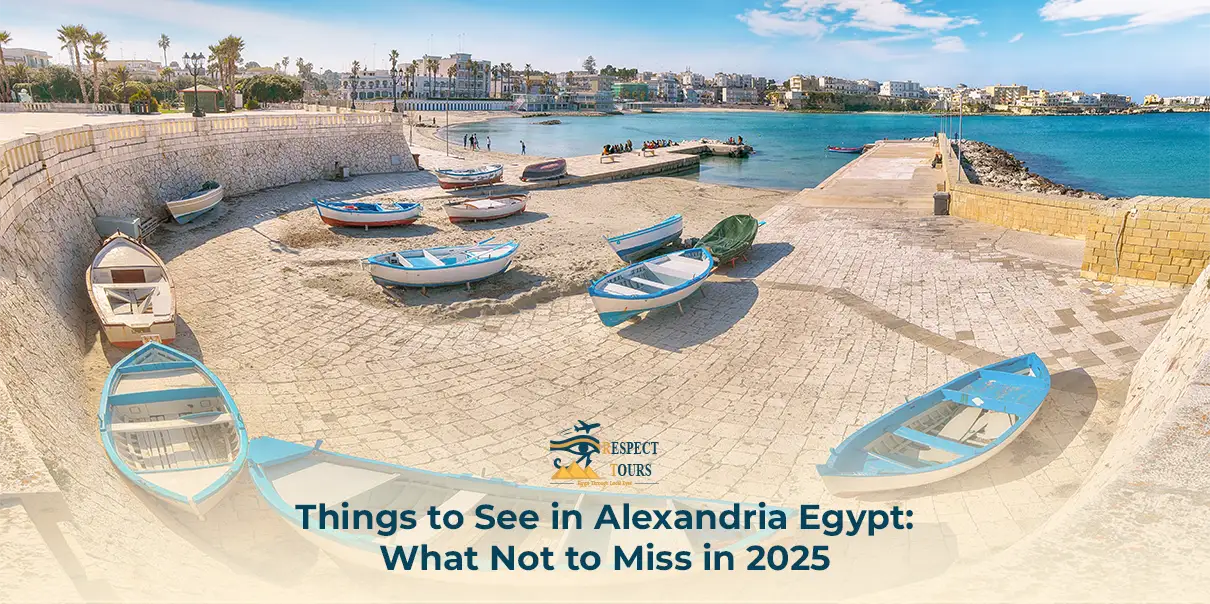
Things to See in Alexandria Egypt

Things to See in Alexandria Egypt: What Not to Miss in 2026

Looking for the best things to see in Alexandria Egypt? This legendary Mediterranean city is unlike anywhere else in the world. Imagine walking the same streets as Cleopatra, touching stones from the Pharos Lighthouse, one of the Seven Wonders of the Ancient World, and exploring underground catacombs that rival Rome’s greatest treasures. All of this happens with the sound of the Mediterranean waves crashing just steps away.

Alexandria isn’t just another Egyptian city of ruins; it’s a fusion of East and West that shaped global history. Here, Greek philosophy blended with Egyptian mysticism, Roman engineering met pharaonic grandeur, and Islamic culture thrived for centuries. From the legendary Great Library that once held the world’s knowledge to sunken palaces still being uncovered today, Alexandria is a destination filled with timeless secrets and living history.

Whether you’re passionate about Greco-Roman monuments, enchanted by Islamic art and architecture, or simply dreaming of a Mediterranean escape, Alexandria delivers experiences you won’t find anywhere else.


Why Choose Respect Tours for Your Alexandria Adventure?


As Egypt’s premier cultural tourism specialist, Respect Tours doesn’t just show you Alexandria; we unlock its deepest secrets. Our expert local guides are passionate historians who bring ancient stones to life with captivating stories, hidden details, and exclusive access that transform ordinary visits into extraordinary discoveries. From skip-the-line entries to private sunset experiences at the Citadel of Qaitbay, we ensure your Alexandria journey exceeds every expectation.

Quick Facts:

  • Location: Mediterranean coast of Egypt, 225km north of Cairo
  • Best Time to Visit: March-May and September-November with Respect Tours
  • Must-See Duration: 2-3 days minimum (our recommended itineraries available)
  • UNESCO Sites: Multiple archaeological locations under consideration
  • Respect Tours Advantage: Local expertise, exclusive experiences, seamless planning


Why Visit Alexandria, Egypt?
 

Things to See in Alexandria Egypt


Unique Historical Significance

Unlike Cairo’s pharaonic focus or Luxor’s temple complexes, Alexandria showcases the rare meeting point of Eastern and Western civilizations. Here, Greek philosophy merged with Egyptian mysticism, Roman engineering met pharaonic grandeur, and Islamic culture embraced ancient traditions.


Living History Experience

Alexandria isn’t a museum city; it’s a vibrant metropolis where 5 million residents live among 2,000-year-old ruins. Fish markets operate beside Roman columns, cafés serve tea in the shadow of medieval citadels, and Mediterranean breezes carry both modern conversations and ancient whispers.


Ongoing Archaeological Discoveries

History in Alexandria is far from finished. Recent underwater excavations have uncovered remains of Cleopatra’s royal palace, including sphinx statues and submerged chambers. Archaeologists continue to make discoveries, meaning that every visit could coincide with history being rewritten before your eyes.


Top 10 Things to See in Alexandria Egypt
 

Top 10 Things to See in Alexandria Egypt


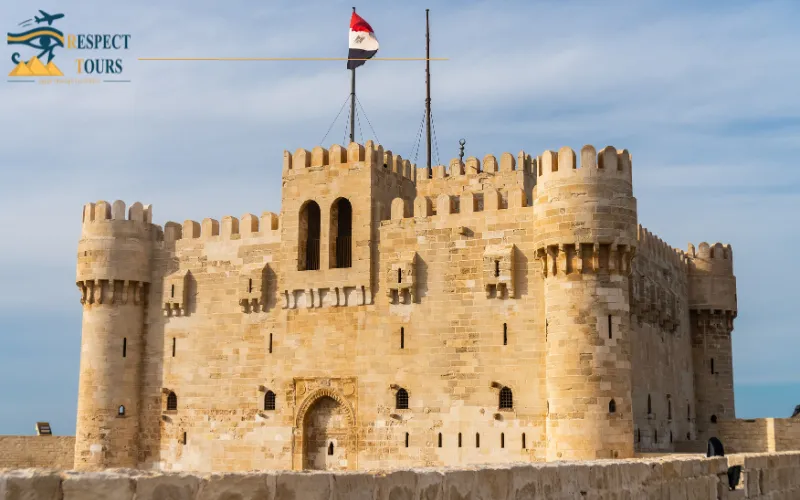
1. Citadel of Qaitbay (Qaitbay Fort)

  • Built: 1477 CE, on the exact site of the ancient Pharos Lighthouse
  • Visit Duration: 1.5–2 hours
  • Best Time: Early morning (8–10 AM) or sunset (4–6 PM)

Highlights:

  • Built using stones from the collapsed Pharos, one of the Seven Wonders of the Ancient World
  • Maritime Museum with fascinating underwater archaeological finds
  • Spectacular Mediterranean sunset views
  • Excellent example of original Mamluk military architecture

What You’ll Experience:

  • Photography Paradise: Capture golden hour shots of the fortress glowing against the Mediterranean backdrop
  • Historical Connection: Touch stones were once part of the legendary Pharos Lighthouse
  • Maritime Heritage: Explore shipwreck artifacts and naval history inside the museum
  • Romantic Views: One of the best sunset spots in Alexandria, perfect for couples and photographers
  • Cultural Insight: Learn about Mamluk defensive strategies and Islamic architecture

Why Visit: To stand where one of the Seven Wonders once rose, while enjoying Alexandria’s most romantic fortress setting.


2. Pompey’s Pillar and Serapeum Complex

  • Built: 297 CE (Roman period)
  • Visit Duration: 45 minutes – 1 hour
  • Best Time: Mid-morning (9:00–11:00 AM) for the best lighting

Highlights:

  • 27-meter red granite monolith, the largest in Egypt
  • The last surviving remnant of the magnificent Serapeum temple
  • Underground chambers and galleries
  • Guardian sphinx statues
  • Panoramic city views

What You’ll Experience:

  • Awe-Inspiring Scale: Marvel at the engineering that moved a 285-ton block without modern machinery.
  • Archaeological Discovery: Explore underground chambers often missed by most tourists.
  • Photo Opportunities: Capture dramatic shots of the guardian sphinxes and towering red granite column.
  • Historical Mystery: Discover the fascinating mix-up behind the pillar’s misleading name.
  • City Views: Enjoy the best panoramic photography spot in central Alexandria.

Historical Note: Despite its name, Pompey’s Pillar was built to honor Emperor Diocletian, not the Roman general Pompey.


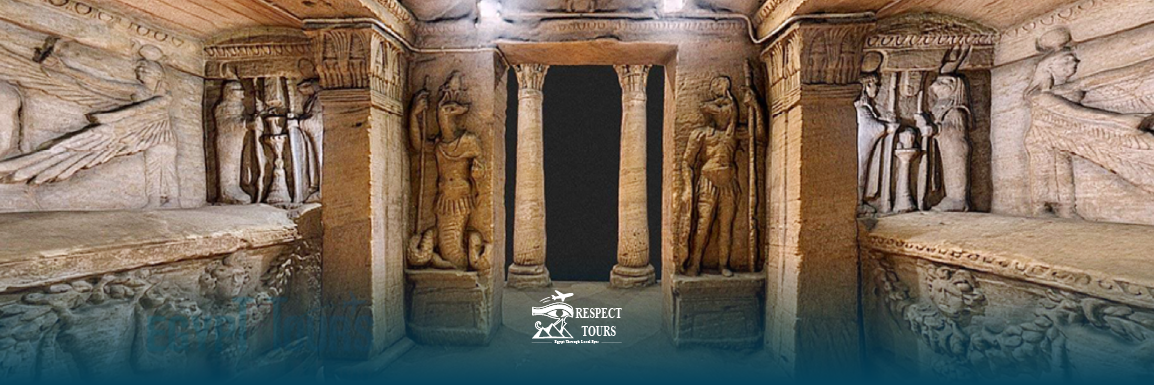
3. Catacombs of Kom El Shoqafa

  • Period: 2nd–4th centuries CE
  • Visit Duration: 1–1.5 hours
  • Best Time to Visit: Morning (9–11 AM), when it’s cooler and less crowded
  • Recognition: Listed as one of the Seven Wonders of the Medieval World

Highlights:

  • A three-level underground necropolis
  • Fascinating blend of Egyptian, Greek, and Roman art
  • Principal tomb featuring Anubis in Roman military dress
  • Hall of Caracalla, containing historical remains
  • Ancient dining halls were once used for memorial feasts.

What You’ll Experience:

  • Cultural Fusion Masterpiece: Admire the rare blend of three civilizations carved in stone.
  • Cool Underground Relief: Enjoy natural “air-conditioning” while exploring underground chambers.
  • Artistic Marvel: Discover the unique image of Anubis in Roman attire, found nowhere else.
  • Historical Drama: Stand in the hall where victims of Emperor Caracalla’s massacre were laid to rest.
  • Spiritual Journey: Step into ancient Egypt’s approach to afterlife preparation.

Why It’s Special:
The Catacombs of Kom El Shoqafa are the largest Roman burial site outside of Rome, making them an extraordinary showcase of cultural blending and history.


4. Bibliotheca Alexandrina (Modern Library)

  • Opened: 2002
  • Visit Duration: 2–3 hours
  • Best Time to Visit: Afternoon (1:00–4:00 PM), when guided tours are available

Key Features:

  • A collection of 4+ million books and manuscripts
  • Striking sun-disc architecture overlooking the Mediterranean
  • Multiple specialized museums inside the complex
  • Planetariums and cultural centers for education and entertainment
  • Built as a tribute to the ancient Great Library of Alexandria

What You’ll Experience:

  • Architectural Wonder: Marvel at the tilted sun-disc design that symbolizes rising knowledge.
  • Cultural Renaissance: Feel the revival of Alexandria’s ancient scholarly spirit.
  • Interactive Learning: Explore rare manuscripts, digital exhibitions, and planetarium shows.
  • Modern Meets Ancient: Discover how ancient wisdom connects with cutting-edge preservation technology.
  • Intellectual Inspiration: Connect with Alexandria’s legacy as the world’s first true university city.

Why Visit:
This modern marvel isn’t just a library; it’s a living cultural hub that bridges the knowledge of the ancient world with today’s innovations.


5. Roman Amphitheater

  • Period: 2nd century CE
  • Visit Duration: ~45 minutes
  • Best Time to Visit: Morning (9–10 AM) before crowds arrive
  • Status: Egypt’s only well-preserved Roman amphitheater

Key Features:

  • 13 tiers of original marble seating
  • Intact mosaic floors
  • Still used today for modern performances
  • Villa of the Birds nearby, showcasing stunning Roman mosaics

What You’ll Experience:

  • Acoustic Marvel: Stand at the center and test the amphitheater’s perfect sound design.
  • Step into History: Sit where Roman citizens once gathered for performances and contests.
  • Artistic Beauty: Admire the intricate mosaic floors with timeless geometric designs.
  • Living Heritage: See how this ancient space still hosts cultural events today.
  • Photo Perfection: Capture striking shots of marble tiers set against Alexandria’s blue Mediterranean sky.


6. El-Mursi Abul Abbas Mosque

  • Built: 1775 (rebuilt in 1943)
  • Visit Duration: 30–45 minutes
  • Best Time to Visit: Early morning or late afternoon (avoid prayer times)
  • Significance: The most important Islamic monument in Alexandria

Key Features:

  • Elegant Ottoman-style architecture
  • Four towering minarets and a striking central dome
  • Intricate geometric decorations in vivid colors
  • Still an active place of worship and pilgrimage

What You’ll Experience:

  • Spiritual Serenity: Absorb the peaceful atmosphere of Alexandria’s holiest site.
  • Architectural Beauty: Admire Ottoman craftsmanship and delicate geometric art.
  • Cultural Respect: Learn proper mosque etiquette and Islamic traditions.
  • Photography Opportunities: Capture the mosque’s stunning exterior and decorative details.
  • Local Interaction: Witness daily prayers and community gatherings.


7. Alexandria Corniche (Waterfront Promenade)

  • Length: 15 km of Mediterranean coastline
  • Visit Duration: 1–3 hours (depending on activities)
  • Best Time: Sunset (5:00–7:00 PM) for magical golden hour views

Features:

  • Palm-lined seafront walkway
  • Historic cafés and restaurants
  • Easy beach access points
  • Panoramic sunset viewing spots
  • Elegant European-influenced architecture

What You’ll Experience:

  • Romantic Stroll: Walk hand-in-hand along one of the Mediterranean’s most beautiful promenades.
  • Cultural Immersion: Sip mint tea and play backgammon at traditional coffee houses.
  • Photography Heaven: Capture fishing boats, palm trees, and colonial-style architecture.
  • Local Life: Watch families picnic, fishermen haul in their catch, and teenagers socialize along the seafront.
  • Culinary Adventure: Enjoy fresh seafood at classic waterfront restaurants.

Perfect For: Evening walks, sunset photography, and soaking in Alexandria’s romantic Mediterranean charm.


8. National Museum of Alexandria

Location: Housed inside a beautifully restored Italian villa.

Collections include:

  • Pharaonic, Greek, Roman, and Islamic artifacts
  • Rare discoveries from Alexandria’s underwater archaeology sites
  • Royal jewelry, coins, and treasures of Egypt’s dynasties
  • Interactive displays tracing the city’s history across millennia

9. Montazah Palace Gardens

Built: Early 20th century by Khedive Abbas II

Features:

  • 150 acres of beautifully landscaped gardens
  • Elegant royal palaces (viewable from the outside)
  • Private beaches along the Mediterranean
  • Shady pine and palm groves
  • Peaceful spaces perfect for families and relaxation


10. Royal Jewelry Museum

Location: Former royal palace

Highlights:

  • Treasures of the Egyptian royal family
  • Diamonds, precious stones, and gold collections
  • Historical photographs and rare documents
  • Ornate palace architecture with exquisite details
  • Artifacts from the Muhammad Ali dynasty

Day Trip to Alexandria from Cairo

How to Spend a Night in Alexandria


How to Spend a Night in Alexandria


Evening Activities

Alexandria Corniche at Sunset

  • 15 km palm-lined promenade along the Mediterranean
  • Perfect for golden hour photography
  • Historic cafés serving traditional tea
  • Cool sea breezes and a romantic evening atmosphere

Qaitbay Citadel Night Visit

  • Illuminated medieval fortress after sunset
  • Peaceful atmosphere with fewer crowds
  • Spectacular views of the harbor and Mediterranean coast
  • Ideal spot for couples and history lovers

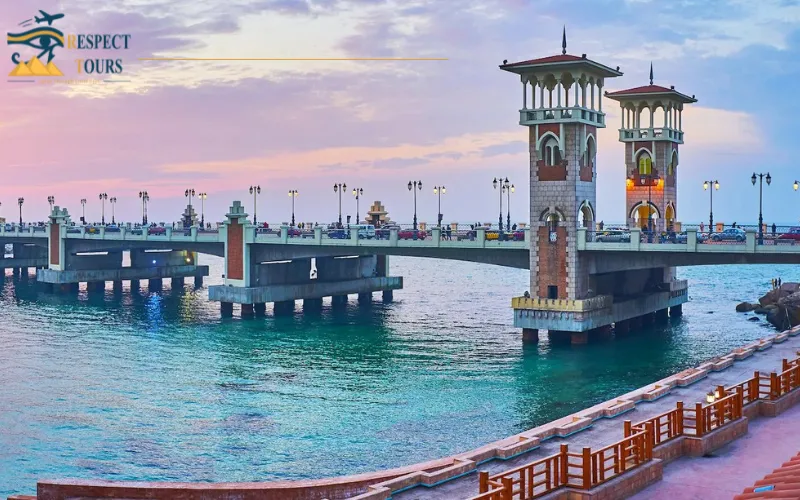
Stanley Bridge After Dark

  • One of modern Alexandria’s most famous landmarks
  • Beautiful lighting displays reflected on the water
  • Popular gathering spot for locals and visitors alike
  • Excellent location for night photography


Dining and Entertainment

Historic Cafés and Restaurants

  • Traditional seafood restaurants along the Corniche
  • Ottoman-era coffee houses with authentic charm
  • Rooftop dining overlooking the Mediterranean
  • Local specialties: grilled fish, Alexandrian liver, and Mediterranean-style cuisine

Night Markets and Shopping

  • The lively souq district stays active well into the night
  • Browse traditional handicrafts, spices, and textiles
  • Sample local street food and sweet treats
  • Explore antique shops for one-of-a-kind souvenirs


Day Trip to Alexandria from Cairo

Best Time to Visit Alexandria, Egypt


Best Time to Visit Alexandria, Egypt


Optimal Seasons

  • Spring (March–May): Pleasant temperatures (18–25°C) with minimal rainfall.
  • Fall (September–November): Comfortable weather, fewer crowds, and perfect for sightseeing.


Summer Considerations

  • June–August: Hot and humid, but refreshing Mediterranean breezes provide some relief.
  • Beach Season: Ideal for swimming and coastal activities.


Winter Months

  • December–February: Mild temperatures (10–18°C) with occasional rainfall.
  • Bonus: Fewer tourists make this a quieter time to explore.


Getting to Alexandria


From Cairo

  • Train: 2.5 hours, comfortable and scenic
  • Car: 3 hours via desert highway
  • Bus: Regular service, budget-friendly option


International Access

  • Alexandria Airport: Limited international flights
  • Cairo Airport: Most international visitors arrive here first


Where to Stay in Alexandria


Historic Areas

  • Downtown Alexandria: Near major attractions
  • Corniche Area: Seafront hotels with Mediterranean views
  • Stanley: Modern area with upscale accommodations


Essential Alexandria Travel Tips
 

Essential Alexandria Travel Tips


Cultural Considerations

  • Dress modestly when visiting mosques
  • Friday prayers affect mosque visiting hours
  • Respect local customs and traditions
  • Learn basic Arabic greetings


Practical Information

  • Egyptian Pound (EGP) is the local currency
  • Tipping is customary in restaurants and for services
  • Most attractions charge separate photography fees
  • Guided tours provide valuable historical context

Complete One-Day Alexandria Tour from Cairo

Perfect Day Itinerary (12 Hours Total)

  • Departure from Cairo: 6:00 AM
  • Return to Cairo: 8:00 PM
  • Transportation: Private car with Respect Tours (approx. 3 hours each way)

Morning Schedule (9:00 AM – 12:30 PM)

9:00 AM – Citadel of Qaitbay (1.5 hours)

  • Start with Alexandria’s most iconic fortress
  • Perfect morning light for photography
  • Explore the Maritime Museum
  • Learn about the Pharos Lighthouse’s history

10:45 AM – Pompey’s Pillar (45 minutes)

  • Quick visit to see the red granite monument
  • Underground chambers exploration
  • Panoramic city views from elevated grounds

11:45 AM – Catacombs of Kom El Shoqafa (1.5 hours)

  • Descend into the remarkable underground necropolis
  • Marvel at Egyptian-Roman-Greek fusion art
  • Cool respite from morning heat
  • Photography in the rotunda and main chambers

Lunch Break (12:30 PM – 1:30 PM)


Traditional Alexandria Lunch at Fish Market Restaurant

  • Fresh grilled fish with Mediterranean herbs
  • Egyptian rice with nuts and raisins
  • Local Alexandria salad with fresh vegetables
  • Mint tea with traditional sweets

Afternoon Schedule (1:30 PM – 5:30 PM)

1:30 PM – Bibliotheca Alexandrina (2 hours)

  • Guided tour of the modern architectural marvel
  • Visit specialized museums and manuscript collections
  • Planetarium show (if time permits)
  • Cultural center exhibitions

3:30 PM – Roman Amphitheater (45 minutes)

  • Explore Egypt’s only preserved Roman amphitheater
  • Test the acoustic properties
  • Photography session with marble columns

4:15 PM – El-Mursi Abul Abbas Mosque (30 minutes)

  • Visit Alexandria’s most important Islamic site
  • Learn about Ottoman architecture
  • Respect local prayer customs

5:00 PM – Alexandria Corniche Walk (30 minutes)

  • Stroll along the Mediterranean promenade
  • Fresh sea breeze and palm tree photography
  • Brief visit to a traditional coffeehouse

Evening Schedule (5:30 PM – 7:00 PM)

5:30 PM – Sunset at Stanley Bridge

  • Modern Alexandria’s iconic landmark
  • Perfect photography opportunities
  • Watch local life unfold during golden hour

6:30 PM – Departure to Cairo

  • Comfortable return journey with stops for refreshments


What Makes This Day Tour Special:

  • Expert Timing: Optimized schedule, avoiding crowds and heat
  • Cultural Balance: Ancient, Islamic, and modern Alexandria
  • Authentic Experiences: Local restaurants, markets, and traditions
  • Photo Opportunities: Golden hour lighting at key locations
  • Comfort: Air-conditioned transportation and strategic rest stops


What to Eat in Alexandria: Culinary Journey


Must-Try Alexandria Specialties

Fresh Seafood Delights

  • Grilled Sea Bass (Loukoz): Mediterranean-style with herbs and lemon
  • Alexandrian Shrimp (Gambari): Cooked with garlic, dill, and tomatoes
  • Fish Kofta: Spiced fish patties grilled over charcoal
  • Seafood Rice (Roz Bil Samak): Fragrant rice with mixed seafood


Traditional Egyptian Favorites with Alexandria Twist

  • Ful Medames: Slow-cooked fava beans with olive oil and spices
  • Feteer Meshaltet: Flaky pastry served sweet or savory
  • Alexandrian Liver (Kebda): Spiced beef liver with peppers
  • Molokhia with Shrimp: Traditional green soup with Mediterranean seafood


Street Food Adventures

  • Hawawshi: Spiced meat stuffed in baladi bread and baked
  • Koshari: Egypt’s national dish with lentils, rice, and pasta
  • Fresh Fruit Juices: Mango, guava, and pomegranate from street vendors
  • Roasted Corn: Mediterranean-style with lime and spices


Essential Alexandria Travel Tips


Before You Go

Best Time to Visit

  • Ideal Months: March-May and September-November (perfect weather, fewer crowds)
  • Summer Considerations: June-August can be hot and humid, but Mediterranean breezes help
  • Winter Benefits: December-February offers mild temperatures and lower hotel rates
  • Ramadan Planning: Restaurant hours change, but the evening atmosphere is magical

What to Pack

  • Comfortable Walking Shoes: Essential for ancient sites with uneven surfaces
  • Sun Protection: Hat, sunscreen, and sunglasses for outdoor exploration
  • Modest Clothing: Long pants and covered shoulders for mosque visits
  • Light Jacket: Mediterranean evenings can be cool, especially in winter
  • Camera: Extra batteries and memory cards for incredible photo opportunities


Cultural Etiquette

Mosque Visits

  • Remove shoes before entering prayer areas
  • Women should cover their hair, arms, and legs
  • Avoid visits during prayer times (5 times daily)
  • Photography may be restricted in some areas
  • Maintain quiet, respectful behavior

Local Interactions

  • Learn basic Arabic greetings: “Ahlan wa sahlan” (welcome), “Shukran” (thank you)
  • Haggling is expected in markets, but not in restaurants
  • Tipping (baksheesh) is customary:10-15% in restaurants, small amounts for guides
  • Friday afternoons are important prayer times—plan accordingly

Photography Guidelines

  • Ask permission before photographing people, especially women
  • Some museums charge extra photography fees
  • Underground sites may prohibit flash photography
  • Military and government buildings are off-limits for photography


Money and Practical Tips

Currency and Payments

  • Egyptian Pound (EGP) is the local currency
  • ATMs: Widely available, especially along the Corniche
  • Credit Cards: Accepted in hotels and upscale restaurants
  • Cash Recommended: For street food, taxis, and small shops
  • Tipping Culture: Keep small bills handy for various services

Transportation

  • From Cairo: Train is most comfortable (2.5 hours), car offers flexibility
  • Within Alexandria: Taxis, Uber, or walking along the Corniche
  • Best Routes: Coastal road offers scenic views between attractions
  • Traffic Considerations: Allow extra time during rush hours (7-9 AM, 5-7 PM)


Health and Safety

Stay Safe

  • Alexandria is generally very safe for tourists
  • Stay hydrated, especially during the summer months
  • Use bottled water for drinking
  • Keep copies of important documents
  • Stay aware of your surroundings in crowded markets


Maximizing Your Experience

Photography Tips

  • Golden Hour: Best lighting 1 hour before sunset
  • Underground Sites: Check if flash photography is allowed
  • Corniche Shots: Capture palm trees against a Mediterranean backdrop
  • Local Life: Early morning and late afternoon for authentic street scenes

Language Help

  • English Usage: Widely spoken in tourist areas and hotels
  • Arabic Numerals: Learn basics for market shopping
  • Translation Apps: Google Translate works offline with downloaded Arabic

Weather Adaptation

  • Summer: Start early, take midday breaks, and end with sunset activities
  • Winter: Layer clothing for temperature changes
  • Rainy Days: Few, but museums make excellent alternatives
  • Mediterranean Breeze: Always refreshing along the coast


Conclusion: 


Alexandria is not just another stop on your Egyptian journey; it is the complete story of Mediterranean civilization in one extraordinary destination. From walking in Cleopatra’s footsteps and touching stones of ancient wonders, to exploring underground catacombs, world-class libraries, and romantic seafront promenades, the things to see in Alexandria, Egypt, are as diverse as they are unforgettable.

Whether you’re captivated by Greco-Roman history, fascinated by the fusion of Eastern and Western cultures, or simply seeking a stunning Mediterranean escape, Alexandria delivers memories that will last a lifetime. This city, where ancient wisdom was preserved and where East met West, continues to enchant travelers just as it has for over 2,000 years.


Experience Alexandria with Respect Tours

Don’t let Alexandria’s treasures remain just beautiful photographs; make them unforgettable memories. Respect Tours specializes in creating personalized Alexandria experiences that go far beyond typical sightseeing. Our passionate local guides unlock hidden stories, provide exclusive access to lesser-known archaeological sites, and ensure every moment of your journey feels magical.

What Makes Respect Tours Different:

  • Expert Local Guides: Passionate historians who bring Alexandria’s stories to life
  • Exclusive Experiences: Private sunset tours, skip-the-line access, hidden gem discoveries
  • Seamless Planning: From Cairo transfers to accommodation recommendations
  • Cultural Immersion: Authentic encounters with local traditions and cuisine
  • Flexible Itineraries: Customized experiences based on your interests and schedule
  • Small Groups: Intimate experiences that feel personal and engaging

Ready to explore Alexandria? Contact Respect Tours today and transform your Egyptian adventure into an extraordinary journey through one of the world’s most legendary cities. Let us show you why Alexandria has captivated hearts and minds for over 2,000 years—and why it will capture yours too.


FAQ: Frequently Asked Questions

How many days do I need to see Alexandria properly?

For first-time visitors, 2-3 days is ideal. A day trip from Cairo covers major highlights, but staying overnight allows you to experience Alexandria’s evening charm, enjoy sunset at the Citadel, and explore local restaurants at a relaxed pace.

Is Alexandria worth visiting compared to Cairo and Luxor?

Absolutely! Alexandria offers something unique: the meeting point of Greek, Roman, and Egyptian civilizations. While Cairo has the pyramids and Luxor showcases pharaonic temples, Alexandria provides Mediterranean charm, underwater archaeology, and cultural fusion you can’t find anywhere else in Egypt.

Can I visit Alexandria as a day trip from Cairo?

Yes! Respect Tours offers excellent day trips with comfortable transportation. Departing at 6 AM and returning by 8 PM allows you to see major attractions. However, staying overnight lets you experience Alexandria’s romantic evening atmosphere.

What’s the best way to get from Cairo to Alexandria?

The train is most comfortable (2.5 hours, air-conditioned, scenic views). Private car with Respect Tours offers flexibility and door-to-door service. Buses are budget-friendly but less comfortable for international visitors.
[rank_math_rich_snippet id="s-c3e7d327-d645-4144-b71e-1781a1e635ff"]
RESPECTTOURSEgypt Through Local Eyes

Top Deals from Respect Tours – Discover More, Pay Less

Respect Tours Egypt Customers Gallery
RESPECTTOURSEgypt Through Local Eyes

Explore by Category

RESPECTTOURSEgypt Through Local Eyes

Popular Category

RESPECTTOURSEgypt Through Local Eyes

Best Egypt Tour Packages

Tour the Pyramids of Giza & Grand Egyptian Museum

Tour the Pyramids of Giza and witness the future of archaeology, all in a single unforgettable day. With Respect Tours, you’ll experience Egypt through local eyes, guided by a certified Egyptologist who brings history to life. Start your journey at the Great Pyramid, the timeless Sphinx, and the ancient Valley Temple. Then step into the Grand Egyptian Museum (GEM), the world’s largest museum dedicated to a single civilization, where over 100,000 artifacts await, including the complete treasure collection of Tutankhamun. This tour is ideal for first-time visitors, culture seekers, and anyone eager to see the best of Cairo in one seamless, expertly guided experience.

Duration

1 Day

Group Size

1 person

Sail the Nile: 4-Night Nile Cruise Luxor to Aswan | Every Saturday

Sailing the Nile isn’t just a cruise; it’s a journey through Egypt’s soul. This 4-night Nile cruise Luxor to Aswan combines ancient temples, royal tombs, scenic river sailing, and comfortable 5-star accommodation in one complete journey through the heart of Upper Egypt. Sailing every Saturday, the cruise takes you to some of Egypt’s most iconic historical sites, including Karnak Temple, Luxor Temple, Valley of the Kings, Temple of Edfu, Temple of Kom Ombo, and the beautiful city of Aswan, while giving you time to enjoy the peaceful atmosphere of the Nile between each destination. With full-board accommodation, expert Egyptologist guides, guided sightseeing, and carefully organized transfers included, every part of the journey is designed to feel smooth, comfortable, and enriching from arrival in Luxor to departure from Aswan. With Respect Tours, “Egypt Through Local Eyes,” this weekly Nile cruise experience is ideal for travelers looking for the perfect balance of history, relaxation, culture, and authentic Egyptian atmosphere in one unforgettable trip.

Duration

5 days 4 nights

Group Size

Unlimited

Full Day Trip to Alexandria from Cairo: Sea, History & Culture

Leave behind the desert landscapes of Cairo and journey to Egypt’s stunning Mediterranean coast on this day trip to Alexandria from Cairo. In just one day, you’ll uncover layers of history that span the Pharaonic, Greek, and Roman eras.  With your private Egyptologist guide, descend into the Catacombs of Kom El Shoqafa, where Egyptian, Greek, and Roman artistry blend underground. Walk through the ancient Roman Theatre, visit the towering Pompey’s Pillar carved from Aswan granite, and stand atop the Citadel of Qaitbay, built on the site of the legendary Lighthouse of Alexandria, one of the Seven Wonders of the Ancient World. Step into the modern Library of Alexandria, a stunning tribute to the ancient library lost to time, then stroll the Mediterranean Corniche to soak in the coastal atmosphere. This one-day Alexandria tour is perfect for history lovers, culture seekers, and anyone who wants to experience a completely different side of Egypt while enjoying the cool sea breeze and vibrant coastal atmosphere. Ready to explore Alexandria?

Duration

1 Day

Group Size

1 person

Abu Simbel Trip from Aswan: Day Tour by Car

The Abu Simbel Trip from Aswan by Car is not just a day tour; it is a curated journey across ancient Egyptian history, Nubian heritage, and monumental architecture. Designed for travelers seeking deep cultural immersion, this full-day experience connects the city of Aswan with one of Egypt’s most iconic archaeological sites: the Abu Simbel Temples, a UNESCO World Heritage site located near the western banks of Lake Nasser. This full-day tour includes expert guiding, a scenic desert drive, and access to one of Egypt’s most awe-inspiring UNESCO World Heritage Sites. At Respect Tours, we don’t just show you Egypt; we share it with you: “Egypt through local eyes.”

Duration

1 Day

Group Size

1 person

Hurghada Safari Tour: Short Red Sea Quad Bike Adventure (2 Hours)

A Hurghada safari tour invites you to explore the untouched beauty of the Red Sea desert, and this short 2-hour adventure is perfect if you’re looking for a quick but authentic desert experience. In just two hours, you’ll enjoy a thrilling 45-minute quad bike ride across golden dunes and open desert landscapes, followed by a peaceful visit to a traditional Bedouin camp where you’ll sip authentic tea and experience warm Bedouin hospitality. Whether you’re racing through sand or relaxing with locals, this adventure delivers pure adrenaline and cultural immersion without taking up your entire day. Want more? You can upgrade to the full desert experience with extended quad riding, traditional dinner, a folklore show, and deeper time with the Bedouin tribe. With Respect Tours, we go beyond the ride; we connect you to the soul of the land because we show you Egypt through local eyes. Ready for your Red Sea adventure?

Duration

1 Day

Group Size

1 person

Full-Day Trip to Fayoum from Cairo

Discover a side of Egypt most travelers never see on this full-day trip to Fayoum from Cairo, a region where desert silence, shifting lakes, and ancient fossils come together in a journey unlike any other. Your adventure begins at Wadi El Rayan, home to Egypt’s only natural waterfalls, framed by golden dunes and tranquil lakes. From there, continue to the stunning Magic Lake, where the water changes color with the sun, and sandboarding adds a thrill to the stillness. But the true heart of the day? Wadi El Hitan, a UNESCO World Heritage Site, is scattered with 40-million-year-old whale fossils, proof that this desert was once a sea. With Respect Tours, this isn’t just a nature tour; it’s a journey into deep time. You don’t just visit; you connect.

Duration

Group Size

1 person

Blue Hole Dahab Tour: Snorkel, Dive & Discover the Red Sea

Welcome to one of the most legendary diving spots on Earth, the Blue Hole of Dahab. This isn’t just a day trip; it’s a plunge into the extraordinary. Located just outside the laid-back coastal town of Dahab, this natural marine sinkhole is framed by dramatic desert cliffs and filled with vibrant coral gardens, crystal-clear waters, and a dazzling array of marine life. On this Blue Hole Dahab Tour, you’ll discover why divers and snorkelers from around the world call it a must-see. Whether you’re a seasoned diver or a first-time snorkeler, the experience is unforgettable: surreal visibility, towering reef walls, and the sheer thrill of gliding through one of nature’s most breathtaking underwater wonders. With Respect Tours, you’re not just visiting a famous dive site; you’re discovering a Red Sea treasure through local eyes.  

Duration

1 Day

Group Size

1 person

Relax & Explore: Nile cruise Aswan to Luxor 3 Nights | Every Friday

Sail through the heart of ancient Egypt in just 4 unforgettable days. This  Nile cruise Aswan to Luxor (3 nights) offers a perfect blend of iconic temples, peaceful sailing, and guided exploration, all from the comfort of a 5-star floating hotel. Sailing every Friday, the cruise begins in the beautiful city of Aswan and takes you through some of the Nile’s most iconic landmarks, including Philae Temple, Temple of Kom Ombo, Temple of Edfu, Karnak Temple, Luxor Temple, and the legendary Valley of the Kings. Along the way, enjoy the relaxing atmosphere of the Nile as you sail between ancient cities, watch daily life along the riverbanks, and experience Egypt at a slower and more enjoyable pace. With full-board accommodation, guided sightseeing, expert Egyptologist guides, and organized transfers included, every part of the trip is designed to feel smooth, comfortable, and enriching from arrival in Aswan to departure in Luxor. With Respect Tours, “Egypt Through Local Eyes”, this weekly Nile cruise is ideal for travelers looking for the perfect balance of history, culture, relaxation, and authentic Nile atmosphere in one complete experience.

Duration

4 days 3 nights

Group Size

1 person

RESPECTTOURSEgypt Through Local Eyes

EXCLUSIVE | Eric Black Moses Explores Egypt as Respect Tours’ Guest

At the FIFA World Cup 2026, millions of people watched Egypt’s national football team arrive in the United States. One American stopped to welcome them. His name is Eric Hudson, and he is about to see Egypt for himself. Respect Tours, Egypt’s trusted travel authority since 1978, has welcomed American police officer Eric Hudson for an exclusive 10-day journey through Egypt, a visit that perfectly embodies the company’s iconic promise: Egypt Through Local Eyes. Who is Eric Black Moses? Eric Hudson is an American police officer who captured the hearts of millions with his genuine and passionate love for Egypt and its people. His warmth toward Egyptian culture turned him into a widely recognized public figure, resonating deeply with audiences across Egypt and the Arab world.  His visit to Egypt is not just a tourism trip; it is the natural next chapter of a story that began the moment he first showed the world how deeply Egypt had touched him.   Respect Tours: Egypt’s Authentic Travel Name Since 1978 For nearly five decades, Respect Tours has stood as one of Egypt’s most trusted and respected names in inbound tourism. Since 1978, Respect Tours has delivered authentic travel experiences in Egypt, built on a simple but powerful belief: that Egypt is best seen through local eyes.  The company has grown to serve over 140,000 travelers from around the world, offering everything from Nile cruises and guided day tours to fully tailored travel packages across Cairo, Luxor, Aswan, Alexandria, Hurghada, and beyond. respecttoursegypt What sets Respect Tours apart is not just its experience but its philosophy. Every journey the company designs is rooted in authentic human connection, local knowledge, and a commitment to showing travelers an Egypt that goes far beyond guidebooks and tourist trails.  When Respect Tours says “Egypt Through Local Eyes,” it is not a marketing line. It is a promise that has been kept for over 45 years, across hundreds of thousands of journeys. The company holds memberships with leading international travel organizations, maintains partnerships with Egypt’s top hotels and operators, and operates under full coordination with Egypt’s official tourism authorities, making it one of the most credible and professionally recognized travel companies in the country.   A Visit Built on That Promise The hosting of Eric Hudson is a living example of everything Respect Tours stands for. Over 10 days, Hudson will travel across Egypt’s most iconic destinations, from the ancient grandeur of Cairo’s pyramids and the Grand Egyptian Museum to the timeless temples of Luxor and Aswan, the sacred waters of the Nile, and the breathtaking landscapes that have defined human civilization for thousands of years. But this is not a standard tourist itinerary. This is Egypt Through Local Eyes in its truest form, curated experiences, local guides, authentic encounters with Egyptian culture, and a journey designed to make Hudson feel not like a visitor but like a guest of the Egyptian people themselves. Husam Fathi, Director of Tourism Sector at Respect Tours, stated: “Eric Hudson did not just admire Egypt from a distance; he showed the world his love for it openly and authentically. That kind of connection is exactly what Respect Tours was built to honor. We are proud to welcome him as our guest, to show him the Egypt that Egyptians know and love, and to prove once again that when the world opens its heart to Egypt, Egypt opens its doors in return.” Where Eric Hudson Will Go in Egypt The ten-day itinerary covers four destinations: Cairo — Days 1 to 5 Hudson begins in Cairo, with visits to the Pyramids of Giza, the Great Sphinx, and the Grand Egyptian Museum, which now holds the complete treasures of Tutankhamun under one roof for the first time in history. He will also spend time in Islamic Cairo, the medieval quarter where Al-Azhar Mosque and Khan El Khalili bazaar have stood for over a thousand years. Alexandria — Days 6 to 7 From Cairo, the journey continues north to Alexandria, Egypt’s Mediterranean city, founded by Alexander the Great in 331 BC. The Bibliotheca Alexandrina, one of the largest libraries in the world, and the seafront Corniche are among the planned stops. Luxor — Days 8 to 9 Luxor holds more ancient monuments than any other city on earth. Hudson will visit the Valley of the Kings, where pharaohs of the New Kingdom were buried in rock-cut tombs for over five centuries. Karnak Temple, the largest religious complex ever built, is also on the itinerary, along with Luxor Temple along the Nile corniche. Hurghada — Days 9 to 10 The trip ends at the Red Sea. Hurghada offers some of the most accessible coral reef diving in the world, with visibility reaching thirty meters on calm days. For many American visitors, this part of Egypt comes as a complete surprise. Official Coordination with Egypt’s Ministry of Tourism The visit has been organized in full coordination with Egypt’s Ministry of Tourism and Antiquities, reflecting the ministry’s ongoing support for cultural and people-to-people tourism initiatives.  This partnership ensures that Hudson’s journey across Egypt is not only smooth and seamless but also carries an official stamp of welcome from the Egyptian state, a message that Egypt is open, proud, and ready to receive visitors who come with a genuine appreciation for its culture and heritage. More Than a Visit, A Message to the World At a time when Egypt’s tourism sector continues to grow and attract global attention, the hosting of Eric Hudson by Respect Tours sends a powerful message: Egypt welcomes those who love her. And when they arrive, she gives them an experience they will carry for a lifetime. Through Eric Hudson’s eyes, and through the lens of Respect Tours’ 45-year legacy, the world will see an Egypt that is warm, ancient, vibrant, and absolutely unforgettable. For more information about Respect Tours and its travel packages, visit respecttoursegypt.com. Frequently Asked Questions Who is Eric Hudson, and why is he visiting Egypt? Eric Hudson is an American

Obelisk Definition & Origin: Explained by Respect Tours Egyptologists

The obelisk definition most people know is simple: a tall, four-sided stone monument with a pointed top. In ancient Egypt, however, obelisks were far more than architectural landmarks. They were powerful religious symbols connected to the sun god Ra, expressions of royal authority, and some of the most impressive engineering achievements of the ancient world. This guide explains what an obelisk is, where the tradition originated, what these monuments symbolized, how they were carved and transported, and where you can still see them today in Egypt and around the world. From the temples of Karnak and Luxor to famous obelisks in Rome, Paris, London, and New York, their story spans more than 4,000 years of history. At Respect Tours Egypt, we’ve been guiding travelers through Egypt’s ancient sites since 1978. Drawing on decades of experience at Luxor, Karnak, Aswan, and other historic locations, we’ve created this guide to help you understand the history, symbolism, and legacy of one of ancient Egypt’s most iconic monuments. Quick Definition An obelisk is a four-sided, tapering monolithic stone monument topped with a pyramid-shaped cap called a pyramidion. The ancient Egyptian word was “Tehen,” meaning “to shine” or “to dazzle.”  Obelisks represented a petrified ray of sunlight, and they first appeared in Heliopolis around 2400 BCE as physical expressions of solar worship and royal power.   What Is an Obelisk? Definition and Basic Structure Every true ancient Egyptian obelisk shares the same basic anatomy. A long, square shaft tapers gradually from base to top, where it ends in a small pyramid called the pyramidion. The whole thing is cut from a single block of stone, usually red granite from the quarries near Aswan. The height-to-base ratio is typically 9:1 or 10:1. That’s what gives them the characteristic needle profile, slender enough to look weightless from a distance, despite some weighing several hundred tons. The pyramidion at the top was often coated in electrum, a naturally occurring gold-silver alloy. At sunrise, it caught the first light before anything else in the temple complex. That wasn’t incidental; it was the whole point. The obelisk was designed to interact with the sun daily, not to sit passively in a courtyard. The shaft was covered in hieroglyphic inscriptions. These weren’t ornamental. They recorded specific information: the pharaoh who commissioned the monument, the deity it was dedicated to, military victories, and religious declarations. An obelisk was simultaneously a monument, a text, and a ritual object.   The Origin of the Obelisk: Heliopolis and the Benben Stone The origin of the obelisk can be traced to Heliopolis, ancient Egypt’s center of sun worship and the home of the god Ra. Around 2400 BCE, the first obelisks emerged from religious beliefs connected to creation and the power of the sun. Their design was inspired by the Benben Stone, a sacred stone associated with the primordial mound that rose from the waters of chaos at the beginning of creation. The pyramid-shaped top of an obelisk, known as the pyramidion, was a direct reflection of this symbol. The earliest obelisks were relatively small, but over time they grew into the towering granite monuments that became some of the most recognizable symbols of ancient Egypt. 📋 Historical Record The oldest surviving obelisk in the world was erected by Pharaoh Senusret I around 1950 BCE. It still stands in Cairo at Al-Masalla Obelisk Park in the Heliopolis district, over 3,900 years old and in remarkably good condition. Most visitors to Cairo never see it.   Obelisk Meaning and Symbolism in Ancient Egypt The Egyptians called an obelisk Tehen, a word that means “to shine” or “to dazzle.” That name alone tells you most of what you need to know about its purpose. Most obelisks were placed in pairs at temple entrances, representing balance and the unity of Upper and Lower Egypt. Their hieroglyphic inscriptions recorded the achievements, religious devotion, and divine authority of the pharaoh who commissioned them. The hieroglyphs covering the shaft added a fourth layer of meaning. They were permanent records of a pharaoh’s divine right to rule, their relationship to specific deities, and their military and religious achievements. Walking around an obelisk and reading its inscriptions was, in a sense, reading the pharaoh’s official theological biography. A Brief History of Egyptian Obelisks Obelisks span over three thousand years of Egyptian history. They started small and theological in the Old Kingdom, reached their architectural peak during the New Kingdom, and eventually ended up scattered across Rome, Paris, London, and New York. The New Kingdom pharaohs turned obelisk construction into competitive architecture. Hatshepsut erected two obelisks at Karnak; one still stands at nearly 30 meters. Thutmose III, who initially tried to hide Hatshepsut’s obelisks behind a wall after her death, commissioned more obelisks than any other pharaoh in history.   How Were Obelisks Built? Quarrying, Transport, and Raising Every true ancient Egyptian obelisk was carved from a single block of stone. No sections bolted together, no internal framework, one piece, from base to pyramidion. At the scale of the largest obelisks, this was a genuinely extraordinary technical achievement. How Were Obelisks Built? The stone of choice was red granite from the quarries near Aswan, hard, dense, and with a reddish color that caught the light well. Workers used dolerite pounders (hard, round stones) to strike the granite surface repeatedly in a technique called percussion grinding.  This gradually fractured the rock along the intended outline. The process involved carving channels along all four sides of the obelisk shape, then working on the underside last. A thin bridge of stone kept the obelisk connected to the bedrock until the final series of strikes freed it. The whole operation, for a large obelisk, could take months. 💡 The Unfinished Obelisk in Aswan The best way to understand obelisk construction is to stand in the Aswan quarry and look at the Unfinished Obelisk, still lying in the bedrock where it was abandoned, likely when a crack appeared mid-carving around 1475 BCE.  It would have been 41 meters tall

The Cave Church Cairo (Saint Simon Monastery): Visitor Guide 2026

The Cave Church, officially the Monastery of Saint Simon the Tanner, is a rock-hewn church complex carved into the limestone cliffs of Mokattam Mountain in southeast Cairo. It seats over 20,000 people, making it the largest church in the Middle East.  It was built by hand, starting in the 1970s, by Cairo’s Zabbaleen community, Coptic Christians who have managed the city’s waste recycling for generations. Most visitors who plan a quick stop end up staying two hours. In this guide, you’ll discover everything you need to know before visiting the Cave Church in Cairo, including its history, location, opening hours, what to see, how to get there, and practical travel tips.  At Respect Tours, we’ve been introducing travelers to Cairo’s hidden gems since 1978, and the Cave Church remains one of the most memorable cultural and spiritual experiences in the city. Where Is the Cave Church Located? The Cave Church, officially known as the Monastery of Saint Simon the Tanner, is located in the Manshiyat Nasser district on the Mokattam Hills in southeastern Cairo. The church complex is carved directly into the limestone cliffs overlooking the city and can be reached in approximately 20 to 25 minutes by car from Downtown Cairo, depending on traffic. The site sits within the neighborhood of the Zabbaleen community, a predominantly Coptic Christian community known for operating one of the world’s most efficient urban recycling systems.  While the area is sometimes referred to as “Garbage City,” visitors quickly discover that the Cave Church is one of Cairo’s most remarkable religious and cultural landmarks. Once you arrive, you’ll find much more than a single church. The complex includes a vast open-air amphitheater, several rock-cut chapels, prayer halls, and panoramic viewpoints carved into the Mokattam cliffs.  Because many sections are spread across different levels of the hillside, it’s worth allowing enough time to explore the entire site rather than just the main church auditorium.   Saint Simon the Tanner: The Story Behind the Name The church is named for Saint Simon the Tanner, a Coptic saint from 10th-century Cairo. Simon was a leather worker, a humble trade low in the social order.  According to Coptic tradition, he was chosen by God to fulfill a prophecy from the Gospel of Matthew: that faith the size of a mustard seed could move a mountain. The story goes that Simon, through prayer and fasting, caused the Mokattam Mountain to visibly rise and fall three times before the Fatimid Caliph Al-Muizz. The miracle was witnessed by the Caliph’s court as proof of the faith of Egypt’s Christian community at a moment of serious political tension. Al-Muizz, witnessing it, is said to have guaranteed the safety of Cairo’s Coptic Christians in return. Whether you approach that story as history, theology, or legend, it’s the reason the church stands where it does, in the cliff face of that same mountain. The Zabbaleen community built it here deliberately. The location is the meaning.   History of the Cave Church: How It Was Built The Cave Church has no ancient origins. It started in the 1970s when the Zabbaleen community, long denied formal places of worship and marginalized within the city, began carving rough prayer spaces into the limestone caves of Mokattam.  Simple grottoes became chapels. Chapels became halls. Halls expanded into the sprawling complex that exists today. It was built largely by hand, with basic tools, over several decades. There was no single architect, no master plan. Different sections were added as the community grew and as resources allowed.  The result is an organic, layered space, which is part of why it feels so different from polished historical monuments. The main St. Simon Cave Church amphitheater, the largest single space in the complex, seats over 20,000 worshippers. It has hosted major Coptic Christian gatherings, Easter services that fill every seat, and visits from international religious delegations.  For context: this is a church built by a community that collects other people’s rubbish for a living, on a cliff, without government funding, that now ranks as the largest church auditorium in the Middle East. Interested in Egypt’s Spiritual Heritage? Our Egypt Spiritual Tours combine the Cave Church, Coptic Cairo, and other sacred sites into a deeply curated itinerary – ideal for travelers who want more than sightseeing.   What to See Inside the Cave Church Complex Allow at least 90 minutes. The site is considerably larger than it appears from the entrance, and it takes time to navigate properly. Here’s what’s inside. The Main Amphitheatre The centerpiece of the complex is an open-air auditorium carved into the cliff, seating over 20,000 people. The scale is the first thing that hits you. Most visitors expect something chapel-sized and walk in to find a space that holds more people than many concert venues.  At Easter, it fills. On a weekday morning, it’s almost empty, which is when the carvings on the surrounding walls are easiest to study. The Biblical Rock Carvings The entire cliff face surrounding the amphitheater is covered in monumental relief carvings, scenes from the Old and New Testaments, the life of Saint Simon, and portraits of Coptic saints.  They were created by Polish sculptor Mario Dobrescu, who worked directly with the rock rather than against it. The natural contours of the limestone were incorporated into the compositions: a crack becomes a valley floor, and a ridge becomes a figure’s arm. At full size, some panels span 15 to 20 meters; the effect is genuinely striking.  These aren’t decorative additions. For the Zabbaleen community, these are their scriptures made permanent in the rock of the mountain; they were told their faith could move it. 📷 Photography Tips Best light for the carvings: 9:00 AM – 11:00 AM, when natural light enters from above the cliff face A wide-angle lens is useful: many panels are too large to capture without stepping well back Always ask before photographing anyone at prayer The upper viewpoint gives panoramic shots across Cairo’s rooftops and the Mokattam Hills The Samaan

Marsa Alam Travel Guide 2026: Dive Sites, Beaches & Insider Tips

Marsa Alam travel offers a completely different side of Egypt’s Red Sea coast. Known for its crystal-clear water, pristine coral reefs, and unspoiled beaches, Marsa Alam has become one of the best destinations in Egypt for diving, snorkeling, and nature lovers seeking a quieter alternative to the country’s larger resort towns. Located around 270 km south of Hurghada, Marsa Alam is home to some of the Red Sea’s most spectacular marine life, including sea turtles, dugongs, dolphins, and vibrant coral gardens. Beyond the underwater world, visitors can enjoy beautiful beaches, desert landscapes, and easy access to several protected marine areas. At Respect Tours, we’ve guided over 140,000 travelers through Egypt since 1978. This guide is built on what we’ve learned running trips in Marsa Alam for decades, the sites worth your time, the seasons that actually work, and the logistics that most travel articles get wrong.   What Is Marsa Alam Known For? Most people who visit Marsa Alam come for one reason: the water. The reefs here are in better condition than almost anywhere else on the Red Sea. There’s less coastal development, fewer boats anchoring on fragile coral, and a national park, Wadi El Gemal, that protects much of the southern coastline. But the sea isn’t the whole story. The Eastern Desert starts immediately behind the coast. An hour inland, you’re in open desert, just rock formations, ancient wadis, and a sky so clear at night that even casual stargazers are stunned. Marsa Alam is best known for: Dugongs: Abu Dabbab Bay has one of the few resident dugong populations accessible to snorkelers anywhere in the world Spinner dolphins: Sha’ab Samadai (Dolphin House) is a protected reef where dolphins rest daily Elphinstone Reef: consistently ranked among the top ten dive sites globally, with reliable sightings of oceanic whitetip sharks Green sea turtles: present year-round at multiple sites Wadi El Gemal National Park: wild coastline, mangroves, desert trails, and Bedouin communities Low crowds: the airport is small, the resort strip is short, and it shows Why Visit Marsa Alam? And Who Is It Actually For?   The honest answer is that Marsa Alam is not for everyone. If your priority is nightlife, a wide choice of restaurants, or easy day trips to pharaonic monuments, you’ll be frustrated. The town itself is small. You’re largely dependent on your tour operator for getting around. But if what you want is genuinely clear water, minimal crowds, and a sense that you’ve found somewhere most tourists haven’t bothered to reach yet, Marsa Alam delivers that better than anywhere else on the Egyptian coast. Who Is Marsa Alam Best For? Marsa Alam truly caters to a diverse range of travelers, but it particularly shines for Serious Divers & Snorkelers: If your primary goal is to explore the Red Sea’s incredible underwater world, Marsa Alam is your ideal base. Nature Enthusiasts: Those who appreciate pristine desert landscapes, untouched coastlines, and unique marine ecosystems will feel right at home. Relaxation Seekers: If you’re looking for a tranquil escape with luxurious resorts and a slower pace, away from the hustle and bustle, Marsa Alam delivers. Adventure Lovers: From quad biking in the desert to kitesurfing on the Red Sea, there’s plenty to get your adrenaline pumping. Families with Older Children: Many resorts offer excellent facilities, and the snorkeling and desert adventures are perfect for engaging older kids. It might not be the best fit for those seeking vibrant nightlife, extensive shopping, or a heavy focus on ancient Egyptian historical sites (though day trips are possible). Marsa Alam is about connecting with nature, both above and below the waves. The Best Beaches in Marsa Alam Abu Dabbab Bay: Turtles and Dugongs Abu Dabbab is the first site most visitors to Marsa Alam hear about, and it earns a reputation.  The bay has a wide seagrass bed in shallow water, the kind of habitat that dugongs depend on. They graze here daily. Green sea turtles feed in the same area. On a good morning, you can see both within twenty minutes of getting in the water. The snorkeling is straightforward. The water is calm, the bay is sheltered, and the depth over the seagrass is only two to four meters. Children who can swim can handle it easily. The beach itself is sandy and clean. Sha’ab Samadai: Dolphin House Reef Sha’ab Samadai is a horseshoe-shaped reef about 25km north of Marsa Alam town. A pod of 50–100 spinner dolphins uses the inner lagoon as a rest area during the day. The site is managed under a rotation system; only a portion of the reef is open to swimmers at any one time, which keeps the dolphins from being overwhelmed. Swimming here is genuinely memorable. The dolphins aren’t performing; they’re resting, and they come and go on their own schedule. We’ve had clients who described it as the highlight of their entire trip to Egypt. Elphinstone Reef: Advanced Diving Elphinstone is an offshore pinnacle that drops steeply on all sides into open water. The walls are covered in soft corals, and the current brings in pelagic species: oceanic whitetip sharks, hammerheads, barracuda, and tuna. It’s one of the few sites in Egypt where shark encounters are reliably expected rather than hoped for. This is not a beginner site. The current can be strong, the depths are significant, and conditions can change quickly. You need a minimum of 30 logged dives and genuine open-water experience. The dive centers operating out of Marsa Alam will assess you honestly before taking you out. Wadi El Gemal National Park Wadi El Gemal (Arabic for “Valley of the Camels”) is a protected area covering both desert and coastline south of Marsa Alam. The landscape is raw and largely undeveloped, with mangrove channels, rocky desert wadis, coastal dunes, and shallow bays. Wildlife includes Nubian ibex, Egyptian gazelle, osprey, and various wading birds. Most visitors take a day trip that combines a short hike with a boat trip through the mangroves. The area also has archaeological

The Great Sphinx of Giza: Facts, History, Mysteries & How to Visit

 The Great Sphinx of Giza is the largest monumental sculpture in the ancient world – a 73-meter limestone colossus with the body of a lion and the face of a pharaoh, carved directly from the bedrock of Egypt’s Giza Plateau around 2500 BC. Approximately 4,500 years old, it is attributed to Pharaoh Khafre and is believed to act as the eternal guardian of his pyramid complex. Its gaze is fixed due east – greeting the rising sun – in accordance with ancient Egyptian solar cosmology. Standing before the Great Sphinx of Giza, with its inscrutable expression and its lion’s paws stretching across the desert sand, is one of those travel moments that genuinely stops you. As your Senior Travel Editor at Respect Tours Egypt, this guide covers everything: the history, the mysteries, and exactly how to visit without the crowds, the confusion, or missing the best views.   Great Sphinx Facts: Size, Age & Key Details   Here are the essential facts about the Great Sphinx of Giza, the numbers, and context that make standing before it all the more extraordinary.   Detail Fact Full Name The Great Sphinx of Giza (ancient Egyptian: Hor-em-akhet — “Horus on the Horizon”) Location Giza Plateau, west bank of the Nile, Egypt — part of the Memphis UNESCO World Heritage Site Length 73 metres (240 ft) — paw to tail Height 20 metres (66 ft) — base to crown of head Width 19 metres (62 ft) at its widest point Material Carved from a single natural limestone outcrop in the Giza bedrock Builder Attributed to Pharaoh Khafre (c. 2558–2532 BCE), Fourth Dynasty Orientation Faces due east — aligned with the rising sun at spring and autumn equinoxes Restorations Cleared by Thutmose IV (~1400 BCE); major restorations in the 20th century   Why this matters to you: The Sphinx was not built; it was revealed. Ancient sculptors looked at a natural limestone outcrop left behind by pyramid quarrying and decided to transform it into a living deity. That shift in perspective changes everything about how you look at it.   Who Built the Great Sphinx of Giza?     The Great Sphinx of Giza is attributed to Pharaoh Khafre of the Fourth Dynasty, who ruled ancient Egypt around 2558-2532 BC.  The evidence includes the Sphinx’s physical position within Khafre’s funerary complex, its alignment with the Khafre Valley Temple, and stylistic similarities with confirmed portraits of the pharaoh.   The case for Khafre rests on three pillars: Location: The Sphinx sits at the eastern edge of Khafre’s mortuary complex, directly aligned with his causeway and pyramid. Architecture: Its proportions and style are consistent with Fourth Dynasty craftsmanship found elsewhere on the Giza Plateau. Portrait evidence: Facial comparisons between the Sphinx and verified statues of Khafre, including the diorite statue held in the Cairo Museum, show strong structural similarities.   How Old Is the Great Sphinx of Giza?   The Great Sphinx of Giza is approximately 4,500 years old, built during the reign of Pharaoh Khafre around 2558-2532 BC. This makes it one of the oldest surviving monumental sculptures on Earth and among the defining achievements of ancient Egypt’s Old Kingdom period. To grasp the scale of that age: when ancient Rome was at its height, the Sphinx was already 2,500 years old. When the first European settlers arrived in America, it had been inhabited by the desert for 4,000 years. When you stand before it, the history of modern nations feels very young indeed. Most Egyptologists date the Sphinx based on its proximity to Khafre’s pyramid and temple complex, the architectural style, and the widely held belief that its face is a portrait of Khafre himself.  However, some alternative theories, notably those proposed by geologist Robert Schoch, suggest an even older date, based on water-erosion patterns that may predate the arid climate of Dynastic Egypt. While these theories remain outside the mainstream, they underscore the enduring mystery surrounding this ancient wonder.   The Mysterious Nose of the Great Sphinx     The nose of the Great Sphinx was deliberately destroyed in 1378 AD, most likely by Muhammad Sa’im al-Dahr, a Sufi iconoclast who defaced the monument in protest at local peasants making offerings to it.  Historical drawings from the 18th century confirm the nose was already missing long before Napoleon’s Egyptian campaign, disproving the popular cannon-fire legend. It is one of the most common questions visitors ask – and one of the most misunderstood. The Napoleon story is a compelling myth, but it is just that: a myth. The truth, as often happens with history, is a bit more human. Al-Dahr reportedly acted out of religious conviction, angered that local peasants were making offerings to the Sphinx in hopes of a good harvest – a practice he considered idolatrous. The locals, understandably upset by the destruction of their beloved monument, reportedly lynched him for his actions. Why this matters to you: The missing nose is not just an aesthetic curiosity. It is a story of cultural clash, changing beliefs, and the volatile relationship between different eras and the monuments they inherit. It adds a layer to the Sphinx that no photograph quite captures.   The Dream Stela: The Sphinx Speaks   Between the front paws of the Great Sphinx stands a granite slab known as the Dream Stela, and the story it tells is one of the most compelling in all of Giza. The stela recounts the dream of Thutmose IV, who, as a young prince, fell asleep in the shadow of the Sphinx during a hunting trip around 1400 BC. In the dream, the Sphinx spoke to him, complaining that the desert sand was burying it and promising Thutmose the throne of Egypt if he would clear the sand away. Thutmose fulfilled his promise. And he did indeed become pharaoh. Why this matters to you: The Dream Stela reveals how the ancient Egyptians saw the Sphinx – not as a statue, but as a living deity with the power to shape destiny. It also

Ancient Egyptian Texts: The 4,400-Year-Old Words Still Carved in Stone

You step into a narrow stone chamber built more than 4,400 years ago. The air is cool. The walls are alive with hieroglyphs, not decoration, but spells. Every carved symbol inside the Pyramid of Unas was intended to protect a king, guide his soul through the afterlife, and carry him to the stars. Ancient Egyptian texts are not relics behind glass. They remain exactly where they were first inscribed, on tomb walls, temple columns, papyrus scrolls, and royal monuments across Egypt. To understand them is to see Egypt differently. Temples become theological statements. Tombs become maps of eternity. Cartouches become royal signatures across time. Written with input from Respect Tours Egypt’s licensed Egyptologist team, specialists who have guided travelers through these sites for more than 45 years, this guide explains how ancient Egyptian writing worked, what the major texts contain, why they were created, and where to encounter the finest surviving examples in person. By the end, you will not just see Egypt’s walls. You will begin to read them.   Ancient Egyptian Writing: Three Scripts, One Civilisation   Most visitors assume all ancient Egyptian writing is hieroglyphic. In fact, three distinct scripts served different purposes across different periods; all three appear together on the Rosetta Stone, the key to their decipherment.   Script Period Used For Hieroglyphic c. 3200 BCE – 394 CE Monumental inscriptions on temple and tomb walls, royal stelae, and religious texts (700+ symbols) Hieratic Old Kingdom onward Cursive script used on papyrus for administration, literature, religious texts, and personal letters Demotic c. 650 BCE – Greco-Roman era Simplified script for legal, commercial, and daily writing; all appear on the Rosetta Stone   How Hieroglyphs Were Deciphered: The Rosetta Stone For 1,400 years after the last hieroglyphic inscription was carved in 394 CE, no one could read them. In 1799, French soldiers near Rashid (Rosetta) discovered a trilingual stone bearing a priestly decree in hieroglyphic, demotic, and Greek.  In 1822, scholar Jean-François Champollion cracked the code, realizing that oval cartouches enclosed phonetic royal names and that hieroglyphs represented sounds as well as objects. Every ancient Egyptian text readable today is readable because of that discovery. How Hieroglyphs Work: A Traveller’s Primer Understanding a few basics transforms what you see on temple walls: Logograms: A symbol depicting an object means that object; a sun drawn means ‘sun.’ Phonograms: The same sun symbol (ra) can represent its sound in an unrelated word. Determinatives: Silent signs at the end of a word indicate category, and walking legs signal a verb of motion. Cartouches: Oval loops enclosing royal names. Spot one, and you have found a pharaoh. Reading direction: Follow the animal and human figures; they always face toward the beginning of the text.     The Major Ancient Egyptian Texts: A Reference Guide   Ancient Egyptian texts span three millennia and cover everything from royal theology to love poetry to medical prescriptions. The table below maps the main categories, their periods, and where to encounter them in Egypt.   Text Category Period What It Contains Where to See It Pyramid Texts Old Kingdom (c. 2400 BCE) Royal funerary spells – the oldest religious writing in the world, exclusive to pharaohs Pyramid of Unas, Saqqara Coffin Texts Middle Kingdom (c. 2055–1650 BCE) Expanded afterlife spells for non-royals; includes early underworld maps Egyptian Museum, Cairo; Luxor Museum Book of the Dead New Kingdom (c. 1550–1070 BCE) ~200 spells guiding the soul; includes the Weighing of the Heart Valley of the Kings, Luxor; Cairo Museums Wisdom Texts Old Kingdom – New Kingdom Ethical teachings and philosophy (Ptahhotep, Amenemope) Cairo Museums (papyri) Literature Texts Middle Kingdom onward Stories, poetry, and myths (Sinuhe, Shipwrecked Sailor) Cairo Museums (papyri) Magical Texts All periods Healing spells and protective magic (Ebers & Edwin Smith papyri) Cairo Museums Temple Inscriptions All periods Royal decrees, hymns, and rituals carved on temple walls Karnak, Luxor, Philae, Abydos, Edfu Hermetic Texts Greco-Roman period Mystical and philosophical writings blending Egyptian & Greek thought Temple of Esna; Temple of Edfu   The Pyramid Texts: Oldest Religious Writing in the World The Pyramid Texts are 800 hieroglyphic spells carved into the burial chambers of Old Kingdom pharaohs at Saqqara, dating to approximately 2400 BCE. They had one purpose: to protect the king’s soul and guide his ascent to join Ra among the stars.  Crucially, the Egyptians believed that carving the words imparted an active magical force; the hieroglyphs were not decorations; they did something. They were exclusively royal. The possibility of an afterlife among the stars was, at this stage in Egyptian history, available only to the pharaoh. That exclusivity makes standing inside the Pyramid of Unas, still largely intact, one of the most charged experiences in Egyptology.   Logistics: Pyramid of Unas, Saqqara complex. Open 7:00 AM-5:00 PM (winter). Arriving at the opening, the chamber fills quickly, and the quiet is irreplaceable. Our private Saqqara tours include an Egyptologist narration of the Pyramid Texts inside the original chamber.  Explore the Saqqara tour → The Book of the Dead: Egypt’s Most Searched Ancient Text Formally the Book of Coming Forth by Day (Pert em hru), this New Kingdom collection of ~200 spells was written on personalized papyrus scrolls, sometimes over 20 meters long, and placed in tombs from c. 1550 BCE.  Its most famous scene, the Weighing of the Heart, shows the deceased’s heart balanced against the feather of Ma’at (truth) before 42 divine judges. A heart heavier than the feather, burdened by wrongdoing, was devoured by Ammit, a composite beast of lion, hippo, and crocodile. If the heart is balanced, eternity awaits. The spells are practical, not abstract: passwords for guarded underworld gates, incantations to neutralize serpents, and declarations of innocence (the Negative Confession). They reveal a civilization that approached death with the same methodical rigor it applied to building temples. Our Valley of the Kings private tours include panel-by-panel Egyptologist commentary on the Book of the Dead scenes that most visitors walk straight past.  View the Valley of the Kings tour

Respect Travel Agency: The Best Egypt Tour Agency Since 1978 for 140,000+ Travelers

You can visit Egypt. Or you can truly experience it. The difference is not the monuments. It is the people guiding you through them. Egypt is a country where every stone carries over 4,000 years of history. Without the right expertise, you simply see temples. With the right guide, you understand the kings, rituals, power struggles, and belief systems that shaped one of the world’s greatest civilizations. For more than 45 years, Respect Travel Agency has helped travelers experience Egypt beyond the surface. Since 1978, over 140,000 guests from the United States, the United Kingdom, Canada, Australia, and across Europe have trusted our licensed Egyptologists and local specialists to reveal the country’s most extraordinary sites with depth and clarity. From the Pyramids of Giza and the temples of Luxor to luxury Nile cruises, private desert journeys, and fully customized itineraries, every experience we design balances history, comfort, and authenticity. Each tour is supported by expert guidance, transparent pricing, and 24/7 on-ground assistance. If you are searching for the best Egypt travel agency, you are not simply looking for hotels and transportation. You are looking for insight, reliability, and a team that treats your journey with the same care and seriousness you do. That is what Respect Travel Agency has delivered consistently since 1978.   Why Choose Respect Tours Egypt?     When you’re looking for the best Egypt travel agency, you’re not just looking for someone to book flights and hotels. You’re seeking a partner who understands your desire for an extraordinary, seamless, and safe adventure.  That’s where Respect Tours Egypt truly shines. We specialize in crafting bespoke luxury and adventure tours, ensuring every detail is meticulously handled from the moment you land until your departure. Local Pro Tip: Don’t underestimate the power of a dedicated local team. While online booking sites offer convenience, they can’t match the on-the-ground expertise and rapid problem-solving capabilities of a seasoned Egyptian agency.  For instance, did you know that the best time to visit the Valley of the Kings is right at opening (6:00 AM) to avoid both the intense midday heat and the largest tour groups? A good agency will ensure you’re there. We understand the nuances of Egyptian travel, from navigating the bustling streets of Cairo to securing exclusive access to archaeological sites. Our commitment to excellence has made us one of the best Egyptian tour companies, consistently exceeding expectations.   Our Story: 45+ Years in Egypt Tourism   Our journey began in 1978, born from a deep love for Egypt’s unparalleled history and a passion for sharing its wonders with the world. Over four decades later, Respect Tours Egypt stands as a testament to unwavering dedication, local expertise, and a commitment to unparalleled service.  We’ve seen Egypt evolve, and we’ve evolved with it, always staying true to our core mission: to provide authentic, enriching, and luxurious travel experiences. Our longevity in the industry means we’ve built relationships that benefit you directly. We work with the finest hotels, the most reliable transportation providers, and, crucially, the most knowledgeable Egyptologist guides. This extensive network ensures that your trip isn’t just well-planned but flawlessly executed. When you choose us, you’re tapping into generations of experience. We’re not just an Egypt travel agency; we’re a legacy. Real Traveler Story: “I remember a few years ago, a couple from Toronto, Sarah and Mark, had their flight delayed by almost 12 hours due to an unexpected storm. They were distraught, thinking they’d miss their first day in Luxor. But because they were traveling with us, our team was already tracking their flight. We rearranged their transfers, rescheduled their Luxor temple visit for later that evening (a magical experience under floodlights, by the way!), and had hot tea waiting for them at their hotel. They told me later, ‘It felt like we had family looking out for us. ‘That’s the Respect Tours difference.”   Awards & Certifications   Excellence is not a claim. It is a standard we have upheld since 1978. Respect Tours Egypt is a proud member of leading global travel authorities, including the Egyptian Travel Agents Association (ETAA), the International Air Transport Association (IATA), and the American Society of Travel Advisors (ASTA). These affiliations confirm our compliance with international travel regulations, financial accountability, and professional ethics within the global tourism industry. IATA Certified & Fully Licensed When choosing an Egypt travel agency, trust and reliability are essential. Respect Tours Egypt is fully licensed by the Egyptian Ministry of Tourism and officially certified by IATA (International Air Transport Association). This is more than administrative approval. It is your assurance that we operate under strict international standards of professionalism, financial security, and ethical conduct. Our IATA accreditation means we follow regulated global procedures for air travel arrangements, ensuring secure ticketing and reliable flight coordination for our clients. It also reflects financial stability and recognized credibility within the worldwide travel network. When you book with Respect Tours, your investment is protected by a licensed, regulated, and internationally connected agency. Over four decades, our dedication to operational precision, expert-guided experiences, and exceptional customer care has positioned us among the most trusted tourism companies in Egypt. We are committed to transparency, accountability, and consistently delivering journeys that meet the expectations of international travelers. These certifications are not decorative logos. They represent responsibility, credibility, and a long-standing commitment to excellence. When you choose Respect Tours, you choose a fully licensed, internationally accredited Egypt travel agency built on integrity, expertise, and 45+ years of proven experience.   Meet Our Egyptologist Guides     Here’s the thing about Egypt: its history isn’t just old; it’s alive. And to truly bring it to life, you need more than just a guide; you need a storyteller, a scholar, and a passionate expert.  That’s exactly what our Egyptologist guides are. Each one is a licensed professional, holding a degree in Egyptology and possessing an encyclopedic knowledge of ancient Egyptian history, culture, and archaeology. They don’t just recite facts; they weave narratives, share anecdotes, and answer

Desert Safari in Egypt: Top Destinations, Activities & Expert Tips for 2026

 A desert safari in Egypt takes you far beyond the usual tourist path into vast golden dunes, surreal white rock formations, hidden oases, and skies filled with more stars than you’ve ever seen. It’s quiet. It’s powerful. It feels untouched. From the White Desert’s otherworldly landscapes to Siwa’s remote beauty and the dramatic terrain of Sinai, Egypt’s deserts offer real adventure, whether you want a one-day 4×4 escape or a multi-day journey deep into the Sahara. At Respect Tours Egypt, we have been organizing desert safaris since 1978. With over 140,000 international travelers served and affiliations with IATA and ASTA, our team works with licensed 4×4 drivers and experienced Bedouin guides to deliver safe, authentic desert experiences with all logistics handled professionally. In this guide, you’ll discover the best destinations and how they compare, the top desert activities from sandboarding to stargazing, updated 2026 pricing, a sample itinerary, essential safety advice, and practical packing tips from a team with decades of on-the-ground experience. Let’s explore Egypt’s desert the right way.   What Does a Desert Safari in Egypt Include?   A desert safari in Egypt is a guided multi-day tour into Egypt’s Western Desert or Sinai, typically by 4×4 vehicle. It covers a range of activities and experiences depending on the duration chosen: Jeep tours through geological formations such as the White Desert and Black Desert Sandboarding down towering dunes near Bahariya Oasis Camel trekking across ancient Bedouin routes Stargazing in one of the world’s darkest sky environments Overnight desert camping with tents, sleeping bags, and mattresses provided Traditional Bedouin dinners cooked over an open fire under the stars Cultural visits to archaeological sites, including the Valley of the Golden Mummies Natural hot springs, Crystal Mountain, and Djara Cave   What Is the Best Time for a Desert Safari in Egypt?     The best time for a desert safari in Egypt is October to April, when daytime temperatures range from 10-30°C and nights are cool and clear for stargazing and camping.  Avoid June to September when temperatures regularly exceed 45°C, making daytime activities uncomfortable and potentially dangerous.   Month Temperature (Day) Temperature (Night) Crowd Level Best For Oct – Nov 20–28°C 10–15°C Medium All activities, comfortable camping Dec – Feb 10–22°C 5–10°C High Stargazing, extended camping, and cooler hikes Mar – Apr 22–30°C 12–18°C Medium Sandboarding, pleasant daytime exploration May – Jun 30–40°C 20–25°C Low Budget travel only – early morning activities Jul – Sep 40–50°C 25–30°C Very Low Not recommended – extreme heat risk   Local Pro Tip: November to February offers the crispest, darkest skies for stargazing. December and January are peak season – book in advance. If you want fewer crowds with equally pleasant weather, October and March are the sweet spots.   Where Can You Go on a Desert Safari in Egypt?   Egypt is home to several distinct desert landscapes, each with its own character. Your choice depends on how much time you have and what draws you: geology, culture, adventure, or all three.   Destination From Cairo Best For Duration Top Activities White Desert ~370 km / 6 hrs Stargazing, photography 2–3 nights Jeep safari, camping, rock formations Black Desert ~350 km / 5.5 hrs Dramatic landscapes Add-on to White Desert 4WD tour, photography Bahariya Oasis ~370 km / 5 hrs Gateway, history 1–2 nights Golden Mummies, hot springs, sandboarding Siwa Oasis ~560 km / 8 hrs Culture, history, relaxation 3–5 nights Cleopatra’s Spring, Oracle Temple, Great Sand Sea Sinai Desert From Sharm: ~1 hr Adventure, biblical history 1–2 nights Mount Sinai hike, Colored Canyon, camel trek  1. White Desert (Sahara el Beyda): The Iconic Core The White Desert is the crown jewel of any Egyptian desert tour. Spread across 3,010 sq km of White Desert National Park, southwest of Cairo, the landscape is defined by vast chalk rock formations sculpted by wind and sand into surreal shapes, giant mushrooms, soaring icebergs, and abstract sculptures rising from bleached sand. Walking among them at dusk or dawn feels genuinely otherworldly. This is the prime location for White Desert Egypt camping and stargazing. The formations glow a pale luminous white under a full moon. By daylight, the contrast between the chalk and the golden desert floor is extraordinary for photography.  The White Desert is approximately 370 km (around 6 hours by private 4×4) southwest of Cairo, accessible via the Bahariya Oasis. Tour Highlight: 4-Day Cairo to Bahariya Oasis Adventure Duration: 4 days / 3 nights | Price: From $640 per person Includes: Private A/C 4×4 from Cairo, all meals, camp equipment, entrance fees, expert guide Highlights: White Desert, Black Desert, Crystal Mountain, Djara Cave, Agabat Valley, Stargazing Book your White Desert overnight tour → Or Customize Your Dream Vacation! Tell us your dates & interests, and our Egypt experts will build your perfect desert itinerary. Plan My Desert Safari →  2. Black Desert: Dramatic Contrast Before the White Visited as a prelude to the White Desert on most Egypt desert tour itineraries, the Black Desert is defined by dark volcanic dolerite stones covering low, rolling hills. The stark colour contrast to the surrounding sand creates one of Egypt’s most striking views.  Ancient volcanic eruptions left these dark boulders scattered across the landscape, and a jeep safari through the area offers photographs that feel almost post-apocalyptic. Most tours combine the Black and White Deserts as a single multi-day route from Bahariya. 3. Bahariya Oasis: The Gateway to the Western Desert Bahariya Oasis serves as the primary departure point for White and Black Desert tours, but it deserves time in its own right.  Beyond the logistics, Bahariya holds the Valley of the Golden Mummies, a remarkable site where hundreds of Greco-Roman mummies were discovered in 1996, now partially displayed in the Golden Mummies Museum.  Natural hot springs, traditional local life, and proximity to Crystal Mountain (a quartz-studded geological formation worth a short stop) make Bahariya a rewarding overnight base. 4. Siwa Oasis: Culture, History, and the Great Sand Sea Far to the west, near the Libyan
RESPECTTOURSEgypt Through Local Eyes
The World Saw It. Now Live It. 🎉

Eric Hudson is coming to Egypt, are you next?

Register now and get his full itinerary + an exclusive offer.