


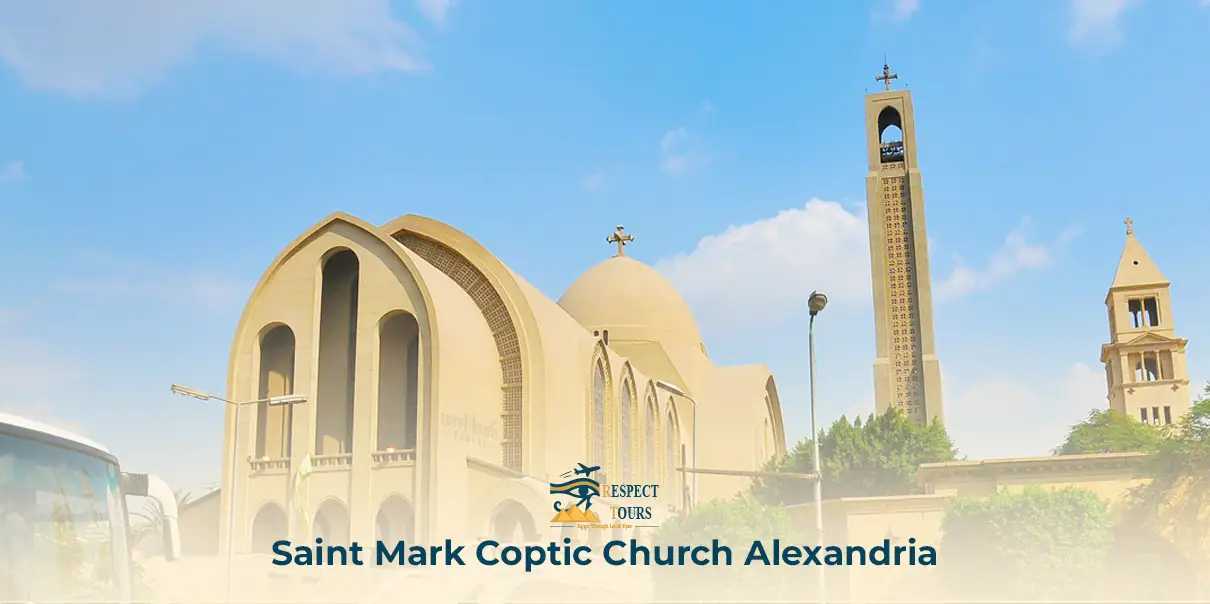
Alexandria, Egypt’s storied Mediterranean port city, is home to countless treasures that reflect its rich and layered past. Among them, the Saint Mark Coptic Church Alexandria stands out as a historical and spiritual landmark that has witnessed nearly two millennia of unwavering faith and devotion.
More than just stone and mortar, this magnificent church embodies the living spirit of Christianity in Egypt and preserves the enduring legacy of Saint Mark Coptic Church Alexandria. Every year, thousands of pilgrims and travelers from across the globe come to experience its sacred atmosphere, admire its heritage, and walk in the footsteps of one of Christianity’s earliest founders.
Serving as a bridge between ancient traditions and modern worship, the Saint Mark Coptic Church Alexandria offers a rare glimpse into the roots of Egyptian Christianity, where history, faith, and culture meet in one remarkable place.
Quick Facts: Saint Mark Coptic Church Alexandria
| Fact | Details |
|---|---|
| Location | El-Mansheya Square, Alexandria, Egypt (Central Alexandria, easy access by taxi or public transport) |
| Opening Hours | Daily: 8:00 AM – 6:00 PM Sunday Services: Early morning & late evening liturgies |
| Ticket / Entrance Fee | Free entry (donations welcomed) |
| Photography Rules | Photography is allowed in the courtyard and certain public areas. No flash inside the church. Filming may require prior permission from church administration. |
| Best Time to Visit | Morning between 8:00 and 10:00 AM for a peaceful atmosphere & the best light for photography. For events, visit during Saint Mark’s Feast in May or Consecration Commemoration in October. |
| Accessibility | Wheelchair-accessible entrance and seating available. |
| Dress Code | Modest clothing required—shoulders and knees covered. Headscarves are recommended for women during services. |
The Beginning of Saint Mark Coptic Orthodox Church
The story of Saint Mark Coptic Orthodox Church begins in the first century AD. This remarkable tale unfolds with the arrival of one of Christianity’s most important figures in Alexandria. The church’s foundation marks a pivotal moment in both Egyptian and Christian history.
The Arrival of Saint Mark in Alexandria
Saint Mark the Apostle came to preach Christianity in Alexandria around 60 AD. He was one of the four evangelists and among the seventy-two disciples chosen by Jesus Christ. Before his arrival in Alexandria, Saint Mark had already established himself as a dedicated servant of Christ. He had traveled extensively with other apostles, including Peter, Paul, and Barnabas.
When Saint Mark arrived in Alexandria, the city was a thriving center of learning and commerce. The famous Library of Alexandria still attracted scholars from across the Mediterranean world. However, the city was also deeply rooted in pagan traditions and the worship of various gods.
Saint Mark’s first encounter in Alexandria became legendary among Christians. According to historical accounts, his sandal broke as he entered the city. He sought help from a local cobbler named Anianus to repair it. During the repair, Anianus accidentally pierced his hand with an awl. Saint Mark healed the wound and used this miracle as an opportunity to share the Gospel message.
Establishing the First Christian Community
The miracle of healing Anianus’s hand became the spark that ignited Alexandria’s first Christian community. Anianus and his family were Saint Mark’s first converts in the city, a humble beginning that would eventually grow into one of Christianity’s most influential centers.
Saint Mark established the first church in the eastern part of Alexandria, in an area called Pokalia, meaning “a place for the cows” or “pasture for cattle.” Today, this site is home to St. Mark’s Cathedral. The location was chosen with care, offering early Christians a haven to gather, pray, and worship.
At the time, Alexandria was a diverse and vibrant city, home to Greeks, Egyptians, Jews, and Romans, each with their religious traditions. Pagan worship was deeply rooted in daily life, with the god Serapis holding special significance among the Greek population.
Despite these challenges, the Christian community steadily grew. Saint Mark’s teachings drew followers from all walks of life. His message of love, forgiveness, and eternal life resonated with those seeking spiritual fulfillment beyond the material world.
Saint Mark Coptic Orthodox Church History
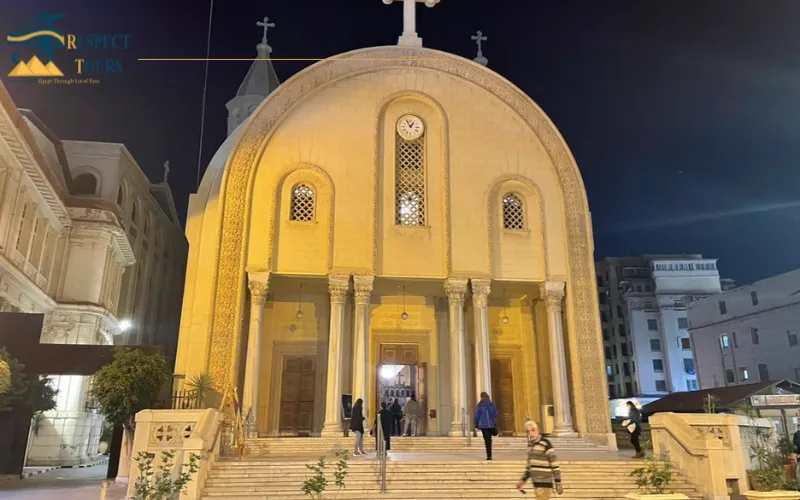
The history of Saint Mark Coptic Orthodox Church stretches back nearly two millennia, a journey marked by growth, persecution, destruction, and rebuilding. Every chapter adds depth to its enduring spiritual significance.
In its early years, the church experienced rapid expansion. Saint Mark continued to preach across Egypt, establishing Christian communities in multiple cities. His bold opposition to paganism earned him the title “The Exterminator of the Idols” among his adversaries.
Persecution intensified during Saint Mark’s ministry. On Easter Day in 68 AD, while Saint Mark was celebrating the Holy Liturgy, the pagans of Alexandria were holding their festival for Serapis, the city’s chief deity. Urged on by the Roman prefect, a mob stormed the church where Saint Mark and the faithful were gathered in prayer.
The attack led to Saint Mark’s martyrdom. He was seized, bound with a rope, and dragged through the streets of Alexandria. His death ended his earthly ministry but marked the beginning of his eternal legacy as the founder of the Coptic Orthodox Church.
Rebuilding Through Centuries of Change
Following Saint Mark’s martyrdom, the church endured centuries of challenges and transformations. The original structure was destroyed and rebuilt multiple times, with each reconstruction reflecting the architectural styles and spiritual needs of its era.
The church survived Roman persecutions, the rise of Islam, and periods of political turmoil. During the Islamic conquest of Egypt in the 7th century, it underwent significant changes, yet remained a steadfast center of Christian worship and community life.
In the medieval period, the church saw both hardship and renewal. Major renovations and expansions were carried out, blending traditional Coptic design elements with contemporary architectural influences of the time.
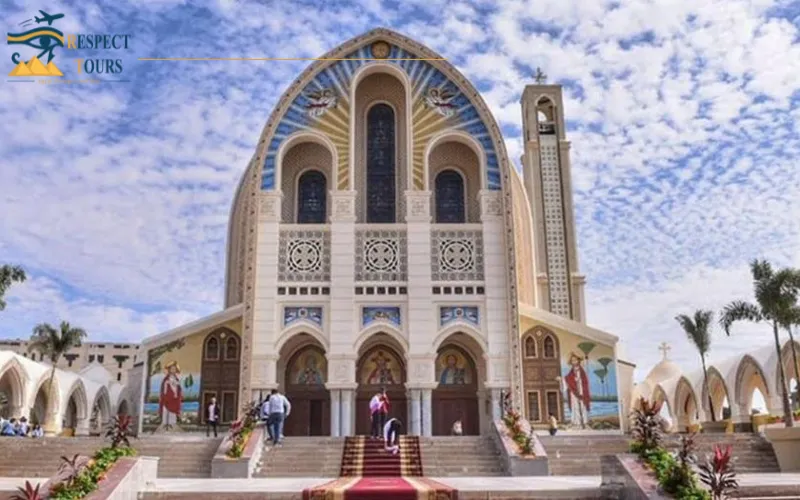
The modern era brought its most dramatic transformation. In the early 1950s, the church was rebuilt and enlarged, reinforced with solid concrete, and later redesigned in the Basilique style. This reconstruction produced the magnificent structure that stands today, welcoming worshippers and visitors from around the world.
Best Time to Visit Saint Mark Coptic Church Alexandria
- For Photography: Early mornings offer soft light and fewer visitors.
- For Religious Experience:
- Feast of Saint Mark (May)—Special liturgies, processions, and community celebrations.
-
- Consecration Commemoration (30th of Paopi/Late October)—Saint Mark’s relics are displayed; a major pilgrimage event.
- Seasonal Note: Alexandria is pleasant in spring (March–May) and autumn (September–November) with mild temperatures.
What Did St. Mark Do in Alexandria?
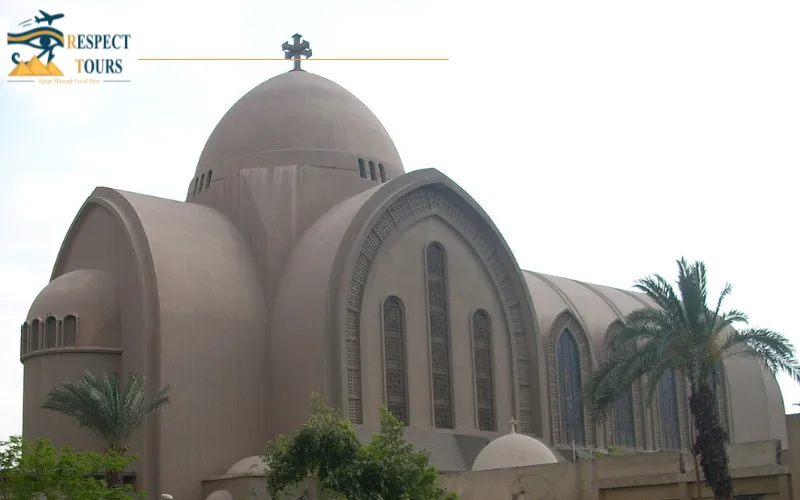
Saint Mark’s ministry in Alexandria transformed the city’s spiritual landscape. His work laid the foundation for one of Christianity’s most enduring traditions. Understanding his specific contributions helps explain the church’s continuing importance.
The Founding of the First Christian Church
Saint Mark’s primary achievement in Alexandria was establishing the first Christian church in Egypt. This accomplishment required careful planning and tremendous courage. The church became a center for worship, teaching, and community life.
The church’s location in Pokalia was strategically chosen. The area provided relative safety from pagan persecution while remaining accessible to potential converts. Saint Mark designed the church to accommodate both worship services and educational activities.
The early church structure was simple but functional. It included space for the Eucharist, baptisms, and community gatherings. Saint Mark personally oversaw every aspect of the church’s development, ensuring it met the community’s spiritual needs.
Role as First Bishop of Alexandria
Saint Mark served as the first Bishop of Alexandria, establishing the episcopal tradition that continues today. His leadership style emphasized pastoral care and theological education. He trained the early church leaders who would continue his work.
As bishop, Saint Mark developed the liturgical practices that became characteristic of the Coptic tradition. These practices combined Jewish and Christian elements with adaptations for Egyptian converts. The result was a unique worship style that continues to define Coptic Christianity.
Saint Mark also established the church’s administrative structure. He appointed deacons, priests, and other leaders to help manage the growing Christian community. This organizational framework proved essential for the church’s survival during periods of persecution.
Egyptian Coptic Churches: A Rich Legacy of Faith
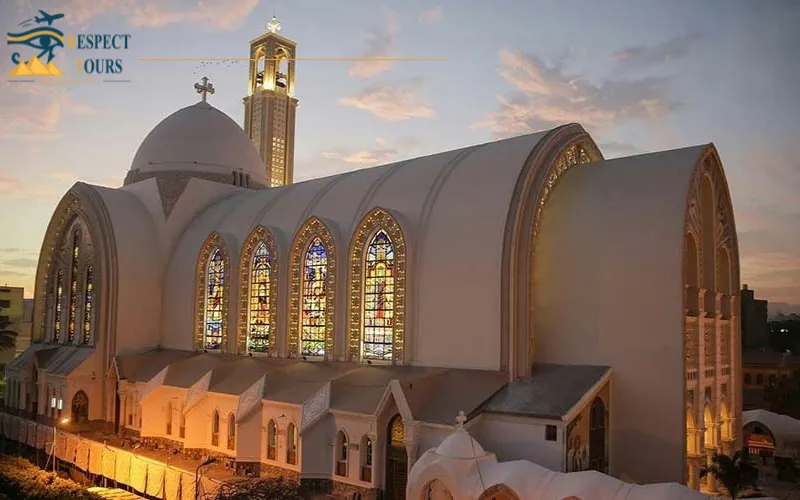
Egypt’s Coptic churches are among the world’s oldest Christian institutions, preserving both sacred traditions and architectural beauty. They are living testaments to a faith that has endured for nearly two millennia.
The Mother Church: Saint Mark Coptic Orthodox Church Alexandria
At the heart of this heritage stands the Saint Mark Coptic Orthodox Church in Alexandria—often called the mother church of the Coptic tradition. Known as the See of St. Mark, it is one of the earliest four Apostolic sees, alongside Jerusalem, Antioch, and Rome, giving it a place among the most important Christian centers in history.
A Distinctive Architectural Legacy
Over the centuries, Egyptian Coptic churches have developed a style all their own.
- Pharaonic Influence: Ancient Egyptian design elements are woven into church structures.
- Christian Symbolism: Biblical motifs and sacred icons enrich the interiors.
- Cultural Fusion: The blending of Egypt’s pre-Christian heritage with Orthodox faith creates a unique and instantly recognizable style.
This architectural and spiritual legacy makes Coptic churches not just places of worship, but also living monuments to Egypt’s enduring Christian identity.
Other Notable Coptic Churches in Alexandria
Alexandria houses several other significant Coptic churches beyond Saint Mark’s. Each tells its own story of faith and perseverance. The Church of Saint Menas, located in the old city, dates back to the 4th century. It honors one of Egypt’s most beloved martyrs.
The Church of Saint Catherine stands as another important spiritual center. This church has served the Coptic community for over a thousand years. Its beautiful icons and architectural details attract both worshippers and art enthusiasts.
The Church of Saint Theodoros offers another glimpse into Alexandria’s rich Christian heritage. This church has undergone multiple restorations while maintaining its historical character. Its peaceful atmosphere provides a perfect setting for prayer and reflection.
Alexandria: A City of Spiritual and Historical Importance
Alexandria’s role in Christian history extends far beyond its churches. The city hosted the famous Catechetical School of Alexandria, one of Christianity’s earliest theological institutions. This school produced many of the church’s most important theologians and leaders.
The city also played a crucial role in the development of Christian doctrine. The Council of Alexandria and various theological debates shaped Christian understanding for centuries. These intellectual contributions complement the city’s spiritual legacy.
Modern Alexandria continues to serve as an important center for Coptic Christianity. The city houses the residence of the Coptic Orthodox Pope, making it the administrative center of the church. This ongoing role ensures that Alexandria remains vital to contemporary Christian life.
Saint Mark Coptic Orthodox Church’s Design
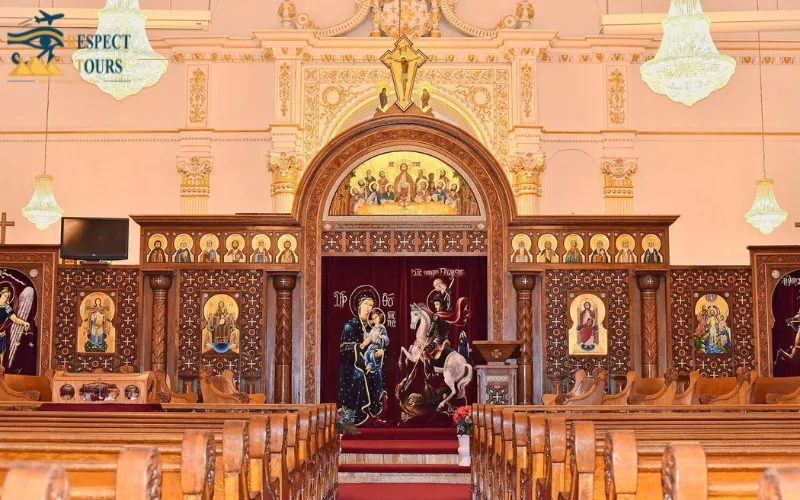
The current Saint Mark Coptic Orthodox Church showcases impressive architectural features that blend tradition with modernity. The building’s design reflects both ancient Christian symbolism and contemporary construction techniques.
Traditional Coptic Architecture
Some authorities trace the origins of Coptic architecture to Ancient Egyptian architecture, seeing a similarity between the plan of ancient Egyptian temples, progressing from an outer courtyard to a hidden inner sanctuary, and that of Coptic churches, with an outer narthex or porch. This connection to ancient Egyptian building traditions gives Coptic churches their distinctive character.
The church’s layout follows traditional Coptic principles. The building progresses from public spaces to increasingly sacred areas. This progression guides worshippers on a spiritual journey from the everyday world to the divine presence.
The features that characterize the Saint Mark Coptic Church Alexandria are consistent with this classical style; it is a fusion of local Egyptian elements and Byzantine architecture. This fusion creates a unique aesthetic that honors both Egyptian heritage and Christian tradition.
The church’s interior features traditional Coptic artwork and symbolism. Icons depicting saints, biblical scenes, and theological concepts adorn the walls. These artistic elements serve both decorative and educational purposes, helping worshippers understand their faith’s rich history.
Modern Renovations and Additions
The church’s modern renovations have enhanced its functionality while preserving its historical character. There are 6 marble pillars that were moved to support the expanded structure. These pillars represent both architectural necessity and symbolic meaning.
The basilica-style renovation created more space for worship and community activities. The expanded nave can accommodate larger congregations during major religious celebrations. The improved acoustics ensure that every word of the liturgy reaches all worshippers.
Modern safety features have been discretely integrated into the historical design. Updated electrical systems, fire safety equipment, and accessibility features ensure the church meets contemporary standards. These improvements allow the church to continue serving its community effectively.
The renovation also included restoration of historical elements. Ancient mosaics, frescoes, and architectural details were carefully preserved or recreated. This attention to historical accuracy maintains the church’s authentic atmosphere.
Things to See in Alexandria Egypt: What Not to Miss
What to See at St. Mark’s Coptic Cathedral
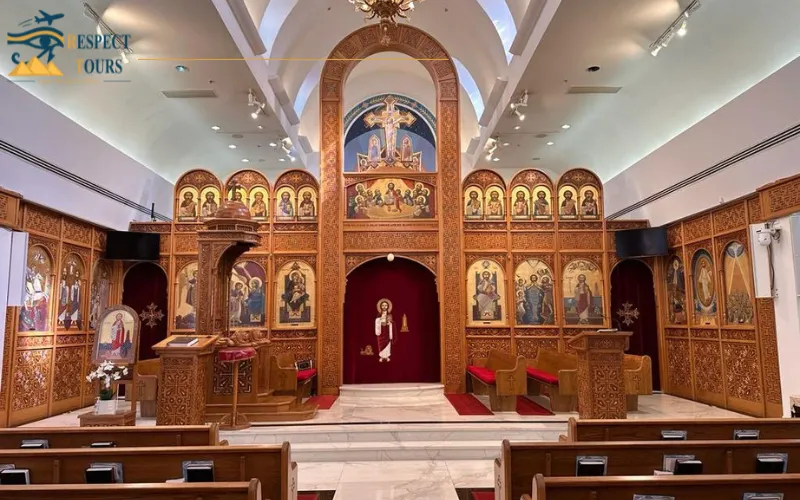
Visiting Saint Mark’s Coptic Cathedral offers numerous opportunities to experience both art and spirituality. Each element of the church tells part of the larger story of Egyptian Christianity.
1. The Relics of Saint Mark
The cathedral’s most sacred treasure is the shrine containing Saint Mark’s relics. This beautifully decorated shrine serves as the focal point for pilgrimages and prayer. The relics are displayed in a specially designed reliquary that allows visitors to view them while maintaining appropriate reverence.
The shrine’s design incorporates traditional Coptic artistic elements. Golden decorations, precious stones, and intricate metalwork create a fitting tribute to the evangelist’s memory. The surrounding area includes space for private prayer and reflection.
2. The Iconostasis
The cathedral’s iconostasis represents one of the finest examples of Coptic religious art. This ornate screen separates the nave from the sanctuary, following ancient Christian tradition. The iconostasis features dozens of icons depicting Christ, the Virgin Mary, saints, and biblical scenes.
Each icon is hand-painted according to traditional techniques passed down through generations. The artists use natural pigments and gold leaf to create images that seem to glow with inner light. These icons serve as windows into the divine realm, helping worshippers connect with the spiritual world.
The iconostasis includes several doors that allow priests to move between the nave and sanctuary during liturgical services. The central doors, known as the Beautiful Gates, are opened at specific moments during the Divine Liturgy. This opening symbolizes the revelation of God’s glory to the faithful.
3. The Altar and Sacred Space
The cathedral’s altar area represents the holiest part of the church. This space is reserved for the celebration of the Eucharist and other sacred rituals. The altar itself is carved from a single piece of marble and decorated with traditional Coptic symbols.
Above the altar, a magnificent dome features painted scenes from the life of Christ. These frescoes were created by skilled artisans who spent months perfecting every detail. The dome’s height and decoration draw the eye upward, encouraging contemplation of divine mysteries.
The sanctuary also includes the episcopal throne, where the Pope of Alexandria sits during special ceremonies. This throne is carved from precious wood and decorated with ivory inlays. It represents the continuing apostolic authority that traces back to Saint Mark himself.
4. The Baptismal Font
The cathedral’s baptismal font continues the tradition of Christian initiation that began with Saint Mark’s first converts. This marble font is large enough to accommodate full immersion baptism, following ancient Christian practice.
The font’s design includes symbolic elements that relate to the baptismal ceremony. Water flows continuously through the font, representing the living water of eternal life. The surrounding area includes space for the godparents and family members to witness the ceremony.
Special baptismal services are held throughout the year, with the most significant occurring during the Easter season. These ceremonies connect new Christians with the faith that Saint Mark first brought to Alexandria nearly two thousand years ago.
5. The Surrounding Courtyard
The cathedral’s courtyard provides a peaceful space for reflection and community gathering. This area includes gardens, seating areas, and memorial plaques honoring significant figures in Coptic history.
The courtyard’s design reflects traditional Islamic geometric patterns, showing the cultural exchange that has occurred in Alexandria throughout history. Fountains and shade trees create a comfortable environment for visitors to rest and contemplate their experience.
The courtyard also serves practical purposes for the church community. It provides space for outdoor ceremonies, social gatherings, and educational activities. During major religious festivals, the courtyard becomes filled with worshippers who cannot fit inside the main church building.
Conclusion
Experience the Coptic Heritage of Alexandria with Respect Tours
Step inside the spiritual heart of Egypt’s second city on our Saint Mark Coptic Orthodox Church Heritage Tour. Visit Saint Mark Coptic Orthodox Church with an expert local guide, discover other historic churches, and explore Alexandria’s iconic landmarks.
We handle all the details, transportation, guided commentary, and insider access, so you can focus on the experience.
FAQ: Frequently Asked Questions
Do I need a ticket to enter?
No. Entrance is free, though donations are appreciated.
Can I take photos inside?
When is the best time to visit for a religious celebration?
Is there a library inside the cathedral?
Yes, the cathedral has a library with books on Coptic theology, history, and heritage, accessible upon request.