

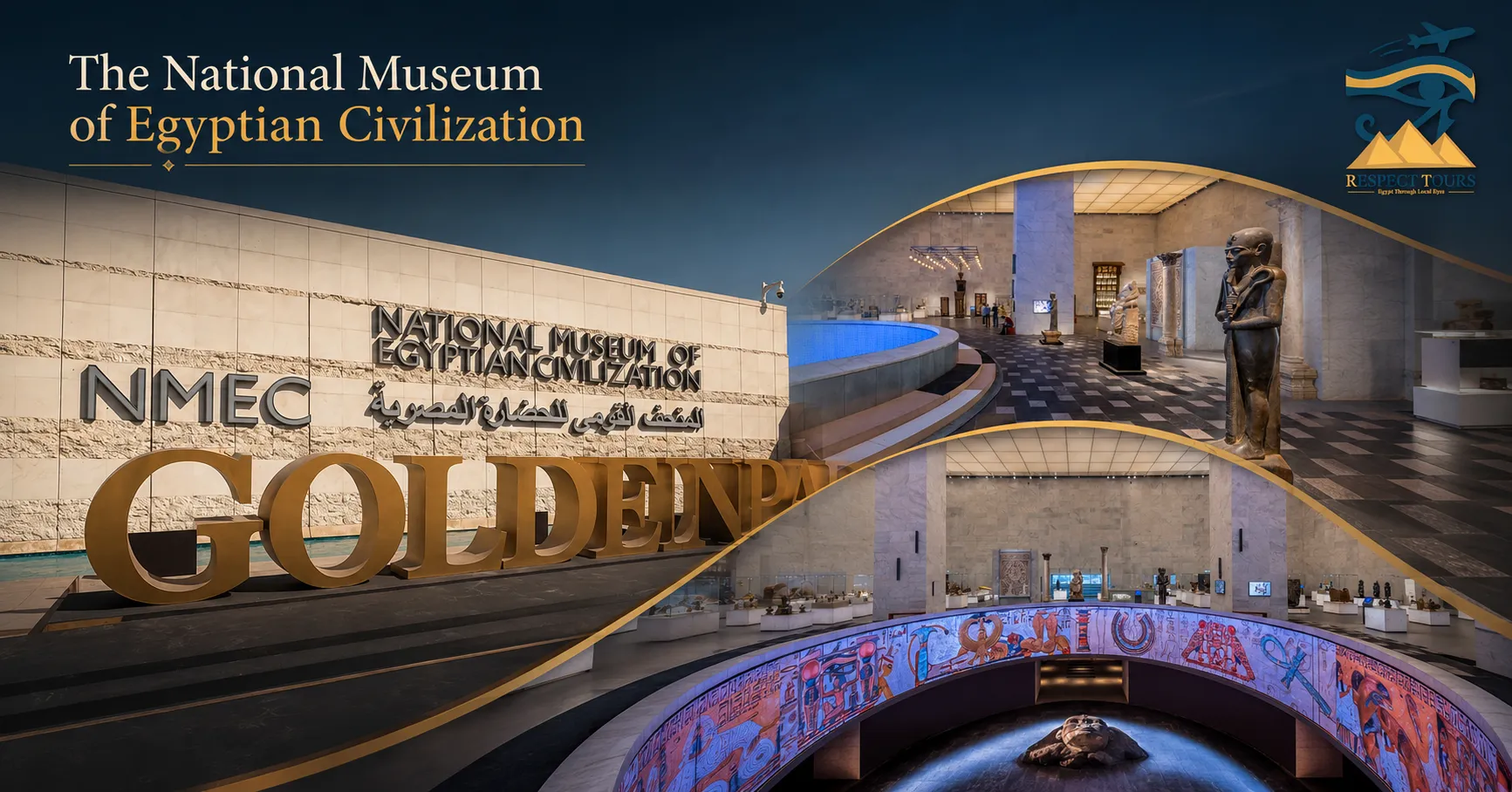
You’re planning your trip to Cairo, trying to make sense of the city’s incredible museums. You’ve heard about the new Grand Egyptian Museum, the classic museum in Tahrir Square, and now this one—the National Museum of Egyptian Civilization. Which one has the famous royal mummies? Where do you go to understand the whole story of Egypt, not just the pharaohs? How do you fit it all into a packed itinerary? It can feel overwhelming, but choosing the right museum for your interests is key to a rewarding visit.
The National Museum of Egyptian Civilization (NMEC) is a modern museum in Old Cairo that tells the comprehensive story of Egypt from prehistoric times to the present day. It is most famous for its spectacular Royal Mummies Hall, which houses the remains of legendary pharaohs like Ramesses II and Queen Hatshepsut. Unlike other museums focused primarily on ancient Egypt, NMEC offers a unique chronological journey through Pharaonic, Greco-Roman, Coptic, Islamic, and modern Egyptian heritage, making it an essential visit for a complete understanding of the nation’s history.
NMEC at a Glance
| Feature | Details |
|---|---|
| Location | El-Fustat Road, Ain El-Sira, Old Cairo |
| Best Known For | The Royal Mummies Hall |
| Recommended Visit Time | 2–3 hours |
| Opening Hours | Saturday–Thursday: 9:00 AM–5:00 PM; Friday: 9:00 AM–5:00 PM (with a break for prayer, subject to change) |
| Last Admission | Typically 4:00 PM |
| Best Time to Visit | At opening time (9:00 AM) on a weekday |
| Ticket Price | Prices vary. Please contact Respect Tours for the latest admission fees. |
| Booking Assistance | Available through Respect Tours customer service. |
Islamic Cairo: NMEC Museum, Citadel
What Is the National Museum of Egyptian Civilization (NMEC)?
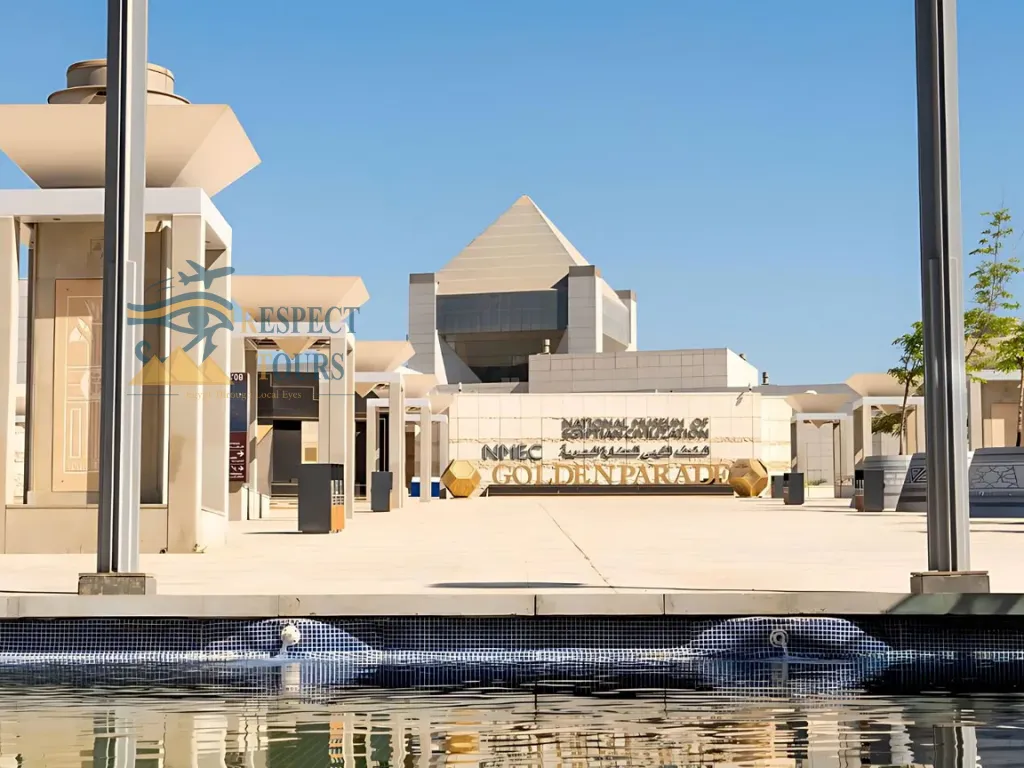
The National Museum of Egyptian Civilization is a large, modern cultural institution dedicated to showcasing the full sweep of Egypt’s rich history and heritage.
Opened in its entirety in 2021, its purpose is to provide a cohesive narrative of Egyptian civilization from its earliest beginnings to the modern era. The museum is located in Fustat, the first capital of Egypt under Islamic rule, and overlooks the tranquil Ain El-Sira Lake. Its collection includes thousands of artifacts that represent the tangible and intangible heritage of the country.
Why Is NMEC Unique?
NMEC’s uniqueness lies in its chronological and thematic approach. While other museums may focus intensely on one period, NMEC connects the dots, showing the evolution of beliefs, technology, and culture across several major eras:
- Prehistoric and Pharaonic Periods
- Greco-Roman Era
- Coptic Egypt
- Islamic Egypt
- Modern and Contemporary Egypt
This multi-period display, culminating in the awe-inspiring Royal Mummies Hall, sets it apart as a museum of civilization rather than just a museum of antiquities.
Is the National Museum of Egyptian Civilization Worth Visiting?
Yes, the National Museum of Egyptian Civilization is absolutely worth visiting, especially for anyone fascinated by the legendary pharaohs themselves or seeking a clear, chronological overview of Egyptian history.
It is particularly worthwhile if you:
- Want to see the Royal Mummies, as this is their exclusive home.
- Have limited time and prefer a more manageable museum experience (a typical visit is 2-3 hours).
- Are interested in the full story of Egypt, including its Coptic and Islamic heritage.
- Prefer modern, spacious exhibition halls that are often less crowded than other major sites.
It’s important to know that NMEC is not the primary location for the treasures of Tutankhamun; those are housed at the Grand Egyptian Museum (GEM) in Giza.
National Museum of Egyptian Civilization Location
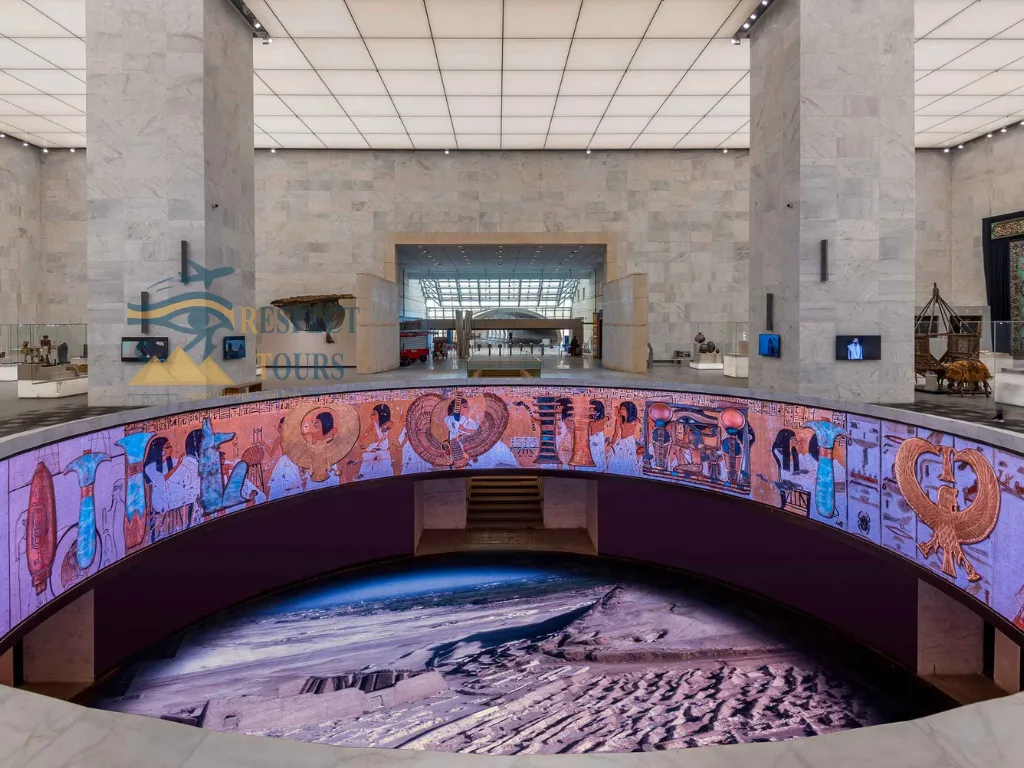
Where Is NMEC Located?
The National Museum of Egyptian Civilization is located on El-Fustat Road in the historic district of Old Cairo, near a newly developed recreational area around Ain El-Sira Lake.
Its location in Fustat is historically significant, placing it at the heart of what was once the region’s main administrative and cultural centre, close to other major sites like Coptic Cairo and the Mosque of Amr ibn al-As.
How to Get to NMEC
The most convenient and stress-free way for travellers to reach NMEC is with a private, air-conditioned vehicle as part of a guided tour. This eliminates any hassle with navigation or parking.
Attractions Near NMEC
NMEC’s location in Old Cairo makes it easy to combine your visit with other significant historical sites:
- Coptic Cairo: Home to the Hanging Church, the Coptic Museum, and the Ben Ezra Synagogue.
- Mosque of Amr ibn al-As: The first mosque built in Egypt and Africa.
- Citadel of Salah El-Din: A medieval Islamic-era fortification with stunning views over the city.
- Khan el-Khalili: A bustling bazaar in the heart of Islamic Cairo (a short drive away).
NMEC Opening Hours and Ticket Prices
Visitor information, especially hours and prices, can change. It’s always best to verify details close to your travel date.
National Museum of Egyptian Civilization Opening Hours
The museum generally operates seven days a week, though hours can vary on public holidays or during Ramadan.
| Day | Museum Hours | Last Ticket |
|---|---|---|
| Saturday–Thursday | 9:00 AM–5:00 PM | 4:00 PM |
| Friday | 9:00 AM–5:00 PM* | 4:00 PM |
\On Fridays, the museum may briefly pause admissions during the main prayer time around midday. This is subject to change.*
NMEC Ticket Prices
Ticket prices are set by the Ministry of Tourism and Antiquities and are subject to change. For the most current rates and to arrange your tickets as part of a seamless tour, please get in touch with our team.
Contact Respect Tours for updated NMEC ticket prices and booking.
A valid student ID with a clear photo and date is typically required to be eligible for the student discount. Children under six are usually granted free entry.
How to Buy NMEC Tickets
You can purchase tickets in two main ways:
- At the Ticket Window: You can buy them directly at the museum’s entrance upon arrival.
- With a Guided Tour: The easiest option. When you book a private Cairo tour with Respect Tours, your guide handles all the ticketing for you, allowing you to bypass queues and enjoy a smooth entry.
Cairo Museums: Egyptian, Coptic, Islamic Art & Abdeen
The Royal Mummies Hall at NMEC
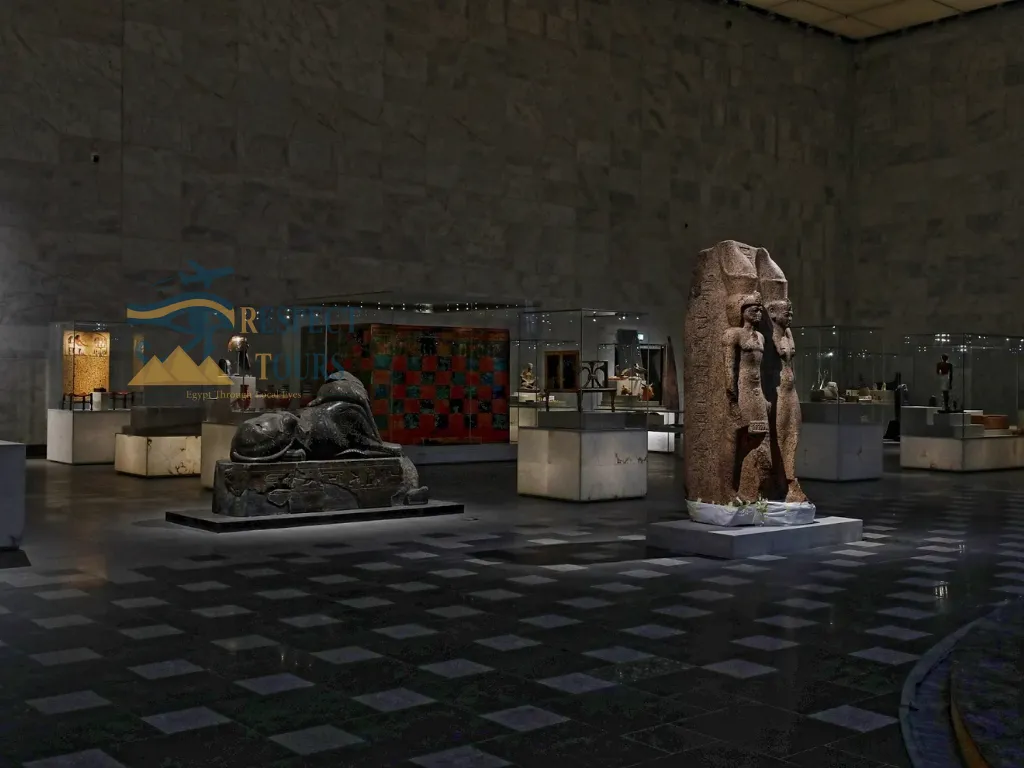
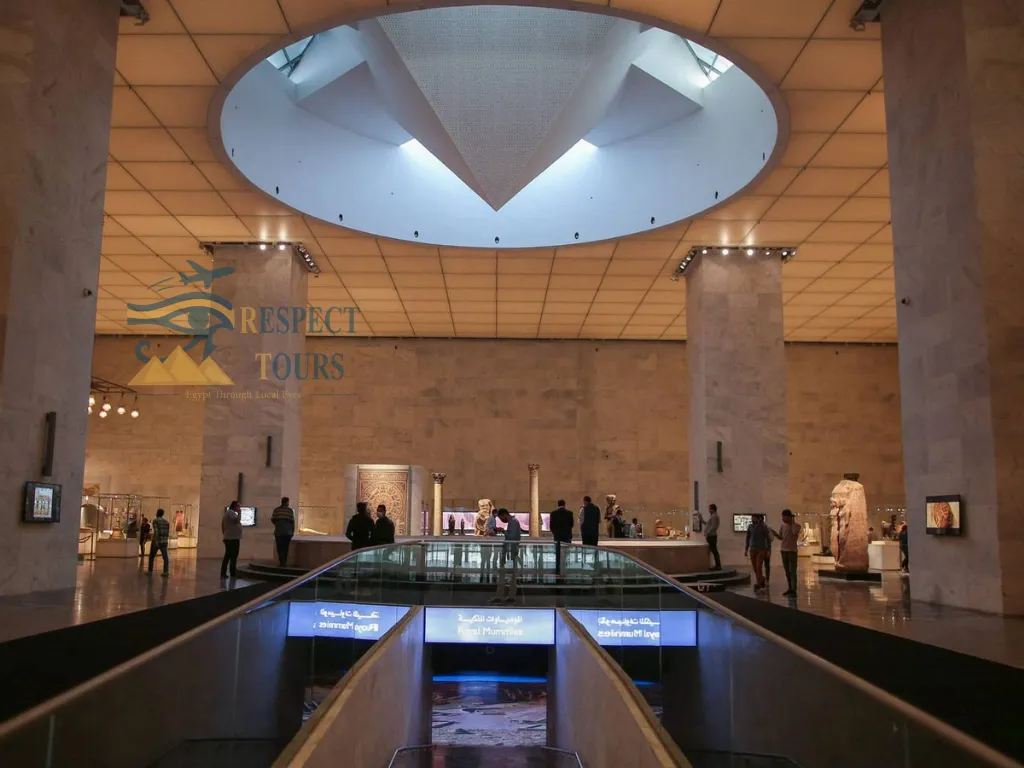
The undisputed highlight of the museum is the Royal Mummies Hall, a specially designed subterranean gallery that houses the mummified remains of Egypt’s greatest kings and queens.
How Many Royal Mummies Are at NMEC?
The hall displays 22 royal mummies: 18 kings and 4 queens from the New Kingdom period (circa 1550–1070 BCE). These are the very same pharaohs who were ceremoniously transported from the Egyptian Museum in Tahrir during the globally televised Pharaohs’ Golden Parade in April 2021.
Famous Kings and Queens in the Royal Mummies Hall
Walking through the hall feels like stepping into the Valley of the Kings. You’ll come face-to-face with some of the most powerful figures from history:
| Royal Mummy | Why They Are Famous |
|---|---|
| Ramesses II (The Great) | One of Egypt’s longest-reigning and most powerful pharaohs, known for his military campaigns and extensive building projects. |
| Seti I | Father of Ramesses II and a great pharaoh in his own right, whose tomb in the Valley of the Kings is one of the most beautiful. |
| Queen Hatshepsut | One of history’s most powerful female rulers, who reigned as a pharaoh and oversaw a period of peace and prosperity. |
| Thutmose III | A formidable military leader often called the “Napoleon of Ancient Egypt” for his vast conquests. |
| Queen Tiye | The influential wife of Amenhotep III and grandmother of Tutankhamun. |
| Seqenenre Taa | A king whose mummy bears the brutal wounds he sustained in battle against the Hyksos invaders. |
What Is the Royal Mummies Hall Like?
The experience is designed to be respectful and atmospheric. You descend a long ramp into a dimly lit, dark-walled environment that mimics the feeling of entering a royal tomb. Each mummy is displayed in a state-of-the-art, nitrogen-filled case with precise temperature and humidity controls. Beside each one, a simple display details their identity and reign, often accompanied by a CT scan showing their physical condition and age at death. The atmosphere is quiet, sombre, and deeply moving.
Can You Take Photos in the Royal Mummies Hall?
No, photography and videography of any kind are strictly prohibited inside the Royal Mummies Hall to maintain a respectful atmosphere and protect the exhibits.
Is Tutankhamun’s Mummy at NMEC?
No. Tutankhamun’s mummy remains in his tomb (KV62) in the Valley of the Kings in Luxor. His world-famous treasures, including his golden masks and coffins, are the centrepiece of the Grand Egyptian Museum (GEM) in Giza.
Must-See Artifacts at the National Museum of Egyptian Civilization
Beyond the mummies, the Main Exhibition Hall offers a treasure trove of artifacts that trace Egypt’s journey through time.
- Nazlet Khater Skeleton: One of the oldest pieces of evidence of human activity in Egypt, this complete skeleton dates back around 35,000 years.
- The Ancient Prosthetic Toe: A remarkable wooden and leather prosthetic big toe found on a mummy, demonstrating the ingenuity of ancient Egyptian medicine.
- The Coffin of Sennedjem: An exquisitely decorated coffin belonging to a craftsman who worked on the royal tombs in the Valley of the Kings.
- The Water Clock of Amenhotep III: An intricate alabaster device used to measure time, showcasing the advanced scientific knowledge of the New Kingdom.
- The Chariot of Thutmose IV: A surviving wooden chariot that offers a glimpse into the technology of royal transport and warfare.
- Greco-Roman, Coptic, and Islamic Highlights: Don’t miss the statue of the Nile god Nilos, ornate Coptic textiles, and the intricately carved wooden Minbar (pulpit) of Abu Bakr ibn Muzhir, which shows the continuity of artistry across different faiths.
NMEC vs. The Grand Egyptian Museum vs. The Egyptian Museum
With three major museums in Cairo, it’s helpful to know which one is right for you.
| Museum | Best For | Location | Main Highlight |
|---|---|---|---|
| NMEC | The full story of Egyptian civilization & the Royal Mummies. | Fustat, Old Cairo | Royal Mummies Hall |
| Grand Egyptian Museum (GEM) | Ancient Egypt in-depth & Tutankhamun’s complete collection. | Giza | The entire Tutankhamun collection |
| Egyptian Museum (Tahrir) | Classic museum atmosphere & unique secondary collections. | Tahrir Square | Treasures of Tanis, Yuya & Thuya |
Full-Day Grand Egyptian Museum Tour with Egyptologist Guide
Which Cairo Museum Should You Choose?
- Choose NMEC if: Your top priority is seeing the legendary royal mummies, and you’re interested in the continuous story of how Pharaonic culture evolved into the Coptic, Islamic, and modern Egypt of today. It’s a fantastic, well-rounded experience.
- Choose the Grand Egyptian Museum (GEM) if: Your main goal is to see the complete, dazzling collection of Tutankhamun’s treasures and immerse yourself in the world of the pharaohs on an epic scale.
- Choose the Egyptian Museum in Tahrir if: You are a return visitor or a museum enthusiast who appreciates the historic, classic charm of early 20th-century museum displays.
For a first-time visitor, a combination of GEM (for Tutankhamun) and NMEC (for the mummies and civilizational story) offers the most complete and rewarding museum experience in Cairo.
Practical Tips for Your Visit
- Wear Comfortable Shoes: The museum is large, and you will be doing a significant amount of walking.
- Bring a Valid Student ID: If applicable, keep your dated student ID handy for a potential discount.
- Photography Rules: Photography without flash is generally allowed in the Main Hall, but it is strictly forbidden in the Royal Mummies Hall. Tripods are not permitted.
- Bags and Storage: Large bags, backpacks, and luggage may need to be left at the cloakroom near the entrance.
- Food and Drink: No food or beverages are allowed inside the exhibition halls. There is a café and restaurant area on site.
- Plan Ahead: Combine your visit with nearby sites in Old Cairo to make the most of your day. A guided tour of NMEC and Islamic Cairo is an efficient and enriching way to do this.
Is The National Museum of Egyptian Civilization Worth It?
Yes, without a doubt. The chance to stand before the actual faces of Ramesses the Great, Hatshepsut, and Seti I is a profound experience that connects you directly to Egypt’s epic past. While the GEM astounds with treasure, NMEC tells a more complete human story. It provides context, fills in the gaps between the ancient and the modern, and delivers one of the most powerful museum experiences in the world in its Royal Mummies Hall. For its unique focus and manageable size, it’s a vital part of any Cairo itinerary.
Book a Private Tour of the National Museum of Egyptian Civilization
The best way to appreciate the vast history within NMEC is with an expert who can bring its stories to life. A private guided tour with Respect Tours ensures you don’t just see the artifacts—you understand their significance.
Our private NMEC tours include:
- A dedicated, licensed Egyptologist guide to explain the exhibits and answer your questions.
- Private, air-conditioned transfers directly from your hotel and back.
- Complete flexibility to explore at your own pace.
- Hassle-free ticket handling.
- The ability to easily combine your museum visit with Coptic Cairo, the Citadel, or Khan el-Khalili for a full-day experience.
This guide provides a solid foundation for your visit to the National Museum of Egyptian Civilization. It is a place that offers not just artifacts, but a narrative—the living story of Egypt from its dawn to the present day. Seeing the pharaohs in their final resting place and tracing the journey of their people through millennia is a perspective you can’t get anywhere else. To explore the full sweep of Egyptian history with local experts, browse our range of professionally guided Cairo day tours. We look forward to showing you our home, Egypt, through local eyes.
Frequently Asked Questions About NMEC
Where is the National Museum of Egyptian Civilization located?
The National Museum of Egyptian Civilization (NMEC) is located on El-Fustat Road in Fustat, Old Cairo, overlooking Ain El-Sira Lake. Its location is close to several important attractions, including Coptic Cairo, the Hanging Church, and the Mosque of Amr Ibn Al-As.
What are the NMEC opening hours in 2026 / 2027?
The National Museum of Egyptian Civilization is generally open daily from 9:00 AM to 5:00 PM, with the last ticket usually sold at 4:00 PM. Opening hours may change during Ramadan, public holidays, or special events, so visitors should confirm the latest schedule before their visit.
How much is a ticket to the National Museum of Egyptian Civilization?
NMEC ticket prices can change, and different rates may apply to foreign adults, students, Egyptian visitors, and children. Contact the Respect Tours customer service team for the latest admission fees and assistance with planning or booking your visit.
How long should I spend at NMEC?
Most visitors need approximately two to three hours to explore the National Museum of Egyptian Civilization. A quick visit may take around 90 minutes, while a detailed guided tour covering the Main Gallery, Royal Mummies Hall, and Textile Gallery can take three to four hours.
Is the National Museum of Egyptian Civilization worth visiting?
Yes. NMEC is especially worth visiting if you want to see Egypt’s royal mummies and understand the development of Egyptian civilization from prehistoric times to the modern era. Its chronological layout and modern displays make it one of Cairo’s most accessible and informative museums.
How many royal mummies are displayed at NMEC?
Twenty-two royal mummies—18 kings and four queens—were transferred to NMEC during the Pharaohs’ Golden Parade in 2021. The Royal Mummies Hall commonly displays 20 of these mummies, although the number available to visitors may change temporarily for conservation or examination.
Is the mummy of Ramesses II at NMEC?
Yes. The mummy of Ramesses II, also known as Ramesses the Great, is one of the main highlights of the Royal Mummies Hall at NMEC. It is presented in a specially controlled display alongside information about the king’s life and modern examinations of his remains.
Is Tutankhamun’s mummy at the National Museum of Egyptian Civilization?
No. Tutankhamun’s mummy remains inside his original tomb, KV62, in the Valley of the Kings in Luxor. His famous funerary treasures, including the golden mask and the wider collection discovered in his tomb, are displayed at the Grand Egyptian Museum in Giza.