


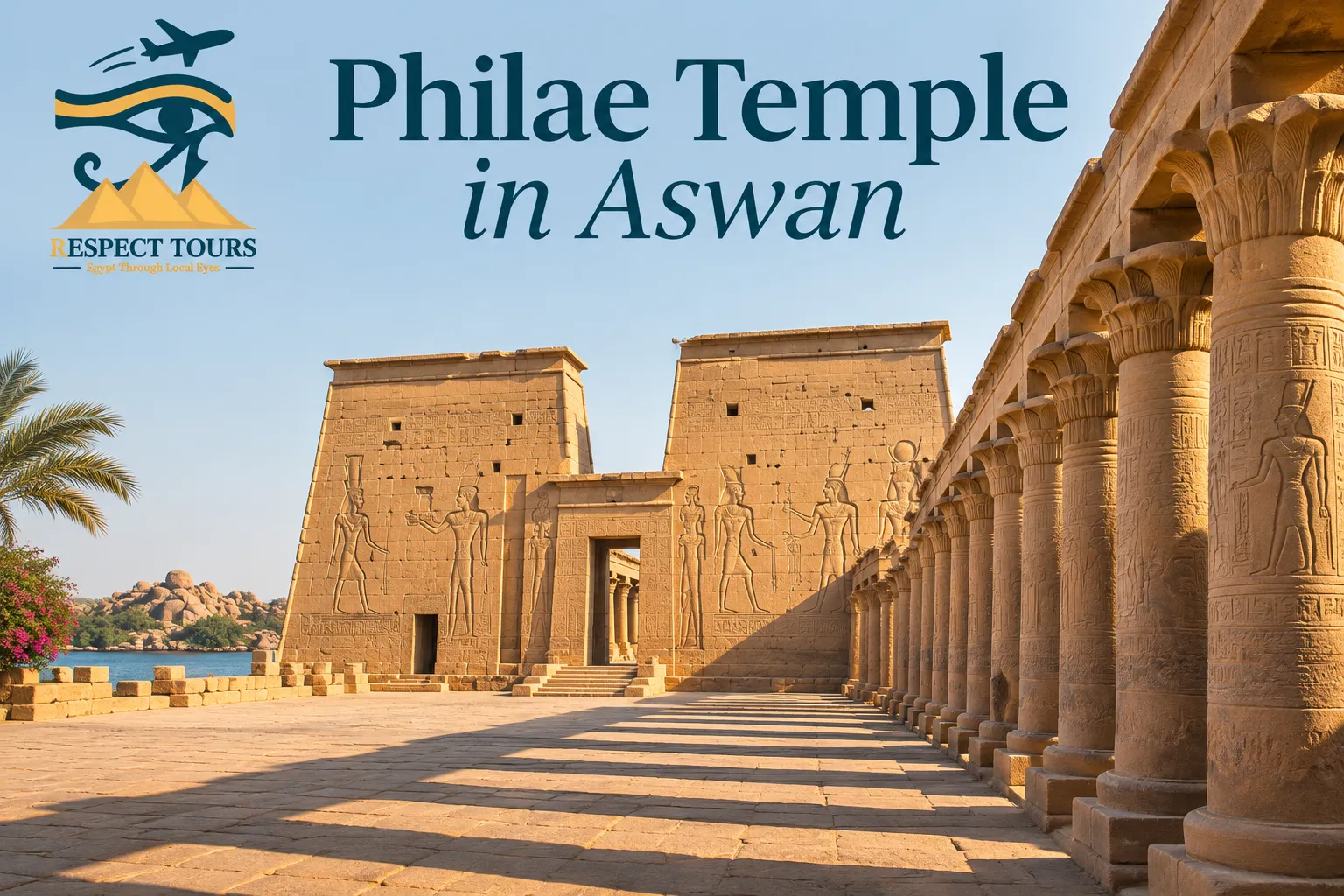
Philae Temple is Isis’s island sanctuary in Aswan and the only major Aswan temple you can reach by boat. It carries the last known hieroglyphic inscription, dated AD 394, and it was rebuilt stone by stone on Agilkia Island to survive the Aswan dams. This guide covers what to see, the story behind it, and how to plan a visit in about 2 hours.
Respect Tours has organized trips across Egypt since 1978, and we can add Philae Temple to your private Aswan tour or Nile cruise. With a local Egyptologist beside you, we arrange the ticket, boat, and return trip, and every relief on the island has a story.
What Is Philae Temple? A Quick Answer
Philae Temple is a complex of Egyptian, Ptolemaic, and Roman shrines to the goddess Isis on Agilkia Island just south of Aswan.
Isis was the goddess of magic, healing, and motherhood. For centuries, pilgrims from Egypt and Nubia sailed here to ask for her protection. In the 1970s, UNESCO and Egypt moved about 40,000 numbered blocks to higher ground when dam water flooded the original island. You reach the temple by a short motorboat ride, and a visit takes about 1.5 to 2 hours.
Philae Temple at a Glance
| Fact | Detail |
| Location | Agilkia Island, near the old Aswan Dam, south of Aswan |
| Main goddess | Isis |
| Main periods | Late Period, Ptolemaic and Roman |
| Moved | 1970s, reopened on Agilkia in 1980 |
| Access | Short motorboat ride from the Philae pier |
| Typical visit | About 1.5 to 2 hours |
| Opening hours | About 7:00 AM to 4:00 PM |
Why Should a First-Time Visitor See Philae Temple?
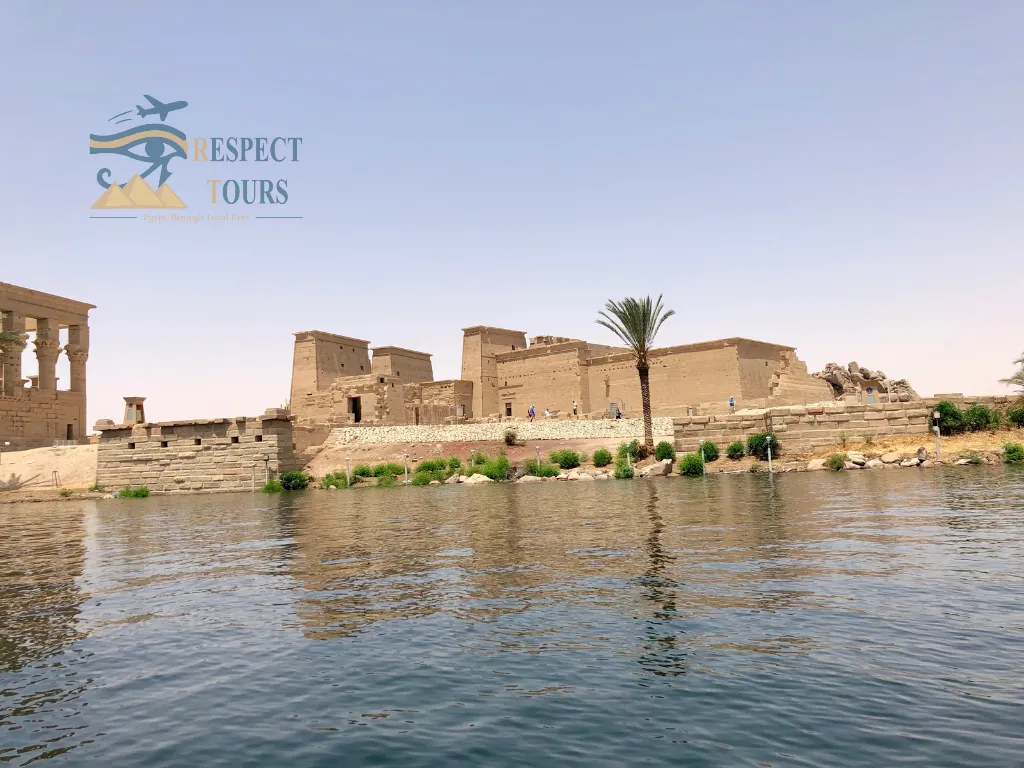
Philae is worth your morning for 3 reasons: the boat approach, the Isis story, and the rescue, which no other Aswan sight combines.
| Reason | What you will notice |
| The approach | You cross open water and see the temple rise from the island. Most Egyptian temples you walk into from a car park. Philae, you arrive like a pilgrim. |
| The story | This was the main sanctuary of Isis, a goddess worshipped across Egypt and later the Roman world. The reliefs make sense once you know her myth. |
| The rescue | The island you stand on is not the original. The temple was dismantled and rebuilt, and you can see how engineers matched the new island to the old one. |
Philae also suits a short stay. It is smaller than Karnak, so you can see it properly in half a day and still fit in the High Dam the same morning.
Who Was the Goddess Isis, and Why Does She Matter Here?
Isis was the wife of Osiris and mother of Horus. She became one of the most widely worshipped goddesses in Egypt and, later, in the Roman world.
According to the myth, Seth killed his brother Osiris. Isis gathered his body, brought him briefly back to life, and conceived Horus. Horus later defeated Seth and became king. You can read more in our guide to Osiris, god of the Egyptian underworld. Horus has his own great temple at Edfu, covered in our Temple of Horus at Edfu guide.
Philae was closely linked to this story. Tradition places a tomb of Osiris on the nearby island of Biga, so Isis, who mourned and protected him, was honored on the island beside it. Pilgrims came for healing and protection, and Nubian offerings helped support the temple for centuries.
What Is the History of Philae Temple?
Philae was sacred to Isis for centuries. The standing buildings date from the 4th century BC to the Roman period, and worship continued into late antiquity.
| Date | What happened? |
| 690 to 664 BC | The earliest religious building is linked to Taharqa. It does not survive intact. |
| About 379 to 360 BC | Nectanebo I builds the oldest standing structure, the Kiosk of Nectanebo. |
| 285 to 246 BC | Ptolemy II Philadelphus begins the main Temple of Isis. Later Ptolemies add the Temple of Hathor. |
| After 30 BC | Egypt becomes a Roman province. Augustus, Hadrian, and Trajan add gates, kiosks, and inscriptions. |
| AD 394 | The last known hieroglyphic inscription is carved here by a priest named Esmet-Akhom. |
| AD 452 | The last known Demotic inscription is dated here. |
| 6th century | The temple is closed, traditionally under Emperor Justinian, and parts become churches. |
| 1902 and 1960s | The Aswan Low Dam, then the High Dam, leaves the island flooded for much of the year. |
| 1970s to 1980 | The complex is moved to Agilkia and reopens in 1980. UNESCO lists the Nubian monuments in 1979. |
Philae is therefore a meeting point of 3 cultures: Egyptian priests, Greek-speaking Ptolemies, and Roman emperors all built here, and early Christians reused it as a church.
How Was Philae Temple Moved and Saved?
Philae was moved because the dam’s water flooded it. The relocation took place in the 1970s under a UNESCO campaign, and the temple reopened on Agilkia in 1980.
After the Aswan Low Dam was finished in 1902, the island sat partly underwater for much of the year. The High Dam, built in the 1960s, created Lake Nasser and made the original site unsafe. See our Aswan High Dam guide for the full story.
Engineers built a cofferdam to drain the site. They took apart about 40,000 numbered blocks and rebuilt them on Agilkia, about 500 meters away. Philae and Abu Simbel were the best-known temples saved in this UNESCO campaign for the monuments of Nubia.
What Should You See at Philae Temple? Stop by Stop?
Walk Philae in 8 stops, from the boat landing to the water’s edge. The order below is common, but your guide may adjust it to the landing point and the crowds.
- The first view from the boat. Look back at the island as you cross. This is the best wide shot of the complex.
- The First Pylon. This huge gateway shows the king smiting enemies in front of the gods. Look for faces scratched out by later hands.
- The Temple of Isis. Pass the second pylon into the inner halls. Reliefs show offerings to Isis, and the sanctuary at the back once held her image. This is the heart of the site.
- The Birth House (mammisi). This small building celebrates the birth of the child god Horus. Look for Isis nursing him in the marshes.
- The Christian traces. Crosses are cut over older figures, and some inscriptions were deliberately damaged. They show how the temple was used as a church.
- The Temple of Hathor. Hathor was the goddess of love and music. Look for the musician reliefs and the distinctive column capitals.
- Hadrian’s Gate. Reliefs show the Roman emperor Hadrian making offerings to Isis. The last hieroglyphic inscription, dated AD 394, is reported here, so ask your guide to point it out.
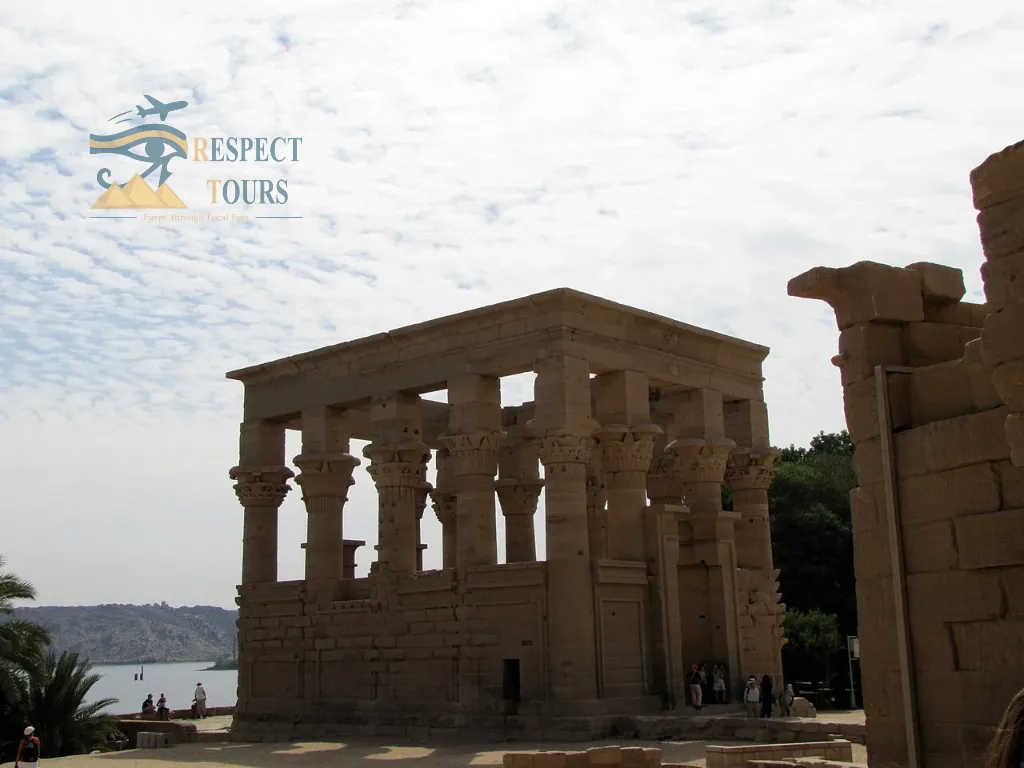
- Trajan’s Kiosk. This columned pavilion stands at the water’s edge and is the most photographed building on the island. It dates to the Roman period.
How Do You Read the Reliefs at Philae?
The walls tell the story of Isis in pictures. Look for these 4 things as you walk:
- The king before the gods: the king offers to Isis, Osiris, and Horus, which shows the temple’s purpose.
- Isis with outstretched wings: a protective pose that appears across Egyptian art.
- Later graffiti: 19th-century visitors carved their names into the stone, and early Christians carved crosses over older figures.
- The last hieroglyphs: the inscription dated AD 394 is the final known hieroglyphic text, so it marks the end of a writing system used for more than 3,000 years.
A guide is most useful here. Reliefs look similar until someone explains who each figure is, and there is little signage on site.
How Do You Visit Philae Temple Step by Step?
Plan about 2 hours for the whole visit, including the boat. Follow these steps:
- Travel to the Philae pier near the old Aswan Dam, about 20 minutes from central Aswan by car.
- Buy your entrance ticket at the ticket office before boarding.
- Walk to the boat landing and agree on the boat price and the return time.
- Cross to Agilkia Island by motorboat.
- Walk the 8 stops above.
- Take the boat back to the pier.
On a private tour, your guide arranges the ticket, boat, and return. That saves the most time and the most haggling.
When Is the Best Time to Visit Philae Temple?
Visit Philae Temple between 7:00 AM and 9:00 AM, when the light is soft, the heat is lower, and fewer tour groups arrive.
| Time | What it is like |
| 7:00 AM to 9:00 AM | Soft light, cooler air, fewer people. Best overall. |
| 11:00 AM to 2:00 PM | Busiest, with several tour groups at once and little shade. |
| After 2:00 PM | Calmer and warm golden light, but closing time and the last boat are close, so you will feel rushed. |
The cooler months from October to early December and from March to early May are the most comfortable. In summer, the morning slot matters even more.
Philae Temple Day Visit or Sound and Light Show?
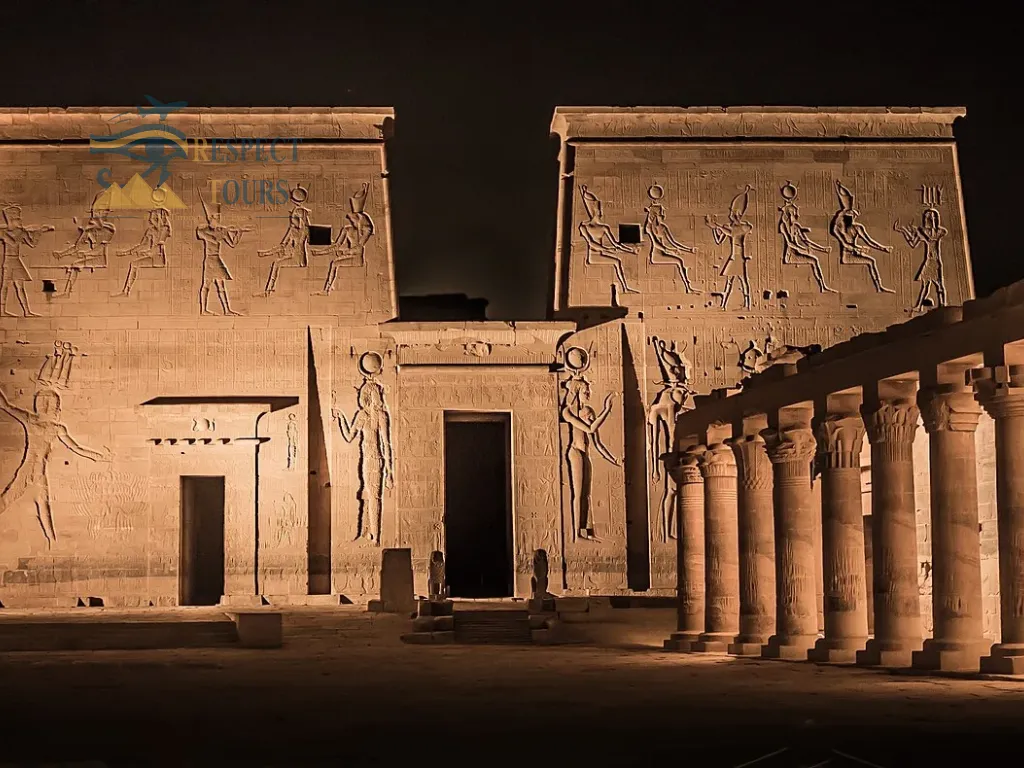
Choose the day visit to understand the temple, and add the evening show for atmosphere. The show tells the story of Isis, Osiris, and Horus with lights and narration.
| Day visit | Sound and light show | |
| Time | Morning to the afternoon closing time | Evening |
| Best for | Seeing the reliefs and architecture | Atmosphere and storytelling |
| Photography | Better detail | Lit buildings at night |
| Guide | Egyptologists explain the carvings. | Narration tells the story. |
| Booking | Ticket and boat | Check the schedule and language first. |
Showtimes, languages, and prices change by season, so confirm them before you book. See our Aswan day tours.
Can You Combine Philae Temple With Other Aswan Attractions?
Yes, Philae Temple combines easily with other Aswan sights, because the visit itself takes only a morning. Our full-day Aswan city tour combines Philae, the High Dam, and the Unfinished Obelisk.
| Attraction | Why combine it with Philae? |
| Aswan High Dam | It explains why Philae moved. It is a short drive from the Philae pier. |
| Unfinished Obelisk | A giant granite obelisk still in its quarry. It shows how the ancient Egyptians cut stone. |
| Nubian village | It gives you the culture of the people displaced by the lake. See our Nubian village by boat trip or our Kalabsha Temple trip. |
| Abu Simbel | Another rescued temple, but it needs a long day trip. See our Abu Simbel day trip. If you sail on Lake Nasser, read our Lake Nasser cruise route. |
Is Philae Part of a Nile Cruise?
Philae Temple is often part of a Nile cruise, especially on sailings that start in Aswan and include it in the first day’s sightseeing.
Our 4-day cruise from Aswan visits Philae, the High Dam, and the Unfinished Obelisk before you board. To pick a ship, see our guide on how to choose the best Nile cruise.
What Are the Common Mistakes When Visiting Philae?
Most problems come from planning, not from the site. Avoid these 5:
- Arriving after 2:00 PM, when closing time and the last boat are close.
- Forgetting cash for the boat.
- Not agreeing on the return trip before crossing.
- Skipping the guide. The reliefs and the Isis story are what make Philae special.
- Treating Philae as a full-day trip when it is a morning visit.
Is Philae Temple Worth Visiting?
Yes, if you like temples with a story and a setting. Philae is smaller than Karnak, but its island location, Isis legend, and rescue make it one of Aswan’s best visits.
It suits first-time visitors, couples, history lovers, and anyone with only a morning in Aswan. You may prefer another stop if you want a huge site or if boat steps and uneven ground are difficult for you. Plan Philae with Aswan’s other sights rather than as a full-day trip by itself.
Explore Philae Temple With Respect Tours
Cross the Nile to Agilkia Island and uncover the stories of Isis, Osiris, and Horus with an expert local guide. Respect Tours, a local operator since 1978, can add Philae Temple to your private Aswan tour or Nile cruise itinerary, with the ticket, boat and timing planned for your morning.
Visit Philae Temple With a Private Egyptologist | Explore Nile Cruises | Plan a Custom Aswan Itinerary
FAQs About Philae Temple
Can children and older travellers visit the Philae Temple?
Yes, in most cases. The site has a boat crossing, uneven paths, and some steps, so it suits children who can walk and active older travellers. Tell us about any mobility needs so we can plan the route.
What is the difference between Philae Temple and the Temple of Isis?
The Temple of Isis is the main temple inside the Philae complex. Philae Temple is the whole group of buildings, which also includes the Temple of Hathor, Trajan’s Kiosk, Hadrian’s Gate, and the Birth House.
Why was Philae Temple moved?
Water from the Aswan dams flooded the original island of Philae. In the 1970s, UNESCO and Egypt took apart about 40,000 numbered blocks and rebuilt the complex on higher ground at Agilkia. It reopened in 1980.