
You’re looking at your Nile cruise itinerary, a list of ancient names and places. Luxor, Karnak, Aswan… they’re the icons. But then you see the stops in between, like Edfu. Is it just another temple? With so much to see, you wonder if this stop is truly essential or just a filler between the headline acts. You want to know what makes the Temple of Horus at Edfu special enough to command a precious morning of your journey, and whether its story is one you’ll remember long after you’ve returned home.
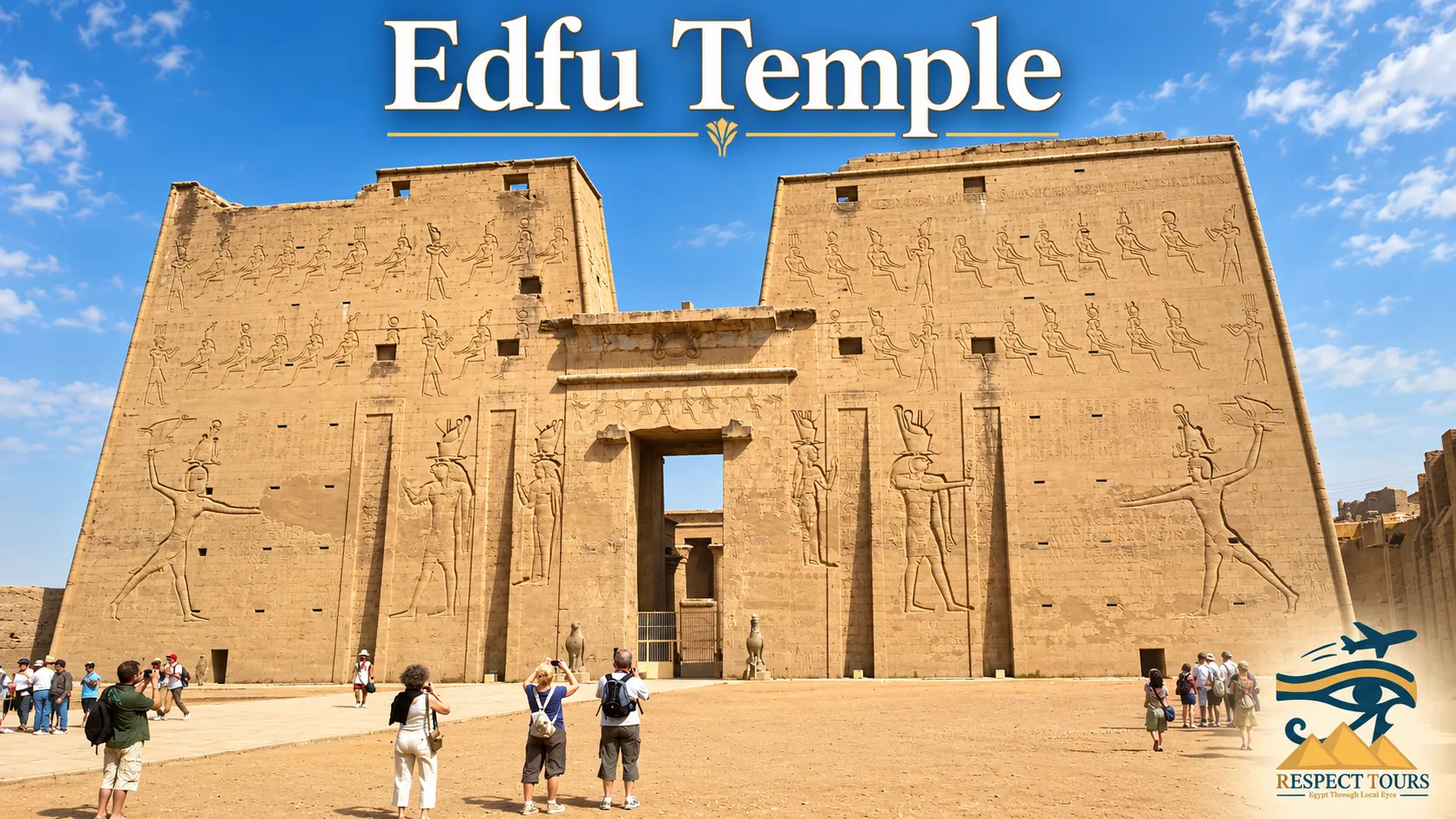
The Temple of Horus at Edfu is one of the most complete and best-preserved ancient temples in Egypt. Located on the west bank of the Nile between Luxor and Aswan, it’s a vital stop on most Nile cruises. Dedicated to the falcon god Horus, this vast Ptolemaic temple allows you to step back in time and experience a nearly intact blueprint of ancient Egyptian sacred architecture and religious belief. Its immense pylon, colonnaded halls, and walls covered in detailed hieroglyphic inscriptions offer an unparalleled glimpse into temple life during the final chapters of pharaonic history.
Edfu Temple at a Glance
The Temple of Horus is famous for its exceptional state of preservation, which provides a complete example of a Ptolemaic temple plan. It’s a key historical site between Luxor and Aswan, offering deep insight into the mythology of Horus and the architectural principles of the ancient world. Most travellers visit Edfu as a core excursion on a Nile cruise.
About the Temple of Horus
| Feature | Detail |
|---|---|
| Location | Edfu, on the west bank of the Nile |
| Governorate | Aswan Governorate |
| Dedicated to | The falcon god, Horus of Behdet |
| Period | Ptolemaic Period |
| Construction Began | 237 BC (under Ptolemy III Euergetes) |
| Construction Ended | 57 BC (under Ptolemy XII Auletes) |
| Construction Period | Approximately 180 years |
| Famous For | Preservation, inscriptions, Horus statues, layout |
| Visited From | Nile cruises between Luxor and Aswan |
| Recommended Time | 1.5–2 hours |
Why Is Edfu Temple So Important?
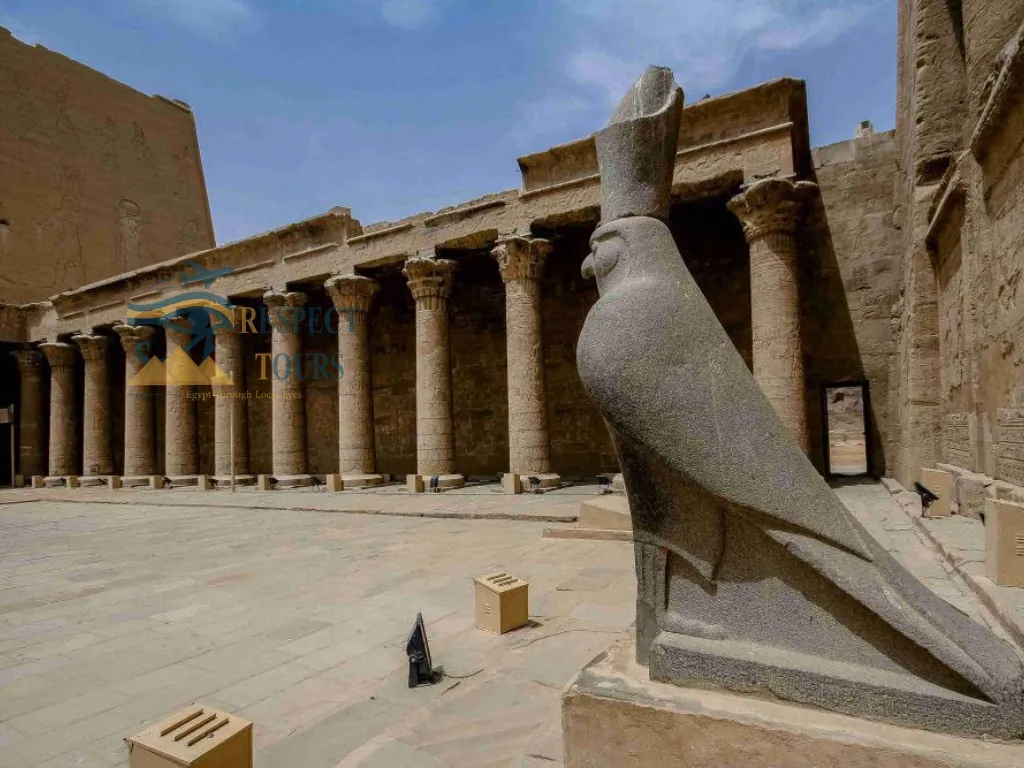
Edfu Temple is important because it is the most completely preserved temple in Egypt. While other temples are magnificent ruins, Edfu remains almost entirely intact, from its monumental gateway to its inner sanctuary and roof. This allows us to understand not just the architecture, but also the function, rituals, and atmosphere of an ancient Egyptian house of worship as a complete system. Its walls form a “library in stone,” preserving myths, festival calendars, and even perfume recipes that are lost elsewhere.
Where Is Edfu Temple?
The Temple of Horus is located in the city of Edfu, on the west bank of the Nile River in Upper Egypt.
Edfu Between Luxor and Aswan
Edfu sits roughly 115 km (72 miles) south of Luxor and 105 km (65 miles) north of Aswan. This strategic position makes it a perfect stop for Nile cruises travelling between the two major cities, typically visited after Esna when sailing south, or before it when sailing north.
How Far Is Edfu Temple from the Nile Cruise Dock?
The temple is located about 3 km (around 2 miles) from the main Nile cruise ship dock. To cover this distance, visitors typically take a horse-drawn carriage (caleche) or a local taxi/tuk-tuk. The journey from the dock to the temple entrance usually takes about 10–15 minutes, depending on traffic.
The History of Edfu Temple
The temple we see today was constructed during the Ptolemaic Period, but the site itself is much older.
Earlier Temples at Edfu
Edfu, known as Behdet in antiquity, was a sacred site for Horus for millennia. Archaeological evidence from the nearby settlement of Tell Edfu points to activity dating back to the Old Kingdom. It’s believed that smaller, earlier temples dedicated to Horus existed on this same spot, built by pharaohs like Ramesses III. These were eventually dismantled or incorporated into the grand Ptolemaic structure.
The Ptolemaic Construction Timeline
Construction of the current Temple of Horus began on 23 August 237 BC under the rule of Ptolemy III Euergetes. The main temple building was finished around 142 BC, but work on the decorations, halls, and massive pylon continued for generations. The temple was officially consecrated and completed in 57 BC during the reign of Ptolemy XII Auletes, the father of the famous Cleopatra VII. This 180-year construction period spanned the reigns of numerous Ptolemaic rulers.
Why Did Greek Rulers Build an Egyptian Temple?
The Ptolemies were a Greek-Macedonian dynasty that ruled Egypt after its conquest by Alexander the Great. To legitimise their rule and gain the support of the powerful Egyptian priesthood and the general populace, they presented themselves as traditional pharaohs. Building and restoring temples in the classical Egyptian style, like those at Edfu, Dendera, and Philae, was a powerful political and religious statement. It demonstrated their piety and respect for Egyptian traditions, securing their place as rightful inheritors of the pharaonic throne.
How Was Edfu Temple Preserved?
Edfu owes its incredible preservation to being buried by desert sand and river silt for centuries. After the Roman Empire banned pagan worship in 391 AD, the temple fell into disuse. The surrounding town slowly encroached, and shifting sands gradually covered the structure, protecting its walls, ceilings, and reliefs from the elements and from being quarried for stone. It remained buried until the French archaeologist Auguste Mariette began excavations in the 1860s.
What to Expect on Your Visit: A Walkthrough of the Temple
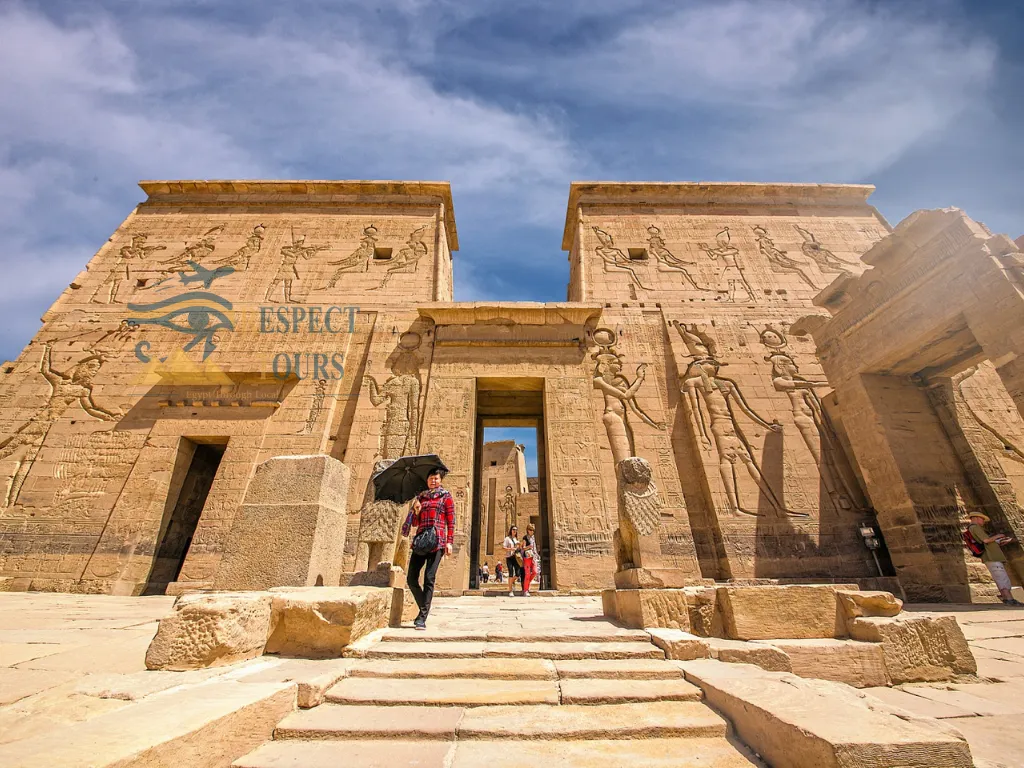
A visit to Edfu is a journey through a complete temple complex. Your Egyptologist guide will help you decode the stories on the walls as you walk from the public outer areas to the sacred inner core.
The experience begins at the First Pylon, a colossal gateway over 36 metres (118 feet) high. It’s adorned with massive reliefs of Ptolemy XII smiting his enemies before Horus and Hathor. Guarding the entrance are two magnificent granite statues of Horus in his falcon form.
Just before the pylon is the Mammisi, or “birth house.” This small chapel celebrates the divine birth of Harsomtus, the son of Horus and Hathor, with reliefs depicting his conception and birth, mirroring the divine birth of the pharaoh himself.
Passing through the pylon, you enter the Great Forecourt. This large, open-air court is surrounded by 32 columns and was accessible to the public during festivals. It’s here that people would have brought their offerings.
Next is the Outer Hypostyle Hall, its roof supported by 12 massive columns. This was the Hall of Consecration, where rituals were performed before entering the temple’s deeper sections. Look for two small chambers off this hall: one was the Temple Library, where ritual texts were stored, and the other was a robing room for priests.
Moving further in, you reach the dimmer, more intimate Inner Hypostyle Hall. This area, also known as the Festival Hall, served as a transitional space. A small room to the left was the Laboratory, where the walls are inscribed with detailed recipes for the sacred perfumes, oils, and incense used in daily rituals.
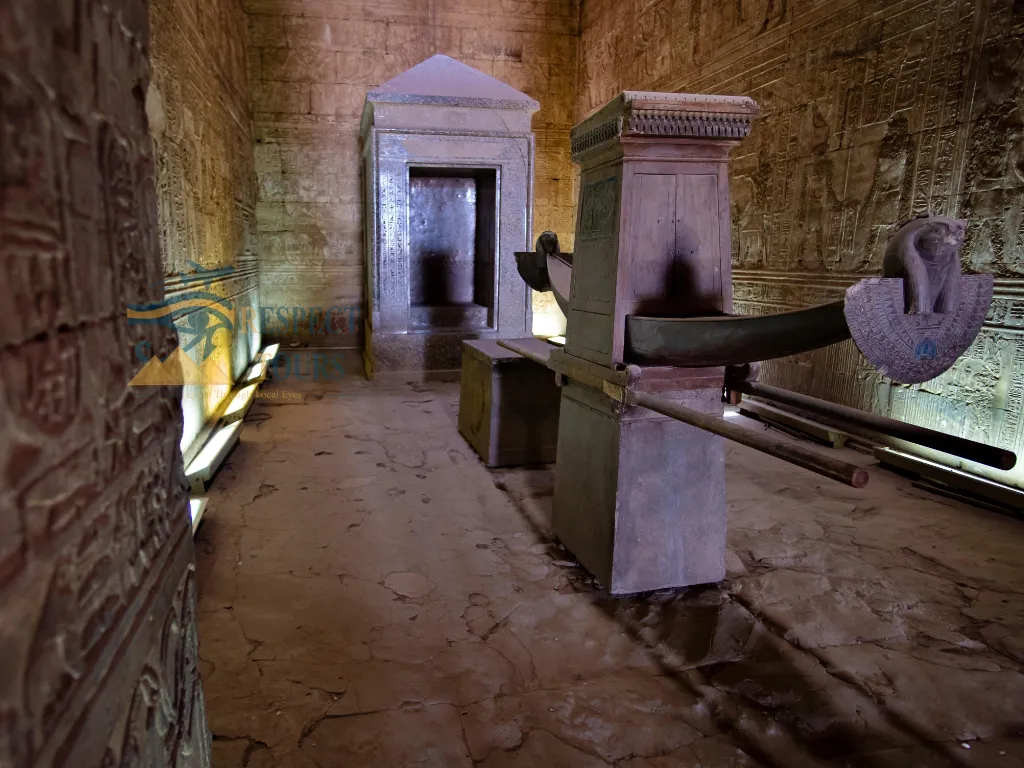
From here, you pass through the Court of Offerings and the Vestibule before finally reaching the heart of the temple: the Sanctuary of Horus. This dark, quiet chamber once housed the gilded wooden statue of the god. Today, it contains a beautifully crafted granite shrine (naos) that would have protected the statue, as well as a modern replica of the sacred barque (boat) that was used to carry the god’s image in festival processions. A ring of chapels dedicated to various deities surrounds the sanctuary.
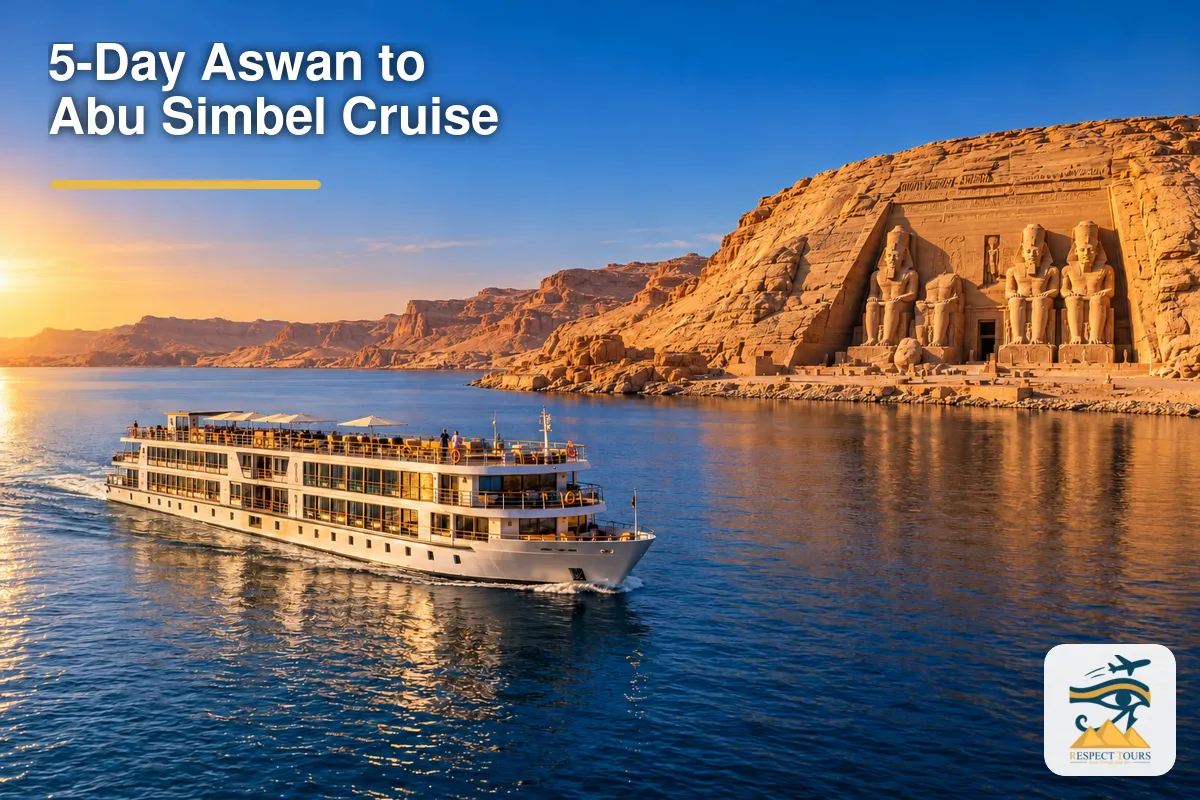
5-Day Nile Cruise Luxor to Aswan Egypt
Who It Suits
Edfu Temple is a fantastic destination for:
- First-time visitors to Egypt: Its completeness makes it the perfect “textbook” example of an ancient temple.
- History and architecture enthusiasts: The intact layout and detailed inscriptions are a rich source of information.
- Families: The grand scale and clear storytelling in the reliefs (like the Horus and Seth battles) can be engaging for older children.
- Travellers on a Nile cruise: It’s a convenient and highly rewarding stop that breaks up the journey between Luxor and Aswan.
However, travellers on a very tight schedule or those experiencing “temple fatigue” might find it less compelling than the unique island setting of Philae or the vibrant colours of Dendera. Those with severe mobility issues may find the uneven ground and scale of the site challenging.
Edfu vs. Other Ptolemaic Temples
It can be hard to choose between the temples of Upper Egypt. Here’s a quick comparison to help you understand what makes each one unique.
| Temple | Best Known For | Best For Travellers Interested In… |
|---|---|---|
| Edfu | Complete temple plan & Horus mythology | Architecture, ritual, and a “walk-in” history book. |
| Kom Ombo | Unique double-temple design for two gods | An unusual layout and the mythology of Sobek the crocodile god. |
| Philae | Beautiful island setting & cult of Isis | A scenic, atmospheric experience with a focus on the goddess Isis. |
| Dendera | Astonishingly preserved colours & ceiling | Art, astronomy, and the powerful goddess Hathor. |
Our Recommendation: You don’t have to choose. A well-planned Nile cruise includes Edfu and Kom Ombo, and combining your Luxor and Aswan stays with visits to Dendera and Philae gives you the full picture. If you must prioritise, visit Edfu to understand how a temple worked, and visit Dendera to see how it looked in full colour.
Practical Tips for Visiting Edfu Temple
- Timings and Tickets: Opening hours and ticket prices are subject to change. It’s always best to have your guide or tour operator confirm the latest details. Prices are typically displayed at the entrance.
- How Long to Spend: Plan for at least 1.5 to 2 hours. This allows enough time for a guided tour and some personal exploration without feeling rushed.
- Best Time to Visit: Early morning or later in the afternoon is ideal to avoid the worst of the midday heat and the largest crowds, which often peak mid-morning when most cruise ships have docked.
- Horse Carriages: The traditional way to get from the dock to the temple is by horse-drawn carriage (caleche). While part of the local experience, the welfare of the animals can be a valid concern for many travellers. Alternatives like local taxis or tuk-tuks are usually available.
- What to Wear: Wear light, breathable clothing (cotton or linen) and comfortable, sturdy shoes for walking on uneven stone surfaces. A hat, sunglasses, and sunscreen are essential.
- Photography: Photography is generally permitted, but using a flash is often forbidden inside the darker halls to protect the reliefs. Always check for local signage.
- Accessibility: The site is large and has uneven surfaces, which can be challenging for visitors with mobility issues. The main halls are relatively flat, but accessing all areas may be difficult. There are toilet facilities near the entrance.
Is Edfu Temple Worth Visiting?
Yes, Edfu Temple is absolutely worth visiting. For any traveller who wants to understand how an ancient Egyptian temple was designed, used, and experienced—not just see another collection of columns—Edfu is an unmissable stop. Its remarkable state of preservation brings the world of the pharaohs and their gods to life in a way that no other ruined temple can. It provides the context that makes all the other ancient sites in Egypt make sense.
Visiting Edfu with Respect Tours
Most of our Nile cruise itineraries, including the classic 5-day journey from Luxor to Aswan, feature a comprehensive visit to the Temple of Horus at Edfu. We handle all the logistics, so you can focus on the experience.
Your visit includes transportation from the cruise dock to the temple and the company of one of our licensed Egyptologist guides. Having a guide at Edfu is crucial; they transform the silent walls into a vivid storybook, pointing out the battle scenes of Horus and Seth, explaining the daily rituals inscribed in the sanctuary, and revealing the hidden perfume recipes in the laboratory. For travellers concerned about animal welfare, we can arrange for a private car or tuk-tuk for the short journey to the temple on our private tours, ensuring your visit aligns with your values.
Conclusion
The Temple of Horus at Edfu stands apart not just for its grand scale, but for its completeness. It is more than a ruin; it is a time capsule. Walking through its gates, courtyards, and halls is the closest one can get to experiencing an ancient Egyptian temple as it was meant to be seen. It offers a clear, coherent story of architecture and belief, making it an essential and deeply rewarding part of any journey into Upper Egypt. For travellers wanting to see Egypt’s history not just as scattered monuments but as a living, breathing culture, Edfu is a powerful and necessary chapter in that story.
Ready to see the story of Horus unfold? Explore our Nile cruise packages that feature a guided visit to Edfu.
Frequently Asked Questions About Edfu Temple
What is Edfu Temple?
Edfu Temple is a remarkably well-preserved ancient Egyptian temple from the Ptolemaic Period. Located in the town of Edfu on the Nile’s west bank, it is dedicated to the falcon god Horus. Its intact structure provides one of the best examples of ancient temple architecture and religious inscriptions.
Why is Edfu Temple so well preserved?
The temple’s extraordinary preservation is due to it being buried for centuries under desert sand and river silt. After pagan worship was outlawed in the Roman era, the temple was abandoned and gradually covered, which protected it from the elements and from being dismantled for its stone until it was excavated in the 1860s.
Is Edfu Temple included in Nile cruises?
Yes, a visit to the Temple of Horus at Edfu is a standard and essential stop on almost all Nile cruise itineraries that travel between Luxor and Aswan. It is one of the main highlights of the journey, typically taking up one morning or afternoon of the schedule.
How do you get from a Nile cruise to Edfu Temple?
From the Nile cruise dock in Edfu, the temple is a few kilometres away. The most common mode of transport is a horse-drawn carriage, known as a caleche. The ride takes about 10-15 minutes. Taxis and auto-rickshaws (tuk-tuks) are also available as alternatives for visitors.
Do you have to take a horse carriage at Edfu?
No, you do not have to take a horse carriage. While it is the most common option offered, local taxis and tuk-tuks are also available at the cruise dock. If you have concerns about animal welfare, you can request an alternative. On private tours, a car can often be arranged in advance.
Is Edfu Temple worth visiting?
Absolutely. Edfu is especially worthwhile because its near-perfect preservation allows you to understand the complete layout and function of an ancient Egyptian temple. It’s more than just ruins; it’s a blueprint of ancient belief, making it a key educational and awe-inspiring site for any visitor to Egypt.
Which god was Edfu Temple dedicated to?
The temple is dedicated to the falcon-headed god Horus, one of the most important deities in the ancient Egyptian pantheon. Specifically, it honours ‘Horus of Behdet’, the local form of the god worshipped at Edfu, who was celebrated for his role as a victorious warrior and the divine embodiment of kingship.
How long should I spend at Edfu Temple?
A typical visit to Edfu Temple lasts between 1.5 and 2 hours. This provides enough time for a guided tour to see the main highlights, from the great pylon to the inner sanctuary, and allows for some time to explore and take photographs at your own pace without feeling rushed.