


More than 800 years ago, Saladin looked across Cairo and saw a city that needed protecting. His answer was to build a powerful fortress high on the Mokattam Hills, a stronghold that would defend the city and become a center of power for centuries.
That fortress is the Cairo Citadel you can explore today.
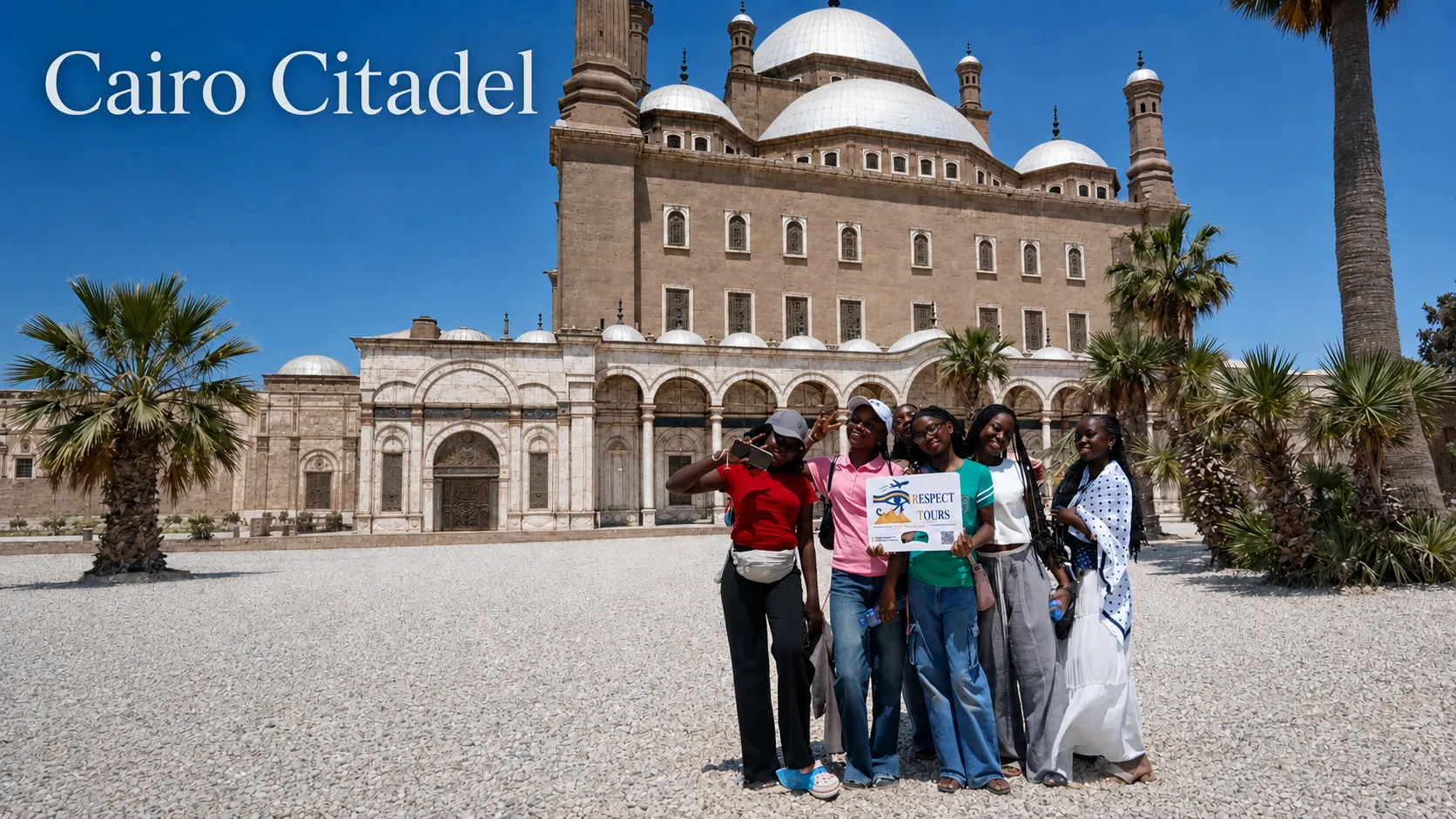
But Saladin’s story was only the beginning. Successive rulers reshaped the Citadel, leaving behind mosques, palaces, fortifications, and centuries of history within its walls. Today, you can step inside the magnificent Mosque of Muhammad Ali, explore this historic hilltop fortress, and enjoy some of the most impressive views across Cairo.
At Respect Tours, we’ve been helping travelers experience Egypt through local eyes since 1978. In this guide, we’ll show you what makes Saladin’s Citadel worth visiting, what you shouldn’t miss, and how to make the most of your visit.
What Is the Cairo Citadel?
The Cairo Citadel, also known as the Citadel of Saladin or Salah al-Din Citadel, is a medieval fortress overlooking Cairo from the Mokattam Hills. Saladin ordered its construction in 1176 to strengthen the city’s defenses, although the fortress was completed later under Sultan al-Kamil.
For centuries, the Citadel served as a seat of power for Egypt’s rulers and gradually grew into a vast complex of mosques, palaces, military buildings, and fortifications. Today, its most famous landmark is the Mosque of Muhammad Ali, but the Citadel also contains historic mosques, museums, and panoramic viewpoints over Cairo.
What is the main attraction at the Cairo Citadel?
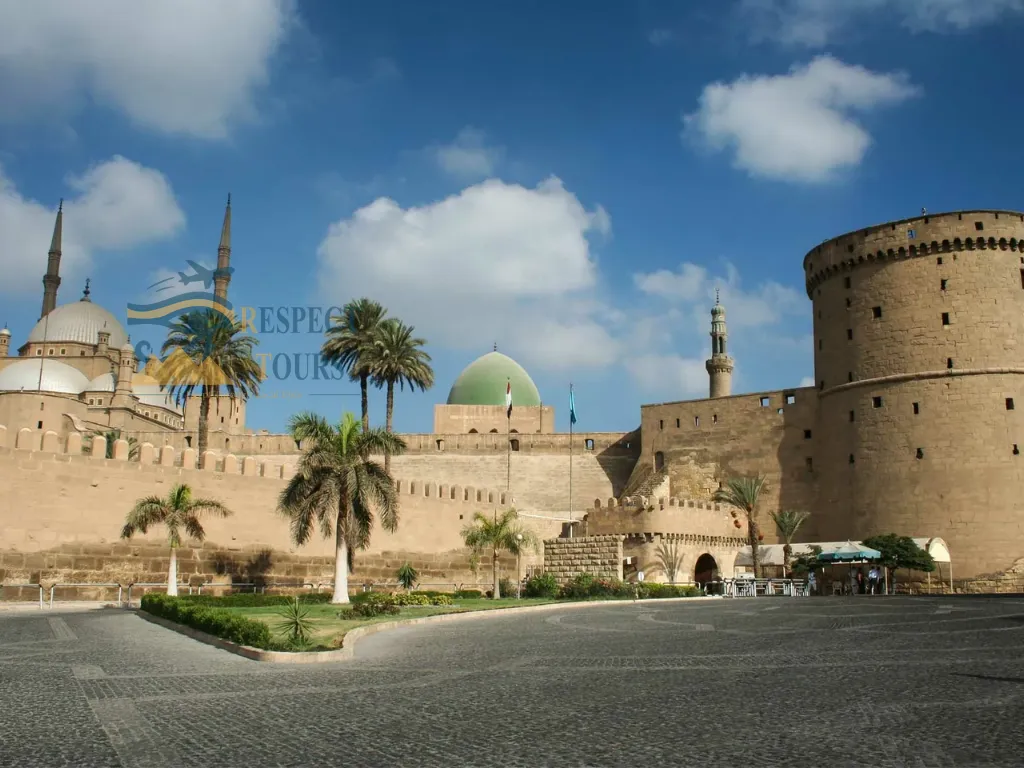
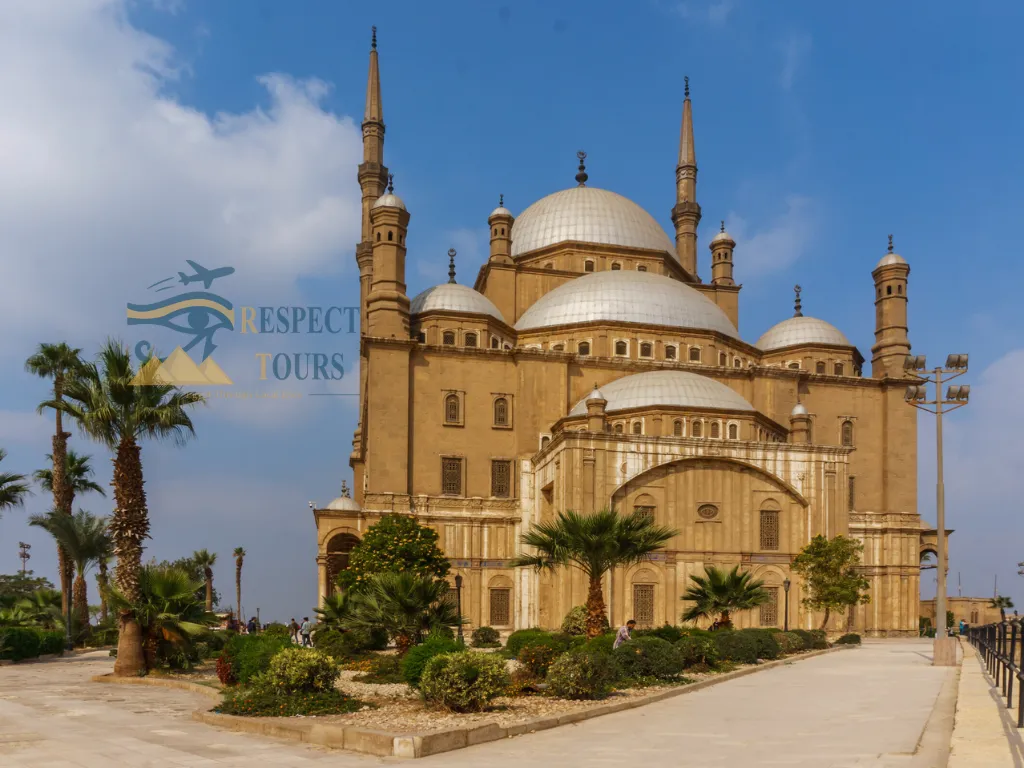
The main attraction for most visitors is the magnificent Mosque of Muhammad Ali, also known as the Alabaster Mosque. Its grand Ottoman architecture and prominent location make it the most visible and widely recognised building within the Citadel complex, offering stunning interiors and breathtaking views from its courtyard.
The Cairo Citadel at a Glance
| Feature | Description |
|---|---|
| Location | On the Mokattam Hills overlooking Islamic Cairo |
| Founded | Construction began in 1176 AD |
| Founder | Salah El-Din Al-Ayyubi (Saladin) |
| Best Known For | Mosque of Muhammad Ali, panoramic Cairo views |
| Recommended Visit | 2–3 hours |
| Best Time to Visit | Early morning (8:00 AM–10:00 AM) on a weekday |
| Ticket Information | Varies; confirm with your tour operator or official sources |
| Suitable For | History lovers, architecture enthusiasts, photographers |
Islamic Cairo: NMEC Museum, Citadel
Why Is the Citadel of Saladin Important?
The Citadel is historically important because it was the centre of power in Egypt for over 700 years. It was founded by the great Muslim leader Saladin to protect Cairo from Crusaders and remained the residence of Egypt’s rulers—from Ayyubid sultans and Mamluk monarchs to Ottoman pashas and Muhammad Ali’s dynasty. Its architecture is a living record of these successive eras, making it a crucial monument for understanding Cairo’s history.
Is Cairo Citadel Worth Visiting?
Yes, the Cairo Citadel is absolutely worth visiting for most travellers in Cairo. It offers a unique combination of monumental Islamic architecture, several museums, and some of the best panoramic views of the city. If you are interested in history, architecture, or simply want a stunning photo opportunity, it’s an essential stop. Those with very limited time or severe mobility challenges might find the large, uneven site difficult to navigate.
Cairo Citadel Location and How to Get There
Understanding the Citadel’s location is key to planning your day in this bustling part of Cairo.
Where Is Cairo Citadel Located?
The Cairo Citadel is located in Central Cairo on a promontory of the Mokattam Hills, situated between the areas known as Islamic Cairo and Old (Coptic) Cairo. Its elevated position makes it a prominent landmark visible from many parts of the city.
How to Get to Cairo Citadel
Getting to the Citadel involves navigating some of Cairo’s busiest streets. Here are the most common options:
- Guided Cairo Tour: A guided tour is the most efficient way to visit. Respect Tours, for example, includes private transportation directly to the entrance, along with an Egyptologist guide who can navigate the complex and explain its rich history.
How Far Is Cairo Citadel from Major Cairo Attractions?
Travel times in Cairo are highly dependent on traffic, which can be heavy. These are rough estimates.
| From | To Cairo Citadel (Approx. Travel Time) |
|---|---|
| Downtown Cairo (Tahrir Square) | 20–40 minutes |
| Giza Pyramids Complex | 45–75 minutes |
| NMEC (National Museum of Egyptian Civilization) | 10–15 minutes |
| Khan el-Khalili Bazaar | 15–25 minutes |
| Coptic Cairo | 15–20 minutes |
Cairo Citadel Opening Hours and Ticket Information
It’s crucial to check the latest information before your visit, as schedules and fees can change.
Cairo Citadel Opening Hours
Official opening hours are set by the Egyptian Ministry of Tourism and Antiquities and can be subject to change.
- General Hours: The site typically opens from 8:00 AM to 5:00 PM.
- Last Entry: Last admission is usually one hour before closing, around 4:00 PM.
- Ramadan & Holidays: During the holy month of Ramadan, hours are often shortened. The site may also have different hours on public holidays or close for official state events. It’s always wise to confirm the schedule on the day of your planned visit.
Cairo Citadel Ticket Information
The admission fee for the Cairo Citadel is set by the government and is subject to change without prior notice. The single ticket grants access to the main enclosures and the mosques and museums within the complex.
To ensure you have the most up-to-date pricing and information, it’s best to consult your tour provider. When you book a day tour of Islamic Cairo with Respect Tours, the entrance fees are typically included in your package, saving you the trouble of managing tickets on-site.
Best Time to Visit Cairo Citadel
Timing your visit can significantly enhance your experience, helping you avoid the biggest crowds and the strongest sun.
Best Time of Day
The best time to visit the Cairo Citadel is early in the morning, right when it opens (around 8:00 or 9:00 AM). At this time, the tour bus crowds have not yet arrived, the temperatures are cooler, and the morning light is excellent for photography. Weekdays (Sunday to Thursday in Egypt) are generally less crowded than weekends (Friday and Saturday).
How Long Do You Need at Cairo Citadel?
The time you spend depends on your level of interest.
- Quick Visit (90 minutes): Focus on the Mosque of Muhammad Ali and the main panoramic terrace.
- Recommended Visit (2–3 hours): Explore the Muhammad Ali Mosque, the Al-Nasir Muhammad Mosque, and wander through the main courtyards and viewpoints.
- In-Depth Visit (3–4 hours): Add a visit to one of the museums, such as the National Military Museum.
Weather and Seasonal Considerations
Cairo is hot and sunny for most of the year.
- Summer (June-August): Can be very hot, with temperatures often exceeding 35°C (95°F). An early morning visit is essential.
- Winter (December-February): Pleasantly mild and sunny, with daytime temperatures around 18-22°C (64-72°F). This is the most comfortable season for exploring the large, open site.
- Air Quality: Cairo’s air quality can affect the clarity of the panoramic views. Views are often clearest in the winter months after a rare rain shower.
The History of Cairo Citadel
The story of the Citadel is the story of Cairo’s rulers. It was conceived as a statement of power and a bastion of defence, evolving with each dynasty that made it home.
Who Was Saladin?
Salah al-Din Yusuf ibn Ayyub, known in the West as Saladin, was the founder of the Ayyubid dynasty and a renowned Muslim sultan of Egypt and Syria. He is celebrated in both Islamic and Christian history for his leadership, chivalry, and military prowess, most notably for recapturing Jerusalem from the Crusaders in 1187.
Why Did Saladin Build Cairo Citadel?
Saladin began construction of the Citadel around 1176 AD for three primary reasons:
- Defence: To protect Cairo from potential Crusader attacks, creating an impregnable fortress.
- Centralisation: To create a secure, centralized administrative centre for his new government, separate from the crowded city below.
- Symbolism: To build a monument that would symbolise the strength and unity of his Ayyubid rule.
He famously said, “With a wall, I will make the two [cities of Cairo and Fustat] into a single whole, so that one army may defend them both; and I believe it is good to encircle them with a single wall from the bank of the Nile to the bank of the Nile.”
Mamluk Expansion and Royal Transformation
After the Ayyubid dynasty, the Mamluks—a class of warrior slaves who rose to become sultans—took power. They moved the seat of the sultanate permanently into the Citadel and transformed it from a stark fortress into a lavish royal complex. They built magnificent palaces, grand halls, and mosques, making it one of the most impressive royal centres in the medieval world.
The most influential Mamluk ruler at the Citadel was Sultan Al-Nasir Muhammad, who ruled three times. He demolished many of the old Ayyubid buildings and undertook a massive construction program, building the stunning Mosque of Al-Nasir Muhammad with its unique green minaret, a grand throne hall (the Great Iwan), and aqueducts to bring water to the complex.
Cairo Citadel During the Ottoman Period
When the Ottoman Empire conquered Egypt in 1517, the Citadel’s role shifted. It was no longer the residence of an independent sultan but became the seat of the Ottoman Pasha, the governor appointed by Istanbul. While some construction continued, its primary function became that of a military garrison. Many of the grand Mamluk palaces fell into disrepair during this period.
Muhammad Ali’s Transformation of the Citadel
In the early 19th century, Muhammad Ali Pasha, an Ottoman Albanian officer, established himself as the ruler of Egypt and founded a dynasty that would last until 1952. He dramatically remade the Citadel, demolishing many dilapidated Mamluk buildings to make way for his own vision. His most significant and lasting contribution is the Mosque of Muhammad Ali, built in a grand Ottoman style. He also built the Al-Jawhara Palace (Jewel Palace) and modernised the administration.
Cairo Citadel Map and Layout
The Citadel is a vast complex divided into two main parts: the Southern Enclosure (the original site of the Sultan’s court) and the lower Northern Enclosure (historically the military garrison). Most visitors spend their time in the Southern Enclosure.
The Southern Enclosure
This is the main tourist area and contains the most famous landmarks.
- Mosque of Muhammad Ali: The dominant feature of the Citadel.
- Mosque of Al-Nasir Muhammad: The only significant Mamluk-era structure to survive Muhammad Ali’s renovations.
- Al-Jawhara Palace (Jewel Palace): A palace-turned-museum built by Muhammad Ali.
- Panoramic Terraces: Offering wide views across Cairo.
The Northern Enclosure
This area is home to museums and fortifications.
- National Military Museum: Housed in a former palace, detailing Egypt’s military history.
- National Police Museum: A smaller museum located near the entrance gate.
- Mosque of Sulayman Pasha: The first Ottoman-style mosque built in Egypt.
- Fortifications and Towers: The original Ayyubid and Mamluk walls and towers are more visible here.
Recommended Walking Route
For a logical 2-3 hour visit, follow this path:
- Enter and walk past the Police Museum towards the main plaza.
- Start with the Mosque of Muhammad Ali. Spend time in its courtyard and prayer hall.
- Exit the mosque and walk to the adjacent panoramic terrace for photos.
- Walk across the plaza to the Mosque of Al-Nasir Muhammad to contrast its Mamluk style.
- View the exterior of the Al-Jawhara Palace area.
- If you have time and interest, proceed towards the Northern Enclosure to visit the National Military Museum.
Mosques Inside Cairo Citadel
The Citadel is home to three major mosques, each representing a different historical era.
Mosque of Muhammad Ali — The Alabaster Mosque
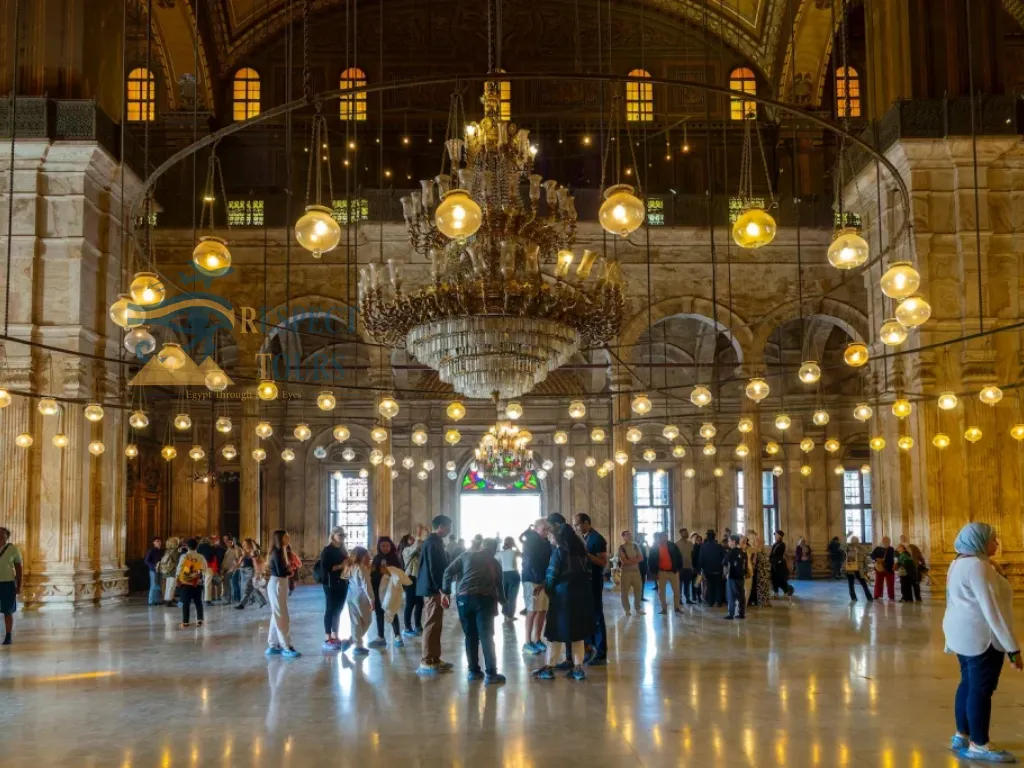
This is the mosque that defines the Cairo skyline. Built between 1830 and 1848, its twin minarets and large central dome are classic examples of Ottoman architecture, modelled on the mosques of Istanbul. It is nicknamed the “Alabaster Mosque” because its lower walls and courtyard are panelled with the stone. Inside, the vast space is decorated with ornate detailing and a multitude of lamps.
Mosque of Sultan Al-Nasir Muhammad
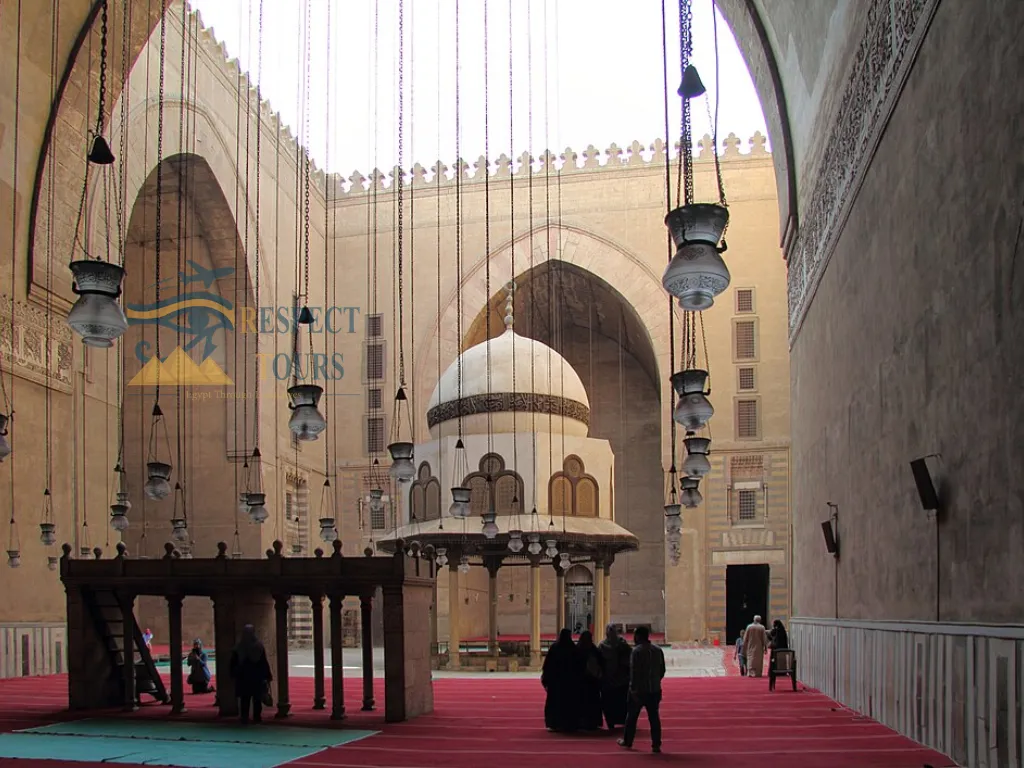
Built in 1318, this mosque is a superb example of Bahri Mamluk architecture and stands in stark contrast to its Ottoman neighbour. Its most striking features are its two minarets, one of which is uniquely decorated with green, white, and blue faience mosaics—a style more common in Persia than Egypt. The hypostyle prayer hall has a simple, powerful elegance.
Mosque of Sulayman Pasha Al-Khadim
Located in the Northern Enclosure, this was the first mosque built in Egypt in the classical Ottoman style (1528). It is a much smaller and more intimate space, with a central dome surrounded by semi-domes and a courtyard decorated with beautiful marble. It served the Janissaries, the Ottoman soldiers garrisoned there.
Old Cairo Tour: Citadel, Coptic Cairo
Museums Inside Cairo Citadel
Your Citadel ticket includes access to several museums, though their opening hours can be inconsistent.
- National Military Museum: Housed in the former Haram Palace, this extensive museum covers Egyptian military history from Pharaonic times to the modern era. It contains a vast collection of weapons, uniforms, and dioramas.
- National Police Museum: Located in the former Citadel prison, this small museum showcases famous political assassinations and police memorabilia.
- Al-Jawhara Palace Museum: Built by Muhammad Ali in 1814, this palace was his reception hall. It has been periodically open as a museum displaying his throne, furniture, and other royal effects, but is often closed for restoration.
Are All Cairo Citadel Museums Always Open?
No. The opening status of the museums, especially Al-Jawhara Palace, can change without notice due to ongoing restoration work or other reasons. The National Military Museum is the most consistently open of the three. It’s best to have a flexible mindset when you visit.
Best Views and Photography Spots at Cairo Citadel
The Citadel’s elevation provides some of the most rewarding photo opportunities in the city.
The Panoramic Terrace
Just west of the Muhammad Ali Mosque is a large terrace offering a sweeping view across Cairo. On a clear day, you can see the Sultan Hassan and Al-Rifa’i Mosques in the foreground, the vast expanse of the city, and even the Giza Pyramids on the distant horizon.
Muhammad Ali Mosque Courtyard
The courtyard (or sahn) of the Alabaster Mosque is another prime location. You can capture stunning shots of the mosque’s facade with the ornate clock tower—a gift from King Louis-Philippe of France—or frame the city through the courtyard’s arches.
Photography Rules
Photography for personal use is generally permitted throughout the Citadel complex. However, the use of large tripods may be restricted in crowded areas, and drone photography is strictly forbidden. When inside mosques, be respectful and avoid taking photos of people praying.
Visitor Etiquette and Dress Code
As a historic and religious site, observing a few rules of etiquette is appreciated.
What Should You Wear?
A modest dress code is recommended. Both men and women should wear clothing that covers their shoulders and knees. When entering the mosques, you will be required to remove your shoes (you can carry them with you in a bag). Women are not strictly required to cover their hair but having a light scarf handy is a respectful gesture, particularly for the Muhammad Ali Mosque, where coverings might be offered at the entrance.
Visiting During Prayer Times
The mosques within the Citadel are active places of worship. If you visit during one of the five daily prayer times, access to the main prayer hall might be temporarily restricted. You can still visit the courtyards and other areas. Be quiet and respectful of worshippers.
Accessibility and Walking Conditions
The Citadel is a large site with considerable walking involved. The ground is often uneven, with cobblestones, slopes, and numerous steps. It is not easily accessible for wheelchair users or those with significant mobility issues. Wearing comfortable, sturdy shoes is essential.
The National Museum of Egyptian Civilization
Attractions Near Cairo Citadel
The Citadel’s location makes it a perfect starting point for exploring other key sites in Islamic Cairo.
- Mosque-Madrasa of Sultan Hassan: A monumental and truly spectacular example of Mamluk architecture, located at the foot of the Citadel.
- Al-Rifa’i Mosque: Built opposite Sultan Hassan in the late 19th/early 20th century, it houses the tombs of Muhammad Ali’s family, including the last Shah of Iran.
- Mosque of Ibn Tulun: One of Cairo’s oldest and largest mosques, famous for its unique spiral minaret and serene courtyard. It’s a short taxi ride away.
- Gayer-Anderson Museum: Two beautifully preserved 16th- and 17th-century houses joined together, located adjacent to the Ibn Tulun Mosque.
- Al-Azhar Park: A beautiful green space offering fantastic views of the Citadel from a different perspective, with restaurants and cafes.
- Khan el-Khalili and Al-Muizz Street: Cairo’s famous historic bazaar and open-air museum street, a 15-25 minute drive or taxi ride from the Citadel.
Explore Cairo Citadel with Respect Tours
The Citadel’s 800-year history can be overwhelming to absorb on your own. Exploring it with a licensed Egyptologist guide transforms the visit. They can bring the stories of sultans and pashas to life, point out subtle architectural details you might otherwise miss, and navigate the sprawling complex efficiently.
Our popular Islamic Cairo, NMEC Museum, and Citadel Day Tour provides a seamless experience. It includes a private, air-conditioned vehicle to take you comfortably between sites, entrance fees handled for you, and the invaluable insights of a local expert. This allows you to connect with the history of the Citadel on a deeper level, seeing it “Egypt Through Local Eyes”.
Is It Worth It? The Final Verdict
For anyone spending more than a day in Cairo, a visit to the Citadel of Saladin is a must-do. It’s not just one attraction, but a collection of significant monuments that tell the story of the city’s medieval and modern history. The combination of the awe-inspiring Mosque of Muhammad Ali, the historic Mamluk mosque of Al-Nasir Muhammad, and the unparalleled views of Cairo makes it a uniquely rewarding experience that appeals to a wide range of travellers.
Conclusion and Next Steps
The Citadel of Saladin is more than just a fortress on a hill; it’s a layered chronicle of Egyptian power, faith, and ambition, written in stone. From its Ayyubid foundations to the Mamluk golden age and Muhammad Ali’s grand vision, the complex offers a condensed journey through the history that shaped modern Cairo. The striking architecture and the unforgettable city views make it an essential part of any Cairo itinerary. Planning your visit with an expert guide can unlock the hidden stories within these ancient walls.
Ready to explore this historic landmark? Browse our popular Cairo day tours and let us handle the details, so you can immerse yourself in the history and beauty of the Citadel.
Things to See in Cairo in 24 Hours
Frequently Asked Questions About Cairo Citadel
1.where is Cairo Citadel located?
The Cairo Citadel is located on the Mokattam Hills in Central Cairo, Egypt. It sits in a strategic, elevated position overlooking the historic area known as Islamic Cairo and offers panoramic views of the entire city.
2. Who built the Citadel of Saladin?
Construction was started by the famous Ayyubid sultan Salah al-Din, known in Europe as Saladin, around 1176 AD. While he laid the foundations, the complex was expanded and modified significantly by subsequent rulers, especially the Mamluk sultans and Muhammad Ali Pasha.
3. Why did Saladin build Cairo Citadel?
Saladin built the Citadel primarily as a formidable fortification to protect Cairo from Crusader attacks. It also served as a secure, centralised seat of government for his new Ayyubid dynasty, symbolising his power and control over Egypt.
4. When was Cairo Citadel built?
Construction of the Cairo Citadel began in 1176 AD under Saladin and continued for several years. However, the site was continuously developed for over 700 years, with major additions made during the Mamluk, Ottoman, and Muhammad Ali periods.
5. What are the Cairo Citadel opening hours ?
The Citadel typically opens daily from around 8:00 AM to 5:00 PM, with last entry around 4:00 PM. These hours are subject to change, especially during Ramadan and public holidays, so it’s always best to confirm before your visit.
6. How much does it cost to visit Cairo Citadel?
Ticket prices are set by the Egyptian government and can change. For the most current admission fees, it is advisable to check with your tour operator. Packages like those from Respect Tours often include entrance fees for a hassle-free experience.
7. How long should I spend at Cairo Citadel?
Plan to spend at least two to three hours. This allows enough time to explore the Mosque of Muhammad Ali, enjoy the panoramic views, and see the Al-Nasir Muhammad Mosque. If you wish to visit the museums, allow three to four hours.
8. Is Cairo Citadel worth visiting?
Yes, it is definitely worth visiting. It is one of Cairo’s most important historical and architectural sites, offering a glimpse into 700 years of Egyptian history, stunning mosques, and some of the best views of the city. It’s a highlight for most visitors to Cairo.
9. What can visitors see inside Cairo Citadel?
Inside the Citadel, visitors can see the famous Mosque of Muhammad Ali (the Alabaster Mosque), the Mamluk-era Al-Nasir Muhammad Mosque, the National Military Museum, the Police Museum, and the exterior of Al-Jawhara Palace, all while enjoying panoramic views of Cairo.
10. Is the Mosque of Muhammad Ali inside the Citadel?
Yes, the Mosque of Muhammad Ali is the most prominent and famous building located inside the Cairo Citadel complex. A visit to the mosque is included in the Citadel’s main entrance ticket.