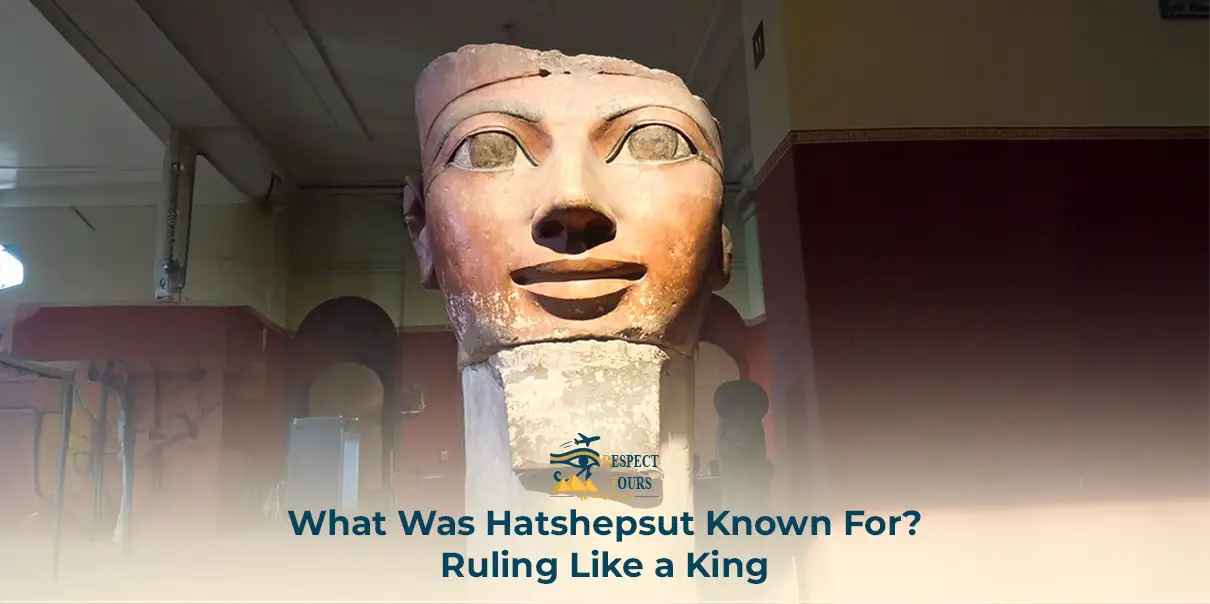
What Was Hatshepsut Known For?

What Was Hatshepsut Known For? Ruling Like a King

Hatshepsut is known for defying convention and rewriting the rules of power in ancient Egypt. As one of the most successful female pharaohs in Egyptian history, she transformed herself from queen consort to Egypt’s sole ruler. She governed for over two decades with unprecedented prosperity and commissioned architectural marvels at Thebes that still stand today.

What Hatshepsut is best known for extends beyond breaking gender barriers. She expanded trade networks, built monuments rivaling any male pharaoh’s achievements, and created a golden age of peace during the New Kingdom era. 

At Respect Tours, we bring the famous female pharaoh Hatshepsut to life through expertly guided experiences that transform ancient history into unforgettable travel moments.


Who Was Hatshepsut? Early Life and Strategic Ascent to Power


Before exploring Hatshepsut’s achievements and facts, understanding her origins reveals how she navigated the complex politics of ancient Thebes.

Was Hatshepsut the Daughter of a Pharaoh?

Born around 1507 BCE, Hatshepsut entered the world as the daughter of Pharaoh Thutmose I and his Great Royal Wife, Ahmose. 

Her lineage positioned her at the center of New Kingdom Egypt’s political machinery during one of its most powerful dynasties. Unlike many royal daughters whose names fade into obscurity, she grew up understanding the administrative sophistication required to govern Egypt from the palace at Thebes.

How Did Hatshepsut Become Queen of Egypt?

At approximately twelve years old, Hatshepsut married her half-brother Thutmose II. This followed royal custom designed to keep power concentrated within the family. As Chief Royal Wife, she became Egypt’s queen and bore a daughter, Neferure, who would later legitimize her mother’s unprecedented rule.

When Thutmose II died after a relatively brief reign, Egypt faced a succession crisis. The designated heir, Thutmose III, was still a child, possibly as young as two years old.

Learn more: The most famous facts about Thutmose III


How Did Hatshepsut Come to Power?
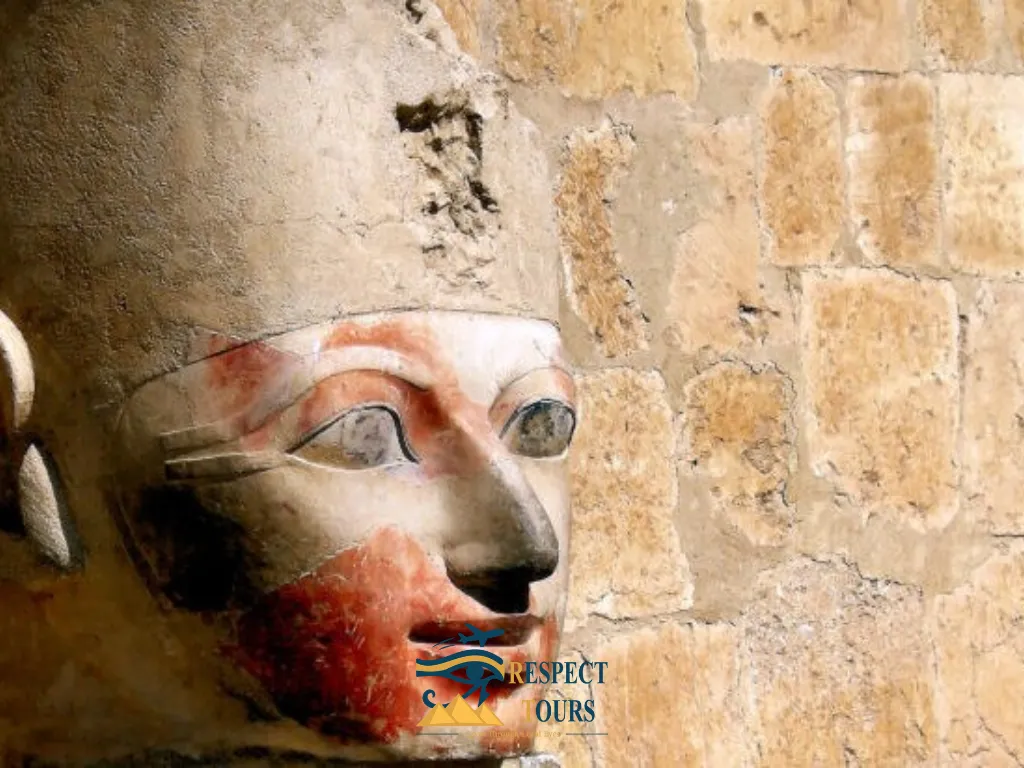
 

What Was Hatshepsut Known For


Understanding Hatshepsut’s rise to power reveals the political genius behind the famous female pharaoh Hatshepsut.

From Queen Consort to Regent

Hatshepsut initially assumed the traditional role of regent, governing Egypt on behalf of her young stepson. For approximately seven years, she fulfilled this expected function while maintaining the fiction that she served merely as a caretaker. However, something shifted dramatically.

Whether driven by ambition, political necessity, or a genuine conviction that she could rule more effectively, Hatshepsut made an extraordinary decision: she declared herself pharaoh.

Why Did Hatshepsut Claim Divine Birth?

This wasn’t a violent coup. Hatshepsut’s rise to power deployed sophisticated propaganda and religious justification.

She claimed divine birth as the daughter of the god Amun-Ra, commissioning reliefs at the Temple of Karnak showing her conception by the deity himself. These scenes depicted Amun-Ra taking the form of Thutmose I to father the future pharaoh, a powerful claim that positioned her rule as divinely ordained.

By around 1473 BCE, she had transformed from regent to co-ruler and finally to sole pharaoh. Remarkably, she achieved this while maintaining support from Egypt’s powerful priesthood of Amun-Ra at Thebes and the nobility.


What Was Hatshepsut Known For? Her Greatest Achievements


What Hatshepsut is best known for centers on three revolutionary accomplishments that defined her 21-year reign.

The Legendary Expedition to the Land of Punt

Economic Achievement: Trade expansion and diplomatic success

Unlike many pharaohs who measured success in battlefield victories, Hatshepsut’s achievements and facts center on trade, diplomacy, and strategic resource acquisition.

Her most celebrated accomplishment was the expedition to the Land of Punt, a semi-mythical trading partner located somewhere along the Red Sea coast (possibly modern-day Eritrea, Somalia, or Yemen).

What Did Hatshepsut Bring Back from Punt?

Around the ninth year of her reign, Hatshepsut dispatched five ships carrying Egyptian goods to Punt.

The expedition returned with exotic treasures:

  • Myrrh trees (transplanted with roots intact)
  • Frankincense (essential for temple rituals at Thebes)
  • Ebony and ivory
  • Gold and precious metals
  • Live animals (baboons, leopards, exotic birds)

The expedition’s details were meticulously recorded on the walls of her mortuary temple at Deir el-Bahri. Travelers today can still see carved images of the boats, the goods, and even the Queen of Punt herself, depicted with unusual anatomical detail.

Why Was the Punt Expedition Important?

This wasn’t simply about luxury goods.

Myrrh and frankincense were essential for religious rituals at the Temple of Karnak and other shrines to Amun-Ra, embalming practices, and royal legitimacy. By securing direct access to these materials, Hatshepsut strengthened Egypt’s religious institutions and her own divine authority.

Moreover, she reopened mines in the Sinai Peninsula, restored trade routes disrupted by previous conflicts, and ensured Egypt’s granaries remained full. This established Hatshepsut’s legacy in New Kingdom Egypt as a peacetime ruler who enriched the nation without conquest.


What Were Hatshepsut’s Major Building Projects?


What Hatshepsut is best known for is architecturally transforming the sacred landscape of Thebes and the Temple of Karnak complex.

The Mortuary Temple at Deir el-Bahri

Architectural Innovation: Three ascending terraces carved into limestone cliffs

If the Punt expedition demonstrated economic acumen, Hatshepsut’s achievements and facts in architecture revealed her artistic vision.

She commissioned more construction projects than almost any pharaoh before her. But one structure stands above all others: the Deir el-Bahri Temple on the West Bank of Thebes.

What Makes Hatshepsut’s Temple Unique?

Designed by her architect and possible lover, Senenmut, this temple represents innovation at its finest.

Unlike the imposing pylons and enclosed courtyards of traditional ancient Egyptian temples, Deir el-Bahri features:

  • Three ascending terraces connected by ramps
  • Colonnaded halls that create harmony with natural limestone cliffs
  • Integration with the landscape rather than domination of it
  • Birth colonnade depicting divine conception by Amun-Ra
  • Punt reliefs showing the famous expedition in vivid detail

The temple served multiple functions: a mortuary temple for Hatshepsut’s cult, a shrine to Amun-Ra, and visual propaganda celebrating her achievements.

Walking through these colonnaded halls today, visitors encounter history as the famous female pharaoh Hatshepsut intended it to be remembered.

Obelisks at Karnak Temple

Engineering Achievement: Tallest obelisks in ancient Egypt

Hatshepsut’s achievements and facts include her commissioning of red granite obelisks at the Temple of Karnak in Thebes.

One stood nearly 30 meters tall, capped with electrum (a gold-silver alloy) that caught the sun’s rays and announced her power to all who approached Thebes. Today, one of these obelisks still stands at Karnak, ranking among ancient Egypt’s tallest surviving monuments.

What Else Did Hatshepsut Build at Karnak?

She built the Red Chapel (Chapelle Rouge) at the Temple of Karnak, a bark shrine for the sacred boat of Amun-Ra.

This structure featured intricate reliefs depicting religious processions and offerings to Amun-Ra. She also initiated restoration projects at temples damaged during the Hyksos period, demonstrating her role as Egypt’s protector and religious steward.


Why Did Hatshepsut Portray Herself as a Man?
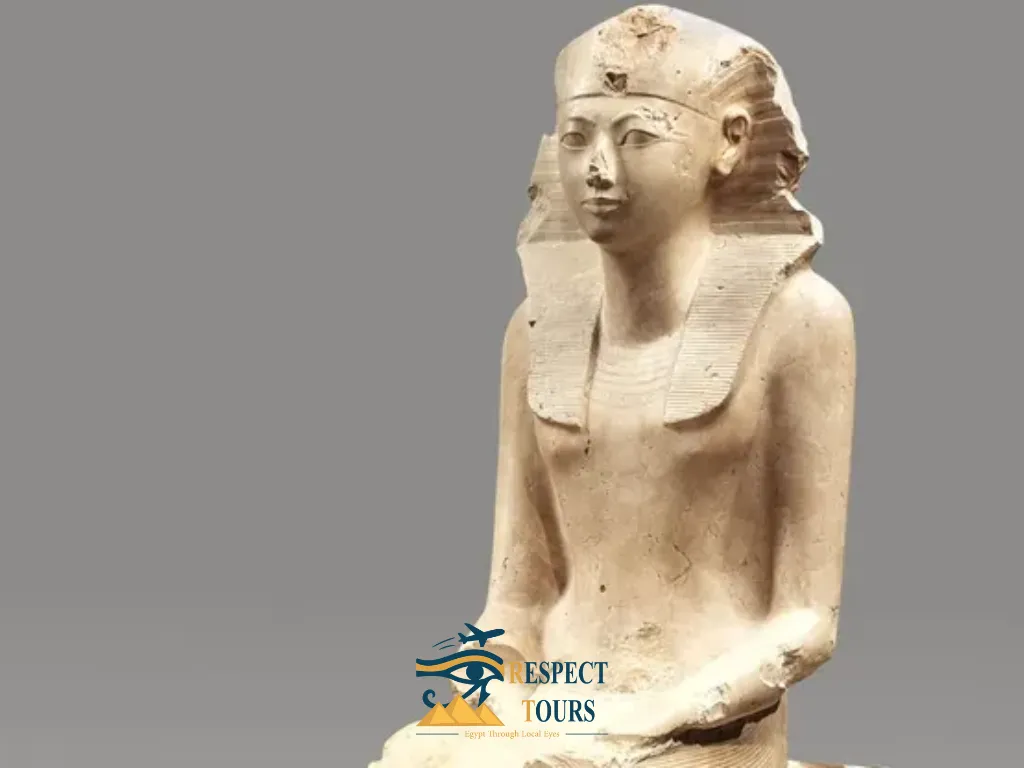
 

What Was Hatshepsut Known For


Understanding what Hatshepsut is best known for requires examining her revolutionary approach to royal iconography.

How Did Hatshepsut’s Appearance Change Over Time?

Early in her rule, she appeared in traditional queenly form, slender, feminine, and wearing elegant sheaths and wigs.

However, as she consolidated power and claimed full pharaonic authority, her iconography transformed dramatically:

Early Reign (as Queen):

  • Feminine body proportions
  • Traditional queen’s crown
  • Elegant royal sheaths
  • Depicted alongside Thutmose II

Later Reign (as Pharaoh):

  • Masculine body proportions
  • Broad shoulders and muscular chest
  • Royal shendyt kilt
  • Ceremonial false beard
  • Nemes headdress
  • Depicted as the sole ruler

Was Hatshepsut Pretending to Be Male?

This wasn’t delusion or deception; it was strategic political theater.

The concept of pharaoh was inherently masculine in Egyptian theology. The pharaoh embodied the living Horus, son of Ra, and husband of Egypt. By adopting male imagery, the famous female pharaoh Hatshepsut aligned herself with centuries of pharaonic tradition.

Inscriptions sometimes contradicted visual representations, using feminine pronouns even when depicting her in male form. This fascinating ambiguity suggests the complexity of her self-presentation.

She wasn’t pretending to be a man; she was embodying the office of pharaoh, which transcended physical gender.


How Did Hatshepsut Die?


The circumstances surrounding the death of the famous female pharaoh Hatshepsut remain one of ancient Egypt’s enduring mysteries.

What Happened to Hatshepsut at the End of Her Reign?

Hatshepsut ruled for approximately 21 years, dying around 1458 BCE at roughly fifty years of age.

No ancient texts describe her final days, and theories range from natural causes to politically motivated assassination.

Recent examination of Hatshepsut’s mummy (confirmed through DNA analysis in 2007) suggests she suffered from:

  • Diabetes (indicated by obesity)
  • Severe dental disease (infected tooth)
  • Possible bone cancer (metastatic carcinoma)
  • Complications from an untreated dental abscess

She likely died from cancer or complications from an infected tooth, a respectable lifespan of 50 years for ancient Egypt.

Why Was Hatshepsut Erased from History?

What happened after her death proved almost more dramatic than her life.

Twenty years later, during the later reign of Thutmose III, a systematic campaign began to erase her memory from monuments at Thebes, the Temple of Karnak, and throughout Egypt:

  • Cartouches chiseled out from temple walls
  • Images defaced or removed entirely
  • Statues smashed and buried in pits
  • Name excluded from official king lists

Why Did Thutmose III Erase Hatshepsut’s Memory?

Scholars debate whether Thutmose III acted from personal resentment, political necessity, or theological concern.

One compelling theory suggests the erasure aimed to legitimize the succession line. By removing the anomalous female pharaoh, later propagandists could present an unbroken line of male rulers from Thutmose II directly to Thutmose III.

Ironically, this attempted damnatio memoriae failed spectacularly. The sheer volume of monuments at Thebes and the Temple of Karnak meant that complete erasure proved impossible.

19 Interesting Facts About Queen Hatshepsut: Which One Will Shock You?

Was Hatshepsut’s Mummy Ever Found?


The discovery of Hatshepsut’s mummy represents one of modern Egyptology’s greatest detective stories.

Where Was Hatshepsut Originally Buried?

For over a century after Deir el-Bahri’s excavation, Hatshepsut’s mummy remained unidentified.

Egyptologists knew of her tomb in the Valley of the Kings (KV20), which she originally constructed for herself and her father. But it had been robbed in antiquity and contained no identifiable royal remains.

The tomb in the Valley of the Kings extends 213 meters into the hillside, the deepest royal tomb excavated. This ambitious engineering reveals her early intention to be buried as a pharaoh in the sacred necropolis of Thebes.

How Was Hatshepsut’s Mummy Identified?

The breakthrough came in 2007 when Dr. Zahi Hawass led a team investigating unidentified royal mummies.

Using DNA analysis, CT scanning, and forensic evidence, they identified a previously overlooked mummy from KV60 (a small tomb in the Valley of the Kings) as Hatshepsut herself.

The Identifying Evidence:

  • DNA match with known Hatshepsut family members
  • Missing tooth matching a molar in a canopic box inscribed with her name
  • Age and physical condition are consistent with historical records
  • Female mummy of appropriate royal status

This discovery added crucial Hatshepsut achievements and facts to our understanding of her life and death.


Where Can You See Hatshepsut’s Mummy Today?


Hatshepsut’s mummy now rests in the National Museum of Egyptian Civilization (NMEC) in Cairo.

How to Visit Hatshepsut’s Mummy

Visiting Information:

  • Location: Al-Fustat, Old Cairo, overlooking Ain Al-Sira Lake
  • Opening Hours: Daily, 9:00 AM to 5:00 PM (ticket sales until 4:00 PM)

The mummy resides in the Royal Mummies Hall, a specially designed space that maintains controlled temperature and lighting.

Interactive displays explain the 2007 identification process, showing DNA analysis results, CT scans revealing her pathologies, and the dramatic tooth-matching story. Standing before her carefully preserved remains creates a profound connection across 3,500 years of history.


What Is Hatshepsut’s Legacy in Ancient Egypt?
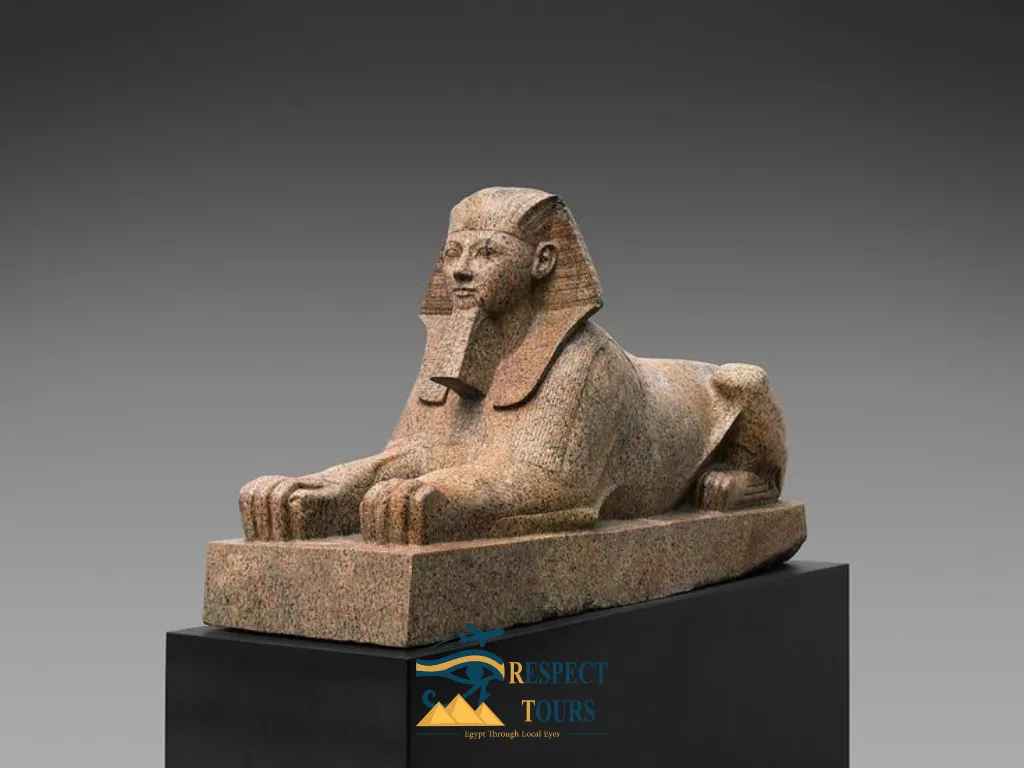
 

What Was Hatshepsut Known For


How Did Hatshepsut Change Egypt’s View of Women in Power?

While not technically Egypt’s first female ruler, she was the first to rule for an extended period with full pharaonic authority.

Egyptian culture maintained complicated attitudes toward female power. Women enjoyed significant legal rights; they could own property, conduct business, initiate divorce, and inherit wealth.

Queens wielded considerable influence, and goddesses like Isis, Hathor, and Sekhmet commanded deep reverence. Yet the position of pharaoh remained conceptually masculine.

Did Hatshepsut Expand the Definition of Pharaonic Power?

She didn’t reject femininity or claim to be male; instead, she expanded the concept of what a pharaoh could be.

Hatshepsut’s achievements and facts proved that administrative excellence, economic prosperity, and diplomatic skill could define successful rule as much as battlefield conquest.

Her reign created a template for future female rulers:

  • Tawosret (19th Dynasty)
  • Cleopatra VII (ruled 1,400 years after Hatshepsut)

Moreover, Hatshepsut’s legacy in New Kingdom Egypt influenced how elite families viewed royal daughters and wives. Powerful queens became increasingly common, with women like Tiye and Nefertiti wielding unprecedented influence.


Summary: What Was Hatshepsut’s Greatest Achievement?

What Hatshepsut is best known for in the broader scope of Egyptian civilization encompasses multiple revolutionary contributions.

Key Hatshepsut Achievements and Facts

Trade and Economic Prosperity:

  • Established trade networks with Punt that enriched Egypt for generations
  • Focused on economic stability over military conquest
  • Demonstrated alternative models of successful leadership

Architectural Innovation at Thebes:

  • Deir el-Bahri Temple remains one of ancient Egypt’s most sophisticated structures
  • Obelisks at the Temple of Karnak showcased artistic achievement
  • The Red Chapel for Amun-Ra at Karnak demonstrated religious devotion

Political Legitimacy:

  • Successfully navigated gender barriers through divine birth claims
  • Maintained support from the Amun-Ra priesthood at Thebes
  • Created precedents for female authority within patriarchal structures

Cultural Legacy:

  • Demonstrated that peace and prosperity could define a successful reign
  • Challenged the military-focused model of pharaonic ideology
  • Influenced Hatshepsut’s legacy in New Kingdom Egypt for centuries


Where to Experience Hatshepsut’s Legacy Today


Exploring what Hatshepsut is best known for requires visiting the monuments where the famous female pharaoh Hatshepsut left her mark.

The Mortuary Temple at Deir el-Bahri (Thebes/Luxor)

No experience captures Hatshepsut’s ambition more vividly than standing before her temple on Luxor’s West Bank at Thebes.

What Can You See at Deir el-Bahri?

  • Lower Terrace: Famous Punt Expedition reliefs showing ships, exotic goods, and the Queen of Punt
  • Middle Terrace: Birth colonnade depicting divine conception by Amun-Ra
  • Upper Terrace: Sanctuary carved into cliff face with shrines to Amun-Ra
  • The temple is best experienced early in the morning when cooler temperatures make climbing comfortable and morning light illuminates the reliefs beautifully.

Respect Tours offers guided experiences that contextualize the temple’s iconography, explaining deliberate defacement by Thutmose III and helping visitors identify original work versus later restorations.

UNESCO World Heritage Status

The temple forms part of the UNESCO World Heritage Site designation for Ancient Thebes with its Necropolis.

Ongoing preservation efforts ensure this architectural masterpiece remains accessible while protecting its delicate reliefs. The temple sits within a larger sacred landscape, offering spectacular views across the Nile Valley toward the Temple of Karnak on the East Bank.

Karnak Temple Complex (East Bank, Thebes)

While Deir el-Bahri remains her signature monument, Hatshepsut’s achievements and facts extend throughout the Temple of Karnak.

What to See:

  • Red Chapel (Chapelle Rouge) for Amun-Ra’s sacred bark
  • Towering obelisk (30 meters tall, 320 tons)
  • Restoration inscriptions throughout the complex

The surviving obelisk at Karnak demonstrates the engineering prowess of her reign. Capped with electrum, it would have gleamed across Thebes, announcing her power to all who approached.

Valley of the Kings, Tomb KV20

Hatshepsut’s original tomb in the Valley of the Kings at Thebes extends 213 meters into the hillside.

Though rarely open and containing no decoration (artifacts moved to her mortuary temple), its ambitious engineering reveals her early intention to be buried as a pharaoh in the sacred necropolis.

Access:

  • Usually closed to general visitors
  • Special arrangements through tour operators
  • Alternative: View the entrance and explore regularly opened tombs

Respect Tours can arrange comprehensive Hatshepsut-focused itineraries connecting Deir el-Bahri, the Temple of Karnak, the Valley of the Kings, and NMEC in Cairo into a coherent narrative.


Why Should Modern Travelers Care About Hatshepsut?


Understanding what Hatshepsut is best known for reveals why the famous female pharaoh Hatshepsut still resonates today.

A Story That Transcends Time

She offers something precious: a tangible connection to a fully realized historical figure whose ambitions feel surprisingly accessible across millennia.

Standing before her temple at Thebes, you’re not just observing ancient architecture. You’re witnessing the physical manifestation of a woman’s determination to be remembered, to matter, to leave an indelible mark on the world.

Lessons in Leadership and Innovation

Hatshepsut’s legacy in New Kingdom Egypt resonates because it demonstrates that leadership takes many forms.

While many pharaohs measured success in conquered territories, she proved that economic prosperity, architectural innovation at Thebes and the Temple of Karnak, and diplomatic skill could define a successful reign just as powerfully.

Connecting Ancient History to Modern Experience

For travelers seeking authentic connections with Egypt’s past, Hatshepsut provides a perfect entry point.

Her monuments at Thebes remain visually stunning and remarkably well-preserved. Her mummy offers the rare opportunity to see an actual pharaoh whose life story we know in detail. Her erasure and rediscovery add layers of mystery that make her narrative compellingly dramatic.


Conclusion


Hatshepsut’s legacy in New Kingdom Egypt transcends ancient history to speak directly to contemporary concerns about leadership, determination, and meaningful impact. Three and a half millennia after her death, we still speak her name, still visit her monuments at Thebes and the Temple of Karnak, and marvel at Hatshepsut’s achievements and facts; a spectacular failure of those who tried to erase her memory.

At Respect Tours, we believe the best travel experiences transform information into insight and ancient history into personal connection. Whether you’re drawn to what Hatshepsut is best known for at Deir el-Bahri, fascinated by her mummy’s identification, or curious about the famous female pharaoh Hatshepsut, who ruled from Thebes, we create experiences tailored to your interests with expert Egyptologist guides, seamless logistics, and unforgettable moments of discovery.

Ready to explore what the famous female pharaoh Hatshepsut achieved? Walk where she walked at Thebes, see her monuments at the Temple of Karnak and the Valley of the Kings, and discover why Hatshepsut’s legacy in New Kingdom Egypt still matters today. 


FAQ: Frequently Asked Questions

What did Hatshepsut build?

Hatshepsut’s achievements and facts in architecture include her mortuary temple at Deir el-Bahri, two massive obelisks at the Temple of Karnak (one still standing at 30 meters), the Red Chapel at Karnak for Amun-Ra’s sacred bark, and restoration projects throughout Thebes. Her building program represented one of New Kingdom Egypt’s most productive construction periods.

How did Hatshepsut die?

Recent scientific analysis of Hatshepsut’s mummy suggests she suffered from diabetes, severe dental disease, and possibly bone cancer. She likely died around 1458 BCE at approximately 50 years of age, a respectable lifespan for ancient Egypt.

Where is Hatshepsut’s mummy now?

Hatshepsut’s mummy, identified through DNA analysis in 2007, now resides in the National Museum of Egyptian Civilization (NMEC) in Cairo. The Royal Mummies Hall displays her remains with dignity and an extensive educational context. Her original burial was in the Valley of the Kings at Thebes (Tomb KV20).

Was Hatshepsut the first female pharaoh?

Hatshepsut wasn’t technically Egypt’s first female ruler; that distinction likely belongs to Sobekneferu (12th Dynasty). However, she was the first to rule for an extended period (21 years) with full authority during the New Kingdom era, making her the most successful famous female pharaoh, Hatshepsut, in Egyptian history.
RESPECTTOURSEgypt Through Local Eyes

Top Deals from Respect Tours – Discover More, Pay Less

Respect Tours Egypt Customers Gallery
RESPECTTOURSEgypt Through Local Eyes

Explore by Category

RESPECTTOURSEgypt Through Local Eyes

Popular Category

RESPECTTOURSEgypt Through Local Eyes

Best Egypt Tour Packages

Tour the Pyramids of Giza & Grand Egyptian Museum

Tour the Pyramids of Giza and witness the future of archaeology, all in a single unforgettable day. With Respect Tours, you’ll experience Egypt through local eyes, guided by a certified Egyptologist who brings history to life. Start your journey at the Great Pyramid, the timeless Sphinx, and the ancient Valley Temple. Then step into the Grand Egyptian Museum (GEM), the world’s largest museum dedicated to a single civilization, where over 100,000 artifacts await, including the complete treasure collection of Tutankhamun. This tour is ideal for first-time visitors, culture seekers, and anyone eager to see the best of Cairo in one seamless, expertly guided experience.

Duration

1 Day

Group Size

1 person

Sail the Nile: 4-Night Nile Cruise Luxor to Aswan | Every Saturday

Sailing the Nile isn’t just a cruise; it’s a journey through Egypt’s soul. This 4-night Nile cruise Luxor to Aswan combines ancient temples, royal tombs, scenic river sailing, and comfortable 5-star accommodation in one complete journey through the heart of Upper Egypt. Sailing every Saturday, the cruise takes you to some of Egypt’s most iconic historical sites, including Karnak Temple, Luxor Temple, Valley of the Kings, Temple of Edfu, Temple of Kom Ombo, and the beautiful city of Aswan, while giving you time to enjoy the peaceful atmosphere of the Nile between each destination. With full-board accommodation, expert Egyptologist guides, guided sightseeing, and carefully organized transfers included, every part of the journey is designed to feel smooth, comfortable, and enriching from arrival in Luxor to departure from Aswan. With Respect Tours, “Egypt Through Local Eyes,” this weekly Nile cruise experience is ideal for travelers looking for the perfect balance of history, relaxation, culture, and authentic Egyptian atmosphere in one unforgettable trip.

Duration

5 days 4 nights

Group Size

Unlimited

Full Day Trip to Alexandria from Cairo: Sea, History & Culture

Leave behind the desert landscapes of Cairo and journey to Egypt’s stunning Mediterranean coast on this day trip to Alexandria from Cairo. In just one day, you’ll uncover layers of history that span the Pharaonic, Greek, and Roman eras.  With your private Egyptologist guide, descend into the Catacombs of Kom El Shoqafa, where Egyptian, Greek, and Roman artistry blend underground. Walk through the ancient Roman Theatre, visit the towering Pompey’s Pillar carved from Aswan granite, and stand atop the Citadel of Qaitbay, built on the site of the legendary Lighthouse of Alexandria, one of the Seven Wonders of the Ancient World. Step into the modern Library of Alexandria, a stunning tribute to the ancient library lost to time, then stroll the Mediterranean Corniche to soak in the coastal atmosphere. This one-day Alexandria tour is perfect for history lovers, culture seekers, and anyone who wants to experience a completely different side of Egypt while enjoying the cool sea breeze and vibrant coastal atmosphere. Ready to explore Alexandria?

Duration

1 Day

Group Size

1 person

Abu Simbel Trip from Aswan: Day Tour by Car

The Abu Simbel Trip from Aswan by Car is not just a day tour; it is a curated journey across ancient Egyptian history, Nubian heritage, and monumental architecture. Designed for travelers seeking deep cultural immersion, this full-day experience connects the city of Aswan with one of Egypt’s most iconic archaeological sites: the Abu Simbel Temples, a UNESCO World Heritage site located near the western banks of Lake Nasser. This full-day tour includes expert guiding, a scenic desert drive, and access to one of Egypt’s most awe-inspiring UNESCO World Heritage Sites. At Respect Tours, we don’t just show you Egypt; we share it with you: “Egypt through local eyes.”

Duration

1 Day

Group Size

1 person

Hurghada Safari Tour: Short Red Sea Quad Bike Adventure (2 Hours)

A Hurghada safari tour invites you to explore the untouched beauty of the Red Sea desert, and this short 2-hour adventure is perfect if you’re looking for a quick but authentic desert experience. In just two hours, you’ll enjoy a thrilling 45-minute quad bike ride across golden dunes and open desert landscapes, followed by a peaceful visit to a traditional Bedouin camp where you’ll sip authentic tea and experience warm Bedouin hospitality. Whether you’re racing through sand or relaxing with locals, this adventure delivers pure adrenaline and cultural immersion without taking up your entire day. Want more? You can upgrade to the full desert experience with extended quad riding, traditional dinner, a folklore show, and deeper time with the Bedouin tribe. With Respect Tours, we go beyond the ride; we connect you to the soul of the land because we show you Egypt through local eyes. Ready for your Red Sea adventure?

Duration

1 Day

Group Size

1 person

Full-Day Trip to Fayoum from Cairo

Discover a side of Egypt most travelers never see on this full-day trip to Fayoum from Cairo, a region where desert silence, shifting lakes, and ancient fossils come together in a journey unlike any other. Your adventure begins at Wadi El Rayan, home to Egypt’s only natural waterfalls, framed by golden dunes and tranquil lakes. From there, continue to the stunning Magic Lake, where the water changes color with the sun, and sandboarding adds a thrill to the stillness. But the true heart of the day? Wadi El Hitan, a UNESCO World Heritage Site, is scattered with 40-million-year-old whale fossils, proof that this desert was once a sea. With Respect Tours, this isn’t just a nature tour; it’s a journey into deep time. You don’t just visit; you connect.

Duration

Group Size

1 person

Blue Hole Dahab Tour: Snorkel, Dive & Discover the Red Sea

Welcome to one of the most legendary diving spots on Earth, the Blue Hole of Dahab. This isn’t just a day trip; it’s a plunge into the extraordinary. Located just outside the laid-back coastal town of Dahab, this natural marine sinkhole is framed by dramatic desert cliffs and filled with vibrant coral gardens, crystal-clear waters, and a dazzling array of marine life. On this Blue Hole Dahab Tour, you’ll discover why divers and snorkelers from around the world call it a must-see. Whether you’re a seasoned diver or a first-time snorkeler, the experience is unforgettable: surreal visibility, towering reef walls, and the sheer thrill of gliding through one of nature’s most breathtaking underwater wonders. With Respect Tours, you’re not just visiting a famous dive site; you’re discovering a Red Sea treasure through local eyes.  

Duration

1 Day

Group Size

1 person

Relax & Explore: Nile cruise Aswan to Luxor 3 Nights | Every Friday

Sail through the heart of ancient Egypt in just 4 unforgettable days. This  Nile cruise Aswan to Luxor (3 nights) offers a perfect blend of iconic temples, peaceful sailing, and guided exploration, all from the comfort of a 5-star floating hotel. Sailing every Friday, the cruise begins in the beautiful city of Aswan and takes you through some of the Nile’s most iconic landmarks, including Philae Temple, Temple of Kom Ombo, Temple of Edfu, Karnak Temple, Luxor Temple, and the legendary Valley of the Kings. Along the way, enjoy the relaxing atmosphere of the Nile as you sail between ancient cities, watch daily life along the riverbanks, and experience Egypt at a slower and more enjoyable pace. With full-board accommodation, guided sightseeing, expert Egyptologist guides, and organized transfers included, every part of the trip is designed to feel smooth, comfortable, and enriching from arrival in Aswan to departure in Luxor. With Respect Tours, “Egypt Through Local Eyes”, this weekly Nile cruise is ideal for travelers looking for the perfect balance of history, culture, relaxation, and authentic Nile atmosphere in one complete experience.

Duration

4 days 3 nights

Group Size

1 person

RESPECTTOURSEgypt Through Local Eyes

Popular Museums in Egypt: Ranked from Unmissable to Optional

The popular museums in Egypt offer far more than collections of ancient artifacts. Each museum tells a different part of Egypt’s story, from the pharaohs and Tutankhamun to Coptic Christianity, Islamic civilization, and the rich heritage of Nubia. But with so many museums across Cairo, Luxor, Aswan, and Alexandria, deciding which ones deserve your time can be challenging. This guide ranks Egypt’s most popular museums from unmissable to optional, helping you choose the right ones based on your itinerary, interests, and the time you have available. Whether you’re visiting Egypt for the first time or returning to explore beyond the famous highlights, you’ll discover which museums are truly worth prioritizing and how to plan your visit more efficiently. At Respect Tours, we’ve been guiding travelers through Egypt’s museums since 1978 with licensed Egyptologists who bring every collection to life. This guide combines our local experience with practical travel advice to help you make the most of every museum visit in Egypt.   Egypt’s Most Popular Museums at a Glance Museum City Priority Time Needed Grand Egyptian Museum (GEM) Giza / Cairo 🔴 Must-visit 3–5 hours Egyptian Museum (Tahrir) Cairo 🔴 Must-visit 2–3 hours National Museum of Egyptian Civilisation (NMEC) Old Cairo 🟠 Highly recommended 2–3 hours Coptic Museum Old Cairo 🟠 Highly recommended 1.5–2 hours Museum of Islamic Art Cairo 🟠 Highly recommended 1.5–2 hours Luxor Museum Luxor 🟠 Highly recommended 1.5–2 hours Nubian Museum Aswan 🟠 Highly recommended 1.5–2 hours Mummification Museum Luxor 🟡 Worth visiting 45–60 mins Alexandria National Museum Alexandria 🟡 Worth visiting 1.5 hours Gayer-Anderson Museum Cairo 🟡 Worth visiting 1 hour Egyptian Museum vs Grand Egyptian Museum: Which One Should You Visit? This is the question we get most often now from visitors planning a Cairo museum day. The honest answer: if you can only visit one, visit the GEM. But if you have time for both, they offer genuinely different experiences, and both are worth your time. GEM vs Egyptian Museum: The Core Difference The Grand Egyptian Museum is organized, spacious, well-lit, and designed to be understood. The Egyptian Museum in Tahrir is chaotic, dense, labyrinthine, and more alive. The GEM tells the story of ancient Egypt clearly.  The Egyptian Museum lets you stumble across a 3,500-year-old statue in a dim corridor with no one else around. Both have value. Neither replaces the other. Factor Grand Egyptian Museum (GEM) Egyptian Museum (Tahrir) Opened Full opening 2025 1902 Size 480,000 m², the largest archaeological museum in the world Approximately 15,000 m² of exhibition space Tutankhamun Collection Complete, with all 5,398 objects displayed together for the first time Some pieces remain; most have moved to GEM Organisation Chronological, clearly labelled and bilingual Dense and room-based; a guide helps you navigate it effectively Location Next to the Giza Pyramids, making both attractions easy to combine Tahrir Square, central Cairo Crowds Growing rapidly, but still manageable with an early arrival Moderate; less visited since GEM opened Time Needed 3–5 hours minimum for the highlights 2–3 hours Best For First-time visitors, families and anyone who wants to understand what they’re seeing Return visitors and history enthusiasts who want the old-Cairo atmosphere   The Most Popular Museums in Cairo 🏛️ 1. Grand Egyptian Museum (GEM) 🔴 Unmissable | 📍 Giza | ⏱️ 3–5 Hours The GEM is the largest museum in the world dedicated to a single civilization. After several years of phased and trial openings, it officially opened in full in 2025. The main draw is the complete Tutankhamun collection, with thousands of objects from the tomb displayed together in dedicated galleries for the first time since Howard Carter discovered it in 1922. The gold death mask, coffins, throne, canopic shrine, jewelry, chariots, and personal belongings are all displayed in a modern setting with clear explanations. Beyond Tutankhamun, the Grand Staircase displays 59 monumental artifacts, including royal statues, columns, stelae, and sarcophagi. The colossal statue of Ramesses II anchors the Grand Hall, while the main galleries take visitors through ancient Egyptian history in a clear chronological and thematic layout. For a first-time visitor to Egypt with an interest in ancient history, this is the country’s most important museum experience. Family & Accessibility Note: The Grand Egyptian Museum is also highly suitable for children, as it includes a dedicated Children’s Museum designed to make ancient Egyptian history interactive and engaging for younger visitors.  In addition, the museum is fully accessible for visitors with disabilities, with ramps, elevators, and facilities designed to accommodate wheelchair users throughout the main exhibition areas. Location: Adjacent to the Giza Plateau, only a short drive from the Pyramids. Hours: Galleries are generally open from 9:00 AM to 6:00 PM, with extended hours until 9:00 PM on Wednesdays and Saturdays. Always check the official schedule before visiting. Tip: Arrive when the galleries open to explore the Tutankhamun collection before larger groups arrive. A licensed Egyptologist guide can transform the experience from impressive to extraordinary. For a deeper visit, consider a full-day Grand Egyptian Museum tour with a private expert guide. Tickets: Entrance fees may vary by visitor category and ticket type. Check the latest Grand Egyptian Museum ticket prices before planning your visit. Combine With: Visit the Pyramids of Giza in the morning, followed by the GEM from late morning to the afternoon. You can explore the plateau through a private Pyramids of Giza tour before continuing to the museum. It is the most logical single-day combination in Cairo. Why It’s Ranked #1: The Grand Egyptian Museum brings together Egypt’s greatest archaeological treasures in a world-class setting. If you visit one museum in Egypt, make it this one. If you visit two, this should still come first. 🏛️ 2. The Egyptian Museum, Tahrir Square 🔴 Unmissable | 📍 Downtown Cairo | ⏱️ 2–3 Hours The Egyptian Museum opened in 1902 and is the oldest archaeological museum in the Middle East. Its distinctive pink neoclassical building is part of the experience, housing a vast collection of ancient Egyptian artifacts spanning from the Predynastic Period to the Greco-Roman

Best Beaches in Egypt: Where to Swim, Snorkel & Relax 

The best beaches in Egypt stretch across three distinct coastlines: the Red Sea to the east, the Sinai Peninsula in the northeast, and the Mediterranean in the north. Each one is different in water temperature, marine life, crowd levels, and the kind of holiday it supports.  If you’re planning a beach trip to Egypt in 2026 and trying to decide where to go, this guide breaks it down honestly. We cover what each destination is actually like, who it suits, what it costs, and what you can do beyond sitting on the sand. At Respect Tours, we’ve been helping travelers explore Egypt since 1978, including the Red Sea and Sinai. This guide brings together the destinations and practical advice we most often share with guests planning a beach escape in Egypt.   Egypt’s Best Beaches at a Glance Destination Best For Sea Clarity Crowds Vibe Sharm El Sheikh Families, divers, resort comfort ★★★★★ High Resort town, organised Hurghada First-time visitors, value holidays ★★★★☆ Very high Busy, good infrastructure Dahab Divers, backpackers, independent travellers ★★★★★ Low–Medium Laid-back, local feel Marsa Alam Marine life, snorkelers, seclusion ★★★★★ Low Quiet, nature-first Nuweiba Off-grid travelers, Bedouin experience ★★★★☆ Very low Remote, basic, beautiful Ain Sokhna Weekend escapes from Cairo ★★★☆☆ High (weekends) Egyptian domestic resort North Coast (Sahel) Mediterranean vibe, Egyptian summer crowd ★★★★☆ Extremely high (Jul–Aug) Lively, party atmosphere Ras Mohammed World-class diving, day trips from Sharm ★★★★★ Low (protected park) Marine reserve, no hotels   Red Sea Beaches: Egypt’s Top Choice for International Visitors   The Red Sea is what most international visitors mean when they talk about an Egypt beach holiday. Water temperatures stay above 22°C year-round. Visibility regularly reaches 20–30 meters.  The coral reefs are in better condition here than almost anywhere in the Mediterranean, and the marine life diversity is genuinely exceptional, with over 1,200 fish species, dugongs, dolphins, sea turtles, and sharks at specific sites. In summer 2026, all Red Sea destinations are fully operational. The Egyptian government has continued investing in resort infrastructure, airport capacity, and marine conservation. For most European, North American, and Gulf visitors, the Red Sea is the default choice, and for good reason. Hurghada: Egypt’s Most Visited Beach City Red Sea • Direct Flights • Family-Friendly • Busy in Summer Hurghada is the most visited beach destination in Egypt and one of the easiest Red Sea resorts to reach. With an international airport, a wide choice of all-inclusive resorts, and plenty of organized activities, it’s particularly convenient for families and first-time visitors who want a beach holiday without complicated planning. The sea is warm and clear, with summer water temperatures reaching around 28–30°C. While the reefs directly along the busiest parts of the coastline are not always the Red Sea’s most impressive, boat trips provide access to better snorkeling areas around the Giftun Islands, where you’ll find clearer water, coral reefs, and colorful marine life. Hurghada also gives you several different resort experiences. El Gouna, around 30 km north, offers lagoons, marinas, restaurants, and a more upscale atmosphere. To the south, Sahl Hasheesh is known for its quieter resort setting and long beachfront, making it a good option for travelers who prefer to stay away from central Hurghada. Quick Guide Water temperature: (July–Aug): 28–30°C Best beaches: Sahl Hasheesh private beach, Giftun Island (by boat) Top activity: Snorkeling and boat trips, diving, glass-bottom boats, desert safaris, and windsurfing Airport: Hurghada International Airport (HRG), direct from most European cities Crowds in summer: High, book accommodation 2–3 months ahead Best for: First-time Red Sea visitors, families with young children, all-inclusive resort holidays, and travellers who want maximum infrastructure with minimum effort. Skip if you’re looking for quiet beaches, undeveloped coastline, or serious diving without day-trip logistics. Explore Hurghada with Respect Tours Discover snorkeling trips, Giftun Island boat tours, desert safaris, and other Red Sea experiences with Respect Tours. Explore Hurghada Day Tours → Sharm El Sheikh: Sinai’s Resort Capital South Sinai • Direct Flights • World-Class Diving • Family-Friendly • Best Season: October–April Sharm El Sheikh sits at the southern tip of the Sinai Peninsula, where the Gulf of Aqaba meets the Red Sea. The water here is some of the clearest in Egypt; visibility often exceeds 30 meters, and the dive sites around Ras Mohammed National Park are world-class. Shark Bay, Naama Bay, and the famous Tiran Strait are within easy reach. The resort area is well-developed and well-organized. Naama Bay is the social center; restaurants, dive shops, promenade cafes, and hotels are within walking distance of each other.  Nabq Bay and Sharks Bay offer slightly quieter alternatives further along the coast. The beaches themselves are mostly sandy and calm, with good reef access at multiple points. Summer is extremely hot, with daytime temperatures often making the beach and sea the main focus of the day. Early mornings and evenings are the practical window for land activities. The water is warm and crystal-clear, and the diving conditions are excellent year-round. For a more comfortable combination of swimming, snorkeling, desert excursions, and sightseeing, October through April is generally the better time to visit.  Quick Guide Water temperature (July–Aug): 27–29°C Best beaches: Naama Bay, Shark’s Bay, Ras Mohammed (day trip) Top dive sites: Ras Mohammed, Tiran Strait, Shark Reef, Yolanda Reef Airport: Sharm El Sheikh International Airport (SSH) Nightlife: The most developed nightlife of any Red Sea destination Crowds in summer: Moderate to high; Gulf visitors increase in July–August Best for: Serious divers, families wanting resort comfort with good reef access, couples, and anyone who wants a beach holiday with a solid choice of restaurants and evening options. Skip if you want seclusion or undeveloped coastline. Sharm is a resort city first.   Explore Sharm El Sheikh with Respect Tours Discover Ras Mohammed snorkeling trips, Tiran Island excursions, desert adventures, and authentic Bedouin experiences with Respect Tours. Explore Sharm El Sheikh Day Tours → Dahab: Best for Diving South Sinai • Divers’ Favorite • Low Crowds • Budget-Friendly • Independent Travel Located around 90 km north

Things to See in Cairo in 24 Hours: Top Attractions & Hidden Gems

Things to see in Cairo range from a 4,500-year-old wonder that needs no introduction to riverside promenades and local neighborhoods that most visitors never discover. The good news is that many of Cairo’s most important attractions can be experienced in just 24 hours with the right plan. From the Pyramids of Giza and the Grand Egyptian Museum to the medieval streets of Khan El Khalili and sunset views over the Nile, a well-organized day can cover far more than most travelers expect.  And if you have extra time, or you’re returning for a second visit, Cairo rewards curiosity with places that many guidebooks overlook: Cairo Tower at sunset, the Mamsha Ahl Misr promenade, Zamalek’s street life, and local experiences that cost almost nothing but reveal a very different side of the city. At Respect Tours, we’ve been guiding travelers through Cairo since 1978. More than 140,000 visitors have trusted us to help them make the most of their time in Egypt’s capital, and this guide is based on what consistently works in the real world, not just on paper. Can You See Cairo in One Day?   Yes, with a clear plan and private transport. Cairo is a city of 22 million people with traffic to match, but the major attractions are clustered in a way that makes a well-structured one-day itinerary genuinely achievable. The Pyramids and the Grand Egyptian Museum are adjacent. Islamic Cairo, the Citadel, and Khan el-Khalili are all within a short drive of each other. A good guide and a reliable vehicle make the difference between a productive day and one spent stuck in traffic or hunting for taxis. What you won’t get in one day: depth. Cairo rewards time. The Egyptian Museum alone has over 100,000 artifacts. The Khan el-Khalili bazaar could absorb an entire morning. Coptic Cairo is a separate world. If you have two or three days, use them. But one well-organized day will cover what matters most. 💡 The Single Most Important Tip Don’t underestimate Cairo’s traffic. It’s legendary. A private, air-conditioned vehicle with a professional driver is your best friend for maximizing sightseeing time and minimizing frustration. This is a core offering of our private guided tours, designed to whisk you seamlessly between sites.   One Day in Cairo: Hour-by-Hour Itinerary   7:00 – 10:00 AM Pyramids of Giza & the Great Sphinx Start here, before the heat and the crowds arrive. The three pyramids- Khufu, Khafre, and Menkaure, and the Great Sphinx are 4,500 years old and still the most impressive thing most visitors will see in their lives.  Allow 2.5 to 3 hours. Walk the plateau, take the panorama photo from the elevated viewpoint south of the complex, and decide in advance whether you want to enter a pyramid; it’s an additional ticket, tight, and steep. Many people find the exterior experience equally compelling. Pyramids of Giza Tour Expert-guided visit to the Giza Plateau with a licensed Egyptologist. Private transport included. Book Tour Tour the Pyramids of Giza & Grand Egyptian Museum 10:30 AM – 1:00 PM Grand Egyptian Museum (GEM) A 10-minute drive from the Pyramids. The GEM is the largest archaeological museum in the world. It houses the complete Tutankhamun collection, 5,398 objects, including the gold death mask, which was previously scattered across multiple floors of the old Cairo Museum.  The museum opened fully in 2025 and is still relatively uncrowded compared to what it will be in a few years. Go now. Focus your 2–2.5 hours on the Tutankhamun galleries, the Grand Staircase (lined with colossal royal statues), and the 11-meter statue of Ramesses II at the entrance hall. Full Day Grand Egyptian Museum Tour Dedicated full-day GEM visit, Tutankhamun galleries, Grand Staircase, and expert narration throughout. Book Tour Full-Day Grand Egyptian Museum Tour with Egyptologist Guide & Full Access 1:00 – 2:00 PM Lunch: Local Egyptian Food Don’t eat at the museum café if you can help it. Ask your guide to take you to a local koshary restaurant or a kofta grill near Islamic Cairo. The food is better, faster, and a fraction of the price. Koshary, ta’ameya, or a kofta plate—any of these will do the job in under an hour. 2:00 – 4:00 PM Islamic Cairo:  Khan el-Khalili & Al-Muizz Street Khan el-Khalili has been a working market since the 14th century; spices, gold, papyrus, souvenirs, and everything in between spread through a warren of narrow lanes.  Al-Muizz Street, running north-south through the neighborhood, is lined with some of the finest Islamic architecture in the world, much of it recently restored. El Fishawy Cafe, which has been operating since 1797, is worth 20 minutes of your afternoon for tea.    4:00 – 5:30 PM Cairo Citadel & Mohamed Ali Mosque Perched on Mokattam Hill, the Citadel was built by Saladin in the 12th century and was the seat of Egyptian rulers for 700 years.  The Mohamed Ali Mosque (the “Alabaster Mosque”) dominates the skyline from below and offers panoramic views over Cairo from its terrace; on a clear day, the Pyramids are visible to the west. Dress modestly; scarves are available at the entrance for those who need them.   6:00 – 7:00 PM Nile Felucca Ride or Cairo Tower at Sunset Two options for the late afternoon, depending on your preference. A felucca is a traditional wooden sailboat; an hour on the Nile as the sun drops is genuinely calming after a day of intensity.  The Cairo Tower (187 meters, Zamalek Island) is the alternative: the observation deck gives you a 360° view of the entire city in the golden hour light. It’s one of the best-value views in Egypt.   8:00 PM onwards Dinner: Nile Cruise or Local Restaurant A Nile dinner cruise is the most popular evening option: food, music, and the Cairo skyline from the water. Alternatively, eat at a traditional Egyptian restaurant in Zamalek or Downtown and end the evening with a walk along the Nile Corniche.   Top Attractions in Cairo (Details): What to Know

Egyptian Food: 20 Dishes You Need to Try in Egypt

Egyptian food is far more than koshary and falafel. Shaped by thousands of years of history and influenced by Pharaonic, Mediterranean, Ottoman, and Middle Eastern traditions, Egyptian cuisine is one of the oldest and most diverse food cultures in the world. From famous Egyptian foods such as ful medames and molokhia to seasonal dishes prepared during Ramadan and traditional meals served during Egyptian festivals, food is an essential part of everyday life in Egypt. This guide covers the best Egyptian food to try, the ingredients behind the country’s most popular dishes, and the culinary traditions that make Egyptian cuisine unique. At Respect Tours, we’ve been introducing travelers to Egypt through its history, culture, and food since 1978, and these are the dishes we recommend our guests try first. # Dish Type 1 Ful Medames Breakfast / Street Food 2 Ta’ameya (Egyptian Falafel) Street Food / Vegetarian 3 Koshary National Dish / Casual Dining 4 Shawarma Street Food / Meat 5 Kebab & Kofta Restaurant / Meat 6 Mulukhiyah Home Cooking / Soup 7 Hamam Mahshi (Stuffed Pigeon) Delicacy / Restaurant 8 Hawawshi Street Food / Meat Pie 9 Alexandrian Kebdah Street Food / Offal 10 Sayadiyah Fish Coastal Cuisine / Restaurant 11 Mahshi (Stuffed Vegetables) Home Cooking 12 Egyptian Fatteh Celebratory Dish / Home Cooking 13 Feteer Meshaltet Pastry / Breakfast 14 Baba Ghanoush Dip / Side Dish 15 Besarah Dip / Vegetarian 16 Baklava Sweet / Bakery 17 Kanafeh Sweet / Bakery 18 Umm Ali Dessert / Restaurant 19 Baked Sweet Potato Street Food / Sweet 20 Aish Baladi (Flatbread) Staple Food / Everywhere   The Most Common Egyptian Street Foods and Breakfast Dishes   Let’s dive into the core of what makes Egyptian cuisine so unique and utterly delicious. These are the dishes you’ll find everywhere, from street carts to five-star restaurants, and they form the backbone of daily life here. Ful Medames: Egypt’s Most Eaten Dish Category: Vegetarian • Street Food • Breakfast Ful medames is slow-cooked fava beans, mashed or whole, seasoned with cumin, olive oil, lemon juice, and sometimes a little garlic or chili. It’s the most common breakfast in Egypt by a significant margin. You’ll see it sold from carts with large pots at dawn and from small restaurants all morning.   The dish goes back thousands of years. Dried fava beans appear in ancient Egyptian tombs as provisions for the afterlife, which gives you a sense of how central they are to the food culture here.  Why it matters: Ful is the fuel that powers Egypt. It’s affordable, delicious, and a staple for millions. You’ll see locals lining up for it every morning. Local Pro Tip: Don’t be afraid to try it from a street cart! Look for a busy one; that’s usually a sign of quality and freshness. It’s often served with aish baladi (Egyptian flatbread) for scooping. Traveler Story: “I was hesitant to try ful at first,” shared Sarah, a Canadian traveler on our ‘Pharaohs & Flavors’ tour last spring. “But our Respect Tours guide, Ahmed, insisted. It was surprisingly delicious, especially with the fresh bread. I ended up having it every morning!” Main Ingredients Fava beans Cumin Olive oil Lemon juice Garlic Chili (optional) Aish baladi (Egyptian bread)   Ta’ameya: Egyptian Falafel (Not What You Think) Category: Vegetarian • Street Food • Breakfast Ta’ameya is the Egyptian version of falafel and one of the country’s most popular street foods. Unlike the chickpea-based falafel found elsewhere in the Middle East, Egyptian ta’ameya is made from ground fava beans, giving it a lighter texture, a vibrant green interior, and a fresh, herby flavor. Crispy on the outside and soft on the inside, ta’ameya is typically served inside aish baladi with tahini, salad, and pickles, making it one of the best Egyptian foods for breakfast or a quick snack. The local name is ta’ameya, although many visitors know it simply as falafel. Using the Egyptian name is a great way to sound like a local. Why It Matters: Ta’ameya is one of the most common foods in Egypt and a perfect introduction to Egyptian street food culture. Local Pro Tip: Ask for your ta’ameya sokhna (hot) for the best flavor and harra if you’d like the spicy version. Main Ingredients Fava beans Parsley Coriander Dill Onion Garlic Cumin Sesame seeds Tahini Aish baladi   Koshary: Egypt’s National Dish Category: Vegetarian • Street Food • National Dish Koshary is Egypt’s national dish and one of the country’s most famous foods. This unique combination of rice, macaroni, lentils, and chickpeas is layered in a bowl and topped with spiced tomato sauce, garlic vinegar, and crispy fried onions. While the combination may sound unusual at first, the balance of textures and flavors is what makes koshary so popular. The soft rice and lentils contrast perfectly with the crunchy onions, while the tangy tomato sauce and garlic vinegar bring everything together. Today, koshary is one of the most common foods in Egypt and can be found in dedicated restaurants and local eateries across the country. For many Egyptians, it’s the ultimate comfort food. Why It Matters: Koshary is considered the national dish of Egypt and one of the best Egyptian dishes for first-time visitors looking to experience authentic Egyptian cuisine. Local Pro Tip: Customize your bowl at the table by adding shatta for heat and da’a for extra garlic flavor. Main Ingredients Rice Macaroni Brown lentils Chickpeas Tomato sauce Garlic vinegar Crispy fried onions Shatta (chili sauce) Da’a (garlic sauce)   ⚠️ First-Timer Note Go easy with the chili sauce (shatta) on your first bowl. It’s concentrated and significantly spicier than it looks. Add half a spoon, taste, then decide.  Shawarma: Done Differently Here Category: Meat • Street Food Shawarma is popular across the Middle East, but the Egyptian version has its own character. Thin slices of marinated chicken or beef are slowly roasted on a vertical spit, developing crispy, caramelized edges before being shaved directly into fresh bread with tahini, garlic sauce, pickles, and sometimes

Siwa Oasis Egypt: Attractions, Culture & Expert Travel Guide by Respect Tours

Siwa Oasis is one of Egypt’s most extraordinary destinations. Located around 750 kilometers west of Cairo and just 50 kilometers from the Libyan border, this remote desert oasis feels completely different from anywhere else in the country. Here, you’ll find the ancient Oracle Temple consulted by Alexander the Great, crystal-clear salt lakes, historic mud-brick settlements, and a unique Amazigh (Berber) culture that has preserved its language, traditions, and architecture for generations. Surrounded by palm groves, natural springs, salt lakes, and the vast dunes of the Western Desert, Siwa offers a side of Egypt that many travelers never experience. It’s a destination where history, nature, and local culture come together in a way that feels both authentic and unforgettable. In this Siwa Oasis travel guide, you’ll discover the best things to do, the most important historical sites, when to visit, how to get there from Cairo, where to stay, what to pack, and practical travel tips to help you plan your trip. At Respect Tours, we’ve been helping travelers explore Egypt since 1978, and this guide brings together the local knowledge and recommendations we share with our guests before they visit Siwa.   Where Is Siwa Oasis Located? Siwa sits in the northwestern corner of Egypt’s Western Desert, in a depression that runs below sea level for much of its area. This geological position, inside the Qattara Depression, one of the lowest points in Africa, is what drives the abundance of natural springs.  There are over 200 freshwater springs across the oasis, and the combination of underground water and desert heat creates an agricultural pocket surrounded by hundreds of kilometres of open sand. The nearest significant city is Marsa Matruh, about 300 kilometers north on the Mediterranean coast. Cairo is 750 kilometers east. There are no commercial flights. The paved road connecting Siwa to the rest of Egypt was only completed in 1926, which explains, better than anything else, why the culture here developed so differently from the rest of the country.   Is Siwa Oasis Worth Visiting? An Honest Assessment Yes, but Siwa rewards specific kinds of travellers and frustrates others. It’s not a resort. There’s no nightlife in the conventional sense. The roads in and around the oasis are mostly unpaved. The Wi-Fi at some lodges is slow or nonexistent. What Siwa offers instead: some of the clearest skies in Africa for stargazing, a desert landscape that changes character hour by hour, ancient ruins with almost no crowds, salt lakes you can float in, a community whose culture is genuinely distinct from anywhere else in Egypt, and the kind of quiet that’s become difficult to find in most places. Reasons to Visit Siwa Ancient history: The Oracle Temple was consulted by Alexander the Great Turquoise salt lakes with effortless floating Great Sand Sea desert safari: dunes exceeding 100 metres Shali Fortress at sunset: one of Egypt’s most photogenic ruins The living Berber culture is found nowhere else in Egypt Dakrur Mountain panoramic views and sand baths Temple of Umm Ubayd and other rarely visited ruins Night sky with no light pollution: Milky Way clearly visible Cleopatra’s Spring: natural freshwater swim El Souq Square for local craft shopping Reasons to Think Twice 8–10 hour road journey from Cairo, no flights Very few ATMs; cash must be brought from Cairo Patchy internet in outlying areas and the desert No conventional nightlife or entertainment venues Not suited to travellers with fewer than 2 full days Requires conservative dress outside the oasis pools   When Is the Best Time to Visit Siwa Oasis? 💡 Booking Note Siwa has a limited number of quality lodges and eco-camps. Adrère Amellal, the most-requested property in the oasis, books out months ahead in peak season. If accommodation matters to you, book it before you book flights. What Is Siwa Oasis Famous For? Siwa is known internationally for several things, most of which are genuinely unusual:   The Oracle of Amun: the temple where Alexander the Great received confirmation of his divine destiny in 331 BCE; one of the most historically significant sites in the Western Desert The Shali Fortress: a 13th-century mud-brick old town dissolving slowly back into the earth, extraordinary at sunset The salt lakes: hyper-saline turquoise water that makes you float without effort, surrounded by desert The Great Sand Sea: one of the largest continuous dune fields on Earth, stretching across the Egypt-Libya border Cleopatra’s Spring (Ain Guba): a natural freshwater pool surrounded by palms, cool even in summer Living Berber culture: the Siwi language, traditional embroidery, and Amazigh customs that survived intact because the town was inaccessible until less than a century ago The Mountain of the Dead (Gabal al-Mawta): a hill riddled with rock-cut tombs from the 26th Dynasty, with some of the best-preserved wall paintings in the Western Desert   Top Things to Do in Siwa Oasis The Shali Fortress The Shali is the medieval heart of Siwa, a 13th-century mud-brick citadel built from karsheef, a local material made from salt-rich mud and rock found only in this region. At its peak, it housed thousands of residents. Heavy rains in 1926 collapsed much of it.  What remains rises above the modern town like a salt-mud sculpture, part ruin, part geological formation. Arrive 30 minutes before sunset. The amber light at that hour turns the walls a color that photographs struggle to capture. Climb the accessible sections for a panoramic view over the oasis, the salt lakes, and the dunes beyond.  Temple of the Oracle (Temple of Amun): Aghurmi The ruins of the Oracle Temple sit on Aghurmi hill, elevated above the surrounding oasis with views across the salt lakes and palms. Alexander arrived here in 331 BCE after a week-long desert crossing from the Mediterranean coast.  The oracle’s chamber is partially intact. Standing inside it, knowing who stood there before you, is one of those moments that makes the 750-kilometer journey feel immediately worthwhile. 📋 Practical Info Entrance: approximately 100 EGP for foreign visitors. Open daily 9:00 AM – 5:00 PM.

EXCLUSIVE | Eric Black Moses Explores Egypt as Respect Tours’ Guest

At the FIFA World Cup 2026, millions of people watched Egypt’s national football team arrive in the United States. One American stopped to welcome them. His name is Eric Hudson, and he is about to see Egypt for himself. Respect Tours, Egypt’s trusted travel authority since 1978, has welcomed American police officer Eric Hudson for an exclusive 10-day journey through Egypt, a visit that perfectly embodies the company’s iconic promise: Egypt Through Local Eyes. Who is Eric Black Moses? Eric Hudson is an American police officer who captured the hearts of millions with his genuine and passionate love for Egypt and its people. His warmth toward Egyptian culture turned him into a widely recognized public figure, resonating deeply with audiences across Egypt and the Arab world.  His visit to Egypt is not just a tourism trip; it is the natural next chapter of a story that began the moment he first showed the world how deeply Egypt had touched him.   Respect Tours: Egypt’s Authentic Travel Name Since 1978 For nearly five decades, Respect Tours has stood as one of Egypt’s most trusted and respected names in inbound tourism. Since 1978, Respect Tours has delivered authentic travel experiences in Egypt, built on a simple but powerful belief: that Egypt is best seen through local eyes.  The company has grown to serve over 140,000 travelers from around the world, offering everything from Nile cruises and guided day tours to fully tailored travel packages across Cairo, Luxor, Aswan, Alexandria, Hurghada, and beyond. respecttoursegypt What sets Respect Tours apart is not just its experience but its philosophy. Every journey the company designs is rooted in authentic human connection, local knowledge, and a commitment to showing travelers an Egypt that goes far beyond guidebooks and tourist trails.  When Respect Tours says “Egypt Through Local Eyes,” it is not a marketing line. It is a promise that has been kept for over 45 years, across hundreds of thousands of journeys. The company holds memberships with leading international travel organizations, maintains partnerships with Egypt’s top hotels and operators, and operates under full coordination with Egypt’s official tourism authorities, making it one of the most credible and professionally recognized travel companies in the country.   A Visit Built on That Promise The hosting of Eric Hudson is a living example of everything Respect Tours stands for. Over 10 days, Hudson will travel across Egypt’s most iconic destinations, from the ancient grandeur of Cairo’s pyramids and the Grand Egyptian Museum to the timeless temples of Luxor and Aswan, the sacred waters of the Nile, and the breathtaking landscapes that have defined human civilization for thousands of years. But this is not a standard tourist itinerary. This is Egypt Through Local Eyes in its truest form, curated experiences, local guides, authentic encounters with Egyptian culture, and a journey designed to make Hudson feel not like a visitor but like a guest of the Egyptian people themselves. Husam Fathi, Director of Tourism Sector at Respect Tours, stated: “Eric Hudson did not just admire Egypt from a distance; he showed the world his love for it openly and authentically. That kind of connection is exactly what Respect Tours was built to honor. We are proud to welcome him as our guest, to show him the Egypt that Egyptians know and love, and to prove once again that when the world opens its heart to Egypt, Egypt opens its doors in return.” Where Eric Hudson Will Go in Egypt The ten-day itinerary covers four destinations: Cairo — Days 1 to 5 Hudson begins in Cairo, with visits to the Pyramids of Giza, the Great Sphinx, and the Grand Egyptian Museum, which now holds the complete treasures of Tutankhamun under one roof for the first time in history. He will also spend time in Islamic Cairo, the medieval quarter where Al-Azhar Mosque and Khan El Khalili bazaar have stood for over a thousand years. Alexandria — Days 6 to 7 From Cairo, the journey continues north to Alexandria, Egypt’s Mediterranean city, founded by Alexander the Great in 331 BC. The Bibliotheca Alexandrina, one of the largest libraries in the world, and the seafront Corniche are among the planned stops. Luxor — Days 8 to 9 Luxor holds more ancient monuments than any other city on earth. Hudson will visit the Valley of the Kings, where pharaohs of the New Kingdom were buried in rock-cut tombs for over five centuries. Karnak Temple, the largest religious complex ever built, is also on the itinerary, along with Luxor Temple along the Nile corniche. Hurghada — Days 9 to 10 The trip ends at the Red Sea. Hurghada offers some of the most accessible coral reef diving in the world, with visibility reaching thirty meters on calm days. For many American visitors, this part of Egypt comes as a complete surprise. Official Coordination with Egypt’s Ministry of Tourism The visit has been organized in full coordination with Egypt’s Ministry of Tourism and Antiquities, reflecting the ministry’s ongoing support for cultural and people-to-people tourism initiatives.  This partnership ensures that Hudson’s journey across Egypt is not only smooth and seamless but also carries an official stamp of welcome from the Egyptian state, a message that Egypt is open, proud, and ready to receive visitors who come with a genuine appreciation for its culture and heritage. More Than a Visit, A Message to the World At a time when Egypt’s tourism sector continues to grow and attract global attention, the hosting of Eric Hudson by Respect Tours sends a powerful message: Egypt welcomes those who love her. And when they arrive, she gives them an experience they will carry for a lifetime. Through Eric Hudson’s eyes, and through the lens of Respect Tours’ 45-year legacy, the world will see an Egypt that is warm, ancient, vibrant, and absolutely unforgettable. For more information about Respect Tours and its travel packages, visit respecttoursegypt.com. Frequently Asked Questions Who is Eric Hudson, and why is he visiting Egypt? Eric Hudson is an American

Obelisk Definition & Origin: Explained by Respect Tours Egyptologists

The obelisk definition most people know is simple: a tall, four-sided stone monument with a pointed top. In ancient Egypt, however, obelisks were far more than architectural landmarks. They were powerful religious symbols connected to the sun god Ra, expressions of royal authority, and some of the most impressive engineering achievements of the ancient world. This guide explains what an obelisk is, where the tradition originated, what these monuments symbolized, how they were carved and transported, and where you can still see them today in Egypt and around the world. From the temples of Karnak and Luxor to famous obelisks in Rome, Paris, London, and New York, their story spans more than 4,000 years of history. At Respect Tours Egypt, we’ve been guiding travelers through Egypt’s ancient sites since 1978. Drawing on decades of experience at Luxor, Karnak, Aswan, and other historic locations, we’ve created this guide to help you understand the history, symbolism, and legacy of one of ancient Egypt’s most iconic monuments. Quick Definition An obelisk is a four-sided, tapering monolithic stone monument topped with a pyramid-shaped cap called a pyramidion. The ancient Egyptian word was “Tehen,” meaning “to shine” or “to dazzle.”  Obelisks represented a petrified ray of sunlight, and they first appeared in Heliopolis around 2400 BCE as physical expressions of solar worship and royal power.   What Is an Obelisk? Definition and Basic Structure Every true ancient Egyptian obelisk shares the same basic anatomy. A long, square shaft tapers gradually from base to top, where it ends in a small pyramid called the pyramidion. The whole thing is cut from a single block of stone, usually red granite from the quarries near Aswan. The height-to-base ratio is typically 9:1 or 10:1. That’s what gives them the characteristic needle profile, slender enough to look weightless from a distance, despite some weighing several hundred tons. The pyramidion at the top was often coated in electrum, a naturally occurring gold-silver alloy. At sunrise, it caught the first light before anything else in the temple complex. That wasn’t incidental; it was the whole point. The obelisk was designed to interact with the sun daily, not to sit passively in a courtyard. The shaft was covered in hieroglyphic inscriptions. These weren’t ornamental. They recorded specific information: the pharaoh who commissioned the monument, the deity it was dedicated to, military victories, and religious declarations. An obelisk was simultaneously a monument, a text, and a ritual object.   The Origin of the Obelisk: Heliopolis and the Benben Stone The origin of the obelisk can be traced to Heliopolis, ancient Egypt’s center of sun worship and the home of the god Ra. Around 2400 BCE, the first obelisks emerged from religious beliefs connected to creation and the power of the sun. Their design was inspired by the Benben Stone, a sacred stone associated with the primordial mound that rose from the waters of chaos at the beginning of creation. The pyramid-shaped top of an obelisk, known as the pyramidion, was a direct reflection of this symbol. The earliest obelisks were relatively small, but over time they grew into the towering granite monuments that became some of the most recognizable symbols of ancient Egypt. 📋 Historical Record The oldest surviving obelisk in the world was erected by Pharaoh Senusret I around 1950 BCE. It still stands in Cairo at Al-Masalla Obelisk Park in the Heliopolis district, over 3,900 years old and in remarkably good condition. Most visitors to Cairo never see it.   Obelisk Meaning and Symbolism in Ancient Egypt The Egyptians called an obelisk Tehen, a word that means “to shine” or “to dazzle.” That name alone tells you most of what you need to know about its purpose. Most obelisks were placed in pairs at temple entrances, representing balance and the unity of Upper and Lower Egypt. Their hieroglyphic inscriptions recorded the achievements, religious devotion, and divine authority of the pharaoh who commissioned them. The hieroglyphs covering the shaft added a fourth layer of meaning. They were permanent records of a pharaoh’s divine right to rule, their relationship to specific deities, and their military and religious achievements. Walking around an obelisk and reading its inscriptions was, in a sense, reading the pharaoh’s official theological biography. A Brief History of Egyptian Obelisks Obelisks span over three thousand years of Egyptian history. They started small and theological in the Old Kingdom, reached their architectural peak during the New Kingdom, and eventually ended up scattered across Rome, Paris, London, and New York. The New Kingdom pharaohs turned obelisk construction into competitive architecture. Hatshepsut erected two obelisks at Karnak; one still stands at nearly 30 meters. Thutmose III, who initially tried to hide Hatshepsut’s obelisks behind a wall after her death, commissioned more obelisks than any other pharaoh in history.   How Were Obelisks Built? Quarrying, Transport, and Raising Every true ancient Egyptian obelisk was carved from a single block of stone. No sections bolted together, no internal framework, one piece, from base to pyramidion. At the scale of the largest obelisks, this was a genuinely extraordinary technical achievement. How Were Obelisks Built? The stone of choice was red granite from the quarries near Aswan, hard, dense, and with a reddish color that caught the light well. Workers used dolerite pounders (hard, round stones) to strike the granite surface repeatedly in a technique called percussion grinding.  This gradually fractured the rock along the intended outline. The process involved carving channels along all four sides of the obelisk shape, then working on the underside last. A thin bridge of stone kept the obelisk connected to the bedrock until the final series of strikes freed it. The whole operation, for a large obelisk, could take months. 💡 The Unfinished Obelisk in Aswan The best way to understand obelisk construction is to stand in the Aswan quarry and look at the Unfinished Obelisk, still lying in the bedrock where it was abandoned, likely when a crack appeared mid-carving around 1475 BCE.  It would have been 41 meters tall

The Cave Church Cairo (Saint Simon Monastery): Visitor Guide 2026

The Cave Church, officially the Monastery of Saint Simon the Tanner, is a rock-hewn church complex carved into the limestone cliffs of Mokattam Mountain in southeast Cairo. It seats over 20,000 people, making it the largest church in the Middle East.  It was built by hand, starting in the 1970s, by Cairo’s Zabbaleen community, Coptic Christians who have managed the city’s waste recycling for generations. Most visitors who plan a quick stop end up staying two hours. In this guide, you’ll discover everything you need to know before visiting the Cave Church in Cairo, including its history, location, opening hours, what to see, how to get there, and practical travel tips.  At Respect Tours, we’ve been introducing travelers to Cairo’s hidden gems since 1978, and the Cave Church remains one of the most memorable cultural and spiritual experiences in the city. Where Is the Cave Church Located? The Cave Church, officially known as the Monastery of Saint Simon the Tanner, is located in the Manshiyat Nasser district on the Mokattam Hills in southeastern Cairo. The church complex is carved directly into the limestone cliffs overlooking the city and can be reached in approximately 20 to 25 minutes by car from Downtown Cairo, depending on traffic. The site sits within the neighborhood of the Zabbaleen community, a predominantly Coptic Christian community known for operating one of the world’s most efficient urban recycling systems.  While the area is sometimes referred to as “Garbage City,” visitors quickly discover that the Cave Church is one of Cairo’s most remarkable religious and cultural landmarks. Once you arrive, you’ll find much more than a single church. The complex includes a vast open-air amphitheater, several rock-cut chapels, prayer halls, and panoramic viewpoints carved into the Mokattam cliffs.  Because many sections are spread across different levels of the hillside, it’s worth allowing enough time to explore the entire site rather than just the main church auditorium.   Saint Simon the Tanner: The Story Behind the Name The church is named for Saint Simon the Tanner, a Coptic saint from 10th-century Cairo. Simon was a leather worker, a humble trade low in the social order.  According to Coptic tradition, he was chosen by God to fulfill a prophecy from the Gospel of Matthew: that faith the size of a mustard seed could move a mountain. The story goes that Simon, through prayer and fasting, caused the Mokattam Mountain to visibly rise and fall three times before the Fatimid Caliph Al-Muizz. The miracle was witnessed by the Caliph’s court as proof of the faith of Egypt’s Christian community at a moment of serious political tension. Al-Muizz, witnessing it, is said to have guaranteed the safety of Cairo’s Coptic Christians in return. Whether you approach that story as history, theology, or legend, it’s the reason the church stands where it does, in the cliff face of that same mountain. The Zabbaleen community built it here deliberately. The location is the meaning.   History of the Cave Church: How It Was Built The Cave Church has no ancient origins. It started in the 1970s when the Zabbaleen community, long denied formal places of worship and marginalized within the city, began carving rough prayer spaces into the limestone caves of Mokattam.  Simple grottoes became chapels. Chapels became halls. Halls expanded into the sprawling complex that exists today. It was built largely by hand, with basic tools, over several decades. There was no single architect, no master plan. Different sections were added as the community grew and as resources allowed.  The result is an organic, layered space, which is part of why it feels so different from polished historical monuments. The main St. Simon Cave Church amphitheater, the largest single space in the complex, seats over 20,000 worshippers. It has hosted major Coptic Christian gatherings, Easter services that fill every seat, and visits from international religious delegations.  For context: this is a church built by a community that collects other people’s rubbish for a living, on a cliff, without government funding, that now ranks as the largest church auditorium in the Middle East. Interested in Egypt’s Spiritual Heritage? Our Egypt Spiritual Tours combine the Cave Church, Coptic Cairo, and other sacred sites into a deeply curated itinerary – ideal for travelers who want more than sightseeing.   What to See Inside the Cave Church Complex Allow at least 90 minutes. The site is considerably larger than it appears from the entrance, and it takes time to navigate properly. Here’s what’s inside. The Main Amphitheatre The centerpiece of the complex is an open-air auditorium carved into the cliff, seating over 20,000 people. The scale is the first thing that hits you. Most visitors expect something chapel-sized and walk in to find a space that holds more people than many concert venues.  At Easter, it fills. On a weekday morning, it’s almost empty, which is when the carvings on the surrounding walls are easiest to study. The Biblical Rock Carvings The entire cliff face surrounding the amphitheater is covered in monumental relief carvings, scenes from the Old and New Testaments, the life of Saint Simon, and portraits of Coptic saints.  They were created by Polish sculptor Mario Dobrescu, who worked directly with the rock rather than against it. The natural contours of the limestone were incorporated into the compositions: a crack becomes a valley floor, and a ridge becomes a figure’s arm. At full size, some panels span 15 to 20 meters; the effect is genuinely striking.  These aren’t decorative additions. For the Zabbaleen community, these are their scriptures made permanent in the rock of the mountain; they were told their faith could move it. 📷 Photography Tips Best light for the carvings: 9:00 AM – 11:00 AM, when natural light enters from above the cliff face A wide-angle lens is useful: many panels are too large to capture without stepping well back Always ask before photographing anyone at prayer The upper viewpoint gives panoramic shots across Cairo’s rooftops and the Mokattam Hills The Samaan
RESPECTTOURSEgypt Through Local Eyes