


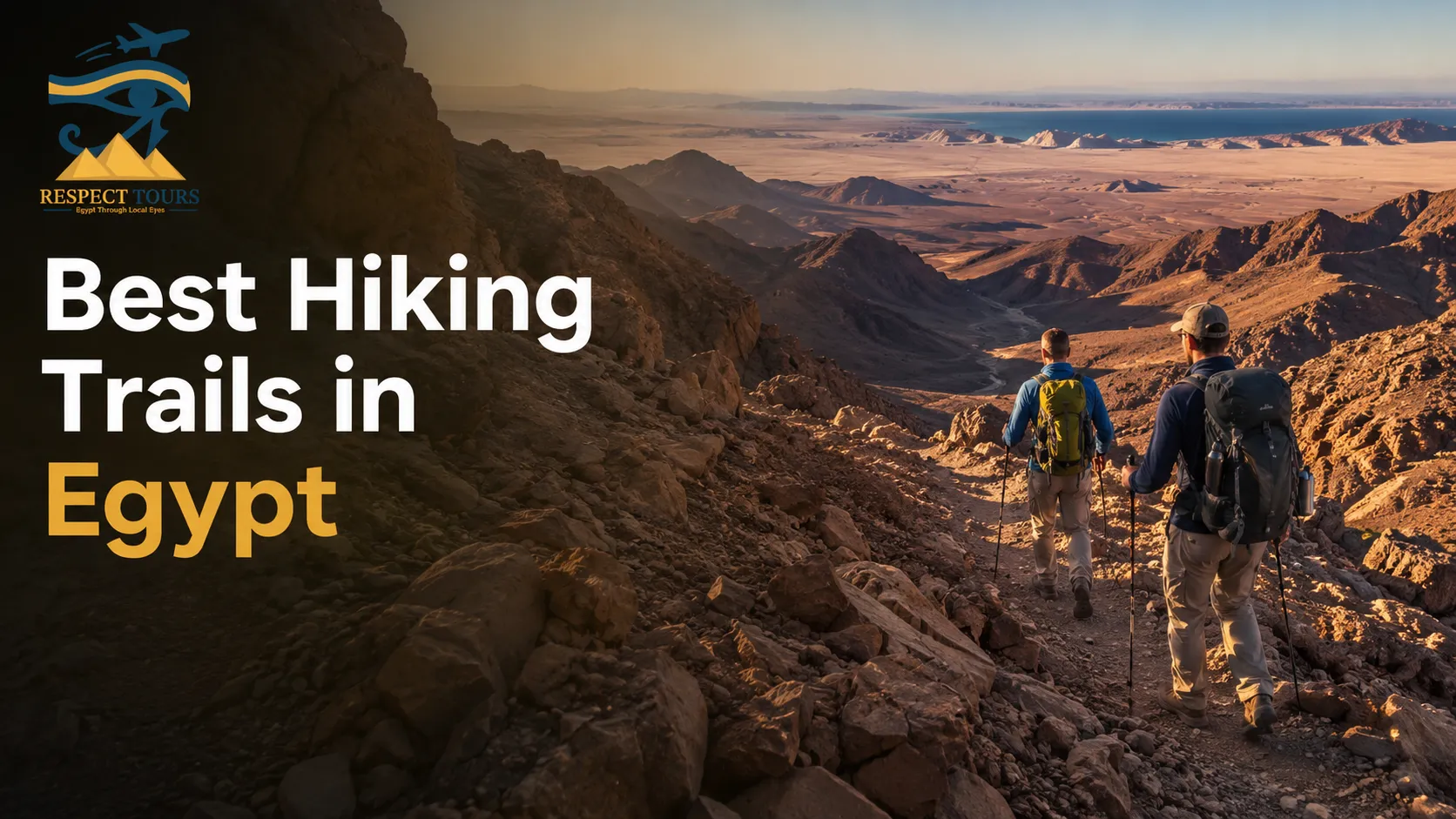
The best hiking trails in Egypt lead to places most travelers never imagine when they picture the country: sunrise above Sinai’s granite peaks, narrow desert canyons, surreal white-rock landscapes, ancient Bedouin routes, and remote mountains overlooking the Red Sea.
The challenge isn’t finding somewhere to hike. It’s knowing which experience is actually worth your time. The most famous trail may not be the most beautiful, the hardest isn’t always the most rewarding, and some of Egypt’s best walks sit far beyond the usual tourist route.
That’s where this guide is different.
At Respect Tours, we’ve been showing travelers Egypt since 1978. We’ve selected 10 hikes we genuinely recommend, then compared them by difficulty, scenery, season, accessibility, and the type of traveler they suit. We’ll also explain when a local guide is essential, what conditions to prepare for, and where current access should be checked before you build a trip around a trail.
Because the hike everyone has heard about isn’t necessarily the one we’d recommend for you.
Egypt’s Best Hiking Trails at a Glance
Before we get into each trail, here’s the quickest way to find the experience that matches your fitness, time, and reason for hiking in Egypt.
| Trail | Region | Duration | Difficulty | Best For |
|---|---|---|---|---|
| The Sinai Trail | South Sinai | Multi-day | Challenging | Experienced hikers and multi-day trekkers |
| Mount Sinai (Jebel Musa) | Saint Catherine | 4–6 hours return | Moderate | First-timers and visitors interested in its spiritual significance |
| Mount Catherine (Jebel Katrina) | Saint Catherine | 5–8 hours | Moderate–Hard | Summit seekers and hikers aiming for Egypt’s highest peak |
| Colored Canyon | Near Nuweiba, Sinai | 2–3 hours | Easy–Moderate | Families, photographers and half-day visitors |
| Blue Hole to Ras Abu Galum | Dahab, Sinai | Around 2–4 hours one way | Moderate | Coastal scenery and overnight stays at Bedouin camps |
| White Desert | Western Desert (Farafra) | Half-day to 2 days | Easy | Travellers wanting to camp among the chalk formations |
| Wadi El Hitan (Whale Valley) | Fayoum | 2–3 hours | Easy | Families and fossil enthusiasts |
| Wadi Degla Protectorate | Cairo (Maadi) | 1–3 hours | Easy | Day hikers based in Cairo |
| Red Sea Mountain Trail (Jebel Shayib) | Eastern Desert | Multi-day | Hard | Experienced hikers and wilderness trekkers |
| Siwa Desert Trek | Western Desert (Siwa) | 1–4 days | Easy–Moderate | A combination of local culture and desert trekking |
Why Egypt Is a Unique Hiking Destination
Egypt’s hiking appeal comes from contrast. In one trip, you can climb granite peaks in Sinai, walk through narrow sandstone canyons, cross open desert, explore fossil valleys, and follow trails shaped by centuries of Bedouin travel.
Dramatically Different Landscapes
Few destinations combine such different terrain in one country. The White Desert offers surreal chalk formations, the Colored Canyon cuts through layers of red and orange sandstone, and the mountains of Sinai rise sharply above remote wadis and valleys.
Ancient Routes, Not Just Scenic Trails
Many hikes in Egypt carry a historical or spiritual story. Mount Sinai is one of the world’s best-known pilgrimage mountains, while other routes pass through old monastic areas, Bedouin territories, and desert corridors used for generations.
A Strong Sense of Remoteness
Outside the main tourist centers, hiking can quickly take you into landscapes with very little development. That sense of space is one of Egypt’s biggest advantages for travelers who want something beyond the classic sightseeing route.
Hiking with Local Knowledge
In remote areas, especially Sinai and the deserts, the experience is closely tied to local Bedouin guides and communities. Their knowledge of routes, water sources, weather, and terrain is part of what makes hiking in Egypt different from simply following a marked trail elsewhere.
Respect Tours Tip: Egypt is not one hiking destination. It’s several completely different ones: mountain, canyon, desert, coastal, and historical, which is why choosing the right region matters as much as choosing the right trail.
Is Hiking in Egypt Safe?
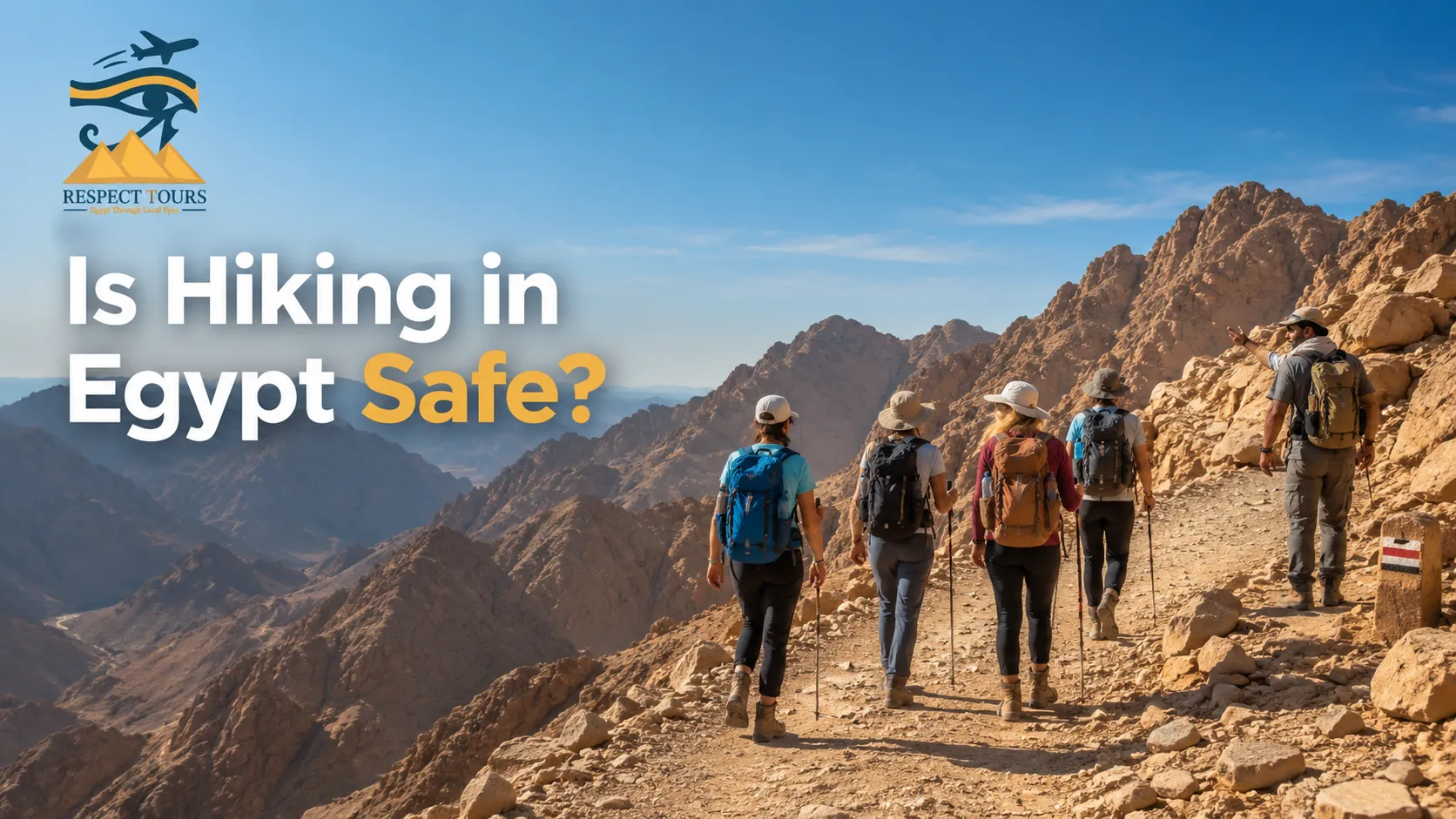
Yes, hiking in Egypt can be safe when you choose the right route, season, and local support. The main risks are usually practical ones: heat, dehydration, rough terrain, remote areas, and changing access conditions, rather than the act of hiking itself.
Check Current Access Before You Go
Some hiking regions, especially in Sinai and remote desert areas, can be affected by permits, local restrictions, or travel-advisory changes. Always check current conditions before building your itinerary around a remote trail.
Local Guides Matter
For many mountain and desert routes, an experienced local guide is one of the most important safety factors. They know the terrain, water sources, weather patterns, access points, and the practical realities of moving through remote areas.
Respect Tours’ Approach
At Respect Tours, we only recommend hiking experiences that match the traveler’s fitness level, the season, and current local conditions. For remote routes, we work with experienced local guides and help arrange the necessary logistics before the trip.
Respect Tours Tip: In Egypt, don’t treat a remote desert or mountain hike like a city walking tour. The right guide, enough water, and current access information can make the difference between a great experience and a bad decision.
When Is the Best Time to Hike in Egypt?
For most of the best hiking trails in Egypt, October to April is the main hiking season. The cooler months make mountain climbs, canyon walks, and desert treks far more comfortable than summer, when exposed terrain and limited shade can make hiking difficult or unsafe.
But Egypt’s hiking regions are very different, so there isn’t one perfect month for every trail.
| Region | Best Months | Avoid | Note |
|---|---|---|---|
| Sinai Mountains | Oct–Apr | Jun–Aug | Snow is possible on high peaks in December and January. Spring brings desert flowers from March to April. |
| Western Desert | Oct, Nov, Feb and Mar | May–Sep | December and January nights can drop below 5°C. Bring warm layers even during winter. |
| Red Sea Mountains | Nov–Mar | Apr–Oct | The most heat-sensitive hiking region; summit hikes during summer are dangerous. |
| Fayoum / Cairo Day Hikes | Oct–Apr | Jun–Aug | Short walks near Cairo can be done year-round if you start before 8 AM. |
What About Summer?
For serious desert or mountain hiking, we would avoid the hottest summer months. Temperatures can exceed 40°C in exposed areas, and many routes offer little or no shade.
That doesn’t mean every outdoor walk in Egypt stops during summer, but it does mean you shouldn’t treat a desert hike like a normal sightseeing day. Route, elevation, start time, water, and local conditions all matter.
Our Favorite Time
If you have flexibility, October–November and March–April offer an excellent balance. Temperatures are generally more comfortable for walking, while you avoid some of the coldest nights found at altitude and deep in the desert.
Respect Tours Tip: In Egypt, choosing the right season can matter more than choosing the right trail. A moderate hike in comfortable weather can be fantastic; the same route in extreme heat can become an entirely different experience.
Best Hiking Trails in Sinai, Egypt
Sinai is Egypt’s strongest hiking region, combining granite mountains, deep wadis, ancient pilgrimage routes, and Bedouin knowledge passed through generations. The experiences range from short canyon walks to serious multi-day wilderness treks.
🥇 1. The Sinai Trail: Best for a Multi-Day Wilderness Adventure
| Trail Information | Details |
|---|---|
| Difficulty | Challenging |
| Region | South Sinai |
| Style | Multi-day trek |
| Highest Point | Mount Catherine — 2,629 m |
| Best Season | October–April |
| Best For | Experienced hikers · Wilderness · Bedouin culture |
The Sinai Trail takes hiking in Egypt far beyond a typical mountain day trip. It crosses remote granite landscapes, deep wadis, high-altitude plateaus, natural springs, and ancient monastery gardens, taking hikers into parts of Sinai that most visitors never see.
The full route takes around 14 days, but many travelers choose shorter sections of 2–5 days, which are enough to experience serious mountain terrain without committing to the entire trail. Hikers travel with a local Bedouin guide, while camels may carry equipment between camps.
You don’t need to complete the whole route to understand what makes the Sinai Trail special. When access permits, even a shorter section can give you several days of genuine wilderness, dramatic mountain scenery, and a much deeper connection to Sinai’s Bedouin landscape.
The trail has also received international recognition, including being featured by Wanderlust Travel Magazine among notable long-distance hiking routes.
📋 What You Should Know
This is not a trail we recommend attempting independently. Remote sections require local knowledge, and access conditions, permits, and security restrictions can change.
Current Access: Always check the latest local conditions and official travel advice before planning a trip specifically around the Sinai Trail.
Respect Tours’ Verdict: Choose the Sinai Trail if you want a real multi-day mountain journey rather than a single famous summit. For a first hiking experience in Egypt, however, we’d start with one of the shorter Sinai routes later in this list.
2. Mount Sinai (Jebel Musa): Best for Sunrise & First-Time Hikers
| Trail Information | Details |
|---|---|
| Difficulty | Moderate |
| Region | Saint Catherine, South Sinai |
| Duration | Around 4–6 hours return |
| Summit | 2,285 m |
| Best Season | October–April |
| Best For | First-time hikers · Sunrise · History and spirituality |
Mount Sinai is Egypt’s most famous hike, but its appeal goes far beyond reaching the summit. The mountain is deeply significant to Judaism, Christianity, and Islam, turning what would already be a spectacular mountain walk into one of Egypt’s most meaningful hiking experiences.
Most travelers make the climb before dawn to watch sunrise over the granite peaks of South Sinai. The most commonly used route is the Camel Path, which climbs gradually toward the summit before the final steep section of stone steps. The alternative Steps of Repentance are considerably steeper, with thousands of steps traditionally associated with the monastery.
Is the Sunrise Hike Worth It?
Yes, if you’re comfortable with the early start and the crowds.
Walking through the mountains in darkness and watching the surrounding peaks gradually appear as the sun rises is what makes this hike memorable. But Mount Sinai is popular, so don’t expect to have the summit to yourself.
If sunrise isn’t important to you, hiking at another suitable time can offer a different experience without making the pre-dawn climb the entire focus.
📋 What You Should Know
Bring a headlamp, water, proper walking shoes, and warm layers. Even when the weather feels pleasant at lower elevations, the summit before sunrise can be surprisingly cold.
Camels may be available for part of the Camel Path, but they don’t take you all the way to the summit. The final section still has to be completed on foot.
Access arrangements and guide requirements can change, so confirm the current local rules before your visit.
Respect Tours’ Verdict: If you only have time for one mountain hike in Egypt, Mount Sinai is one of our strongest recommendations. It’s achievable for many travelers with reasonable fitness and combines scenery, history, and a sunrise you’ll remember long after the climb is over.
View the Mount Sinai Tour from Sharm El Sheikh
3. Mount Catherine: Best for Reaching Egypt’s Highest Peak
| Trail Information | Details |
|---|---|
| Difficulty | Moderate–Hard |
| Region | Saint Catherine, South Sinai |
| Duration | Around 5–8 hours, depending on the route |
| Summit | 2,629 m — Egypt’s highest peak |
| Best Season | October–April |
| Best For | Experienced hikers · Mountain scenery · High-altitude trekking |
If Mount Sinai is the famous climb, Mount Catherine is the one for hikers who want to go higher. At 2,629 metres, it is the highest mountain in Egypt and offers a more demanding, quieter experience in the rugged highlands around Saint Catherine.
The trail climbs through granite valleys and mountain terrain before reaching a summit with sweeping views across South Sinai. Compared with Mount Sinai, the experience feels less like a pilgrimage route and more like a proper mountain hike, with fewer visitors and a stronger sense of wilderness.
Mount Catherine vs Mount Sinai
Choose Mount Sinai if you want the iconic sunrise, religious history, and a more accessible first mountain hike.
Choose Mount Catherine if your priority is the hiking itself. It is higher, generally more demanding, and better suited to travelers who want to spend longer in the mountains rather than follow the most famous route.
📋 What You Should Know
Routes and hiking times can vary depending on the starting point and itinerary, so treat duration estimates as a guide rather than a fixed schedule.
Conditions at altitude can also be very different from those below. Warm layers, sufficient water, proper hiking footwear, and an experienced local guide are important, particularly during the colder months.
Respect Tours’ Verdict: Mount Catherine is our pick for travelers who look at Mount Sinai and think, “What’s the next challenge?” You lose some of the famous pilgrimage atmosphere but gain a quieter trail, Egypt’s highest summit, and one of the country’s strongest mountain-hiking experiences.
4. Colored Canyon: Best for an Easy Canyon Adventure
| Trail Information | Details |
|---|---|
| Difficulty | Easy–Moderate |
| Region | Near Nuweiba, South Sinai |
| Duration | Around 2–3 hours |
| Landscape | Narrow sandstone canyon |
| Best Season | October–April |
| Best For | Beginners · Photography · Short adventure hikes |
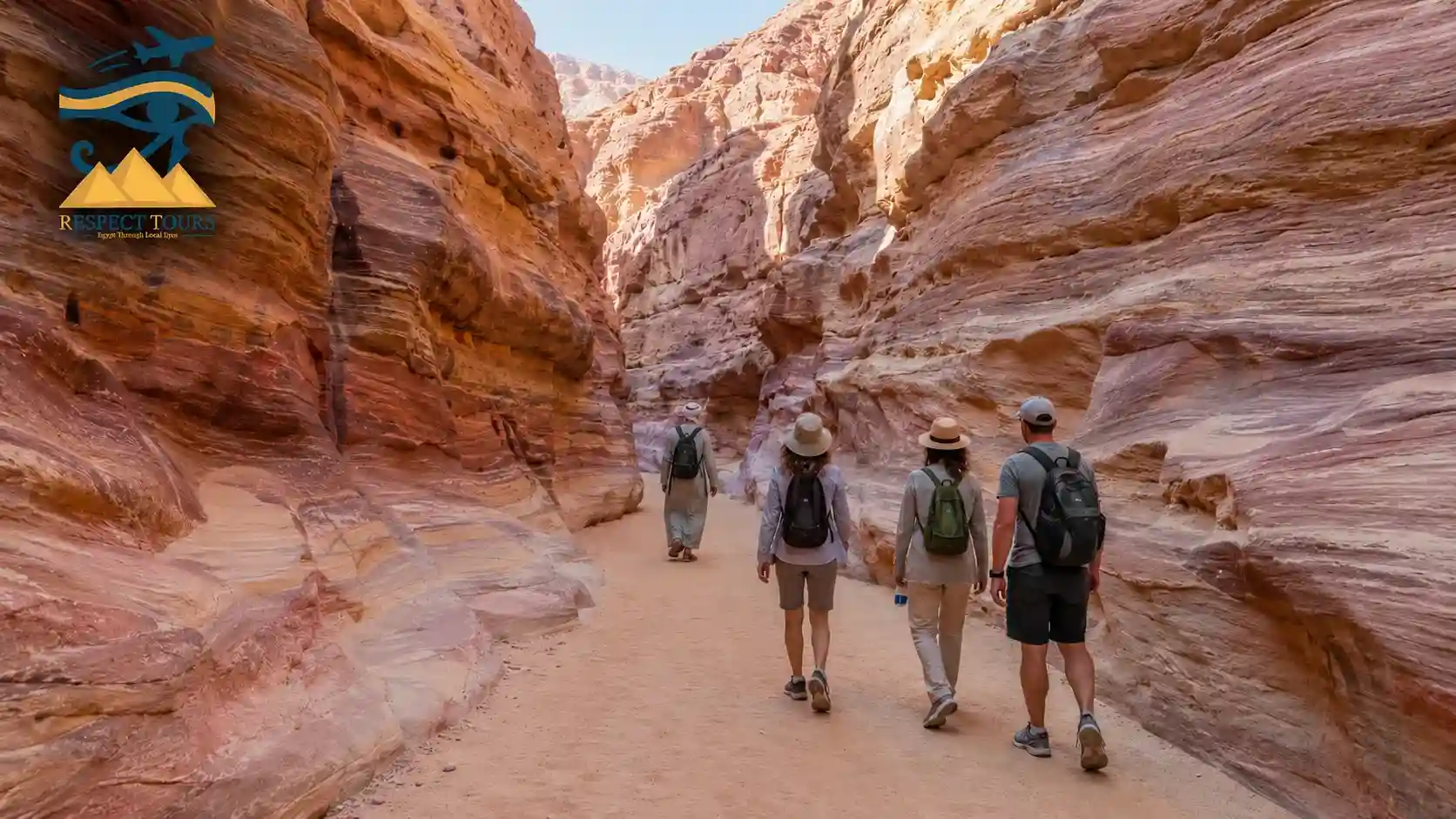
The Colored Canyon proves that hiking in Sinai doesn’t have to mean climbing a mountain. Here, the experience is about walking through a narrow sandstone canyon shaped into twisting passages and layered with shades of red, orange, yellow, pink, and brown.
It’s a completely different experience from Mount Sinai or Mount Catherine. Instead of chasing a summit, you’re inside the landscape, moving between sculpted rock walls and narrow passages where the patterns and colors change as the light shifts.
That makes it particularly good for travelers who want a memorable outdoor experience without committing to a full mountain climb or multi-day trek.
📸 Why Is the Colored Canyon Worth Visiting?
The geology is the attraction. Wind and water erosion have exposed layers of sandstone and created unusual shapes, textures, and natural patterns throughout the canyon.
It’s also one of the most photogenic hikes on this list, but don’t spend the entire walk looking through your phone. Some of the canyon’s best details are directly above and around you.
📋 What You Should Know
Although the hike itself is relatively short, expect uneven ground, rocks, and some narrow sections. Proper footwear is much better than sandals.
Summer heat can make exposed desert areas uncomfortable, which is why we prefer the cooler months for this experience.
Respect Tours’ Verdict: Choose the Colored Canyon if you want maximum scenery without maximum difficulty. It’s one of our favorite introductions to Sinai for travelers who like adventure but don’t necessarily consider themselves serious hikers.
View the Colored Canyon Trip from Sharm El Sheikh
5. Blue Hole to Ras Abu Galum: Best Coastal Hike in Egypt
| Trail Information | Details |
|---|---|
| Difficulty | Moderate |
| Region | Dahab, South Sinai |
| Distance | Around 8–10 km one way |
| Duration | Roughly 2–4 hours, depending on pace and stops |
| Best Season | October–April |
| Best For | Coastal scenery · Hiking and snorkeling · Bedouin experience |
This is one of those hikes that doesn’t feel like the Egypt most travelers expect. Starting near Dahab’s famous Blue Hole, the trail follows the coastline toward Ras Abu Galum, with the mountains of Sinai rising on one side and the deep blue Gulf of Aqaba on the other.
There’s no summit to conquer. The appeal is the journey itself: a rugged coastal path, almost no development along the way, and the constant contrast between desert mountains and the Red Sea.
And unlike most hikes on this list, reaching the end doesn’t necessarily mean the adventure is over. Ras Abu Galum is known for its clear water and coral reefs, so the experience can combine hiking, swimming, or snorkeling and time at a Bedouin camp in a single day.
What Makes This Hike Different?
Very few trails in Egypt let you spend the morning walking through desert terrain and then finish by putting on a mask and snorkeling above a coral reef.
That combination makes Blue Hole to Ras Abu Galum particularly good for travelers who want adventure without committing to a difficult mountain climb.
📋 What You Should Know
The trail is exposed, with very little shade, so sun protection and enough water are essential. Walking time varies considerably with pace, stops, and the exact itinerary.
Ras Abu Galum is a protected area, and access arrangements can change, so confirm the current route and local requirements before setting out.
Respect Tours’ Verdict: If climbing mountains isn’t your thing but you still want a proper Sinai adventure, this would be high on our list. The combination of coastal hiking, mountains, Bedouin surroundings, and the possibility of snorkeling makes it one of the most varied hiking days in Egypt.
Best Hiking Trails in Egypt’s Western Desert
The Western Desert offers a completely different kind of hiking from Sinai. There are fewer summits and defined mountain paths; here, the experience is about walking through enormous open landscapes, strange geological formations, dunes, oases, and some of Egypt’s most remote desert scenery.
6. White Desert: Best for Surreal Desert Landscapes
| Trail Information | Details |
|---|---|
| Difficulty | Easy |
| Region | Farafra, Western Desert |
| Duration | Half-day to multi-day |
| Landscape | White chalk formations · Open desert |
| Best Season | October–March |
| Best For | First-time desert hikers · Photography · Camping |
The White Desert is less about following a conventional hiking trail and more about walking through one of the strangest landscapes in Egypt.
Wind erosion has sculpted the white chalk into enormous formations rising from the desert floor, some resembling mushrooms, towers, animals, and abstract sculptures. Against the surrounding sand and blue sky, parts of the landscape can feel almost unreal.
You don’t need to be an experienced hiker to enjoy it. Short walks between the formations are accessible to many travelers, while longer itineraries can combine trekking with 4×4 exploration and overnight desert camping.
🌌 Why Stay Overnight?
Because the White Desert changes completely after the day visitors leave.
Watching sunset across the chalk formations is impressive, but spending the night beneath the desert sky and waking up among them turns a sightseeing stop into a genuine Western Desert experience.
If your itinerary allows it, we’d choose an overnight trip over rushing in and out on the same day.
📋 What You Should Know
The White Desert is a protected area, and travel arrangements, permits, and access requirements can change. This isn’t somewhere we recommend simply driving into independently without checking the current rules and local conditions.
Desert temperatures also swing dramatically. Days can be pleasantly warm during the main season while nights become surprisingly cold, so pack layers even if Cairo feels comfortable.
Respect Tours’ Verdict: Choose the White Desert if you want a hike where the landscape matters more than the physical challenge. It may be one of the easiest experiences on this list, but visually, it’s one of the hardest to forget.
Explore the Bahariya Oasis, White & Black Desert Tour
7. Wadi El Hitan: Best for Fossils, Geology & an Easy Desert Walk
| Trail Information | Details |
|---|---|
| Difficulty | Easy |
| Region | Wadi El Rayan, Fayoum |
| Duration | Around 2–3 hours |
| Landscape | Desert valley · Fossils · Rock formations |
| Best Season | October–April |
| Best For | Families · Beginners · Fossils and natural history |
Wadi El Hitan (Whale Valley) is unlike any other hike on this list. You’re not walking toward a mountain summit or through a dramatic canyon; you’re walking across a desert landscape that was once beneath an ancient sea.
The valley is famous for its fossil remains of Archaeoceti, an extinct group of early whales, which preserve crucial evidence of how whales evolved from land-based mammals into ocean-going animals. That extraordinary fossil record is why Wadi El Hitan became a UNESCO World Heritage Site.
And that’s what makes walking here so memorable: you’re exploring a desert while looking at evidence of the sea that existed here millions of years ago.
🦴 What Will You Actually See?
Rather than fossils displayed only behind museum glass, Wadi El Hitan allows visitors to walk through the landscape where important specimens were discovered.
Along the route, you can see fossil sites alongside unusual desert formations and learn how dramatically this part of Egypt has changed over geological time.
The walking itself is relatively easy, making this one of the strongest choices on our list for families and travelers who want an outdoor experience without a demanding hike.
📋 What You Should Know
Wadi El Hitan is in a protected desert area, so visits should follow the designated routes and local regulations. There is very little shade, making water, sun protection, and suitable footwear important even though the walk is not technically difficult.
It also works particularly well as part of a wider Fayoum day or overnight trip, rather than treating the hike as the only reason to travel to the region.
Respect Tours’ Verdict: Come here if you want your hike to tell a story. Few places let you walk through a desert while discovering evidence of ancient whales beneath your feet. For families, geology lovers, and travelers looking for something completely different from Egypt’s archaeological sites, Wadi El Hitan deserves its place on this list.
8. Siwa Oasis Desert Trek: Best for Desert Hiking & Local Culture
| Trail Information | Details |
|---|---|
| Difficulty | Easy–Moderate |
| Region | Siwa Oasis, Western Desert |
| Duration | Half-day to multi-day |
| Landscape | Dunes · Salt lakes · Oasis · Desert |
| Best Season | October–March |
| Best For | Desert hiking · Siwan culture · Camping and slow travel |
Siwa is where hiking becomes part of a much bigger desert experience. You can walk between enormous dunes, palm groves, salt lakes, rocky outcrops, and springs, then end the day watching the sunset over the Great Sand Sea.
What makes Siwa different from the White Desert is the human story surrounding the landscape. The oasis has its own distinct culture and history, and exploring with local Siwan guides adds far more than navigation.
You begin to understand how communities have lived around the oasis, crossed the desert, and adapted to this environment for generations.
There isn’t one single “Siwa hiking trail.” Experiences range from short walks around the oasis and desert edge to longer guided treks and overnight camping journeys into the surrounding Western Desert.
🏜️ What Makes Siwa Worth the Journey?
Siwa is remote, and that is part of its appeal.
You don’t come here simply to tick off a hiking route. A good itinerary can combine walking, desert landscapes, Siwan villages, salt lakes, springs, local food, and nights beneath an exceptionally dark desert sky.
If you have enough time, slow down. Siwa rewards travelers who stay rather than rush through it.
📋 What You Should Know
Longer desert routes require proper planning and local support. Distances can be deceptive in open terrain, mobile coverage may be limited, and temperatures fall considerably after sunset during winter.
Respect Tours’ Verdict: Choose Siwa if you want more than a hike. This is our pick for travelers who want the desert, local culture, and adventure to become one experience and who don’t mind traveling farther to find it.
Red Sea Mountain Hikes
Away from Hurghada’s beaches and resorts, the Eastern Desert rises into rugged mountains, deep wadis, and remote landscapes that most Red Sea visitors never realize are there. Hiking here is much less developed than in Sinai, which is exactly what makes it interesting for experienced travelers.
Explore the 5-Day Cairo to Siwa Oasis Tour
9. Red Sea Mountain Trail: Best for Remote Wilderness
| Trail Information | Details |
|---|---|
| Difficulty | Challenging |
| Region | Eastern Desert, near Hurghada |
| Style | Multi-day mountain trekking |
| Landscape | Mountains · Wadis · Desert |
| Best Season | November–March |
| Best For | Experienced hikers · Remote wilderness · Bedouin culture |
The Red Sea Mountain Trail takes you into an Egypt that feels remarkably far removed from the resorts along the coast. Instead of beaches and coral reefs, you enter a landscape of jagged peaks, dry wadis, desert plains, and old mountain routes.
The trail was developed with the Maaza Bedouin community, whose knowledge of the Eastern Desert is central to the experience. Local guides don’t simply show hikers which direction to walk; they bring generations of knowledge about the terrain, traditional routes, water sources, and life in one of Egypt’s least-visited mountain regions.
Like the Sinai Trail, this isn’t primarily about reaching one famous summit. The journey through the landscape is the experience.
📋 What You Should Know
This is remote desert trekking, not a casual excursion from your Hurghada hotel. Routes can involve long days, rough terrain, limited infrastructure, and very little shade.
Access to the full trail and remote sections has also faced restrictions in recent years. Do not build an itinerary around the Red Sea Mountain Trail without first confirming current access, permissions, and local conditions.
Respect Tours’ Verdict: This is one of the most fascinating hiking concepts in Egypt, but current accessibility matters more than how impressive it looks on paper.
Easy Hiking Near Cairo
You don’t need to travel to Sinai or deep into the Western Desert to hike in Egypt. If you’re staying in Cairo and only have a few hours, Wadi Degla offers one of the easiest ways to swap city traffic for open desert scenery.
10. Wadi Degla Protectorate: Best Easy Hike Near Cairo
| Trail Information | Details |
|---|---|
| Difficulty | Easy |
| Region | Maadi, Cairo |
| Duration | Around 1–3 hours |
| Landscape | Limestone canyon · Wadi · Desert |
| Best Season | October–April |
| Best For | Beginners · Families · Short hikes near Cairo |
Wadi Degla is the hike we’d recommend when you want to get outdoors without sacrificing an entire day of your Cairo itinerary. The protected area sits surprisingly close to the city, yet once you move deeper into the wadi, the urban landscape gives way to limestone cliffs, open desert, and a broad natural valley.
Unlike Mount Sinai or Egypt’s multi-day desert routes, there’s no major summit and no technical challenge. You can simply walk as far into the valley as your time and fitness allow before turning back.
That makes Wadi Degla particularly useful for beginners, families, or travelers who want to add some hiking to a Cairo stay without planning a separate expedition.
📋 What You Should Know
There is very little shade, so avoid the hottest part of the day and carry enough water. Comfortable walking shoes, sun protection, and a charged phone are sensible even for a short visit.
Because opening arrangements and access conditions can change, check the current status before setting out.
Respect Tours’ Verdict: Wadi Degla isn’t the most dramatic hike on this list, and it doesn’t need to be. Its strength is accessibility. For an easy desert walk close to Cairo that fits around the rest of your sightseeing, it’s one of the most practical choices in Egypt.
How to Choose the Right Hiking Trail in Egypt
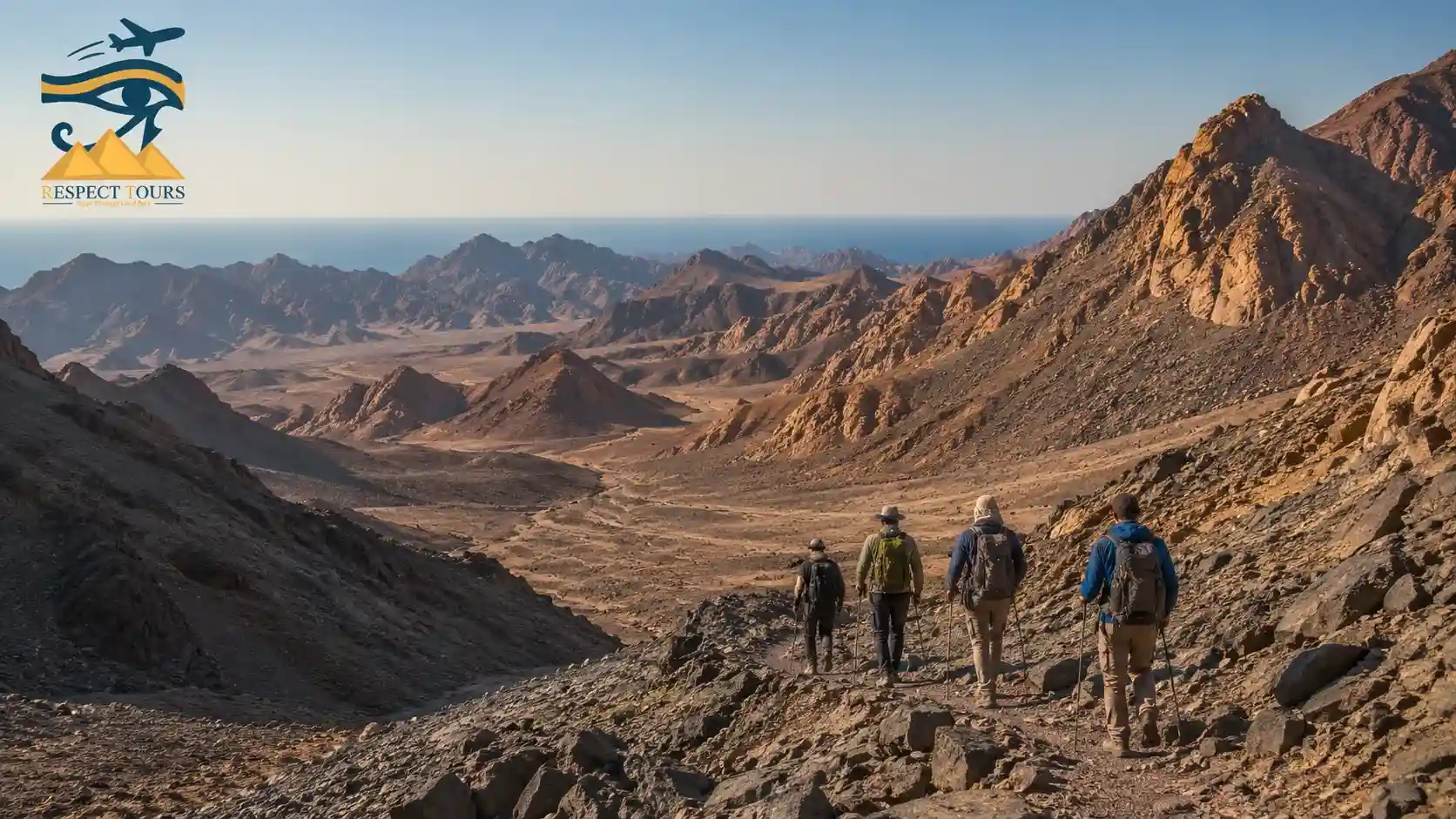
With mountain summits, desert walks, coastal routes, and multi-day treks on the same list, the best hike in Egypt depends much more on the experience you want than on which trail is most famous.
| If You Want… | We Recommend |
|---|---|
| Your First Mountain Hike in Egypt | Mount Sinai |
| Egypt’s Highest Summit | Mount Catherine |
| A Serious Multi-Day Adventure | Sinai Trail* |
| An Easier Scenic Hike | Colored Canyon |
| Hiking and Red Sea Scenery | Blue Hole → Ras Abu Galum |
| The Most Unusual Desert Landscape | White Desert |
| An Easy Hike with Natural History | Wadi El Hitan |
| Desert and Local Culture | Siwa Oasis |
| Remote Mountain Wilderness | Red Sea Mountain Trail* |
| An Easy Hike Near Cairo | Wadi Degla |
*Check current access and local conditions before planning around long-distance remote trails.
What to Pack for Hiking in Egypt
| Category | Essential Items | Notes |
|---|---|---|
| Footwear | Broken-in trail shoes or hiking boots with ankle support | Sandals are not adequate for rocky terrain. New boots can cause blisters. |
| Clothing | Long-sleeved shirts, long trousers and a wide-brim hat | Synthetic fabrics dry faster than cotton. Long sleeves provide better protection than sunscreen alone at altitude. |
| Warm Layer | Fleece or light down jacket | Desert temperatures drop quickly at night. The Sinai summit can be around 5°C at 4 AM in October. |
| Water | 3–4 litres minimum for a full-day desert hike | Add electrolyte tablets. Thirst is a late sign of dehydration. |
| Sun Protection | SPF 50+ sunscreen, UV sunglasses and a buff or shemagh | Desert glare reflects UV from the sand. Remember to apply sunscreen to the backs of your hands. |
| Navigation | Offline maps downloaded before departure | Mobile coverage can be limited or unavailable on remote routes. A GPS device is recommended for multi-day trips. |
| Night Hiking (Sinai) | Headlamp and spare batteries | The Mount Sinai summit hike usually starts between 1 and 2 AM in darkness. |
| Emergency | Satellite communicator for remote multi-day treks | Mobile service may be nonexistent in the Sinai interior and Western Desert. |
FAQs About Hiking in Egypt
What are the best hiking trails in Egypt?
Some of the best hiking trails in Egypt include Mount Sinai, Mount Catherine, the Sinai Trail, Colored Canyon, Blue Hole to Ras Abu Galum, the White Desert, Wadi El Hitan, Siwa Oasis, the Red Sea Mountain Trail, and Wadi Degla.
The best choice depends on whether you want mountains, desert, coastal scenery, history, or a multi-day adventure.
What is the best hike in Egypt for first-time visitors?
Mount Sinai is our top choice for many first-time visitors. It combines dramatic mountain scenery with history and spiritual significance while remaining achievable for travelers with reasonable fitness.
If you prefer something easier, consider Colored Canyon, Wadi El Hitan, or Wadi Degla.
What is the hardest hike in Egypt?
Egypt’s long-distance mountain routes, particularly the Sinai Trail and Red Sea Mountain Trail, are among the most demanding because they involve multiple days in remote terrain. For a single mountain climb, Mount Catherine offers a greater challenge than Mount Sinai and takes you to Egypt’s highest summit at 2,629 meters.
Can beginners go hiking in Egypt?
Absolutely. You don’t need to be an experienced trekker to hike in Egypt. Wadi Degla, Wadi El Hitan, the White Desert, and Colored Canyon all offer relatively accessible experiences, while Mount Sinai is a good next step for travelers ready for a longer climb.
Can you hike Mount Sinai without a guide?
Guide and access requirements can change, so check the current arrangements in Saint Catherine before your hike. Even when a route appears straightforward, using a local guide can add valuable knowledge about the mountain, its history, and current conditions.
When is the best time to hike in Egypt?
For most regions, October to April is the best general hiking season. The cooler temperatures are much better suited to exposed desert and mountain terrain. For the Western Desert and Red Sea Mountains, the cooler winter months can be particularly comfortable.
Is hiking in Egypt safe?
Hiking in Egypt can be safe with proper planning. Choose routes appropriate for your experience, carry enough water, avoid extreme heat, and check current access conditions. For remote desert and mountain routes, we strongly recommend experienced local support.
Can you hike in Egypt during summer?
Short walks may still be possible depending on the location and conditions, but summer is not our preferred season for serious desert or mountain hiking. Extreme heat, strong sun, and limited shade can make exposed routes considerably more demanding.
Is Egypt good for serious hikers?
Yes, but you need to look beyond the classic tourist itinerary. Mount Catherine, Sinai’s mountain routes, and the Eastern Desert can provide much more demanding experiences than many visitors expect. Access to some remote long-distance routes can change, so verify current conditions before planning your trip around one.
Hike Egypt with Respect Tours
Hiking in Egypt can involve more than choosing a trail. Local guides, permits, 4WD support, remote-area logistics, and overnight camping arrangements can all require advance coordination, especially in Sinai and the Western Desert.
At Respect Tours, we’ve been showing travelers Egypt since 1978. We combine decades of local experience with trusted local guides and on-the-ground knowledge to match you with a hike that suits your fitness, available time, interests, and current conditions.
From Sinai’s mountain peaks to Siwa and the Western Desert, we can coordinate the details that matter: the right route, local support, transport, timing, and practical arrangements.
Let’s Find the Right Egypt Adventure for You
Tell us where you’re traveling, how much time you have, and how challenging you want your hike to be. We’ll recommend the experience that genuinely fits you, not simply the one everyone else books.
Tailor Your Egypt Adventure
Planning something bigger? We can build a custom Egypt itinerary combining hiking with Sinai, the Western Desert, Cairo, and other destinations around your dates, interests, and fitness level.
Egypt Through Local Eyes — since 1978.