


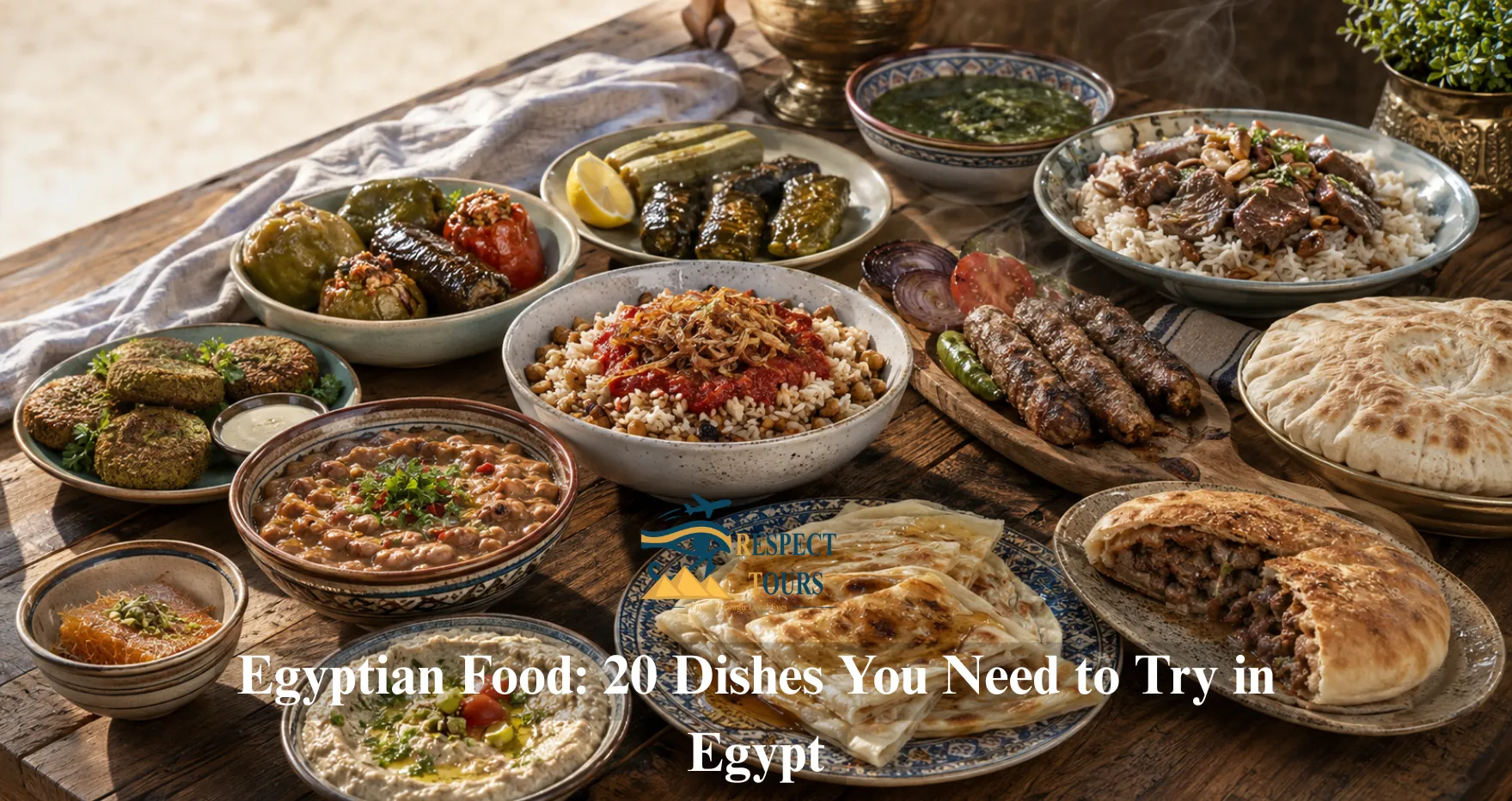
Egyptian food is far more than koshary and falafel. Shaped by thousands of years of history and influenced by Pharaonic, Mediterranean, Ottoman, and Middle Eastern traditions, Egyptian cuisine is one of the oldest and most diverse food cultures in the world.
From famous Egyptian foods such as ful medames and molokhia to seasonal dishes prepared during Ramadan and traditional meals served during Egyptian festivals, food is an essential part of everyday life in Egypt.
This guide covers the best Egyptian food to try, the ingredients behind the country’s most popular dishes, and the culinary traditions that make Egyptian cuisine unique. At Respect Tours, we’ve been introducing travelers to Egypt through its history, culture, and food since 1978, and these are the dishes we recommend our guests try first.
| # | Dish | Type |
|---|---|---|
| 1 | Ful Medames | Breakfast / Street Food |
| 2 | Ta’ameya (Egyptian Falafel) | Street Food / Vegetarian |
| 3 | Koshary | National Dish / Casual Dining |
| 4 | Shawarma | Street Food / Meat |
| 5 | Kebab & Kofta | Restaurant / Meat |
| 6 | Mulukhiyah | Home Cooking / Soup |
| 7 | Hamam Mahshi (Stuffed Pigeon) | Delicacy / Restaurant |
| 8 | Hawawshi | Street Food / Meat Pie |
| 9 | Alexandrian Kebdah | Street Food / Offal |
| 10 | Sayadiyah Fish | Coastal Cuisine / Restaurant |
| 11 | Mahshi (Stuffed Vegetables) | Home Cooking |
| 12 | Egyptian Fatteh | Celebratory Dish / Home Cooking |
| 13 | Feteer Meshaltet | Pastry / Breakfast |
| 14 | Baba Ghanoush | Dip / Side Dish |
| 15 | Besarah | Dip / Vegetarian |
| 16 | Baklava | Sweet / Bakery |
| 17 | Kanafeh | Sweet / Bakery |
| 18 | Umm Ali | Dessert / Restaurant |
| 19 | Baked Sweet Potato | Street Food / Sweet |
| 20 | Aish Baladi (Flatbread) | Staple Food / Everywhere |
The Most Common Egyptian Street Foods and Breakfast Dishes
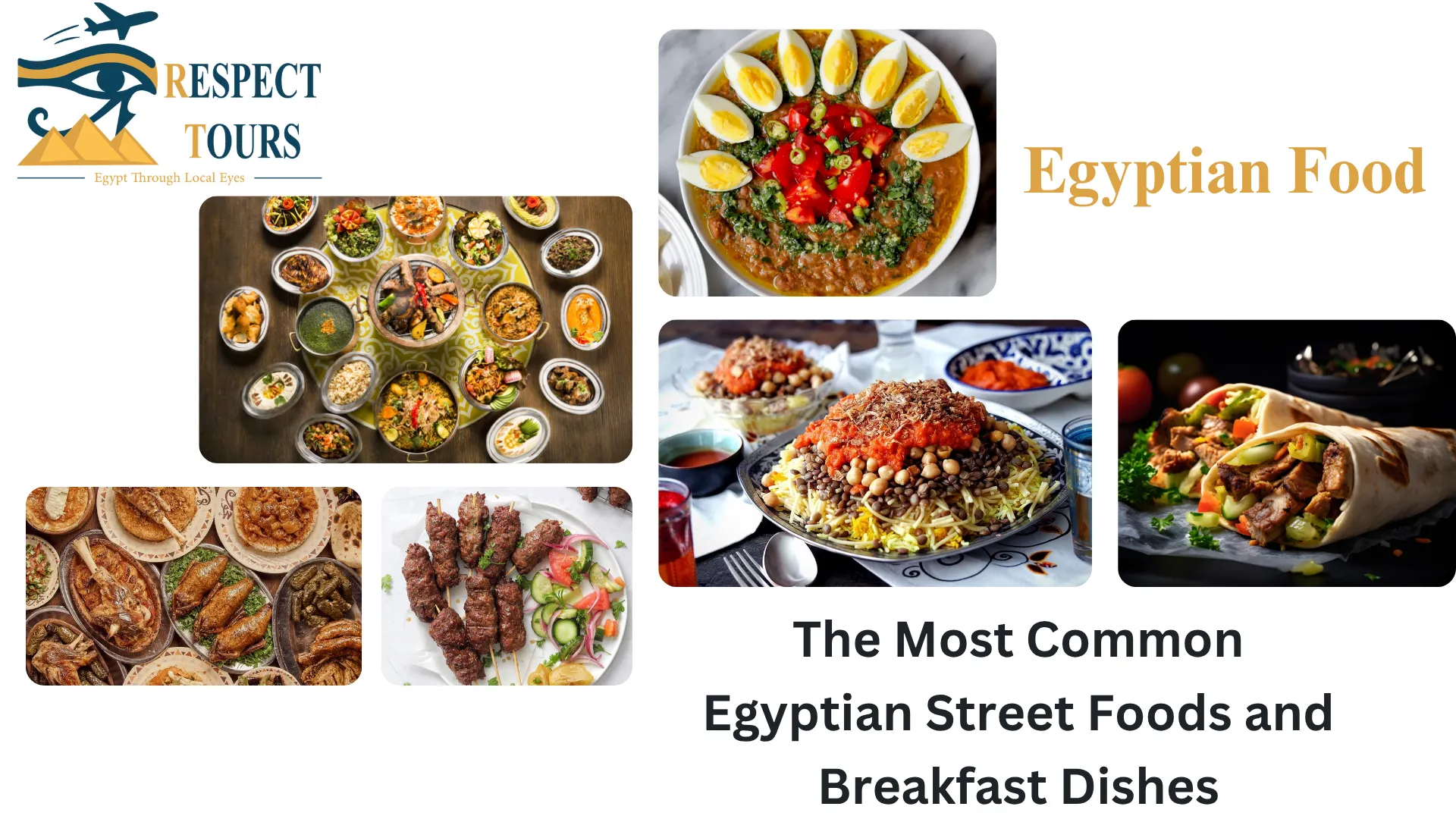
Let’s dive into the core of what makes Egyptian cuisine so unique and utterly delicious. These are the dishes you’ll find everywhere, from street carts to five-star restaurants, and they form the backbone of daily life here.
-
Ful Medames: Egypt’s Most Eaten Dish
Category: Vegetarian • Street Food • Breakfast
Ful medames is slow-cooked fava beans, mashed or whole, seasoned with cumin, olive oil, lemon juice, and sometimes a little garlic or chili. It’s the most common breakfast in Egypt by a significant margin. You’ll see it sold from carts with large pots at dawn and from small restaurants all morning.
The dish goes back thousands of years. Dried fava beans appear in ancient Egyptian tombs as provisions for the afterlife, which gives you a sense of how central they are to the food culture here.
- Why it matters: Ful is the fuel that powers Egypt. It’s affordable, delicious, and a staple for millions. You’ll see locals lining up for it every morning.
- Local Pro Tip: Don’t be afraid to try it from a street cart! Look for a busy one; that’s usually a sign of quality and freshness. It’s often served with aish baladi (Egyptian flatbread) for scooping.
- Traveler Story: “I was hesitant to try ful at first,” shared Sarah, a Canadian traveler on our ‘Pharaohs & Flavors’ tour last spring. “But our Respect Tours guide, Ahmed, insisted. It was surprisingly delicious, especially with the fresh bread. I ended up having it every morning!”
Main Ingredients
- Fava beans
- Cumin
- Olive oil
- Lemon juice
- Garlic
- Chili (optional)
- Aish baladi (Egyptian bread)
-
Ta’ameya: Egyptian Falafel (Not What You Think)
Category: Vegetarian • Street Food • Breakfast
Ta’ameya is the Egyptian version of falafel and one of the country’s most popular street foods. Unlike the chickpea-based falafel found elsewhere in the Middle East, Egyptian ta’ameya is made from ground fava beans, giving it a lighter texture, a vibrant green interior, and a fresh, herby flavor.
Crispy on the outside and soft on the inside, ta’ameya is typically served inside aish baladi with tahini, salad, and pickles, making it one of the best Egyptian foods for breakfast or a quick snack.
The local name is ta’ameya, although many visitors know it simply as falafel. Using the Egyptian name is a great way to sound like a local.
- Why It Matters: Ta’ameya is one of the most common foods in Egypt and a perfect introduction to Egyptian street food culture.
- Local Pro Tip: Ask for your ta’ameya sokhna (hot) for the best flavor and harra if you’d like the spicy version.
Main Ingredients
- Fava beans
- Parsley
- Coriander
- Dill
- Onion
- Garlic
- Cumin
- Sesame seeds
- Tahini
- Aish baladi
-
Koshary: Egypt’s National Dish
Category: Vegetarian • Street Food • National Dish
Koshary is Egypt’s national dish and one of the country’s most famous foods. This unique combination of rice, macaroni, lentils, and chickpeas is layered in a bowl and topped with spiced tomato sauce, garlic vinegar, and crispy fried onions.
While the combination may sound unusual at first, the balance of textures and flavors is what makes koshary so popular. The soft rice and lentils contrast perfectly with the crunchy onions, while the tangy tomato sauce and garlic vinegar bring everything together.
Today, koshary is one of the most common foods in Egypt and can be found in dedicated restaurants and local eateries across the country. For many Egyptians, it’s the ultimate comfort food.
- Why It Matters: Koshary is considered the national dish of Egypt and one of the best Egyptian dishes for first-time visitors looking to experience authentic Egyptian cuisine.
- Local Pro Tip: Customize your bowl at the table by adding shatta for heat and da’a for extra garlic flavor.
Main Ingredients
- Rice
- Macaroni
- Brown lentils
- Chickpeas
- Tomato sauce
- Garlic vinegar
- Crispy fried onions
- Shatta (chili sauce)
- Da’a (garlic sauce)
⚠️ First-Timer Note
Go easy with the chili sauce (shatta) on your first bowl. It’s concentrated and significantly spicier than it looks. Add half a spoon, taste, then decide.
-
Shawarma: Done Differently Here
Category: Meat • Street Food
Shawarma is popular across the Middle East, but the Egyptian version has its own character. Thin slices of marinated chicken or beef are slowly roasted on a vertical spit, developing crispy, caramelized edges before being shaved directly into fresh bread with tahini, garlic sauce, pickles, and sometimes tomatoes.
While shawarma can be found almost everywhere in Egypt, quality varies considerably from one place to another. The best shawarma is juicy on the inside, slightly charred on the edges, and packed with flavor from the marinade and slow roasting process.
- Why it matters: Shawarma is one of the most popular street foods in Egypt and a quick, flavorful meal enjoyed by locals throughout the day.
- Local Pro Tip: Look for places where the meat is visibly caramelizing on the spit, and there’s a good line of locals. That’s your best bet for a fresh, delicious shawarma.
Main Ingredients
- Chicken or beef
- Flatbread or fino bread
- Tahini sauce
- Garlic sauce
- Pickles
- Tomatoes
- Onions
- Shawarma spice blend
-
Kebab and Kofta: Charcoal-Grilled Meat
Category: Meat • Grilled Dishes • Restaurant Favorite
Kebab is grilled chunks of lamb or beef. Kofta is seasoned ground meat, beef or lamb, shaped onto flat skewers and grilled over charcoal. Both are served with flatbread, tahini, and a simple salad of tomato, onion, and parsley.
The charcoal grill is what makes Egyptian kofta different from versions elsewhere. The smoke is part of the flavor. Good kofta is spiced simply with cumin, coriander, and a little chili because the quality of the meat and the grill does the work.
Both dishes are traditionally served with aish baladi, tahini, grilled vegetables, and fresh salads.
- Why it matters: These dishes are celebratory, often enjoyed with family and friends. The smoky flavor from the charcoal grill is irresistible.
- Traveler Story: “My husband, David, is a big meat-eater,” recounted Brenda from the UK, who joined our ‘Luxury Nile Cruise & Cairo’ tour. “He was thrilled with the kofta. He said it was the best he’d ever had, so tender and perfectly spiced. Our Respect Tours guide even showed us a local restaurant near our hotel that specialized in it.”
Main Ingredients
Kebab
- Lamb or beef cubes
- Onion
- Salt and pepper
- Egyptian spices
Kofta
- Minced beef or lamb
- Onion
- Parsley
- Cumin
- Coriander
- Black pepper
- Chili (optional)
-
Mulukhiyah: The Divisive Green Soup
Category: Home Cooking • Traditional Dish
Mulukhiyah is made from jute mallow leaves, finely chopped and cooked in chicken or rabbit broth with garlic and coriander. The texture is thick and slightly gelatinous (the leaves release a natural mucilage when cooked), and the color is deep green. It’s served with rice and either chicken or rabbit, which are cooked separately in the same broth.
The texture is often the biggest surprise for first-time visitors, as mulukhiyah is naturally thick and silky. However, its savory, garlicky taste makes it one of the most beloved dishes in Egypt and a staple of Egyptian home cooking.
Mulukhiyah is traditionally served with rice alongside chicken, rabbit, or meat cooked in the same broth.
- Why it matters: It’s a traditional dish with ancient roots, often served with rice and chicken or rabbit. It’s a true taste of home for many Egyptians.
- Local Pro Tip: The “ta’leya” (garlic and coriander fried in ghee) added at the end is crucial for its distinctive aroma and flavor. Don’t miss it!
Main Ingredients
- Jute mallow leaves
- Chicken, rabbit, or beef broth
- Garlic
- Coriander
- Ghee or butter
- Rice
- Chicken or rabbit (for serving)
-
Hamam Mahshi: Stuffed Pigeon
Category: Meat • Traditional Dish • Delicacy
Hamam Mahshi, or stuffed pigeon, is one of the most traditional and distinctive dishes in Egyptian cuisine. Raised specifically for cooking, the pigeons are stuffed with seasoned rice or freek (green wheat) before being roasted or grilled until the skin is crisp and the meat is tender.
The meat is richer and more flavorful than chicken, making it a favorite dish for celebrations, family gatherings, and special occasions across Egypt.
Hamam mahshi has been part of Egyptian food culture for centuries and remains one of the best Egyptian dishes for visitors looking to experience authentic local cuisine beyond the usual tourist favorites.
- Why It Matters: Hamam mahshi is considered one of Egypt’s most famous delicacies and an important part of traditional Egyptian cuisine.
- Cultural Note: Stuffed pigeon is often served to honored guests and during special family occasions, making it a symbol of Egyptian hospitality and generosity.
- Local Pro Tip: For the best experience, try hamam mahshi at a traditional Egyptian restaurant, where it is usually prepared using family recipes passed down through generations.
Main Ingredients
- Pigeon
- Rice or freek (green wheat)
- Onion
- Cinnamon
- Black pepper
- Cardamom
- Chicken broth
- Butter or ghee
-
Hawawshi: Egypt’s Crispy Meat-Stuffed Bread
Category: Meat • Street Food
Hawawshi is spiced minced meat, beef or lamb, mixed with onion, green pepper, parsley, and cumin; stuffed inside aish baladi flatbread; and baked in a very hot oven until the outside is crisp and the meat is cooked through. The bread acts as both container and crust.
The combination of crunchy bread and spiced meat makes hawawshi one of the best Egyptian foods for anyone looking to try authentic local flavors.
There are two main versions of hawawshi in Egypt. The traditional baladi hawawshi uses Egyptian flatbread, while the famous Alexandrian hawawshi (Hawawshi Eskandarani) uses a thicker dough that creates a softer interior and crisp outer crust.
- Why it matters: It’s a hearty, flavorful, and satisfying street food or casual meal, perfect for a quick bite.
- Local Pro Tip: Some places offer it “baladi” (in regular flatbread) or “eskandarani” (in a special dough, more like a calzone). Try both if you can!
Main Ingredients
- Minced beef or lamb
- Onion
- Green pepper
- Parsley
- Cumin
- Black pepper
- Chili (optional)
- Aish baladi or hawawshi dough
-
Alexandrian Kebdah: Spicy Liver Sandwich
Category: Meat • Street Food
This is Alexandria’s most famous street food contribution. Beef liver is cut small and stir-fried at high heat with hot green peppers, garlic, and a mix of spices, then stuffed into a fino bread roll.
(a small, crusty white roll). It’s served immediately, still sizzling.
The result is rich, spicy, and full of flavor, making it one of the boldest dishes in Egyptian street food culture. Even visitors who normally avoid liver are often surprised by how different and enjoyable the Alexandrian version can be.
- Why It Matters: It’s a famous street food specialty from Alexandria, offering a unique and bold taste experience.
- Local Pro Tip: If you’re visiting Alexandria, try kebdah from a busy local sandwich shop where it’s cooked fresh to order and served straight from the pan.
- First-Timer Note: Alexandrian kebdah is known for its heat and strong garlic flavor, so don’t expect a mild sandwich; the spice is part of the experience.
Main Ingredients
- Beef liver
- Garlic
- Green chili peppers
- Cumin
- Coriander
- Black pepper
- Vinegar or lemon juice
- Fino bread
-
Sayadiyah: Fisherman’s Rice
Category: Seafood • Coastal Cuisine
Sayadiyah is one of the most famous seafood dishes in Egyptian cuisine and a specialty of Egypt’s Mediterranean coastal cities, particularly Alexandria and Port Said. The dish combines fresh fish with fragrant rice cooked in caramelized onions and spices, creating its distinctive brown color and rich flavor.
Traditionally, sea bass, mullet, or other local white fish are fried or baked before being served over the seasoned rice and topped with crispy onions. Tahini sauce is usually served on the side, adding a creamy contrast to the savory fish and rice.
- Why it matters: It’s a delicious and aromatic seafood dish that highlights Egypt’s connection to the Mediterranean and Red Seas.
- Local Pro Tip: For the most authentic experience, try sayadiyah in Alexandria or one of Egypt’s coastal cities, where the fish is the freshest, and the dish is part of the local culinary tradition.
Main Ingredients
- Sea bass, mullet, or white fish
- Rice
- Caramelized onions
- Garlic
- Cumin
- Cinnamon
- Bay leaves
- Black pepper
- Tahini sauce
- Fried onions
Egyptian Home Cooking: Sides, Dips, and Shared Dishes
Some of the best Egyptian dishes you’ll eat don’t come from restaurants. They come from home kitchens or from small local places that cook the way home kitchens do. These are the dishes that define Egyptian family meals and celebratory gatherings.
-
Mahshi: Stuffed Vegetables
Category: Vegetarian • Home Cooking
“Mahshi” means “stuffed” in Arabic, and the dish covers a wide range of vegetables, including zucchini, bell peppers, eggplant, cabbage leaves, and vine leaves, all filled with a mixture of seasoned rice, tomato, parsley, and spices, then slow-cooked in a tomato broth until tender.
While every Egyptian family has its own recipe, the vine leaf version, known as “waraq enab,” is especially popular and considered one of the highlights of Egyptian cuisine.
Mahshi is a dish that often appears at family gatherings, celebrations, and Ramadan tables, making it an important part of Egyptian food culture.
- Why it matters: It’s a cornerstone of Egyptian home cooking, demonstrating the country’s love for fresh produce and aromatic spices.
- Local Pro Tip: If you see “waraq enab” on a menu, that’s stuffed grape leaves, a particularly popular type of mahshi.
Main Ingredients
- Rice
- Tomato
- Parsley
- Dill
- Coriander
- Onion
- Garlic
- Cumin
- Zucchini, eggplant, peppers, cabbage, or vine leaves
-
Egyptian Fatteh: Egypt’s Celebratory Rice Dish
Category: Meat • Home Cooking • Festive Food
Fatteh is the dish Egyptian families make for Eid al-Adha and other significant occasions. It’s built in layers: crispy broken pieces of flatbread at the base, then cooked rice, then slow-braised lamb or beef, all covered in a garlicky tomato sauce and a white yogurt-tahini sauce. The bread at the bottom absorbs the sauces and the meat juices as it sits.
The result is rich and complex: the bread gives texture, the yogurt gives sharpness, the meat gives depth, and the garlic runs through everything. It’s a dish that tastes like it took effort, because it did. If you’re invited to eat fatteh in an Egyptian home, accept it.
- Why it matters: It’s a hearty, flavorful dish often prepared for special occasions, showcasing the richness of Egyptian home cooking and an essential part of Eid and family gatherings.
- Cultural Note: If you’re invited to an Egyptian home during Eid al-Adha, there’s a good chance that fatteh will be on the table. Accepting a plate is often considered part of the hospitality experience itself.
Main Ingredients
- Aish baladi or toasted bread
- Rice
- Lamb or beef
- Tomato sauce
- Garlic
- Vinegar
- Ghee or butter
- Yogurt or tahini sauce (optional in some regions)
-
Feteer Meshaltet: Layered Egyptian Pastry
Category: Pastry • Street Food • Traditional Dish
Feteer Meshaltet is one of Egypt’s oldest and most famous pastries, often described as the Egyptian version of puff pastry. Made by stretching thin layers of dough with butter or ghee and folding them repeatedly, it is baked until golden, flaky, and crispy on the outside while remaining soft and buttery inside.
It comes sweet or savory. Sweet versions are served with honey, cream, or jam. Savory versions are filled with cheese, minced meat, or vegetables. Either way, watching it being made is part of the experience; the stretching technique is practiced enough that skilled feteer makers can work the dough across an entire table without tearing it.
- Why it matters: It’s a versatile and comforting dish, often enjoyed for breakfast, lunch, or as a snack.
- Traveler Story: “We tried feteer meshaltet on our first morning in Luxor,” recounted Mark and Lisa from the US. “Our Respect Tours guide suggested we try it with honey and cream. It was so light and buttery, absolutely heavenly. We even saw how they stretch the dough; it’s an art form!”
Main Ingredients
- Flour
- Butter or ghee
- Water
- Salt
- Honey, cream, or jam (sweet versions)
- Cheese, meat, or vegetables (savory versions)
-
Baba Ghanoush: Roasted Eggplant Dip
Category: Vegetarian • Side Dish • Mezze
Baba Ghanoush is one of the most popular appetizers in Egyptian cuisine and a staple of traditional Egyptian meals. Baba ghanoush is roasted eggplant, charred over a flame or under a grill until the skin is black and the interior is completely soft, then mashed with tahini, lemon juice, garlic, and olive oil. The charring is essential; it’s what gives the dip its smoky depth. Without it, it’s just mashed eggplant.
Good baba ghanoush has a pronounced smokiness that you can smell before you taste it. It’s served as a side at most Egyptian meat restaurants and works well as a dip with flatbread before a meal.
- Why it matters: It’s a healthy, flavorful dip that pairs perfectly with aish baladi and complements many main dishes.
- Local Pro Tip: The best baba ghanoush has a deep, smoky flavor, indicating the eggplant was properly charred before mashing.
Main Ingredients
- Eggplant
- Tahini
- Garlic
- Lemon juice
- Olive oil
- Salt
- Parsley (optional garnish)
-
Besarah: Ancient Green Dip
Category: Vegetarian • Traditional Dish • Mezze
Besarah is less well-known outside Egypt but has a longer history than most dishes on this list. It’s made from dried fava beans cooked with fresh herbs, dill, parsley, coriander, and garlic, blended to a rough paste and topped with crispy fried onions and a drizzle of olive oil.
The color is deep green, the texture is chunky rather than smooth, and the flavor is earthy and herbal with a sharp garlic note underneath. It predates most Middle Eastern dips you’re familiar with. It’s also one of the cheapest and most nutritious things you can eat in Egypt.
Although less famous internationally than hummus or baba ghanoush, besarah is one of the oldest examples of Egyptian cuisine and an important part of the country’s culinary heritage.
- Why it matters: It’s an ancient, nutritious, and flavorful dish, often served as a main course with bread or as a side.
- Local Pro Tip: Besarah is best enjoyed fresh with warm aish baladi and extra fried onions on top for added texture and flavor.
Main Ingredients
- Dried fava beans
- Parsley
- Dill
- Coriander
- Garlic
- Onion
- Olive oil
- Crispy fried onions
The Best Egyptian Desserts and Sweet Street Foods
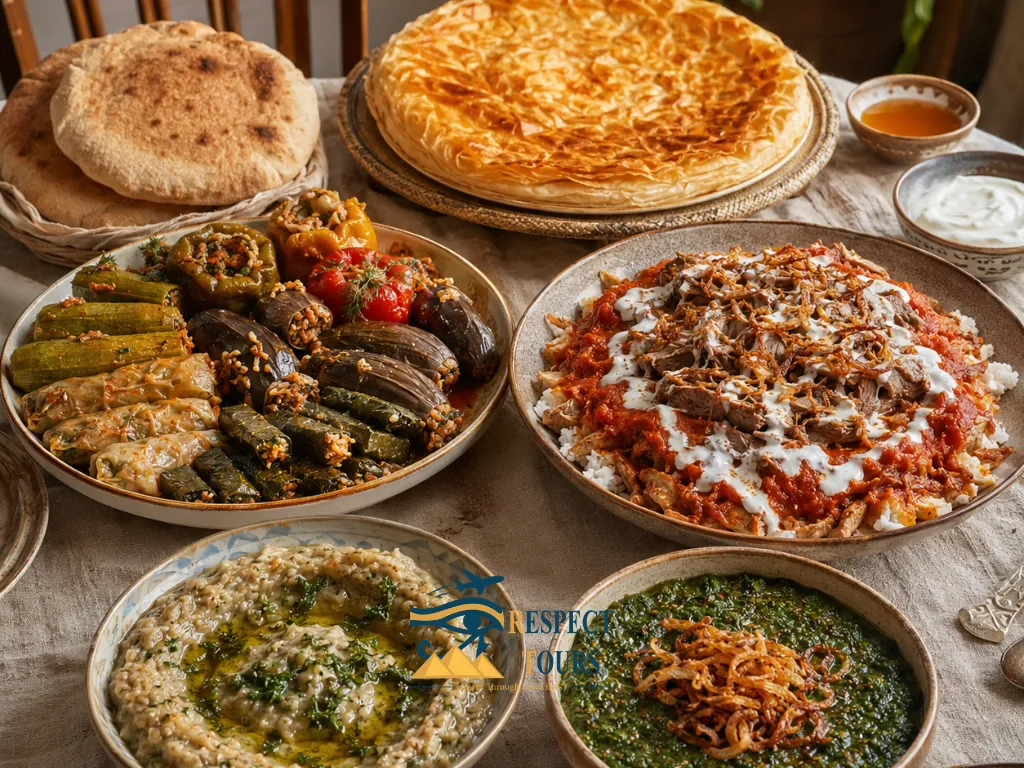
Egyptian desserts tend toward the sweet end of the scale: honey, nuts, cream, and sugar-soaked pastry. They’re eaten separately from meals, often mid-afternoon or after evening prayers, rather than as a course. Here are the ones worth seeking out specifically.
-
Baklava: The Egyptian Version
Category: Dessert • Pastry • Traditional Sweet
Baklava is one of Egypt’s most popular desserts and a favorite treat during Ramadan, Eid celebrations, and family gatherings. Made from layers of delicate phyllo pastry filled with nuts and baked until golden, it is finished with a light sugar syrup that gives it its characteristic sweetness and crisp texture.
The Egyptian version of baklava is typically less syrupy than some regional varieties and often contains generous amounts of pistachios, walnuts, or mixed nuts, creating a richer texture and more balanced flavor.
Baklava is commonly found in Egyptian bakeries, pastry shops, and dessert stores throughout the year, especially during festive seasons.
- Why it matters: It’s a beloved sweet treat, perfect for sharing or a personal indulgence.
- Local Pro Tip: The best baklava should be crisp and flaky rather than soft or soggy. For the freshest version, buy it from bakeries that prepare it daily.
Main Ingredients
- Phyllo pastry
- Butter or ghee
- Pistachios
- Walnuts or mixed nuts
- Sugar syrup
- Rose water or orange blossom water (optional)
-
Kanafeh: Hot Cheese Pastry in Syrup
Category: Dessert • Street Food • Traditional Sweet
Kanafeh is one of the most famous desserts in Egypt and a favorite treat during Ramadan and festive celebrations. It is made from fine strands of pastry layered with a filling and baked until golden and crispy before being soaked in sweet syrup and topped with crushed pistachios.
The contrast of textures is the point: the crunch of the pastry against the warm, soft, slightly salty cheese, with the sweetness of the syrup running through it. It doesn’t keep well; it needs to be eaten immediately. If you see it being made and pulled from the oven in Khan el-Khalili or any bakery, buy it then.
- Why it matters: The contrast between the crispy pastry, the warm, gooey cheese, and the sweet syrup is simply divine.
- Traveler Story: “I saw kanafeh being made in a small shop in Khan el-Khalili,” said Emily from the US. “The chef was spinning the dough; it was fascinating! And then eating it fresh out of the oven, warm and sweet, it was an experience I won’t forget.”
Main Ingredients
- Kanafeh pastry strands (kataifi)
- Soft white cheese or cream
- Butter or ghee
- Sugar syrup
- Pistachios
- Rose water or orange blossom water (optional)
-
Umm Ali: Egyptian Bread Pudding
Category: Dessert • Traditional Sweet
Umm Ali is Egypt’s most beloved dessert by a significant margin. Layers of puff pastry or shredded phyllo are torn into pieces, soaked in hot sweetened milk flavored with vanilla and rosewater, and baked with nuts, pistachios, almonds, and coconut until the top is golden and the milk has been absorbed into the pastry.
The name means “Mother of Ali”; the origin story involves a 13th-century Ayyubid ruler and a vindicated wife, but the details vary depending on who tells it. The dessert itself is straightforward: warm, creamy, textured, and comforting in the way that bread pudding always is. Order it at a traditional Egyptian restaurant rather than a hotel, where it’s usually better.
- Why it matters: It’s a comforting, warm dessert with a legendary origin story, often enjoyed during cooler evenings or after a hearty meal.
Main Ingredients
- Puff pastry or phyllo pastry
- Milk
- Sugar
- Pistachios
- Almonds
- Raisins
- Coconut
- Cream (optional)
- Vanilla
-
Baked Sweet Potato: Winter Street Food
Category: Sweet • Street Food • Seasonal Favorite
Baked sweet potatoes are one of Egypt’s most popular winter street foods and a familiar sight on city streets during the colder months. From autumn through winter, vendors sell whole sweet potatoes slowly roasted in traditional ovens until the inside becomes soft, sweet, and naturally caramelized.
Simple but surprisingly satisfying, baked sweet potatoes are enjoyed as an evening snack by people of all ages and are a perfect example of how Egyptian street food often relies on fresh ingredients rather than complicated recipes.
Main Ingredients
- Sweet potatoes
- Why It Matters: Baked sweet potatoes are one of Egypt’s most beloved seasonal foods and an important part of winter street food culture.
- Local Pro Tip: The best baked sweet potatoes have a soft, creamy interior and slightly caramelized edges. They’re traditionally eaten hot straight from the oven with no toppings or sauces needed.
-
Aish Baladi: Egyptian Flatbread (The Real Staple)
Category: Vegetarian • Staple Food • Bakery
“Aish” in Arabic means both “bread” and “life,” which tells you something about its role in Egyptian food. Aish baladi is a round, slightly puffed flatbread made from wholemeal flour, baked at a very high temperature in a communal oven. It’s thicker and more substantial than pita, with a slightly nutty flavor from the wholemeal flour.
It’s not a dish on its own, but it’s present at almost every meal in Egypt for scooping ful, for wrapping ta’ameya, and for mopping up mulukhiyah. A loaf costs 1–3 EGP. If you buy nothing else from a street cart in Egypt, buy a fresh loaf of aish baladi straight from the bakery. It’s one of the best simple things you’ll eat on the trip.
- Why It Matters: Aish Baladi is more than just bread; it is the foundation of Egyptian cuisine and one of the most important foods in everyday Egyptian life.
- Local Pro Tip: For the best experience, try a fresh loaf straight from a local bakery while it’s still warm. Many Egyptians consider freshly baked aish baladi one of the simplest and best foods in Egypt.
Main Ingredients
- Whole wheat flour
- Water
- Yeast
- Salt
Feseekh and Egyptian Festival Foods
Some Egyptian foods are closely connected to specific festivals and celebrations and are only eaten during certain times of the year.
The most famous example is Feseekh, a traditional Egyptian dish associated with Sham El-Nessim, Egypt’s ancient spring festival that dates back to Pharaonic times. Feseekh is made from fermented, salted, and dried mullet fish that is carefully prepared by specialists known as Fasakhani using traditional preservation methods.
Because of its strong aroma and distinctive flavor, feseekh is considered one of Egypt’s most unique culinary traditions. It is typically served with aish baladi, fresh onions, lemons, and green vegetables, while many Egyptians prefer the milder renga (smoked herring) as an alternative.
Other traditional Sham El-Nessim foods include colored eggs, green onions, and lettuce, continuing food traditions that have been celebrated in Egypt for thousands of years.
What Makes Egyptian Cuisine Unique?
Egyptian cuisine is one of the oldest continuously evolving food traditions in the world. Over thousands of years, it has been shaped by Pharaonic, Mediterranean, Ottoman, Middle Eastern, and African influences, creating a culinary identity that is both diverse and distinctly Egyptian.
What makes Egyptian food unique is its simplicity and reliance on local ingredients. Fava beans, lentils, rice, flatbread, fresh vegetables, herbs, and aromatic spices form the foundation of many of the country’s most popular dishes. Meals are often designed to be shared, making food an important part of Egyptian hospitality and family life.
Another characteristic of Egyptian cuisine is its regional variety. Seafood dominates the Mediterranean cities of Alexandria and Port Said, while Upper Egypt is known for slower cooking methods and dishes based on freek and traditional grains. Cairo, meanwhile, is famous for its vibrant street food culture, where many of Egypt’s most famous dishes can be enjoyed for just a few pounds.
From everyday breakfasts to festive meals prepared during Ramadan and national celebrations, Egyptian food reflects the country’s history, geography, and culture in every bite.
Practical Tips for Eating Egyptian Food as a Tourist
Where to Eat
The best Egyptian food is not in hotel restaurants. It’s in small local places, koshary shops with plastic stools, ful carts at street corners, and kofta restaurants that have been open since 1970 and haven’t changed the recipe. These places are easy to find, cost a fraction of hotel food, and are consistently better.
For hygiene-conscious travellers: the volume of customers and the speed of turnover at busy street stalls is a reasonable proxy for freshness. Avoid anything that’s been sitting uncovered. Cooked-to-order is almost always safer than pre-cooked and left out.
Dietary Restrictions
- Vegetarians eat well in Egypt; ful, ta’ameya, koshary, mahshi, besarah, baba ghanoush, and feteer meshaltet cover you at every meal.
- Vegans can eat most street food (ful and ta’ameya are naturally vegan) but need to ask about dairy in pastries and sauces.
- Pork is not present in mainstream Egyptian food (Egypt is a predominantly Muslim country)
- Gluten-free is difficult; bread accompanies almost everything and is often used as an ingredient in main dishes.
- Halal: all meat in Egypt is halal unless you’re in a licensed hotel with an international menu.
Drinks to Know
- Karkadeh: hibiscus tea, served hot or cold, tart and sweet, the best non-alcoholic drink in Egypt
- Sahlab: a thick, warm milk drink made from orchid root, topped with nuts and coconut; a winter speciality
- Erk Sous: liquorice root drink, sold from large ornate urns by street vendors; dark, slightly bitter, refreshing
- Ahwa: Egyptian coffee, strong, cardamom-spiced, served in small cups with sugar already added; specify “sada” for unsweetened
- Tap water: not recommended for drinking. Bottled water is cheap and available everywhere.
FAQs About Egyptian Food
What is the most famous Egyptian food?
Koshary is Egypt’s national dish and the most internationally recognized Egyptian food. For most Egyptians, though, ful medames is the most common and culturally central dish, eaten daily by millions for breakfast. Ta’ameya (Egyptian falafel) is the most popular street food by volume sold.
What is the best Egyptian food for first-time visitors?
Start with koshary (the national dish, vegetarian, and impossible to dislike), then ta’ameya from a street cart, and then kofta at a local grill restaurant. For dessert, kanafeh fresh from the oven. If you can try ful medames for breakfast on your first morning, do it; it sets the tone for the rest of the trip.
Is Egyptian food spicy?
Generally no, not by default. Most Egyptian dishes are spiced (cumin, coriander, and cinnamon) but not hot. Chili is always offered separately and added to taste. The exception is Alexandrian kebdah (liver sandwich), which is genuinely hot. Koshary’s shatta sauce is concentrated chili; add it cautiously on your first try.
Is Egyptian food safe to eat for tourists?
Yes, with basic common sense. Avoid raw vegetables and salads from street stalls (the washing water is the risk, not the vegetables themselves). Cooked food from busy street carts is generally fine; the volume of customers means nothing sits long. Drink bottled water. Eat at restaurants your guide recommends, or at places where locals are eating.
Can vegetarians eat well in Egypt?
Very well. Egyptian street food is largely built around fava beans and vegetables. Ful medames, ta’ameya, koshary, mahshi, baba ghanoush, besarah, and feteer meshaltet are all vegetarian by default. Most Egyptian restaurants have more vegetarian options than meat dishes. It’s one of the better countries in the world for vegetarian eating on a budget.
What is the best Egyptian food to bring home?
Dried fava beans (for making ful at home), dried hibiscus (karkadeh) for tea, Egyptian spice blends from the spice market, and, if you’re visiting Siwa, cold-pressed olive oil. Packaged baklava and Egyptian sweets travel well if packed carefully. Avoid bringing back fresh or meat products; customs restrictions apply.
Experience Egyptian Food Through Local Eyes
Trying Egyptian food is about much more than choosing dishes from a menu. The best meals in Egypt are often found in family-run restaurants, neighborhood bakeries, busy street food stalls, and local markets that many visitors would never discover on their own.
The difference between eating koshary at a tourist restaurant and enjoying it at a local favorite in downtown Cairo, or between trying freshly baked feteer in a village bakery and ordering it from a hotel menu, is often the difference between simply eating in Egypt and truly experiencing Egyptian cuisine.
Our guides know where to eat. Not the places that appear in every guidebook, but the places that have been good for decades, that locals actually go to, and that require someone who knows the neighborhood to find. Food is part of every itinerary we build, not as an afterthought, but as a planned element of the day.
We’ve been helping travelers explore Egypt since 1978 through private tours, Egyptologist-guided experiences, and tailor-made itineraries designed around your interests, including local food experiences, market visits, and authentic Egyptian restaurants recommended by our team.
Explore Egypt with Respect Tours
- Cairo Day Tours: Discover the Pyramids, museums, and Khan El Khalili while experiencing some of Cairo’s most famous local dishes.
- Egypt Tour Packages: Explore Cairo, Luxor, Aswan, Alexandria, and beyond with carefully planned itineraries and authentic dining experiences.
Build your trip around your interests, including food tours, cooking experiences, local markets, and regional cuisine.
Respect Tours
Egypt Through Local Eyes.