


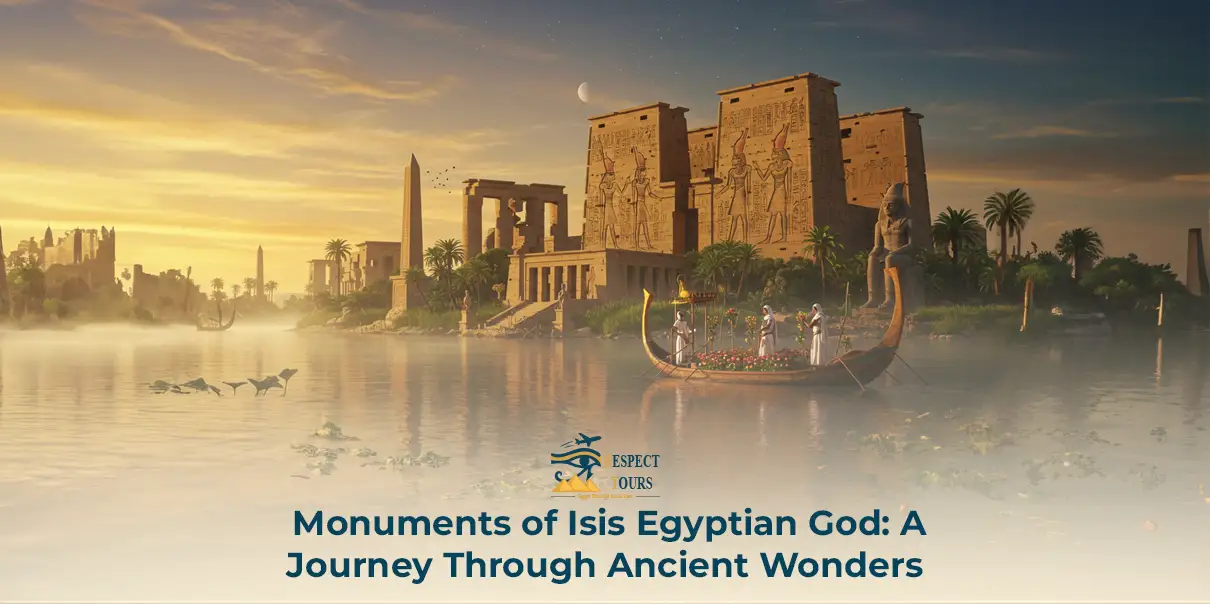
Egypt’s ancient civilization gifted the world with countless treasures. Among these magnificent legacies stands the worship of Isis, one of the most revered deities in human history. From towering temples to modest shrines, the Monuments of Isis Egyptian God tell the story of a goddess whose influence stretched far beyond the Nile Valley, reaching Rome, Pompeii, and beyond.
This guide explores the most important monuments dedicated to Isis, revealing her role as divine mother, healer, protector, and queen of magic.
Who is Isis? The Divine Mother of Egypt
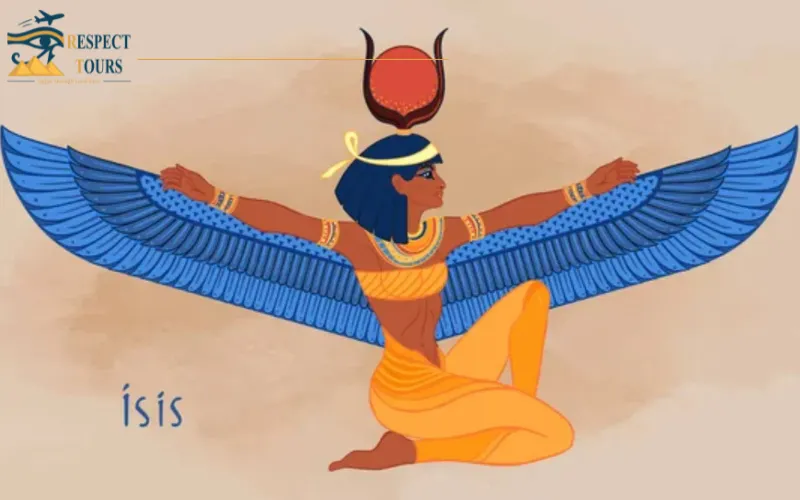
Isis (Aset in ancient Egyptian) was one of Egypt’s most revered goddesses. Her name means “throne” or “seat of power,” symbolizing her role as both protector of the pharaoh and divine mother.
- Attributes: Magic, motherhood, healing, and protection
- Symbols: Solar disk between cow horns, outstretched wings, the ankh
- Sacred Animals: Cow, scorpion, kite bird
- Mythology: Wife of Osiris, mother of Horus, restorer of life
Egyptians believed Isis’s tears caused the Nile to flood each year, bringing fertility to the land. Her story of love, loss, and resurrection with Osiris became the foundation of Egyptian spirituality and inspired countless monuments.
The Majestic Monuments of Isis
1. Philae Temple: The Great Sanctuary of Isis
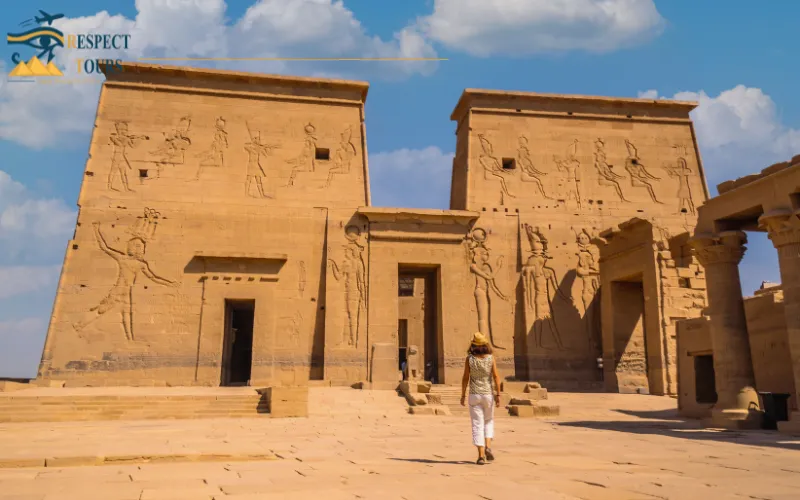
The most iconic Monument of Isis Egyptian God is the Philae Temple, located on Philae Island in Aswan.
- Construction: Began in 380 BCE (Ptolemaic era) and expanded under Roman rule
- Highlights:
- 18-meter-high pylons carved with Isis mythology
- Birth House (Mammisi), celebrating Isis as the mother of Horus
- Kiosk of Trajan, with 14 elegant columns, where pilgrims arrived by boat
- Astronomy: The temple’s axis aligned with Sirius, the sacred star of Isis
Philae remained an active religious site until the 4th century CE, making it one of the last pagan sanctuaries in the ancient world.
2. Temple of Dendur: A Gift to the World
Built around 15 BCE by Emperor Augustus, the Temple of Dendur stood in Nubia, honoring Isis alongside local deities.
When the Aswan High Dam threatened to submerge it, UNESCO relocated the temple to the Metropolitan Museum of Art in New York (1978).
- Design: 25 meters long, with reliefs showing Roman emperors making offerings to Isis
- Style: Blends Egyptian iconography with Roman artistry
- Legacy: A symbol of how Isis worship transcended Egypt, reaching global audiences
3. Hadrian’s Gate at Philae
Commissioned by Emperor Hadrian (130 CE), this monumental gateway fused Roman design with Egyptian symbolism.
- Features: Corinthian columns, solar disk carvings, and hieroglyphic praises to Isis
- Innovation: Adjustable stone blocks to protect the temple during Nile floods
Hadrian’s Gate reflects how Roman emperors embraced Isis while preserving Egyptian tradition.
4. Sanctuary of Isis at Pompeii
Discovered in 1764, the Temple of Isis in Pompeii stunned archaeologists, proving that Isis worship spread deeply into Roman life.
- Complex: Included the main temple, priests’ quarters, and ritual spaces
- Artifacts: Ritual objects, sacred Nile water containers, and frescoes of Isis myths
- Highlights: A statue of Isis imported from Egypt, worshipped until Pompeii’s destruction in 79 CE
Monuments of Isis Outside Egypt
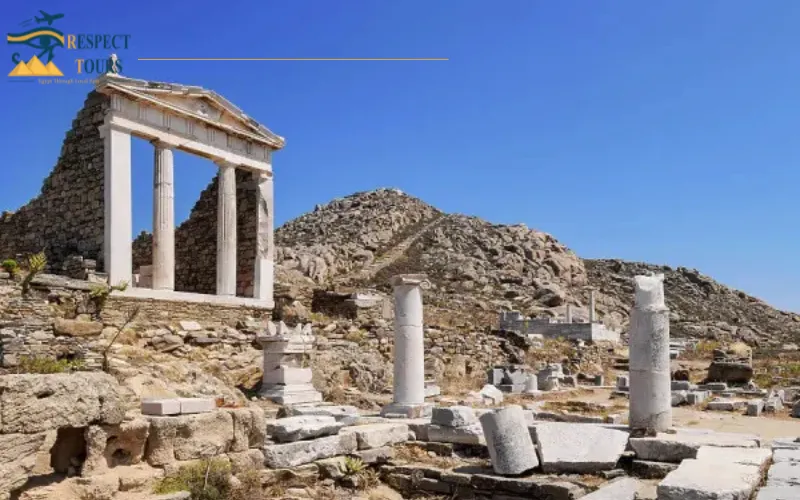
Temple of Isis at Delos, Greece
One of the best-preserved Isis temples outside Egypt is found on the island of Delos, a major Greek trading hub. Merchants and sailors prayed to Isis here for protection at sea.
Temples in Gaul and Britain
Roman expansion carried Isis’s worship to Europe. Temples dedicated to her stood in Gaul (France) and even in Londinium (Roman London). These shrines prove Isis was not just an Egyptian goddess but a Mediterranean one.
Statue of Isis in Rome
In Rome’s Campus Martius, a colossal black basalt statue of Isis stood over 3 meters tall.
- Depiction: Isis as Stella Maris (Star of the Sea), protector of sailors
- Details: Star-patterned robes, sistrum (sacred rattle), inscriptions calling her “Queen of Heaven”
- Artistry: A blend of Egyptian tradition with Roman refinement
This statue highlights how Isis evolved into a universal goddess worshipped across cultures.
Lesser-Known Monuments of Isis
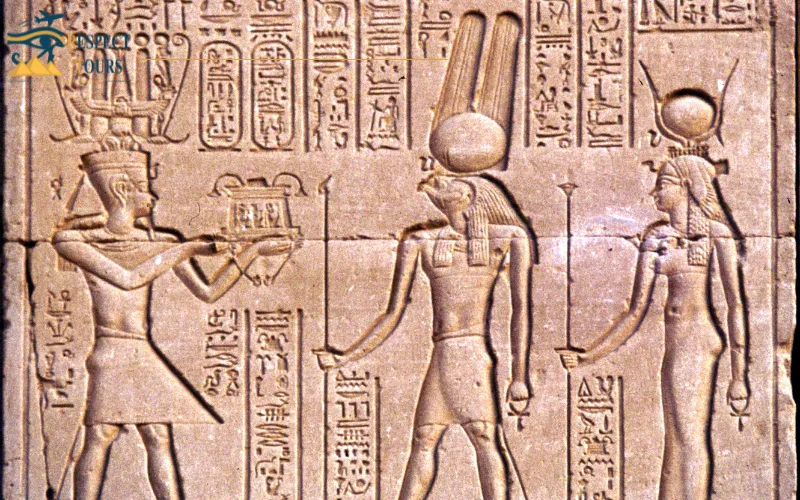
Isis Reliefs at Esna Temple
- Depictions of Isis controlling the stars and creating sacred lakes
- Advanced astronomical carvings linking the goddess to cosmic order
Small Shrine of Isis at Karnak
- Built in the 18th Dynasty (1550–1295 BCE)
- One of the earliest Isis monuments, showing her protecting pharaohs
Healing Statues at Saqqara
- Hollow statues filled with sacred water are used for curing illnesses
- Inscriptions describe remedies for snake bites, fever, and scorpion stings
Day Tour to Dendera and Abydos Temples from Luxor
Other Temples of Isis in Egypt
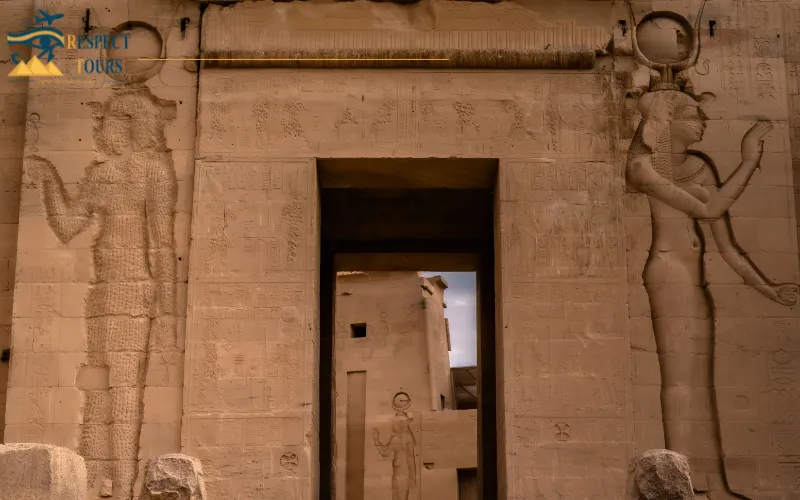
Temple of Isis at Behbeit el-Hagar
Located in the Nile Delta, Behbeit el-Hagar was one of the first temples built entirely from granite, dedicated solely to Isis. Dating to the 30th Dynasty (4th century BCE), it was a major pilgrimage center. Today, only ruins remain, but their scale shows how far Isis’s cult had spread within Egypt itself.
Temple of Isis at Coptos
Coptos, near modern Qift in Upper Egypt, housed an important Isis sanctuary. Archaeological finds include statues, inscriptions, and ritual objects, proving her worship was deeply rooted in daily life here.
Isis Chapels in Major Temples
Isis wasn’t limited to her own sanctuaries. Many great temples, like Dendera and Luxor, included side chapels or reliefs dedicated to her, showing her role alongside Hathor and other deities.
The Story of Isis and Osiris
The monuments make sense only when tied to Isis’s myth.
- Osiris: Murdered by his brother Set, dismembered, and scattered
- Isis: Reassembled him with magic, conceived Horus, and revived Osiris briefly
- Legacy: Her mourning became the model for Egyptian funerary rites
This myth made Isis the goddess of resurrection, love, and eternal life, themes carved into every monument dedicated to her.
Isis in Statues and Art
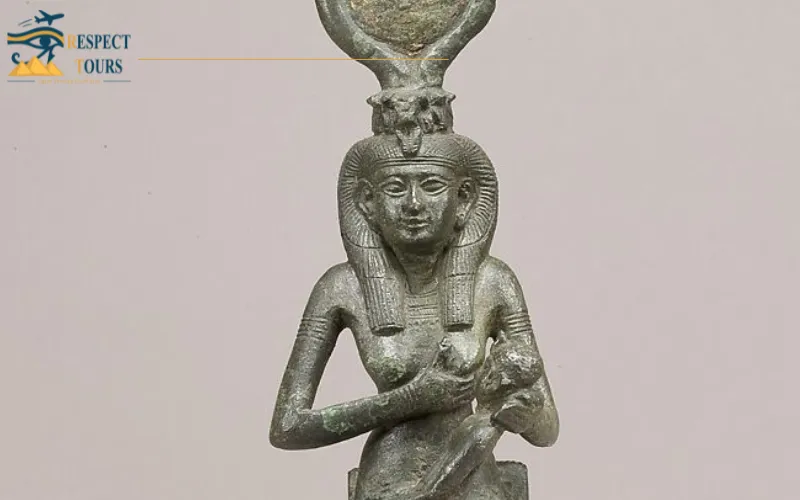
Statues of Isis Lactans (Nursing Horus)
One of the most famous images of Isis shows her nursing the infant Horus on her lap. These statues, found across Egypt and beyond, later influenced Christian depictions of the Virgin Mary with baby Jesus.
Winged Isis in Funerary Monuments
On tomb walls and sarcophagi, Isis is often shown with outstretched wings, protecting the deceased. This iconography linked her with eternal life and safe passage to the afterlife.
Global Museum Collections
Isis statues and reliefs are now displayed in major museums worldwide, including
- Louvre Museum (Paris)
- British Museum (London)
- Turin Egyptian Museum (Italy)
- Cairo Museum (Egypt)
Why Was Isis So Popular?
Isis transcended Egypt because:
- Universal Appeal: Motherhood and protection resonated with all people
- Personal Salvation: Followers felt a direct bond with her, unlike with distant gods
- Adaptability: Easily integrated into Greek, Roman, and Mediterranean religions
- Healing Power: Promised health, magic, and comfort in hardship
- Community: Mystery cults of Isis created belonging and spiritual hope
Her worship spread across the Mediterranean, with temples from London to Rome.
Conclusion
The Monuments of Isis Egyptian God, are not just ruins; they are living testimonies of love, faith, and divine protection. From the grand sanctuary at Philae to the hidden shrine at Karnak, from Pompeii to New York, her legacy endures across continents.
Isis began as Egypt’s divine mother but became a goddess of the world, her monuments reminding us of humanity’s eternal search for hope, healing, and eternal life.
Visiting these sites today allows travelers to walk in the footsteps of ancient devotees, experiencing the same awe that inspired pharaohs, priests, and pilgrims thousands of years ago.
[rank_math_rich_snippet id="s-5978dc0b-dfed-4827-9ee9-e72db290ad0f"]