

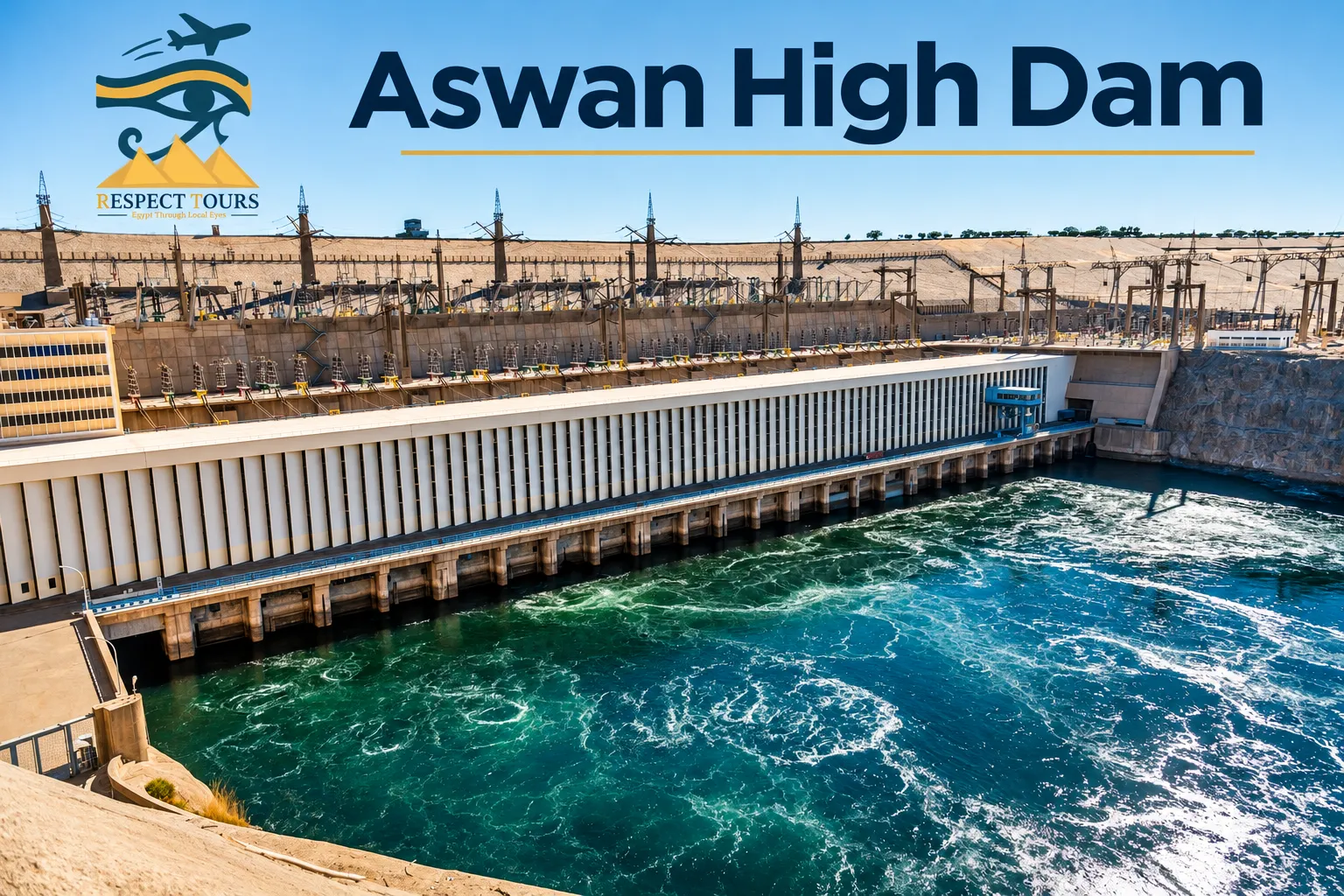
The Aswan High Dam is a rock-fill dam across the Nile, south of Aswan, built between 1960 and 1970 to control floods, store water and generate electricity. It is about 3,830 metres long and holds back Lake Nasser. It also forced about 100,000 Nubians to move and led to the rescue of Abu Simbel and Philae. This guide explains the history, engineering, benefits, environmental costs and how to visit the dam with a local guide.
Aswan High Dam Quick Facts
| Fact | Detail |
|---|---|
| Location | South of Aswan, across the Nile |
| Construction | 1960 to 1970 |
| Official inauguration | January 1971 |
| Dam type | Rock-fill embankment dam |
| Length | About 3,830 metres |
| Height | About 111 metres |
| Reservoir | Lake Nasser |
| Main purposes | Water storage, flood control, irrigation and hydroelectricity |
The length and height come from the Egyptian Ministry of Water Resources and Irrigation. NASA gives the same length and describes the dam as nearly 1,000 metres wide at its base.
What Is the Aswan High Dam?
The Aswan High Dam is a huge rock-fill dam that controls the flow of the Nile. It stores water, protects Egypt from floods and drought, and generates electricity.
In Arabic it is known as El-Sadd El-Aali (the High Dam). It is the reason Egypt no longer depends on the Nile’s yearly flood.
Where Is the Aswan High Dam Located?
The dam is on the Nile about 13 km south of Aswan city. It is the boundary between the river below and Lake Nasser above.
Distance From Aswan City
Most visitors reach it by a short drive from the city. A visit is often combined with Philae Temple.
The Dam’s Position Across the Nile
The dam crosses the valley from bank to bank. On one side is the river, and on the other is Lake Nasser.
Aswan High Dam and Lake Nasser
Lake Nasser is the reservoir behind the dam. It stretches south into Sudan, where it is called Lake Nubia.
How to Reach the Dam
Most visitors go on a guided tour or by taxi. Our Aswan day tours include the High Dam with Philae and other sights.
Aswan High Dam vs. Aswan Low Dam
Many visitors confuse the two dams. The Low Dam is the older one, and the High Dam is the large modern one.
| Aswan Low Dam | Aswan High Dam |
|---|---|
| Completed in 1902 | Completed in 1970 |
| Located downstream | Located farther south |
| Smaller storage capacity | Created Lake Nasser |
| Raised twice | Built as a new large-scale project |
| Also called the Old Aswan Dam | Known as El-Sadd El-Aali |
After the Low Dam was raised twice, it could no longer meet Egypt’s growing water needs. Egypt chose to build a new dam instead of raising it a third time.
Why Was the Aswan High Dam Built?
Egypt built the dam to control the Nile, secure water year-round and produce power. Each purpose answered a problem the Low Dam could not solve.
Controlling the Annual Nile Flood
Before the dam, the Nile flooded every year. High floods damaged land and low floods meant poor harvests.
Protecting Egypt During Drought Years
Lake Nasser stores water in good years and releases it in dry years.
Storing Water for Year-Round Irrigation
Stored water lets farmers irrigate throughout the year instead of waiting for the flood.
Generating Hydroelectric Power
The power station has a capacity of 2.1 gigawatts. In 1970 it met about half of Egypt’s electricity needs and brought power to many villages for the first time.
Supporting Agriculture and Modern Development
Reliable water and power supported farming and industry. We cover the benefits and costs in separate sections below.
History of the Aswan High Dam
The project grew out of plans to control the Nile and became a national project after the 1952 revolution. The timeline below shows how it unfolded.
- Early plans: engineers had long wanted to control the Nile, and the Low Dam of 1902 was a first step.
- 1952 revolution: after the revolution, the new government made the High Dam a national project under President Gamal Abdel Nasser.
- Financing: funding was a challenge. The international financing Egypt expected did not materialise in the mid-1950s, and the Suez Crisis of 1956 followed.
- Egyptian-Soviet cooperation: the Soviet Union then provided financial and technical support.
- Construction, 1960 to 1970: the main work took 10 years.
- Inauguration, January 1971: the dam was officially inaugurated.
Who Built the Aswan High Dam?
Egyptian engineers and workers built the dam, with Soviet funding and technical support. It was an Egyptian national project, so it is wrong to say the Soviet Union built it alone.
Egyptian Engineers and Workers
Egyptian engineers and thousands of workers carried out the construction.
Soviet Funding and Technical Support
The Soviet Union provided finance, equipment and specialists. You can see a monument to Soviet-Egyptian friendship near the dam.
Gamal Abdel Nasser and the National Project
Nasser made the High Dam a symbol of the new Egypt. The project is still linked to his name.
How Was the Aswan High Dam Built?
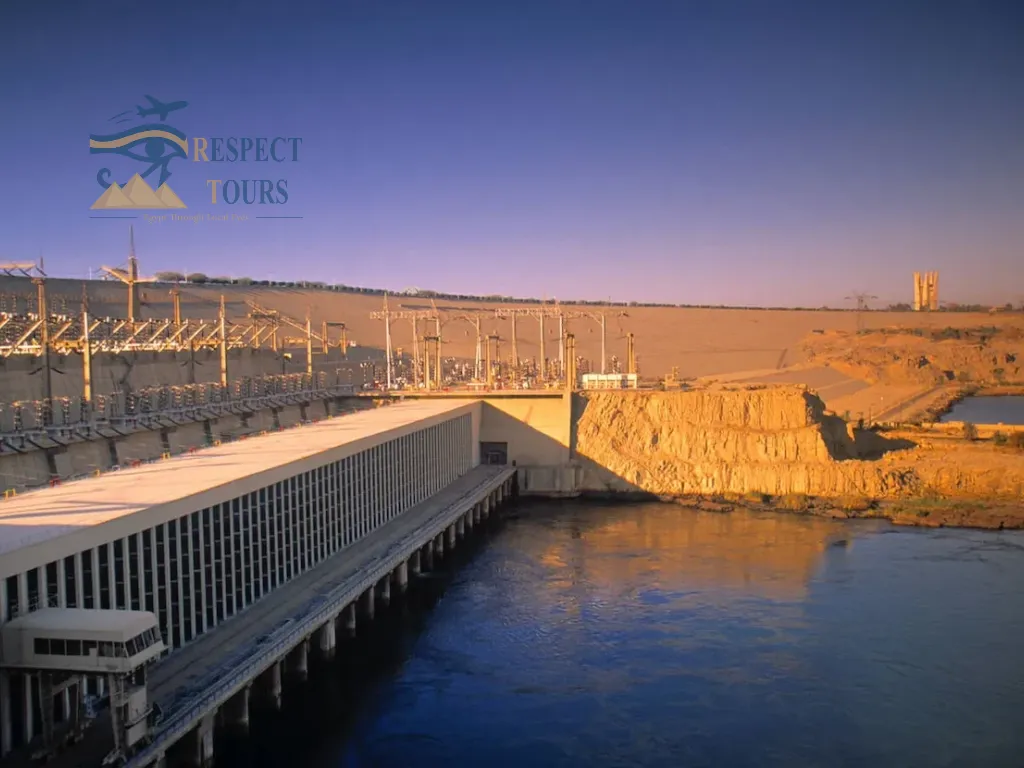
Builders piled up rock and sand to form a long embankment, then diverted the Nile around the site. A power station was added at the dam.
Rock-Fill Embankment Construction
The dam is built from rock and other fill rather than a solid concrete wall. It is about 3,830 metres long and 111 metres high.
Diverting the Nile Through Tunnels
Engineers diverted the river so they could build the dam on dry ground.
The Hydroelectric Power Station
According to the Ministry of Water Resources and Irrigation, water reaches the turbines through 6 tunnels. The station can produce about 10 billion kilowatt-hours a year.
Turbines and Water Flow
Water from Lake Nasser passes through the turbines and returns to the Nile downstream.
Reservoir and Flood-Control Capacity
NASA states that the dam holds back about 132 cubic kilometres of water in Lake Nasser. That reserve is what protects Egypt in flood and drought years.
How Does the Aswan High Dam Work?
The dam stores water behind it and releases it in a controlled way. The steps are:
- Lake Nasser stores water during high-flow years.
- Controlled releases supply the Nile downstream.
- Water passes through turbines to generate electricity.
- Stored water supports irrigation during lower-flow periods.
- Additional capacity helps protect Egypt from major floods.
How the Aswan High Dam Created Lake Nasser
The dam blocked the Nile and the water rose behind it to form Lake Nasser. The lake is about 550 km long, with a highly indented shoreline.
The Size and Route of Lake Nasser
The lake runs south from Aswan for most of its length. It is one of the largest man-made lakes in the world.
Lake Nasser in Egypt and Lake Nubia in Sudan
The northern part is in Egypt and is called Lake Nasser. The southern part is in Sudan and is called Lake Nubia.
Fishing, Irrigation and Tourism
Lake Nasser supports fishing and irrigation. It is also a tourism destination.
Lake Nasser Cruises From Aswan to Abu Simbel
Cruises on the lake link Aswan with Abu Simbel and temples that were moved from Nubia. Read our Lake Nasser cruise route guide for the stops.
Benefits of the Aswan High Dam
The dam gave Egypt flood protection, a water reserve and electricity. Those gains were large, and they came with costs described later.
Flood Protection
NASA notes that the dam nearly eliminated the danger of floods in the Nile Valley downstream. This had both positive and negative effects.
Water Storage During Drought
The reservoir lets Egypt draw on stored water in dry years.
Permanent Irrigation and Agricultural Production
Year-round water allows farmers to grow more than one crop a year on much of the land.
Hydroelectric Power
The power station has a capacity of 2.1 gigawatts. In the early 1970s that was about half of Egypt’s electricity needs.
Electricity for Towns and Villages
For many villages the dam brought electricity for the first time.
Egypt’s Economic and Industrial Development
Reliable power and water supported industry and agriculture. The share of Egypt’s electricity it supplies has fallen as demand has grown.
Social Impact on Nubian Communities
The creation of Lake Nasser flooded Nubian homeland, and about 100,000 people had to move. This was the most serious human cost of the project.
The Formation of Lake Nasser
As the lake rose, it covered villages, farmland and monuments along the Nile in Lower Nubia.
Relocation of Egyptian and Sudanese Nubians
Nubians in Egypt and Sudan were resettled in new areas, some near Aswan and others farther away.
Loss of Villages and Ancestral Landscapes
Many families lost the villages, date groves and landscapes of their ancestors.
New Nubian Settlements
New settlements were built for the displaced families. Many Nubians still describe the loss of their original homeland.
Preserving Nubian Culture and Memory
Nubian music, language and crafts remain alive. In Aswan you can visit a Nubian village on our Nubian village tour by boat, and see the history at the Nubian Museum on our Aga Khan Mausoleum and Nubian Museum trip.
Saving the Monuments of Nubia
The rising lake threatened ancient temples, so UNESCO launched an international rescue campaign in 1960. Temples were moved to higher ground, and the two best known are Abu Simbel and Philae.
UNESCO’s International Rescue Campaign
The campaign recorded and saved many sites. Countries around the world helped fund and carry out the work.
Moving Abu Simbel
Abu Simbel was cut into blocks and rebuilt on higher ground above the rising lake. You can visit it on our Abu Simbel day trip from Aswan.
Relocating Philae Temple
Philae was moved to a new island that was raised and reshaped. Visit it on our full-day Aswan city tour with Philae, the High Dam and the Unfinished Obelisk.
Other Rescued Nubian Temples
Other temples were moved too, including Kalabsha. See it on our Kalabsha Temple and Nubian village trip.
Environmental Effects of the Aswan High Dam
The dam changed the Nile’s sediment, soils and delta. Not every change comes from the dam alone, because population growth, farming methods and climate also play a part.
Sediment Trapped Behind the Dam
The dam traps the silt that the flood used to carry downstream. Silt collects mainly in the upper part of Lake Nasser.
Changes to Soil Fertility
Without the yearly silt, fields downstream receive fewer natural nutrients.
Increased Dependence on Fertilisers
Farmers use more fertiliser to make up for the loss of silt.
Nile Delta Erosion
Less sediment reaches the coast, and parts of the delta coastline are eroding. Sea-level rise adds to the pressure.
Changes to Fisheries and Aquatic Life
Fisheries changed. Lake Nasser supports a fishing industry, while some sea fisheries off the delta declined after the dam. Researchers still debate the exact causes.
Waterlogging, Salinity and Evaporation
Year-round irrigation keeps groundwater high, which can raise salt in the soil and cause waterlogging. Lake Nasser also loses water to evaporation in the desert heat. Drainage systems were built to manage the problem.
Challenges and Controversies
The dam’s legacy is debated. Supporters stress security of water and power, and critics stress the social and environmental costs.
Balancing Water Security With Environmental Change
Egypt gains from stored water but must manage the environmental effects.
Managing Sediment in Lake Nasser
Silt continues to build up in the lake and must be monitored over the long term.
Long-Term Maintenance and Monitoring
A dam of this size needs constant inspection and maintenance.
Egypt’s Dependence on the Nile
Egypt depends on the Nile for nearly all its water, so the dam remains central to national planning.
Different Views of the Dam’s Legacy
Many Egyptians see the dam as a national achievement. Many Nubians remember it as a loss. Both views are part of the history.
Why Is the Aswan High Dam Important Today?
The dam still anchors Egypt’s water management and supplies electricity. Egypt relies on it every day.
Egypt’s Water Management System
Lake Nasser is the country’s main water reserve.
Agriculture and Food Production
Irrigation from the Nile supports farming across the valley and delta.
Hydroelectric Energy
The power station still produces electricity, although it supplies a smaller share of national demand than in 1970.
National Memory and Modern Egyptian Identity
The dam is a symbol of 20th-century Egypt and is taught as a national project.
Strategic Importance of Lake Nasser
The lake is a strategic water reserve for Egypt.
Visiting the Aswan High Dam
A visit takes about 30 to 45 minutes, and most people combine it with Philae Temple. You stand on the dam crest, with the Nile on one side and Lake Nasser on the other.
On our tours, your guide explains the dam on the spot. This is the best place to see why the lake behind you exists.
What Can Visitors See?
You see the long crest road, the lake, the river below and a small pavilion with displays on the dam. A monument to Soviet-Egyptian friendship stands at the western end.
High Dam Viewpoints
Walk along the crest for views of both the lake and the river. The dam is more about scale and history than dramatic scenery.
How Long Does a Visit Take?
Allow 30 to 45 minutes at the dam itself.
Best Time of Day to Visit
Go in the morning, when the light is soft and the heat is lower. Winter days are the most comfortable.
Places to Visit Near the Aswan High Dam
Combine the dam with these sights:
- Philae Temple: moved to a new island because of the lake.
- Unfinished Obelisk: a giant granite obelisk left in the quarry.
- Nubian Museum: the story of Nubian history and culture.
- Kalabsha Temple: a rescued temple on Lake Nasser.
- Lake Nasser: the reservoir behind the dam.
- Nubian village: a living Nubian community.
Interesting Aswan High Dam Facts
- The dam is a rock-fill structure rather than a solid concrete wall.
- Lake Nasser extends from southern Egypt into Sudan.
- The dam was built upstream from the older Aswan Dam.
- Its construction led to one of history’s largest archaeological rescue campaigns.
- Abu Simbel was dismantled and rebuilt above the lake’s rising waters.
- The dam changed Egypt’s relationship with the annual Nile flood.
- Its electricity helped expand access to power across Egypt.
Visit the Aswan High Dam With Respect Tours
Discover the Aswan High Dam, Lake Nasser and the ancient monuments reshaped by one of Egypt’s largest modern engineering projects. Respect Tours, a local operator since 1978, can combine the High Dam with Philae Temple, the Unfinished Obelisk and other Aswan highlights in a private guided tour. Our 4-day Aswan to Luxor cruise also visits the High Dam on day 1.
Explore Aswan Day Tours Book a Private Aswan Tour Discover Lake Nasser Cruises Create Your Egypt Itinerary
FAQs About the Aswan High Dam
Is the Aswan High Dam worth visiting?
Yes, if you are interested in history and engineering. The dam itself is more about scale than scenery, so visit it with a guide and combine it with Philae Temple and the Unfinished Obelisk in one morning.
Can I take photographs at the Aswan High Dam?
Taking photographs is generally allowed in tourist areas. Rules about video cameras, zoom lenses and drones can apply, and enforcement varies. Ask your guide before you photograph, and do not photograph military or operational areas.
Can tourists enter the power station?
Do not plan on it. Normal visits are at the viewing area on the dam crest. Any operational areas require permits and official arrangements, so we do not include the power station in our standard tours.
Does the Aswan High Dam still generate electricity?
Yes, the hydroelectric station still produces electricity. Its capacity is 2.1 gigawatts, but it supplies a smaller share of Egypt’s demand today than in 1970, when it met about half of the country’s needs.