

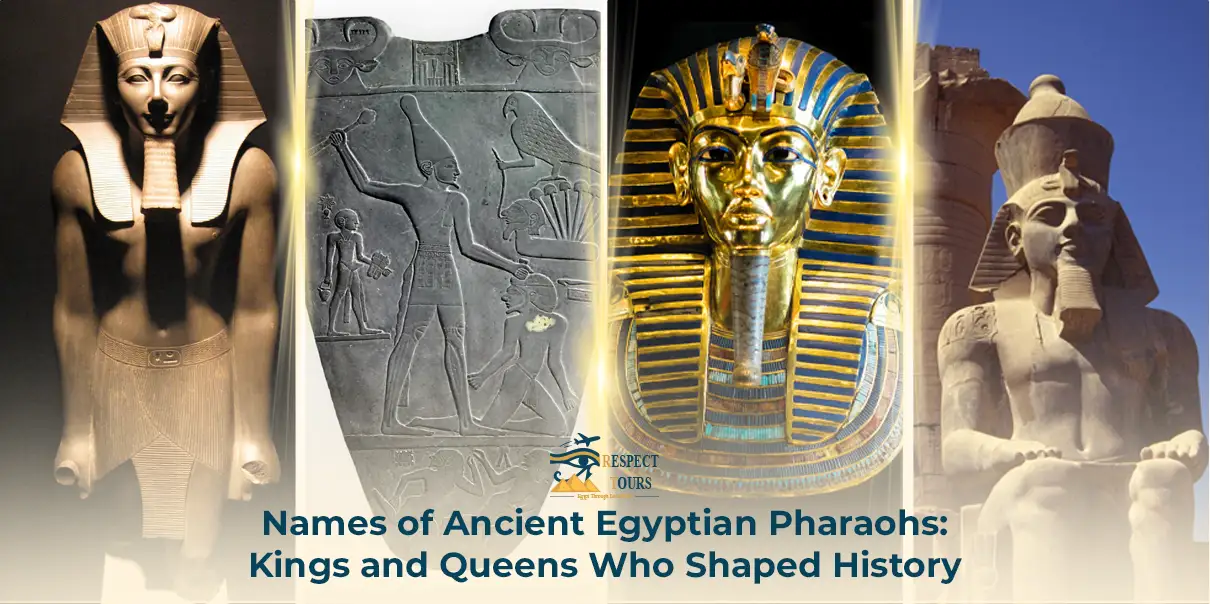
The names of ancient Egyptian pharaohs tell the story of one of the world’s greatest civilizations. From Narmer, who unified Egypt around 3100 BCE, to Cleopatra VII, the last pharaoh before Rome took control, these rulers shaped more than 3,000 years of history.
This guide gives you a clear list of the most important Egyptian pharaohs, explains how their naming system worked, and shows you where to see their monuments today in Cairo, Giza, Luxor, and Aswan. Whether you’re planning a trip to Egypt or searching for a trusted Egyptian pharaoh names list, you’ll find timelines, pronunciation tips, and practical travel advice.
Most lists only give you names, but this guide goes further. You’ll learn how to pronounce each name, what their hieroglyphs mean, which monuments are open to visitors today, and how understanding the royal naming system turns your Egypt trip into a real archaeological experience.
Quick Answer: Names of Ancient Egyptian Pharaohs
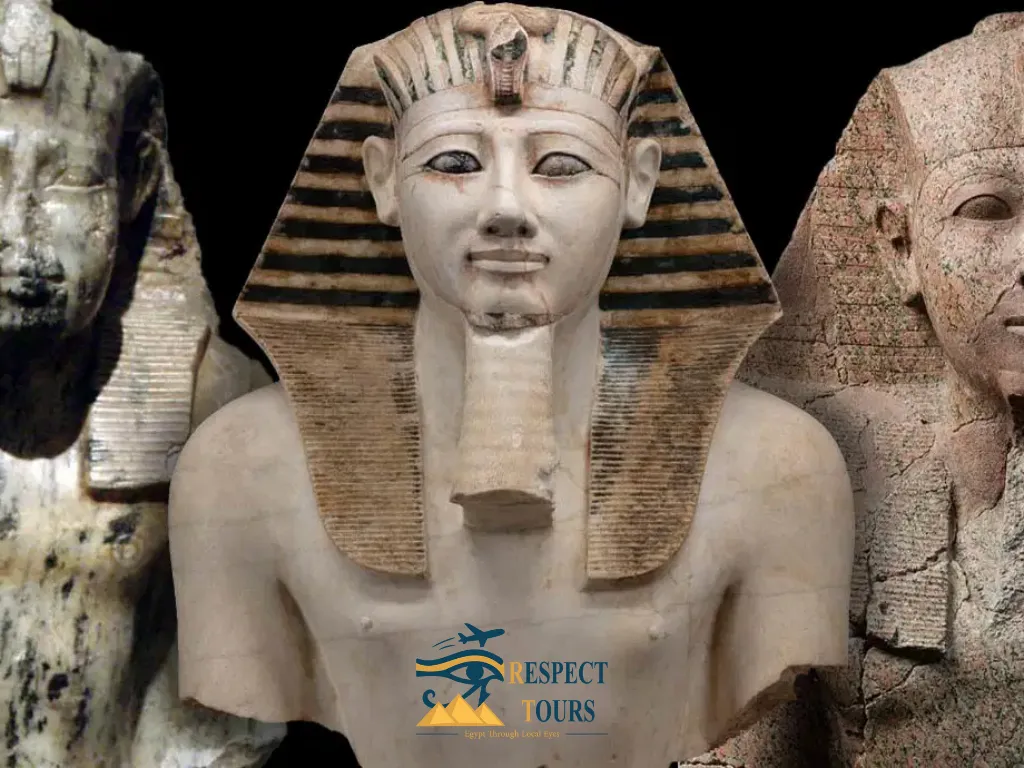
Over 170 pharaohs ruled ancient Egypt from 3100 BCE to 30 BCE across approximately 30 dynasties. The most important names to know:
Old Kingdom: Pyramid Builders (2686-2181 BCE):
- Narmer/Menes: Unified Egypt, founded Dynasty 1
- Djoser: Built the first pyramid (Step Pyramid, Saqqara)
- Khufu, Khafre, Menkaure: Built the three Giza pyramids
Middle Kingdom: Classical Age (2055-1650 BCE):
- Mentuhotep II: Reunified Egypt after civil war
- Senusret III: Military expansion, administrative reforms
- Sobekneferu: First confirmed female pharaoh
New Kingdom: Golden Age (1550-1077 BCE):
- Hatshepsut: Powerful female pharaoh, 22-year reign
- Thutmose III: Military genius, expanded empire
- Akhenaten: Religious revolutionary (monotheism)
- Tutankhamun: Boy king, intact tomb discovered in 1922
- Ramesses II: 66-year reign, Abu Simbel, the greatest builder
Late Period & Ptolemaic:
- Cleopatra VII: Last pharaoh before Roman conquest (30 BCE)
Egyptian Pharaoh Names List: What You’ll Discover
This comprehensive Egyptian pharaoh names list documents over 170 ancient Egyptian rulers’ names across 3,000 years of history. Whether you’re researching famous Egyptian pharaohs like Tutankhamun and Cleopatra or exploring the complete list of pharaohs by dynasty, you’ll find detailed information on Egyptian king names and meanings with accurate pronunciation guides.
Our pharaohs of Egypt timeline covers all major periods, from Old Kingdom pyramid builders to New Kingdom conquerors. You’ll also discover Egyptian queen names, including powerful female rulers like Hatshepsut and Sobeknefer, who claimed full pharaonic authority. Each entry in this Egyptian dynasty list includes where to see their monuments today across Cairo, Luxor, Aswan, and Giza.
Quick Navigation:
- Old Kingdom pharaohs and pyramid builders
- Middle Kingdom rulers and the classical age
- The New Kingdom empire and the golden age
- Female pharaohs and Egyptian queens
- Royal naming system explained
- Pronunciation guide for traveler
Quick Reference: Ancient Egyptian Dynasties Timeline
Ancient Egypt’s history spans approximately 30 dynasties, divided into major periods. Egyptologists organize Egyptian history into “kingdoms” (periods of strong centralized power) and “intermediate periods” (times of political fragmentation or foreign rule). This system helps us understand how pharaonic power evolved across millennia.
The Old Kingdom was the age of pyramid construction and divine kingship. After its collapse, Egypt fractured until Middle Kingdom rulers reunified the land and created a cultural renaissance. The New Kingdom represents Egypt’s golden age of military expansion and monumental building, the era of Hatshepsut, Tutankhamun, and Ramesses II. Egypt’s final centuries saw native dynasties alternate with Persian, Nubian, and Greek rule before Rome absorbed the kingdom in 30 BCE.
Major Periods of Egyptian History:
- Early Dynastic Period (Dynasties 1-2, 3100-2686 BCE): Unification & first kings
- Old Kingdom (Dynasties 3-6, 2686-2181 BCE): Age of pyramids
- First Intermediate Period (Dynasties 7-10, 2181-2055 BCE): Political fragmentation
- Middle Kingdom (Dynasties 11-12, 2055-1650 BCE): Reunification & classical age
- Second Intermediate Period (Dynasties 13-17, 1650-1550 BCE): Hyksos rule
- New Kingdom (Dynasties 18-20, 1550-1077 BCE): Empire & golden age
- Third Intermediate Period (Dynasties 21-25, 1077-747 BCE): Division
- Late Period (Dynasties 25-30, 747-332 BCE): Foreign domination
- Ptolemaic Dynasty (305-30 BCE): Greek rulers ending with Cleopatra
Ancient Egyptian Pharaohs List by Dynasty and Period
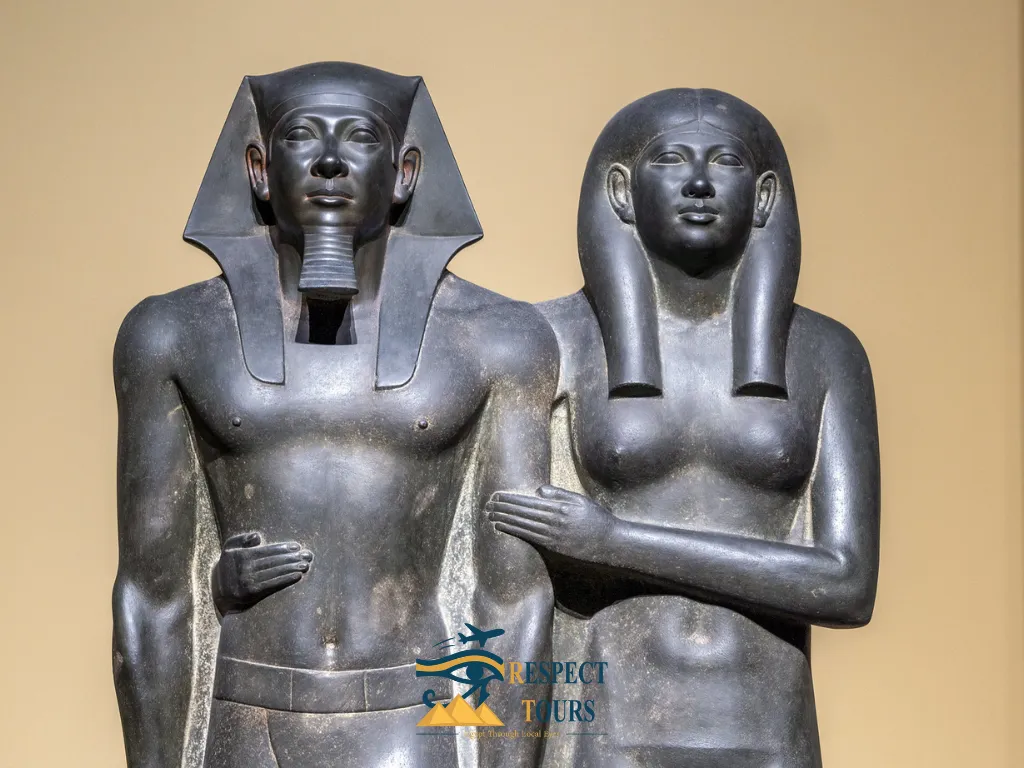
Old Kingdom Pharaohs, Pyramid Builders
Key Old Kingdom Rulers:
- Narmer (Menes): First pharaoh, unified Upper and Lower Egypt (c. 3100 BCE)
- Djoser: Built the first pyramid, the Step Pyramid at Saqqara (Dynasty 3)
- Snefru: Built Bent Pyramid and Red Pyramid at Dahshur (Dynasty 4)
- Khufu (Cheops): Built the Great Pyramid of Giza (Dynasty 4)
- Khafre: Built the second Giza pyramid and the Great Sphinx (Dynasty 4)
- Menkaure: Built the third Giza pyramid (Dynasty 4)
- Pepi II: Longest documented reign, possibly 94 years (Dynasty 6)
Middle Kingdom Pharaohs, Egypt’s Classical Age
Notable Middle Kingdom Pharaohs:
- Mentuhotep II reunited Egypt after the First Intermediate Period (Dynasty 11)
- Amenemhat I, founder of Dynasty 12, moved the capital to Itjtawy
- Senusret I, Military campaigns in Nubia, major building projects
- Senusret III, the Greatest Middle Kingdom warrior, and his administrative reforms
- Amenemhat III, Long peaceful reign, irrigation and mining projects
- Sobekneferu, the First confirmed female pharaoh, ended Dynasty 12
New Kingdom Pharaohs, Egypt’s Golden Age
Most Famous New Kingdom Pharaohs:
| Pharaoh | Key Achievements |
|---|---|
| Ahmose I | Expelled the Hyksos invaders and founded the 18th Dynasty around 1550 BCE |
| Hatshepsut | Female pharaoh who ruled for approximately 22 years and built the Temple of Deir el-Bahri |
| Thutmose III | Known as the “Napoleon of Egypt”; led 17 military campaigns and expanded the Egyptian Empire |
| Amenhotep III | Ruled during a peak of prosperity marked by diplomatic marriages and major building projects |
| Akhenaten | Originally Amenhotep IV; introduced a religious revolution centred on the worship of Aten |
| Tutankhamun | The boy king who ruled from approximately 1332 to 1323 BCE; famous for his largely intact tomb, KV62 |
| Horemheb | A general who became pharaoh and restored Egypt’s traditional religion after the Amarna Period |
| Seti I | A 19th Dynasty pharaoh known for military campaigns in the Levant and the exceptional artwork inside his tomb |
| Ramesses II | Ruled for approximately 66 years and built Abu Simbel, the Ramesseum and many other monuments |
| Ramesses III | Considered the last great pharaoh of ancient Egypt; repelled invasions by the Sea Peoples during the 20th Dynasty |
How Famous Egyptian Pharaohs’ Names Worked: Royal Titulary Explained
How many names did Egyptian pharaohs have? The answer is five. The royal titulary was a complex five-part naming system that proclaimed a pharaoh’s divine authority and earthly legitimacy.
The 5 Parts of Ancient Egypt rulers’ names
Each pharaoh adopted five names at coronation, each serving specific religious and political functions:
1- Horus Name: Identified the pharaoh as the earthly manifestation of the falcon god Horus
- Example: Ramesses II’s Horus name was Kanakht Merymaat (“Strong Bull, Beloved of Maat”)
- Symbolized the king’s divine power and strength
Discover 10 fascinating facts about Ramesses II’s incredible reign.
2- Nebty Name (“Two Ladies”): Connected pharaoh to protective goddesses Nekhbet (vulture, Upper Egypt) and Wadjet (cobra, Lower Egypt)
- Example: Ramesses II’s Nebty name Mekkemetwafkhasut (“He who protects Egypt and subdues foreign lands”)
- Emphasized the unification of Upper and Lower Egypt
3- Golden Horus Name: Associated pharaoh with the imperishable gold of the gods
- Example: Ramesses II’s Golden Horus Userrenputaananakhtukhaemwast (“Rich in years, great in victories”)
- Proclaimed eternal divine status
4- Prenomen (Throne Name): Official coronation name written in cartouche
- Example: Ramesses II = Usermaatre (“Powerful is the Justice of Ra”)
- Appeared on monuments, temples, and official documents
- Usually incorporated the sun god Ra’s name
5- Nomen (Birth Name): Personal name given at birth, also in cartouche
- Example: Ramesses (“Ra has fashioned him”)
- What modern historians use to identify pharaohs
- Often passed down through the royal family
Understanding Prenomen and Nomen
The two cartouche names, prenomen and nomen, are what you’ll see carved on temple walls and tomb inscriptions across Egypt.
Prenomen (Throne Name) Examples:
- Tutankhamun’s prenomen = Nebkheperure (“Lord of the Forms of Ra”)
- Hatshepsut’s prenomen = Maatkare (“Truth is the Soul of Ra”)
- Thutmose III’s prenomen = Menkheperre (“Enduring of Form is Ra”)
Nomen (Birth Name) Examples:
- Tutankhamun (“Living Image of Amun”)
- Hatshepsut (“Foremost of Noble Ladies”)
- Thutmose (“Thoth is Born”)
Why Pharaohs Used Multiple Names
The five-part royal titulary served overlapping purposes. The Horus, Nebty, and Golden Horus names connected the king to Egypt’s gods and goddesses, proclaiming divine legitimacy. The prenomen announced the pharaoh’s religious and political program. Notice how most include “Ra,” emphasizing solar theology and continuity with cosmic order. The nomen maintained family lineage and personal identity.
Together, these names declared, “I am human and divine, unifier of Upper and Lower Egypt, heir to Horus’s throne, and chosen of Ra.” When you read cartouches at Karnak Temple or the Valley of the Kings, you’re witnessing this ancient system of power and identity carved in stone.
Egyptian King Names and Meanings: Quick Reference Table
| Pharaoh | Dynasty | Name Meaning | Where to See |
|---|---|---|---|
| Narmer | 1st | “Striking Catfish” | Egyptian Museum (Narmer Palette) |
| Djoser | 3rd | “Holy One” | Saqqara Step Pyramid |
| Khufu | 4th | “He Protects Me” | Great Pyramid, Giza |
| Hatshepsut | 18th | “Foremost of Noble Ladies” | Deir el-Bahri Temple, Luxor |
| Thutmose III | 18th | “Thoth Is Born” | Valley of the Kings (KV34), Karnak |
| Akhenaten | 18th | “Effective for Aten” | Egyptian Museum (Amarna art) |
| Tutankhamun | 18th | “Living Image of Amun” | Valley of the Kings (KV62), Museum |
| Ramesses II | 19th | “Ra Has Fashioned Him” | Abu Simbel, Luxor Temple, Karnak |
| Cleopatra VII | Ptolemaic | “Glory of Her Father” | Temple of Dendera |
How to Pronounce Ancient Egyptian Pharaoh Names

Ancient Egyptian hieroglyphics didn’t record vowels, so pronunciation is approximated using Coptic (the final stage of the Egyptian language) and Greek transliterations. Here’s how to say the most important names of ancient Egyptian pharaohs confidently.
Essential Pronunciation Guide:
- Narmer: NAR-mer
- Khufu: KOO-foo (Greek: Cheops, KEE-ops)
- Khafre: KAH-fray (Greek: Chephren, KEF-ren)
- Hatshepsut: hat-SHEP-soot (NOT hat-shep-SIT, common mistake)
- Thutmose: THOOT-moh-suh (also Thutmosis)
- Akhenaten: ah-keh-NAH-ten
- Nefertiti: nef-er-TEE-tee (“The Beautiful One Has Come”)
- Tutankhamun: too-tan-KAH-mun (often shortened to “King Tut”)
- Ramesses: RAM-uh-seez (Greek: Ozymandias, the “king of kings” from Shelley’s poem)
- Cleopatra: klee-oh-PAT-rah
When you visit Luxor or Cairo, you’ll impress guides and locals by pronouncing these names correctly. Your Egyptologist guide will appreciate hearing “I’d love to see Hatshepsut’s temple at Deir el-Bahri” rather than “Hat-sheep-suit.”
Female Pharaohs and Queens of Egypt
While male rulers dominated Egypt’s throne, several women claimed full pharaonic power, not as consorts or regents, but as legitimate kings with complete royal titulary.
Confirmed Female Pharaohs
Sobekneferu (Dynasty 12, c. 1806-1802 BCE)
- First confirmed female pharaoh in Egyptian history
- Ruled at the end of the Middle Kingdom
- Adopted masculine royal titles and wore traditional male pharaonic regalia
- Her brief reign marked Dynasty 12’s conclusion before the Second Intermediate Period
Hatshepsut (Dynasty 18, c. 1479-1458 BCE)
- The most successful female pharaoh, ruling approximately 22 years
- Initially regent for young stepson Thutmose III, then claimed full kingship
- Commissioned ambitious building projects, including the mortuary temple at Deir el-Bahri
- Depicted herself wearing a false ceremonial beard in official statues
- Organized a famous expedition to the Land of Punt (modern Somalia/Eritrea region)
- After her death, Thutmose III systematically erased her name from monuments
Where to See Her Legacy: Deir el-Bahri Temple (Luxor West Bank), Karnak Temple (Red Chapel), Egyptian Museum (statues and reliefs). Her mummy resides in Cairo’s Royal Mummies Hall. Learn more about what made Hatshepsut unique among Egyptian rulers.
Twosret (Dynasty 19, c. 1191-1189 BCE)
- Ruled at the end of Dynasty 19, initially as regent for young Siptah
- Claimed full pharaonic titles after Siptah’s death
- Built one of the largest tombs in the Valley of the Kings (KV14)
- Her reign ended Dynasty 19 before Setnakhte founded Dynasty 20
Where to See Her Legacy: Tomb KV14 in Valley of the Kings (later usurped, but her original decorations are visible)
Cleopatra VII (Ptolemaic Dynasty, 51-30 BCE)
- Last pharaoh of Egypt before Roman annexation
- Ethnically Greek (Ptolemaic dynasty descended from Alexander’s general)
- Unlike her Greek predecessors, she learned to speak the Egyptian language
- Presented herself as the reincarnation of the goddess Isis
- Political alliances with Julius Caesar (bore son Caesarion) and Mark Antony
- Died by suicide in 30 BCE; her death ended 3,000 years of pharaonic civilization
Where to See Her Legacy: Temple of Dendera (reliefs showing Cleopatra and Caesarion), Alexandria (Ptolemaic-era sites, underwater archaeology), Philae Temple (Ptolemaic construction).
Where to See Pharaoh Monuments Today
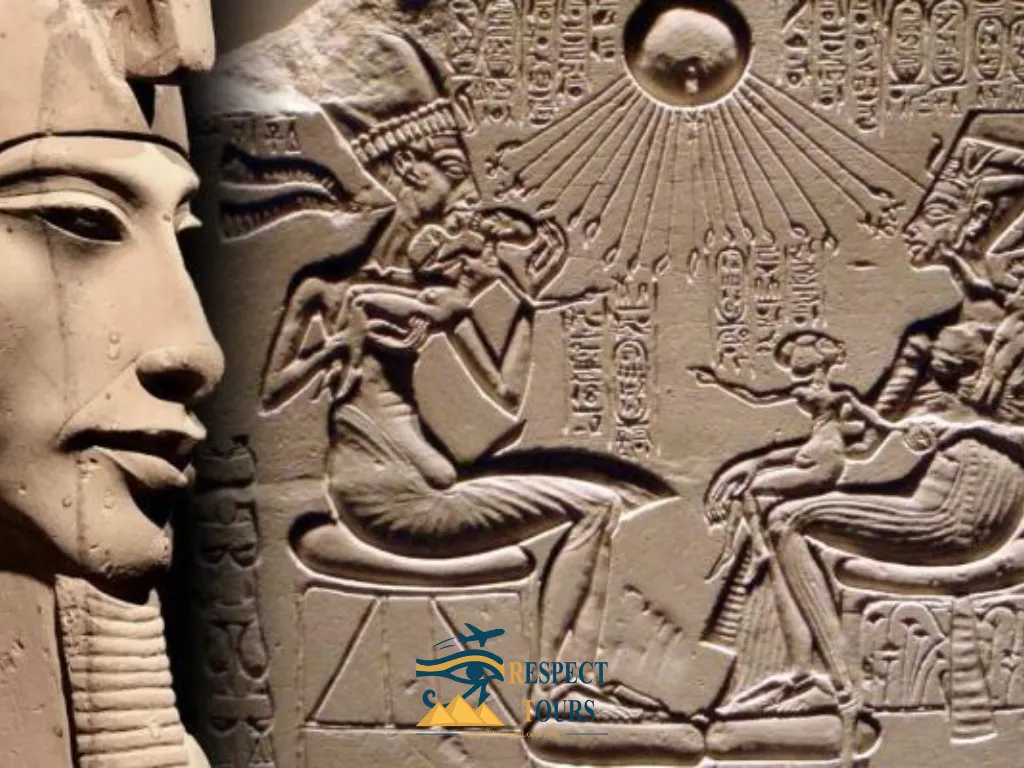
The names of ancient Egyptian pharaohs aren’t just textbook entries; they’re carved on monuments you can touch, temples you can walk through, and treasures displayed in world-class museums.
Cairo: Museums & Royal Mummies
Egyptian Museum, Tahrir Square
- Houses over 120,000 ancient Egyptian artifacts
- Tutankhamun galleries: golden death mask, throne, chariots, jewelry
- Narmer Palette commemorating Egypt’s unification
- Royal Mummies Hall (separate ticket required): Face-to-face with Ramesses II, Seti I, Hatshepsut, Thutmose III, and other legendary rulers. Ramesses II’s preserved face, hooked nose, thin lips, and reddish hair make history shockingly personal.
Grand Egyptian Museum (near Giza)
- Will house the complete Tutankhamun collection (5,000+ objects)
- State-of-the-art climate control and display technology
- King Tut’s chariot and golden beds are already visible in the preview galleries
Practical Info: The Royal Mummies Hall requires a separate ticket purchased on-site (check current pricing online). Photography is prohibited in the mummies hall. Plan 3-4 hours for a thorough museum visit. Check current ticket prices and booking information.
Giza: Pyramids of Khufu, Khafre, Menkaure
Giza Plateau
- Great Pyramid of Khufu: Last surviving Wonder of the Ancient World (originally 481 feet tall)
- Interior access to the Great Pyramid: The Descending passage leads to the Grand Gallery and King’s Chamber, where Khufu’s empty sarcophagus rests. Climbing narrow passages requires moderate fitness; not recommended for claustrophobia.
- Second Pyramid of Khafre: Retains original limestone casing at peak
- Great Sphinx: Limestone monument with Khafre’s face (possibly)
- Solar Boat Museum: Khufu’s reconstructed 143-foot cedarwood funeral boat
Luxor: Valley of Kings & Temples
Ancient Thebes (modern Luxor) was Egypt’s New Kingdom capital and remains the world’s greatest concentration of pharaonic monuments.
East Bank:
- Karnak Temple Complex: Massive temple expanded by dozens of pharaohs over 2,000 years. Don’t miss Thutmose III’s Festival Hall, Hatshepsut’s Red Chapel, and the Great Hypostyle Hall with 134 columns.
- Luxor Temple: Ramesses II’s monumental entrance pylon and courtyard, Amenhotep III’s colonnade. Recently restored 1.7-mile sphinx avenue connecting to Karnak.
West Bank:
- Valley of the Kings: Royal necropolis containing 63 discovered tombs. Standard ticket includes 3 tombs; Tutankhamun (KV62) and Seti I (KV17) require additional tickets.
- Deir el-Bahri: Hatshepsut’s three-tiered mortuary temple carved into limestone cliffs, one of ancient Egypt’s most visually stunning monuments
- Ramesseum: Ramesses II’s mortuary temple with toppled colossus inspiring Shelley’s “Ozymandias”
- Medinet Habu: Ramesses III’s exceptionally well-preserved complex
Aswan: Abu Simbel & Philae
Abu Simbel (170 miles south of Aswan)
- Ramesses II’s masterpiece: four 65-foot seated colossi carved directly from the cliff face
- Great Temple interior: reliefs depicting the Battle of Kadesh
- Small Temple dedicated to Ramesses’ wife Nefertari
- Sun Festival (February 22 & October 22): Sunlight penetrates 200 feet to illuminate statues of Ramesses and gods in the inner sanctuary
- UNESCO relocated the entire temple complex in the 1960s to save it from Lake Nasser’s rising waters
Philae Temple
- Island temple complex dedicated to the goddess Isis
- Built during the Ptolemaic period, continued under Roman rule
- Also relocated by UNESCO (moved to Agilkia Island)
- Beautiful columned courts and reliefs showing Ptolemaic pharaohs making offerings
Practical Info: Abu Simbel requires an early morning departure (3:30-4:00 AM) for a 3.5-hour drive, or you can fly from Aswan (20 minutes). Sunrise arrival means fewer crowds and ideal photography light. Combine Abu Simbel with Philae Temple in a long day trip.
Why Choose Respect Tours
- Expert Egyptologist guides who explain cartouches, translate hieroglyphics, and bring pharaonic stories to life
- Small group sizes (maximum 12 travelers) for personalized attention and intimate site access
- Licensed, insured transportation with air-conditioned vehicles and carefully vetted accommodations
- Flexible itineraries that adapt to your pace, interests, and photography needs
- Skip-the-line access at major sites, early-morning Valley of Kings entries before crowds
We handle all tickets, timing, security, and logistics so you can focus on standing where Hatshepsut stood, touching stones Ramesses II carved, and walking through Khufu’s pyramid chambers.
Isn’t it time you saw the monuments of the pharaohs for yourself?
Conclusion
The names of ancient Egyptian pharaohs Khufu, Hatshepsut, Ramesses II, and Tutankhamun are more than lines in history books. They are written across Egypt’s landscape, carved into temple walls in Luxor, hidden inside pyramids at Giza, and shining at Abu Simbel when the sun aligns with Ramesses II’s sanctuary.
Understanding these names brings ancient Egypt to life. With Respect Tours, Egyptologist guides help you read a cartouche, explain each pharaoh’s royal titles, and show you exactly where their stories still stand today. You’ll learn why Hatshepsut chose a king’s imagery, how to pronounce names like Nebkheperure with confidence, and where to see the monuments built by the most powerful rulers of 3,000 years of history.
If you’re ready to step beyond the pages of history and walk in the footsteps of Egypt’s greatest kings and queens, contact Respect Tours today. Your journey into the world of the pharaohs starts here.
FAQ: Frequently Asked Questions
Who was the first pharaoh of Egypt?
Narmer (possibly the same person as the legendary Menes) unified Upper and Lower Egypt around 3100 BCE, founding Dynasty 1 and establishing the office of pharaoh. The Narmer Palette at the Egyptian Museum in Cairo commemorates this unification, showing Narmer wearing both the white crown of Upper Egypt and the red crown of Lower Egypt.
Approximately 170-190 pharaohs ruled across 3,000 years and 30 dynasties. The exact count varies depending on how historians classify co-regencies, regional rulers during intermediate periods, and politically erased rulers like Akhenaten.
Multiple pharaohs built pyramids. Djoser commissioned the first pyramid (Step Pyramid at Saqqara, c. 2670 BCE). The three famous Giza pyramids were built by Fourth Dynasty pharaohs: Khufu (Great Pyramid, c. 2580 BCE), his son Khafre (second pyramid), and Khafre’s son Menkaure (third pyramid). Pyramid construction continued through the Middle Kingdom, though on smaller scales.