
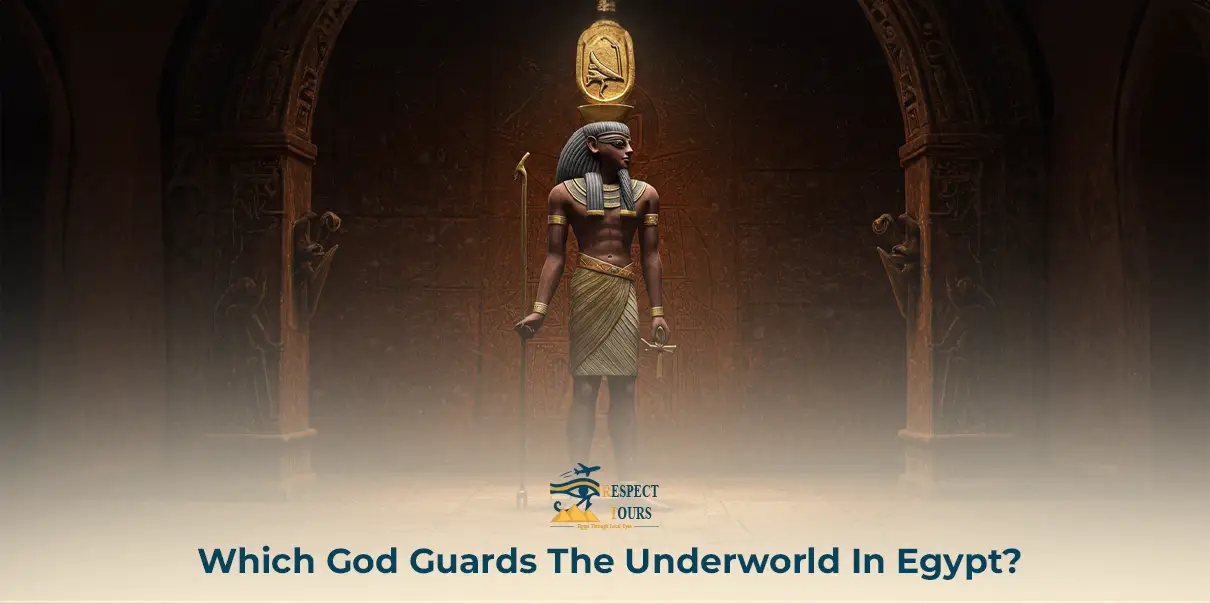
Anubis is the god who guards the underworld in Egypt, the jackal-headed deity who guided souls through the Duat, protected tombs, and oversaw the sacred Weighing of the Heart ceremony.
When asking “Which God Guards the Underworld in Egypt?”, the answer begins with Anubis but extends to a divine hierarchy that included Osiris, Ma’at, Thoth, and Ammit, each governing judgment, truth, and the soul’s eternal destiny.
Ancient Egyptian mythology presents the underworld not as a place of punishment, but as a realm of transformation and divine justice. Here, Anubis acts as the psychopomp, the soul’s guide, ensuring safe passage to the Hall of Two Truths, where Osiris presides as the final judge. Understanding which god guards the underworld in Egypt reveals how this civilization united death, morality, and resurrection into one of history’s most intricate spiritual systems.
Anubis: Primary Guardian of the Dead
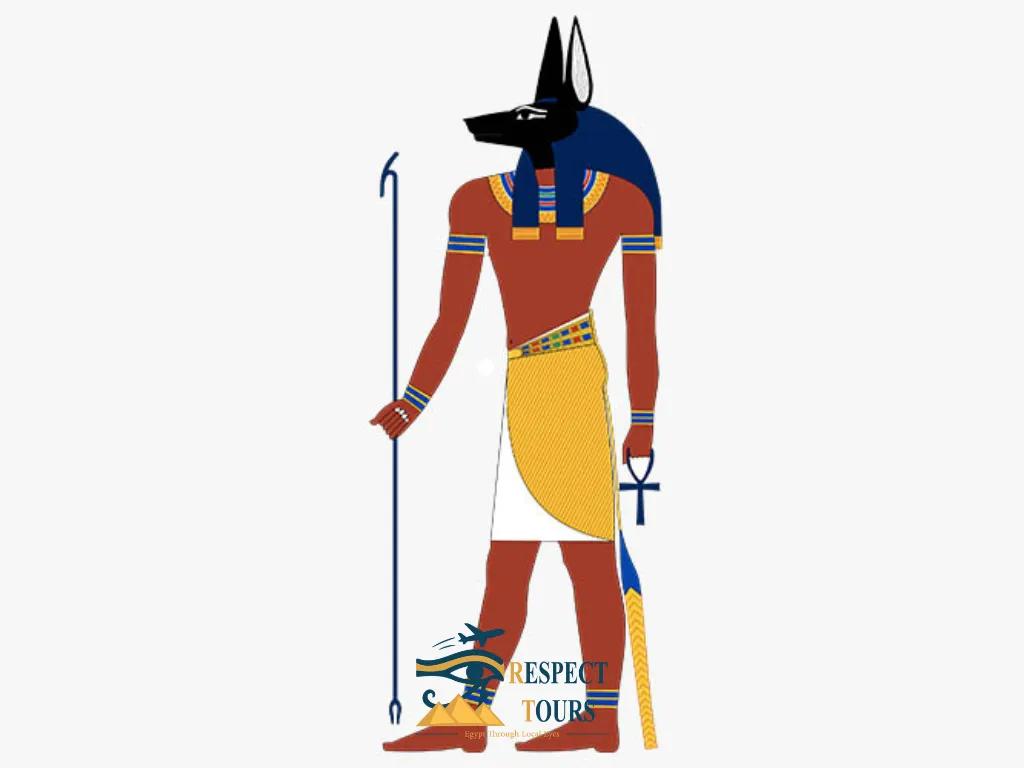
Anubis (ancient Egyptian: Inpu) emerged as Egypt’s oldest death deity during the Pre-Dynastic period, predating the Osirian resurrection cult by centuries.
Archaeological evidence from Abydos and Saqqara demonstrates his worship existed before 3100 BCE, establishing him as the foundation of Egyptian funerary religion.
The deity’s distinctive jackal iconography originated from observing wild canines scavenging near ancient cemeteries along desert margins. Rather than viewing these animals as threats to burials, Egyptians transformed them into protective symbols, a conceptual inversion that elevated Anubis to divine guardian status.
His black coloration symbolized both fertile Nile silt and the discoloration of mummified flesh, connecting regeneration with preservation.
Mythological Genealogy:
- Primary tradition: Son of Osiris and Nephthys (Osiris’s sister-wife’s sister)
- Alternative tradition: Son of Ra and Nephthys
- Symbolic relationship: Adoptive son and loyal servant to Osiris
- Divine siblings: Horus (as Osiris’s heir), Set (as antagonist)
Comprehensive Responsibilities in Death Administration
Anubis’s guardianship extended across multiple interconnected domains, creating an integrated system of death management:
- Mummification Oversight
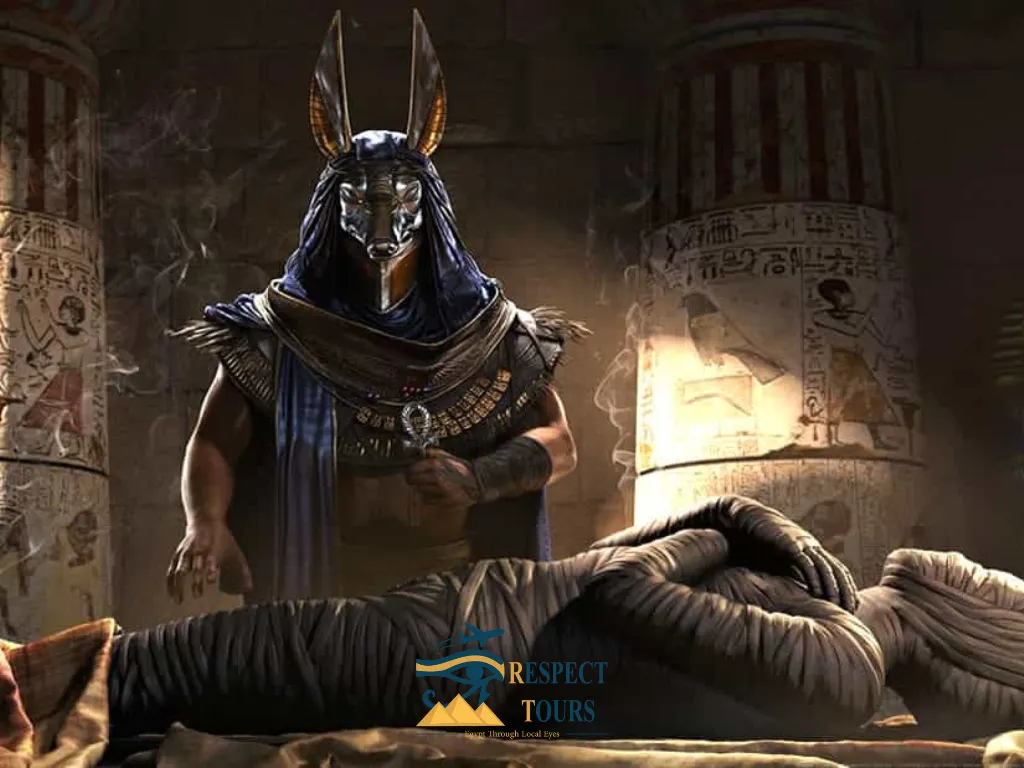
Anubis invented the embalming process after preserving Osiris’s murdered body, establishing the prototype for all subsequent mummifications. His supervision guaranteed:
- Proper organ removal and canopic jar placement
- Correct application of natron salts for desiccation
- Magical recitations during each procedural stage
- Protection against demonic interference during the 70-day process
- Quality control, ensuring eternal body preservation
Embalming priests (wt) wore Anubis masks during ceremonies, ritually transforming into the god to channel his divine expertise and protective power.
- Psychopomp Function: Soul Guidance Through the Duat
As psychopomp, Anubis personally escorted each deceased soul (ba) through the underworld’s treacherous geography. This guidance included:
- Navigation through the Twelve Gates, each guarded by knife-wielding demons
- Teaching protective spells from the Book of the Dead (Reu nu pert em hru)
- Providing passwords (hekau) for gate guardians
- Protection against serpent demons like Apophis
- Safe passage across the Lake of Fire (She-ent)
Without Anubis’s protection, souls faced permanent destruction (second death) from supernatural predators inhabiting the Duat’s dangerous regions.
- The Weighing of the Heart Ceremony (Psychostasia)
Anubis conducted this pivotal judgment ritual in the Hall of Two Truths (Maaty), determining each soul’s eternal fate through precise cardiac measurement:
Ceremony Procedure:
- Heart (ib) extraction and examination for spiritual weight
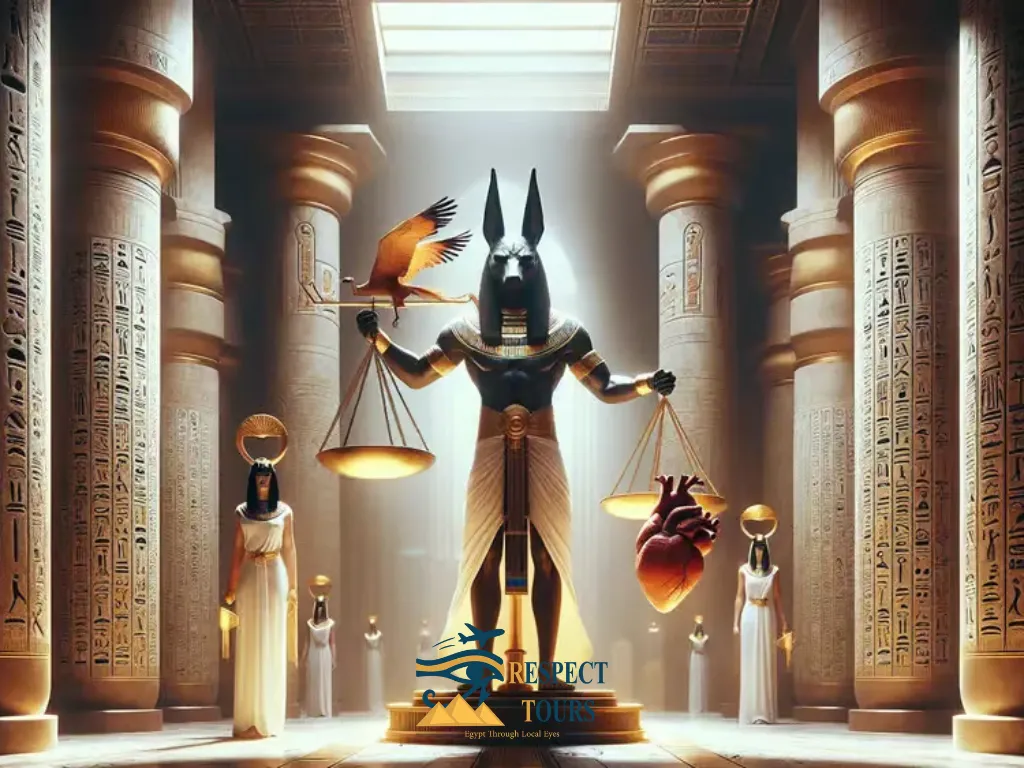
- Placement on golden scales opposite Ma’at’s ostrich feather
- Balance verification with mathematical precision
- Result proclamation to Osiris and the 42 Assessor Gods
- Soul direction toward paradise or Ammit
The heart contained consciousness, memory, and moral character, making it the seat of judgment rather than the brain (which Egyptians discarded during mummification). Hearts heavier than the feather revealed corruption through sin, while balanced hearts demonstrated righteousness sufficient for eternal life.
- Necropolis Protection
Anubis guarded physical burial sites against tomb robbers, vandals, and malevolent spirits. His divine presence:
- Sanctified cemetery grounds (khert-neter)
- Protected mummies from decay and disturbance
- Deterred supernatural threats to buried remains
- Maintained the boundary between the living and dead realms
- Ensured perpetual offerings reached deceased spirits
Temple complexes dedicated to Anubis maintained sacred jackal populations, mummifying these animals with honors equivalent to human burials upon death.
Sacred Epithets and Divine Names
Ancient Egyptians addressed Anubis through multiple titles reflecting his comprehensive authority:
- “Imy-ut” (He Who Is In the Place of Embalming)
- “Khenty-imentiu” (Foremost of the Westerners—referencing death’s western direction)
- “Tepy-dju-ef” (He Who Is Upon His Sacred Mountain—the desert necropolis)
- “Neb-ta-djeser” (Lord of the Sacred Land—the cemetery realm)
- “Qebehet” (Purifier—referencing cleansing rituals)
Each epithet emphasized specific aspects of his guardianship, invoked during relevant funeral ceremonies or magical spells.
Osiris: Supreme Judge and Underworld Ruler
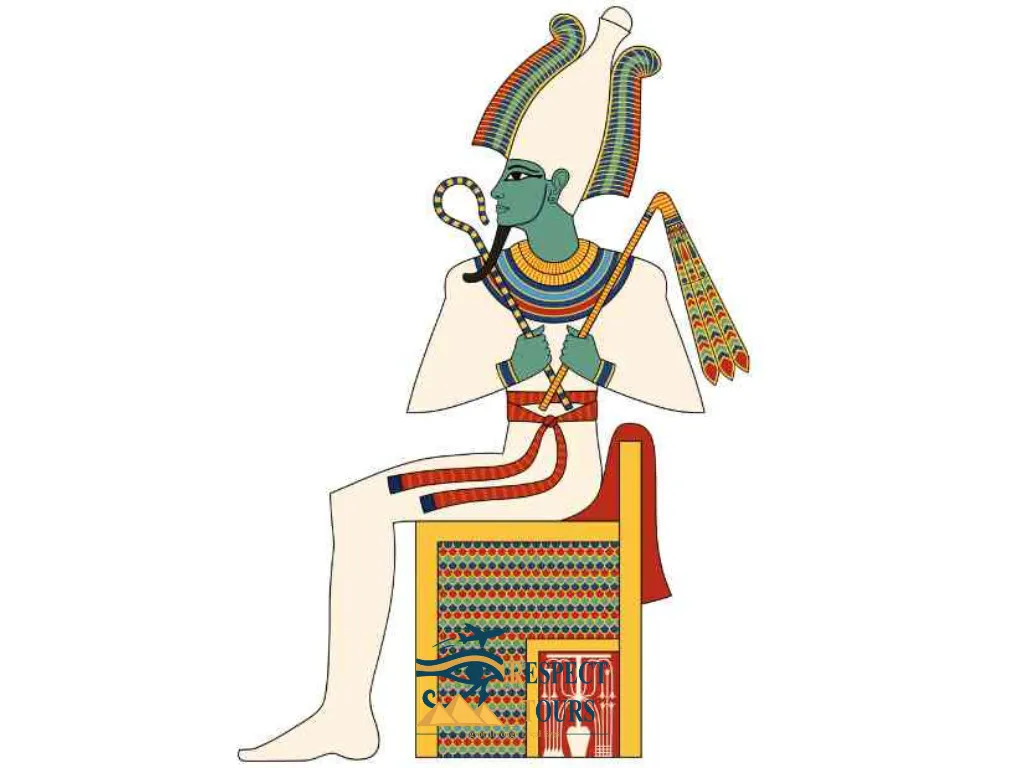
Osiris (Wesir in ancient Egyptian) began as an agricultural deity associated with the Nile’s annual inundation cycle. His mythology evolved following a foundational narrative that transformed him from living king to resurrected underworld lord.
The Osirian Death-Resurrection Myth:
Set, god of chaos and desert storms, murdered his brother Osiris through jealous ambition, seeking divine kingship. He dismembered the corpse into 14 pieces (some sources say 42, matching the divine judges), scattering them across Egypt. Isis, Osiris’s devoted sister-wife, searched tirelessly to recover every fragment.
Through powerful magic (heka), Isis temporarily resurrected Osiris long enough to conceive Horus, the divine heir who would later defeat Set and restore cosmic order (ma’at). Anubis performed the first mummification on Osiris’s reassembled body, establishing the procedure that would preserve Egyptian dead for three millennia.
This experience with death, dismemberment, and resurrection qualified Osiris uniquely to judge others facing similar transitions. His green skin symbolized regeneration through vegetation cycles and the promise of rebirth for righteous souls.
Judicial Authority in the Hall of Two Truths
Osiris presided over final judgment proceedings from his throne in the Hall of Two Truths, surrounded by divine assessors and supernatural witnesses. His court operated through strict procedural protocols:
The 42 Assessor Gods (Divine Judges):
Each assessor represented specific moral principles, questioning souls about particular sins during the Negative Confession (a declaration of innocence rather than guilt admission):
- “I have not killed” (addressed to Usekh-nemmt from Heliopolis)
- “I have not stolen” (addressed to Hept-khet from Kher-aha)
- “I have not told lies” (addressed to Neheb-nefert from Memphis)
- [Continuing through 42 specific moral violations]
Souls must convince all 42 judges of their innocence while their hearts undergo weighing; any lie would manifest as increased cardiac weight, ensuring honest testimony.
Osiris’s Judgment Criteria:
The green god evaluated:
- Heart weighing results from Anubis
- Testimony from the 42 assessors
- Records maintained by Thoth
- Ma’at’s verification of truth
- The deceased’s earthly behavior and ritual observance
His verdicts were absolute and irreversible, applying identical moral standards to pharaohs and peasants alike, demonstrating Egyptian belief in universal divine justice transcending earthly social hierarchies.
Symbols and Iconography of Divine Kingship
Osiris appeared in art with distinctive attributes emphasizing his dual nature as death lord and eternal king:
Visual Elements:
- Green or black skin: Regeneration, fertile soil, mummified flesh
- Mummy wrappings: Victory over death through proper burial
- Atef crown: White crown of Upper Egypt flanked by ostrich feathers
- Crook and flail: Royal authority symbols inherited from living kingship
- False beard: Divine kingship marker in Egyptian tradition
- Ankh scepter: Life-granting power despite the death domain
His cult center at Abydos became Egypt’s most sacred pilgrimage site, where pharaohs and nobles sought burial proximity to the god’s legendary tomb. Annual festivals reenacted the Osirian death-resurrection myth through elaborate mystery plays.
Evolution of Underworld Guardianship
Old Kingdom (2686-2181 BCE): Anubis’s Supremacy
During Egypt’s earliest dynasties, Anubis held exclusive authority over death matters. The Pyramid Texts from this era emphasize his singular importance:
- Royal burials invoked only Anubis for protection
- Mummification rituals centered entirely on his procedures
- Funerary spells addressed him as the supreme death deity
- Temple resources concentrated on his cult centers
- Priestly positions focused on Anubis worship
This Old Kingdom dominance established Anubis as the foundational guardian whose authority later gods would complement rather than replace.
Middle Kingdom (2055-1650 BCE): Osirian Integration
The First Intermediate Period’s chaos and subsequent Middle Kingdom reunification brought theological changes emphasizing resurrection hope through Osiris:
Theological Shifts:
- Osiris emerged as the supreme underworld ruler
- Anubis adapted to a specialized guardian role
- Dual-authority system developed
- Democratization of the afterlife (commoners gaining access)
- Coffin Texts replaced Pyramid Texts
Rather than competition, texts emphasized Anubis-Osiris collaboration, each deity specializing in complementary functions. This partnership model became standard throughout the remaining Egyptian history.
Key Innovation: The Weighing of the Heart ceremony was formalized during this period, requiring both deities’ participation and establishing their interdependent relationship.
New Kingdom (1550-1077 BCE): Imperial Expansion
Egypt’s imperial conquests spread Anubis worship internationally:
Geographic Spread:
- Military campaigns require battlefield death rituals
- Egyptian colonies establishing Anubis temples
- Foreign populations adopting Egyptian funerary practices
- International recognition of the jackal god
- Cross-cultural religious syncretism begins
Royal patronage reached unprecedented levels, with pharaohs funding elaborate temple complexes and artistic programs celebrating Anubis’s achievements. Valley of the Kings tombs featured increasingly sophisticated Anubis imagery and invocations.
Late Period and Greco-Roman Era (664 BCE-395 CE): Foreign Influence
Foreign conquest brought new religious dynamics while preserving traditional Egyptian beliefs:
Greek Period Developments:
- Identification with Hermes (messenger god guiding souls)
- Creation of Hermanubis (syncretic composite deity)
- Continued temple operations under Ptolemaic patronage
- Philosophical interpretations by Greek scholars
- Mediterranean-wide recognition
Roman Period Adaptations:
- Mystery cults incorporating Egyptian deities
- Anubis worship spreading to Roman provinces
- Archaeological evidence from Britain to Black Sea
- Integration with Roman funeral practices
- Continued temple construction and maintenance
This adaptability enabled Anubis’s survival through political upheavals that destroyed many other aspects of pharaonic culture.
Cultural Legacy and Modern Influence
Ancient Mediterranean Impact
Greek and Roman encounters with Egyptian religion permanently influenced Western underworld concepts:
Mythological Exchanges:
- Hermes Psychopompos adopts Anubis’s soul-guiding function
- Cerberus (three-headed dog), possibly inspired by jackal guardian imagery
- Charon (ferryman of the dead) parallels underworld navigation assistance
- Judicial afterlife concepts entering Western religious thought
Roman historians like Plutarch documented Egyptian funeral practices in detail, preserving knowledge that would influence later European understanding of ancient death rituals.
Medieval and Renaissance References
European scholars encountered Anubis through:
- Classical texts by Herodotus, Plutarch, Diodorus Siculus
- Early Christian writings condemning “pagan” Egyptian gods
- Medieval bestiaries describing jackal-headed beings
- Renaissance humanism’s renewed classical interest
- Early Egyptology during Napoleon’s Egyptian campaign (1798-1801)
Modern Popular Culture Representations
Contemporary media extensively features Anubis:
Film and Television:
- The Mummy franchise (1999-2017): Anubis warriors and curses
- Stargate series (1994-present): Alien race using Egyptian god names
- Gods of Egypt (2016): Direct mythological portrayal
- Moon Knight (2022): MCU series incorporating the Egyptian pantheon
Literature:
- Rick Riordan’s Kane Chronicles: Young adult Egyptian mythology
- Neil Gaiman’s American Gods: Ancient deities in the modern world
- Numerous horror and fantasy novels featuring Egyptian elements
Gaming:
- Assassin’s Creed Origins (2017): Historical Egypt exploration
- Smite (2014): Anubis as a playable character
- Age of Mythology (2002): Egyptian faction god powers
- Mobile games extensively using Egyptian themes
Visual Arts:
- Tattoo culture: Anubis designs symbolizing protection and guidance
- Heavy metal album artwork: Death god aesthetic
- Street art: Ancient Egyptian iconography in urban spaces
- Fashion: Luxury brands incorporating Egyptian motifs
Academic and Educational Significance
Anubis serves educational purposes:
- Museum exhibits explaining ancient Egyptian culture
- Educational programs using mythology for history lessons
- Archaeological discoveries continue to reveal new information
- Digital preservation makes artifacts globally accessible
- Academic conferences dedicated to Egyptian religion
Major institutions holding significant Anubis collections include the British Museum, Louvre, Cairo Museum, Metropolitan Museum of Art, and Berlin’s Neues Museum.
Contemporary Spiritual Movements
Modern spiritual practices incorporate Anubis:
- Kemetic Orthodoxy: Reconstructionist Egyptian paganism
- New Age spirituality: Invocations for protection and guidance
- Ceremonial magic: Egyptian god names in ritual work
- Meditation practices: Visualization using ancient imagery
- Death positivity movement: Ancient Egyptian acceptance of mortality
These contemporary adaptations demonstrate his continued spiritual relevance beyond academic historical interest.
Where to See and Learn About Anubis in Egypt
1. Cairo: Museums That Bring Anubis to Life
- Home to some of the most iconic Anubis statues, canopic jars, and mummification tools.
- The highlight: the black Anubis shrine found in Tutankhamun’s tomb, displayed with golden detail.
- Perfect for travelers who want to see the craftsmanship and symbolism of Egypt’s guardian god up close.
- The Egyptian Museum, Tahrir Square
- Features ancient funerary masks, coffins, and amulets depicting Anubis.
- Sections dedicated to the Book of the Dead, explaining how Anubis guided souls through the underworld.
- Excellent for understanding how the mythology evolved over dynasties.
2. Saqqara: The Sacred Land of Anubis
- Saqqara’s Anubieion (Temple of Anubis) was one of the oldest sanctuaries dedicated to the god.
- Thousands of mummified jackals were discovered here, offerings made to gain Anubis’s favor.
- The Serapeum of Saqqara, near the Anubieion, also reflects the deep funerary culture tied to his worship.
3. Abydos: The Cult Center of Osiris and the Path of the Dead
- Abydos served as the spiritual heart of Egypt’s funerary religion, linking Osiris and Anubis.
- The Temple of Seti I includes rich carvings showing Anubis assisting Osiris in judgment scenes.
- Pilgrims from across Egypt once came here to connect with the afterlife gods.
4. Luxor: Temples Depicting Anubis in the Afterlife Journey
- The Temple of Hatshepsut (Deir el-Bahari)
- Wall reliefs depict Anubis overseeing funerary rituals and offerings to the gods of the underworld.
- The temple’s funerary nature makes it one of the best places to see Anubis’s priestly role.
- The Valley of the Kings
- Tombs feature scenes of Anubis guiding pharaohs through the Duat, including the famous Tomb of Tutankhamun, where an exquisite Anubis statue was found guarding the burial chamber.
- A must-see for travelers who want to stand face to face with the god who guarded Egypt’s kings.
5. Aswan: Temples of Transformation
- Philae Temple (Dedicated to Isis)
- Depicts the resurrection of Osiris and the divine partnership between Anubis and Isis in restoring life.
- Visitors can witness how Anubis’s role evolved from a protector to a restorer of cosmic balance.
6. Beyond the Temples: Experiencing Anubis in Egyptian Art and Culture
- Modern Egyptian artisans reproduce Anubis statues, amulets, and paintings, available in local markets like Khan el-Khalili (Cairo) and Luxor Souq.
- Themed exhibitions in major museums often explore the “Mystery of the Afterlife”, showcasing mummification tools and Anubis iconography.
- For travelers, these provide tangible links between myth and modern heritage.
Conclusion:
The question “Which God Guards the Underworld in Egypt?” opens a window into one of history’s most complex and enduring belief systems. At its heart stands Anubis, the jackal-headed guardian who protected the dead, guided souls through the Duat, and ensured their safe passage to judgment. Beside him ruled Osiris, the resurrected god-king and supreme judge who governed the destiny of every soul.
To truly grasp this legacy, you don’t have to stop at reading; you can walk where these beliefs were born. Respect Tours can take you across Egypt’s ancient necropolises, temples, and museums, where the stories of Anubis, Osiris, and the underworld come alive. Step into the land where mythology meets eternity, and let Egypt tell you its story.
FAQ: Frequently Asked Questions
Is Anubis the main god of the underworld?
Anubis serves as the primary guardian and guide, but Osiris holds the supreme judicial authority. Their complementary roles create dual leadership rather than singular control.
Ammit immediately devours the failed heart, completely destroying the soul and preventing any resurrection or eternal existence, called the “second death.”
No, they revered him as a protective guardian. Fear focused on judgment failure, not Anubis himself, who ensured fair treatment and safe guidance.
The Duat encompasses the entire underworld, including dangerous regions, while the Field of Reeds represents the paradise destination for successful souls.