
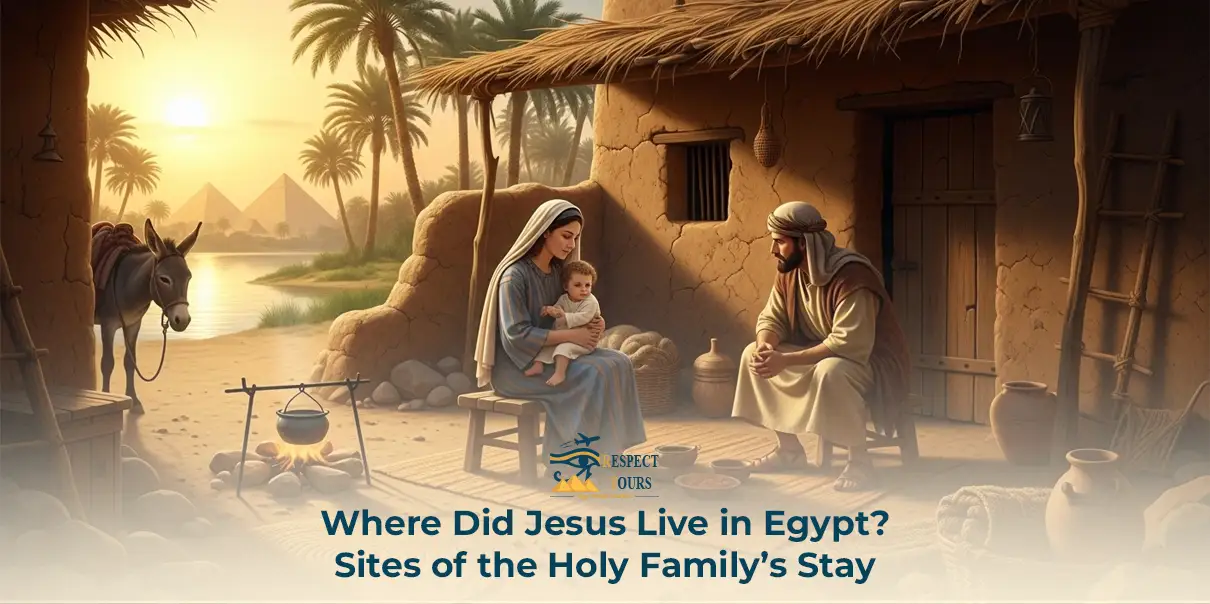
The question “Where did Jesus live in Egypt?” invites us to travel back more than 2,000 years, to a time when Egypt became a land of refuge, faith, and divine protection.
According to the Gospel of Matthew (2:13-23), an angel appeared to Joseph in a dream, warning him to take Mary and the infant Jesus and flee to Egypt to escape King Herod’s threat. Their journey across the deserts and along the Nile transformed Egypt into a sanctuary blessed by their presence.
Today, this sacred question, “Where did Jesus live in Egypt?” leads us through fifteen holy sites preserved by Coptic Christian communities for nearly two millennia. These are not just ancient landmarks; they are living centers of faith, where countless pilgrims still walk the same paths the Holy Family once traveled.
This guide explores every stop on their journey, blending biblical history, Coptic tradition, archaeological insight, and travel guidance. Whether you are a pilgrim seeking spiritual connection or a traveler drawn to the roots of early Christianity, you’ll discover why Egypt remains a sacred chapter in the life of Jesus and the story of faith itself.
Where Did Jesus Live in Egypt? Key Holy Family Sites

The Holy Family’s stay in Egypt is one of the most cherished stories in Christian history. Guided by divine warning, they journeyed from Bethlehem to several towns across Egypt before returning home to Nazareth.
According to Coptic tradition, the main places where Jesus lived or stayed include:
- Farama (Pelusium): The first Egyptian town they entered, offering early refuge.
- Tel Basta (Bubastis – near Zagazig): Where a miraculous spring is said to have appeared.
- Mostorod (El-Mahamma): Known as “The Bath Place,” where Mary bathed the child Jesus.
- Belbeis: The family rested under a tree now linked to the Virgin Mary.
- Samannoud: Home to a church honoring their visit.
- Wadi El Natrun: The cradle of Egyptian monastic life, blessed by the Holy Family’s presence.
- Old Cairo (Coptic Cairo): A major refuge, where the Church of Abu Serga still stands over the cave that sheltered them.
- Maadi: Site of the Virgin Mary Church, where a Bible miraculously floated on the Nile.
- Matariya & Zeitoun: Places of miracles and Marian apparitions.
- Assiut – Deir El-Muharraq & Gabal El-Tayr: Their final refuge before the angel guided them back to the Holy Land.
Each stop tells a story of hope, protection, and faith, and forms part of Egypt’s Holy Family Trail, recognized by both the Vatican and UNESCO for its spiritual and cultural importance.
Why did Jesus live in Egypt?
Egypt was chosen as a refuge for the Holy Family due to its unique combination of safety, geography, and historical significance. According to the Flight into Egypt narrative in the Gospel of Matthew, Joseph, guided by an angel, brought Mary and baby Jesus to Egypt to protect them from King Herod’s persecution.
The country’s location offered a secure and accessible route from Bethlehem, making it an ideal sanctuary. Beyond its geographic advantages, Egypt held deep religious and cultural importance in the Bible.
It symbolized both a place of refuge and a land with a rich spiritual heritage, connecting the story of the Holy Family to centuries of faith.
Today, visiting these sites forms an essential part of the Holy Family in Egypt journey and attracts countless pilgrims, making it a central destination for Christian pilgrimage in Egypt. Exploring these locations provides insight into the early life of Jesus and the enduring spiritual legacy of his time in Egypt.
How Long Did Jesus Stay in Egypt?
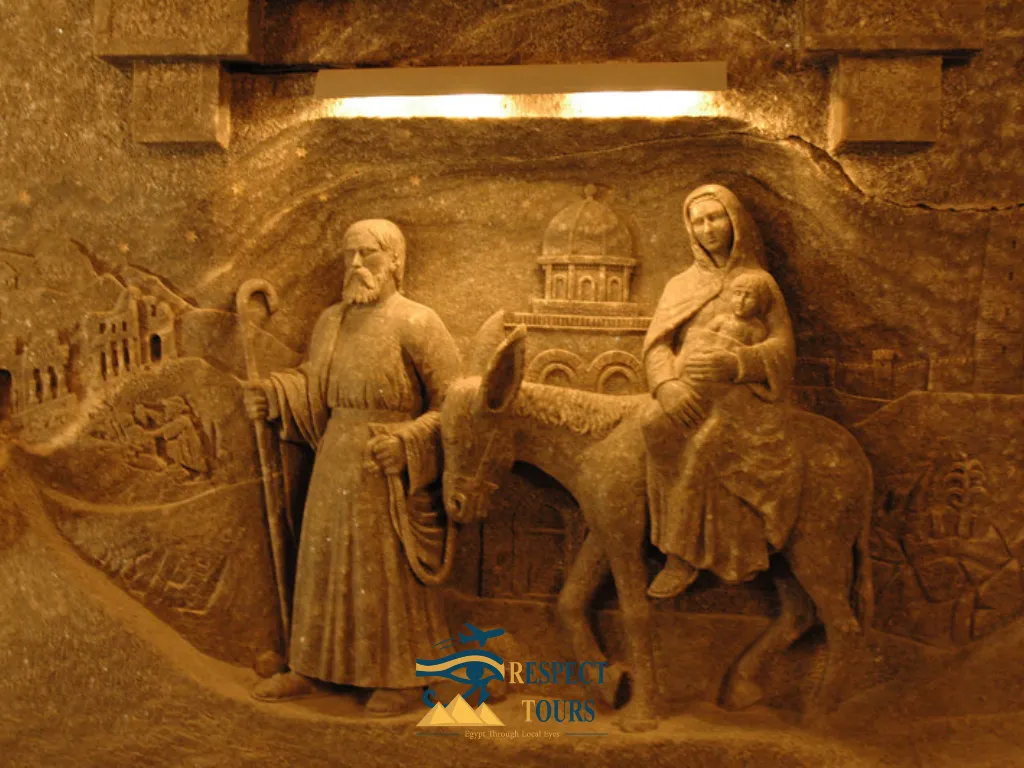
The Bible doesn’t tell us exactly how long Jesus lived in Egypt. Matthew simply says they remained “until the death of Herod,” which historians date to 4 BCE.
Coptic tradition offers more specific details:
Three Years and Eleven Months: The Coptic Synaxarium (a collection of saints’ stories and holy events) states the Holy Family stayed in Egypt for three years and eleven months. This has been the traditional belief in the Coptic Church for centuries.
Two to Three Years: Some scholars suggest a shorter period of two to three years based on:
- Jesus’ age when they returned (Matthew calls him a “child,” not an infant)
- Time needed to travel the route described in the Coptic tradition
- Herod’s death date and when it would have been safe to return
Why the Uncertainty? Ancient people didn’t track time the same way we do. Exact dates mattered less than the spiritual significance of events. What everyone agreed on: the Holy Family spent a substantial period in Egypt, long enough to move between multiple locations and become part of local communities.
Overview of the Holy Family Egypt Route and Journey Trail
The journey of the Holy Family in Egypt is a significant part of Christian history, tracing the route taken by Joseph, Mary, and baby Jesus after fleeing Bethlehem. According to Coptic tradition, the family traveled from :
Bethlehem → Sinai → the Nile Delta → Upper Egypt → and eventually returned to Palestine.
This route, now recognized as the Holy Family route in Egypt, highlights the key places where Jesus lived in Egypt, each holding historical and spiritual importance. Along the way, the Holy Family visited towns, monasteries, and sacred sites that continue to attract pilgrims today.
A suggested map or image titled “Holy Family Route in Egypt Map” can visually guide readers through the journey, enhancing understanding and engagement. Many of these locations have been preserved and acknowledged by UNESCO for their cultural and religious significance, ensuring that the heritage of the Holy Family’s time in Egypt is respected and celebrated.
Exploring this route allows visitors not only to follow in the footsteps of Jesus but also to experience Egypt’s rich Christian history firsthand.
Entry Through Sinai: First Steps in Egypt
Rafah and the Border Crossing
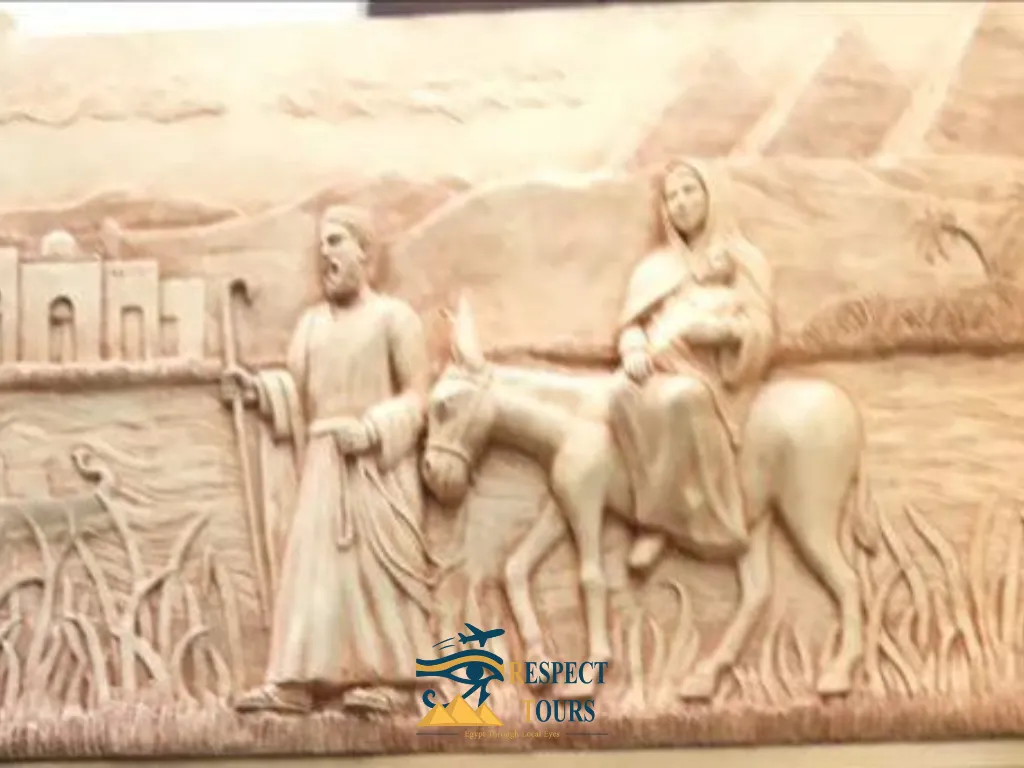
The Holy Family’s first step into Egyptian territory likely occurred near Rafah, on the border between ancient Judea and the Sinai Peninsula. This was a major crossing point on trade routes.
Imagine the relief: after a week of hurried travel with an infant, they crossed out of Herod’s reach. They were safe, but now came new challenges, strangers in a foreign land, needing food, shelter, and guidance.
Farama (Ancient Pelusium): First Egyptian Refuge
Farama, known to the Greeks and Romans as Pelusium, was Egypt’s northeastern port and a crossroads of trade and culture.
Coptic tradition holds that the Holy Family first rested here, welcomed by the local Jewish community who offered them shelter and guidance before they continued deeper into the Nile Delta.
While they did not stay long, early Christians later built churches at Farama to honor their brief visit.
Archaeological excavations at Tell Farama, near modern El-Arish, reveal Greek, Roman, and Byzantine ruins, including churches from later centuries that preserve this sacred memory.
Visiting Today:
- Location: Near modern El-Arish in North Sinai
- Access: Limited due to security restrictions in Sinai; check current travel advisories
- What Remains: Archaeological ruins, some visible ancient walls and foundations
- Significance: Historical starting point of the Egypt journey, more important symbolically than as a detailed pilgrimage site
Through the Nile Delta: Finding Shelter
Tell Basta (Ancient Bubastis): The Miracle of the Spring
Location: Near modern Zagazig, about 80 km northeast of Cairo.
Tell Basta, once the great city of Bubastis, was famous in ancient Egypt for the temple of the cat goddess Bastet. When the Holy Family arrived here, tradition says they were exhausted and thirsty.
As Mary prayed for water, a spring miraculously burst from the ground, providing fresh water for the family. Locals welcomed them with kindness, and Coptic tradition remembers this as one of the Holy Family’s most beautiful miracles.
Some stories say that when they entered the town, idols in the temples collapsed, symbolizing Christ’s power over false gods.
Today, a local spring is still honored as the “Holy Family Well,” drawing visitors seeking blessing and reflection.
Visiting Practically:
- Location: Near Zagazig, reachable by car or train from Cairo (about 90 minutes)
- What to See: Archaeological site with ancient ruins; ask locally about the “Holy Family spring” site.
- Opening Times: Archaeological site usually open from morning to afternoon; confirm locally
- Entry: Small fee for archaeological site access
- Best Time: Morning to avoid heat
- Duration: 1-2 hours for site exploration
- Facilities: Limited; bring water and sun protection
- Accessibility: Uneven terrain; may be difficult for those with mobility issues
Mostorod (El-Mahamma): The Bathing Place
Meaning: El-Mahamma means “The Bath,” referring to the tradition that the Virgin Mary bathed baby Jesus here.
Location: Northeastern Cairo, now part of Greater Cairo.
Sacred Tradition: After days of desert travel, the Holy Family found refuge with a local family in Mostorod. Mary bathed Jesus using water that, according to Coptic belief, gained healing power. This moment highlights Mary’s tender care and the human side of the Holy Family’s journey.
Historical Legacy: By the Byzantine era, Mostorod became a known pilgrimage site. A church was built over the sacred spot, and its wells were believed to bless visitors.
Today, Modern Mostorod is a busy Cairo suburb, yet the Church of the Virgin Mary at Mostorod still preserves this ancient memory, standing where faith and daily life once met.
Visiting Today:
- Location: Mostorod district, northeast Cairo
- Access: Reachable by taxi or ride-sharing from central Cairo (30-45 minutes depending on traffic)
- Church: Church of the Virgin Mary
- Open: Usually open for visitors; respectful behavior expected
- Services: Coptic liturgies held regularly; visitors welcome to observe
- What to See: Church interior with icons depicting the Holy Family’s visit; the well or water site associated with the bathing tradition
- Photography: Ask permission; usually okay in the courtyard, restricted inside during services
- Entry: Free (donations appreciated)
- Duration: 30-60 minutes
- Dress Code: Modest dress; women should cover shoulders and wear skirts/pants below the knee; men should wear long pants
Belbeis: Rest Under the Shade
Located about 60 km northeast of Cairo in today’s Sharqia Governorate, Belbeis was once a vital stop on the ancient trade routes between Palestine and Egypt. Its position made it a natural resting point for travelers and caravans.
According to Coptic tradition, the Holy Family rested under a large tree here during their journey through Egypt. Locals are said to have welcomed them with food, water, and protection, an enduring symbol of Egyptian hospitality.
Over the centuries, a “Virgin Mary Tree” at Belbeis became a sacred site of prayer and pilgrimage, believed to descend from the tree that once shaded the Holy Family. Nearby stands the Church of the Virgin Mary, built to commemorate their visit and continuing a line of worship that dates back to the Byzantine era.
Today, Coptic communities in Belbeis celebrate this moment each year with special services and gatherings, keeping alive the memory of Egypt’s compassion toward the refugee family.
Visiting Today:
- Location: Belbeis, Sharqia Governorate; accessible by car from Cairo (1-1.5 hours)
- Main Site: Church of the Virgin Mary
- What to See: Church interior with Holy Family iconography; the area identified with the tree tradition (current tree is a modern descendant/replacement)
- Open: Church generally open daily; confirm service times locally
- Best Time: Morning; can combine with other Delta sites
- Duration: 45 minutes to 1 hour
- Local Interaction: Belbeis is less touristy than Cairo sites; local Christians are often delighted to welcome pilgrims and share the church’s history
The Cairo Region: Finding Longer Shelter
Old Cairo (Coptic Cairo): The Heart of Ancient Christian Egypt
Why Old Cairo Is Special: If you visit only one place on the Holy Family route, make it Old Cairo. This area contains the greatest concentration of ancient Christian sites, some dating to the earliest centuries of Christianity. The neighborhood preserves nearly 2,000 years of continuous Christian presence.
Location: In southern Cairo, along the Nile, in an area the Romans called “Babylon-in-Egypt” (different from Mesopotamian Babylon). Today it’s accessible via Cairo Metro (Mar Girgis station).
Why the Holy Family Came Here: By the time the Holy Family reached the Cairo area, they had been moving between small Delta towns. Old Cairo (then just a Roman fortress and associated settlement) offered several advantages:
- Security: The Roman fortress provided law and order
- Size: Large enough to offer work opportunities
- Diversity: Mixed population where outsiders wouldn’t attract attention
- Resources: Markets, craftsmen, trade opportunities
- Jewish community: Fellow Jews who could provide cultural and religious support
They likely stayed in Old Cairo longer than other stops, long enough to become part of the community.
The Cave Church: Abu Serga (Church of St. Sergius and Bacchus)
The Sacred Cave: Abu Serga is built over a cave where Coptic tradition holds the Holy Family lived for several months. This cave served as their home—a simple underground shelter that offered protection and privacy.
Historical Context: Using caves or semi-underground spaces for housing was common for poor families in the ancient world. These spaces stayed cooler in summer, warmer in winter, and required no construction. For refugees with limited resources, such a shelter made perfect sense.
The Tradition: According to Coptic accounts preserved in the Synaxarium, Joseph, Mary, and Jesus lived in this cave, with Joseph working as a carpenter in the area while Mary cared for young Jesus. Local families provided food and support.
The cave’s location near the Nile would have provided water access. The Roman fortress provided security. The Holy Family had found a place where they could settle, at least temporarily.
Church Development: The first church built over the cave dates to the 4th or 5th century CE, making it one of Egypt’s oldest churches. The current structure combines ancient elements with renovations from various periods.
Architectural Details:
- The Cave: Accessible via stairs from inside the church, the cave-crypt has stone walls and a low ceiling. The space is small, perhaps 3-4 meters across, giving a sense of the Holy Family’s humble living conditions.
- The Church Above: Beautiful Coptic architecture with wooden screens, ancient icons, and marble columns
- The Baptistery: Ancient stone baptismal font where early Christians were baptized
- Icons: Medieval and modern icons depicting the Holy Family’s time in Egypt
Why It’s Important: Abu Serga physically connects visitors to the Holy Family’s living space. Standing in that cave, you’re in the room where Jesus spent months of his early childhood, where Mary cooked simple meals, where Joseph repaired tools, and where Jesus took his first steps (if chronology allowed).
Visiting Abu Serga:
- Location: Coptic Cairo, near Mar Girgis Metro station
- Open: Daily, approximately 9 AM – 4 PM (confirm locally; closes during services)
- Entry: Free (donations appreciated)
- Cave Access: Stairs descend into the cave-crypt; take your time, as steps can be uneven
- Services: Coptic liturgies Saturday evening and Sunday morning; visitors welcome to observe
- Photography: Generally allowed in the courtyard and the main church; restricted in the cave and during services; always ask permission
- Dress Code: Modest dress required (covered shoulders, long pants/skirts)
- Duration: 30-45 minutes minimum; longer if attending service
- Guided Tours: Church volunteers sometimes available to explain history; tips appreciated
- Best Time: Mid-morning weekdays for fewer crowds; Sunday morning to experience Coptic liturgy
Practical Tips:
- The cave-crypt can feel cramped; those with claustrophobia might prefer viewing from the stairs
- Water damage has sometimes closed cave access; check the current status if this is important to you
- Combining Abu Serga with other Old Cairo churches makes an excellent half-day pilgrimage
- The surrounding neighborhood (Coptic Cairo) has shops selling religious items, making it easy to find souvenirs or devotional objects
The Hanging Church (Al-Mu’allaqa): Above the Fortress Gates
Unique Architecture: The Hanging Church gets its name from its position, built atop the southern gatehouse of the ancient Roman fortress; it appears to “hang” above the passage below.
Construction: The church dates to the 3rd or 4th century CE, though the current structure reflects many periods of renovation. Its position on Roman foundations makes it architecturally unique.
Connection to the Holy Family: While not claiming direct Holy Family residence, the Hanging Church’s location in Old Cairo connects it to the area where Jesus lived. Early Christians built here specifically because of Old Cairo’s sacred significance.
What to See:
- Beautiful Coptic Architecture: Carved wooden screens, marble pulpit, medieval icons
- Ancient Icons: Some icons date back centuries, depicting biblical scenes and Coptic saints
- The Fortress Foundations: Visible Roman stonework beneath the church
- Unique Ceiling: Shaped like Noah’s Ark, a common Coptic architectural motif
- Historic Ambiance: This church has hosted worship continuously for 1,700+ years
Visiting:
- Location: Walking distance from Abu Serga (5 minutes)
- Open: Daily 9 AM – 4 PM approximately
- Entry: Free (donations welcome)
- Duration: 30 minutes
- Photography: Usually allowed; confirm with attendants
- Services: Regular Coptic liturgies; check the schedule if interested in attending
The Coptic Museum: Understanding the Heritage
Why Visit: The Coptic Museum, located in Old Cairo, provides essential context for understanding the Holy Family sites. Its collections show how Egyptian Christianity developed and how the Holy Family’s memory was preserved.
Collections Include:
- Ancient Manuscripts: Early biblical texts and Coptic documents
- Icons and Paintings: Depicting the Holy Family and other biblical scenes
- Textiles: Including burial shrouds with Christian imagery
- Metalwork: Crosses, liturgical objects, pilgrimage tokens
- Architectural Elements: Carved wood and stone from ancient churches
- Maps and Drawings: Showing the Holy Family route and ancient Christian sites
Highlight Exhibitions:
- Displays specifically about the Holy Family in Egypt
- Room reconstructions showing ancient Christian home life
- Development of Coptic art from pharaonic through Islamic periods
Visiting:
- Location: In the Coptic Cairo complex
- Open: Daily 9 AM – 5 PM (closed Mondays)
- Entry: Ticketed (reasonable fee)
- Duration: 1-2 hours minimum
- Guided Tours: Available in multiple languages
- Gift Shop: Books about Coptic Christianity and quality reproductions
- Accessibility: Ground floor accessible; some areas have stairs
Maadi: The Riverside Departure
Location: Maadi, now a Cairo suburb along the Nile, about 15 km south of downtown.
The Tradition: Coptic tradition holds that when the time came to leave the Cairo area and journey south, the Holy Family departed by boat from Maadi. This riverside location became a symbolic place of farewell to the communities that had sheltered them.
The Miracle Story: One beloved tradition tells of a Bible or gospel floating on the Nile at Maadi, a miraculous sign of God’s presence and protection. Different versions exist:
- Some say a Bible fell in the water but miraculously didn’t sink
- Others describe a Bible appearing on the water’s surface as a sign
- Some interpretations see this as symbolic rather than literal
The Church of the Virgin Mary: Maadi’s church commemorates the Holy Family’s time there. The building is relatively modern but stands on a site venerated for centuries.
What’s Special About Maadi: Unlike older, crowded parts of Cairo, Maadi is a planned community with tree-lined streets, making it pleasant to visit. The riverside setting helps visitors imagine the Holy Family’s Nile journey.
Visiting:
- Location: Maadi neighborhood, southern Cairo; reachable by Metro (several Maadi stations) or taxi
- Church: Church of the Virgin Mary (ask locals for “Kenisset El-Adra” – Church of the Virgin)
- Open: Generally open daily; confirm service times
- What to See: Church interior, riverside area where tradition places the departure
- Nile Access: The Corniche (riverside road) offers Nile views; imagine the Holy Family’s boat journey
- Duration: 45 minutes to 1 hour
- Neighborhood: Maadi is pleasant for walking; cafes and shops are nearby
- Best Combined With: Old Cairo sites (same day is feasible)
Matariya: The Miraculous Tree and Spring
Matariya, once a suburb of ancient Heliopolis, was a peaceful area of gardens and farms when the Holy Family arrived in Egypt.
According to Coptic tradition, Mary rested under a large sycamore tree after a long journey with baby Jesus. Two miracles took place:
- A spring of fresh water appeared where none existed, and Mary used it to bathe Jesus and wash his clothes.
- The tree bent its branches to shade them, nature itself honoring the divine child.
Mary is also said to have planted a small garden nearby, growing herbs and vegetables during their stay, a tender image of her daily care as a mother.
The Virgin Mary Tree seen today is a descendant of the ancient sycamore that, tradition says, lived for nearly 2,000 years. Though the original tree died in the late 1800s, a new one was grown from its cuttings and now stands protected within a peaceful garden.
Beside it flows the sacred spring, enclosed in stone. Pilgrims still collect its water, believing it carries healing power.
Matariya’s roots run deep; it was part of Heliopolis, one of Egypt’s oldest religious centers. Early Christians built here deliberately, linking the land’s ancient holiness to the story of Jesus’ refuge in Egypt.
Visiting Matariya:
- Location: Matariya neighborhood, northeast Cairo; accessible by Metro (El-Matariya station) or taxi
- Main Site: The Virgin Mary Tree garden
- Open: Usually daily during daylight hours (confirm locally)
- Entry: Free (donations appreciated)
- What to See:
- The Virgin Mary Tree (behind protective fence)
- The spring enclosure (water still flowing)
- The garden and the surrounding peaceful area
- Small church or chapel on site
- Duration: 30-45 minutes
- Character: Local pilgrimage site; very authentic, less touristy than Old Cairo
- Crowds: Can be busy during Coptic feast days; quieter on weekdays
- Facilities: Basic; bring water (though drinking the sacred spring water is part of many pilgrims’ experience)
- Photography: Usually allowed; ask if uncertain
- Best Time: Morning; can combine with Zeitoun (nearby)
Practical Considerations:
- Matariya is a working-class Cairo neighborhood; it lacks tourist infrastructure
- Modest dress essential (this is a sacred site in a conservative neighborhood)
- Very little English is spoken; knowing basic Arabic phrases or having a guide helps.
- The tree and spring are the main attractions; the neighborhood itself is typical urban Cair.o
Zeitoun: Modern Marian Apparitions
Unlike other Holy Family locations, Zeitoun does not claim a first-century visit from Jesus, Mary, and Joseph. Instead, it became famous for 20th-century apparitions of the Virgin Mary, which Coptic Christians see as a continuation of her blessing over Egypt.
Location: Zeitoun, northern Cairo, near Matariya, a traditional stop on the Holy Family’s route.
The Apparitions (1968–1971)
Between 1968 and 1971, thousands of Egyptians, Christian and Muslim alike, reported seeing a glowing figure of Mary above St. Mary’s Coptic Church. Witnesses described a luminous woman in white, sometimes surrounded by doves or radiant light.
Faith and Skepticism
Skeptics point to the lack of scientific proof or clear photographs, suggesting possible mass illusion. Believers, however, emphasize the scale of eyewitnesses, spiritual impact, and Church validation, seeing it as Mary’s return to Egypt, a sign of ongoing grace upon the land that once sheltered her family.
Visiting Today:
- Location: Zeitoun, northern Cairo
- Church: St. Mary’s Church, where apparitions occurred
- What to See: Church building, rooftop area where apparitions reportedly appeared, museum/display about the 1968-1971 events
- Open: Usually daily; confirm locally
- Entry: Free
- Duration: 30-45 minutes
- Combine With: Matariya (very close by; can visit both in one trip)
- Character: Active parish church with modern apparition site significance
Into the Monastic Heartland: Wadi El Natrun
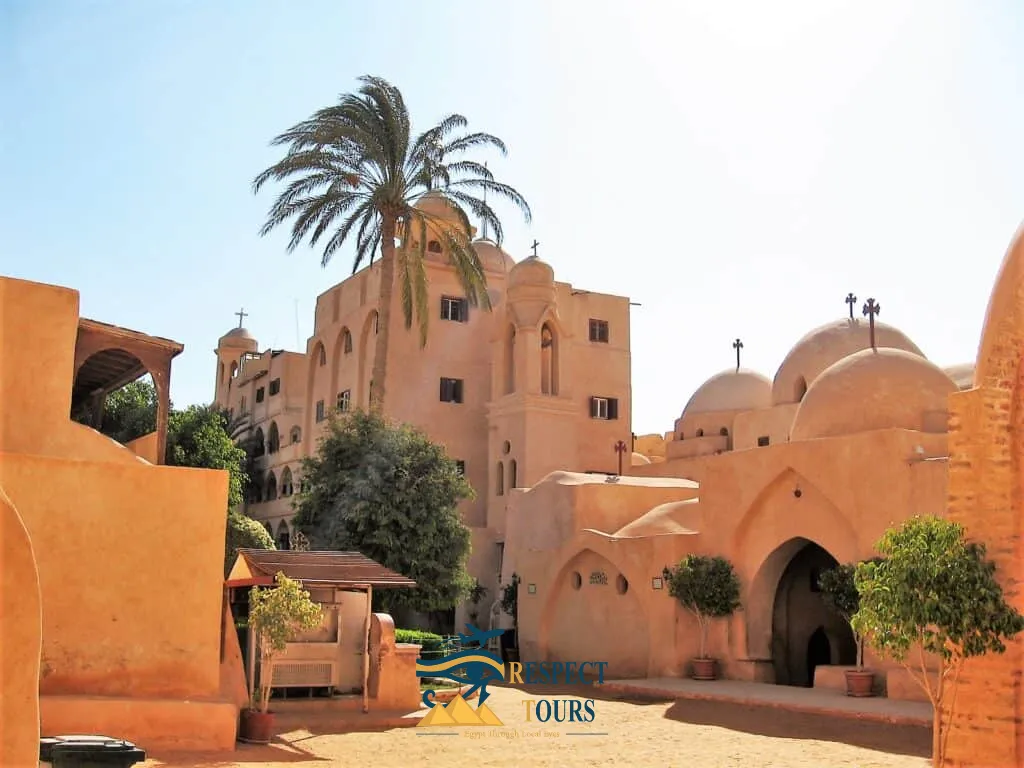
Location: About 100 km northwest of Cairo, between Cairo and Alexandria.
Why It’s Special: Wadi El Natrun is the spiritual heart of Egyptian Christianity, home to some of the world’s oldest active monasteries. Monks have lived and prayed in this desert valley for over 1,600 years.
Connection to the Holy Family: Coptic tradition says the Holy Family passed through this desert during their journey in Egypt, blessing it and paving the way for its future as a center of monastic life.
Monastic Heritage: From the 4th century onward, thousands sought solitude here to live in prayer and simplicity. Four historic monasteries still thrive today, preserving ancient faith traditions amid Egypt’s golden sands.
The Four Active Monasteries
1. Deir Anba Bishoy (Monastery of St. Bishoy)
About St. Bishoy: One of the most beloved Egyptian saints (4th century), known for his ascetic life and spiritual visions.
The Monastery: Founded in the 4th century, this monastery houses monks following traditional Coptic spiritual practices. The complex includes churches, monks’ cells, a library, a bakery, workshops, and gardens.
Holy Family Connection: Tradition holds the Holy Family rested in this area, blessing the ground. Centuries later, monks built here because of this sacred history.
Visiting:
- Open: Usually daily; call ahead to confirm
- Guided Tours: Monks or lay guides provide tours explaining monastery history
- What to See: Ancient churches, library with rare manuscripts, monks’ quarters (from outside), gardens, St. Bishoy’s preserved body (Orthodox Christians believe saints’ bodies remain incorrupt)
- Duration: 1-2 hours
- Dress Code: Very modest dress required (long sleeves, long pants/skirts for women, head covering helpful)
- Photography: Restricted; ask permission
- Interaction: Monks may answer questions about monastic life
2. Deir Abu Makar (Monastery of St. Macarius)
About St. Macarius: Another 4th-century monastic founder, known for extreme asceticism and spiritual wisdom.
The Monastery: One of Egypt’s most important monasteries, currently experiencing revival with many young monks joining. The monastery is more restrictive about visitors than some others, maintaining a contemplative atmosphere.
Significance: Houses an important library and is considered the mother monastery of Coptic monasticism.
Visiting:
- Access: More restricted; advance permission often required
- Best For: Serious pilgrims and researchers; casual tourists might prefer other monasteries
- What to See (if admitted): Ancient churches, modern facilities, beautiful desert setting
3. Deir El-Suryan (Syrian Monastery)
History: Founded in the 6th century, this monastery acquired its name when Syrian monks purchased and occupied it in the 8th-9th centuries.
Significance: Contains some of Egypt’s finest medieval Coptic art and one of the world’s most important collections of Syriac manuscripts.
What Makes It Special:
- Wall Paintings: Medieval frescoes in remarkably good condition
- Ancient Library: Thousands of manuscripts (some on display)
- Architectural Beauty: Harmonious blend of ages and styles
- Active Community: Monks maintain traditional practices while welcoming pilgrims
Visiting:
- Open: Most days with confirmation
- Duration: 1-2 hours
- What to See: Main church with ancient paintings, library viewing area, monastery courtyards
- Character: Perhaps the most visitor-friendly of the Wadi El Natrun monasteries
4. Deir El-Baramus (Baramus Monastery)
History: Possibly the oldest of the four, dating to the 4th century.
Name Meaning: “Baramus” relates to two Roman soldiers’ sons who became monks here, martyred for their faith.
Character: Most isolated and austere of the four; the smallest active monastic community.
Visiting:
- Access: Most restricted; serious pilgrims only
- Atmosphere: Very contemplative and removed from the modern world
- Best For: Those seeking a deep spiritual experience rather than a tourist visit
Journey to Upper Egypt: The Final Refuge
Why They Traveled South
After staying in the Cairo/Delta region, the Holy Family continued south into Upper Egypt. Why?
Possible Reasons:
- Greater Safety: The further from Palestine, the safer from Herod’s reach
- Following Guidance: Coptic tradition suggests divine guidance directed them south
- Economic Opportunities: Upper Egypt had prosperous towns where Joseph could work
- Jewish Communities: Upper Egypt hosted Jewish populations, especially around Assiut
- Extended Stay: If they stayed in Egypt for 3-4 years, they may have needed to relocate periodically
Gabal El-Tayr (Mountain of the Birds)
Location: East bank of the Nile near Samalut, about 240 km south of Cairo.
Feature: A dramatic limestone cliff rising from the river, one of the Nile’s most striking natural landmarks.
Tradition:
Coptic tradition says the Holy Family sailed past Gabal El-Tayr when rocks from the cliff began to fall toward their boat.
Mary prayed for protection, and the danger stopped instantly. Some say the mountain bowed in reverence, others that Jesus raised His hand to halt the stones.
The Holy Family found shelter in a cliffside cave, which became a sacred site.
The Monastery:
Built into the cliff in the 4th century CE, the Monastery of the Virgin Mary stands about 120 meters above the Nile. Pilgrims visit for its ancient stone church, the Holy Family’s cave, and breathtaking views of the river valley.
What to See:
- Rock-carved Church of the Virgin Mary
- The Holy Family’s Cave
- Panoramic views of the Nile Valley
- Annual Feast of the Virgin Mary (Aug 21–22), attracting thousands of pilgrims
Visiting Tips:
- Location: Near Samalut, Minya Governorate (4–5 hours from Cairo)
- Climb: Steep staircase up the cliff, bring water and rest stops.
- Duration: 2–3 hours
- Best Time: Morning, to avoid midday heat
- Facilities: Basic; photography allowed outdoors, ask before taking interior photos
Deir El-Muharraq: The Final Refuge
Location: Near Qussiya, Assiut Governorate, about 320 km south of Cairo.
Why It’s So Important: Deir El-Muharraq holds a special place in Coptic tradition as the Holy Family’s longest and final Egyptian residence. According to the Synaxarium, they lived here for six months and ten days, longer than anywhere else in Egypt.
The Name: “El-Muharraq” means “the burnt” in Arabic, possibly referring to:
- Desert heat
- Or a legend about fire burning without consuming (like Moses’ burning bush)
- Or ancient fires monks kept burning continuously
Biblical Significance: Here, an angel appeared to Joseph and told him it was safe to return home after Herod’s death. This marks the end of the Holy Family’s stay in Egypt and the beginning of Jesus’ life in Nazareth.
The Sacred Site: The monastery complex includes:
- Church of the Virgin Mary (Al-Adra): Built over the cave where the Holy Family lived. Its altar rests on the “Holy Stone”, believed to be where Jesus stood as a child, making it uniquely consecrated by Christ himself.
- The Cave Dwelling: A preserved space where visitors can stand where the Holy Family once stayed.
- The Virgin’s Tree: An ancient tree believed to date back to their time in Egypt.
- Monastic Complex: Includes ancient and modern churches, monks’ quarters, guest lodgings, gardens, and protective walls.
History & Heritage:
Dating back to the 4th century CE, Deir El-Muharraq has been continuously inhabited by monks, earning it the title “The Second Bethlehem.”
Modern Pilgrimage: The monastery draws hundreds of thousands of pilgrims annually, especially during:
- Feast of the Virgin Mary (August 21-22): Massive celebrations
- Feast of the Annunciation (March/April): Special services
- Coptic Christmas (January 7): Pilgrimage season
Visiting Deir El-Muharraq:
Location: Near Qussiya, Assiut Governorate; about a 5-6-hour drive from Cairo, or 40 km west of Assiut city
The Return to the Holy Land
After spending several years in Egypt, the Holy Family received guidance from an angel, who instructed Joseph that it was safe to return to their homeland. This divine message marks the end of their Egyptian journey and symbolizes protection, faith, and divine providence.
The return to Palestine not only fulfilled the biblical prophecy but also highlights Egypt’s enduring role as a sanctuary in Christian history. Visiting the sites associated with the Holy Family’s stay in Egypt allows pilgrims and travelers to appreciate the spiritual significance of this journey and understand the lasting cultural and religious impact of Egypt on the story of Jesus’ early life.
Planning Your Holy Family Pilgrimage
Choosing Your Itinerary
3-Day Cairo Focus (Recommended for First-Time Visitors):
- Day 1: Coptic Cairo (Abu Serga, Hanging Church, Coptic Museum)
- Day 2: Matariya, Zeitoun, Maadi
- Day 3: Wadi El Natrun monasteries
5-Day Northern Route:
- Day 1: Cairo arrival, Old Cairo
- Day 2: Matariya, Zeitoun, Maadi
- Day 3: Wadi El Natrun
- Day 4: Nile Delta sites (Belbeis, Mostorod, others)
- Day 5: Return to Cairo
7-Day Complete Route:
- Days 1-3: Cairo and nearby sites
- Day 4: Travel to Upper Egypt
- Day 5: Gabal El-Tayr
- Day 6: Deir El-Muharraq
- Day 7: Return to Cairo (or continue to Luxor/Aswan)
10-Day Comprehensive Journey:
- All major sites plus time for:
- Attending Coptic services
- Longer monastery visits
- Personal reflection
- Combining with other Egyptian attractions (Pyramids, Luxor, etc.)
Conclusion
Egypt holds a sacred place in Christian history, a land that sheltered the Holy Family and became a living testament of faith, refuge, and divine protection. Visiting these sites isn’t just a tour; it’s a spiritual journey through time, where faith and history meet in every stone, monastery, and church.
With Respect Tours, you can follow in the footsteps of Jesus, Mary, and Joseph, exploring the same path they once walked, from Cairo and the Nile Delta to the serene monasteries of Upper Egypt. Our expert guides bring each story to life, blending historical insight with heartfelt devotion.
Book your Holy Family Egypt Tour today and experience the journey that shaped Christian heritage. Walk the path of the Holy Family, feel the faith that endures, and discover Egypt through the eyes of history and the heart of belief.
FAQ: Frequently Asked Questions
Where did Jesus stay in Egypt?
Jesus stayed in various locations across Egypt, including Maadi, Old Cairo, and the regions of Upper Egypt, as the Holy Family sought safety during their time in the country.
The exact duration is not known, but according to tradition, the Holy Family lived in Egypt for several years before returning to Nazareth.
Key sites include the Church of Abu Serga in Old Cairo, the Monastery of St. Simon in Mokattam, and the Virgin Mary Tree in the Assiut region, among others.
The Holy Family route is a path tracing the journey of Mary, Joseph, and Jesus across Egypt, highlighting the towns, churches, and landmarks they visited.