

When was the Great Pyramid at Giza built? Travelers and historians alike have asked this for centuries. The answer takes us back to around 2580–2560 BC, when Pharaoh Khufu ordered the construction of what would become the largest and most precise pyramid in Egypt. Rising above the Giza Plateau for more than 4,500 years, it remains the only surviving Wonder of the Ancient World.
In this article, we’ll go beyond the date itself. You’ll discover how the pyramid was built, who the workers really were, how long it took, and why it still fascinates modern science. We’ll also share travel tips from Respect Tours to help you experience the Great Pyramid in a way that feels authentic, safe, and unforgettable.
When Was the Great Pyramid at Giza Built? (Construction Date & Timeline)
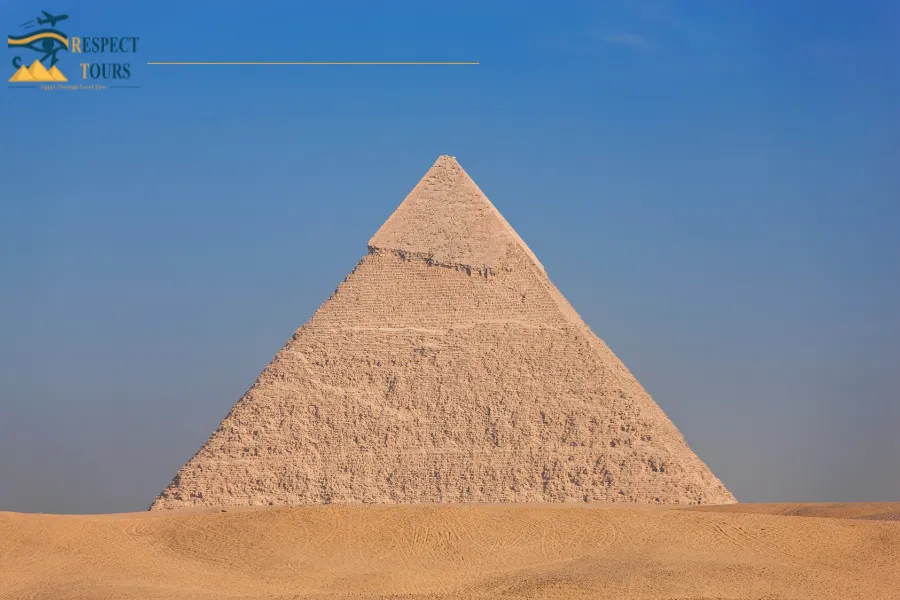
If you’re asking, “When Was the Great Pyramid at Giza Built?” The short answer is around 2580–2560 BC, during Pharaoh Khufu’s reign in Egypt’s Fourth Dynasty (Old Kingdom), making it over 4,500 years old.
Construction Timeline Overview
| Date | Milestone |
|---|---|
| 2580 BCE | Estimated start of construction during Khufu’s second or third year as ruler |
| 2570 BCE | Peak building phase, quarrying and hauling limestone blocks from across the Nile |
| 2560 BCE | Estimated completion date of the full pyramid complex, including causeways and temples |
Some modern researchers prefer the 2580 BC start date, while others cite 2560 BC as the likely completion year. Regardless of which specific estimate you follow, both confirm the pyramid is around 4,500 years old.
Despite the slight disagreement among scholars, there’s consensus that the structure took approximately 20–30 years to complete, making it not only the oldest pyramid in Giza but also the largest and most precisely engineered.
The pyramid’s perfect alignment to true north and its massive scale continue to fascinate both travelers and engineers. It is also the only surviving monument of the Seven Wonders of the Ancient World.
Historical Debate: Conflicting Dates and Theories
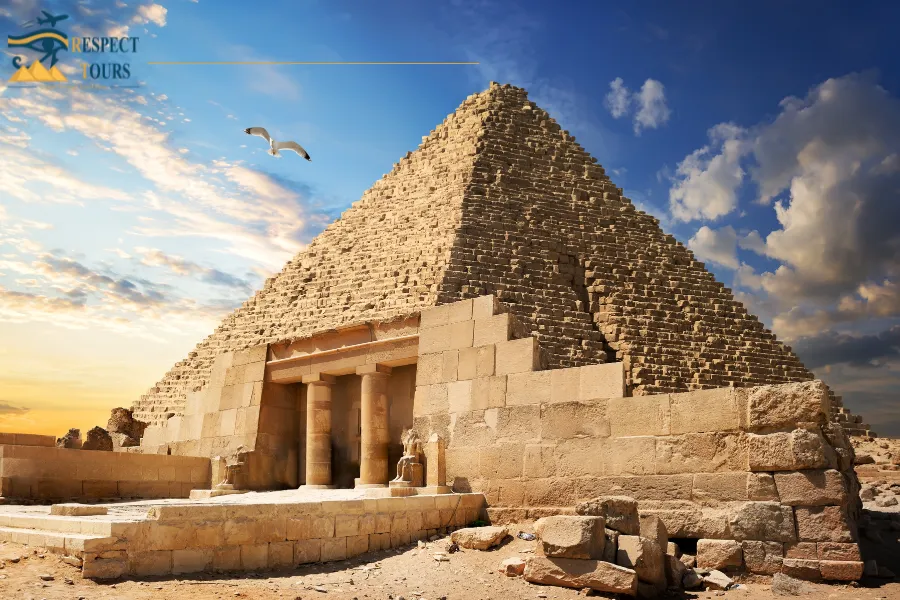
While most Egyptologists agree that the Great Pyramid was built between 2580 and 2560 BC, the exact year remains a subject of scholarly debate. Some researchers argue for a slightly earlier or later timeline based on interpretations of historical records, astronomical alignments, and stone inscriptions.
- Traditional View: Year built around 2580 BC during the reign of Khufu.
- Alternative Theories: A few fringe researchers suggest an earlier timeline, possibly as early as 2600 BC, based on Sothic cycle calendars and star alignments.
- Conflicting Records: Ancient sources like Herodotus offer timelines that differ by decades, showing that even ancient historians debated the construction period.
Despite these differences, all theories place the construction firmly within Egypt’s Old Kingdom and the Fourth Dynasty.
Egyptologist Dr. Mark Lehner once said, “Even if we debate a few decades here or there, what matters is that this monument belongs firmly to the reign of Khufu, not aliens or lost civilizations.”
Carbon Dating & Scientific Proof
In recent years, scientists have used radiocarbon dating (C-14) on organic materials found within the mortar of the pyramid’s stones. These tests support the conventional timeline of 2580–2560 BC. Carbon dating of wood and charcoal fragments embedded in the structure suggests a construction date consistent with Khufu’s reign.
Additionally, geological studies of quarry marks and tool fragments further validate the period, making radiocarbon dating one of the strongest scientific confirmations of when the pyramid was built.
Trip to Egypt Pyramids and the Egyptian Museum
Who Built the Great Pyramid of Giza? (Pharaoh Khufu & Workforce)
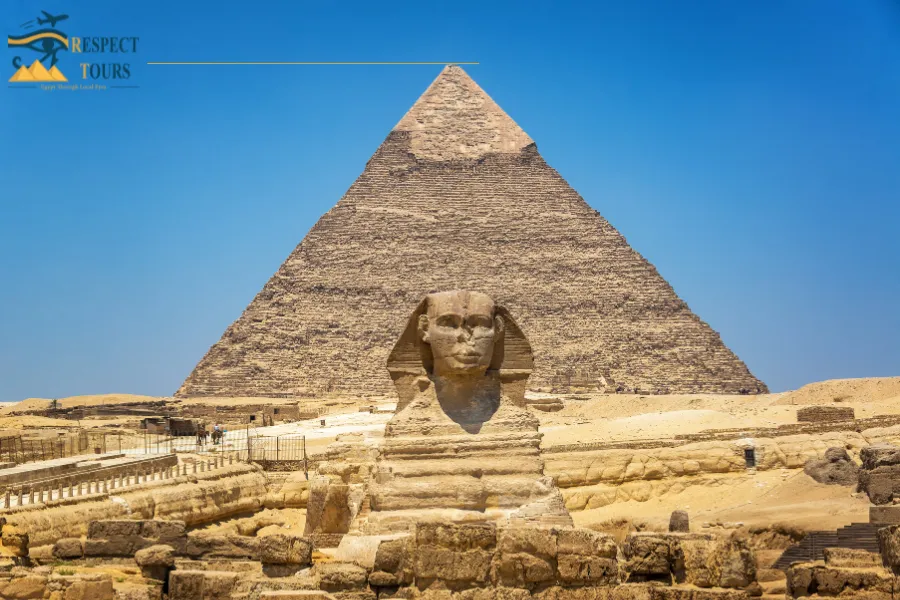
The Pyramid of Khufu wasn’t just a monument; it was a national project that showcased the power and organization of the Old Kingdom of Egypt under Pharaoh Khufu.
Pharaoh Khufu: The Vision Behind the Pyramid
Khufu (also known as Cheops) ruled between c. 2589 and 2566 BC and was determined to create a tomb that would last for eternity. His pyramid became the centerpiece of a vast funerary complex, including temples, causeways, and satellite tombs.
Hieroglyphic quarry marks and graffiti found inside hidden chambers refer directly to Khufu, confirming him as the pyramid’s commissioner.
Khufu vs. Khafre: A Quick Comparison:
| Feature | Khufu’s Great Pyramid | Khafre’s Pyramid |
|---|---|---|
| Original Height | ~146.6 m (481 ft) | ~143.5 m (470 ft) |
| Built | 2580–2560 BC | ~2520 BC |
| Visible Today | Tallest | Appears taller due to an elevated foundation |
| Special Feature | Precision alignment, largest base | Includes the Great Sphinx |
While Khafre’s pyramid looks taller from a distance, that’s simply because it sits on higher ground. Khufu remains the true giant and the oldest of the three.
Were 100,000 Men Forced to Build It?
The ancient Greek historian Herodotus claimed that 100,000 slaves labored for 20 years to build Khufu’s pyramid. However, modern archaeology tells a very different story.
Today, historians agree that the workers were not enslaved but organized teams of skilled laborers:
- likely 20,000–30,000 workers total,
- working in rotating shifts,
- supported by centralized food, housing, and medical care.
The discovery of a workers’ village, complete with bakeries, cattle bones, and tombs of craftsmen, suggests these builders were respected artisans, even buried near the pyramid they helped erect.
Specialized Roles Involved
- Quarrymen: cut limestone and granite blocks
- Transport teams hauled stones from across the Nile
- Engineers & architects: designed ramp systems and foundation
- Artisans: carved interior chambers and hieroglyphs
- Priests & scribes: kept records and ceremonial oversight
This coordinated workforce demonstrated not only Khufu’s authority but also Egypt’s advanced bureaucratic and engineering systems.
Built by Skilled Hands, Not Slaves
Archaeological evidence shows:
- Workers were organized by specialized roles (quarrymen, masons, boatmen)
- They lived in nearby barracks with food supplied from the Nile Delta
- Some tombs of workers had inscriptions calling them “Friends of Khufu.”
This project was a display of national unity and royal power, not forced servitude, as earlier myths suggested.
How Long Did It Take to Build the Pyramid of Khufu?
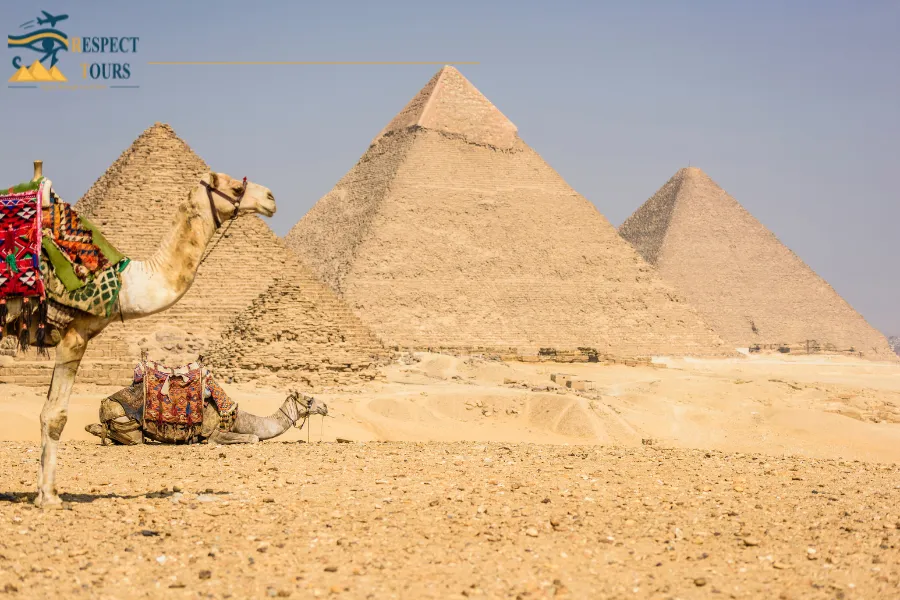
While scholars debate the exact length of time, most agree that the ancient structure at Giza took between 20 and 30 years to complete. This aligns closely with the reign of Pharaoh Khufu, who ruled for about 23–26 years during Egypt’s Fourth Dynasty.
Comparison with Other Pyramid Build Times
| Pyramid | Pharaoh | Approx. Build Time |
|---|---|---|
| Great Pyramid (Khufu) | 2580–2560 BC | 20–30 years |
| Khafre Pyramid | 2520 BC | ~15–20 years |
| Menkaure Pyramid | 2490 BC | ~10–15 years |
Although Khafre’s pyramid appears taller due to elevated ground, Khufu’s took the longest time and required the largest number of blocks, making it the most complex construction project of the three.
Estimates from Ancient Sources vs Modern Research
- Herodotus (5th century BC) claimed it took 20 years and involved massive labor forces.
- Modern scholars, guided by radiocarbon dating and material evidence, support a similar timeframe, likely between 2570 BC and 2560 BC for the main structure.
The core of the pyramid could have been built in just 10–15 years, with the remaining years spent on the internal chambers, casing stones, causeways, and valley temples.
Key Timeline Facts:
- Up to 2.3 million limestone blocks were used
- Average of 70 blocks moved per day
- Likely 4th Dynasty state project supervised by high-ranking officials
How Could It Be Built So Fast?
Several factors made this speed possible even in ancient times:
- Highly organized labor force working in seasonal shifts
- Quarries nearby provided limestone more efficiently
- Simple but effective engineering: ramps, sledges, levers
- Continuous supply networks via the Nile River
Did You Know? To finish the pyramid in 25 years, workers had to set an average of 70 blocks per day, each weighing 2–15 tons. That’s roughly one block every few minutes during daylight hours!
Today, the construction timeline remains a marvel of human ambition and cooperation.
proving just how advanced ancient Egyptian engineering really was.
How Was the Great Pyramid Constructed?
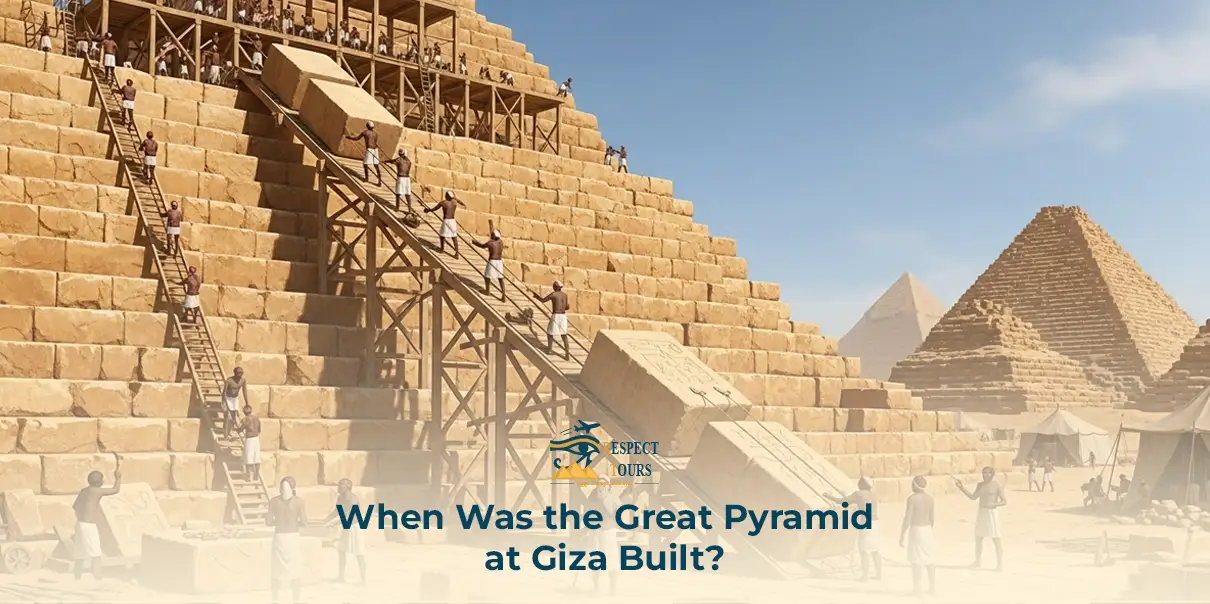
Ancient engineers didn’t leave behind blueprints, so modern scholars have proposed various ramp systems used to move immense blocks:
- Straight Ramps: built from mudbrick and limestone rubble, extending outward from the pyramid’s base.
- Zigzag or Spiral Ramps: wrapping around the structure as it grew, allowing blocks to be hauled to higher levels.
- Internal Ramps: A more recent theory suggests hidden spiraling corridors inside the pyramid were used to haul stones upward.
Regardless of which method was used, the ancient Egyptian architecture displayed remarkable problem-solving skills, and they adjusted their ramp systems as construction progressed.
Tools & Materials Used
Most of the limestone blocks came from nearby quarries, while the highest-quality Tura limestone used for the smooth outer casing was transported from across the Nile. Builders used:
- Copper chisels and hammers to cut blocks
- Wooden sledges to drag stones
- Ropes made of papyrus fibers
- Levers to lift and shift blocks into place
Many of the tools found have been preserved in museums and archaeological sites, proving they relied on simple but effective technology.
Transporting 2.3 Million Blocks
Historians estimate that over 2.3 million blocks were transported from quarries to the Giza plateau. Workers used:
- The Nile River and a network of canals during the flood season
- Wooden barges to float heavy stones closer to the site
- Greased sledges are pulled across wet sand to reduce friction
Organization & Planning
The construction project required meticulous planning and coordination:
- Teams were organized into gangs and crews, each responsible for specific tasks.
- Skilled architects oversaw alignment using astronomy and rope-stretching techniques.
- Work was likely seasonal, with farmers working as builders during the annual Nile flood when fields were submerged.
The result was a perfectly aligned structure, within a fraction of a degree of true north, showing how advanced ancient Egyptian planning truly was.
Why Was the Ancient Structure at Giza Built? (Purpose & Beliefs)
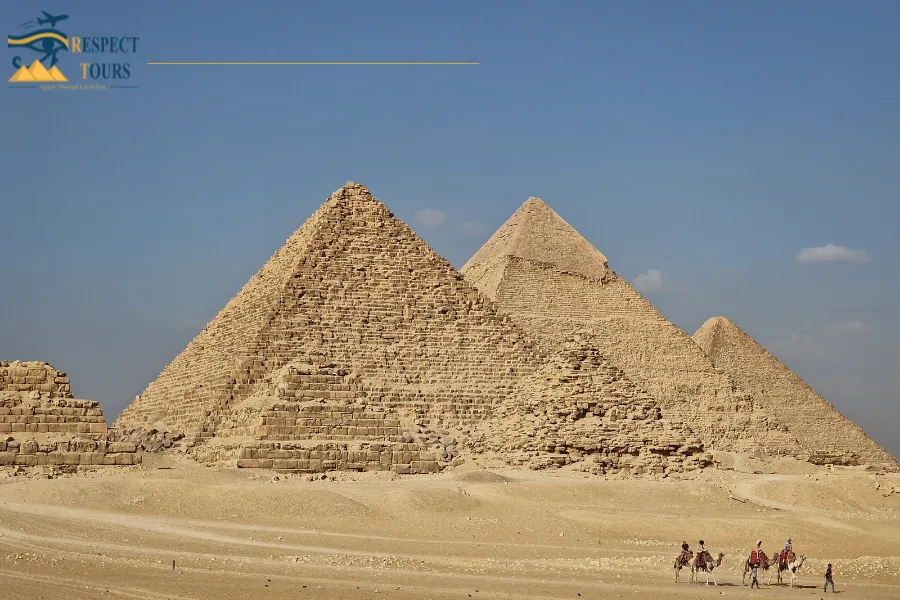
Unlike modern buildings, the Great Pyramid was not meant for public use. It was built as part of a larger funerary complex, serving both religious and political purposes.
A Royal Tomb for the Afterlife
At its heart, the pyramid was a tomb for Pharaoh Khufu, built to ensure his journey into the afterlife. Ancient Egyptians believed their king would become a god after death. To prepare him for eternity, they constructed grand tombs filled with everything he might need: food, treasures, sacred texts, and even miniature boats.
The pyramid’s internal chambers, like the King’s Chamber, Queen’s Chamber, and Grand Gallery, were designed for ritual and symbolic purposes, not just burial.
Symbol of Divine Power and Cosmic Order
The pyramid shape represented the primordial mound (Benben) from which creation began, according to Egyptian mythology.
Its four sides are aligned almost perfectly with the cardinal directions, reflecting cosmic order (Ma’at).
The rays of the sun god Ra were believed to shine down on the pyramid, helping the king ascend to the heavens.
Political Propaganda in Stone
The size and precision of the Great Pyramid were not just spiritual but political. It signaled:
- Khufu’s absolute power
- The wealth and resources of the Egyptian state
- A central authority capable of mobilizing thousands of workers
By building the largest pyramid in Giza, Khufu cemented his legacy and outshone his predecessors and successors alike.
More Than Just a Tomb
While primarily a royal burial monument, the pyramid complex also included:
- Mortuary temples for daily offerings to the king’s spirit
- Causeways connecting the pyramid to the Nile
- Boat pits, where wooden solar boats were buried to transport the king into the afterlife
In summary: The Old Kingdom monument was built not only to house a king’s body but also to honor his spirit, proclaim his divinity, and showcase Egypt’s spiritual and political might.
Fascinating Facts About the Great Pyramid of Khufu
Even after 4,500 years, the Old Kingdom monument continues to leave travelers speechless. Here are some incredible facts that highlight just how extraordinary this ancient structure is:
Fast Facts at a Glance
- Original height: 146.6 meters (481 feet), the tallest structure in the world for over 3,800 years
- Current height: 138.8 meters (455 feet) due to erosion and loss of casing stones
- Weight estimate: Around 6 million tons
- Number of blocks used: Approximately 2.3 million
- Average block weight: 2.5 to 15 tons each
- Orientation: Aligned within 0.067° of true north
Did You Know?
- The pyramid once had a smooth white limestone casing that made it gleam in the sun and possibly reflect light like a giant mirror.
- For centuries, the Great Pyramid was covered in polished stones that were so precisely fitted that even a blade could not fit between them.
- The interior includes mysterious chambers like the Queen’s Chamber, Grand Gallery, and a hidden void discovered as recently as 2017 using cosmic-ray technology.
Record-Breaking Facts
- It was the tallest human-made structure in the world until Lincoln Cathedral was completed in England in 1311 AD.
- The pyramid’s base covers an area of 13 acres, roughly equal to eight Olympic-sized football fields.
- Each side of the base is almost exactly 230 meters (755 feet) long, an astonishing feat of precision engineering.
Astounding Accuracy
Modern engineers are still amazed that the four sides of the base align almost perfectly with the four cardinal directions, without modern compasses or tools. This precision suggests the ancient Egyptians used astronomical observations to orient the structure.
These mind-blowing facts not only wow travelers but also highlight the level of technological and cultural advancement in ancient Egypt, long before modern machinery existed.
Khufu vs Khafre vs Menkaure: A Quick Comparison

While the Great Pyramid of Khufu gets much of the attention, it’s part of a trio of royal pyramids on the Giza Plateau. Understanding how Khufu’s pyramid compares with those of his son Khafre and his grandson Menkaure helps visitors appreciate each monument more fully.
Comparison between The Three Pyramids of Giza
| Feature | Menkaure’s Pyramid (grandson) | Khafre’s Pyramid (son of Khufu) | Khufu’s Great Pyramid |
|---|---|---|---|
| Pharaoh | Menkaure | Khafre | Khufu |
| Built | 2490 BC | 2520 BC | 2580–2560 BC |
| Original Height | 65 m (213 ft) | 143.5 m (470 ft) | 146.6 m (481 ft) |
| Current Height | 62 m | 136 m | 138 m |
| Unique Feature | Granite casing at base; smaller & more refined | Appears tallest due to higher ground; includes the Sphinx | Largest, most precise alignment |
| Number of Queens’ Pyramids | 3 smaller pyramids for queens | 0 directly attached | 3 |
Key Observations for Travelers
Understanding the layout of the Giza Plateau helps visitors truly appreciate not just the majesty of these monuments, but also when the Great Pyramid at Giza was built compared to the others.
- Khufu’s pyramid is the largest and oldest of the three main pyramids, and the one people mean when they ask, “When exactly was it built?” It was constructed with incredible precision and was originally encased in brilliant white Tura limestone that reflected the sun like a beacon.
- Khafre’s pyramid may appear taller because it sits on higher ground and still retains some casing stones at the top. It also shares the complex with the Great Sphinx.
- Menkaure’s pyramid is much smaller and distinct because part of it was covered in pink granite, giving it a different texture and look.
Fun Fact: Which Pyramid Do Tourists Confuse the Most?
Surprisingly, most first-time visitors think Khafre’s pyramid is the Great Pyramid (Khufu), simply because it looks taller from ground level and still has some of its original casing at the very top. In reality, the Great Pyramid of Khufu is slightly larger and stands furthest back.
GPS Tip for Visitors
As you stand facing the pyramids from the Sphinx side:
- The tallest one in the back left is Khufu
- The one who looks tall but slightly behind is Khafre
- The small one in front/on the right is Menkaure
Modern Discoveries & Ongoing Research
Even after 4,500 years, the Great Pyramid is still full of secrets, and modern science is helping uncover them.
1- Cosmic Rays & Hidden Chambers
Since 2015, the ScanPyramids Project, an international team supported by Egypt’s Ministry of Antiquities, has been using cosmic-ray muon technology to peer inside the pyramid without breaking a single stone.
Using particles from space called muons, scientists scan the pyramid’s interior like an X-ray. This has led to the discovery of new empty voids and hidden corridors that had been undetected for millennia.
2- Recently Discovered Corridors
In 2017, researchers found a large, 30-meter-long hidden void above the Grand Gallery. In 2023, another corridor, the North Face Corridor, was uncovered near the pyramid’s entrance, possibly used during construction.
Official Statement:
“These discoveries confirm that the Great Pyramid still hides many mysteries,” said an official statement from the Egyptian Ministry of Antiquities, adding that this is just the beginning of a new era of non-invasive archaeology in Egypt.
3- What Could Be Inside?
While most experts believe these voids were part of the pyramid’s internal structure, used to redistribute weight, others think they could lead to chambers that have yet to be explored. The excitement lies in the possibility that one day, technology may reveal even more passages, or even treasures, within the Great Pyramid.
4- Why This Fascinates Travelers
For visitors, this means the Great Pyramid isn’t just a relic of the past, it’s an active site of discovery. You aren’t just seeing ancient history; you’re witnessing an archaeological mystery still unfolding.
These discoveries have renewed the global fascination with this ancient monument and continue to spark debates about its original purpose, internal architecture, and, most importantly, when the Great Pyramid at Giza was built. As new data emerges, experts hope to get even closer to understanding the exact timeline and building sequence of Khufu’s great tomb.
Myths About the Pyramid Builders
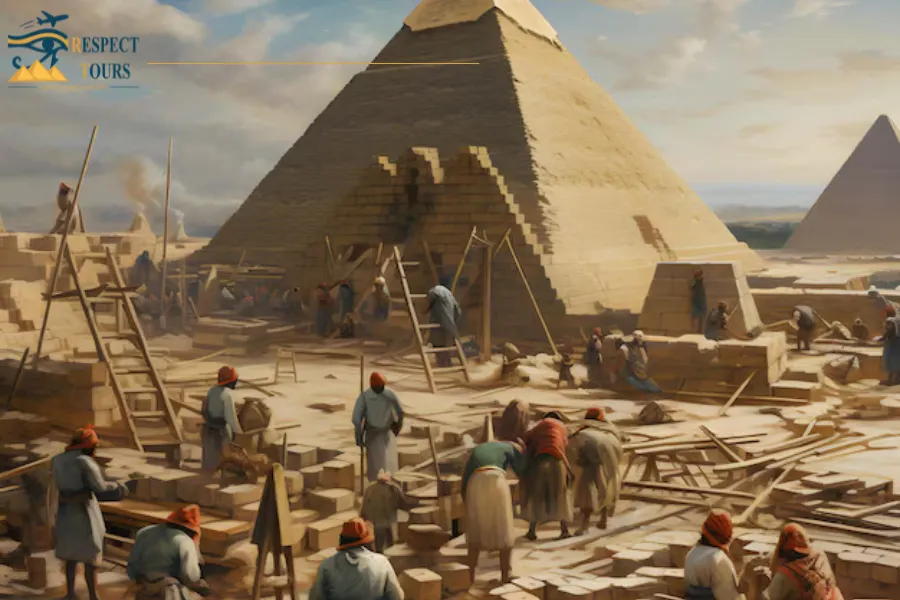
Myth 1: The Pyramids Were Built by Slaves
One of the most persistent myths is that the pyramids were built by slaves under brutal conditions. This likely stems from ancient Greek writers and early Hollywood films.
Reality: Archaeological findings, including workers’ villages, graves, and daily bread and beer rations, show the builders were skilled laborers who were respected and well-fed. Many were buried near the pyramid as an honor.
Myth 2: Ancient Aliens Built the Pyramids
This popular internet theory claims that humans couldn’t have built such a perfect structure without help from extraterrestrials.
Reality: There is overwhelming evidence of human planning, tools (copper chisels, sledges, ramps), and local materials. Engineering complexity doesn’t mean aliens, it means the Egyptians were far more advanced than many modern people give them credit for.
Myth 3: The Great Pyramid Has Magical or Cursed Powers
Some believe the pyramid emits mystical energy, or that disturbing it brings curses (often linked to Tutankhamun’s tomb, not Khufu’s).
Reality: While the pyramid is aligned with astronomical precision, there is no scientific evidence of mystical forces or curses attached to Khufu’s pyramid. But we can’t deny the chilling awe you feel standing in its shadow.
Myth 4: The Pyramid Hides Gold Treasure
Many travelers assume there must be treasure inside the Great Pyramid.
Reality: No gold or treasure has ever been found inside Khufu’s pyramid. It was likely looted in antiquity and was never meant to be filled with riches like the tombs in the Valley of the Kings.
Myth 5: You Can Explore Secret Chambers Inside
Some tourists expect hidden rooms or elaborate underground mazes they can enter.
Reality: Visitors today can access only select corridors leading to the King’s Chamber. The newly discovered voids are still sealed and being investigated by researchers, not open to the public.
Final Thought
These myths show just how powerful the Great Pyramid’s legacy is. While legends capture our imagination, the true story is even more impressive: a 4,500-year-old masterpiece built by humans, for a pharaoh, using innovative techniques far ahead of their time.
Travel Tips & Respect Tours Experience
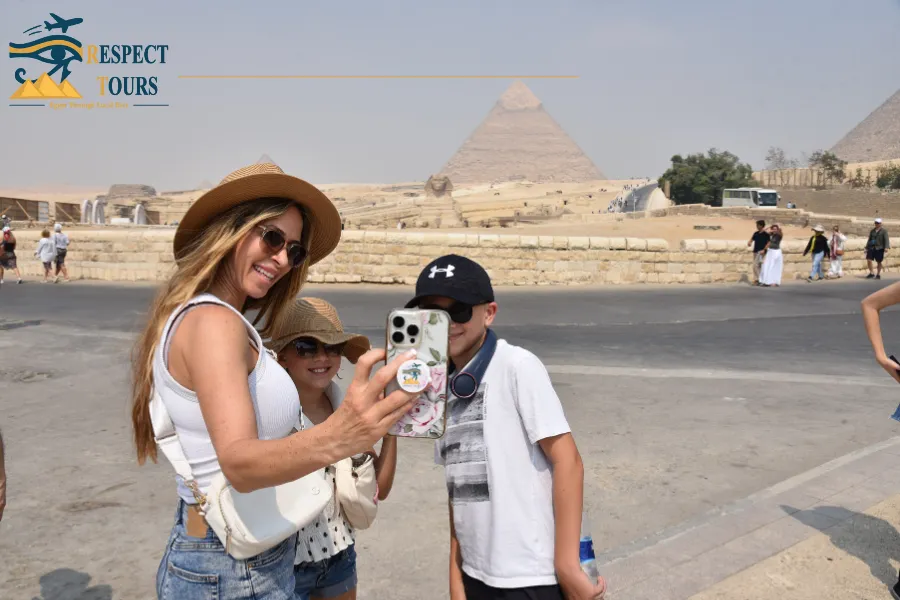
The Giza Plateau is open year-round, but the experience can vary greatly depending on the season and time of day:
- Best season: October through April (cooler, more comfortable)
- Best time of day: early morning (around 8 AM) or just before sunset for fewer crowds and softer light
Those iconic photos of the pyramids glowing at sunrise or sunset? Those are typically taken in winter months when the sky is clear and the temperature is mild.
What to Wear & Bring
The pyramid complex is exposed and can be dusty and windy, so come prepared:
- Comfortable walking shoes (sandy ground, uneven stones)
- Light, breathable clothing (layers if it’s a winter morning)
- Sunglasses, hat, and sunscreen
- Water bottle (hydration is key!)
- Cash for camel rides or extra tickets for pyramid interior access
Ticket Types & Entry Tips
- A standard entry ticket allows access to the site and viewing the pyramids from outside.
- A separate ticket is required to enter Khufu’s Great Pyramid (limited and often sells out early).
- Beware of unofficial guides inside the complex, it’s better to book through a certified guide or tour operator.
Why choose Respect Tours to lead you to the Pyramids?
At Respect Tours, we take the stress out of your visit to Giza:
- Fully licensed Egyptologist guides
- Air-conditioned transport from your hotel
- Skip-the-line service for pyramid entrance tickets
- Optional camel or horseback rides arranged ethically and safely
- Small group and private tours available
We don’t just show you the pyramids; we connect you with ancient Egypt through storytelling, history, and real cultural immersion.
Whether you’re a history lover, photographer, or first-time traveler, a guided visit with Respect Tours ensures you experience the magic of Giza without the crowds, scams, or confusion.
Conclusion
Standing before the Great Pyramid of Giza is like standing at the crossroads of time, a powerful reminder of what humans can achieve with vision, skill, and determination. Built around 2580 BC, this incredible structure still sparks wonder in travelers, historians, and scientists today.
By understanding the history of the Great Pyramid of Giza, when it was built, who built it, and how it was constructed, your visit transforms from a simple photo opportunity into a deeply meaningful experience.
At Respect Tours, we don’t just take you to the pyramids , we guide you into the heart of ancient Egypt. Our expert Egyptologists bring history to life through storytelling, science, and cultural insight, ensuring every moment of your trip feels authentic, safe, and unforgettable.
Don’t just read about history; come experience it.
FAQ: Frequently Asked Questions
How old is the Great Pyramid today?
The Great Pyramid is approximately 4,500 years old, built by Pharaoh Khufu around 2580–2560 BC. That makes it the oldest of the Seven Wonders of the Ancient World, and the only one still standing.
It is the oldest and largest of the three pyramids at Giza, but not the oldest pyramid in Egypt. The Step Pyramid of Djoser at Saqqara, built around 2630 BC, is older, but Khufu’s pyramid remains the most famous and iconic.