
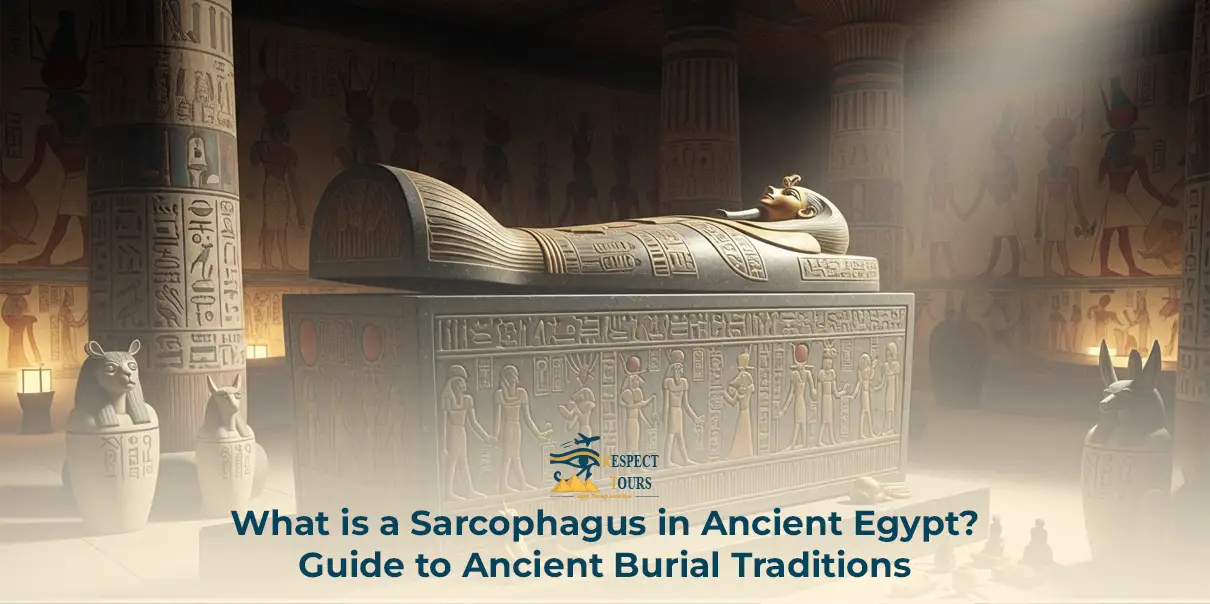
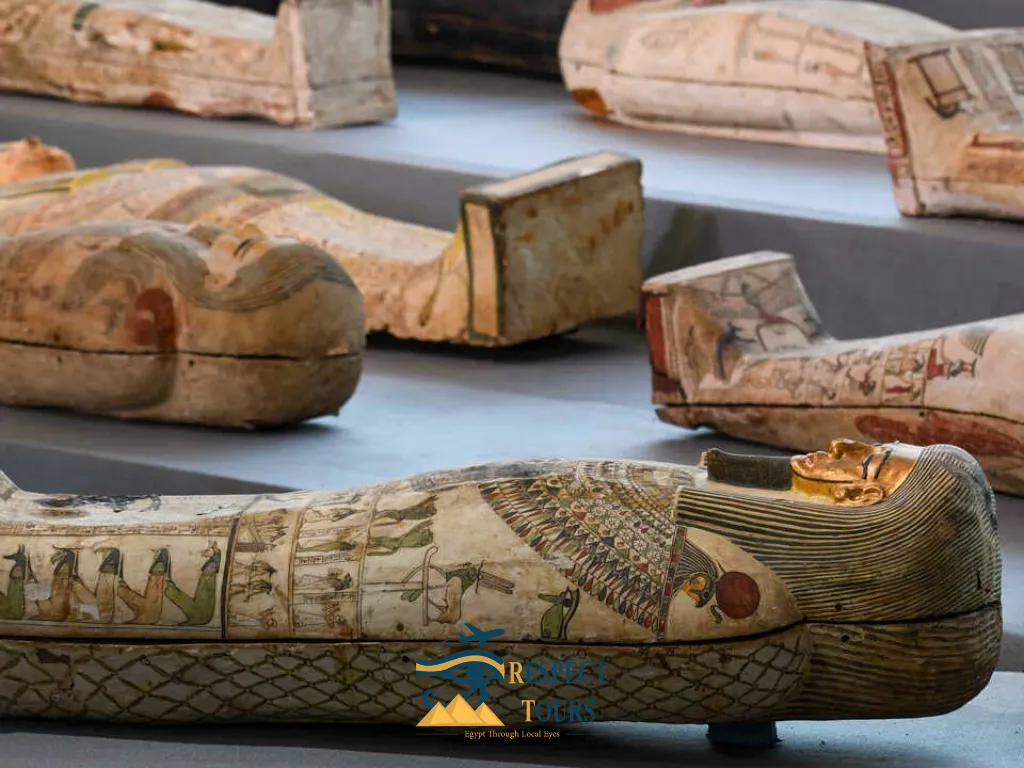
What is a sarcophagus in ancient Egypt? A stone outer container, weighing from 500 kilograms to 80 tons, housing the mummified body with its nested wooden coffins. The Greek name means “flesh-eater” (sarx = flesh, phagein = to eat), though Egyptian sarcophagi were preserved rather than consumed, creating sacred spaces for resurrection.
Over 3,000 years, Egyptian sarcophagi evolved from simple Old Kingdom granite boxes to elaborate New Kingdom anthropoid forms mirroring human shapes. Carved using copper tools, quartz sand, and extraordinary patience, each represents ancient Egypt’s unwavering belief that death was merely a doorway to eternal life.
This complete guide draws on insights from Respect Tours’ licensed Egyptologists, who help you understand not just what sarcophagi are, but also where to see the most magnificent examples and how to experience them meaningfully during your Egyptian journey.
10 Fascinating Facts About Egyptian Sarcophagi
Before we explore the depths of Egyptian burial customs, here are ten essential facts about sarcophagi that every traveler should know:
1. The Name Means “Flesh-Eater”
Despite the Greek origin suggesting consumption, Egyptian sarcophagi were designed to preserve bodies for eternity, not destroy them.
2. Weighing Up to 80 Tons
The Apis bull sarcophagi at Saqqara’s Serapeum are among the heaviest stone objects ancient Egyptians carved, each weighing 60-80 tons from single granite blocks.
3. Not Everyone Got One
Only pharaohs, nobility, and wealthy Egyptians could afford stone sarcophagi. Common people were buried in simple wooden coffins or reed mats.
4. Multiple Layers of Protection
Royal burials featured nested protection: mummy wrappings, an inner wooden coffin, an outer wooden coffin, and finally the massive stone sarcophagus.
5. Traveled Nearly 1,000 Kilometers
The finest granite sarcophagi were quarried at Aswan and transported 900 kilometers north to burial sites near Memphis and Thebes.
6. Evolution Across 3,000 Years
Sarcophagi evolved from simple rectangular boxes in the Old Kingdom to elaborate human-shaped (anthropoid) containers in the New Kingdom.
7. Inscribed with Magical Spells
Interior and exterior surfaces featured texts from the Book of the Dead and Coffin Texts, protective spells guiding the deceased through the afterlife.
8. Color-Coded Symbolism
Every pigment carried meaning: blue for rebirth, green for regeneration, gold for divinity, red for life force, and black for resurrection.
9. Precision Without Modern Tools
Ancient craftsmen achieved mirror-smooth surfaces and precise right angles using copper tools, dolerite hammer-stones, and quartz sand.
10. Still Being Discovered
Archaeologists continue to uncover new sarcophagi throughout Egypt; the Saqqara necropolis alone has yielded hundreds in recent excavations.
Why Were Sarcophagi Important in Ancient Egyptian Burial Customs?
Understanding what a sarcophagus meant to ancient Egyptians requires stepping into their worldview of death and the afterlife.
Death was not an ending but a transformation, a dangerous passage through the underworld (Duat) toward the Field of Reeds, where the justified deceased would live eternally alongside Osiris, god of the afterlife.
Physical Protection in Royal Tombs
The sarcophagus served multiple critical functions in Egyptian funerary rituals.
Physically, it protected the mummified body from tomb robbers, wild animals, and environmental damage. The heavy stone, often weighing several tons, created a formidable barrier that required extraordinary effort to breach.
When you visit the burial chambers beneath the pyramids of Giza or descend into the royal tombs in the Valley of the Kings, you’ll notice how these massive containers were often positioned in confined spaces, making removal virtually impossible.
Spiritual Regeneration and Afterlife Beliefs
Spiritually, the sarcophagus functioned as a regenerative vessel within Egyptian afterlife beliefs.
Ancient Egyptians believed the body needed to remain intact for the soul (ba) and life force (ka) to reunite with it in the afterlife.
The stone container, inscribed with protective spells from the Book of the Dead, created a sacred space where this resurrection could occur. The interior walls often depicted the sky goddess Nut stretching her star-spangled body over the deceased, symbolically giving birth to them anew each morning, just as she birthed the sun god Ra.
This connection between container and cosmos transformed the sarcophagus into a miniature universe where regeneration occurred.
Symbol of Status in Egyptian Burial Customs
Socially, commissioning a stone sarcophagus demonstrated wealth, power, and piety.
While common Egyptians were buried in simple wooden coffins or reed mats, the elite invested tremendous resources in their eternal resting places.
The most elaborate examples, like those of the pharaohs, required years of skilled labor, from quarrying and transporting massive stone blocks to the painstaking carving and painting of hieroglyphic texts and divine images.
This investment in funerary art reflected beliefs about maintaining status in the afterlife.
How Did Egyptian Sarcophagi Evolve Over Time?
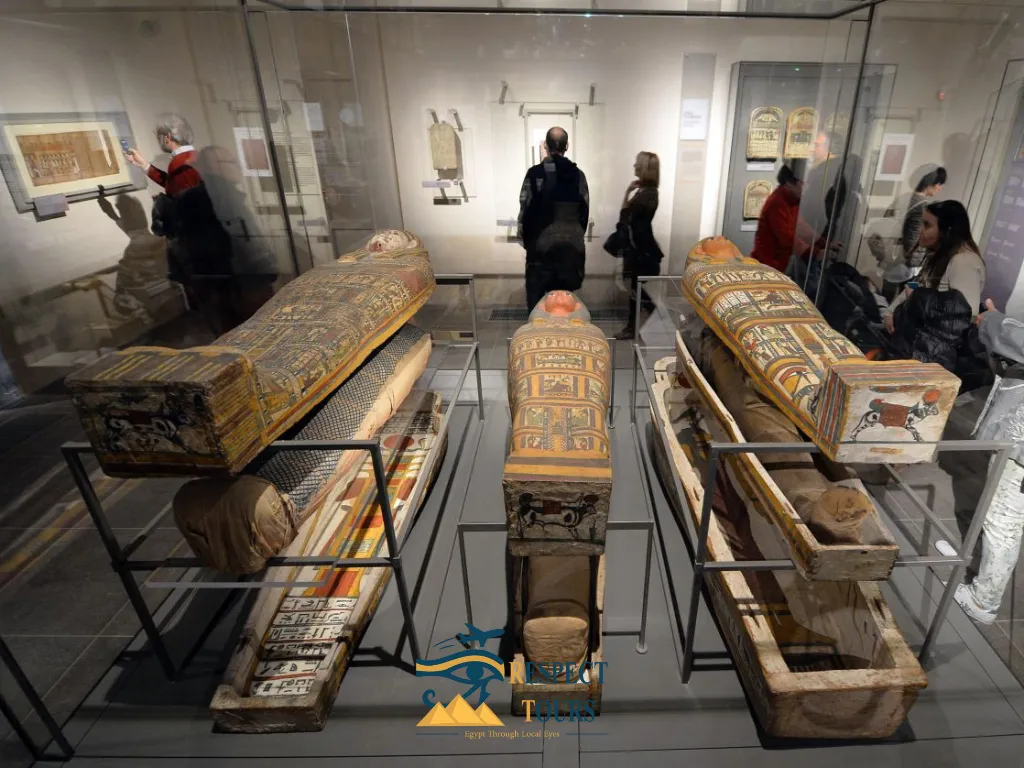
The story of the Egyptian sarcophagus spans more than three millennia, evolving alongside changes in religious beliefs, artistic styles, and available resources.
Comparison of Sarcophagi Across Egyptian Dynasties
| Period | Dates | Type | Primary Material | Decoration Style | Social Access |
|---|---|---|---|---|---|
| Old Kingdom | 2686–2181 BCE | Rectangular box | Red/black granite, limestone | Minimal; name and titles only | Pharaohs and the highest nobility |
| Middle Kingdom | 2055–1650 BCE | Rectangular box | Limestone, some granite | Elaborate Coffin Texts, offering scenes | Expanded to wealthy officials |
| New Kingdom | 1550–1077 BCE | Anthropoid (human-shaped) | Granite, quartzite, calcite | Highly decorative; gods, symbols, Book of the Dead | Royal family and elite officials |
| Late/Greco-Roman | 664 BCE–395 CE | Mixed styles | Various stones | Blend of Egyptian and Mediterranean styles | Continued for sacred animals (Apis bulls) |
This table illustrates how Egyptian burial customs evolved, reflecting changing religious practices and social structures.
The Old Kingdom: Rectangular Stone Containers (2686–2181 BCE)
During the age of pyramid construction, sarcophagi were rectangular granite or limestone boxes with flat lids. The exteriors remained relatively plain, featuring only the name and titles of the deceased along with a false door motif that allowed the ka to exit and enter.
Inside the Great Pyramid of Khufu at Giza, you can view the pharaoh’s unadorned red granite sarcophagus, its austere simplicity reflecting Old Kingdom aesthetics that emphasized permanence over decoration.
Key characteristics of Old Kingdom sarcophagi:
- Rectangular granite or limestone construction
- Minimal exterior decoration
- Focus on durability over artistic embellishment
- Designed to contain rectangular wooden coffins
- Typically weighing several tons
When you run your hand along the smooth interior walls of these ancient containers in the Cairo Museum, you’re touching surfaces that master craftsmen achieved using copper tools, quartz sand, and extraordinary patience.
The Middle Kingdom: Decorated Surfaces and Coffin Texts (2055–1650 BCE)
A transformation occurred as religious practices democratized during this period of Egyptian history. Sarcophagi began featuring elaborate decorations on both exterior and interior surfaces.
The Coffin Texts, spells previously reserved for royalty, now adorned the inner walls of wealthy officials’ burial containers, providing magical protection and guidance through the afterlife’s perils.
You’ll see representations of offerings, funerary goods, and protective deities painted in vibrant pigments that still glow after four thousand years.
Color symbolism in Middle Kingdom funerary art:
- Blue represented the Nile and rebirth
- Green symbolized regeneration and Osiris
- Gold embodied the eternal and divine
- Red conveyed life force and vitality
- Black referenced fertile soil and rebirth from darkness
The New Kingdom: The Anthropoid Revolution (1550–1077 BCE)
The most dramatic evolution occurred when sarcophagi began taking human form during this golden age of Egyptian civilization. These anthropoid containers featured carved faces, crossed arms holding royal regalia, and bodies wrapped in feathered or geometric patterns representing protective wings.
The famous nested sarcophagi of Tutankhamun, three layers of gold and gilded wood inside a massive quartzite outer container, exemplify this peak of artistic achievement.
When you visit the Valley of the Kings near Luxor, you’ll descend into royal tombs where these anthropoid sarcophagi once rested within stone burial chambers painted with scenes from the Book of the Dead.
The intimate human form created a more personal connection between the living and deceased, transforming the sarcophagus from a mere container to a symbolic body double.
The Late Period and Greco-Roman Influence (664 BCE–395 CE)
As Egypt came under Greek and Roman influence, sarcophagus design absorbed Mediterranean elements while maintaining Egyptian religious content.
Stone containers became less common for non-royals as elaborate wooden coffins took precedence.
However, the sacred Apis bulls of Memphis continued receiving massive granite sarcophagi, some weighing over sixty tons, which you can still see in the underground galleries of the Serapeum at Saqqara.
This breathtaking site remains essential for understanding the continuity of Egyptian funerary rituals across millennia.
What Materials and Stone Carving Techniques Were Used?
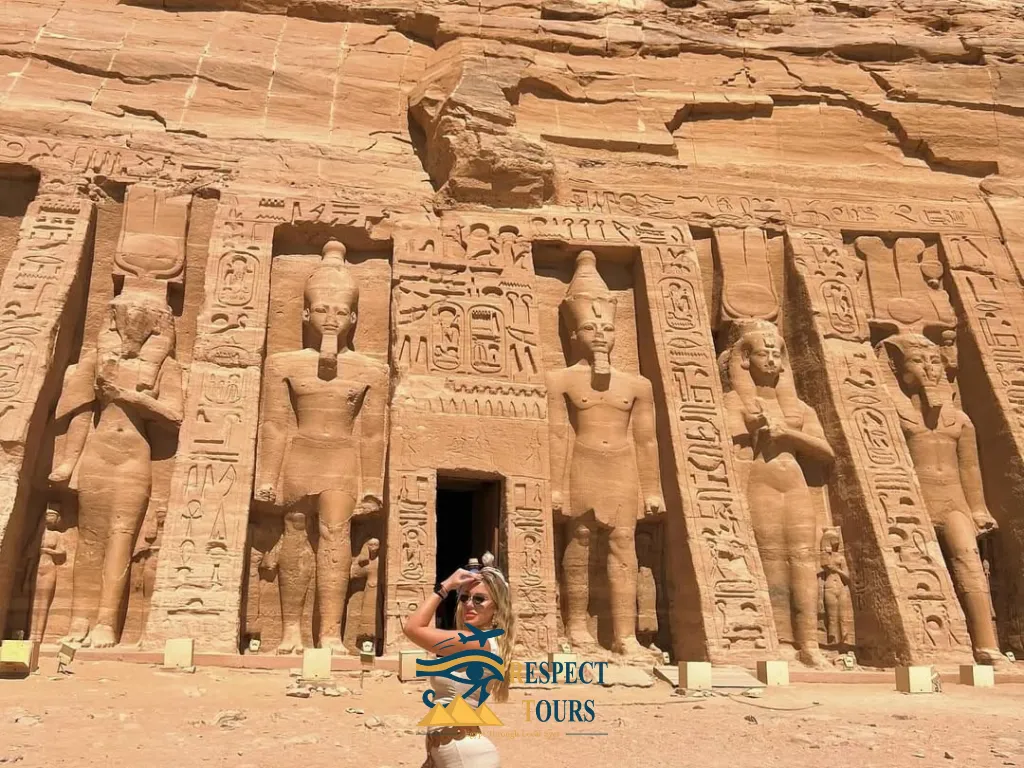
Standing before a massive granite sarcophagus raises immediate questions about ancient engineering and stone carving techniques.
How Did Egyptians Quarry and Transport Heavy Stone?
The finest sarcophagi were carved from granite quarried at Aswan, nearly 900 kilometers south of Cairo. Workers would identify a suitable section of bedrock, then create a series of holes along the desired cutting line.
Wooden wedges inserted into these holes were soaked with water, expanding and cracking the stone. The separated block, sometimes weighing forty tons or more, was then shaped roughly at the quarry before the arduous journey north.
Transportation process for Egyptian stone carving:
- Sledges pulled by dozens of workers
- Lubricated paths with water or milk
- River transport on specially constructed boats during the Nile’s flood season
- Strategic timing during high water levels
- Ramps and levers for final positioning in burial chambers
When you cruise the Nile from Luxor to Aswan with Respect Tours, you’ll follow the same route these sacred cargo vessels took millennia ago.
You’ll pass quarries where partially finished obelisks and sarcophagi still lie abandoned, providing insight into ancient stone carving techniques.
How Were Sarcophagi Carved with Such Precision?
Creating the hollow interior of a granite sarcophagus required immense skill and patience.
Craftsmen used copper or bronze tools hardened through hammering, along with quartz sand as an abrasive.
The process was painstaking: pounding dolerite hammer-stones against the surface, then grinding with sand-covered tools to smooth it. Achieving the precise rectangular cavities, with corners meeting at exact right angles and walls of uniform thickness, demonstrates mathematical sophistication that rivals modern engineering.
Ancient Egyptian stone carving techniques:
- Dolerite hammer-stones for pounding
- Copper chisels for softer limestone
- Quartz sand as an abrasive grinding agent
- Wooden mallets for controlled strikes
- String and plumb lines for maintaining angles
- Reed measuring rods for precision
The workshops at Deir el-Medina, the village that housed workers building royal tombs in the Valley of the Kings, provide archaeological evidence of this specialized craft.
What Types of Stone Were Used in Ancient Egypt?
While red or black granite from Aswan was preferred for royal sarcophagi due to its durability and prestige, other stones served different purposes and budgets.
Common sarcophagus materials in Egyptian burial customs:
- Granite (Aswan): Red or black, extremely durable, used for pharaohs
- Limestone (Cairo quarries): Softer, workable, ideal for detailed carving
- Basalt: Dark, nearly black, associated with fertility and rebirth
- Quartzite: Golden when polished, embodying solar associations with Ra
- Calcite (Egyptian alabaster): Translucent, rare, used for elite burials
Wooden coffins placed inside sarcophagi were typically cedar imported from Lebanon or local sycamore fig.
The nested arrangement, wooden anthropoid coffins inside stone sarcophagi, created multiple protective layers, each inscribed with spells to safeguard different aspects of the deceased’s being.
What Do the Symbols on Sarcophagi Mean in Egyptian Funerary Art?
Every element decorating a sarcophagus carried meaning within the complex web of Egyptian afterlife beliefs.
The Four Sons of Horus in Funerary Rituals
You’ll frequently encounter four protective deities on sarcophagus lids and sides throughout Egyptian funerary art.
The protective quartet:
- Imsety (human-headed): Protected the liver, associated with the south
- Hapy (baboon-headed): Guarded the lungs, associated with the north
- Duamutef (jackal-headed): Protected the stomach, associated with the east
- Qebehsenuef (falcon-headed): Guarded the intestines, associated with the west
These sons of Horus guarded the deceased’s internal organs stored in canopic jars and protected the four cardinal directions around the body.
Their presence on a sarcophagus created a magical shield against evil forces during the dangerous journey through the underworld.
Which Goddesses Protected the Dead?
The goddesses Isis and Nephthys, sisters who mourned and protected Osiris, typically appear at the head and foot of sarcophagi in Egyptian funerary art. Their outstretched wings embrace and shelter the deceased.
Inside the lid, Nut, goddess of the sky, often stretches her star-covered body, ready to swallow the deceased each evening and give birth to them renewed each dawn.
This imagery mirrored the sun’s daily journey and symbolized eternal rebirth in Egyptian afterlife beliefs.
Read more about: Which God Guards the Underworld in Egypt? The Answer Might Surprise You
What Do the Hieroglyphic Symbols Represent?
Three symbols appear repeatedly on sarcophagi across all periods of Egyptian history:
- Ankh: Representing eternal life and breath
- Djed pillar: Symbolizing stability and Osiris’s backbone
- Was scepter: Indicating power and dominion over chaos
Together, these hieroglyphs promised the deceased eternal life, stability in the afterlife, and continued authority. When you photograph these symbols in tombs and museums, you’re capturing a visual prayer for immortality that has endured for millennia.
What Are the Most Famous Examples of Egyptian Sarcophagi?
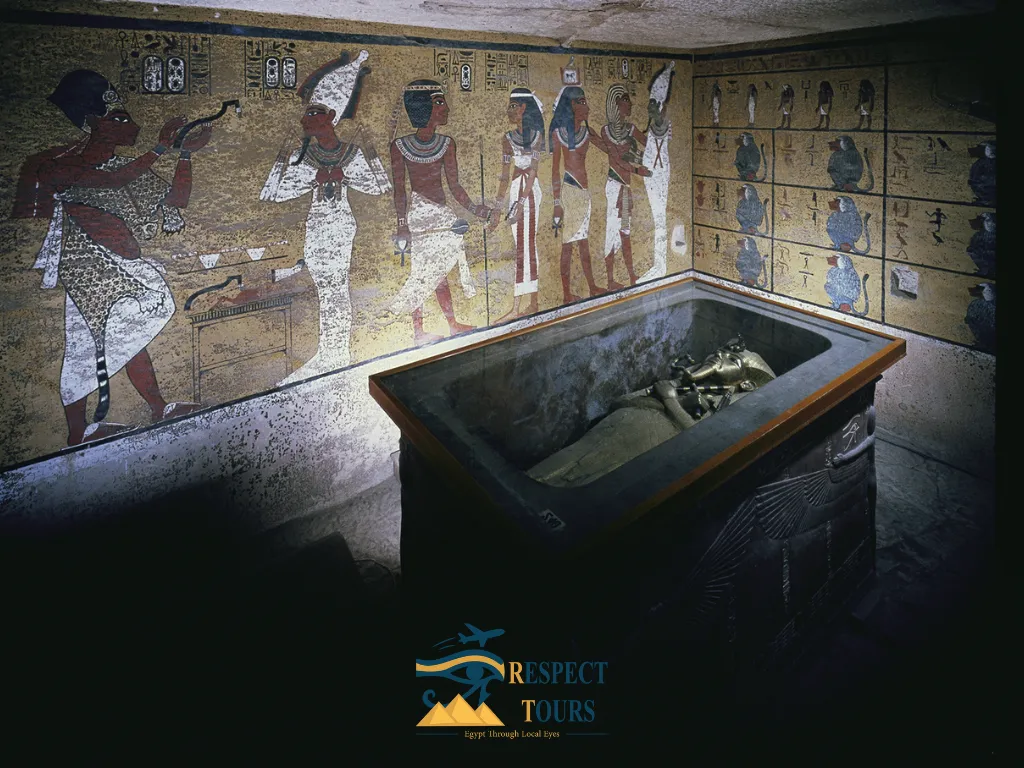
Your Egyptian journey offers opportunities to encounter some of history’s most remarkable sarcophagi, each representing different aspects of Egyptian burial customs.
Where Is Tutankhamun’s Sarcophagus Today?
The boy king’s burial equipment represents the pinnacle of New Kingdom craftsmanship and funerary art. His outermost sarcophagus, carved from a single block of yellow quartzite and painted to resemble granite, weighs over 1,000 kilograms.
Inside rested three anthropoid coffins, the innermost solid gold, weighing 110 kilograms.
Tutankhamun’s nested protection system:
- Quartzite stone sarcophagus (outermost)
- Gilded wooden coffin with inlays (outer coffin)
- Gilded wooden coffin with glass paste (middle coffin)
- Solid gold coffin weighing 110kg (innermost)
- Gold death mask
- Linen wrappings with amulets
- The mummified body
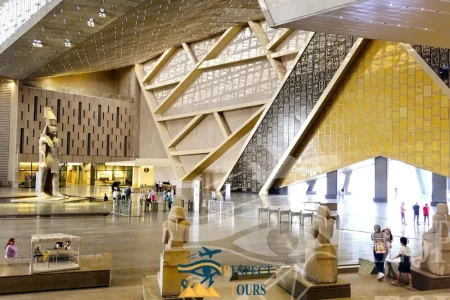
The Grand Egyptian Museum in Cairo displays these treasures in climate-controlled galleries that allow close viewing. Respect Tours arranges early access visits to the Full-Day Grand Egyptian Museum Tour with Egyptologist Guide, letting you experience these objects before crowds arrive, with expert Egyptologists explaining the symbolism and craftsmanship of Tutankhamun’s nested burial system.
What Makes the Serapeum of Saqqara Unique?
Perhaps Egypt’s most overlooked wonder, the Serapeum contains twenty-four massive granite sarcophagi that housed the mummified Apis bulls, living manifestations of the god Ptah.
Each container weighs between 60 and 80 tons, carved from single blocks of Aswan granite using ancient stone carving techniques and polished to mirror-smoothness.
Walking through the underground galleries at Saqqara, running your hand along the cool stone of these colossal containers, you’ll confront questions that archaeologists still debate.
Respect Tours includes extended Saqqara visits to the Cairo City Tour: Pyramids of Dahshur, Saqqara & Memphis in comprehensive itineraries, recognizing that this sprawling necropolis deserves more than a quick stop, with expert guides explaining the engineering mysteries of the 80-ton Apis bull sarcophagi.
Where to see provincial examples of Egyptian sarcophagi:
- Luxor Museum: Exquisitely carved examples from Theban nobles
- Aswan Museum: Sarcophagi from Nubian-influenced southern regions
- Imhotep Museum (Saqqara): Various periods and social classes
- National Museum of Egyptian Civilization (NMEC): Comprehensive collection showcasing the evolution of burial customs
These provincial pieces reveal how Egyptian burial customs varied across Egypt’s vast geography and how local workshops developed distinctive styles.
What’s the Difference Between a Coffin and a Sarcophagus in Ancient Egypt?
Confusion often arises between these terms, but understanding the distinction enhances your appreciation of Egyptian burial customs.
Defining Coffins in Egyptian Funerary Practices
A coffin is typically made of wood, lighter, portable, and anthropoid (human-shaped) or rectangular. Coffins could be nested, one placed inside another, with the innermost directly encasing the mummy.
They were decorated with protective spells and images of deities and often featured a painted face representing the idealized deceased.
Defining Sarcophagi in Ancient Egyptian Burial Customs
A sarcophagus is the outer stone container that houses the coffin or coffins. It was carved from granite, limestone, basalt, or other durable stone using specialized stone carving techniques.
Sarcophagi were essentially immovable once positioned in burial chambers, serving as the final architectural element between the deceased and the outside world.
Understanding the Nested Protection System
Think of it as concentric protection within Egyptian funerary rituals: the mummy wrappings as the first layer, wooden coffins as the middle layers, and the stone sarcophagus as the outermost shell.
The complete burial system in Egyptian burial customs:
- Mummy wrappings with protective amulets
- Inner wooden anthropoid coffin (painted, inscribed)
- Outer wooden anthropoid coffin (more elaborate)
- Stone sarcophagus (permanent, immovable)
- Burial chamber (carved or built tomb space)
Not every burial included a sarcophagus.
Common Egyptians were interred in simple wooden coffins or even reed mats. Stone sarcophagi were luxuries indicating significant wealth and status in ancient Egyptian society.
How Did Social Class Affect Burial Practices?
Egyptian burial customs varied dramatically based on social status and wealth.
| Social Class | Burial Container | Materials | Location | Funerary Goods |
|---|---|---|---|---|
| Pharaohs | Multiple nested coffins and a stone sarcophagus | Gold, granite, quartzite | Royal tombs (Valley of the Kings) | Extensive treasures, furniture, and chariots |
| Nobility/Priests | Wooden coffins and stone sarcophagi | Cedar, limestone, sometimes granite | Rock-cut tombs | Shabti figures, jewelry, and amulets |
| Wealthy Merchants | Elaborate wooden coffins | Painted cedar or sycamore | Family tomb chambers | Limited jewelry, essential amulets |
| Craftsmen/Workers | Simple wooden coffins | Basic sycamore | Communal burial areas | Few personal items, basic amulets |
| Common People | Reed mats or simple boxes | Reeds, cheap wood | Shallow graves in the desert | Minimal or no grave goods |
This stratification reflects how Egyptian afterlife beliefs were accessible to all, but the quality of preparation varied significantly.
How Do Modern Scientists Study Ancient Sarcophagi?
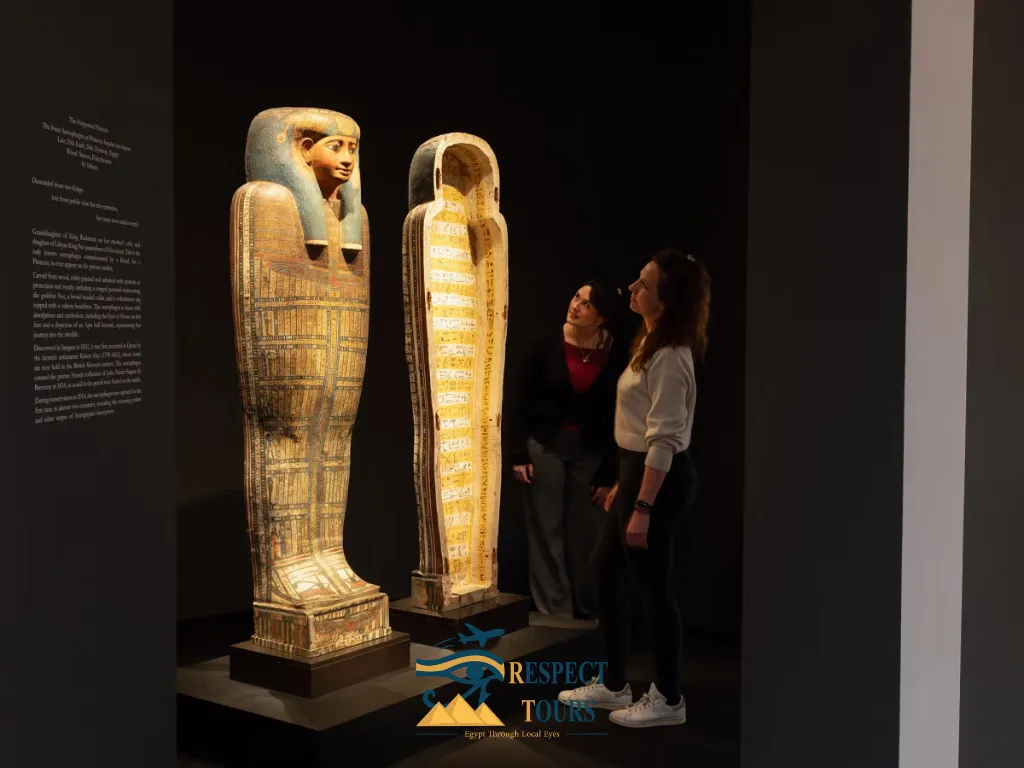
Your visit to Egyptian sarcophagi benefits from cutting-edge research technologies that reveal secrets about ancient Egyptian burial customs.
How Do Researchers Examine Sarcophagi Without Opening Them?
CT scanning and X-ray analysis allow researchers to examine sarcophagi contents without opening them, which is crucial for preserving fragile mummies and artifacts.
When the Egyptian Museum conducted CT scans of royal mummies in the early 2000s, they revealed details about health, diet, cause of death, and even familial relationships.
These discoveries revolutionized the understanding of pharaonic dynasties and Egyptian burial customs.
How Are Sarcophagi Being Preserved Today?
Preserving stone sarcophagi presents unique challenges in modern museum practice. Many have endured millennia in stable tomb environments, only to deteriorate rapidly when exposed to fluctuating humidity, temperature, and light.
Modern conservation techniques for Egyptian artifacts:
- Environmental monitoring systems
- Controlled lighting to prevent pigment fading
- Salt efflorescence treatment (crystalline deposits)
- Protective barriers maintain viewing distance
- 3D scanning for digital preservation
- Climate-controlled storage facilities
The Grand Egyptian Museum and the National Museum of Egyptian Civilization (NMEC) employ state-of-the-art preservation systems, balancing public display with long-term conservation.
Where Can You See Egyptian Sarcophagi During Your Visit?
Planning your Egyptian adventure around sarcophagus viewing requires strategic itinerary building that incorporates the best museums and archaeological sites.
- Grand Egyptian Museum (GEM)
The world’s largest collection of Egyptian artifacts, including dozens of sarcophagi from all periods, represents the full spectrum of Egyptian burial customs. Tutankhamun’s burial equipment occupies an entire gallery.
Allow at least half a day for the GEM; it’s massive, world-class, and frequently overwhelming without a knowledgeable guide.
- National Museum of Egyptian Civilization (NMEC)
Located in Old Cairo, NMEC houses the Royal Mummies Hall, featuring 22 pharaohs and queens displayed in climate-controlled cases.
The museum’s chronological layout helps visitors understand the evolution of Egyptian burial customs and funerary rituals across different dynasties.
-
Egyptian Museum in Tahrir Square
Still contains significant collections, including the gilded wooden coffins of Yuya and Thuya, Tutankhamun’s great-grandparents.
Though less technologically advanced than newer museums, it offers intimacy with artifacts that’s harder to achieve in larger venues.
Why Visit Saqqara for Egyptian Funerary Art?
The Serapeum contains the massive Apis bull sarcophagi, a highlight for visitors seeking Egypt beyond tourist-saturated sites.
The underground galleries remain cool and dim, lit by strategic lighting that emphasizes the containers’ enormous scale and the sophistication of ancient Egyptian stone carving techniques.
Respect Tours includes extended Saqqara visits in comprehensive itineraries, recognizing that this sprawling necropolis deserves more than a quick stop.
The nearby Imhotep Museum houses sarcophagi and coffins from various Saqqara tombs, providing context for the site’s three-thousand-year use as a burial ground.
What Makes Luxor Essential for Understanding Egyptian Burial Customs?
-
Luxor Museum
Though smaller than Cairo institutions, it offers exceptionally well-curated displays of Egyptian funerary art. The magnificent calcite sarcophagus of Ramesses VI and exquisitely painted wooden coffins from Theban tombs showcase New Kingdom artistic peaks.
-
Valley of the Kings
Several open tombs contain sarcophagi still in situ, positioned where ancient priests placed them during funerary rituals thousands of years ago. Seeing these massive containers in their original context, within painted burial chambers deep beneath desert mountains, provides a perspective impossible to achieve in museums.
Recommended royal tombs with sarcophagi:
- Tomb of Ramesses IV: Well-preserved granite sarcophagus
- Tomb of Ramesses IX: Stunning wall paintings surrounding the burial chamber
- Tomb of Thutmose III: Deep burial chamber with astronomical ceiling
Should You Visit Aswan and Southern Egypt?
-
Nubia Museum
Emphasizes southern Egypt and Nubian cultures, displaying sarcophagi and burial customs from this region that served as both Egypt’s frontier and a source of granite for its grandest monuments.
The museum contextualizes Egyptian funerary rituals within broader African cultural patterns.
-
Aswan Quarries
Including the famous Unfinished Obelisk site, it shows sarcophagus production at its source.
Partially carved containers abandoned in the bedrock reveal ancient stone carving techniques and the immense labor required for each burial vessel.
What Should You Pack for Archaeological Site Visits?
Essential items for exploring Egyptian burial customs:
- Comfortable walking shoes with good traction
- Hat and high-SPF sunscreen
- Small flashlight for viewing tomb details and funerary art
- A camera with good low-light capability and extra batteries
- Small daypack for personal items
Conclusion
What is a sarcophagus in ancient Egypt? You came seeking a definition. You found something far richer: 3,000 years of human creativity, engineering mastery, and spiritual conviction carved into tons of stone.
From simple Old Kingdom granite boxes to elaborate New Kingdom golden vessels, from 500-kilogram limestone containers to 80-ton Apis bull sarcophagi requiring years of labor, these monuments represent ancient Egypt’s unwavering belief: death was merely a doorway, and the body must be preserved for eternal resurrection.
Ancient Egyptians answered with monuments that have endured 4,500 years. Let us help you experience them properly.
Contact Respect Tours to Design Your Personalized Egyptian Journey, where carved stone becomes an eternal legacy.
FAQ: Frequently Asked Questions
What does “sarcophagus” literally mean?
The word combines the Greek “sarx” (flesh) and “phagein” (to eat), meaning “flesh-eater,” referring to limestone’s effects on organic material, though Egyptian sarcophagi aimed to preserve rather than consume.
Modest limestone examples weigh 500-800 kilograms, royal granite sarcophagi often exceed 2,000 kilograms, while the Apis bull containers at Saqqara weigh 60-80 tons each, representing extreme achievements in ancient stone carving techniques.
The Grand Egyptian Museum offers the most comprehensive collection, including
Tutankhamun’s complete burial equipment and sarcophagi from multiple dynasties.
For variety, also visit the Egyptian Museum (Tahrir), Luxor Museum (exquisite.
New Kingdom example, and the Imhotep Museum at Saqqara (varied social classes).
The largest known sarcophagi are the Apis bull containers at Saqqara’s Serapeum. Weighing 60-80 tons each and carved from single granite blocks transported 900 km from Aswan. Each measures approximately 4 meters long, 2.3 meters wide, and 3.3 meters high. Twenty-four of these colossal sarcophagi line the underground Galleries.