


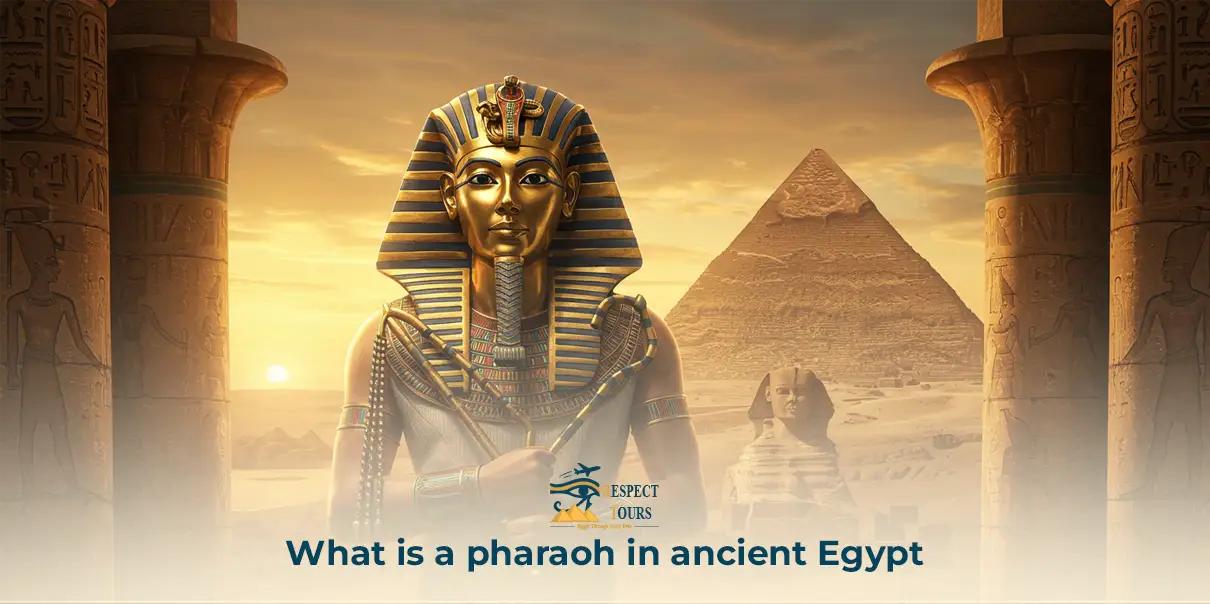
Ancient Egypt stands as one of history’s most fascinating civilizations. At the heart of this remarkable culture sat the pharaoh, a figure of immense power and divine authority. But what is a pharaoh in ancient Egypt exactly? Understanding this question unlocks the mysteries of Egyptian civilization and reveals how these god-kings shaped one of humanity’s greatest empires.
The pharaoh represented far more than a simple ruler. These extraordinary leaders served as living gods, military commanders, high priests, and supreme judges simultaneously. The nature of a pharaoh’s role in Ancient Egypt becomes clearer when we examine their multifaceted position in society. They controlled vast territories, commanded massive armies, and oversaw the construction of monuments that still inspire wonder today.
The Origins of the Title “Pharaoh”
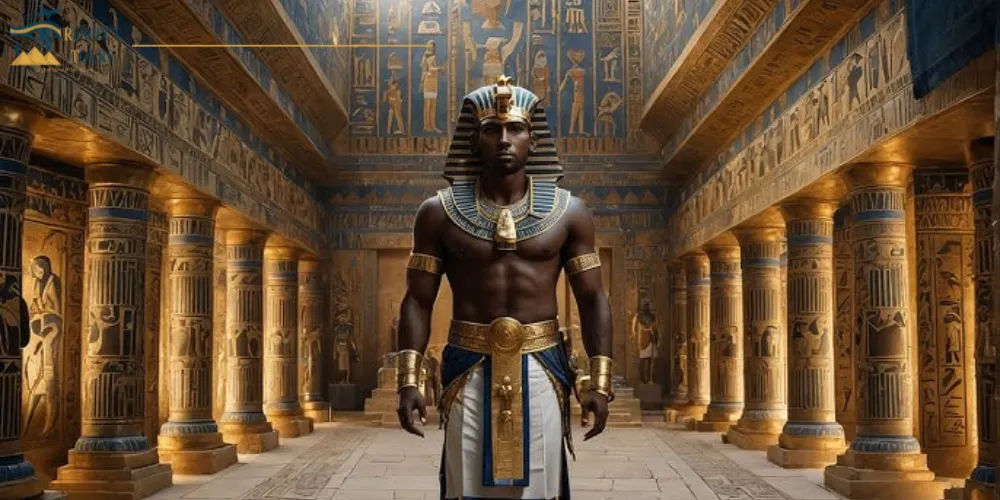
The word “pharaoh” conjures images of powerful rulers, pyramids, and ancient mysteries. But where did this title come from? The word “pharaoh” conjures images of powerful rulers, pyramids, and ancient mysteries. But where did this title come from?
Over time, the meaning evolved. By the New Kingdom period (1550-1077 BCE), “per-aa” began referring directly to the king. This linguistic shift reflected the growing power and divine status of Egyptian rulers. The palace and the king became inseparable concepts in Egyptian minds.
Ancient texts reveal fascinating details about this transformation. The Amarna Letters, diplomatic correspondence from the 14th century BCE, show foreign rulers addressing Egyptian kings as “pharaoh.” This demonstrates how the title gained international recognition and respect.
Early pharaohs used multiple titles simultaneously. The most important was the “nesw-bity,” meaning “King of Upper and Lower Egypt.” This dual kingship reflected Egypt’s geography and political structure. The pharaoh ruled both the Nile Delta (Lower Egypt) and the river valley (Upper Egypt).
The Divine Role of the Pharaoh
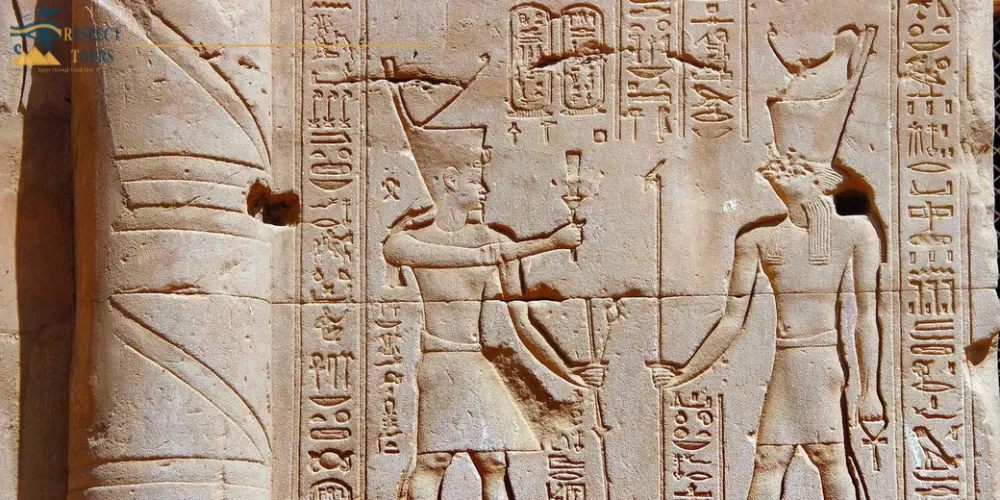
At the heart of what is a pharaoh in ancient Egypt lies their indisputable divine status. The pharaoh was not merely chosen by the gods; they were gods. This belief was fundamental to the Egyptian worldview. The pharaoh was considered the living Horus, the falcon-headed god associated with kingship and the sky. Upon the pharaoh’s death, they transformed into Osiris, the god of the afterlife and resurrection.
This divine connection meant the pharaoh was the intermediary between the gods and humanity. They were responsible for maintaining Ma’at, the cosmic order, justice, and truth. Without Ma’at, chaos would reign.
The pharaoh’s daily rituals, from sunrise to sunset, were crucial for the well-being of Egypt. They performed ceremonies in temples, offering sacrifices to the gods. These acts ensured the Nile’s annual flooding, the success of harvests, and the continued prosperity of the land.
The pharaoh’s divinity was reinforced through elaborate iconography. They were depicted with specific regalia: the nemes headdress, the false beard, the crook, and the flail. Each element symbolized their divine authority and royal power.
Temples were built to honor them, and their images adorned monuments across Egypt. The Great Sphinx at Giza, for example, is a massive representation of Pharaoh Khafre, embodying his divine strength and watchful gaze.
Furthermore, the pharaoh’s divinity was hereditary. The lineage was traced back to the primeval gods. This belief legitimized the pharaoh’s rule and ensured a smooth transition of power. Even when there were disputes over succession, the underlying principle of divine kingship remained unchallenged.
The Political and Military Power of the Pharaoh
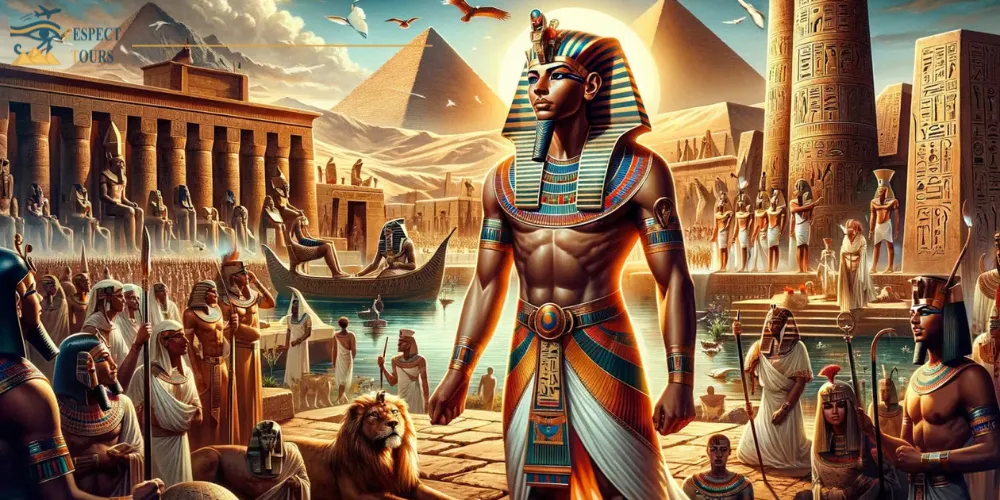
Pharaohs wielded absolute political authority over ancient Egypt. They controlled all land, appointed all officials, and made all major decisions.
Military leadership represented another crucial aspect of pharaonic power. Pharaohs personally led armies into battle, demonstrating their courage and divine protection. Victory in warfare proved the gods favored their chosen ruler. Defeat could threaten a pharaoh’s legitimacy and dynasty.
Pharaohs used military campaigns to expand Egypt’s borders and secure valuable resources. Gold from Nubia, cedar wood from Lebanon, and exotic goods from Punt filled royal treasuries. These riches funded massive building projects and maintained Egypt’s prosperity.
Diplomatic marriages strengthened Egypt’s international position. Pharaohs married foreign princesses to seal alliances and prevent conflicts. These diplomatic unions created complex family relationships spanning the ancient Near East. Royal correspondence reveals sophisticated diplomatic protocols and mutual respect between kingdoms.
The Pharaoh and Society
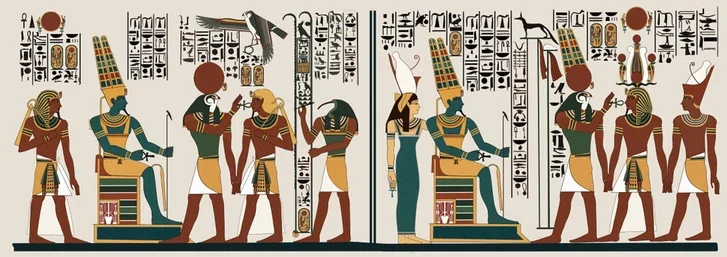
The pharaoh’s influence permeated every level of ancient Egyptian society. They were at the apex of a highly stratified social hierarchy. Below the pharaoh were the royal family, high-ranking officials, priests, and military commanders. Then came the scribes, artisans, and merchants. At the base of the pyramid were the farmers and laborers, who constituted the vast majority of the population.
Despite the rigid social structure, the pharaoh was seen as the protector and provider for all Egyptians. They were responsible for their welfare, ensuring food security, and maintaining order. The concept of Ma’at extended to social justice. The pharaoh was expected to rule justly and fairly, ensuring that even the humblest citizen received their due.
The pharaoh’s image and deeds were central to Egyptian identity. Propaganda played a significant role in reinforcing the pharaoh’s status. Reliefs and inscriptions on temples and tombs glorified the pharaoh’s achievements, victories, and piety. These artistic representations served to educate and inspire the populace. They reinforced the idea that the pharaoh was truly divine and indispensable.
Notable Pharaohs of Ancient Egypt
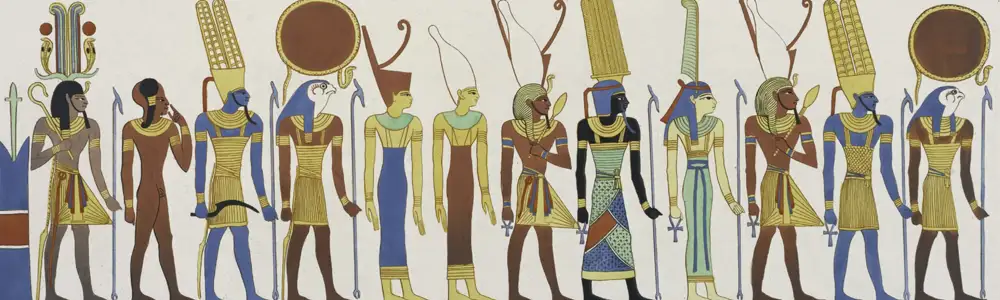
1-Narmer (c. 3100 BCE):
Traditionally receives credit for unifying Upper and Lower Egypt. Archaeological evidence suggests this process took several generations, but Narmer’s Palette depicts him conquering northern enemies. This artifact represents one of history’s earliest examples of royal propaganda.
2-Djoser (c. 2670-2650 BCE):
Revolutionized royal burial practices by building the first pyramid. His Step Pyramid at Saqqara transformed religious architecture and demonstrated pharaonic power. The architect Imhotep designed this masterpiece, later becoming worshipped as a god himself.
3-Khufu (c. 2589-2566 BCE):
Constructed the Great Pyramid of Giza, one of the Seven Wonders of the Ancient World. This massive monument required precise engineering, vast resources, and decades of labor. The pyramid’s perfection reflects the pharaoh’s absolute authority over Egyptian society.
4-Hatshepsut (c. 1479-1458 BCE):
Became one of history’s most successful female pharaohs. She ruled Egypt for over twenty years, overseeing trade expeditions and building projects. Her mortuary temple at Deir el-Bahari showcases innovative architecture and artistic achievement.
5-Akhenaten (c. 1353-1336 BCE):
He attempted to revolutionize Egyptian religion by promoting worship of Aten, the sun disk. His radical reforms created the world’s first known monotheistic religion. Though his successors reversed these changes, Akhenaten’s reign influenced religious thought for centuries.
6-Tutankhamun (c. 1332-1323 BCE):
Became famous primarily due to his intact tomb in 1922. The young pharaoh’s burial treasures revealed the incredible wealth and artistry of the New Kingdom period. His golden death mask remains one of ancient Egypt’s most recognizable artifacts.
7-Ramesses II (c. 1279-1213 BCE):
He ruled for sixty-six years and built more monuments than any other pharaoh. His military campaigns expanded Egypt’s empire and secured its borders. The temples at Abu Simbel demonstrate his power and devotion to the gods.
8-Cleopatra VII (69-30 BCE)
Egypt’s last pharaoh and one of history’s most famous rulers. She spoke multiple languages, received an excellent education, and skillfully navigated Roman politics. Her relationships with Julius Caesar and Mark Antony shaped the ancient world’s destiny.
The Symbolism of the Pharaoh’s Death
The death of a pharaoh was not seen as an end, but as a transition. It was a crucial part of the divine cycle. As mentioned, the deceased pharaoh became Osiris, the god of the underworld.
This transformation ensured the continuity of kingship and the well-being of Egypt. The elaborate funerary rituals reflected this belief.
Mummification was a complex and lengthy process. It was designed to preserve the body as a vessel for the ka (life force) and ba (personality) to return to in the afterlife. The pharaoh’s organs were removed, preserved, and placed in canopic jars. The body was treated with natron, dried, and then wrapped in linen bandages. This meticulous process could take up to 70 days.
The pharaoh’s burial in a grand tomb, often a pyramid or a rock-cut tomb in the Valley of the Kings, was paramount. These tombs were miniature universes, filled with grave goods to support the pharaoh in the afterlife. These included furniture, jewelry, food, and even miniature servants (shabtis). The walls were adorned with spells and images from the Book of the Dead, guiding the pharaoh through the perilous journey to the afterlife.
The construction of these tombs was a lifelong endeavor for the pharaoh. Planning and building began early in their reign. This ensured a fitting eternal resting place.
The sheer scale and artistry of these tombs speak volumes about the Egyptians’ belief in the afterlife and the pharaoh’s pivotal role within it. The journey through the underworld was fraught with challenges, and the spells and provisions in the tomb were meant to overcome them.
List of the Pharaohs
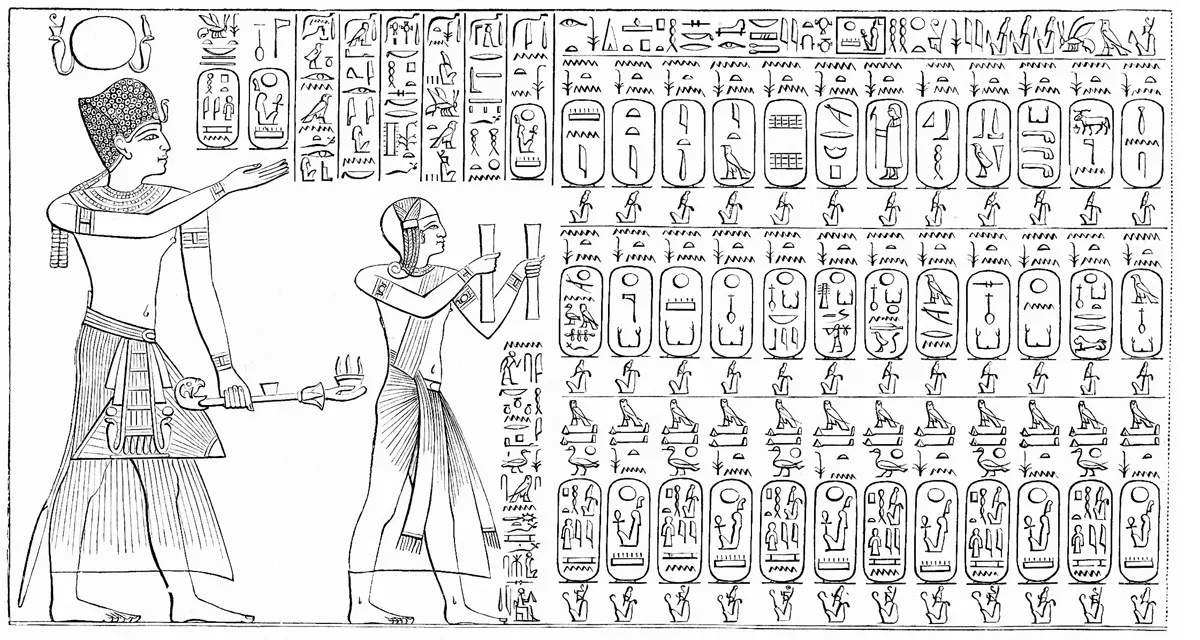
First Dynasty
- Narmer established the first dynasty around 3100 BCE, unifying Upper and Lower Egypt under a single crown. His successors Aha, Djer, Djet, Den, Anedjib, Semerkhet, and Qa’a consolidated royal power and established pharaonic traditions. Archaeological evidence from Abydos reveals elaborate royal burials demonstrating early pharaonic wealth and power.
- Royal names from this period appear on ivory labels, stone vessels, and cylinder seals. These artifacts provide crucial information about early pharaonic administration and religious practices. The first dynasty lasted approximately 150 years and created foundations for all subsequent Egyptian civilization.
Second Dynasty
The Second Dynasty pharaohs Hetepsekhemwy, Raneb, Nynetjer, Weneg, Sened, Peribsen, Khasekhemwy, and possibly others ruled from approximately 2890 to 2686 BCE. Political conflicts marked this period, with some pharaohs choosing different patron deities and burial locations.
Peribsen uniquely associated himself with Seth rather than Horus, suggesting religious or political upheaval. Khasekhemwy later reconciled these competing factions, incorporating both Horus and Seth into his royal titles. This dynasty’s conclusion set the stage for the Old Kingdom’s golden age.
Third Dynasty
Djoser began the Third Dynasty around 2686 BCE and commissioned the first pyramid at Saqqara. His architect, Imhotep, revolutionized royal burial architecture, creating the world’s first monumental stone building. Subsequent rulers Sekhemkhet, Sanakht, and Khaba continued pyramid-building traditions.
The Step Pyramid complex included temples, courtyards, and underground chambers mimicking the pharaoh’s earthly palace. This architectural innovation demonstrated the pharaoh’s divine status and unlimited resources. Third Dynasty pharaohs established precedents for all future pyramid construction.
Fourth Dynasty
Fourth Dynasty pharaohs achieved the pinnacle of pyramid building between 2613 and 2494 BCE. Sneferu built multiple pyramids, perfecting construction techniques for his successors. Khufu created the Great Pyramid of Giza, followed by Khafre and Menkaure, who completed the Giza complex.
These monuments required unprecedented organization and resources. Tens of thousands of workers quarried limestone, transported massive blocks, and assembled them with incredible precision. The Giza pyramids remain among humanity’s greatest architectural achievements, reflecting absolute pharaonic power.
Fifth Dynasty
Fifth Dynasty rulers (2494-2345 BCE), including Userkaf, Sahure, Neferirkare, and others, shifted focus from pyramid building to sun temple construction. These pharaohs emphasized their connection to Ra, the sun god, building elaborate temples celebrating solar worship.
Royal pyramids became smaller but incorporated complex religious texts called Pyramid Texts. These spells ensured the pharaoh’s successful afterlife journey and divine transformation. Fifth Dynasty innovations influenced Egyptian religious practices for millennia.
Sixth Dynasty
The Sixth Dynasty (2345-2181 BCE) marked the Old Kingdom’s decline under pharaohs like Teti, Pepi I, Merenre, and Pepi II. Pepi II’s exceptionally long reign of over sixty years weakened central authority as provincial governors gained independence.
Climate change and reduced Nile floods created economic hardship throughout Egypt. Royal authority diminished as local rulers challenged pharaonic supremacy. The Sixth Dynasty’s collapse initiated the First Intermediate Period’s chaos and fragmentation.
Seventh Dynasty
Historical records suggest the Seventh Dynasty lasted only seventy days, with multiple short-lived pharaohs. This period represents the immediate aftermath of the Old Kingdom collapse, when the central authority completely broke down. Different claimants fought for pharaonic legitimacy without success.
Archaeological evidence for this dynasty remains extremely limited. Most information comes from later king lists that may not accurately reflect historical reality. The Seventh Dynasty’s brevity demonstrates how quickly pharaonic power could collapse without strong leadership.
Eighth Dynasty
Eighth Dynasty pharaohs attempted to restore Old Kingdom traditions from their capital at Memphis. Rulers like Neferkauhor and Neferirkare claimed legitimate succession from earlier dynasties but controlled limited territory. Their authority rarely extended beyond the immediate Memphis region.
Provincial governors maintained independence while paying lip service to pharaonic authority. This period saw continued economic decline and social instability throughout Egypt. The Eighth Dynasty’s weakness paved the way for competing dynasties in different regions.
Ninth Dynasty
Ninth Dynasty pharaohs ruled from Herakleopolis around 2160-2130 BCE during the First Intermediate Period. These rulers, including Meryibre Kheti, controlled Middle Egypt while competing dynasties governed other regions. Limited inscriptions provide information about their reigns and territorial control.
Economic recovery began during this period as local administrators restored irrigation systems and trade networks. However, political fragmentation continued as multiple pharaohs claimed legitimate authority. The Ninth Dynasty’s limited power reflected Egypt’s continuing instability.
Tenth Dynasty
The Tenth Dynasty continued Herakleopolitan rule until approximately 2040 BCE. These pharaohs gradually expanded their control while facing challenges from the Theban rulers in Upper Egypt. Military conflicts between the northern and southern dynasties characterized this period.
Literary works from this era, including the “Instructions for Merikare,” provide insights into pharaonic ideology during political fragmentation. These texts emphasize royal responsibility for justice and prosperity while acknowledging contemporary challenges.
Eleventh Dynasty
Eleventh Dynasty pharaohs from Thebes eventually reunified Egypt around 2055 BCE under Mentuhotep II. This dynasty’s early rulers controlled only Upper Egypt before expanding northward. Successful military campaigns restored pharaonic authority throughout the Nile Valley.
Mentuhotep II’s victory over Herakleopolitan rivals initiated the Middle Kingdom period. His mortuary temple at Deir el-Bahari demonstrated renewed royal power and architectural innovation. The Eleventh Dynasty’s success restored pharaonic prestige and Egyptian unity.
Twelfth Dynasty
The Twelfth Dynasty (1985-1795 BCE) represented the Middle Kingdom’s golden age under pharaohs like Amenemhat I, Senusret I, and Amenemhat III. These rulers expanded Egypt’s borders, developed trade networks, and undertook massive irrigation projects in the Fayyum region.
Royal literature flourished during this period with works like the “Story of Sinuhe” and “Instructions of Amenemhat.” These texts promoted pharaonic ideology while entertaining educated audiences. Twelfth Dynasty pharaohs successfully balanced central authority with provincial autonomy.
Thirteenth Dynasty
Thirteenth Dynasty pharaohs (1795-1650 BCE) maintained Egyptian unity despite increasingly short reigns. Over fifty rulers governed during these 150 years, suggesting political instability and competing claims to royal authority. However, administrative continuity preserved governmental functions.
Strong viziers and an established bureaucracy maintained stability despite frequent dynastic changes. Trade relationships continued with neighboring regions while military campaigns secured Egypt’s borders. The Thirteenth Dynasty’s longevity demonstrates institutional strength beyond individual pharaohs.
Fourteenth Dynasty
The Fourteenth Dynasty ruled contemporaneously with the Thirteenth Dynasty from the Delta region. These minor pharaohs controlled limited territory and left few historical records. Their existence demonstrates Egypt’s continuing political fragmentation during the Second Intermediate Period.
Archaeological evidence suggests these rulers maintained local authority while acknowledging the theoretical supremacy of the Theban pharaohs. Limited inscriptions provide glimpses of their reigns and territorial control. The Fourteenth Dynasty’s obscurity reflects their minimal historical impact.
Fifteenth Dynasty
The Fifteenth Dynasty (1650-1550 BCE) consisted of Hyksos rulers who conquered Lower Egypt from their capital at Avaris. These foreign pharaohs adopted Egyptian titles and customs while introducing new military technologies, including horse-drawn chariots and composite bows.
Notable Hyksos pharaohs included Salitis, Khyan, and Apophi, who established trade networks throughout the eastern Mediterranean. Their rule introduced cosmopolitan influences while maintaining Egyptian administrative traditions. The Hyksos innovations later strengthened native Egyptian military capabilities.
Sixteenth Dynasty
The Sixteenth Dynasty comprised minor Hyksos rulers and contemporary Theban pharaohs during the Second Intermediate Period. Limited evidence makes precise chronology difficult, but these rulers controlled various Egyptian territories while acknowledging foreign Hyksos supremacy.
Theban pharaohs of this period prepared for eventual liberation campaigns against Hyksos rulers. Military preparations and alliance-building characterized their reigns. The Sixteenth Dynasty’s activities set the foundations for the New Kingdom’s establishment.
Seventeenth Dynasty
Seventeenth Dynasty Theban pharaohs, including Taa I, Taa II, and Kamose, launched liberation wars against the Hyksos rulers. Archaeological evidence from royal mummies reveals battle wounds sustained during these conflicts. Their sacrifices paved the way for Egypt’s reunification.
Kamose’s victory stele describes successful campaigns against Hyksos forces in Lower Egypt. His brother Ahmose I completed the liberation and established the Eighteenth Dynasty. The The The Seventeenth Dynasty’s military achievements restored native Egyptian rule and pharaonic legitimacy.
Abydos (Thinite) Dynasty
Contemporary pharaohs ruled from Abydos during the Second Intermediate Period, maintaining traditional religious practices while acknowledging Hyksos authority. These rulers left limited inscriptions but preserved ancient Egyptian customs during foreign domination.
Archaeological excavations at Abydos reveal continued royal burials and temple activities during this period. Local pharaohs maintained religious traditions that proved crucial for later dynastic restoration. Their preservation of Egyptian culture contributed to national survival.
Eighteenth Dynasty
The Eighteenth Dynasty (1550-1295 BCE) marked the New Kingdom’s beginning with pharaohs like Ahmose I, Hatshepsut, Thutmose III, Akhenaten, and Tutankhamun. These rulers expanded Egypt’s empire to its greatest extent while accumulating unprecedented wealth and power.
Military campaigns conquered Nubia and extended Egyptian influence into the Levant. Tribute from subject territories funded massive building projects, including Karnak Temple expansions and the Valley of the Kings tombs. Eighteenth Dynasty pharaohs achieved legendary status through their achievements.
Nineteenth Dynasty
Nineteenth Dynasty pharaohs (1295-1186 BCE), including Seti I and Ramesses II, continued imperial expansion while facing new threats from the Sea Peoples and the Hittites. The Battle of Kadesh demonstrated pharaonic military leadership despite tactical limitations.
Ramesses II’s sixty-six-year reign epitomized pharaonic power through extensive building projects and military campaigns. His monuments throughout Egypt and Nubia proclaimed royal achievements for future generations. The Nineteenth Dynasty maintained Egypt’s imperial status through diplomatic and military skill.
Twentieth Dynasty
The Twentieth Dynasty’s most notable pharaoh, Ramesses III (1186-1155 BCE), successfully defended Egypt against Sea Peoples invasions while maintaining internal stability. Subsequent rulers faced increasing economic difficulties and declining royal authority.
Administrative documents from this period reveal growing corruption and reduced pharaonic resources. Foreign invasions and internal rebellion weakened royal power throughout the dynasty’s duration. The Twentieth Dynasty’s conclusion marked the New Kingdom’s end and pharaonic decline.
Twenty-first Dynasty
Twenty-first Dynasty pharaohs ruled from Tanis while Theban high priests controlled Upper Egypt (1077-943 BCE). This division weakened pharaonic authority and marked the Third Intermediate Period. Royal power became increasingly ceremonial rather than practical.
Pharaohs like Smendes and Psusennes I maintained Egyptian traditions while acknowledging limited territorial control. Their elaborate burials at Tanis demonstrated continuing royal pretensions despite reduced political influence. The Twenty-first Dynasty’s weakness invited foreign intervention.
Twenty-second Dynasty
Libyan pharaohs of the Twenty-second Dynasty (943-716 BCE), including Shoshenq I and Osorkon II, established new royal traditions while adopting Egyptian customs. These rulers maintained pharaonic legitimacy through marriage alliances and religious patronage.
Shoshenq His military campaigns into Palestine demonstrated continuing pharaonic ambitions beyond Egypt’s borders. However, internal conflicts and competing dynasties gradually weakened royal authority. The Twenty-Second Dynasty’s fragmentation prepared for future foreign conquest.
Twenty-third Dynasty
The Twenty-third Dynasty (818-715 BCE) ruled contemporaneously with the Twenty-second Dynasty from Leontopolis. Multiple pharaohs claimed legitimate authority while controlling limited territories. This political fragmentation weakened Egypt’s resistance to foreign invasion.
Competing royal lines created confusion about legitimate succession and territorial control. Limited inscriptions provide information about individual pharaohs and their achievements. The Twenty-third Dynasty’s division facilitated the Nubian conquest of Egypt.
Twenty-fourth Dynasty
Tefnakht and Bakenranef comprised the Twenty-fourth Dynasty (727-715 BCE), ruling from Sais in the Delta. These pharaohs attempted to resist Nubian expansion while maintaining independence in Lower Egypt. Their brief reigns ended with the Nubian conquest.
Archaeological evidence suggests these rulers maintained Egyptian traditions while facing overwhelming military pressure. Their resistance demonstrated a continuing pharaonic spirit despite political weakness. The Twenty-fourth Dynasty’s defeat completed Nubian domination of Egypt.
Conclusion:
So, what is a pharaoh in ancient Egypt? The pharaoh was far more than a mere monarch. They were the cornerstone of ancient Egyptian civilization. Their divine status ensured cosmic harmony. Their political power maintained order and stability. Their military leadership protected the realm. Their societal role unified the people.
The legacy of the pharaohs continues to fascinate and inspire. Their stories are woven into the fabric of human history. They remind us of the enduring power of belief, leadership, and the human spirit’s capacity for creation. As you explore the wonders of Egypt, remember the pharaohs who built them. Their spirit still resonates within the ancient stones.