

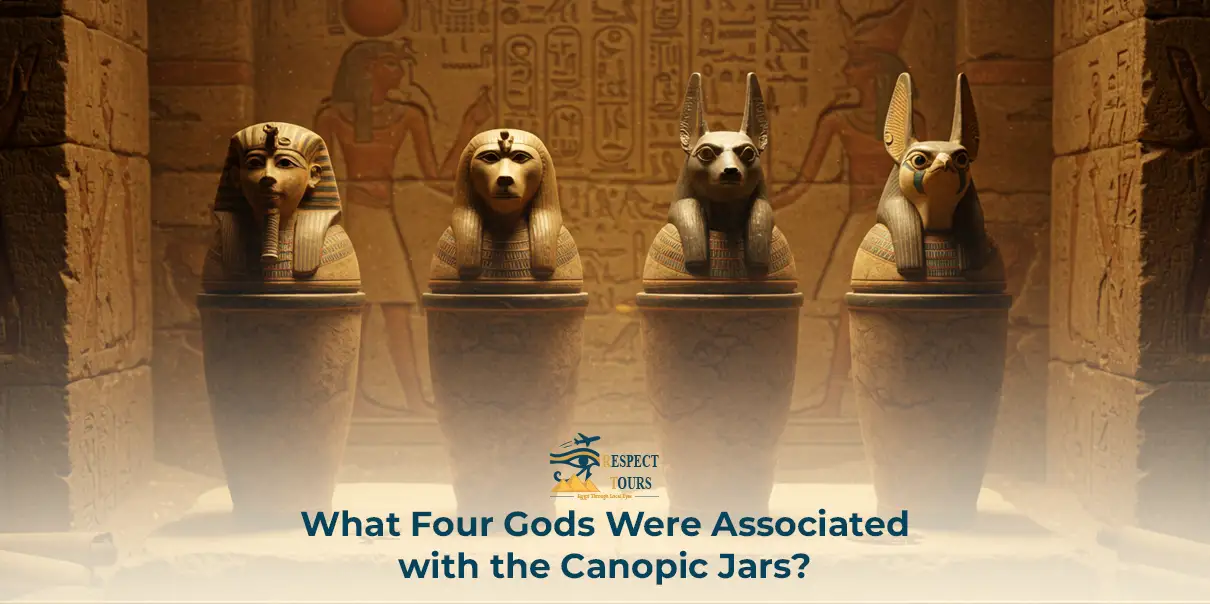
The ancient Egyptians believed in preserving the body for the afterlife. A key part of this process was the use of canopic jars. But what four gods were associated with the Canopic jars? These sacred vessels were not just containers; powerful deities protected them. Understanding: What four gods were associated with the Canopic jars? Reveals deep spiritual connections in Egyptian mummification.
In this article, we examine the gods associated with these jars, their roles, and lesser-known facts that are rarely found online. Let’s dive into the fascinating world of Canopic jars and their divine guardians.
The Purpose of Canopic Jars in Ancient Egypt
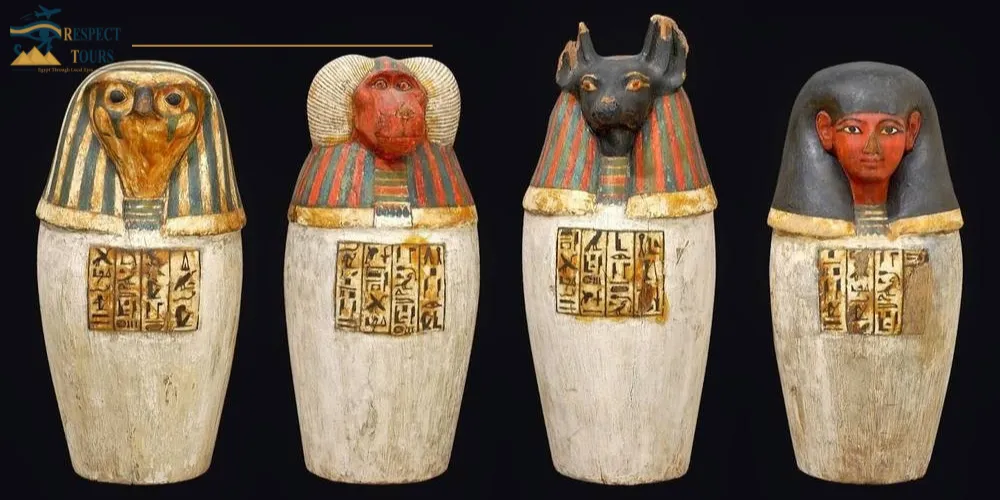
In ancient Egypt, canopic jars played a vital role in the sacred process of mummification. The ancient Egyptians believed that for the soul to journey safely into the afterlife, the body had to be preserved, and that meant protecting its internal organs. Canopic jars were specially designed containers used to store these vital organs after they were removed during embalming.
These jars were far more than simple storage vessels. They acted as a spiritual link between the world of the living and the afterlife. The ancient Egyptians believed that keeping the organs safe from decay and evil forces was essential for achieving resurrection and eternal life.
Interestingly, the term “Canopic” originates from Canopus, a city in ancient Greece. The Greeks later associated these jars with Canopus, a mythical sea captain, but the practice and symbolism were purely Egyptian. In Egyptian belief, each jar had a distinct role and was protected by one of the Four Sons of Horus, divine guardians entrusted with watching over the organs.
Typically ranging from 12 to 18 inches (30–45 cm) in height, Canopic jars were crafted from materials like limestone, alabaster (calcite), or pottery. Wealthier families sometimes commissioned jars made of precious metals like gold or silver, decorated with inscriptions, protective spells, and intricately carved lids shaped like the heads of gods.
The jars were usually placed inside elaborately carved Canopic chests, which were then positioned near the sarcophagus within the tomb. This deliberate arrangement kept the organs close to the mummified body, reinforcing the belief that the body and soul must reunite in the afterlife for resurrection to occur.
What Gods Were Associated with Each Canopic Jar?
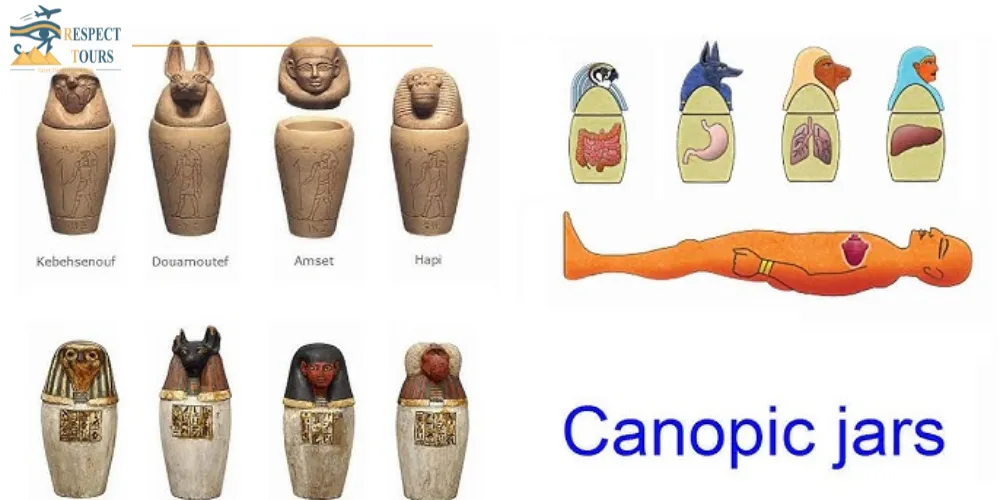
Each canopic jar in ancient Egypt was protected by one of the Four Sons of Horus, powerful deities who safeguarded the organs of the deceased during their journey to the afterlife.
- Imsety, with a human head, protected the liver.
- Hapy, with a baboon head, guarded the lungs.
- Duamutef, with a jackal head, watched over the stomach.
- Qebehsenuef, with a falcon head, protected the intestines.
These gods symbolized divine order and balance, each linked to elements of nature and the spiritual world. Their roles were crucial in maintaining the harmony of the afterlife.
Each male guardian was also paired with a protective goddess:
- Isis guarded Imsety’s jar.
- Nephthys protected Hapy’s jar.
- Neith watched over Duamutef’s jar.
- Selket safeguarded Qebehsenuef’s jar.
Together, these divine pairs created a powerful spiritual shield—blending strength, protection, and wisdom—to ensure the soul’s safe passage and eternal peace.
The Four Sons of Horus: Guardians of the Canopic Jars
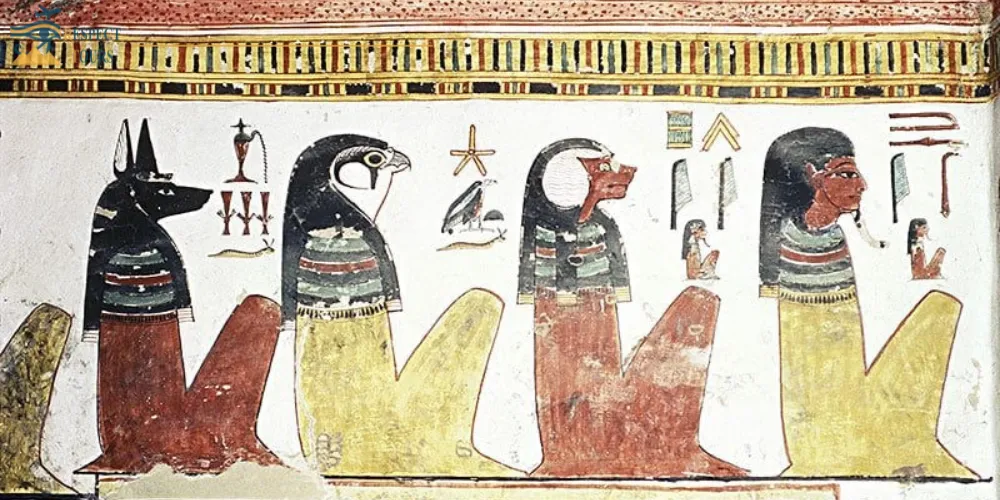
The Four Sons of Horus were divine protectors of the canopic jars in ancient Egypt. According to myth, they were born from a lotus flower, linking them to themes of creation, rebirth, and cosmic order. As sons of Horus, one of Egypt’s most powerful gods, they inherited his protective strength and divine authority.
First mentioned in the Pyramid Texts around 2400 BCE, their role expanded over time. Originally seen as general guardians, they later became specifically tied to the organs placed in canopic jars during mummification.
Each son was aligned with one of the four cardinal directions; north, south, east, and west, creating a spiritual shield around the deceased. Their presence ensured that no evil could approach from any direction.
They were also associated with different times of day, providing continuous protection both day and night. This 24-hour guardianship symbolized eternal vigilance, keeping the body’s vital organs safe for the journey into the afterlife.
Imsety: The Human-Headed God
Imsety, one of the Four Sons of Horus, appeared with a human head, making him the most relatable of the group. His human form symbolized the connection between the mortal world and the divine, serving as a bridge between life and the afterlife.
Imsety was the guardian of the liver, an organ ancient Egyptians believed was the source of emotion and passion. Protecting the liver meant preserving the emotional essence of the deceased for eternity.
In tombs, Imsety’s canopic jar was placed facing south, the direction associated with the sun at its peak, bringing life, warmth, and vitality to the preserved organ.
Archaeological finds reveal Imsety’s popularity, especially among common Egyptians. His human form made him more accessible, and many protective amulets and charms bore his image.
His name, meaning “the one who is in his wrappings,” directly links him to the mummification process. It underscores his sacred role in safeguarding the preserved body on its journey to the afterlife.
Hapy: The Baboon-Headed God
Hapy, one of the Four Sons of Horus, was depicted with a baboon head on a human body. In ancient Egypt, baboons symbolized wisdom, alertness, and protection from evil, qualities Hapy embodied as a divine guardian.
His baboon form connected him to Thoth, the god of wisdom, linking Hapy to the preservation of knowledge and memory in the afterlife. As the protector of the lungs, he safeguarded the breath of life, essential for both physical vitality and the ability to speak sacred spells in the next world.
In tombs, Hapy’s canopic jar was placed facing north, a direction associated with stability and the imperishable stars. This placement reflected the enduring nature of his protection and the cosmic permanence of divine order.
Ancient Egyptians also believed baboons greeted the sun god Ra with loud calls at dawn. In this role, Hapy served as both a protector and a divine announcer, warning against spiritual threats.
By guarding the lungs, Hapy ensured the deceased retained the ability to breathe, speak, and invoke protection in the afterlife, vital elements of Egyptian funerary belief.
Duamutef: The Jackal-Headed God
Duamutef, one of the Four Sons of Horus, was depicted with a jackal head, evoking the protective power of Anubis, the god of embalming. Jackals were closely linked to Egyptian cemeteries, seen as natural guardians of the dead. Duamutef channeled their alertness and loyalty to defend the deceased.
As the guardian of the stomach, Duamutef protected the body’s ability to digest and absorb nourishment, essential for maintaining strength in the afterlife.
His canopic jar was placed facing east, the direction of the rising sun. In Egyptian belief, the east symbolized rebirth and renewal. Each sunrise brought fresh protective energy to the stomach jar, reinforcing Duamutef’s role as a restorer of strength.
With his jackal senses, sharp sight, hearing, and smell, Duamutef could detect and repel threats before they reached the tomb. Ancient texts describe him as a fierce warrior, fighting off evil spirits and guarding the body with unmatched vigilance.
Feared by demons and respected by the living, Duamutef stood as a powerful shield over one of the body’s most vital organs.
Qebehsenuef: The Falcon-Headed God
Qebehsenuef, the falcon-headed son of Horus, symbolized royal power, divine vision, and swift protection. His connection to Horus and the sacred falcon linked him to the sky, kingship, and celestial guardianship in ancient Egyptian belief.
As the protector of the intestines, Qebehsenuef watched over one of the most delicate and difficult organs to preserve. With his falcon sight, he could detect danger from above, striking swiftly to defend the body from spiritual threats and decay.
His canopic jar was placed facing west, the direction of the setting sun and the entrance to the afterlife. This placement aligned him with the soul’s journey beyond death and with Hathor, the goddess of the western realm who welcomed the dead.
Preserving the intestines required great care during mummification, and Qebehsenuef’s divine power ensured they remained protected from corruption. His sky-born authority even allowed him to summon winds and storms, turning divine forces against any evil that approached.
Feared by malevolent spirits, Qebehsenuef stood as a powerful, airborne guardian at the gateway to eternity.
The Connection Between the Gods and the Canopic Jars
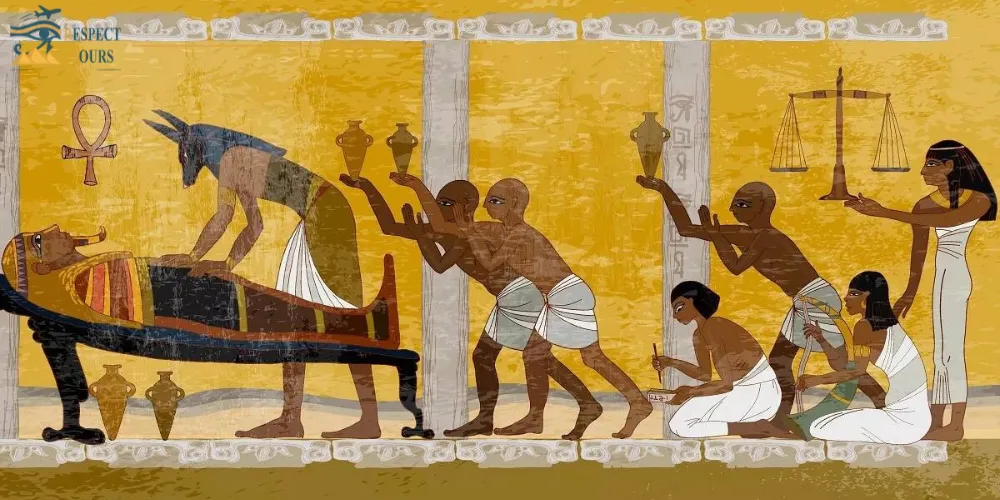
The bond between the Four Sons of Horus and the canopic jars went far beyond symbolic protection. Ancient Egyptians believed these gods actually inhabited the jars during the burial process, transforming them from simple containers into sacred vessels infused with divine presence.
Priests performed rituals with incense, prayers, and offerings to invite each god into their assigned jar. Once the ceremony was complete, the deity was believed to dwell within the jar, offering eternal protection to the preserved organs.
The lids of the jars were carved to represent the heads of the gods: human, baboon, jackal, or falcon. These lids served as the physical manifestation of the deity. The finer the craftsmanship, the stronger the spiritual connection and protective power.
Often, sacred texts and protective spells were inscribed directly on the jars. These writings amplified the gods’ power, ensured safe passage through the afterlife, and guided the deceased on their spiritual journey.
Together, the jars formed a kind of miniature temple system within the tomb. Each jar functioned as a shrine to its guardian god, while the canopic chest acted as the temple sanctuary—bringing divine protection directly to the burial chamber.
The Evolution of Canopic Jars Over Time
Canopic jars evolved significantly throughout ancient Egyptian history. Early examples from the Old Kingdom were plain, with human-headed lids representing the deceased.
In the Middle Kingdom, the Four Sons of Horus were introduced, though all jars still had human heads. By the New Kingdom, the familiar animal-headed designs emerged, reflecting a shift toward stronger religious symbolism.
During the Late Period, jars became more elaborate, often decorated with gold, silver, and precious stones for elite burials.
The Ptolemaic period introduced Greek artistic influences, blending Hellenistic styles with traditional Egyptian beliefs.
Under Roman rule, canopic jars declined as cremation became more common, though traditional families preserved the practice.
Modern discoveries continue to reveal new styles, highlighting regional differences and evolving spiritual customs.
The Symbolism Behind the Canopic Jars
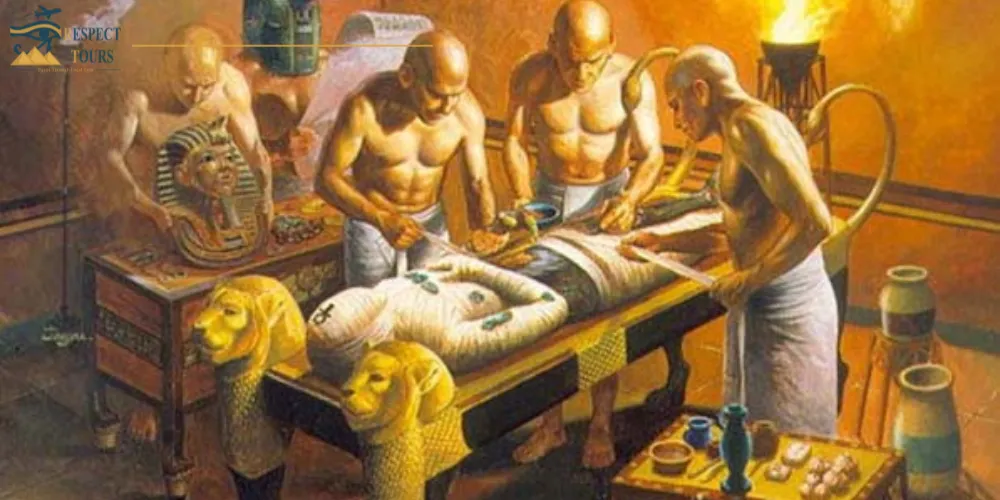
Canopic jars were more than organ containers—they symbolized wholeness, protection, and the resurrection of the body. Preserving the organs was essential to achieving eternal life in ancient Egyptian belief.
The four jars also represented the four elements: earth, air, fire, and water. This balance reflected the cosmic harmony needed for a successful journey to the afterlife.
Colors used on the jars had deep meaning:
- Red symbolized life and energy
- Blue represented the heavens and divine protection
- Gold stood for eternity and divinity
- Black reflected rebirth and fertile Nile soil
Jar placement often followed astronomical alignments, connecting the tomb to celestial cycles and divine order.
The number four symbolized stability. Arranged in a square, the jars formed a protective mandala, amplifying their spiritual power.
Each jar also marked a stage of the soul’s journey through the underworld. Guided by the Four Sons of Horus, the jars ensured safe passage through trials and into the eternal afterlife.
Unique Facts About Canopic Jars
Modern archaeological discoveries have uncovered surprising facts about canopic jars—offering deeper insights into ancient Egyptian burial customs:
- Shared Jars: Some jars held organs from multiple individuals, often used when family members died together. This practice symbolized unity in both life and death.
- Hidden Treasures: X-ray scans have revealed unexpected contents like jewelry, amulets, and precious stones, added for extra protection and wealth in the afterlife.
- Miniature Jars: The smallest jars ever found measured just 3 inches, made for infant burials. Despite their size, they featured the same protective symbols.
- Oversized Royal Jars: Some jars reached up to 4 feet in height, used for pharaohs and high priests. Their size reflected the deceased’s spiritual importance.
- Reopenable Designs: Certain jars were built to be opened and resealed, allowing families to place offerings long after the burial ceremony.
- International Finds: Canopic jars have been discovered in Sudan, Libya, and even ancient Greece, showing how Egyptian funerary practices spread beyond the Nile Valley.
- Fake Organs: Some jars contained replica organs made from resin, wax, or cloth—likely used when the originals were missing or too decayed to preserve.
Conclusion
The Four Sons of Horus and their canopic jars represent one of Egypt’s most enduring legacies. These divine protectors continue to fascinate people worldwide. Their story reveals the depth of ancient Egyptian spiritual beliefs.
Modern museums display canopic jars as masterpieces of ancient art. Visitors marvel at their craftsmanship and religious significance. These artifacts connect us to humanity’s earliest attempts to understand death and the afterlife.
The protective symbolism of canopic jars influences contemporary spiritual practices. Many modern cultures have adopted similar protective rituals. The concept of divine guardianship remains relevant across cultures and centuries.
Archaeological research continues to uncover new information about canopic jars. Each discovery adds to our understanding of ancient Egyptian civilization. The jars serve as windows into a remarkable ancient culture.
The Four Sons of Horus – Imsety, Hapy, Duamutef, and Qebehsenuef – remain powerful symbols of protection. Their legacy extends far beyond ancient Egypt. These divine guardians continue watching over humanity’s quest for eternal life.
For travelers visiting Egypt, seeing actual canopic jars creates unforgettable experiences. The Egyptian Museum in Cairo houses the world’s finest collection. Respect Tours can arrange special viewing opportunities for these remarkable artifacts.
The story of the canopic jars reminds us of humanity’s universal desire for protection and permanence. These ancient vessels represent hope, faith, and the eternal human spirit. Their legacy will continue inspiring future generations of explorers and believers.
FAQ: Frequently Asked Questions
What did canopic jars symbolize in ancient Egypt?
They symbolized wholeness, protection, cosmic balance, and the safe passage of the soul to the afterlife.
What are the names of the Four Sons of Horus?
Are canopic jars displayed in museums today?
What materials were used to make canopic jars?
Common materials included limestone, pottery, and alabaster, with gold and silver used for elite burials.