

On August 2, 2027, the skies over Egypt will darken as day briefly turns to night. The total solar Eclipse Egypt 2027 is not just another astronomical event; it’s being called the “eclipse of the century.” Why? Observers in Egypt, especially along the Nile in Luxor and Aswan, will witness the longest totality of the century, lasting more than six and a half minutes.
For international travelers, this rare moment offers the chance to combine once-in-a-lifetime stargazing with the timeless beauty of Egypt’s ancient monuments, Nile cruises, and Red Sea adventures. Unlike other destinations along the eclipse path, Egypt’s unique mix of clear summer skies, rich cultural backdrop, and strong travel infrastructure makes it the ultimate stage for this cosmic performance.
In this article, we’ll cover everything you need:
- The science of solar eclipses is explained simply.
- Why the 2027 event is so extraordinary.
- The solar eclipse path in Egypt.
- Best places to view it, from Luxor’s temples to Siwa’s desert skies.
- Practical weather, safety, and travel tips.
- How to book solar eclipse tours, Egypt cruises, and hotels before everything sells out.
- Plus, cultural insights, photography advice, and what happens after 2027.
Understanding Solar Eclipses: The Science Behind the Phenomenon
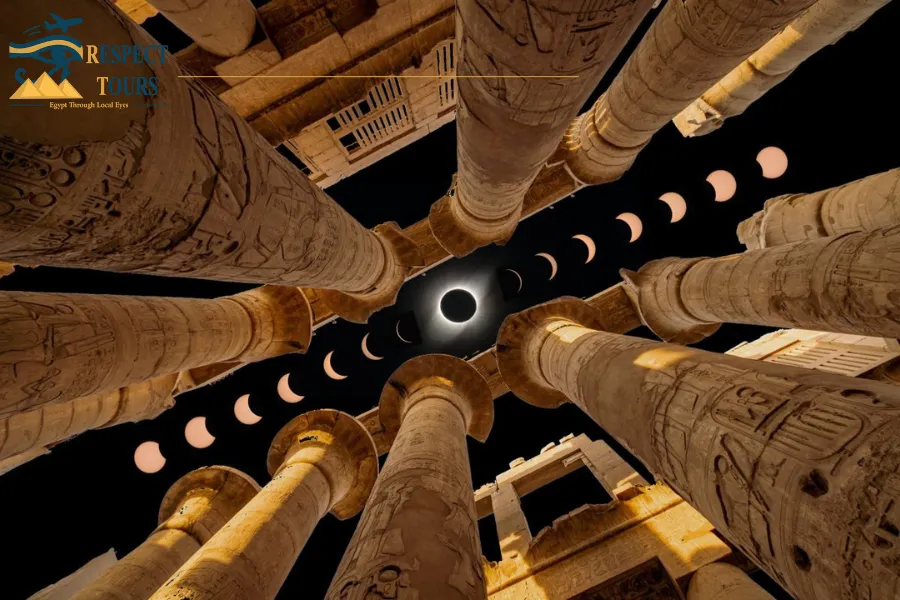
A solar eclipse happens when the moon passes directly between the Earth and the sun, casting a shadow over our planet. Depending on the alignment, we experience different types:
- Partial solar eclipse: only part of the sun is covered.
- Annular solar eclipse: the moon is too far from Earth to block the sun completely, leaving a fiery “ring of fire.”
- Total solar eclipse: the moon perfectly blocks the sun’s disk, turning day into night for a few breathtaking minutes.
The 2027 event belongs to a repeating pattern called the Saros cycle, a rhythm of eclipses separated by roughly 18 years and 11 days. Ancient civilizations, including the Egyptians, did not understand the mechanics but were awed and sometimes terrified by these rare events.
For modern travelers, the appeal is different: standing in silence as the sun disappears, temperatures drop, stars emerge, and the sun’s glowing corona shines like a celestial crown.
Quick Facts: The Total Solar Eclipse Egypt 2027
| Date | Sunday, August 2, 2027 |
|---|---|
| Longest Duration | 6 minutes 22 seconds (near Luxor, Upper Egypt) |
| Peak Time | Around 12:00–12:10 PM local time |
| Path Width in Egypt | ~258 km (from the Mediterranean to the Red Sea) |
| Best Viewing Locations | Luxor, Aswan, Siwa Oasis, Red Sea coast (Marsa Alam, Berenice) |
| Weather Outlook | Desert climate, <5% cloud risk in Upper Egypt |
| Why It’s Special | Among the longest total solar eclipses visible in Egypt this century; viewable from iconic sites like the Valley of the Kings and Karnak Temple. |
Why Egypt Hosts the Longest Eclipse of the Century?
What makes this eclipse so famous? Duration. Most eclipses last only 2–4 minutes in totality. But in Luxor, Egypt, observers will enjoy a staggering 6 minutes and 23 seconds of darkness, the longest eclipse until June 2132.
Three reasons explain Egypt’s starring role:
- Perfect Positioning: Egypt lies along the central line of the eclipse’s path, where the moon’s shadow is widest and longest.
- Dry Summer Skies: August in Egypt brings hot, arid weather with a very low chance of cloud cover. While other countries along the eclipse path may struggle with visibility, Egypt’s skies are among the clearest.
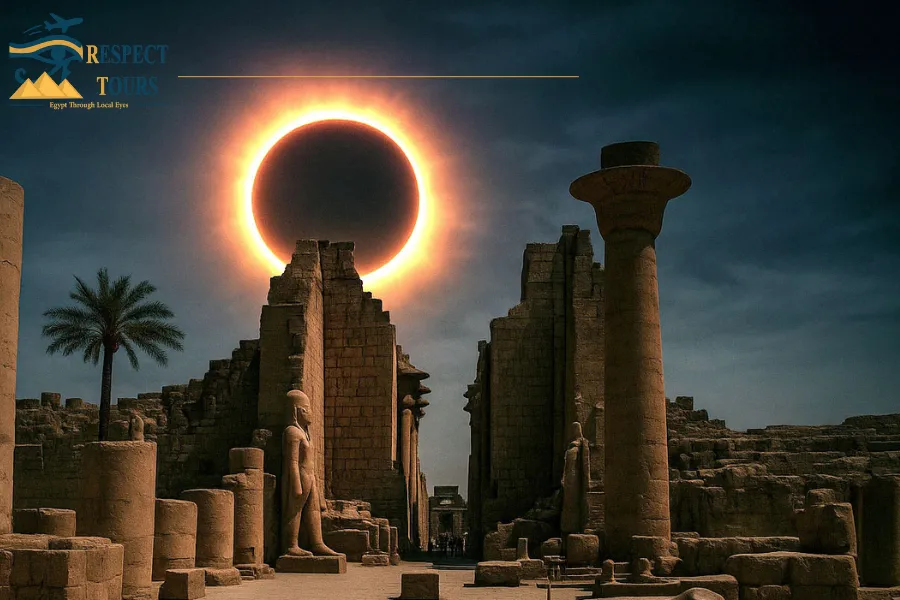
- Historic Setting: Few places in the world let you watch a solar eclipse with the Valley of the Kings, Karnak Temple, or the Nile River as your backdrop.
This rare alignment means Egypt is expected to attract hundreds of thousands of international visitors, including scientists, astronomers, and eclipse enthusiasts.
Path of the Eclipse: From Luxor to Aswan and Beyond
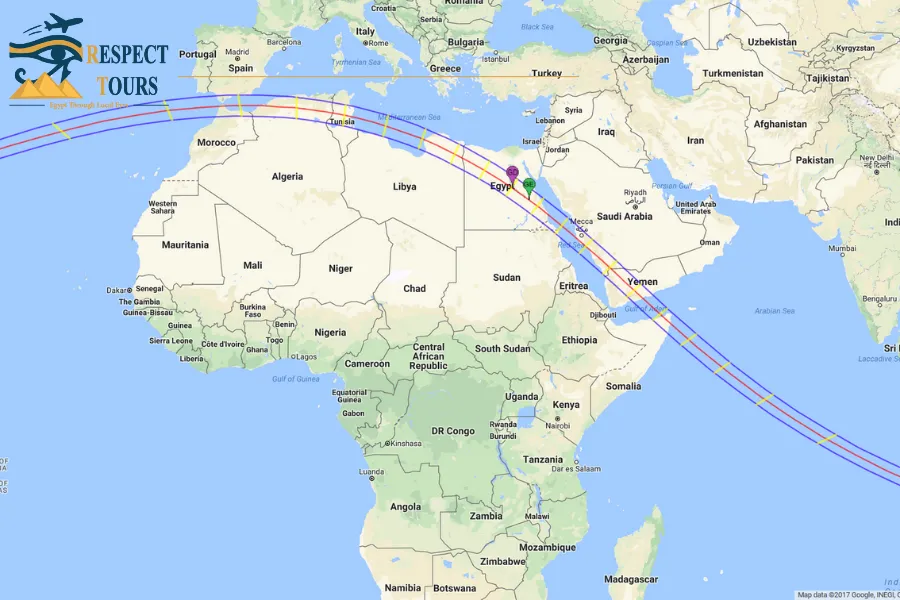
The moon’s shadow will sweep across North Africa, the Mediterranean, and parts of the Middle East. But the epicenter of the eclipse experience is firmly in Egypt.
- The path of totality begins in the Atlantic Ocean, crossing into North Africa.
- In Egypt, it cuts a dramatic swath across Luxor, Aswan, the Red Sea coast, and the Western Desert.
- The longest totality, over six minutes, is centered near Luxor, making it the ultimate viewing hotspot.
- Travelers can expect different experiences depending on where they watch:
- Luxor offers both maximum duration and a stunning backdrop of temples and tombs.
- Aswan promises slightly shorter totality but breathtaking Nile views and Nubian heritage.
- The Red Sea coast gives a unique beach-and-cosmos combination, perfect for travelers wanting to mix astronomy with diving and relaxation.
- Remote locations like Siwa Oasis and the desert landscapes of Western Egypt provide minimal light pollution for a surreal stargazing feel.
Tip: For exact timings and maps, NASA and TimeandDate provide interactive eclipse trackers you can consult while planning your trip.
Eclipse Duration by Major Egyptian Cities
- Luxor – ~6 minutes 22 seconds (maximum totality)
- Aswan – ~6 minutes 20 seconds
- Hurghada (Red Sea Coast) – ~6 minutes 15 seconds
- Siwa Oasis (Western Desert) – ~6 minutes 05 seconds
- Cairo, Partial eclipse only, ~93% coverage (not in the solar eclipse path in Egypt of totality)
- Alexandria, Partial eclipse only, ~90% coverage
The prime viewing zone stretches across Upper Egypt (Luxor & Aswan) and the Red Sea coast, where desert skies and minimal cloud cover provide near-perfect conditions.
Egypt vs. Other Eclipse Locations (Quick Comparison)
| Country/Region | Max Duration | Viewing Conditions | Accessibility for Travelers | Why Egypt Wins |
|---|---|---|---|---|
| Egypt | 6m 22s | Desert skies, <5% cloud risk | World-class heritage sites + Nile cruises | Longest track & most iconic settings |
| Spain (Southern) | 4m 49s | Coastal, variable weather | Limited sites, shorter duration | Shorter totality |
| Morocco | 4m 47s | Good desert skies | Accessible but shorter | Less duration |
| Saudi Arabia | 6m 00s | Desert skies | Limited tourist access | Less traveler-friendly |
| Yemen | 5m 58s | Remote areas | Difficult to access | Safety/travel concerns |
.
Where to See The Total Solar Eclipse Egypt 2027?
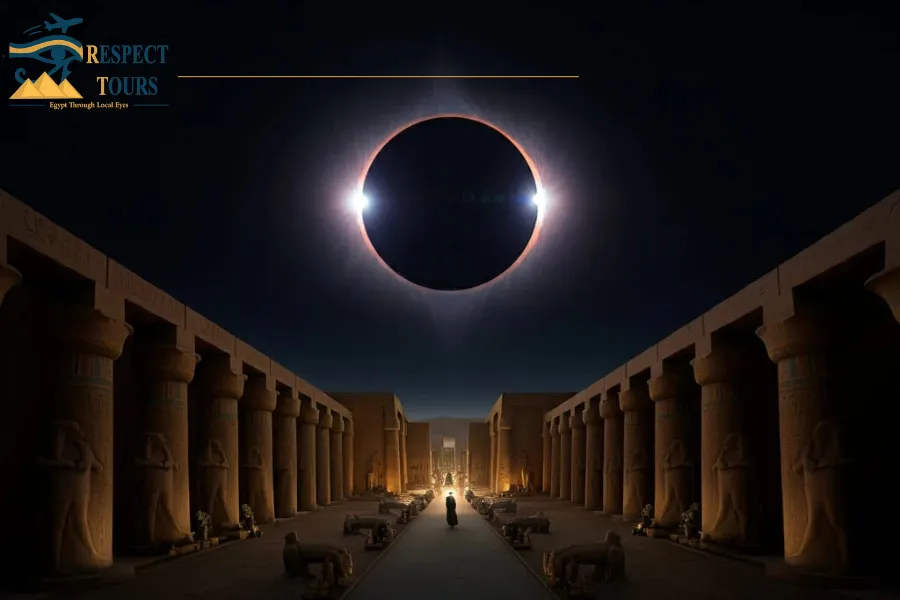
With so many historic and natural wonders along the path, choosing your viewing spot is part of the adventure.
1- Luxor: The Heart of Eclipse Viewing
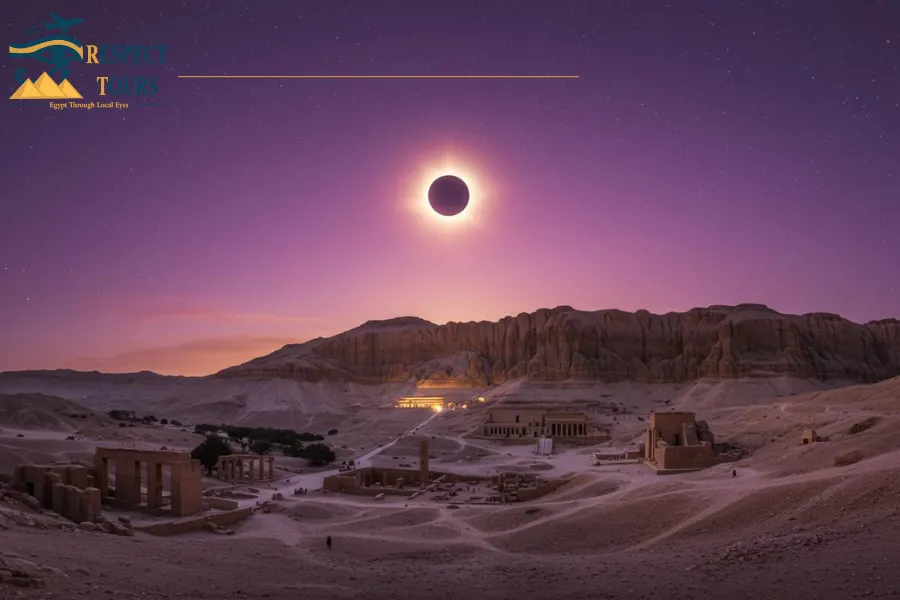
Known as the world’s greatest open-air museum, Luxor is expected to be the top Egypt eclipse 2027 viewing locations for eclipse hunters. The Valley of the Kings, Karnak Temple, and Luxor Temple all sit directly in the path of totality. Imagine watching the sky darken above monuments built more than 3,000 years ago.
2- Aswan: The Nile in Shadow
South of Luxor, Aswan provides a quieter but equally stunning experience. Here, the Philae Temple, Nubian villages, and riverfront hotels give travelers a front-row seat to the eclipse while surrounded by culture and tradition.
3- Red Sea Resorts
For those who want to mix astronomy with leisure, Hurghada and Marsa Alam are excellent choices. The eclipse will still be visible in full totality, and travelers can enjoy diving, snorkeling, and Red Sea sunsets before and after the celestial show.
4- Siwa Oasis & the Desert
Off-the-beaten-path travelers may opt for Siwa Oasis or the Western Desert. These remote areas offer fewer crowds, open skies, and a mystical desert setting for the eclipse.
What the Eclipse Will Look Like at Maximum Totality
So, what should you expect when the sun disappears?
- Darkness Falls: The sky will turn an eerie twilight blue as the moon fully covers the sun.
- Stars and Planets: Bright planets like Venus and Jupiter may appear in the sky.
- The Corona: The sun’s outer atmosphere will glow in ghostly white streams, visible only during totality.
- Temperature Drop: Expect a noticeable dip in temperature, especially in the desert, where heat vanishes quickly.
- Sounds of Awe: In Luxor and Aswan, you may hear silence spread across the crowd—followed by gasps as the corona reveals itself.
It’s a sensory experience that goes beyond science—many travelers describe it as spiritual, humbling, and unforgettable.
Weather in Egypt in August 2027: What Travelers Can Expect
Egypt’s August climate is famously hot, but that doesn’t mean it will spoil the eclipse. The dry weather works in your favor.
- Temperature: Expect 35–42°C (95–108°F) in Luxor and Aswan during the day.
- Rainfall: Virtually none, August is one of Egypt’s driest months.
- Visibility: Skies are generally clear, with excellent chances of unobstructed viewing.
Traveler Tips for the Heat :
- Stay hydrated: carry bottled water, especially if viewing from desert or archaeological sites.
- Wear light, breathable clothing, hats, and sunscreen.
- Consider booking a hotel with a pool or shaded areas to cool down after the event.
- For family travelers, plan shaded viewing setups or opt for Red Sea resorts, which are slightly cooler and breezier.
Ancient Egyptian Myths and Cultural Views on Eclipses
For ancient Egyptians, the sun god Ra represented life, order, and power. When the sun darkened unexpectedly, it was a moment of deep mystery and sometimes fear. Ancient records suggest that eclipses were seen as battles between Ra and the forces of chaos, particularly the serpent deity Apep, who tried to devour the sun.
Priests and astronomers in temples may have tracked these celestial events, but to ordinary Egyptians, an eclipse was a cosmic omen, a moment when the balance of the universe seemed at risk.
For modern travelers, experiencing the 2027 eclipse in Egypt is a chance to connect with this ancient perspective. Imagine standing at Karnak Temple, knowing that thousands of years ago, people in the same place might have looked up with awe and fear at the same celestial event.
How to Safely Watch the Total Solar Eclipse Egypt 2027?
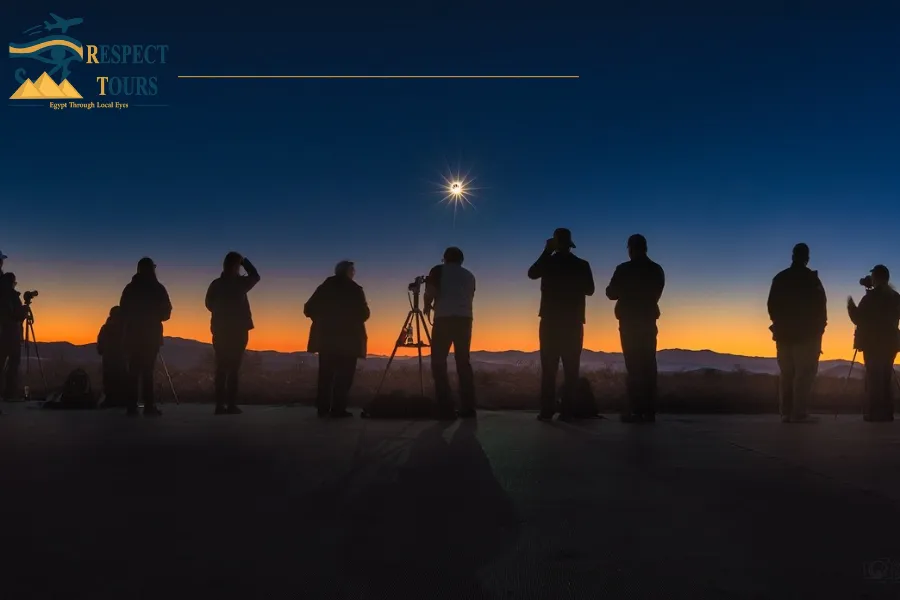
Safety should be your top priority, so how to watch the eclipse safely? Looking directly at the sun without protection can cause permanent eye damage.
Essential Gear:
- Certified eclipse glasses (ISO 12312-2 standard). Buy them well in advance from reputable sellers.
- Solar filters for telescopes or cameras if you plan to photograph.
- Shaded viewing areas for children or older travelers to rest during the wait.
What to Avoid :
- Do not use regular sunglasses; they are not safe.
- Do not look through cameras, binoculars, or telescopes without solar filters.
Comfort & Heat Safety :
Because August in Egypt is hot, combine eye safety with heat protection: hats, water, sunscreen, and lightweight clothing. Many travelers book Nile cruise packages to enjoy shaded viewing decks and easy access to refreshments.
Photography and Gear Tips for Capturing the Eclipse
The total solar eclipse is one of the most photographed events in astronomy, and the 2027 solar eclipse in Egypt will be no different. Here’s how to prepare:
- Smartphone users: Modern smartphones can capture surprisingly good shots. Use a solar filter attachment during partial phases, and remove it during totality to capture the corona.
- Camera enthusiasts: A DSLR or mirrorless camera with a telephoto lens (200–500mm) provides dramatic close-ups.
- Tripods: Essential for stability during long exposures.
- Settings: Lower ISO (100–400), vary shutter speed, and bracket exposures to capture the corona.
- Practice: Try photographing the moon at night as a rehearsal.
Remember: don’t get so caught up in the photography that you miss the moment. Sometimes the best memory is one you capture with your eyes.
Solar Eclipse Travel Packages Egypt, and Nile Cruise Options for 2027
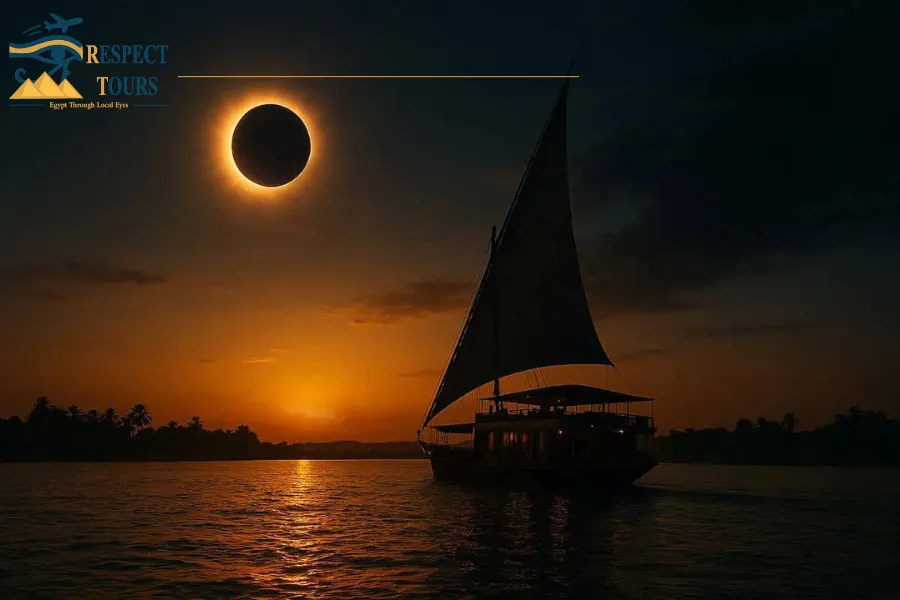
One of the most unforgettable ways to experience the 2027 solar eclipse in Egypt is by combining it with a tailored tour or a luxurious Nile cruise. Imagine watching the sky darken while sailing between Luxor and Aswan, surrounded by temples, ancient monuments, and the serene waters of the Nile.
Options range from classic small-group total solar eclipse tours Egypt to private journeys designed around your interests, whether that’s more time at the Pyramids, exploring the Valley of the Kings, or venturing into desert landscapes. Some travelers prefer luxury cruises with five-star amenities, while others opt for more intimate, boutique-style experiences.
Land-Based Tours: Travelers can also join overland tours that combine the eclipse with visits to Cairo, Giza pyramids, Abu Simbel, and the Red Sea resorts.
Budget vs Luxury Options :
- Budget: Group tours with basic hotels and shared guides.
- Luxury: Private Egyptologists, 5-star accommodations, and special access to viewing areas near heritage sites.
No matter your budget, the golden rule is to book early. Rooms in Luxor are expected to sell out years in advance.
Respect Tours offers complete eclipse-focused travel packages and Nile cruise itineraries, and can even design customized Solar eclipse Travel Packages in Egypt based on your requests. From the moment you arrive, everything is arranged: transportation, accommodations, guided tours, and special eclipse-viewing events, so you can focus entirely on enjoying the experience.
Travel & Logistics for International Visitors
Egypt is well-connected, but planning is crucial.
1- Airports & Entry
- Cairo International Airport (CAI): Main international hub.
- Luxor International Airport (LXR): Direct flights from Europe and regional hubs.
- Hurghada & Marsa Alam Airports: Convenient for Red Sea resorts.
2- Getting Around
- Domestic flights connect Cairo with Luxor, Aswan, and Hurghada.
- Trains: The Cairo–Luxor–Aswan route is popular and affordable, though slower.
- Nile cruises: Combine travel with comfort and sightseeing.
3- Visa Requirements
- Most travelers can obtain an eVisa online before arrival. Check Egypt’s official government portals for updates.
Respect Tours can handle all of these arrangements on your behalf, from airport pickups and domestic transport to hotel bookings and guided excursions, ensuring a smooth and stress-free journey. With expert local knowledge and a dedicated team, they make sure international visitors can relax and immerse themselves in the magic of Egypt without worrying about the details.
Crowd Management and Booking Warnings
Eclipse tourism often leads to sold-out hotels, overbooked flights, and crowded landmarks. Egypt 2027 will be no exception.
- Book early: Secure accommodations at least 1–2 years ahead.
- Choose wisely: Some tours may overpromise; stick with reputable operators like Respect Tours, Sky & Telescope, or established Egyptian travel agencies.
- Expect crowds in Luxor: Streets and temples will be packed. Consider Aswan or Siwa for quieter experiences.
After 2027: When is the Next Total Solar Eclipse?
If you fall in love with chasing eclipses, mark your calendar:
- August 12, 2026: Total solar eclipse across Spain and North Africa (shorter totality).
- August 2, 2027: Egypt’s event, the longest of the century.
- July 13, 2034: Another dramatic eclipse is visible in North Africa and the Middle East.
But make no mistake: the 2027 solar eclipse in Egypt is unmatched for length, setting, and accessibility.
Insider Advice: What Travelers Wish They Knew Before an Eclipse Trip
From online forums and eclipse chaser communities, here are tips from those who’ve been there:
- Arrive early. Don’t plan to travel on eclipse day, roads and airports will be chaotic.
- Pack patience. Crowds are part of the experience, but the payoff is worth it.
- Bring backups. Extra batteries, memory cards, and a power bank.
- Soak it in. Don’t view the eclipse only through a lens; take at least 30 seconds to just experience it.
- Respect local culture. Temples and sites may be crowded; be mindful of religious and heritage protocols.
Conclusion
The total solar eclipse Egypt 2027 is more than an astronomical event; it’s a cosmic performance on the world’s greatest stage. From Luxor’s temples to the Red Sea’s shores, Egypt offers the longest, clearest, and most culturally immersive eclipse experience of the century.
But with millions of travelers expected, the time to plan is now.
Respect Tours offers curated itineraries, from luxury Nile cruises to family-friendly packages, ensuring you witness the eclipse in comfort and style—while exploring Egypt’s timeless treasures.
Book early, prepare wisely, and get ready for an event that will stay with you for the rest of your life.
FAQ: Frequently Asked Questions
What time is the solar eclipse in Luxor on August 2, 2027?
Around 12:00–12:10 pm local time, with over 6 minutes of totality. Exact timing varies slightly by location.
How long will the eclipse last in Egypt?
Can I photograph the eclipse with a smartphone?
What is the weather like in Luxor in August?
Hot and dry, with daytime highs around 38–42°C (100–108°F). Skies are typically clear.