
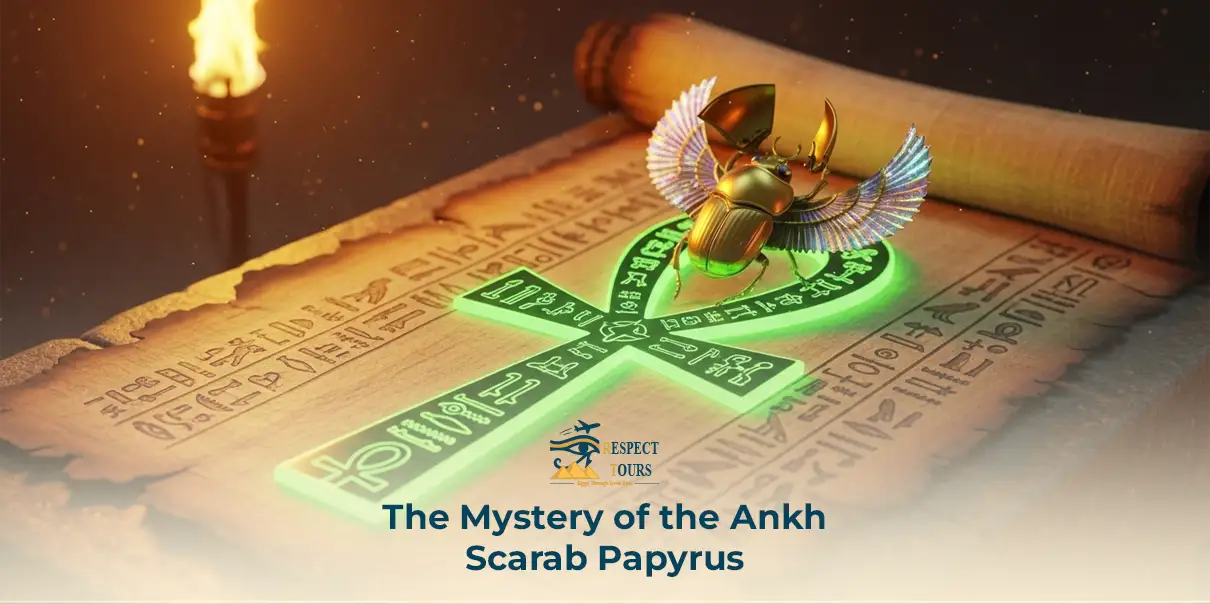
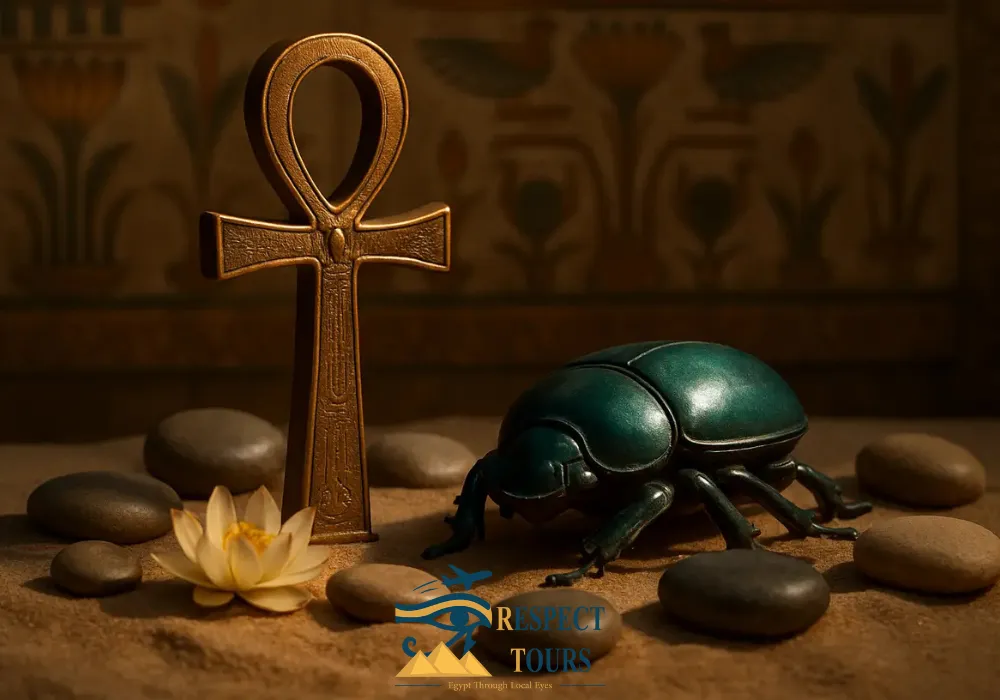
The Mystery of the Ankh Scarab Papyrus unites three sacred Egyptian symbols, the ankh (representing life), scarab (symbolizing rebirth), and papyrus (signifying divine knowledge), into a single metaphysical artifact that represents the soul’s transformation and immortality.
Found in New Kingdom tombs and temples, these sacred papyri reveal how ancient Egyptians viewed life, death, and resurrection as an eternal cycle, not a final destination.
What Is the Ankh Scarab Papyrus?
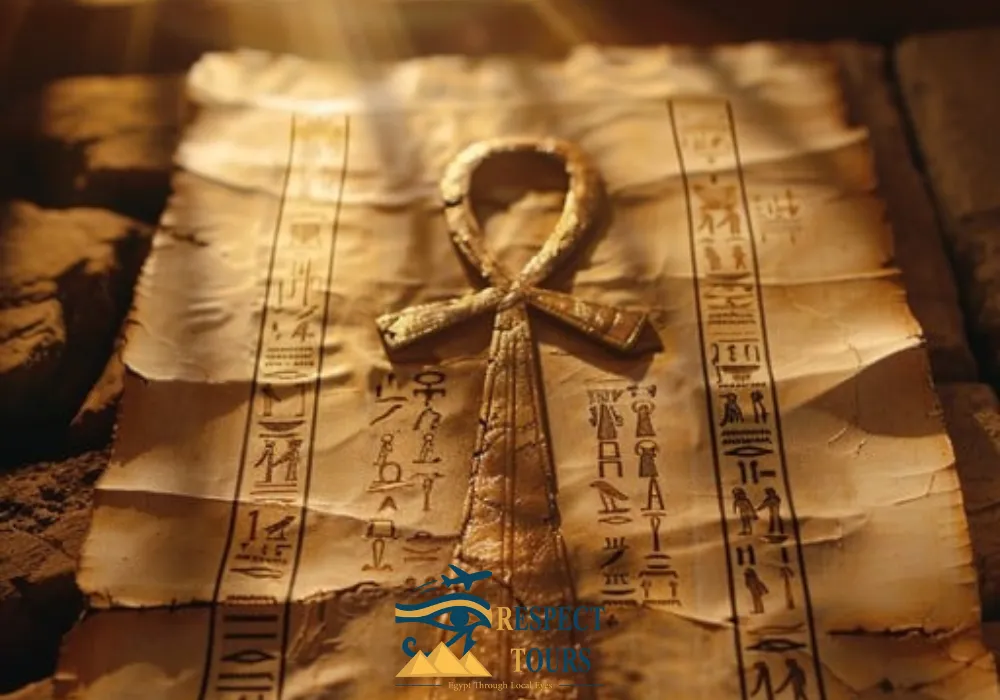
The Ankh Scarab Papyrus represents a unique convergence of ancient Egyptian symbolism. It merges the ankh’s promise of eternal life with the scarab’s power of transformation and the papyrus’s sacred knowledge. These remarkable artifacts typically feature intricate hieroglyphic inscriptions surrounding a central design where the ankh symbol is adorned with scarab beetle imagery.
- Period: Archaeological evidence suggests these papyri were created during Egypt’s New Kingdom period (1550-1077 BCE), a time when religious symbolism reached unprecedented sophistication.
- Purpose: The papyrus serves as more than mere writing material; it becomes a canvas for spiritual transformation, with each element carefully positioned to maximize its mystical properties.
- Craftsmanship: Master scribes would spend months perfecting each stroke, ensuring that every curve of the ankh and every detail of the scarab beetle aligned with cosmic forces.
Each element reflects a fundamental cosmic principle:
- Ankh (𓋹): The Key of Life, divine breath, and eternal vitality.
- Scarab (𓆣): The symbol of Khepri, the morning sun and renewal.
- Papyrus (𓇋𓏏): The living medium of sacred speech, connected to Thoth, god of writing and cosmic order.
The earliest examples appear in the New Kingdom (c. 1550–1077 BCE), a golden age when Egyptian theology intertwined with astronomical precision and artistic mastery.
These papyri were often placed in tombs, temple libraries, and ritual deposits, serving as both art and amulet.
What the Ankh Actually Is
The symbol: ☥
A cross with a loop on top. Simple geometry. Profound meaning.
The Egyptian name: ankh (ꜥnḫ)
Literal meaning: “life,” “to live,” “alive”
Visual form: Used both as:
- A hieroglyphic sign in writing (phonetic value: ankh)
- A symbolic object carried by gods and kings
First appearance: Early Dynastic Period (c. 3100 BCE), among Egypt’s oldest religious symbols
Last known use: Coptic Christianity adopted it as the crux ansata (“handled cross”), blending ancient Egyptian and Christian symbolism into the 7th century CE
Total lifespan: Over 3,800 years of continuous sacred meaning, arguably history’s longest-lived religious symbol.
The Shape: What Does It Mean?
Egyptologists have debated the ankh’s original meaning for over 200 years. Unlike scarabs (which clearly derive from beetles) or the djed pillars (which represent backbones), the origin of the ankh remains uncertain.
Theory 1: Sandal Strap
Proposed by: Sir Alan Gardiner (1927), Egypt’s most influential grammarian
Evidence:
- Early hieroglyphic variants show a horizontal bar with upturned ends, resembling a sandal thong
- Sandals symbolized one’s path through life
- “To follow in someone’s footsteps” was expressed through sandal imagery
Interpretation: The ankh represents the journey of life—the path one walks from birth to death to rebirth
Weakness: Doesn’t explain the loop, which is the symbol’s most distinctive feature
Theory 2: The Tyet Knot (Isis Knot)
Proposed by: Wolfhart Westendorf (1966)
Evidence:
- Strong resemblance to the tyet (☥ vs ⳨)—symbol associated with Isis
- Both symbols carry life/protection meanings
- Some inscriptions show ankhs and tyets used interchangeably
Interpretation: The ankh may derive from or share origins with knot-amulets used for protection
Weakness: Doesn’t explain why the ankh appears much earlier than Isis’s prominence
Theory 3: Stylized Womb and Birth Canal
Proposed by: E.A. Wallis Budge (1904), though controversial
Evidence:
- The loop could represent the womb
- The vertical line: birth canal
- The horizontal bar: the moment of emergence into life
Interpretation: The ankh symbolizes the act of birth—entering into life
Weakness: No direct textual evidence from ancient Egypt supports this reading
The truth? We don’t know definitively. Ancient Egyptians left no text saying “the ankh symbolizes X because Y.” The symbol was so fundamental, so ubiquitous, that they apparently saw no need to explain it, like explaining what a cross means to medieval Christians or what yin-yang means to Taoists.
What we DO know: Regardless of origin, by the Old Kingdom, the ankh unambiguously meant life, specifically, the eternal, divine life that transcends death.
How the Ankh Was Actually Used
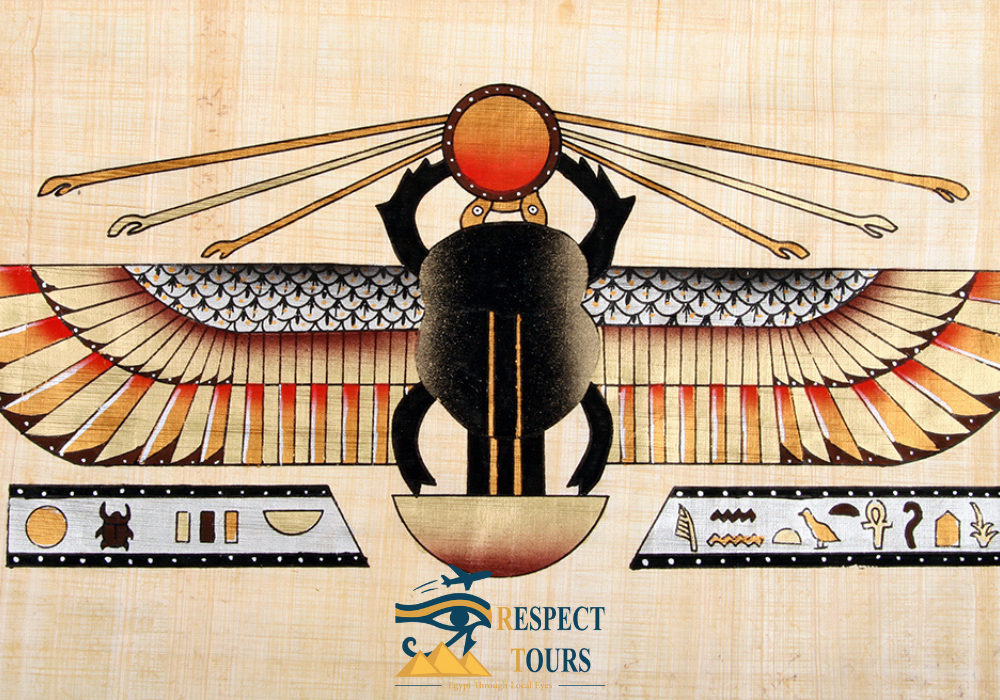
In hieroglyphic writing:
The ankh appeared in countless words related to life:
- ankh (ꜥnḫ) = to live, life, alive
- ankh-wy = living ones (plural)
- ankh nefer = good life, happiness
- ankh djet = live eternally
- di ankh = given life (common offering formula)
Royal names: Pharaohs incorporated “ankh” into throne names:
- Ankh-kheperu-Ra (“Living are the manifestations of Ra”), Tutankhamun’s prenomen
- Neb-ankh (“Lord of life”)
- Ankh-ef-en-Ra (“He lives for Ra”)
Gods carrying ankhs:
Browse any collection of Egyptian art: gods consistently carry ankhs, often paired with:
- Was scepter (☥ + ⚚) = “life and power”
- Djed pillar (☥ + ⚉) = “life and stability”
- Was + djed together (☥ + ⚚ + ⚉) = “life, power, and stability”,the triple blessing appearing on countless monuments
This combination wasn’t decorative; it was formulaic prayer made visual. The gods held these symbols while texts beside them recited the blessing: “I give you life, power, and stability like Ra forever.”
Symbolism: A Blueprint of Life, Death, and Rebirth
In Egyptian cosmology, to live eternally meant to transform eternally.
The Ankh Scarab Papyrus encodes this through layered symbolism:
The Ankh: The Divine Breath of Eternity
- The loop (shenu) signifies the soul’s immortality.
- The vertical shaft bridges the earth and sky.
- The horizontal arms embody the balance of life and death.
It was known as the “key of life” and appeared in every divine hand, from Isis to Ra, representing the power to sustain existence.
The Scarab: Khepri, the Self-Created God
The scarab beetle rolling its sun-like sphere across the desert mirrored Ra’s daily journey through the sky.
- Khepri, the morning manifestation of Ra, “rolled the sun into being” each dawn.
- The beetle’s rebirth from its own egg symbolized resurrection without decay.
When paired with the ankh, the scarab transforms life into renewal, a living process, not a static eternity.
The Papyrus: Writing as Creation
Papyrus was sacred to Thoth, the god who recorded truth and measured time.
Its fibers symbolized the union of earth and heaven, horizontal threads (the land) interwoven with vertical ones (divine energy).
When inscribed with hieroglyphic spells, the papyrus became a living conduit for the soul’s ascent.
The Real Meaning Behind Every Aspect of the Symbol
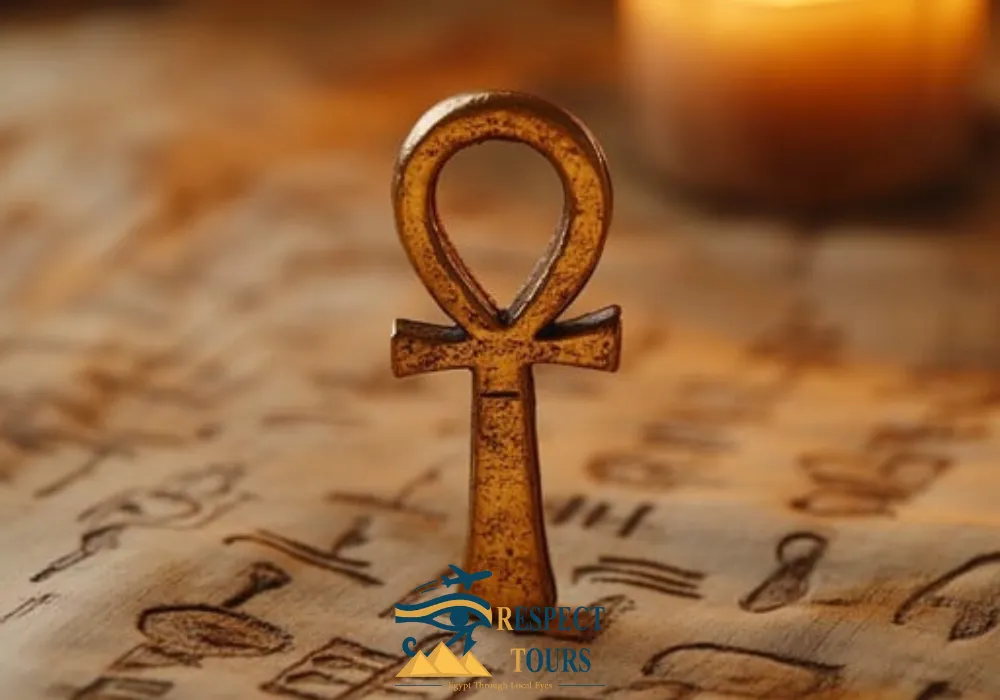
Each element of the Ankh Scarab Papyrus carries layers of meaning that interconnect to form a comprehensive spiritual system.
- The Ankh:
- Loop: Represents the eternal soul.
- Vertical Line: Symbolizes the path between earth and heaven.
- Horizontal Bar: Signifies the balance between opposing forces—life and death, light and darkness, order and chaos.
- The Scarab Beetle:
- Six Legs: Correspond to the six directions of space in Egyptian cosmology.
- Body: Represents the seventh dimension—the center point where all forces converge.
- Dung Rolling: Mirrors the sun’s movement, linking the beetle to the mighty sun god Ra.
- The Papyrus Material:
- Marsh Reeds: Connects the artifact to Nun, the primordial waters of creation.
- Horizontal Fibers: Represent the earth.
- Vertical Fibers: Symbolize the connection to the divine realm above.
- Color Symbolism:
- Golden Scarabs: Represent the sun’s life-giving power.
- Green Ankhs: Symbolize renewal and vegetation.
- Black Ink: Connects to the fertile soil of the Nile.
- Red Pigments: Invoke the power of life-force and protection against evil.
Why the Scarab Appears on the Ankh Papyrus
The scarab’s inclusion on the Ankh Papyrus was no artistic flourish; it was theological genius.
It linked the static life-force (ankh) to the dynamic force of renewal (scarab), uniting the two most sacred aspects of existence.
Ancient Egyptians saw time not as linear, but cyclical, with life, death, and rebirth forming one continuum.
The Ankh Scarab Papyrus visualized that eternal loop, granting divine protection and the power to “rise again with Ra.”
What Is the Significance of Papyrus in Ancient Egyptian Culture?
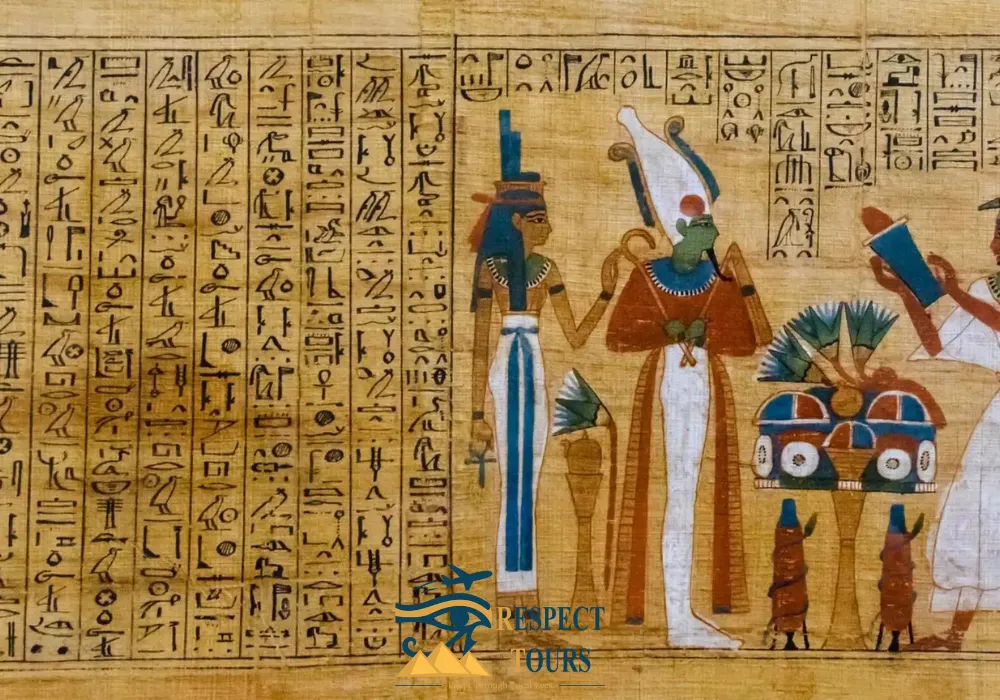
Papyrus represented far more than a writing material; it embodied the very essence of knowledge, wisdom, and divine communication.
- Preservation of Knowledge: This remarkable material enabled the preservation of Egypt’s greatest achievements in literature, medicine, mathematics, and religious thought.
- Sacred Craft: The process of creating papyrus was considered sacred, with specific rituals governing each step. Master papyrus makers held positions of great respect.
- God of Wisdom: Papyrus was often associated with Thoth, the god of wisdom and writing. By inscribing sacred symbols onto papyrus, scribes created a trinity of divine power, combining Thoth’s wisdom with Ra’s life-giving energy and the ankh’s promise of eternal life.
What Role Did the Ankh Play in Ancient Egyptian Religion?
The ankh stands as perhaps the most recognizable symbol of ancient Egypt, representing the fundamental concept of life itself.
- “Key of Life”: Known as the “key of life” or “breath of life,” the ankh appeared in countless religious contexts.
- Divine Authority: Gods and goddesses were frequently depicted holding ankhs, symbolizing their power to grant or sustain life. Pharaohs also carried them to demonstrate their divine authority.
- Eternal Life: In funerary contexts, the ankh served as a key to unlock the mysteries of death and rebirth.
- Symbolic Shape: The unique shape has inspired many interpretations, from the union of male and female principles to a stylized sandal strap symbolizing the journey through life and death.
The Hidden Codes: Astronomy, Color, and Light
Recent infrared studies on Ankh Scarab Papyri in the Egyptian Museum, Cairo, have revealed invisible inscriptions and pigment layering, proof that scribes encoded cosmic data within their art.
Color Symbolism
| Color | Symbolic Meaning | Associated Deity |
|---|---|---|
| Gold | Solar divinity, immortality | Ra |
| Green | Renewal, vegetation, vitality | Osiris |
| Black | Fertility, death’s fertile soil | Anubis |
| Red | Life-force, protection | Sekhmet |
| Blue | Divine energy, sky, rebirth | Amun |
Under temple torchlight, pigments like malachite and ochre reflected light to reveal hidden hieroglyphs, the earliest form of sacred augmented reality.
The Ankh, Scarab, and Ra: The Solar Trinity
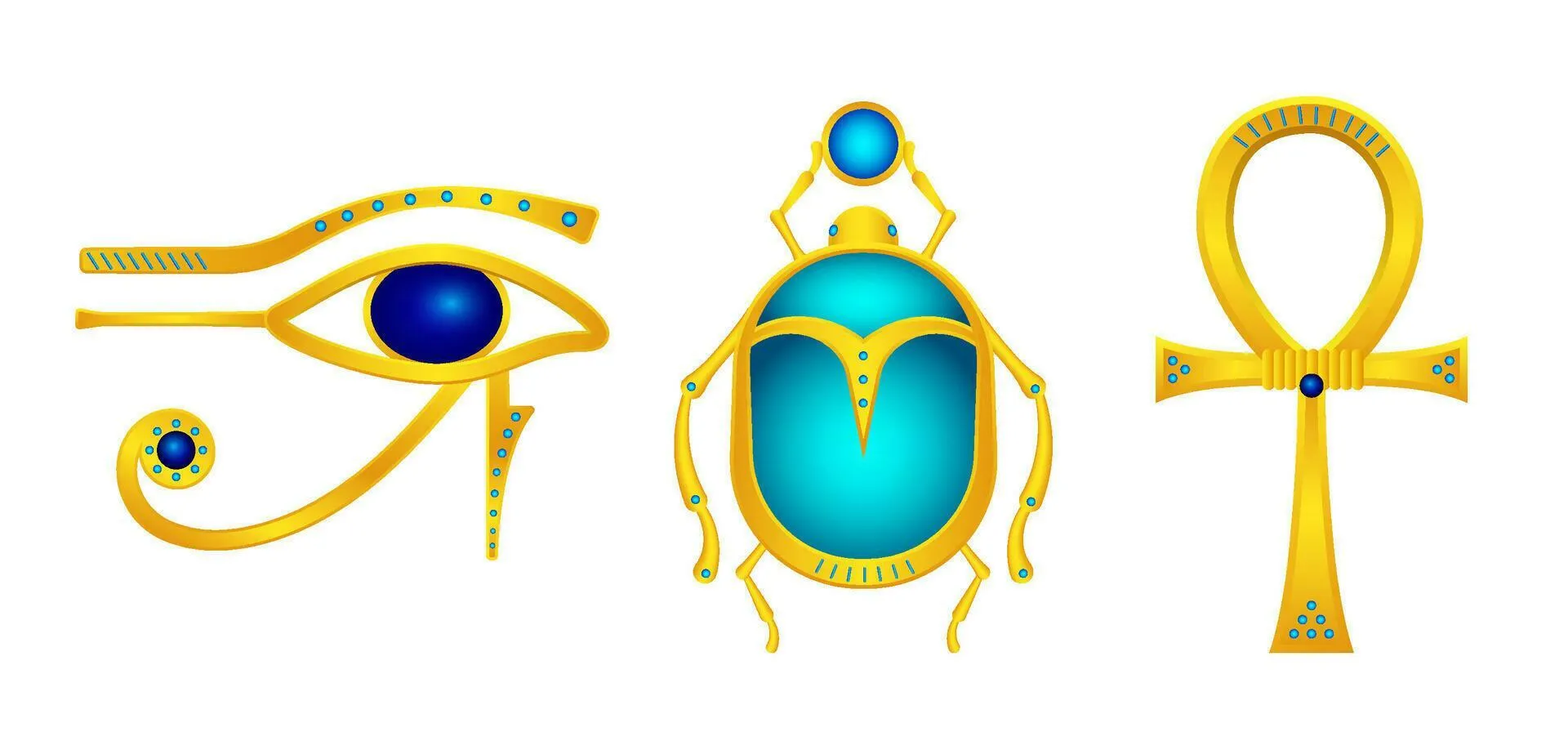
Every element of the papyrus mirrors the cosmic order established by Ra:
- Ankh = The breath of life, creation.
- Scarab = The rebirth of the sun, renewal.
- Papyrus = The written record, memory.
Together, they mirror the three stages of the sun:
- Khepri (rising sun)
- Ra (midday sun)
- Atum (setting sun returning to the underworld).
In this trinity, the papyrus was the bridge, where gods and mortals communicated.
Connection to the Book of the Dead
The Ankh Scarab Papyrus was closely related to funerary manuscripts like the Book of the Dead, Amduat, and Book of Gates.
Texts from these scrolls often invoked the same symbols:
- The ankh opened the gates of the Duat.
- The scarab guided the Ka (spirit) through the trials of judgment.
- The papyrus scroll carried the spoken spells that ensured safe passage.
The papyrus was thus both a ritual manual and metaphysical passport, allowing the soul to “speak Ma’at” and live again among the stars.
Discovery and Modern Research
Fragments of Ankh Scarab Papyri have been discovered in:
- Theban Tomb TT320 (Cache of Royal Mummies)
- Saqqara Necropolis (priestly burials)
- Deir el-Medina (artisans’ chapels)
Modern Egyptologists like Dr. Salima Ikram and Dr. Zahi Hawass interpret these artifacts as part of “spiritual technology”, tools engineered to transform consciousness through visual language.
Some papyri are displayed at:
- The Egyptian Museum (Cairo)
- The British Museum (London)
- The Metropolitan Museum of Art (New York)
- The Grand Egyptian Museum (GEM, Giza)
Comparison: Ankh, Scarab, and Eye of Horus
| Symbol | Meaning | Function | Realm |
|---|---|---|---|
| Ankh | Life, vitality | Grants divine energy | Life & Afterlife |
| Scarab | Rebirth, transformation | Ensures resurrection | Solar Cycle |
| Eye of Horus | Protection, balance | Guards against evil | Physical & Spiritual |
Together, these three form a triad of existence, life, protection, and rebirth, mirroring Egypt’s entire religious philosophy.
Modern Significance and Interpretation
Today, the Ankh Scarab Papyrus continues to inspire art, jewelry, and spiritual symbolism.
Yet, its original purpose remains profound: it is not decoration, it is revelation.
Its design expresses truths still relevant today:
- Life and death are one continuous motion.
- Knowledge and faith must be recorded to endure.
- Renewal requires transformation.
For modern seekers, it stands as a mirror, reminding us that immortality lies in creation, memory, and meaning.
Where to See the Ankh Scarab Papyrus
Travelers with Respect Tours can explore Egypt’s sacred geography where the mystery lives on:
- Cairo: Egyptian Museum’s papyrus collection and GEM displays.
- Luxor: Tombs where resurrection texts were first painted.
- Aswan: Temples of Isis and Khepri, where scarabs were consecrated.
- Saqqara: Site of early papyri and funerary scrolls.
Walk where eternity was written. Respect Tours’ Egyptologists bring these symbols to life through storytelling, private museum access, and sunrise temple visits that reveal the living magic of Egypt’s symbols.
Conclusion
The Mystery of the Ankh Scarab Papyrus is more than an archaeological enigma; it’s Egypt’s philosophical answer to mortality.
By combining the ankh’s life, the scarab’s rebirth, and the papyrus’s knowledge, it encodes humanity’s oldest question: What does it mean to live forever?
This sacred triad, crafted in ink and spirit, bridges time, proving that life’s essence is not in duration, but in transformation.
Through Respect Tours, travelers can trace these symbols in stone, scroll, and sky, where ancient hands wrote eternity into existence.
FAQ: Frequently Asked Questions
How does this symbolism influence modern culture?
Today, the ankh and scarab appear in jewelry, tattoos, and film, but their deeper power lies in their message:
that life is cyclical, change is sacred, and knowledge is the bridge between worlds.
The Ankh Scarab Papyrus reminds modern seekers that immortality is not duration—it is transformation through memory and creation.
What materials were used to make the inks and pigments?
Egyptian pigments were a fusion of alchemy and ecology:
- Black ink: Carbon soot mixed with gum arabic, symbolizing the fertile soil of the Nile.
- Red ochre: Ground iron oxide for divine energy and protection.
- Malachite green: Crushed copper ore invoking the regenerative power of Osiris.
- Lapis lazuli blue: Imported from Afghanistan, representing heaven’s infinite expanse.
- Gold leaf: Applied to highlight divine radiance, often on the ankh loop or scarab wings. Each pigment was ritually prepared, art as invocation, not decoration.
Most authentic Ankh Scarab Papyri date to Egypt’s New Kingdom period (1550-1077 BCE), though some examples may be older. This was a time when religious symbolism reached unprecedented sophistication in Egyptian culture.