
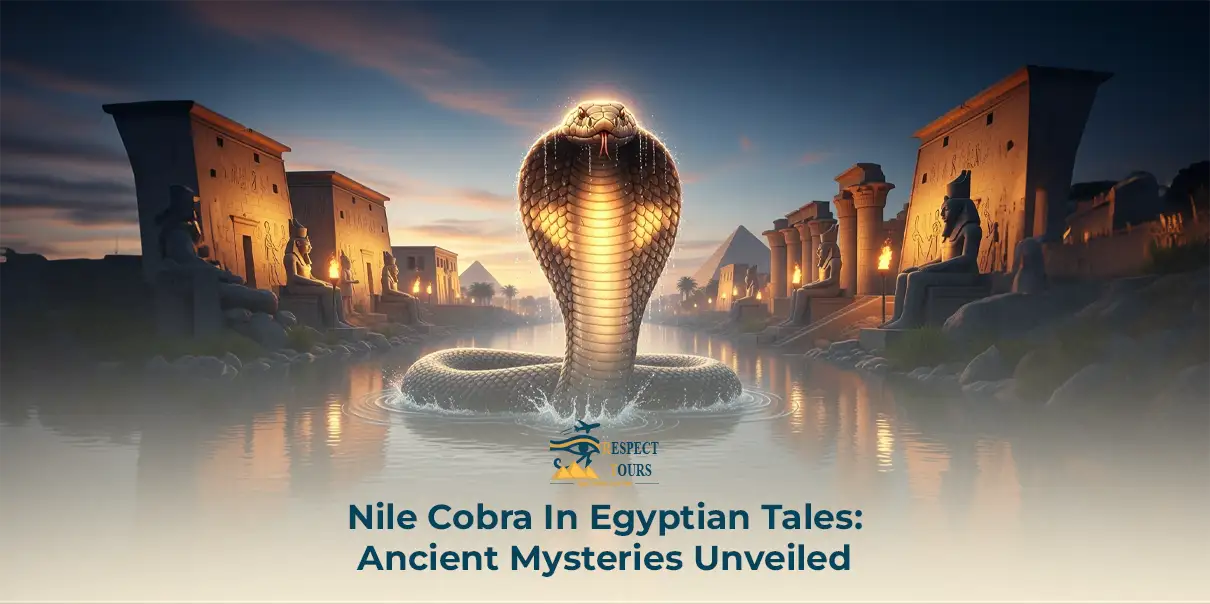
The Nile Cobra in Egyptian Tales was far more than a venomous snake; it was a sacred guardian, a divine protector, and a symbol of eternal power. For over 3,000 years, ancient Egyptians saw cobras not as threats, but as living gods who defended pharaohs, guarded temples, and guided souls through the afterlife.
In hieroglyphs and temple carvings, the serpent’s flared hood became an emblem of divine authority. Pharaohs wore it on their crowns as the uraeus, a blazing cobra ready to strike down enemies with the fire of the gods. Egyptians even crafted cobra jewelry for protection and told stories of serpent goddesses who breathed flame to defend the land of the Nile.
This article uncovers the fascinating world of the Nile Cobra in Egyptian Tales, revealing how a feared predator became a timeless symbol of protection, rebirth, and royal power at the heart of Egypt’s mythology.
Quick Facts About Cobra Symbolism
| Aspect | Meaning |
|---|---|
| Primary Goddess | Wadjet (protector of Lower Egypt) |
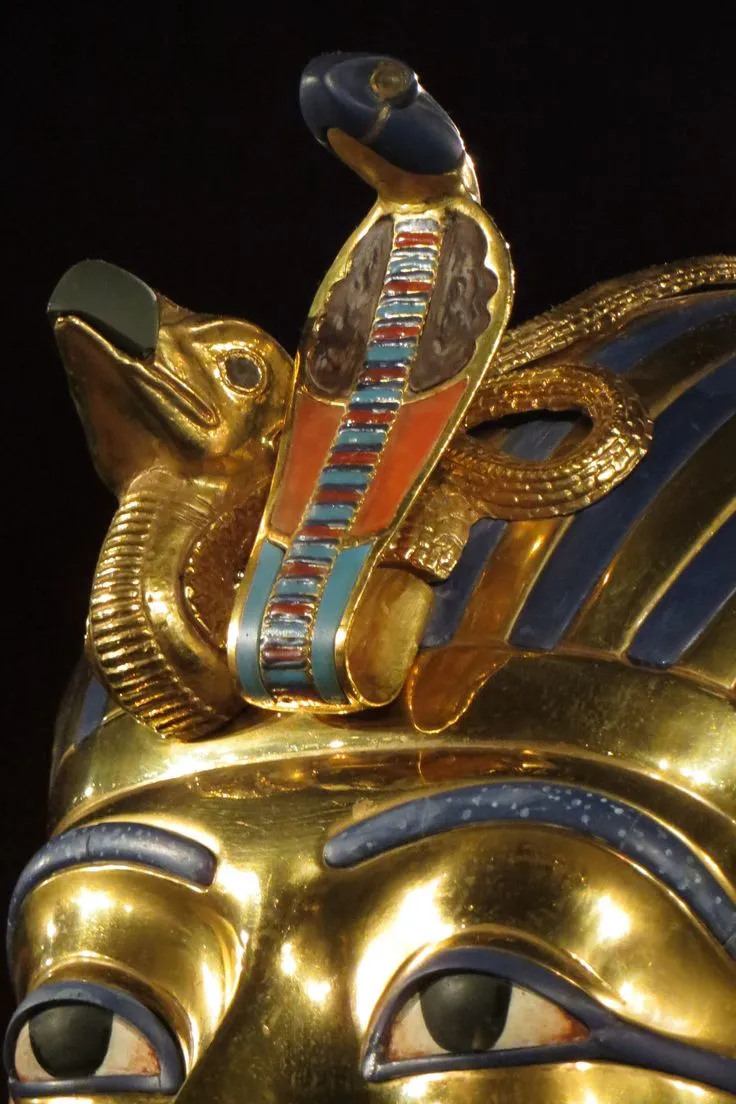
| Royal Symbol | Uraeus (cobra on pharaoh’s crown) |
| Main Enemy | Apep (chaos serpent) |
| Symbolism | Protection, power, divine authority |
| Sacred Role | Guardian of kings and temples |
| Afterlife Role | Guide and protector of souls |
What Does the Cobra Symbolize in Ancient Egypt?
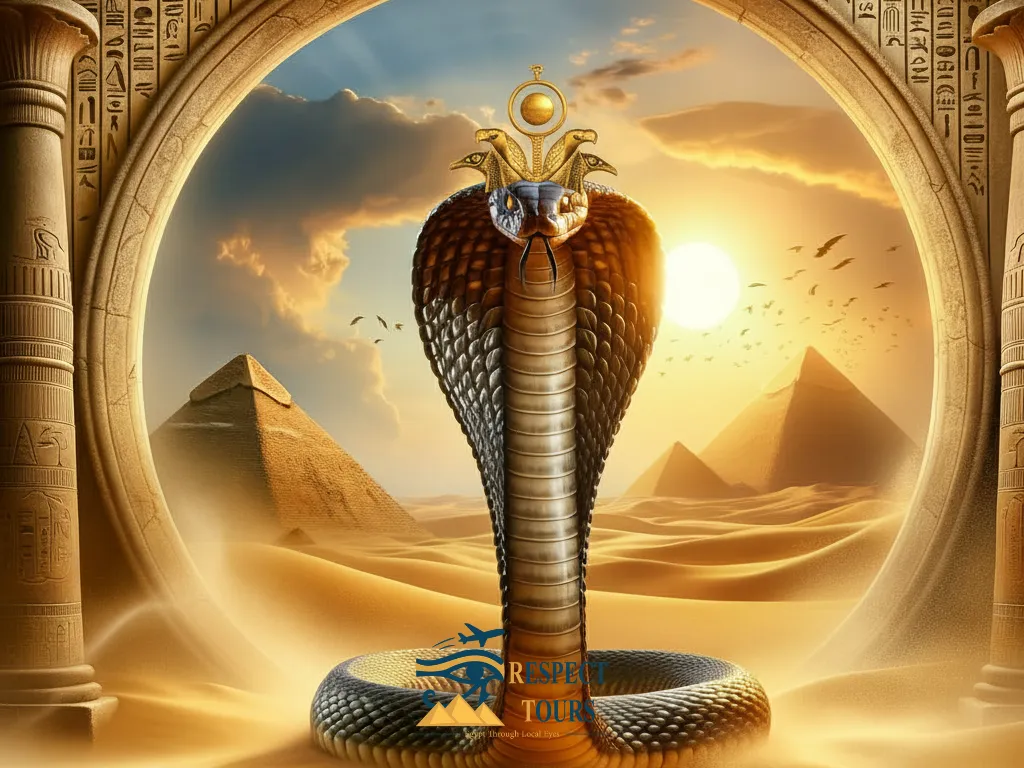
The cobra carried multiple layers of meaning in Egyptian culture, representing complex ideas about power, protection, and the divine.
Protection and Divine Defense
Cobras stood for watchful protection. Their raised hood showed readiness to defend, not attack. The goddess Wadjet, often shown as a cobra, guarded pharaohs and temples, spitting fire at enemies. Mothers wore cobra amulets for safety, and tombs featured cobra carvings to protect the dead.
Royal Power and Authority
The cobra’s venom and fearless stance made it the perfect symbol of pharaonic power. Worn as the uraeus crown, it represented controlled strength, the king’s right to strike only when necessary to protect Egypt’s order.
Rebirth and Transformation
By shedding its skin, the cobra symbolized renewal and eternal life. Egyptians believed, like the serpent, that the soul could shed its mortal body and be reborn in the afterlife.
Wisdom and Hidden Knowledge
Living on the earth and sensing unseen movement, cobras embodied secret knowledge and divine awareness. Priests linked them to prophecy and insight from the gods.
Justice and Judgment
Legends tell of sacred cobras who punished tomb robbers but spared the innocent, proof, Egyptians believed, that these divine guardians could distinguish right from wrong.
The Cobra Goddess: Wadjet’s Sacred Role
Who Was Wadjet?
Wadjet (also called Wadjyt) was ancient Egypt’s most powerful cobra goddess. She protected Lower Egypt (the northern Nile Delta region) and served as the pharaoh’s personal guardian. Egyptians pictured her as a woman with a cobra head or as a full cobra wearing the red crown of Lower Egypt.
Egyptians depicted Wadjet in three main forms:
- As a full cobra: A rearing snake with expanded hood, often wearing the red crown of Lower Egypt
- As a cobra-headed woman: Human body with a cobra’s head, holding scepters and ankh symbols
- As a woman wearing the red crown: Fully human form, distinguished by her crown and sometimes a cobra staff
Her name meant “the green one” or “papyrus-colored one,” referring to the lush green papyrus marshes of the Nile Delta where she ruled. This connection to wetlands made her a water goddess as well as a cobra deity.
Wadjet’s Powers and Duties
Ancient texts say Wadjet had several important jobs:
- Protecting the Pharaoh: She sat on the king’s forehead as the uraeus (the cobra crown ornament), ready to spit fire at enemies. This wasn’t just decoration; Egyptians believed Wadjet’s spirit actually lived in the uraeus and would defend the pharaoh with deadly venom.
- Guarding Sacred Places: Temples dedicated to Wadjet had real cobras living in them. Priests fed and cared for these sacred snakes, believing they were Wadjet’s earthly forms.
- Helping Mothers and Children: Despite her fierce reputation, Wadjet also protected women during childbirth and watched over young children. Parents often wore Wadjet amulets to keep their babies safe.
- Unifying Egypt: Together with Nekhbet (the vulture goddess of Upper Egypt), Wadjet symbolized the unification of all Egypt under one pharaoh.
Five Ancient Cobra Tales from Egypt
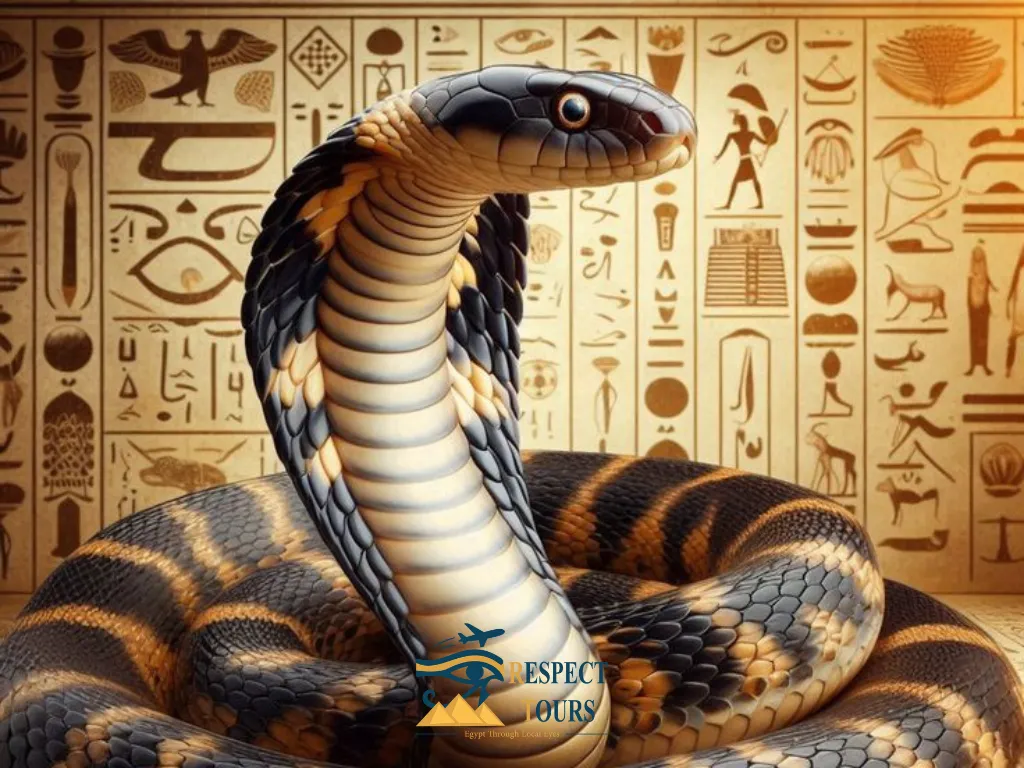
Tale 1: The Eye of Ra Becomes a Cobra
This famous myth explains how the cobra became the pharaoh’s protector.
The Story: Long ago, the sun god Ra ruled both heaven and earth. But humans grew disrespectful and stopped worshipping the gods. This made Ra angry.
“I will send my eye to punish them,” Ra declared. His divine eye left his head and transformed into Sekhmet, a fierce lioness goddess who slaughtered rebellious humans across Egypt.
But Sekhmet became too violent. She loved killing and wouldn’t stop, even after humans begged for mercy. Ra worried she would destroy all humanity.
The clever god Thoth mixed beer with red pomegranate juice until it looked like blood. They poured thousands of gallons across the land. When Sekhmet saw the red liquid, she thought it was blood and drank herself unconscious.
When she woke up, Sekhmet had transformed into the gentler goddess Hathor. But Ra’s eye retained its protective power. From then on, the eye appeared as a cobra—fierce enough to defend but controlled enough not to destroy everything. This cobra became the uraeus that sits on every pharaoh’s crown, protecting the king just as Ra’s eye protects the sun.
Tale 2: Wadjet Saves Baby Horus
This beloved story shows Wadjet as a nurturing protector, not just a warrior.
The Story: After the evil god Set murdered Osiris and seized Egypt’s throne, Osiris’s wife Isis fled into the papyrus marshes of the Nile Delta. She was pregnant with Horus, the rightful heir to Egypt’s throne.
Isis knew Set would try to kill her son, so she hid deep in the swamps where thick papyrus plants blocked the sunlight. She prayed to Wadjet, the cobra goddess who ruled those marshes.
“Great Wadjet,” Isis cried, “protect my son. He must survive to avenge his father and restore ma’at (balance) to Egypt.”
Wadjet heard Isis’s prayer. The cobra goddess wrapped her coils around baby Horus, creating a living shield. When Set’s demons searched the marshes for the child, they saw only papyrus plants and water. Wadjet’s magic hid the baby prince from evil eyes.
For years, Wadjet guarded Horus as he grew strong in the hidden marshes. She taught him about Egypt’s animals and showed him how to move silently through reeds. When scorpions threatened the child, Wadjet caught them with lightning speed. When crocodiles approached, she drove them away with her fearsome hiss.
Finally, Horus grew old enough to challenge Set for Egypt’s throne. Thanks to Wadjet’s protection, he survived to become king. From that day forward, every pharaoh wore Wadjet on his crown, remembering how the cobra goddess protected Egypt’s rightful king.
Tale 3: The Nightly Battle Against Apep
This dramatic tale was so important that Egyptian priests acted it out every single day.
The Story: Each night, the sun god Ra sailed his boat through the underworld. This terrifying journey took him through twelve hours of darkness before sunrise could return.
But Ra didn’t travel alone. He faced Apep (also called Apophis), a giant chaos serpent longer than the Nile River itself. Apep lived in the darkest depths of the underworld, waiting to devour Ra and end the world.
Every night, the battle began the same way. Apep rose from dark waters and coiled around Ra’s boat, trying to swallow it whole. The serpent’s roar shook the underworld. His venom could melt stone. His eyes glowed red like dying stars.
But Ra had defenders. The cobra goddess Wadjet stood at the boat’s front, her hood expanded, fangs ready. Behind her stood other protective deities, including Set (ironically using his chaos powers for good during these battles) and the magical goddess Isis.
The battle raged for hours. Wadjet breathed fire at Apep’s eyes, temporarily blinding him. Other gods stabbed the serpent with spears and knives. They chanted spells to weaken his magic. Finally, they bound Apep with magical chains and left him writhing in the darkness.
Ra’s boat sailed onward. When the sun rose each morning, Egyptians knew their gods had won another battle. But Apep couldn’t be killed—only defeated temporarily. The next night, the serpent would rise again, healed and ready to fight.
The Daily Ritual: Egyptian priests took this story seriously. Every morning, they performed rituals to help the gods defeat Apep. They drew pictures of the serpent, then stabbed or burned them. They chanted spells listing all the ways to hurt Apep. They believed these rituals actually helped Ra win the battle.
Tale 4: The Cobra Who Guarded the Tomb
This story comes from ancient Egyptian wisdom literature—moral tales told to teach lessons.
The Story: A wealthy nobleman built a magnificent tomb filled with golden treasures for his afterlife. To guard his riches, he prayed to Wadjet, offering her honey, milk, and precious oils.
Wadjet heard his devotion. She sent a sacred cobra to live in the tomb, coiled around the nobleman’s sarcophagus. This wasn’t an ordinary snake—it was one of Wadjet’s children, blessed with the goddess’s own intelligence and judgment.
Years passed. The nobleman died and was buried with his treasures. His tomb stood sealed in the desert cliffs.
One night, a thief crept into the tomb. He saw the golden grave goods gleaming in his torchlight and reached for a jeweled necklace. The cobra stirred but didn’t strike. She watched the thief carefully.
The man grabbed treasures frantically, stuffing them in his bag. But then he noticed the nobleman’s mummy. An amulet of Wadjet hung around the mummy’s neck. The thief reached for it greedily.
The cobra struck instantly. Her venom was swift. The thief fell dead, still clutching the sacred amulet he tried to steal.
The next day, tomb inspectors found the thief’s body. The cobra had returned to her coil around the sarcophagus. She had eaten none of the food offerings—only protected what was sacred.
“See how Wadjet judges fairly,” the inspectors said. “She allowed the thief to take gold, for gold is just metal. But when he touched sacred objects meant for the afterlife, she delivered justice.”
Tale 5: Cleopatra’s Asp: History or Legend?
The most famous cobra story from ancient Egypt involves its last pharaoh.
The Historical Context: In 30 BCE, Queen Cleopatra VII ruled Egypt from Alexandria. She had allied with Roman general Mark Antony against Octavian (later Emperor Augustus). When they lost the Battle of Actium, Egypt fell under Roman control.
The Traditional Story: Ancient Roman historians wrote that Cleopatra chose death over capture. She ordered servants to bring her a basket of figs containing a hidden asp (a type of Egyptian cobra).
According to the historian Plutarch, Cleopatra tested the snake’s venom on condemned prisoners first, watching how quickly they died. Satisfied it would bring quick, painless death, she wore her royal robes, dressed as the goddess Isis, and let the cobra bite her arm or breast.
Her servants Iras and Charmion died the same way. When Roman soldiers broke into her chambers, they found three bodies arranged like sleeping queens. The asp had vanished (or died and been hidden by servants).
The Mystery: Modern historians debate whether this story is true. Some evidence suggests:
Arguments for the Cobra:
- Cobra venom was well-known to the Egyptians
- Snake symbolism fits Cleopatra’s image as Egypt’s divine ruler
- Cobras could be hidden in small containers
- The death was quick and relatively painless
Arguments against the Cobra:
- Cobra venom doesn’t always kill quickly
- Three people dying from one snake seems unlikely
- Romans might have invented the dramatic story
- Cleopatra may have used poison instead
Mythological Serpents and Dragons
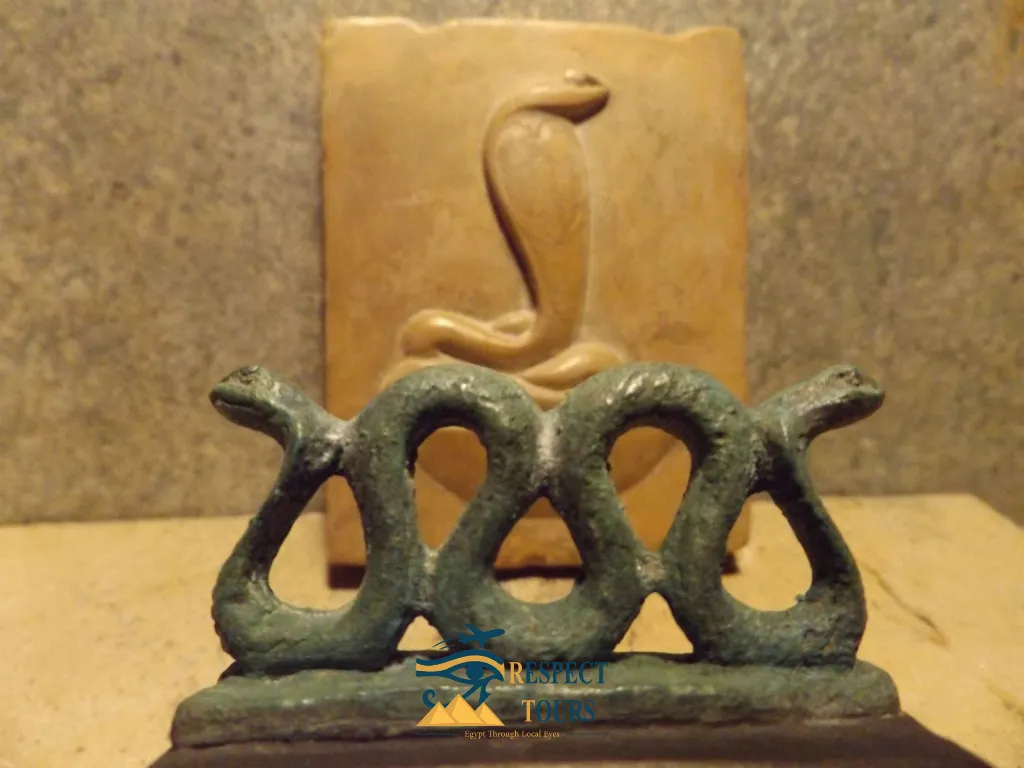
Egyptian mythology contains numerous Nile Cobras in Egyptian Tales, featuring serpentine creatures ranging from benevolent guardians to terrifying monsters. The most famous antagonist was Apep (Apophis), a colossal chaos serpent requiring constant divine vigilance to prevent cosmic catastrophe.
Protective serpent deities included Nehebkau, safeguarding pharaohs and providing sustenance for the deceased, and Meretseger, the cobra goddess guarding the Valley of the Kings. These Nile Cobras in Egyptian Tales depicted serpentine deities with human characteristics, suggesting Egyptians viewed cobras as complex beings capable of sophisticated thought and moral reasoning.
Cobras in Egyptian Culture
Nile Cobra In Egyptian Tales integration into daily Egyptian life extended beyond royal contexts, permeating art, literature, medicine, and social customs. Citizens incorporated cobra motifs into personal belongings for protection, while artisans developed sophisticated techniques for depicting cobras in goldwork, stone carvings, and jewelry.
Medical papyri containing Nile Cobra in Egyptian Tales reveal practical cobra bite treatment knowledge, combining herbal remedies with magical incantations. These tales influenced Egyptian literature and oral traditions, serving entertainment, moral instruction, and cultural preservation purposes.
What Does a Snake Symbolize in Egypt?
Nile Cobra in Egyptian Tales encompassed vast symbolic meanings reflecting complex human-serpent relationships. Snakes represented wisdom and hidden knowledge from underground realms where secret truths resided. Their skin-shedding ability symbolized renewal and spiritual rebirth in funerary art and mummification rituals.
Protection formed another crucial aspect, with the Nile Cobra in Egyptian Tales portraying serpents as guardians of sacred spaces, royal persons, and valuable treasures. This protective quality extended into the afterlife, where serpent deities guided souls and defended against malevolent forces.
Other Snake Gods and Goddesses
Renenutet: The Harvest Cobra
Renenutet was a gentler cobra goddess who protected crops and ensured good harvests. Farmers prayed to her during planting season and left offerings after the harvest. She appeared as a cobra with a woman’s head, often nursing a baby while wearing sheaves of wheat.
Despite being a cobra, Renenutet rarely represented danger. Instead, she symbolized prosperity, nourishment, and the earth’s fertility. Her main temple was in Faiyum, Egypt’s agricultural heartland.
Nehebkau: The Soul-Nourisher
Nehebkau was a mysterious two-headed cobra god who lived in the underworld. His name meant “He Who Harnesses Spirits.” Ancient texts describe him as having human arms and legs but a serpent’s body with cobra heads on both ends.
Nehebkau’s main job was feeding the dead in the afterlife. Egyptians believed souls needed nourishment during their journey through the underworld. Nehebkau provided this spiritual food. He also protected the pharaoh and was sometimes shown suckling the king like a nurse.
Meretseger: “She Who Loves Silence”
Meretseger was the cobra goddess who lived on the mountain peak above the Valley of the Kings. Workers building royal tombs prayed to her daily because she could send venomous snakes or scorpions to punish anyone who swore false oaths or stole from the tombs.
But Meretseger could also be merciful. If someone confessed their wrongdoing and made offerings, she would heal snakebites and forgive crimes. Many surviving prayers to Meretseger thank her for mercy after she punished someone for their mistakes.
Apep: The Chaos Serpent
Unlike the protective cobras, Apep (Apophis) represented everything Egyptians feared. This massive serpent lived in the deepest darkness of the underworld. He had no temples, no worshippers, and no prayers, only curses and defensive rituals.
Egyptian theology explained that Apep existed before creation. When the gods organized the universe and created order (ma’at), Apep was left over, pure chaos that couldn’t be destroyed. The gods could only fight him constantly to prevent him from undoing creation.
Interestingly, Apep wasn’t technically evil; he was chaos itself, beyond good and evil. But because Egyptians valued order so highly, chaos became the ultimate enemy.
Cobras in Daily Egyptian Life
Medical Knowledge About Snake Bites
Ancient Egyptian doctors knew a surprising amount about treating cobra bites. Medical papyri (the Edwin Smith Papyrus and Ebers Papyrus) contain detailed instructions for treating venomous bites.
Practical Treatments Included:
- Tying a ligature above the bite to slow venom spread
- Cutting the wound to drain blood and venom
- Applying honey (which has antibacterial properties)
- Using crushed onion or garlic poultices
- Making the patient vomit to remove swallowed venom
Magical Treatments Included:
- Reciting spells to invoke Isis or Wadjet
- Drawing protective symbols around the wound
- Wearing amulets of cobra goddesses
- Making offerings to snake deities
Modern medicine confirms some ancient treatments actually worked (ligatures, honey), while others were purely symbolic (spells). But the combination gave patients both physical treatment and psychological comfort.
The Cobra in Egyptian Afterlife Beliefs
Serpents in the Book of the Dead
The Book of the Dead (actually titled “Book of Coming Forth by Day”) is a collection of spells to help souls reach the afterlife. Many chapters mention serpents—both helpful and harmful.
- Spell 33: “To Repel Serpents “O Rerek-serpent, get away! For Geb is within me, for I am Atum who comes forth from Nun. Begone from me, O crooked-faced one! I am Ra, who was before the gods!”
- This spell shows the soul claiming divine identities to repel dangerous underworld serpents.
- Spell 87: “For Being Transformed into a Serpent.” This spell allowed the deceased to transform into a serpent themselves, gaining the snake’s regenerative powers and wisdom.
- Spell 108: “For Knowing the Souls of the Westerners” Mentions Wadjet as one of the protective deities guiding souls through the western realm (the afterlife).
Tomb Decorations Featuring Cobras
Egyptian tombs are covered with cobra images:
- Above Doorways: Winged cobras (combining Wadjet with protective wings) guarded tomb entrances to prevent evil spirits from entering.
- On Sarcophagi: The cobra goddess often appears on coffin sides, coiled protectively around the deceased person’s name. This suggested Wadjet personally guarded that specific individual.
- In Judgment Scenes: Some underworld judgment scenes show cobras spitting fire at souls who failed the heart-weighing test, destroying the unworthy.
- On Amulet Necklaces: Mummies were often buried wearing cobra amulet necklaces to ensure protection during the dangerous journey through the underworld.
Guiding Souls Through Darkness
Several afterlife texts mention friendly serpent deities who guide souls through the underworld’s twelve hours (corresponding to the twelve hours of night when Ra travels underground).
These helpful serpents:
- Illuminated dark passages with glowing bodies
- Told souls the correct responses to challenges
- Ferried souls across underworld rivers
- Defended against hostile demons
- Nourished souls during the long journey
Not all underworld serpents were evil—many were benevolent guides essential for reaching paradise.
Other Important Snakes in Ancient Egypt
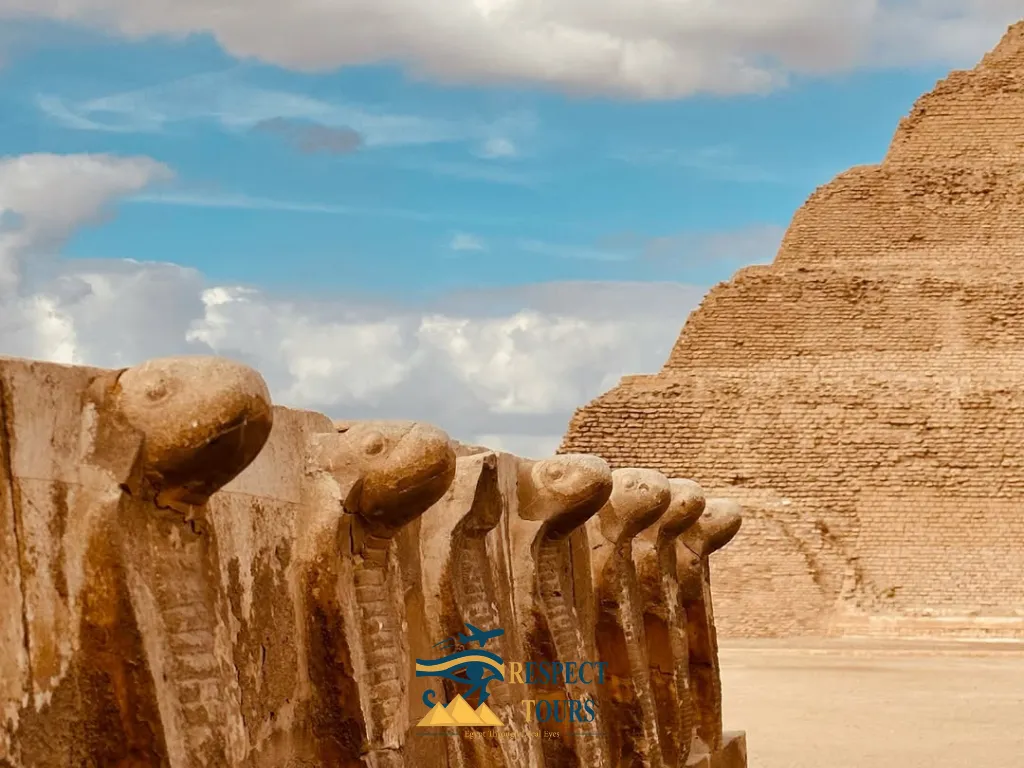
While cobras dominated Egyptian mythology, other snake species also appeared in tales and symbolism.
The Egyptian Asp (Vipera)
The asp is actually a type of viper, not a cobra. Ancient sources sometimes confused different snakes under the general term “asp.” These smaller, aggressive snakes appeared in stories as deadly hidden dangers. The asp represented sudden, unexpected threats, while the cobra represented visible, noble power.
Horned Viper (Cerastes cerastes)
The horned viper’s distinctive “horns” (actually raised scales) made it easy to identify. This snake became a hieroglyphic symbol representing the sound “f.” Desert dwellers respected horned vipers for their incredible ability to survive in extreme heat by burying themselves in sand during the day.
In mythology, horned vipers sometimes appeared as desert guardians or trickster characters, less noble than cobras but clever survivors.
The Spitting Cobra (Naja nubiae)
The Nubian spitting cobra can spray venom several meters to blind attackers. This defensive behavior fascinated ancient Egyptians, who saw it as magical. Spitting cobras appeared in stories about serpent magic and defensive sorcery.
Some scholars think the “fire-breathing” uraeus was inspired partly by spitting cobras defending themselves with venom spray.
Sand Boa (Eryx colubrinus)
These small, docile snakes live buried in sand, emerging at dusk to hunt. Ancient Egyptians considered them lucky omens because they’re harmless and eat scorpions and poisonous insects.
Sand boas appeared in folk tales as wise, peaceful characters who gave good advice, the opposite of aggressive cobras.
Egyptian Rat Snake (Malpolon moilensis)
These large snakes helped control rat populations around granaries and homes. Egyptians appreciated them for protecting food supplies. Some texts mention “house serpents” that were probably rat snakes, tolerated or even encouraged to live in homes and temples.
African Rock Python (Python sebae)
These massive snakes (up to 6 meters long) lived in southern Egypt and Sudan. Ancient texts describe them with awe and fear. Pythons represented exotic, mysterious southern lands beyond Egypt’s borders, places of both danger and valuable trade goods (gold, ivory, incense).
Where to See Cobra Symbolism Today
Egyptian Museum, Cairo
The Cairo Museum contains thousands of cobra artifacts:
- Tutankhamun’s golden uraeus from his death mask
- Cobra-shaped jewelry from various dynasties
- Stone statues of Wadjet
- Cobra-decorated furniture and tools
- Bronze cobra sculptures from temples
Location: Tahrir Square, Cairo
Best exhibits: Tutankhamun galleries (2nd floor)
Grand Egyptian Museum, Giza
This new museum (opened in 2025) has dedicated sections on animal symbolism, including extensive cobra displays. Interactive exhibits explain the mythology behind serpent deities.
Location: Near the Giza Pyramids
Best exhibits: Religious symbolism gallery
Temple of Edfu
Edfu Temple has some of Egypt’s best-preserved cobra reliefs. The temple walls show detailed scenes of Wadjet protecting Horus. The roof decorations feature winged cobras guarding the sanctuary.
Location: Edfu, Upper Egypt (between Luxor and Aswan)
Best feature: Intact cobra-topped columns
Luxor Temple
The entrance to Luxor Temple features massive statues of Ramesses II, each wearing a detailed uraeus. At night, lights illuminate these cobras dramatically.
Location: Luxor city center
Best time: Evening when illuminated
Valley of the Kings
Many royal tombs contain elaborate cobra paintings. Tomb walls show cobras protecting the pharaoh’s journey through the afterlife. The paintings retain vibrant colors after 3,000+ years.
Location: West Bank, Luxor
est tombs: Ramesses VI (KV9), Seti I (KV17)
Conclusion
For over 3,000 years, cobras dominated Egyptian imagination. These snakes represented everything important to ancient culture: protection, power, wisdom, danger, renewal, and divine authority.
The Nile Cobra in Egyptian Tales shows how one culture transformed a feared predator into a beloved deity. Through stories passed down through generations, Egyptians taught their children that:
- True power is controlled and protective, not recklessly destructive
- Even dangerous creatures deserve respect
- Divine protection requires both strength and wisdom
- The natural world contains spiritual lessons
- Authority must be earned through defending the weak
Today, the cobra’s spirit still lives on, in golden crowns, stone carvings, and temple walls glowing under Egypt’s sun. Each cobra figure whispers the same ancient message: protection is sacred, and power must serve balance.
Let Respect Tours guide you to the temples, tombs, and museums where these legends come alive. Walk in the footsteps of pharaohs, uncover the secrets of the cobra goddess Wadjet, and experience how ancient wisdom still breathes through Egypt’s sacred sites.
Because to see the cobra in Egypt isn’t just to visit history, it’s to witness the eternal dance between power, protection, and divine purpose.
FAQ: Frequently Asked Questions
Why did pharaohs wear a cobra on their crowns?
The cobra, known as the uraeus, was placed on the pharaoh’s forehead as a symbol of royal authority and divine favor. It represented the “Eye of Ra,” ready to strike down threats to Egypt. Pharaohs believed it linked them directly to the gods.
Wadjet was a protective cobra goddess, while Apep (Apophis) was a massive serpent symbolizing chaos and destruction. Every night, Wadjet and other gods fought Apep to ensure the sun rose again, representing the eternal triumph of order over chaos.
Ancient Egyptians noticed that cobras shed their skin, symbolizing renewal, resurrection, and immortality. In funerary art, serpents guarded tombs and guided souls, representing the soul’s rebirth in the afterlife.
Yes. Cobra imagery remains visible across Egypt’s temples and museums, especially at Karnak, Luxor, Philae, and the Egyptian Museum in Cairo. Respect Tours offers expert-guided visits that reveal the myths and meanings behind these ancient symbols.