

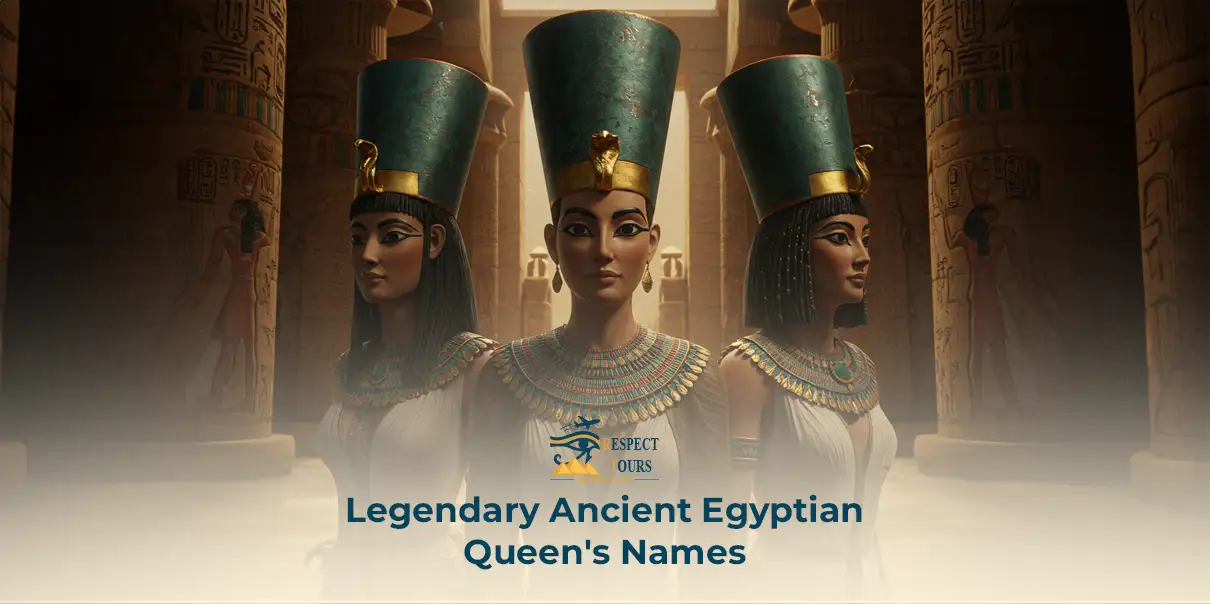
Legendary Ancient Egyptian Queen’s Names carry stories of power, divinity, and timeless influence. In the golden sands of Ancient Egypt, where pharaohs raised pyramids to the heavens, queens stood as rulers, priestesses, and symbols of eternal authority. Their names were not just spoken; they were lived identities, crafted to honor gods like Ra, Isis, Hathor, and Neith, and to proclaim destiny, beauty, wisdom, and royal power.
For over 3,000 years, these queens shaped Egypt’s history, from the dawn of the First Dynasty to the glory of Cleopatra’s reign. Each name echoed across temples, tombs, and monuments, leaving legacies that continue to inspire awe today.
In this article, you’ll discover the most legendary Ancient Egyptian queen’s names, the meaning behind them, and the extraordinary women who carried them into eternity.
Royalty: Ancient Egyptian Queen Names
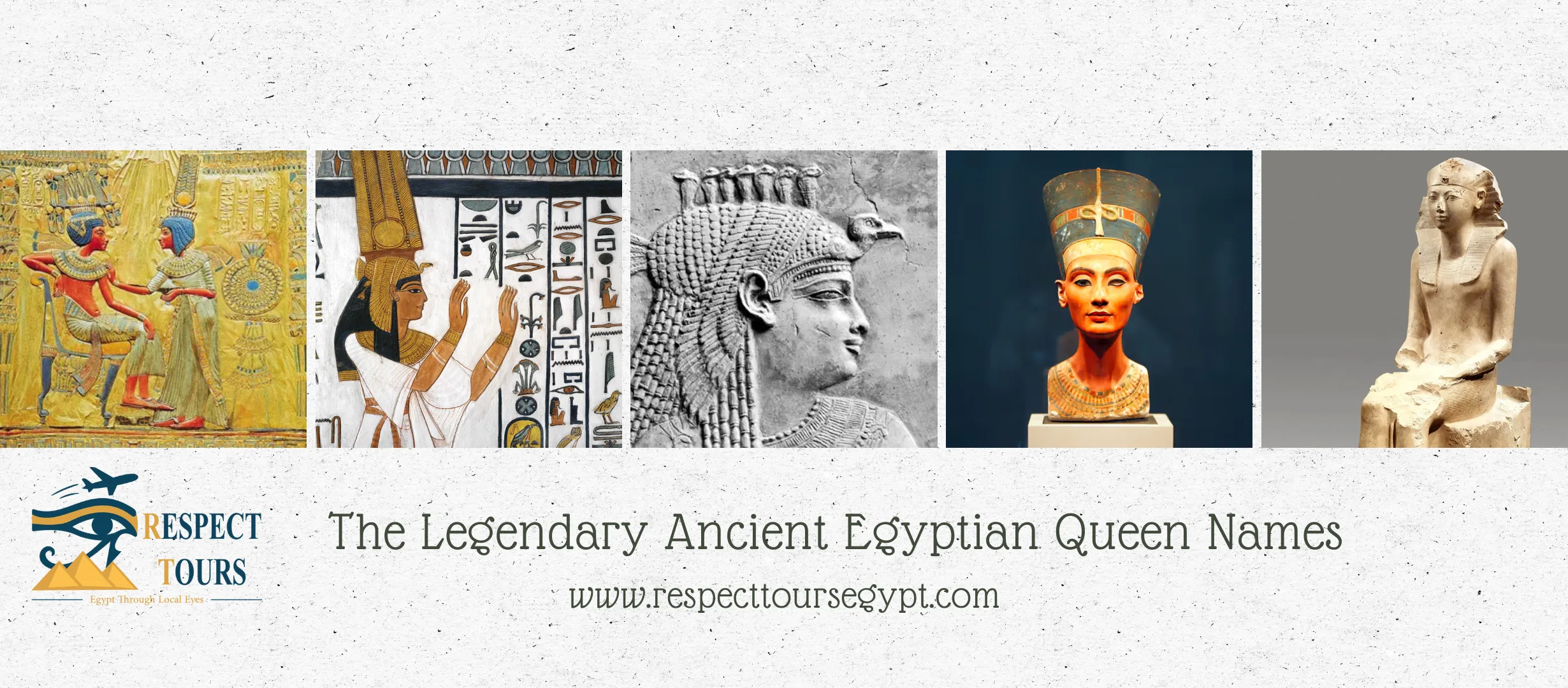
In the heart of Ancient Egypt, a queen’s name was never just a name; it was a story, a destiny, and a promise to the gods.
Every royal name carried a spark of the divine. It wasn’t chosen at random, but crafted to declare a queen’s sacred bond with the gods, her role in the kingdom, and her place in the cosmic order. With every syllable, the name whispered power, protection, and purpose.
Some names glowed with the radiance of Ra, the mighty sun god. Others embraced the nurturing magic of Isis, the eternal mother. Many echoed the beauty and love of Hathor, while others carried the sharp wisdom and warrior spirit of Neith.
To speak a queen’s name in Ancient Egypt was to invoke her essence, her duty, and her divine right to rule. These names were not just titles carved in stone; they were eternal legacies, etched into the very soul of a civilization.
First Dynasty (c. 2920 BCE) – The Dawn of Queens
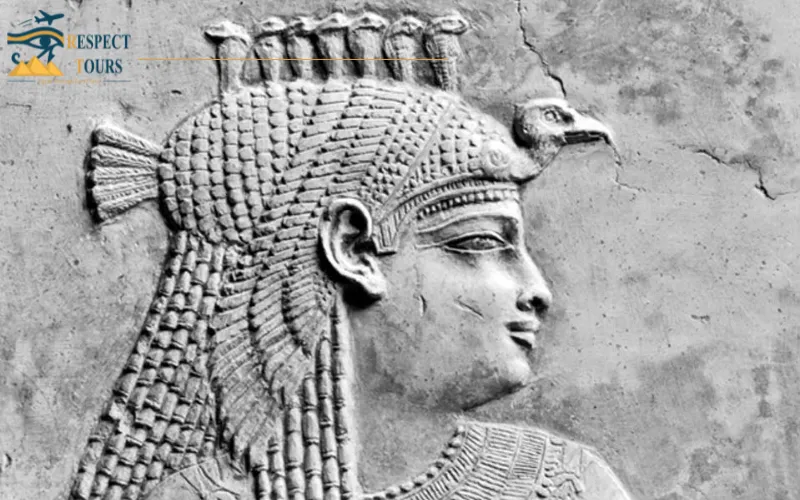
The First Dynasty marked not only the unification of Egypt but also the dawn of queenship as a force of power and identity. During this era, Legendary Ancient Egyptian Queen’s Names began to appear in inscriptions and tombs, linking royal women directly to the gods and Egypt’s political destiny. These early queens were more than consorts; they acted as regents, advisors, and in some cases rulers, shaping the foundations of queenship for the next three thousand years.
Their presence established a legacy of strength, wisdom, and divine authority that echoed through every dynasty to follow, proving that from the very beginning, queens held the power to define Egypt’s future.
Queen Merneith (c. 2920 BCE) – The First Dynasty’s Trailblazer
Queen Merneith is remembered as one of Egypt’s earliest recorded female rulers, possibly serving as regent for her young son, or perhaps even ruling as pharaoh in her own right. Her name, “Beloved of Neith,” linked her directly to Neith, the ancient goddess of war, wisdom, and weaving. This divine association was powerful, as Neith was revered both as a protector of pharaohs and as a maternal figure of guidance and strength.
Archaeological discoveries from her grand tomb at Abydos reveal treasures and inscriptions usually reserved for kings, clear evidence of her elevated authority. Merneith’s reign marks the first known instance of a woman holding supreme power in Ancient Egypt, setting a precedent for the legendary queens who would follow in her footsteps.
Queen Neithhotep
Queen Neithhotep’s very name—“Neith is satisfied”—reveals the deep spiritual connection between Egypt’s early rulers and the goddess Neith. As the wife of Pharaoh Narmer (often identified as Menes, the legendary unifier of Egypt), she stood at the heart of a transformative era.
Her role was not merely ceremonial; Neithhotep helped lay the religious and political foundations of the newly unified kingdom. Through her name, she embodied the idea that proper rule and devotion to the gods brought harmony to the divine order, a principle that would guide Egyptian royalty for centuries to come.
Sixth Dynasty (c. 2345 – 2181 BCE): The Golden Age of Pyramids
The Sixth Dynasty represented the culmination of Old Kingdom power and achievement. During this era, pyramid construction reached its zenith, and queens enjoyed significant religious and political influence.
Queen Nitocris
Queen Nitocris, remembered by ancient historians as the last pharaoh of the Sixth Dynasty, bears a name meaning “Neith is excellent” or “Beloved of Neith.” Classical sources, including Herodotus and Manetho, describe her as a powerful ruler who came to power through dramatic circumstances and ruled with both wisdom and vengeance.
Though some modern scholars debate her historical existence, ancient accounts portray her as a queen who successfully avenged her brother’s murder and ruled Egypt with considerable skill. Her story represents the archetypal powerful Egyptian queen: beautiful, intelligent, and utterly ruthless when necessary.
Twelfth Dynasty (c. 1991 – 1802 BCE): The Middle Kingdom Queens
The Middle Kingdom marked a renaissance of Egyptian power after the chaos of the First Intermediate Period. Queens during this era enjoyed renewed prestige and authority, with some achieving unprecedented levels of power.
Queen Sobekneferu (1806-1802 BCE)
Queen Sobekneferu, whose name means “Beauty of Sobek,” was named after Sobek, the crocodile god associated with the Nile’s fertility and pharaonic power. She holds the distinction of being Egypt’s first definitively confirmed female pharaoh, ruling in her own right for approximately four years.
Breaking with tradition, Sobekneferu adopted full pharaonic regalia and titles, including the false beard and royal uraeus serpent. Her reign marked the end of the Twelfth Dynasty and demonstrated that women could successfully assume the full authority of pharaohship. Archaeological evidence from her reign shows she undertook building projects and maintained Egypt’s prosperity during her rule.
Eighteenth Dynasty (c. 1550 – 1292 BCE) – The Age of Powerful Queens
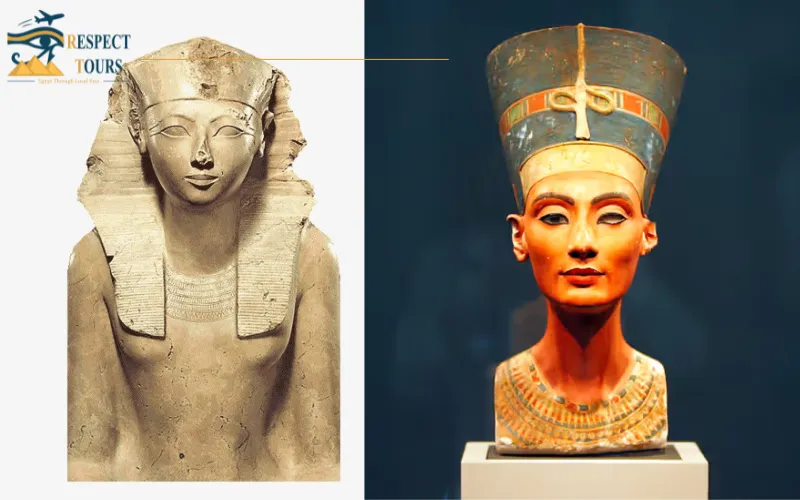
The Eighteenth Dynasty represents the golden age of Egyptian queenship, producing some of history’s most famous and powerful royal women. This period saw the unprecedented expansion of Egyptian influence and the emergence of queens who wielded authority equal to pharaohs.
Queen Hatshepsut (1479-1458 BCE): The Woman Who Became King
Queen Hatshepsut, whose name means “Foremost of Noble Women,” stands as ancient Egypt’s most successful female pharaoh. Initially serving as regent for her stepson Thutmose III, she gradually assumed full pharaonic authority, ruling Egypt for approximately 22 years.
Her reign brought unprecedented prosperity and artistic achievement to Egypt. She commissioned magnificent building projects, including her stunning mortuary temple at Deir el-Bahari, and organized successful trading expeditions to the mysterious land of Punt. Hatshepsut adopted full male pharaonic regalia and titles, even wearing the traditional false beard in official depictions.
Her name proved prophetic – she truly became the foremost among noble women, ruling with wisdom and bringing Egypt to new heights of cultural and economic achievement. Her reign challenges traditional gender roles while demonstrating the sophisticated nature of Egyptian royal ideology.
Queen Nefertiti (1370–1330 BCE): The Icon of Beauty and Power
Queen Nefertiti, whose name means “The Beautiful One Has Come,” remains one of history’s most recognizable figures thanks to the famous limestone bust discovered in 1912. As the Great Royal Wife of Pharaoh Akhenaten, she played a central role in one of ancient Egypt’s most dramatic religious and artistic revolutions.
During the Amarna Period, Nefertiti supported her husband’s radical monotheistic worship of the sun disk Aten, abandoning traditional Egyptian polytheism. Artistic depictions show her participating in religious ceremonies with unprecedented prominence, sometimes depicted with the same scale and authority as the pharaoh himself.
Some scholars theorize that Nefertiti may have ruled as pharaoh after Akhenaten’s death, possibly under the name Neferneferuaten. Her beauty, power, and mysterious fate have captivated imaginations for over 3,000 years, making her name synonymous with ancient Egyptian queenship.
Queen Tiye: The Matriarch of Amarna
Queen Tiye, whose name possibly means “She of the Diadem,” served as the Great Royal Wife of Amenhotep III and mother of the revolutionary pharaoh Akhenaten. Born to non-royal parents, her elevation to queenship demonstrated that merit and favor could transcend traditional bloodlines.
Tiye wielded remarkable influence throughout her husband’s reign and continued as a power behind the throne during her son’s dramatic religious reforms. Foreign correspondence found at Amarna shows that international rulers addressed letters directly to her, recognizing her significant political authority.
Her mummy, identified through DNA analysis, reveals a woman who lived to approximately 50 years old and maintained her influence well into her son’s reign. Queen Tiye represents the quintessential Egyptian queen mother – wise, influential, and instrumental in shaping royal policy.
Queen Ankhesenamun
Queen Ankhesenamun, whose name means “She Lives for Amun,” experienced one of ancient Egypt’s most dramatic life stories. Born as Ankhesenpaaten during the Amarna Period, she was the daughter of Akhenaten and possibly Nefertiti. Her original name honored the Aten, but she later changed it to honor the traditional god Amun when religious orthodoxy was restored.
As the wife of the boy pharaoh Tutankhamun, she bore the tragic burden of two stillborn daughters, ending the royal bloodline. After Tutankhamun’s mysterious death, she took the unprecedented step of writing to the Hittite king, requesting one of his sons as a husband – a letter that reveals both her desperation and her understanding of international politics.
Her story embodies the personal cost of political upheaval and the vulnerability of even the most powerful women in ancient Egypt.
Nineteenth Dynasty (c. 1292 – 1189 BCE): The Age of Warrior Kings and Beloved Queens
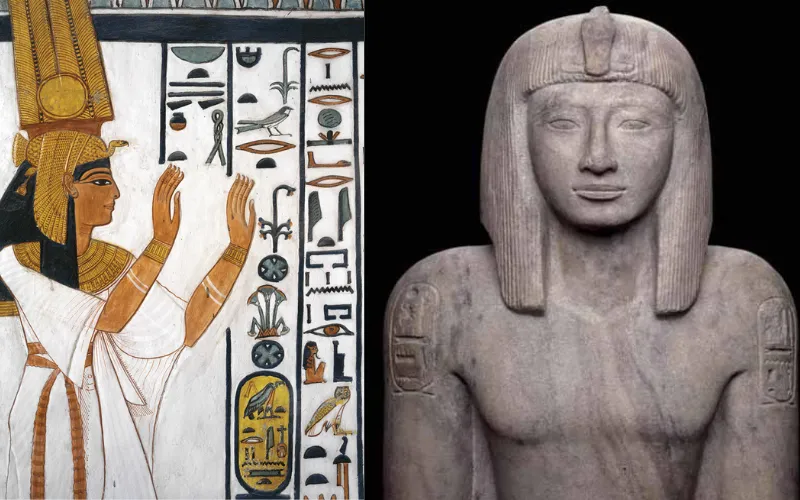
The Nineteenth Dynasty marked Egypt’s resurgence in military power under pharaohs such as Seti I and Ramesses II. Queens during this period enjoyed great honor and affection, with their husbands commissioning magnificent monuments celebrating their beauty and devotion.
Queen Nefertari: The Favorite Wife of Ramses II
Queen Nefertari, whose name translates to “Beautiful Companion” or “Most Beautiful,” was the beloved Great Royal Wife of Ramesses II, one of Egypt’s most renowned pharaohs. Her husband’s devotion to her is immortalized in the magnificent temple he built for her at Abu Simbel, where she appears alongside the gods as a divine figure.
Her tomb in the Valley of the Queens, designated QV66, contains some of ancient Egypt’s most beautiful wall paintings, depicting her journey through the afterlife with exquisite artistic detail. The tomb’s inscriptions reveal her titles, including “Mother of the King” and “Great of Praises.”
Nefertari corresponds with foreign queens, demonstrating her role in international diplomacy. Her letters with the Hittite queen, preserved in cuneiform tablets, show the sophisticated diplomatic relationships maintained by royal women. She truly lived up to her name as Ramesses II’s most beautiful and beloved companion.
Queen Twosret
Queen Twosret, whose name means “Powerful is the Daughter of Ra,” represents one of ancient Egypt’s last great female pharaohs. Initially serving as the Great Royal Wife of Seti II, she later became regent for the young pharaoh Siptah before eventually claiming full pharaonic authority.
Her reign marked the end of the Nineteenth Dynasty, and she successfully maintained Egyptian stability during a period of political uncertainty. Archaeological evidence shows she completed building projects and maintained the traditional religious practices that legitimized pharaonic rule.
Twosret’s cartouches appear alongside those of pharaohs in official inscriptions, demonstrating her acceptance as a legitimate ruler. Her name, connecting her to Ra, the sun god, emphasized her divine authority and her role as Ra’s earthly representative.
Ptolemaic Dynasty (305 – 30 BCE): The Hellenistic Queens
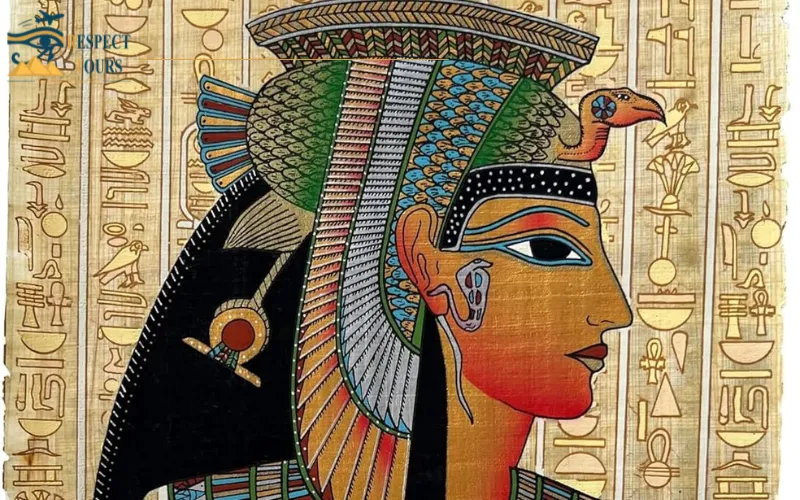
The Ptolemaic Dynasty, established after Alexander the Great’s conquest of Egypt, blended Greek and Egyptian traditions. Ptolemaic queens bore Greek names but adopted Egyptian royal customs, creating a unique fusion of cultures.
Queen Cleopatra (69–30 BCE): The Last Pharaoh of Egypt
Queen Cleopatra VII, whose name means “Glory of the Father,” stands as perhaps history’s most famous queen. The last active pharaoh of ancient Egypt, she spoke multiple languages, was highly educated, and skillfully navigated the complex politics of the late Roman Republic.
Contrary to popular misconceptions, Cleopatra was renowned more for her intelligence and political acumen than her physical beauty. She successfully maintained Egyptian independence for nearly two decades through strategic alliances with Julius Caesar and later Mark Antony.
Her tragic death in 30 BCE marked the end of pharaonic Egypt and the beginning of Roman rule. Yet her name has transcended history, becoming synonymous with feminine power, intelligence, and tragic romance. She truly embodied the glory of her Ptolemaic heritage while serving as the final link to three millennia of pharaonic tradition.
The First Egyptian Queen
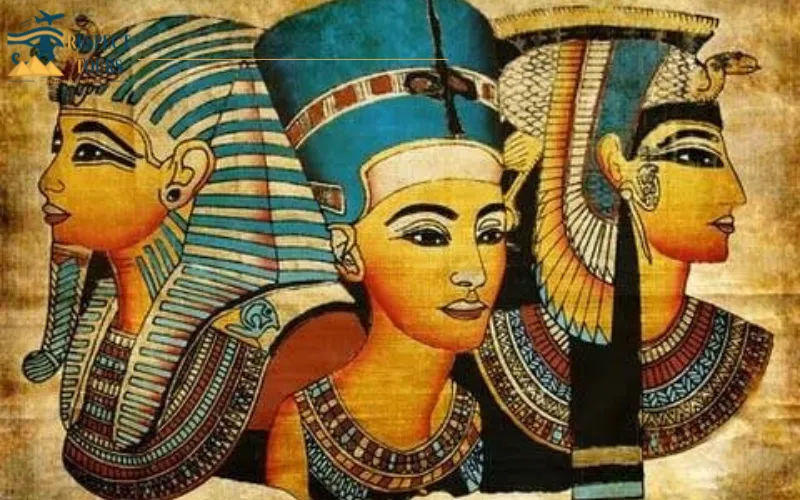
Determining the first Egyptian queen involves examining the earliest dynastic records and archaeological evidence. Queen Neithhotep of the First Dynasty holds strong claims to this distinction, serving as the wife of Narmer (Menes), the pharaoh who unified Upper and Lower Egypt around 3100 BCE.
However, Queen Merneith presents an even more significant case as possibly the first woman to wield supreme pharaonic authority. Archaeological evidence from her tomb at Abydos suggests she ruled as pharaoh, not merely as a queen consort, making her potentially the first female ruler in recorded history.
These early queens established precedents that would influence Egyptian queenship for millennia, demonstrating that royal women could wield significant political and religious authority when circumstances demanded.
How Did Cleopatra Become Pharaoh?
Cleopatra VII ascended to the throne through the Ptolemaic tradition of royal succession, which often involved complex family dynamics and co-rulership arrangements. Born into the Ptolemaic royal family, she was designated as heir by her father, Ptolemy XII Auletes.
Following Ptolemaic custom, she initially ruled as co-pharaoh with her younger brother Ptolemy XIII, whom she was also required to marry according to royal tradition. However, political conflicts arose between the siblings, leading to civil war.
Cleopatra’s alliance with Julius Caesar proved crucial in securing her position. With Roman support, she defeated her brother and established herself as the sole ruler of Egypt. Her political intelligence, linguistic skills (she reportedly spoke nine languages), and understanding of both Egyptian and Roman politics enabled her to maintain power for nearly two decades.
Her path to the throne demonstrates the complex interplay of family politics, foreign alliances, and personal capability that characterized late Ptolemaic Egypt.
The Most Powerful Queen of Egypt
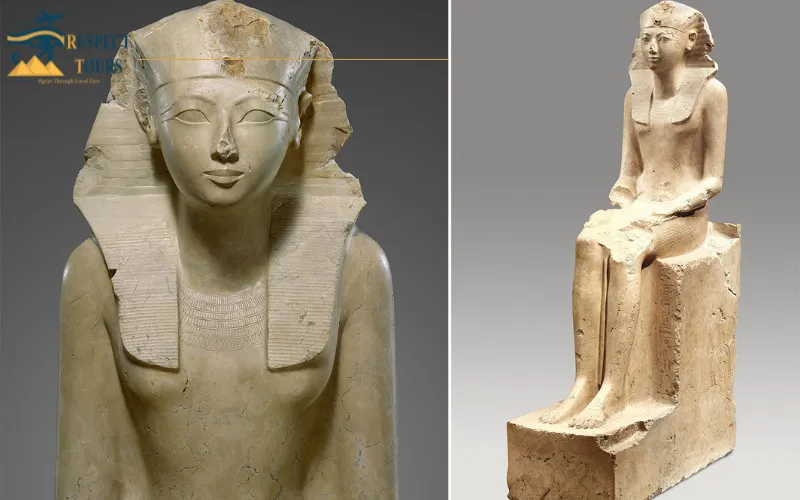
Determining Egypt’s most powerful queen requires examining both the extent of authority wielded and the lasting impact of their reigns. Several queens compete for this distinction:
Queen Hatshepsut ruled as pharaoh for 22 years, bringing unprecedented prosperity and architectural achievement to Egypt. Her successful assumption of full pharaonic authority and the stability of her reign mark her as exceptionally powerful.
Queen Cleopatra VII maintained Egyptian independence for nearly 20 years against Roman expansion, demonstrating remarkable political skill and international influence. Her relationships with Julius Caesar and Mark Antony showcased her ability to navigate complex geopolitical situations.
Queen Tiye wielded significant behind-the-scenes power throughout her husband’s reign and influenced her son’s revolutionary religious changes. Her correspondence with foreign rulers demonstrates recognized international authority.
Most historians consider Hatshepsut the most powerful due to her successful assumption of full pharaonic titles and the prosperity Egypt enjoyed under her rule. Her ability to maintain power for over two decades while undertaking massive building projects suggests unparalleled authority among Egyptian queens.
Who Were the Four Famous Queens of Egypt?
The four most celebrated queens of ancient Egypt, recognized for their historical significance and cultural impact, are:
- Queen Hatshepsut (1479-1458 BCE) – The most successful female pharaoh, who ruled for 22 years and brought unprecedented prosperity to Egypt. Her mortuary temple at Deir el-Bahari remains one of ancient Egypt’s architectural marvels.
- Queen Nefertiti (1370-1330 BCE) – The beautiful queen who supported the Amarna religious revolution and may have ruled as pharaoh after her husband Akhenaten’s death. Her limestone bust is one of the world’s most recognizable ancient artifacts.
- Queen Nefertari (1295-1255 BCE) – The beloved wife of Ramesses II, honored with magnificent temples at Abu Simbel and a stunning tomb in the Valley of the Queens. She represents the idealized Egyptian queen.
- Queen Cleopatra VII (69-30 BCE) – The last pharaoh of Egypt, whose intelligence, political skill, and tragic romance with Mark Antony have captivated imaginations for over 2,000 years.
These four queens span over 1,400 years of Egyptian history, each representing different aspects of queenship – from religious authority and architectural patronage to political intelligence and romantic legend.
How Many Queens of Egypt Are There?
Calculating the exact number of Egyptian queens presents significant challenges due to incomplete historical records, varying definitions of queenship, and the vast span of Egyptian civilization (approximately 3,100 years).
Egyptologists have identified over 100 named queens throughout Egyptian history, though this number likely represents only a fraction of the women who held royal titles. Many queens are known only from fragmentary inscriptions, while others may have been entirely lost to history.
The queens fall into several categories:
- Great Royal Wives – Primary queens who could potentially rule as pharaoh
- Royal Wives – Secondary wives in polygamous royal marriages
- Queen Mothers – Former queens who gained influence through their sons
- Female Pharaohs – Queens who ruled with full pharaonic authority
Different dynasties preserved records with varying degrees of completeness. The New Kingdom (1550-1077 BCE) provides the most comprehensive information about royal women, while earlier periods offer only fragmentary evidence.
Recent archaeological discoveries continue to reveal previously unknown queens, suggesting the total number may be significantly higher than currently documented. Each discovery adds to our understanding of the crucial roles these remarkable women played in ancient Egyptian civilization.
Conclusion
The Legendary Ancient Egyptian Queen’s Names extend far beyond their beautiful names and royal titles. These extraordinary women shaped one of the world’s greatest civilizations, ruling with wisdom, grace, and determination. Their names still echo across temples, tombs, and monuments — reminders of a time when queens could rise as pharaohs and when feminine power was celebrated, immortalized in stone and gold.
At Respect Tours, we bring their stories to life. From Luxor’s Valley of the Queens, where Nefertari’s tomb dazzles with color, to Cairo’s Egyptian Museum, where the treasures of Nefertiti and Tiye are preserved, to Alexandria, where Cleopatra once ruled, we’ll guide you through the footsteps of these legendary women.
Travel to Egypt with Respect Tours and experience the power, beauty, and history of the queens who shaped a civilization. Your journey into the world of Legendary Ancient Egyptian Queen’s Names begins here.
FAQ: Frequently Asked Questions
Who was the first queen of Egypt?
The first recorded queen was Neithhotep, around 2920 BCE, during the First Dynasty. She played a key role in royal foundations and may have ruled as regent.
The four most famous queens are:
- Cleopatra VII: The last pharaoh of Egypt.
- Nefertiti: The queen of beauty and religious revolution.
- Hatshepsut: The queen who ruled as king, known for her magnificent temples.
- Nefertari: The beloved queen of Ramses II, remembered for her stunning tomb.
Dozens of queens influenced Egypt across dynasties. Some ruled directly as pharaohs, while others shaped politics and religion as royal wives and mothers.