
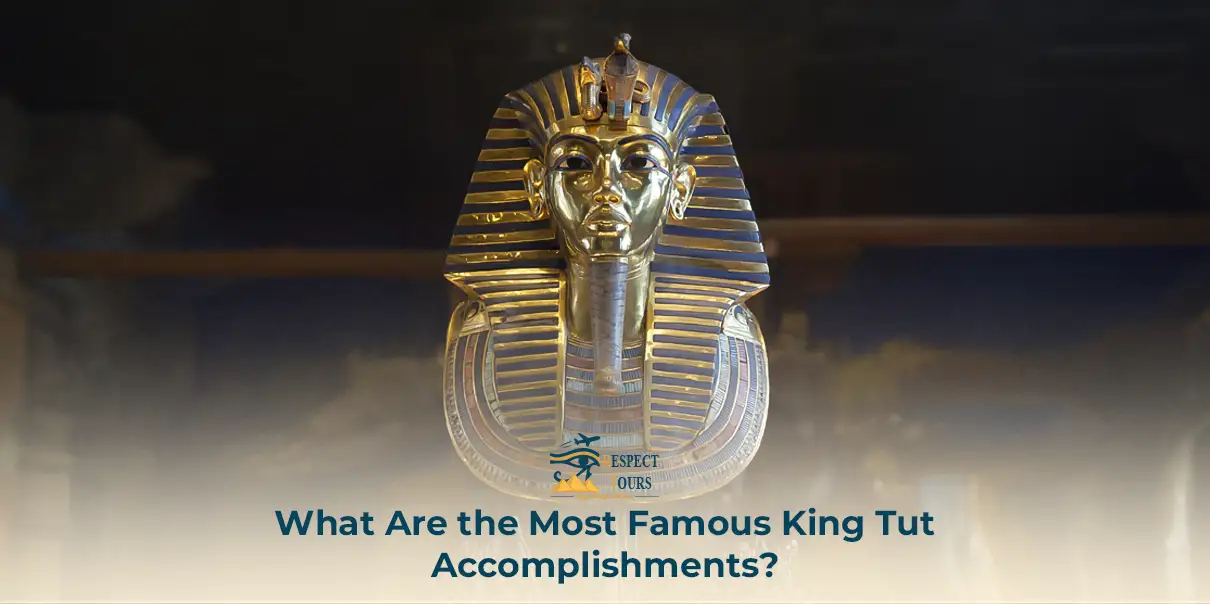
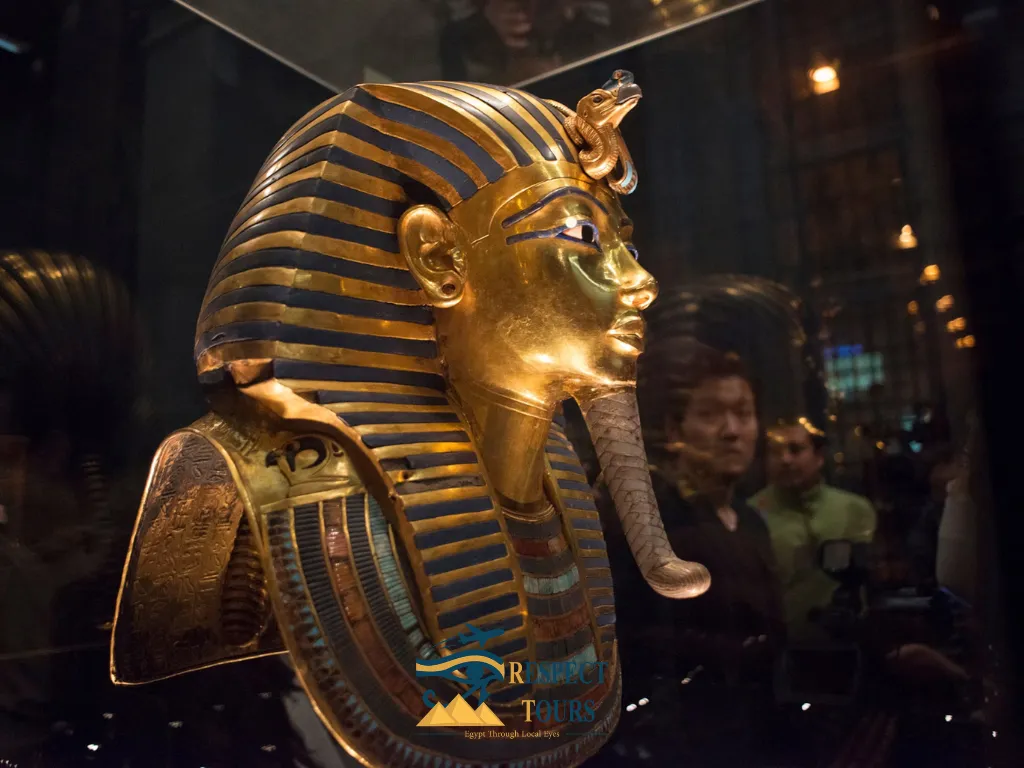
He ruled Egypt for less than a decade and died before turning twenty, yet more than 3,300 years later, King Tutankhamun remains the world’s most famous pharaoh. His golden mask has become the face of ancient Egypt, a timeless symbol of beauty, power, and mystery.
But behind the glittering treasures lies a remarkable story. What did this young king truly achieve during his short reign? How did he restore Egypt’s lost faith and rebuild a nation shaken by religious revolution?
In this article, Respect Tours invites you to uncover the real accomplishments of the Boy King, his reforms, his legacy, and the tomb that changed history. With over 5,000 of his artifacts now displayed at the Grand Egyptian Museum near the Pyramids of Giza, there’s never been a better time to walk in Tutankhamun’s footsteps and witness the golden age of Egypt reborn.
King Tutankhamun Quick Facts
- Born: ~1341 BCE in Akhetaten (Amarna)
- Reign: 1332-1323 BCE (9 years)
- Age at Death: ~19 years old
- Dynasty: 18th Dynasty, New Kingdom
- Father: Pharaoh Akhenaten
- Wife: Ankhesenamun (half-sister)
- Greatest Achievement: Restoring traditional Egyptian religion
- Most Famous For: Nearly intact tomb discovery (1922)
- Tomb Location: KV62, Valley of the Kings
- Artifacts Found: 5,398 objects
- Current Display: Grand Egyptian Museum, Cairo
Who Was King Tutankhamun?
Birth and Royal Lineage
Tutankhamun was born around 1341 BCE as the son of Pharaoh Akhenaten and “The Younger Lady” (likely Akhenaten’s sister). Modern DNA analysis confirms this incestuous union, common among Egyptian royalty to preserve “divine” bloodlines.
He inherited a kingdom in crisis. His father had abandoned Egypt’s traditional polytheistic worship, imposing monotheistic devotion to the sun disk Aten. This religious revolution destabilized the powerful priesthoods, damaged the economy, and fractured social order.
At approximately nine years old, Tutankhamun ascended to Egypt’s throne around 1332 BCE. He married his half-sister Ankhesenamun (daughter of Akhenaten and Queen Nefertiti), continuing royal tradition while cementing political alliances.
The Meaning Behind His Name
Tutankhamun’s name tells Egypt’s restoration story. Born “Tutankhaten” (Living Image of Aten), he changed his name early in his reign to “Tutankhamun” (Living Image of Amun).
This wasn’t personal preference; it was a public declaration that Egypt’s ancient gods had returned. Every time someone spoke the pharaoh’s name, they acknowledged Amun’s restoration as king of the gods. The name change transformed the pharaoh himself into a walking proclamation of Egypt’s religious rebirth.
Why this mattered politically: Nine-year-old Tutankhamun couldn’t make this decision alone. His advisors (Ay and General Horemheb) orchestrated the change. By announcing religious restoration through a child’s name rather than a decree, they made it feel divinely ordained instead of politically calculated, protecting Tutankhamun’s legitimacy while distancing him from his father’s failures.
Birth of a Pharaoh: Family and Origins
The Son of Akhenaten
Tutankhamun’s royal bloodline ran deep, though it was also complicated by the custom of sibling marriage practiced by Egyptian royalty. Modern DNA analysis conducted on his mummy confirms that his father was Pharaoh Akhenaten, the revolutionary ruler who upended Egyptian religion. His mother was identified as “The Younger Lady,” a mummy found in tomb KV35—likely Akhenaten’s sister, making Tutankhamun the product of an incestuous union common among pharaohs seeking to preserve divine royal blood.
Born around 1341 BCE in Akhetaten (modern-day Amarna), Akhenaten’s purpose-built capital, the young prince entered a world unlike any Egypt had known. The traditional gods had been suppressed, ancient temples lay neglected, and the powerful Amun priesthood seethed with resentment. Following his father’s death when Tutankhamun was still a child, he married his half-sister Ankhesenamun, herself a daughter of Akhenaten and the famous Queen Nefertiti, continuing the royal tradition while cementing political alliances.
What Does “Tutankhamun” Mean?
The young pharaoh’s very name tells the story of Egypt’s religious transformation. He was born “Tutankhaten,” meaning “Living Image of Aten”, a name honoring his father’s singular god. But early in his reign, as Egypt returned to traditional religious practices, the boy king changed his name to “Tutankhamun,” meaning “Living Image of Amun.”
This name change represented far more than personal preference. It was a public declaration that Egypt’s ancient gods had returned to their rightful place, that the powerful Amun, king of gods and patron of Thebes, was restored, and that the Amarna experiment was officially over. Every time someone spoke the pharaoh’s name, they acknowledged the re-establishment of Egypt’s religious order. It was a brilliant political and theological statement that a child could make simply by changing what he was called.
King Tutankhamun’s 6 Greatest Accomplishments

1. Restoring Egypt’s Traditional Religion
The Problem: Akhenaten had closed temples, fired priests, and suppressed traditional gods for nearly 17 years. The powerful Amun priesthood, which controlled vast wealth and social influence, had been dismantled. Religious festivals that unified Egyptian society had ceased.
Tutankhamun’s Solution: He reversed his father’s policies completely, reopening temples, reinstating priesthoods, and reviving festivals. The Restoration Stela at Karnak Temple records these reforms, describing how the boy king “found the temples fallen into ruin, their shrines overgrown, and their sanctuaries as if they had never existed.”
Impact: This restoration didn’t just revive faith; it reactivated Egypt’s entire economic and social system. Temples weren’t merely places of worship; they were massive institutions controlling farmland, workshops, and trade networks.
2. Temple Reconstruction and Building Projects
Scope: Tutankhamun rebuilt and expanded temples throughout Egypt, particularly at Karnak and Luxor. His name appears on monuments as far south as Nubia.
Economic Stimulus: These projects employed thousands of stone workers, artisans, painters, and administrators. Workers spent wages on food, clothing, and goods, multiplying economic activity throughout the Nile Valley.
Legacy Note: Many structures later credited to Ramses II and Horemheb actually began under Tutankhamun’s rule. His successors simply carved their names over his.
3. Economic Revival and Prosperity
Connection to Religion: Reopening temples reignited Egypt’s economic engine. Temple industries, trade networks, and festivals flourished again. Priests returned to managing temple lands, which represented significant portions of Egypt’s agricultural wealth.
Evidence of Success: The luxury artifacts in Tutankhamun’s tomb, gold shrines, elaborate furniture, and precious stones, prove the artistic and financial revival achieved during his short reign. This wealth came from a functioning economy, not inherited reserves.
4. Diplomatic Relations and Foreign Policy
The Challenge: Akhenaten’s internal focus had weakened Egypt’s foreign relations. Neighboring kingdoms watched Egypt’s chaos warily.
Tutankhamun’s Approach: His administration rebuilt diplomatic ties with Mitanni, Hittites, Nubia, and the Levant. Tomb art and correspondence indicate renewed gift exchanges and peaceful relations.
Strategy: A pharaoh who restored temples, stabilized the economy, and ruled from traditional centers sent a clear message to foreign powers: Egypt was stable again and worth trading with.
5. Moving the Capital Back to Traditional Centers
The Decision: One of Tutankhamun’s earliest and wisest moves was abandoning Amarna (Akhenaten’s purpose-built capital) and returning to Memphis and Thebes.
Why This Mattered: Amarna isolated the monarchy from traditional power centers. Moving to Thebes physically reconnected the pharaoh with the Amun priesthood (Egypt’s most powerful religious faction) and Memphis’s administrative elite. This wasn’t just changing addresses; it was rebuilding the social networks that made Egypt function.
Political Genius: The move signaled the end of Akhenaten’s experiment and the return to tradition, restoring confidence among Egypt’s elite families.
6. Cultural and Artistic Renaissance
The Synthesis: Under Tutankhamun, Egyptian art evolved rather than simply regressed. His artisans merged Amarna’s naturalistic innovations with classical Egyptian formalism, creating a new artistic language.
Evidence: His golden mask perfectly demonstrates this blend; the face shows Amarna’s gentle realism, but the royal regalia follows traditional iconography. This wasn’t abandoning innovation; it was selective integration.
Broader Impact: This artistic approach influenced Egyptian art for generations, showing that Amarna’s contributions could be preserved while rejecting its theology.
How Did King Tutankhamun Die?
King Tutankhamun died around 1323 BCE at approximately 19 years old. For nearly a century, his death has been debated.
Modern Scientific Evidence
Advanced DNA testing, CT scans, and forensic studies reveal:
- Severe leg fracture shortly before death, which became infected
- Malaria (deadliest strain: Plasmodium falciparum) in his system
- Genetic conditions: club foot, cleft palate, pronounced overbite
- Bone disease from generations of royal inbreeding
Current Consensus
Tutankhamun most likely died from infection following the leg injury, complicated by malaria and genetic weakness. In an age without antibiotics, even small wounds could prove fatal.
Assassination theories dismissed: Early theories about skull fractures were disproven when scans showed the damage occurred during mummification, not before death.
The Succession Crisis
His tomb contained two mummified stillborn daughters; genetic analysis confirmed they were his and Ankhesenamun’s children. Inherited genetic problems prevented a viable heir.
With no surviving children, power passed to his advisor Ay, who married the widowed Ankhesenamun to gain legitimacy. This effectively ended the 18th Dynasty’s direct royal line.
The Discovery That Changed Everything: Howard Carter and KV62
While Tutankhamun’s life accomplishments restored Egypt, his death created an even greater legacy.
Howard Carter’s 1922 Discovery
British archaeologist Howard Carter, funded by Lord Carnarvon, spent years searching the Valley of the Kings for a rumored hidden tomb. On November 4, 1922, his team uncovered a staircase leading to a sealed doorway bearing Tutankhamun’s cartouche.
When Carnarvon asked, “Can you see anything?” Carter famously replied: “Yes, wonderful things.”
Why the Tomb Survived 3,000 Years
Factor 1 – Location: Tucked low in the valley floor, debris from excavating Ramesses VI’s tomb directly above eventually buried KV62’s entrance completely. Workers unknowingly built huts over it.
Factor 2 – Size: The tomb’s small size made it atypical for royal burials. Most pharaohs prepared elaborate multi-chambered complexes over many years. Tutankhamun’s unexpected death at 19 meant using a tomb intended for a noble; it didn’t look like what tomb robbers expected.
Factor 3 – Historical Erasure: Tutankhamun’s successors (particularly Horemheb) deliberately removed his name from official records and usurped his monuments. By making him historically invisible, they inadvertently protected his tomb from organized plundering.
The 5,398 Treasures Inside
The four small chambers contained everything a pharaoh might need for eternity:
Burial Chamber:
- Four gilded shrines (nested)
- Red quartzite sarcophagus
- Three nested coffins (innermost: 110 kg solid gold)
- Golden mask (11 kg gold, lapis lazuli, glass inlay)
Other Chambers:
- Gilded chariots and thrones
- Weapons and jewelry
- Alabaster vessels and musical instruments
- Food and wine for the afterlife
- 130 walking sticks (evidence of his disability)
- Two life-sized guardian statues
- Canopic jars with preserved organs
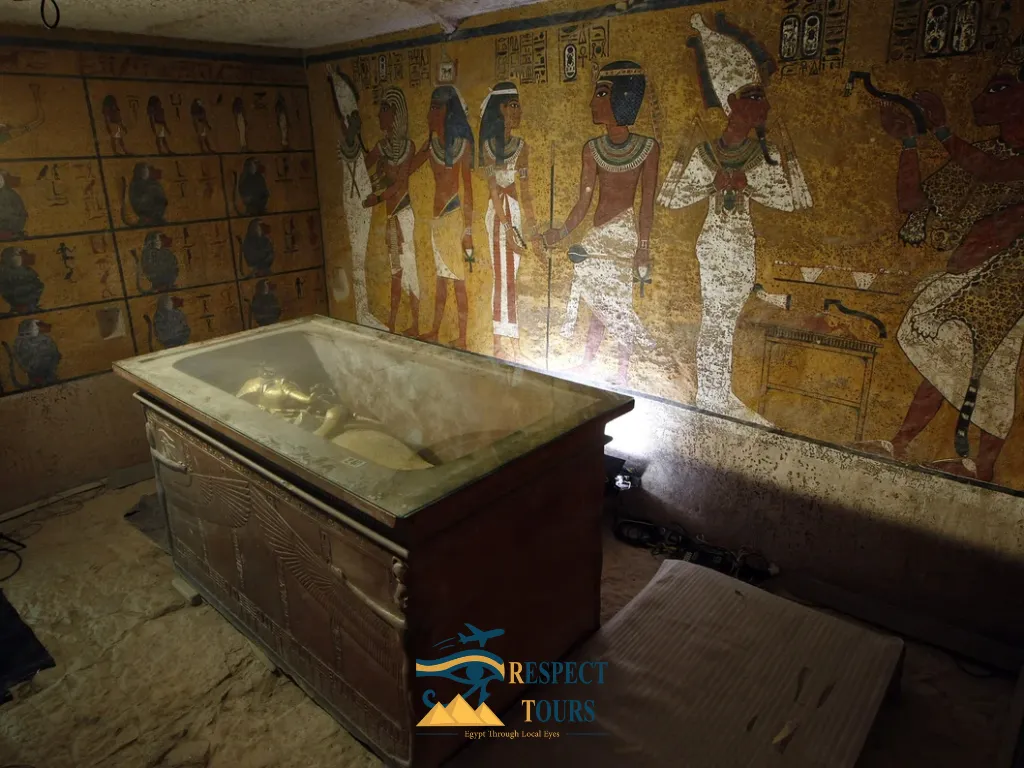
Wall Paintings: Depicted Tutankhamun’s journey to eternity, including the “Opening of the Mouth” ritual that restored his senses for the afterlife.
Tutankhamun vs. Other Famous Pharaohs
| Pharaoh | Reign | Major Accomplishments | Famous For | Modern Recognition |
|---|---|---|---|---|
| Tutankhamun | 9 years | Religious restoration, temple rebuilding | Intact tomb | Most globally recognizable |
| Ramses II | 66 years | Military conquests, massive building | Abu Simbel | Greatest builder |
| Khufu | 23 years | Great Pyramid of Giza | World’s most iconic monument | Engineering marvel |
| Hatshepsut | 22 years | Trade expeditions, architectural innovation | Successful female pharaoh | Women’s leadership |
| Akhenaten | 17 years | Monotheistic revolution | Religious revolutionary | Controversial reformer |
| Cleopatra VII | 21 years | Roman alliances, political strategy | Roman relationships | Pop culture icon |
Key Insight: Tutankhamun’s reign was the shortest among famous pharaohs, yet his global recognition exceeds all others, proving that sometimes how you’re remembered matters more than how long you ruled.
5 Fascinating Facts About King Tutankhamun
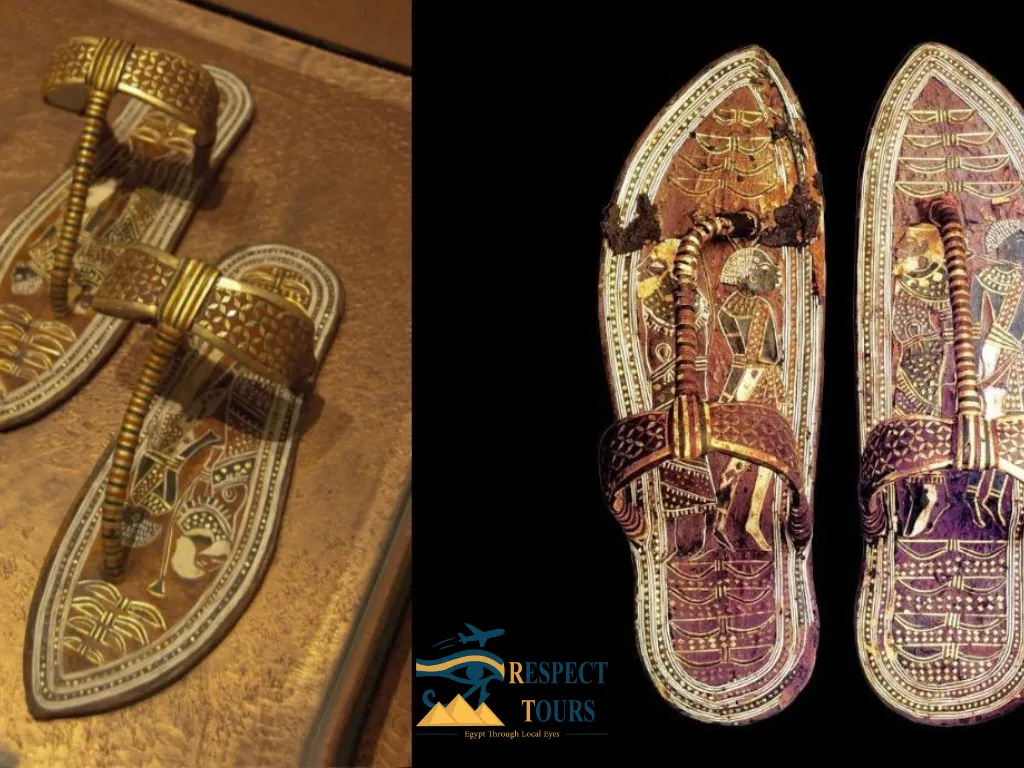
1. He Had Multiple Physical Disabilities
Modern medical analysis revealed:
- Club foot requiring a cane (130 walking sticks found in the tomb)
- Cleft palate and pronounced overbite
- Bone disease and malaria
- All likely consequences of royal intermarriage
2. Two Stillborn Daughters Rest With Him
Two small coffins contained mummified fetuses; genetic analysis confirmed they were Tutankhamun and Ankhesenamun’s daughters. Both were born prematurely; neither survived. These remains suggest genetic issues preventing viable heirs.
3. His Tomb Was Robbed Twice in Antiquity
Evidence shows thieves entered shortly after the burial, taking portable items like oils and perfumes. After each robbery, officials reorganized remaining items and resealed the tomb. The hasty restacking explains why Carter found objects somewhat disorganized.
4. He Owned a Dagger Made From a Meteorite
One of his burial daggers has an iron blade forged from meteoritic iron, metal that literally fell from the sky. Chemical analysis confirmed its extraterrestrial origin, making it one of the earliest examples of iron working in Egypt and demonstrating the value placed on this otherworldly material.
5. The Golden Mask May Have Been Made for Someone Else
Some Egyptologists argue the burial mask shows modification signs, cartouches, and facial features possibly altered for Tutankhamun rather than its original intended owner (possibly Nefertiti or Smenkhkare). His unexpected death required hasty burial preparations, supporting this theory.
Where to See King Tutankhamun’s Treasures Today
The Grand Egyptian Museum, Cairo
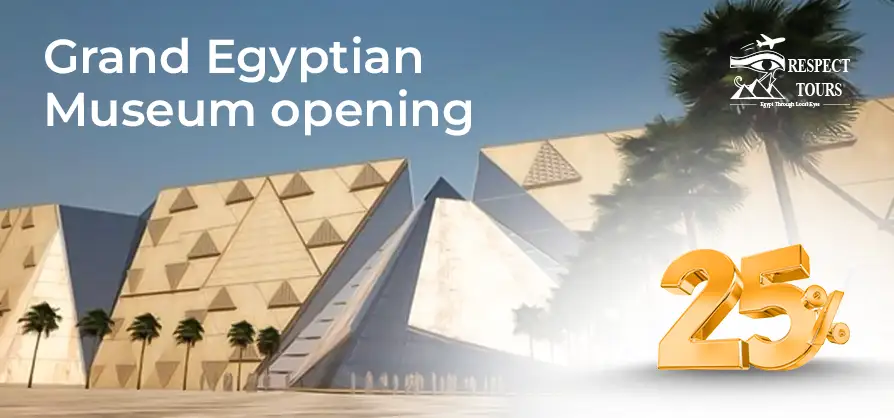
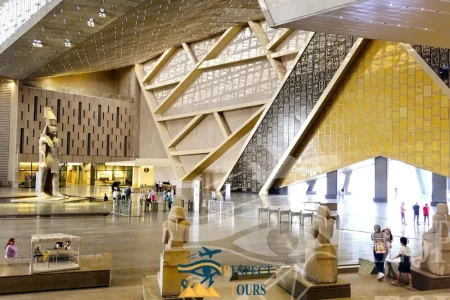
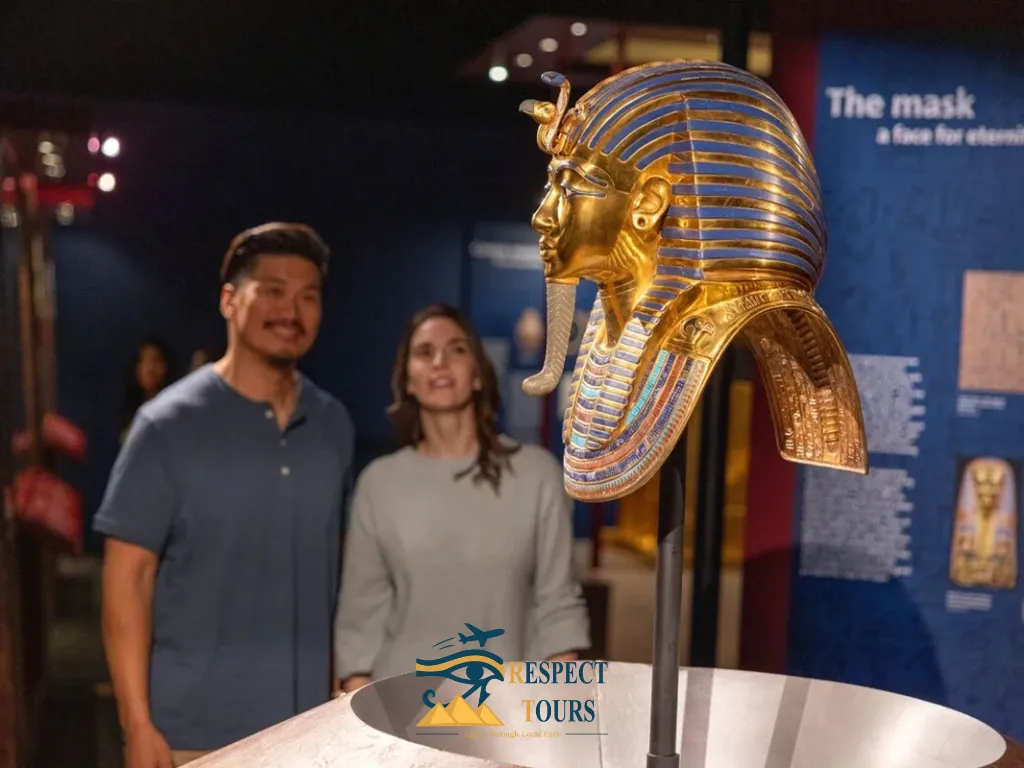
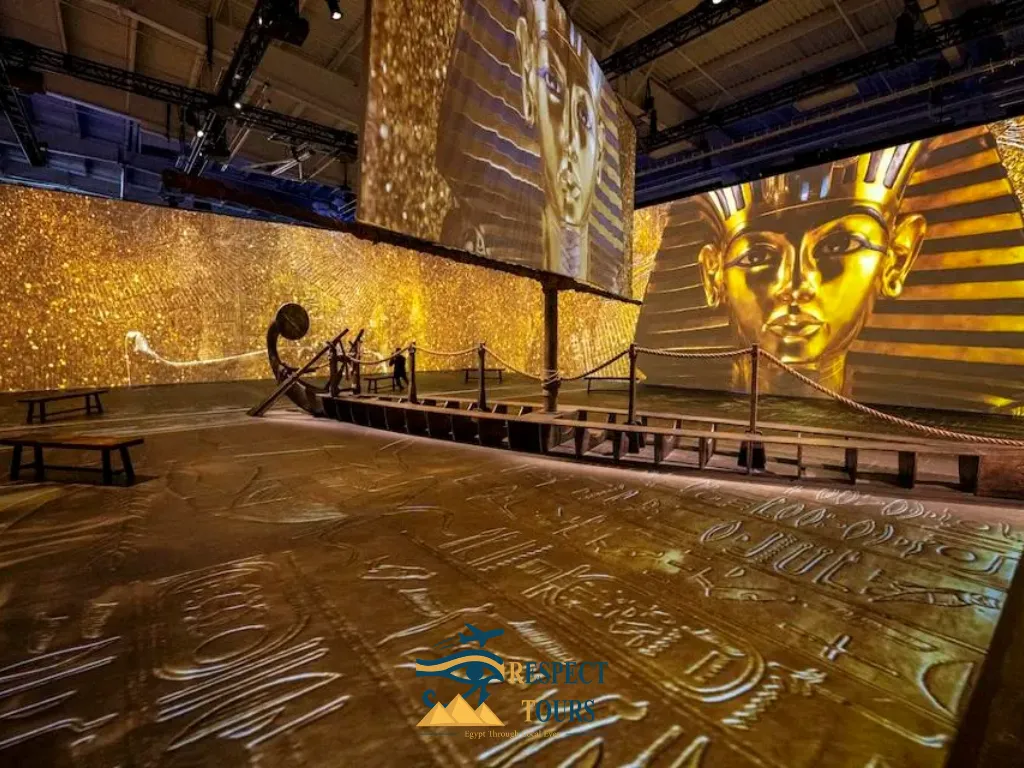
The Grand Egyptian Museum (GEM) near the Pyramids of Giza houses the complete collection, over 5,000 objects displayed together for the first time in history.
What You’ll See:
- The golden mask and all three coffins
- All four gilded shrines
- Chariots, thrones, beds
- Complete jewelry collection
- Weapons, musical instruments
- Canopic jars and ritual objects
- Thousands of everyday items
Why Visit Now: Previously, treasures were split between the Egyptian Museum in Tahrir Square, storage facilities, and traveling exhibitions. This is the first time everything is displayed in one purpose-built, world-class facility.
Location Advantage: You can visit the Pyramids of Giza (built 1,200 years before Tutankhamun) and explore his treasures in one remarkable day.
Valley of the Kings, Luxor
Tutankhamun’s actual tomb (KV62) remains accessible, though most treasures now reside in Cairo.
What Makes It Special:
- Standing where Howard Carter made his discovery
- Seeing painted walls depicting the afterlife journey
- Viewing the outer sarcophagus still in place
- Understanding why the small size helped it survive
Conservation Note: Access is sometimes limited or requires special tickets due to preservation concerns.
Combine with: Karnak Temple (where the Restoration Stela stands), Luxor Temple (his building projects), and dozens of other tombs from ancient Thebes.
Planning Your King Tut Experience
Best Time to Visit: Egypt’s ideal travel season runs from October through March, when temperatures are comfortable for exploring outdoor archaeological sites. The Grand Egyptian Museum is climate-controlled year-round, but combining museum visits with the Pyramids or Valley of the Kings means planning for outdoor time.
How Much Time to Allocate: The Grand Egyptian Museum deserves at least 3-4 hours to properly explore the Tutankhamun galleries and other exhibits. Combined with the nearby Pyramids of Giza, plan for a full day. If visiting the Valley of the Kings in Luxor, budget a full day there as well to see multiple tombs and the temple complexes.
Combination Opportunities: The most enriching Egyptian experiences combine multiple sites. A typical itinerary might include:
- Full day at the Grand Egyptian Museum with ancient wonders and a Tour the Pyramids of Giza.
- Flight to Luxor for Valley of the Kings, Karnak, and Luxor Temple
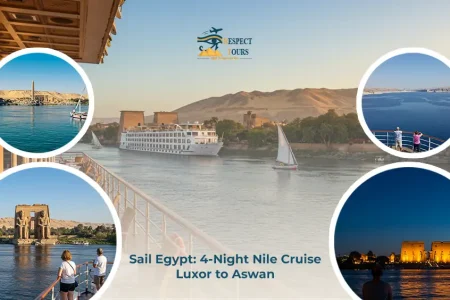
- Optional Nile cruise connecting Cairo and Luxor
Experience King Tut’s Story with Egypt’s Trusted Experts
Exploring King Tutankhamun’s accomplishments is one thing; witnessing his treasures up close is another. To truly connect with the Boy King’s story, you need more than a ticket; you need insight, expertise, and authentic guidance. That’s exactly what Respect Tours provides.
Our licensed Egyptologist guides don’t just share facts; they bring ancient Egypt to life through stories that reveal the meaning behind every artifact.
You’ll discover how the famous Restoration Stela at Karnak records Tutankhamun’s return to traditional religion, why the golden mask remains the most powerful symbol of his reign, and what the objects in his tomb tell us about faith, art, and royal life in the 18th Dynasty.
With years of local experience, we make your journey effortless, offering skip-the-line access, small group tours, and custom itineraries designed around your interests and pace. Whether you’re traveling solo, with family, or in a group, we ensure comfort, safety, and storytelling that turns history into a living experience.
Egypt’s treasures deserve to be explored with context, care, and genuine Egyptian hospitality, qualities that Respect Tours has proudly delivered to travelers from around the world.
Conclusion
King Tutankhamun’s accomplishments during his brief reign, restoring traditional religion, rebuilding temples, reviving Egypt’s economy, and stabilizing a kingdom in crisis, were remarkable for any ruler, let alone one who died before age 20. But his greatest gift to humanity came after death: an intact tomb that has educated millions about ancient Egyptian civilization and inspired wonder across generations.
Today, the Grand Egyptian Museum offers an unprecedented opportunity to see the complete Tutankhamun collection, over 5,000 artifacts displayed together in a world-class facility that honors their historical and artistic significance. From the iconic golden mask to the smallest everyday objects, these treasures tell the story of a culture that achieved extraordinary sophistication 3,300 years ago.
Step into ancient history at the Grand Egyptian Museum, explore over 5,000 treasures of the Boy King, and witness the legacy of King Tutankhamun that continues to shape our understanding of ancient Egypt.
Book your Grand Egyptian Museum tour today and witness King Tut’s legacy up close.
FAQ: Frequently Asked Questions
What was King Tut’s greatest achievement?
Restoring traditional Egyptian religion after Akhenaten’s monotheistic revolution was his greatest legacy, documented on the Restoration Stela at Karnak.
He reversed Akhenaten’s policies, reopened temples, restored priesthoods, revived diplomacy, and brought Egypt back to its traditional gods and cultural stability.
KV62 is the most intact royal tomb ever found, containing over 5,000 original objects that reveal how Egypt’s pharaohs prepared for the afterlife.
The golden mask is on display at the Grand Egyptian Museum in Giza, along with the full Tutankhamun collection in a dedicated gallery.