
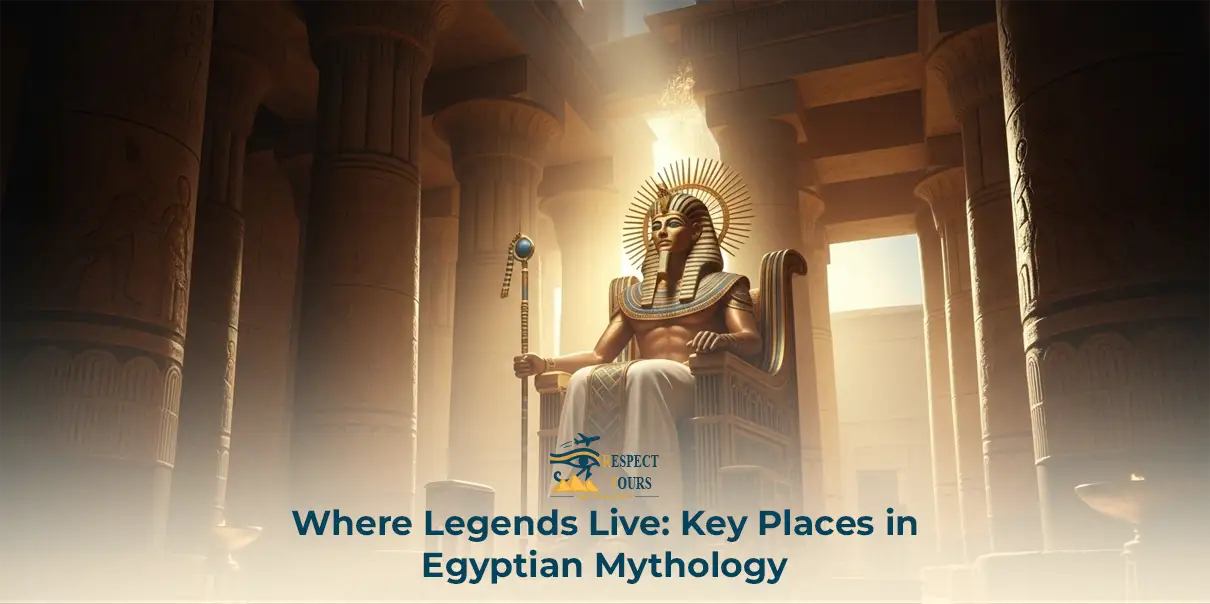
Quick answer: “Places in Egyptian Mythology” are (1) real cult centers (Abydos, Heliopolis, Thebes/Karnak), (2) lost or rediscovered cities (Heracleion/Thonis, Tanis, Pi-Ramesses), and (3) mythic realms (the Duat, Aaru, the Primeval Mound/Benben). Together, they anchor Egypt’s creation stories, divine kingship, and the journey after death.
If you’re searching for Places in Egyptian Mythology, you’re really asking where Egypt’s gods lived, where creation “began,” and where the dead traveled. This guide maps each place to its ruling deity and function: Abydos–Osiris (death–rebirth), Heliopolis–Atum/Ra (creation, Ennead, Benben), Hermopolis, Thoth (Ogdoad, cosmic egg), Thebes/Karnak–Amun (divine kingship), alongside Kom Ombo–Sobek/Horus, Philae–Isis, and more. We also decode non-physical geographies, the Hall of Two Truths, Twelve Gates of the Night, Lake of Fire, and the paradise of Aaru, so you see how texts like the Book of the Dead plotted the soul’s route through the Duat.
Expect concise, entity-rich sections, comparison tables (real vs mythic), and traveler notes that connect temples and museums to their mythic roles. By the end, you’ll know what each place is, which god governs it, why it mattered, and where to see it today, from reliefs at Karnak and Philae to artifacts in Cairo and the GEM.
Abydos: The Sacred City of Osiris
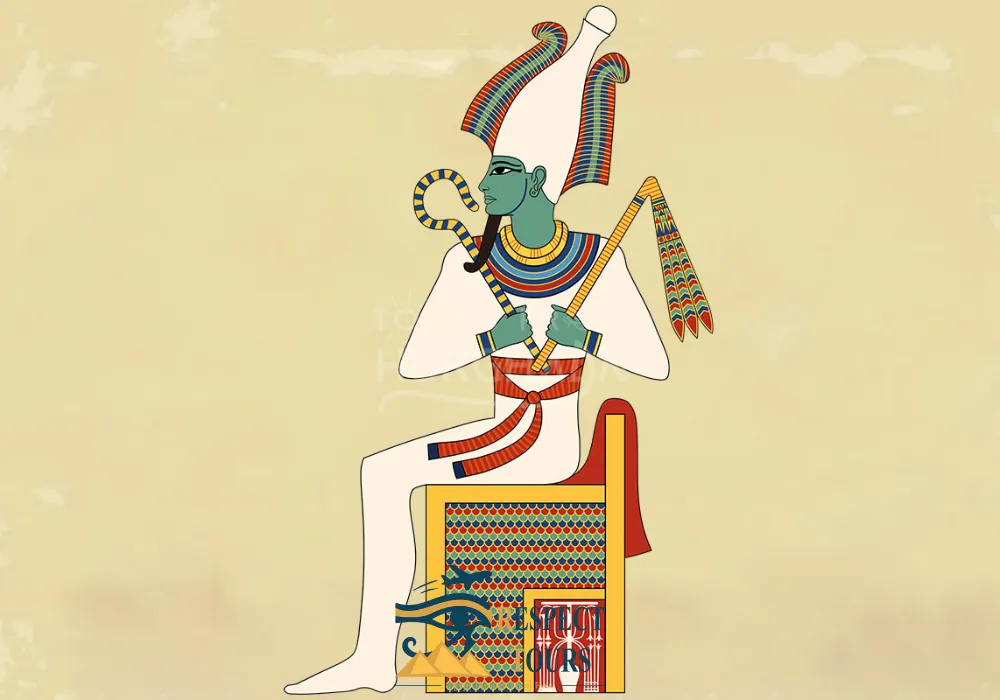
When exploring Places in Egyptian Mythology, Abydos stands as the most sacred center of divine resurrection. Located in Upper Egypt near modern Sohag, it was believed to be the burial place of Osiris, the god of the afterlife. More than a city, Abydos was Egypt’s spiritual threshold between life and eternity.
Why Abydos Mattered
In myth, Osiris was murdered by his brother Seth and resurrected by Isis, symbolizing the eternal victory of life over death. Abydos became the physical stage for this mythic drama. Every year, Egyptians gathered to reenact the Osiris Mysteries, processions that mirrored the god’s death, dismemberment, and rebirth, rituals that promised renewal for both the land and the soul.
What to See in Abydos Today
- Temple of Seti I: A masterpiece of relief art, containing the Abydos King List, which records Egypt’s royal lineage.
- The Osireion: A symbolic underground temple representing the tomb of Osiris; its flooded halls evoke the Primeval Waters of Nun from which life arose.
- Processional Way of Osiris: The route pilgrims took to honor the god, symbolically retracing his journey to rebirth.
Mythic Symbolism
Abydos functioned as Egypt’s “spiritual north star”, a fixed point guiding both pharaohs and commoners toward eternity. In the Book of the Dead, to be “one who knows the road to Abydos” meant to be spiritually enlightened, capable of joining Osiris in the afterlife.
Elephantine City: Island of Creation and Khnum
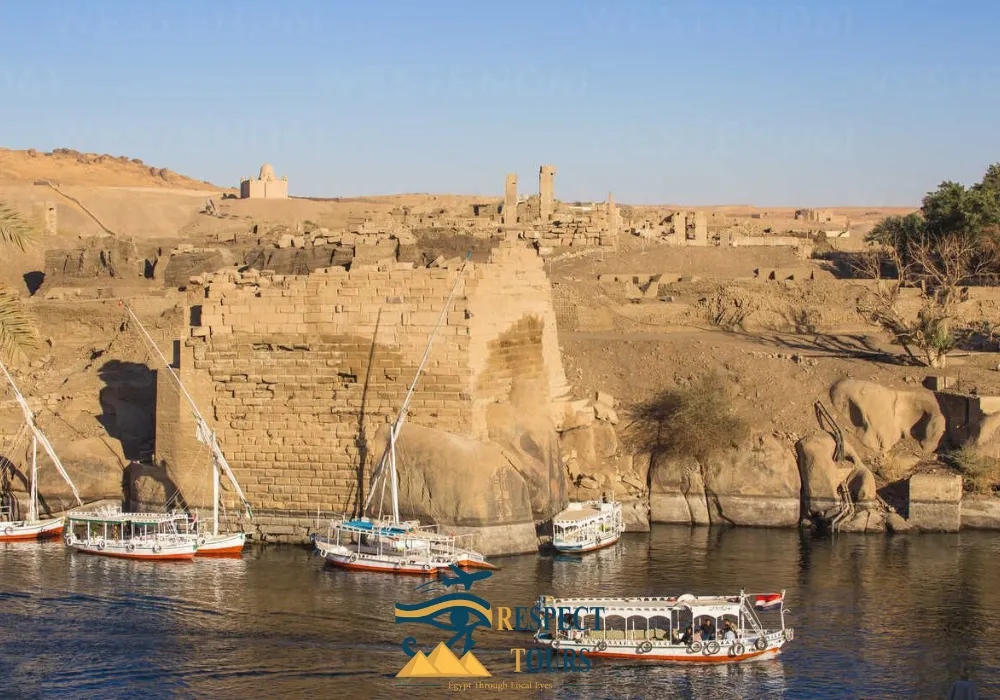
If Abydos was Egypt’s city of resurrection, then Heliopolis was the city of creation. Known in ancient Egyptian as Iunu (“The Pillar”), Heliopolis, now a northeastern suburb of modern Cairo, was the shining center of solar theology and one of the most important Places in Egyptian Mythology.
Why Heliopolis Mattered
In Egyptian cosmology, Heliopolis was where the world began. From the endless waters of Nun, the Primeval Mound emerged, the first land. On this mound stood the creator god Atum, who brought forth the first divine pair, Shu (air) and Tefnut (moisture). This moment of emergence was symbolized by the Benben Stone, a sacred pyramid-shaped relic believed to radiate the power of creation itself.
Heliopolis was also home to the Ennead, the family of nine creator gods:
Atum, Shu, Tefnut, Geb, Nut, Osiris, Isis, Seth, and Nephthys, the divine lineage that structured Egyptian theology.
Key Mythological Concepts
- Benben Stone: The prototype for pyramids and obelisks, symbolizing the first sunrise.
- Solar Rebirth: Every morning, the sun god Ra was believed to rise from Heliopolis, travel across the sky, and descend into the Duat at night, only to be reborn again.
- Temple of Ra-Atum: Though now lost, it was once the most radiant temple in Egypt, crowned by obelisks that reflected the first light of dawn.
Archaeological & Modern Insights
Only fragments of ancient Heliopolis remain today, most notably, the Obelisk of Senusret I, standing alone amid the Cairo suburbs. Yet this solitary monument marks the origin point of Egyptian cosmology, where religion, astronomy, and kingship merged into one.
Symbolism in Kingship
Every pharaoh claimed descent from Ra of Heliopolis, asserting divine right through solar lineage. The “son of Ra” epithet found in royal cartouches stems directly from this city’s theology. Even the architecture of pyramids and temples across Egypt echoed the Heliopolitan model of creation, ascending toward the sun.
Hermopolis: The City of the Ogdoad and the Cosmic Egg
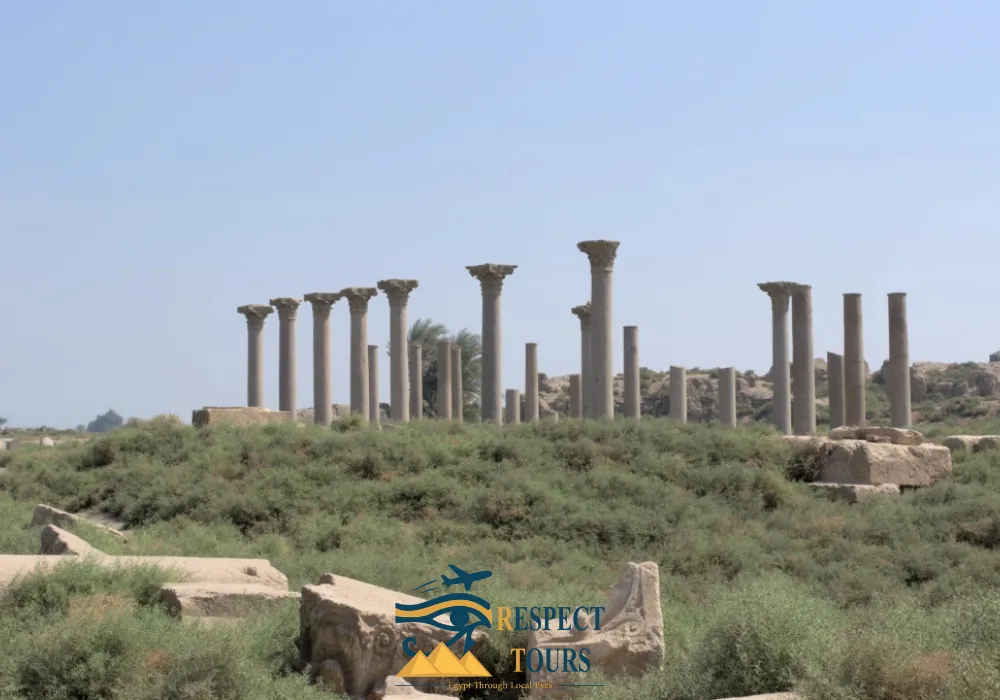
Moving from the blazing light of Heliopolis to the shadowed wisdom of Hermopolis, we enter one of the most intellectually profound Places in Egyptian Mythology. Known in Egyptian as Khmunu (“The City of Eight”), Hermopolis in Middle Egypt (modern El-Ashmunein) was the sacred city of Thoth, god of wisdom, writing, and the moon.
Why Hermopolis Mattered
If Heliopolis explained how creation began with the sun, Hermopolis explained what existed before creation. Its theology revolved around the Ogdoad, eight primordial deities, four male-female pairs, representing the chaotic elements that preceded the ordered world:From the union of these divine pairs emerged a cosmic egg, floating upon the dark waters. Within that egg, the sun god Ra was born, bringing light and order to the universe.
| Element | Male Deity | Female Deity | Meaning |
|---|---|---|---|
| Water | Nun | Naunet | The boundless deep |
| Darkness | Kuk | Kauket | Infinite night |
| Air | Heh | Hauhet | Limitless space |
| Hiddenness | Amun | Amaunet | The unseen force |
Mythological Concepts & Symbols
- The Cosmic Egg: Symbol of creation’s potential, the universe before it hatched into light.
- The Ibis & the Moon: Thoth, often depicted as an ibis-headed god, measured time through lunar cycles and recorded the birth of creation itself.
- Balance of Chaos and Order: Hermopolitan myth bridged chaos (Nun) with order (Ma’at), showing that even darkness held creative power.
Archaeological Highlights
While little remains of the grand temples that once stood here, fragments of Thoth’s temple and Greek-era foundations confirm Hermopolis’s long-standing role as a spiritual and intellectual capital. Artifacts discovered here, now housed in the Cairo Museum and GEM, include reliefs of Thoth inscribing sacred texts and lunar offerings.
Cultural Influence
Hermopolis gave birth to Egypt’s philosophical view of creation as consciousness. Thoth’s act of writing was not mere record-keeping; it was creation through language. Every hieroglyph, spoken or carved, echoed that first moment when divine speech turned chaos into cosmos.
Thebes & Karnak: The Throne of Amun and the Heart of Divine Power
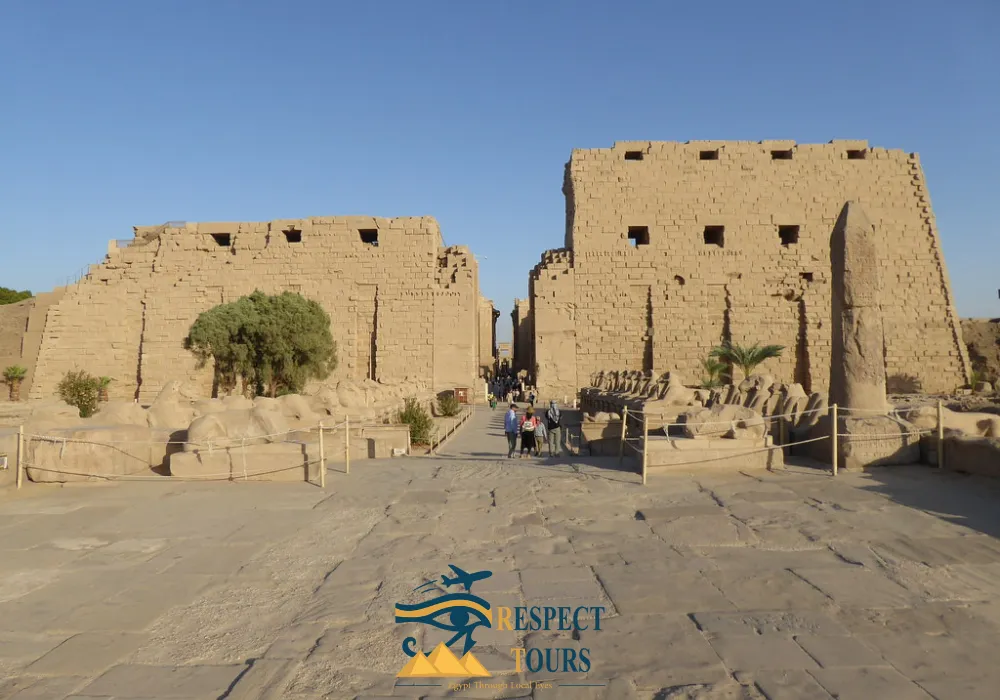
If Heliopolis was the birthplace of creation and Hermopolis the cradle of cosmic wisdom, then Thebes, modern-day Luxor, was the throne of divine kingship. Together with the Karnak Temple Complex, Thebes became the beating spiritual heart of ancient Egypt and one of the most enduring Places in Egyptian Mythology.
Why Thebes and Karnak Mattered
Thebes rose to prominence during the New Kingdom (1550–1070 BCE), when it became both Egypt’s political capital and its mythological center of divine authority. The city was dedicated primarily to Amun-Ra, the hidden god whose power permeated all existence.
According to myth, Amun was the unseen creator who merged with the sun god Ra to form Amun-Ra, lord of the heavens and ruler of the gods. This fusion of hidden and visible divinity made Thebes a sacred space where the invisible became manifest, where cosmic order (Ma’at) flowed through the pharaoh to sustain Egypt.
The Karnak Temple Complex: The Temple of Millions of Years
The Karnak Temple, located on the east bank of the Nile, wasn’t just a temple; it was a living myth, expanded by more than 30 pharaohs over 2,000 years. Its grand axis aligned perfectly with the rising sun, symbolizing divine rebirth.
Mythological Highlights:
- The Precinct of Amun-Ra: The main sanctuary, considered the earthly dwelling of the god himself.
- The Opet Festival: Each year, the sacred statue of Amun traveled by boat from Karnak to Luxor Temple, reenacting the renewal of divine kingship and fertility.
- The Hypostyle Hall: Its 134 towering papyrus columns represent the marsh of creation, where the world first emerged from the primordial waters.
This ritual procession wasn’t just a ceremony; it was cosmic theater. As Amun’s barque drifted along the Nile, the pharaoh’s power was renewed, ensuring harmony between gods and humanity.
Luxor Temple: The Temple of Rebirth
While Karnak symbolized the realm of the gods, Luxor Temple represented the birthplace of kingship. Here, the divine aspect of the pharaoh was renewed each year. The temple’s alignment with the sunset and the Nile symbolized the eternal cycle of death and rebirth, mirroring the journey of the sun god Ra through the underworld.
Architectural & Symbolic Harmony
Every stone in Thebes carried cosmic meaning. The east bank (Karnak and Luxor) represented life and sunrise, while the west bank (Valley of the Kings) symbolized death and sunset. Together, they mirrored the eternal cycle of existence that defined Egyptian religion.
Traveler Insight
Standing beneath the colossal columns of Karnak or walking the Avenue of Sphinxes that links it to Luxor Temple, travelers can feel the hum of divine order still alive in the stone. Respect Tours’ “Gods of Thebes” itinerary connects you directly to this energy, combining sunrise visits at Karnak, private access to Luxor Temple at dusk, and guided storytelling that brings the myths of Amun, Mut, and Khonsu to life under the same sky they once ruled.
Heliopolis: The City of the Sun and the Birthplace of Creation
Among all Places in Egyptian Mythology, none shines brighter than Heliopolis, the ancient City of the Sun. Known in Egyptian as Iunu (“The Pillar”), Heliopolis stood northeast of modern Cairo and served as the spiritual cradle of creation, the place where life itself was believed to have begun.
Why Heliopolis Mattered
Heliopolis was the heart of Egypt’s oldest creation myth, the Heliopolitan Ennead, a divine family of nine gods led by Atum, the self-created one. According to legend, in the beginning, there was only the dark, endless ocean of chaos (Nun). From its depths, Atum rose upon the Primeval Mound, bringing light, order, and existence into being.
From Atum came Shu (air) and Tefnut (moisture); from them came Geb (earth) and Nut (sky); and their children, Osiris, Isis, Set, and Nephthys, completed the divine family. This myth not only explained creation but also established the cosmic order that governed Egyptian religion for over 3,000 years.
Mythological Highlights
- The Benben Stone: The sacred pyramid-shaped stone that symbolized the moment of creation, when Atum first stood on dry land. It became the prototype for pyramids and obelisks throughout Egypt.
- The Obelisk of Senusret I: Still standing today in Cairo’s suburb of Matariya, this 20-meter monolith is the last visible remnant of the great Sun Temple. It marks the spiritual axis where the first light touched the earth.
- The Temple of Ra-Atum: The central sanctuary where priests greeted the sunrise each morning, reaffirming the eternal cycle of life and rebirth.
- The Ennead Cult: Every major god in the Egyptian pantheon traces lineage or mythic roots to Heliopolis, making it the cosmic origin point of all divine stories.
Symbolism and Legacy
Heliopolis wasn’t just a city; it was Egypt’s philosophical foundation. The priests of Ra developed a theology where sunlight represented both creation and resurrection. Every sunrise was the rebirth of Atum as Ra, journeying across the sky in his solar barque before descending into the underworld at night.
The city’s influence extended far beyond Egypt. The Greeks identified Ra with Helios and gave the city its modern name, Heliopolis (“City of the Sun”). Its myth of creation inspired architectural and spiritual traditions as far as Mesopotamia and Rome.
Historical & Archaeological Notes
Though most of Heliopolis now lies beneath Cairo’s modern sprawl, excavations have revealed temple foundations, sphinx fragments, and inscriptions praising Ra as “the light that never dies.” The surviving obelisk remains a silent witness to Egypt’s first theology, a single ray of stone connecting heaven and earth.
Kom Ombo: The Dual Temple of Sobek and Horus
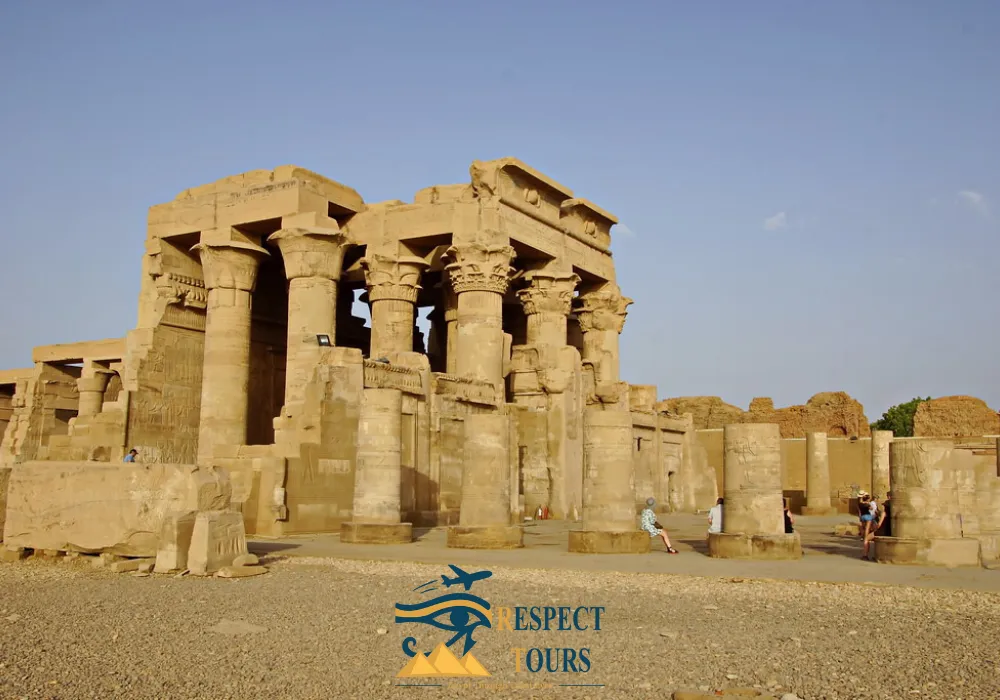
Perched dramatically on the east bank of the Nile, the Temple of Kom Ombo is one of the most mysterious and symbolically rich Places in Egyptian Mythology. Unlike any other temple in Egypt, it was built in perfect symmetry, dedicated to two opposing gods, Sobek, the crocodile god of fertility and chaos, and Horus the Elder, the falcon god of protection and divine kingship.
Here, light and darkness, order and danger, life and death existed side by side. Kom Ombo was not merely a temple; it was a cosmic balance in stone, capturing Egypt’s deepest belief that harmony could only exist through duality.
Why Kom Ombo Mattered
In mythology, Sobek ruled over the Nile’s unpredictable floods, both a giver and destroyer of life, while Horus symbolized stability, justice, and the eternal protection of the pharaoh. The temple’s twin design reflected their divine relationship: two sanctuaries, two halls, two sets of sacred carvings, all mirroring each other perfectly.
This dual worship reminded ancient Egyptians that life’s balance depended on the coexistence of opposites. Without Sobek’s fertile floods, there could be no crops; without Horus’s order, chaos would reign.
Mythological Highlights
- Sobek’s Power: As the “Lord of the Crocodiles,” Sobek represented the raw energy of nature. Myths describe him helping Isis recover Osiris’s body, protecting the Nile from evil forces.
- Horus the Elder: Associated with the sky and kingship, Horus symbolized clarity and divine protection. He was the defender of Ma’at, the universal order.
- The Dual Sanctuary: Each god had his own entrance, altar, and sacred barque (boat). Priests performed simultaneous rituals on both sides, ensuring cosmic equilibrium.
- Healing and Protection: The temple was also associated with medicine. One relief, called the “Medical Calendar of Kom Ombo,” shows ancient surgical instruments, proof that healing was part of divine order.
Symbolism and Architecture
Kom Ombo’s entire layout is a theological diagram. Every wall, pillar, and relief tells stories of balance and reciprocity:
- Crocodiles and falcons carved side by side.
- The Nile flows beneath as the lifeblood connecting both forces.
- A staircase descending into a Nilometer, measuring the flood’s level, a divine barometer of balance between plenty and disaster.
The temple’s symmetry illustrated a revolutionary concept in Egyptian spirituality: that divinity was not singular but complementary, each force validating and tempering the other.
Archaeological and Cultural Legacy
Built during the Ptolemaic period (180–47 BCE), Kom Ombo merged ancient Egyptian theology with Greek influences. The dual design fascinated early travelers, and modern excavations have uncovered mummified crocodiles, once sacred to Sobek, now displayed in the Crocodile Museum beside the temple.
The site also preserves delicate carvings of royal rituals, processions, and astrological symbols, suggesting that Kom Ombo served as both a temple of worship and a cosmic observatory.
Philae: The Sacred Island of Isis and the Power of Love & Resurrection
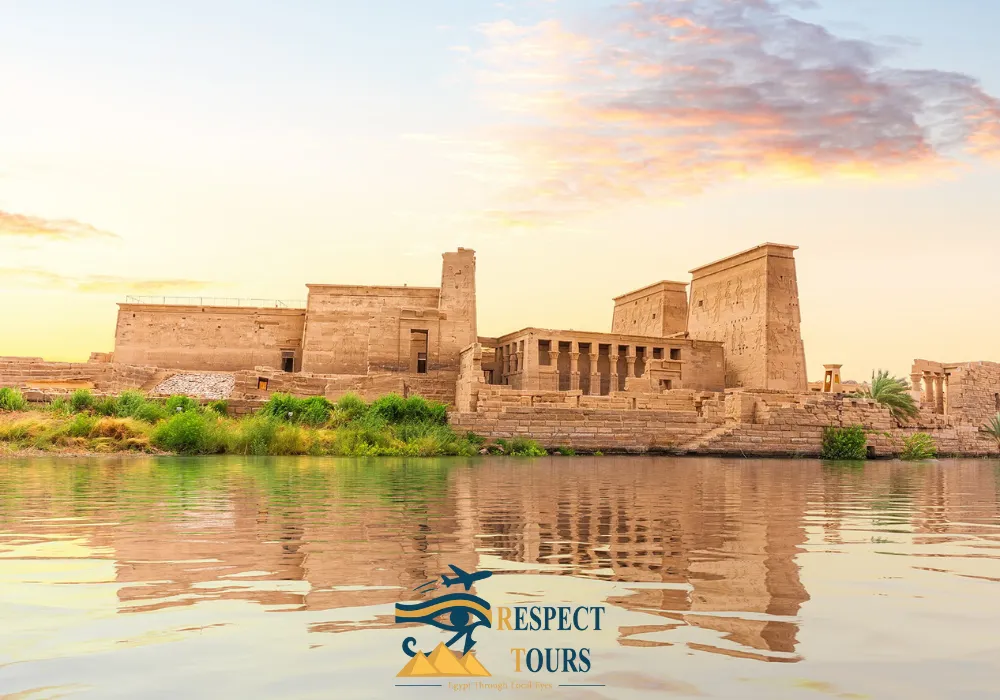
From the monumental temples of Thebes, we journey south to the tranquil waters near Aswan, where the island of Philae rises like a dream. Often called the Pearl of the Nile, Philae stands as one of the most sacred and enduring Places in Egyptian Mythology, devoted to Isis, goddess of love, magic, and resurrection.
Why Philae Mattered
In Egyptian mythology, Isis was more than a mother or magician; she was the heart of divine compassion, the protector of life, and the resurrector of hope. Philae was believed to be the site where she found and reassembled the body of Osiris after his brother Set murdered and dismembered him. Through her spells, Isis restored Osiris to eternal life, conceiving their son Horus, who would avenge his father and restore cosmic balance (Ma’at).
This myth of love overcoming death made Philae the spiritual epicenter of resurrection, a living symbol of the eternal bond between devotion and divinity.
Mythological Highlights
- The Osiris Cycle: Reenacted annually at Philae, where priests and pilgrims performed rituals symbolizing death, rebirth, and fertility.
- Temple of Isis: The centerpiece of the island, its reliefs depict Isis nursing the infant Horus, symbolizing divine motherhood and protection.
- The Abaton (Holy of Holies): Believed to contain the tomb of Osiris, accessible only to high priests.
- The Nile Connection: Every year, the Nile flood was seen as Osiris’s life returning to the land; Philae’s rituals ensured the river’s renewal.
Architectural & Symbolic Beauty
Philae’s temple complex blends Ptolemaic elegance with ancient Egyptian tradition. Columns shaped like lotus and papyrus plants symbolize rebirth, while inscriptions along the colonnades tell of Isis’s power to conquer death. The sacred island itself, surrounded by calm waters, reflected the boundary between worlds, the living and the divine.
Historical Continuity
Even as Christianity spread through Egypt, Philae remained active as one of the last sanctuaries of the ancient gods. Temples here were only closed in the 6th century CE by Emperor Justinian, making it the final stronghold of traditional Egyptian religion.
In the 1960s, when the Aswan High Dam threatened to submerge the island, UNESCO launched a monumental rescue mission. Every block of the Philae Temple was moved to the nearby Agilkia Island, where it stands today, a modern resurrection worthy of its goddess.
Traveler Insight
Visiting Philae at sunrise or under the stars is an ethereal experience. The Sound & Light Show at Philae Temple transforms its myth into living theater, narrating the love story of Isis and Osiris as waves shimmer beneath the sacred walls.
Abu Simbel Temples: The Monument of the Sun and the Gods
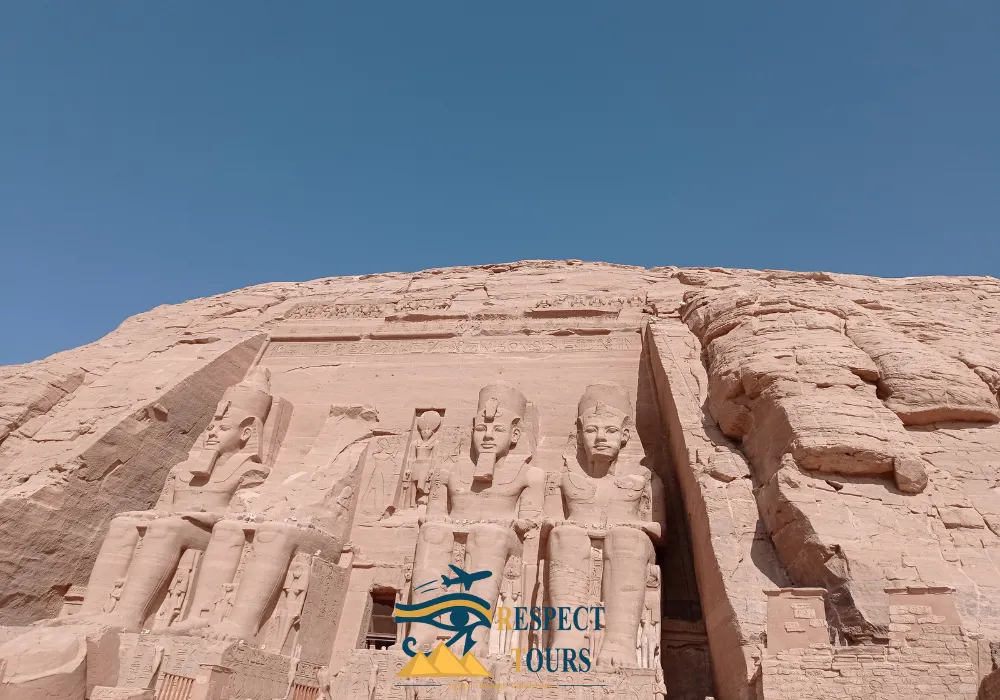
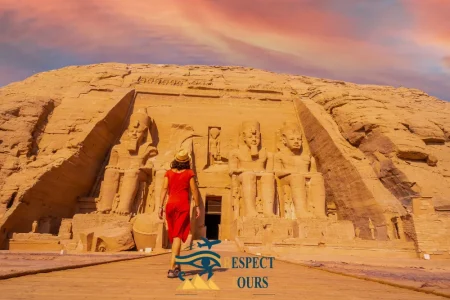
Carved directly into the sandstone cliffs of southern Egypt, the Abu Simbel Temples are among the most awe-inspiring and astronomically aligned Places in Egyptian Mythology. Built over 3,200 years ago by Pharaoh Ramses II, this monumental complex immortalized not only Egypt’s gods, Ra-Horakhty, Amun, and Ptah, but also the divine power of the king himself.
Why Abu Simbel Mattered
In ancient Egyptian theology, pharaohs were not mere mortals; they were the bridge between gods and men, responsible for maintaining Ma’at, the cosmic order. Ramses II embodied this principle more completely than any other ruler, and Abu Simbel became his sacred testament to divine kingship.
The larger temple was dedicated to Ra-Horakhty (the sun in its rising form), Amun-Ra (the hidden sun), and Ptah (the god of creation). Ramses himself was deified alongside them, reflecting his role as the “Son of the Sun” who ruled by divine right.
The Solar Miracle: Light Over Darkness
Twice each year, on February 22 and October 22, a breathtaking phenomenon occurs. The rising sun’s rays penetrate 65 meters into the temple’s inner sanctuary, illuminating the statues of Ramses, Amun-Ra, and Ra-Horakhty, while leaving Ptah, the god of the underworld, in shadow.
This solar alignment wasn’t accidental; it was deliberate, designed to synchronize the temple with cosmic rhythms. The event marked both Ramses’s coronation and his birthday, aligning human time with divine eternity. It’s one of the most remarkable examples of astronomical engineering in ancient history.
Symbolism and Mythology
The temple’s architecture reflects the union between heaven and earth. The colossal façade, with its four seated statues of Ramses II, represents permanence and godlike authority. Inside, reliefs depict Ramses’s military victories, most notably at Kadesh, symbolizing his divine protection by Ra and Amun.
Even the smaller temple beside it, dedicated to Queen Nefertari and the goddess Hathor, reinforces a sacred duality: masculine and feminine, power and beauty, sun and love.
Legacy and Modern Rediscovery
When Lake Nasser threatened to submerge Abu Simbel during the 1960s Aswan High Dam project, the temples were dismantled and relocated piece by piece, an engineering miracle of modern times. The rescue itself mirrored the myth of resurrection, a temple reborn from the flood, just as the gods renewed the world each dawn.
Alexandria: Where Egyptian and Greek Myths Met
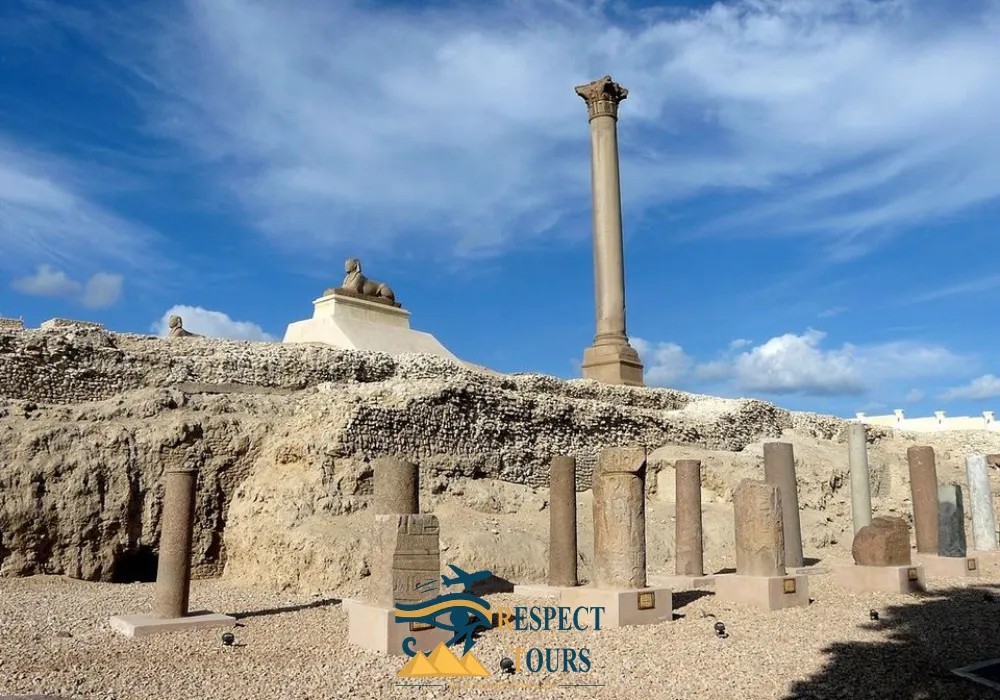
Among the Places in Egyptian Mythology, none embodies cultural fusion like Alexandria, the city founded by Alexander the Great in 331 BCE. Perched on Egypt’s Mediterranean coast, it became the crossroads of civilizations, where Greek philosophy met Egyptian theology, and new gods were born from their union.
The City of Serapis: A Fusion of Worlds
At the heart of Alexandria stood the Serapeum, a grand temple dedicated to Serapis, a deity created to unify Greek and Egyptian faiths. Serapis combined the essence of Osiris (the god of resurrection) and Apis (the sacred bull of Memphis) with features of Zeus and Hades, a god of life, death, and rebirth.
This new mythology symbolized harmony between East and West. Worship of Serapis spread throughout the Mediterranean, and Alexandria became a spiritual capital for the Hellenistic world.
Intellectual and Mythological Power
Alexandria wasn’t only a city of worship, it was a city of wisdom. The Library of Alexandria and the Museum were temples of knowledge, continuing Egypt’s ancient reverence for divine intellect (inspired by Thoth of Hermopolis).
Myths and science blended seamlessly here; astronomers studied the stars to understand the gods’ movements, while philosophers reinterpreted Egyptian theology for Greek minds.
The Living Legacy
Though much of the ancient city lies beneath modern Alexandria, the Serapeum ruins, the Pompey’s Pillar, and the Catacombs of Kom el-Shoqafa still echo with the city’s hybrid mythology, where Egyptian tomb art depicts Greek gods, and Hellenistic sculpture bears the grace of the Nile.
Crocodilopolis: The City of Sobek
Hidden in the lush Faiyum oasis lies one of the most fascinating and unusual Places in Egyptian Mythology, Crocodilopolis, known to the ancients as Shedet. This city was dedicated to Sobek, the crocodile god who ruled over the Nile’s fertility, strength, and primal energy.
Why Crocodilopolis Mattered
To the Egyptians, the Nile was the source of all life, but it could also be unpredictable and dangerous. Sobek embodied both faces of the river: nurturing and destructive, calm and violent. As the guardian of the Nile’s waters, he ensured annual floods brought abundance instead of chaos.
In Shedet, the people worshipped living crocodiles as divine incarnations of Sobek. These creatures, called “Petsuchos,” lived in sacred pools within the temple complex, adorned with gold and jeweled collars, fed honey cakes, and honored as gods.
Mythological Highlights
- Sobek the Creator: Some creation myths describe Sobek emerging from the primeval waters (Nun), giving birth to light and life, making him a symbol of regeneration.
- Sobek’s Dual Nature: In the Book of the Dead, he guides the pharaoh across the Nile in the afterlife, protecting him from chaos. Yet he was also a fierce warrior deity, invoked in battles for strength and courage.
- The Temple of Sobek: Archaeological remains at Kom el-Fakhry reveal vast enclosures where sacred crocodiles were mummified, proof that divine reverence continued long after their deaths.
Edfu Temple: The Temple of Horus
Rising majestically on the west bank of the Nile between Luxor and Aswan, the Temple of Edfu is one of Egypt’s best-preserved and most spiritually charged monuments. Dedicated to Horus the Falcon God, Edfu embodies the eternal struggle between light and darkness that defines Egyptian mythology.
Why Edfu Mattered
Horus represented kingship, divine justice, and protection, the force that maintained Ma’at, the cosmic order. At Edfu, his mythological victory over his uncle Set, the god of chaos, was commemorated in stone.
The temple’s inscriptions, spanning more than 2,000 square meters, narrate the “Sacred Drama of Horus and Set”, where Horus avenges his father Osiris and restores balance to the universe.
Mythological Highlights
- Battle of Horus and Set: The walls depict fierce battles between the two gods, with Horus ultimately triumphing, symbolizing order’s victory over chaos.
- Divine Kingship: Each pharaoh was seen as the “Living Horus,” inheriting his power to rule wisely and justly.
- The Festival of Victory: Every year, the myth was reenacted in a grand festival, where priests carried statues of Horus down the Nile to Dendera to reunite with Hathor, goddess of love.
Symbolism and Design
Edfu’s massive pylons show Horus striking down his enemies, while inside, carvings show his birth, coronation, and triumph. The temple’s perfect symmetry symbolizes harmony — a visual echo of the cosmic order Horus preserved.
Memphis: The City of Ptah
Before Thebes, before Cairo, there was Memphis, Egypt’s first capital and one of the most ancient Places in Egyptian Mythology. Located near modern Cairo, Memphis was the city of Ptah, the creator god, patron of craftsmen, and architect of the universe.
Why Memphis Mattered
According to the Memphite Theology, Ptah didn’t shape the world with his hands, but with his heart and tongue, through thought and speech. This concept, inscribed on the famous Shabaka Stone, declares that Ptah “conceived creation in his heart and brought it into being with his word.”
It’s one of the world’s earliest expressions of creation through divine intellect, centuries before similar ideas appeared in Greek or Biblical traditions.
Mythological Highlights
- Ptah the Maker: He was the craftsman of the gods, fashioning both their images and the world they ruled.
- Triad of Memphis: Ptah was worshipped with his consort Sekhmet, goddess of power and healing, and their son Nefertum, symbol of rebirth and the lotus flower.
- Center of Divine Kingship: Every pharaoh’s coronation began at Memphis, under Ptah’s blessing, making it the ceremonial birthplace of every reign.
The Pyramids of Giza: Stairway to Eternity
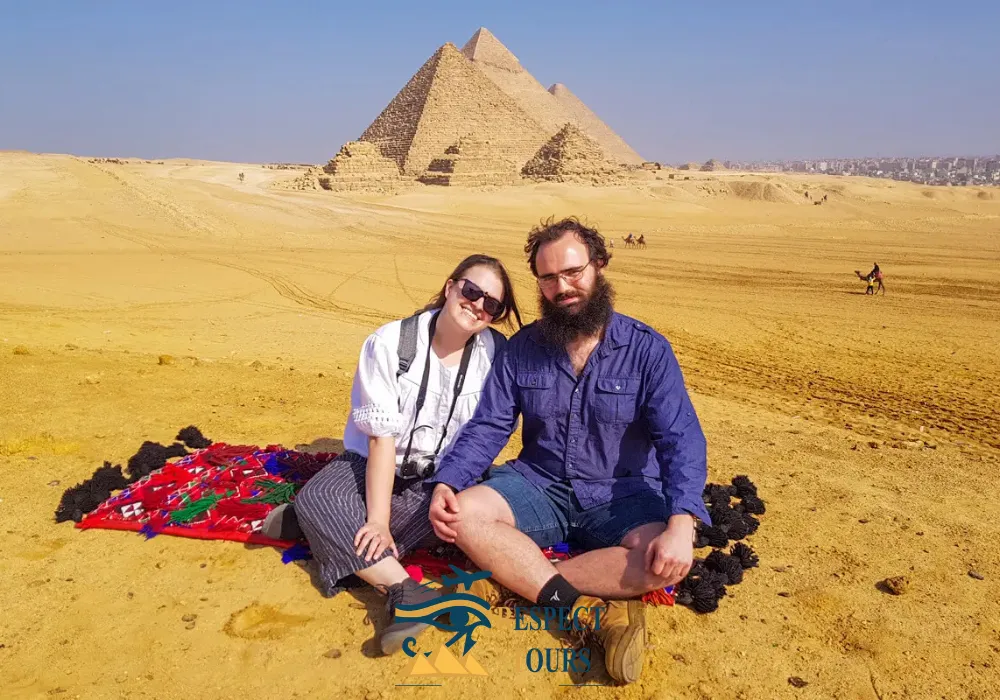
No list of Places in Egyptian Mythology would be complete without the Pyramids of Giza, eternal symbols of divine ascent and immortality. Rising from the desert plateau west of Cairo, these monumental tombs were not just royal resting places; they were portals between the human and the divine.
Why the Pyramids Mattered
Built for the pharaohs Khufu, Khafre, and Menkaure, the pyramids embodied the ancient belief that kings became gods in death. According to the Pyramid Texts, inscribed deep inside burial chambers, the king’s soul would “climb the ladder to the sky” and unite with Ra, the sun god.
Their precise alignment with the cardinal points and the celestial stars wasn’t random; it reflected the cosmic order (Ma’at) that governed both heaven and earth.
Mythological Highlights
- Divine Resurrection: Each pyramid served as a gateway to the afterlife, where the pharaoh’s ka (spirit) joined the gods.
- Solar Symbolism: The pyramid’s shape mirrored the rays of the sun, a stairway for the pharaoh to ascend to the heavens.
- Cosmic Harmony: The Great Pyramid of Khufu was aligned with Orion’s Belt, believed to be the celestial home of Osiris, lord of the afterlife.
Symbolism and Spiritual Significance
To the ancient Egyptians, the pyramids were more than monuments; they were machines of eternity, engineered for rebirth. Each limestone block was a prayer, each corridor a path toward divine union.
Lost Places In Egyptian Mythology
When we talk about lost Places in Egyptian Mythology, we are uncovering not only ancient ruins but also the religious and cultural centers where myths, gods, and kingship shaped Egyptian life. These rediscovered cities reveal how mythology influenced politics, daily life, and even urban planning.
Aten: The Golden City of Amenhotep III
Aten, also known as the “Lost Golden City,” was founded by Pharaoh Amenhotep III during the 18th Dynasty near Thebes (modern Luxor). Once a thriving administrative and industrial hub, it had houses, workshops, bakeries, and storerooms.
Although not tied to one myth, Aten reflects the divine role of Amenhotep III, who was closely associated with solar deities like Ra. Its rediscovery in 2021 revealed how a royal city blended mythology and divine kingship into everyday life, making it a significant Place in Egyptian Mythology.
Heracleion: The Sunken City of Heracles and Neith
Heracleion, also called Thonis, was once a bustling port near the Nile Delta before sinking into the Mediterranean. Rediscovered underwater in the early 2000s, it revealed temples, colossal statues, and ritual objects.
In mythology, Heracleion was linked to Heracles (by the Greeks) and the Egyptian goddess Neith, one of the oldest deities of creation and war. It was a sacred site where Egyptian and Greek religious traditions merged, giving it a special place among lost Places in Egyptian Mythology.
Tanis: The Northern City of the Kings
Tanis, located in the Nile Delta, rose to prominence as Egypt’s capital in the 21st and 22nd Dynasties. It became known as the “northern Thebes.”
The city hosted temples dedicated to Amun, Mut, and Khonsu, the Theban Triad, mirroring the worship of Thebes in Upper Egypt. Mythologically, this made Tanis a reflection of the southern capital, ensuring divine protection for Lower Egypt. With its royal tombs and temples, Tanis became an important Place in Egyptian Mythology.
Pi-Ramesses: The City of Ramesses the Great
Pi-Ramesses, founded by Ramesses II, was a magnificent capital in the Nile Delta, filled with temples, palaces, and colossal statues. It symbolized the pharaoh’s role as both king and divine representative.
Myths here centered on divine kingship and Ramesses’ close ties to Amun-Ra and Ra-Horakhty. The city is also connected to the legendary Battle of Kadesh, where Ramesses claimed divine favor in victory. Though later abandoned due to changes in the Nile, Pi-Ramesses remains a monumental Place in Egyptian Mythology, celebrating the god-king’s power.
Mythological Places in Egyptian Mythology
Not all Places in Egyptian Mythology were physical sites like temples or cities. Many existed only in myths, funerary texts, and religious imagination. These mythological places represented the journey of the soul, the origins of the cosmos, and the eternal struggle between order and chaos. They were central to how ancient Egyptians understood life, death, and the divine.
Duat: The Egyptian Underworld
The Duat was the mysterious underworld where souls traveled after death. It was described in funerary texts such as the Book of the Dead and the Amduat.
In this mythological place, the sun god Ra journeyed every night, battling Apophis, the serpent of chaos, before being reborn at dawn. For humans, the Duat was a place of trials, where the soul faced judgment before Osiris and either entered eternal life or perished. As one of the most famous Places in Egyptian Mythology, the Duat symbolized both danger and the promise of rebirth.
Aaru: The Field of Reeds
Aaru, also called the Field of Reeds, was the Egyptian paradise. It was envisioned as a perfect version of Egypt, with fertile fields, flowing canals, and endless harvests.
Souls who passed the judgment of Osiris and proved their purity were allowed to enter Aaru, where they lived eternally in peace with the gods. This mythological place represents the ideal afterlife and remains one of the most hopeful and comforting Places in Egyptian Mythology.
The Primeval Mound: The First Land of Creation
According to Egyptian cosmology, in the beginning, there was only the dark waters of Nun, the chaos of nothingness. From it rose the Primeval Mound, the first land where creation began.
It was on this sacred mound that the creator god Atum emerged, bringing light, air, and life into existence. Many temples, especially at Heliopolis, were designed as symbolic representations of the Primeval Mound, making it a foundational Place in Egyptian Mythology tied to creation itself.
The Benben Stone: Sacred Stone of Heliopolis
The Benben Stone was a sacred object in Heliopolis, symbolizing the moment of creation when the Primeval Mound first rose from Nun.
It was linked to the creator god Atum-Ra, who stood upon it at the dawn of time. Later, pyramids and obelisks were designed as reflections of the Benben, connecting royal tombs and temples to the myth of creation. As both a physical and symbolic object, the Benben Stone is one of the most powerful Places in Egyptian Mythology.
The Isle of Flames: The Fiery Island of the Gods
The Isle of Flames was a mythical place said to protect the sun god Ra. Surrounded by fire and guarded by serpents, it was unreachable by mortals or evil forces.
Texts describe it as the birthplace of divine beings and a refuge for the gods against chaos. This fiery island highlighted the cosmic struggle between light and darkness, making it another dramatic Place in Egyptian Mythology where mythic imagination shaped the universe.
Respect Egypt Tours: Your Gateway to the Sacred Places in Egyptian Mythology
At Respect Egypt Tours, we believe that exploring Egypt is more than sightseeing; it’s stepping into the very heart of history and mythology. From the grand temples of Luxor and the sacred city of Abydos to the mysterious mythological Places in Egyptian Mythology like the Duat and the Field of Reeds, we craft journeys that bring these timeless stories to life. Our expert guides don’t just show you monuments; they share the myths, gods, and legends that shaped one of the greatest civilizations on earth.
Discover Egypt with respect, passion, and authenticity. Book your unforgettable journey today with Respect Egypt Tours and walk where gods and pharaohs once stood.
Conclusion
From grand temples and bustling capitals to lost cities buried in sand and purely mythological realms, the Places in Egyptian Mythology continue to reveal the heart of one of the world’s greatest civilizations.
They were not just locations but living symbols where gods, kings, and people connected through faith and ritual. Exploring these places, whether real or mythical, allows us to step closer to the spiritual vision of the ancient Egyptians and understand how their myths shaped history, culture, and identity.
FAQ: Frequently Asked Questions
What are the main “Places in Egyptian Mythology”?
Three buckets: real cult centers (Abydos–Osiris, Heliopolis–Ra/Atum, Thebes/Karnak–Amun), lost/rediscovered cities (Heracleion/Thonis, Tanis, Pi-Ramesses, Aten “Golden City”), and mythic realms (the Duat, Aaru/Field of Reeds, the Primeval Mound and Benben).
At Heliopolis on the Primeval Mound, when Atum rose from Nun and birthed the Ennead, symbolized by the Benben Stone (prototype for pyramids/obelisks).
Hermopolis (Khmunu) with the Ogdoad, eight primordials (Nun/Naunet, Heh/Hauhet, Kuk/Kauket, Amun/Amaunet). From them emerges the cosmic egg, hatching the sun.
Heracleion/Thonis (sunken port of Neith, Greek–Egyptian cult), Tanis (Delta “northern Thebes”), Pi-Ramesses (Ramesses II’s royal capital), and Aten (“Golden City” of Amenhotep III).