

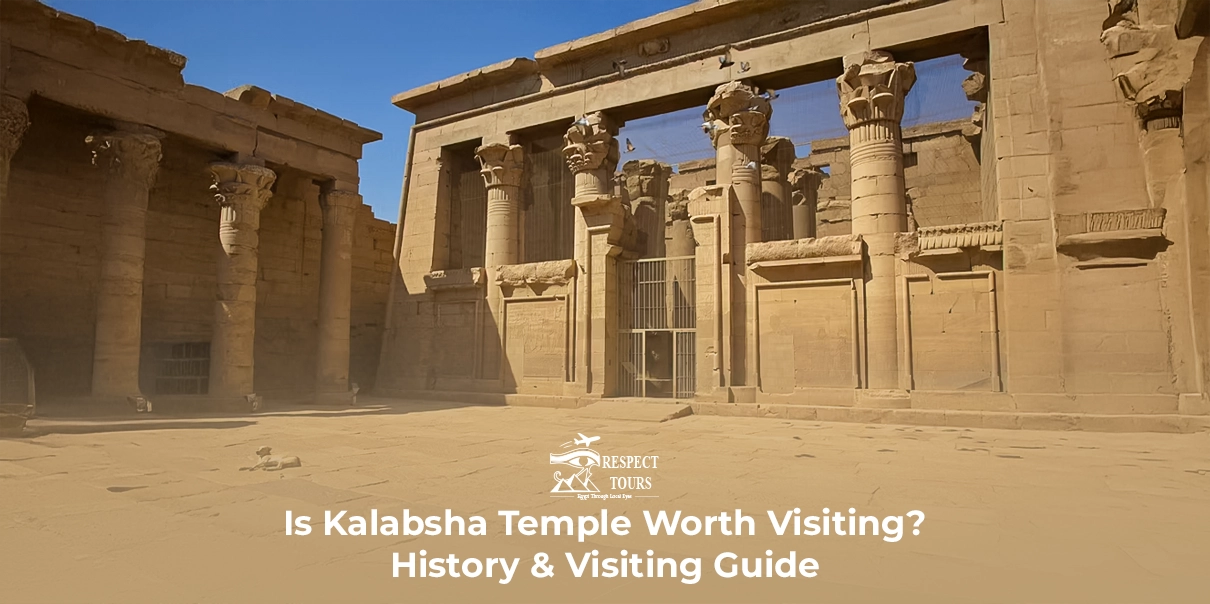
Set on a quiet island in Lake Nasser, just south of the Aswan High Dam, Kalabsha Temple is more than an ancient Roman-era monument; it is a survivor. In the 1960s, as the waters of Lake Nasser began to rise, Kalabsha Temple was carefully dismantled stone by stone and relocated 50 kilometers to higher ground.
More than 13,000 massive limestone blocks were numbered, transported, and rebuilt in a rescue effort that became one of UNESCO’s most ambitious preservation missions.
Yet Kalabsha Temple matters for more than its dramatic relocation. It represents a rare fusion of Roman power, Egyptian religious design, and Nubian cultural identity, all preserved in remarkable detail.
If you’re planning your Aswan itinerary, this complete 2026 guide, prepared by the Egypt travel experts at Respect Tours Egypt, covers everything you need to know: history, architecture, tickets, boat access, visiting tips, and how Kalabsha Temple compares to Philae and Abu Simbel.
Here’s what you need to know before you go.
What is Kalabsha Temple?
Kalabsha Temple is a Roman-era temple on Lake Nasser near Aswan, Egypt. Built around 30 BC under Emperor Augustus, it was dedicated to Mandulis, the Nubian sun god.
UNESCO relocated the temple in 1962-1963 to save it from flooding when Lake Nasser formed behind the Aswan High Dam. Engineers dismantled 13,000 stone blocks and reassembled them 50 kilometers away, one of history’s most dramatic monument rescues.
Kalabsha Temple Quick Facts
- Location: Lake Nasser island, 12km south of Aswan High Dam
- Coordinates: 23°58′N 32°52′E
- Built: 30 BC – 14 AD (Roman period)
- Dedicated To: Mandulis (Nubian sun god)
- Style: Roman-Egyptian-Nubian fusion
- Relocated: 1962-1963 by UNESCO
- Moved: 50km from the original site at Bab el-Kalabsha
- Blocks Moved: 13,000 numbered stones
- Opening Hours: 8:00 AM – 5:00 PM daily
- Entrance Fee: 200 EGP adults, 100 EGP students
- Access: Boat only (15-20 min from High Dam marina)
Interesting Facts About Kalabsha Temple
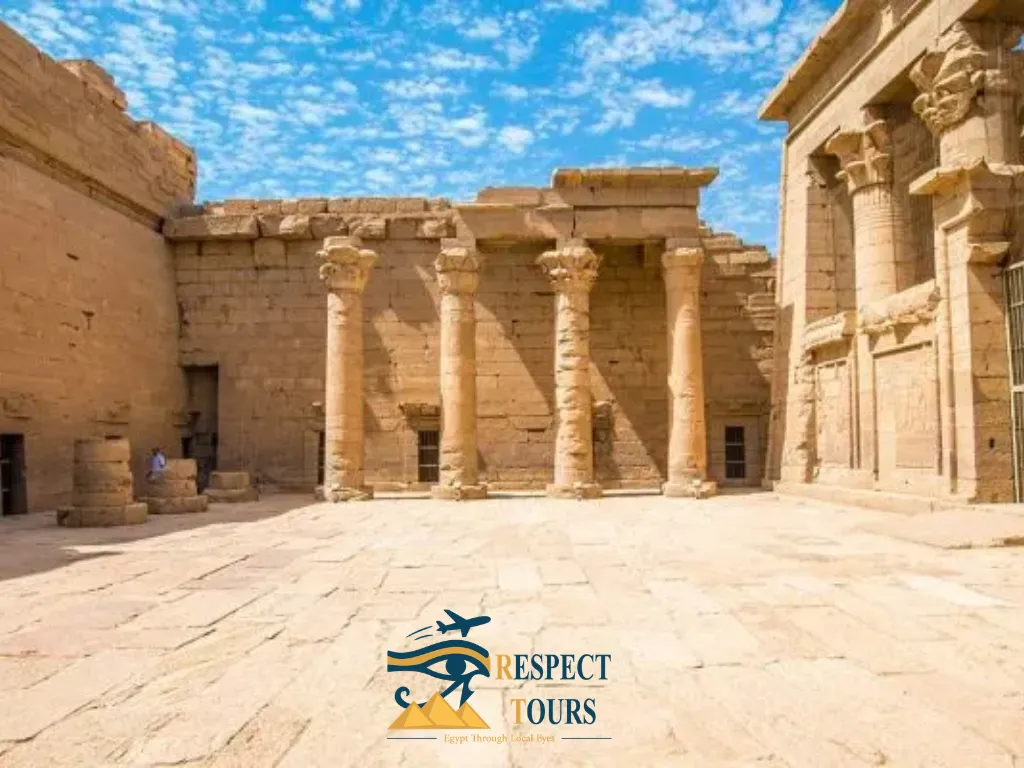
- Largest free-standing temple in Lower Nubia: Before its relocation, it was the largest of the freestanding temples in the region.
- Moved 50 km from original location: A staggering feat of engineering!
- One of 14 monuments saved by UNESCO: Part of a larger, heroic effort to preserve Nubian heritage.
- Construction never fully completed: Look for the unfinished carvings, offering a unique glimpse into ancient craftsmanship.
- Mix of Egyptian and Roman religious practices: A fascinating example of cultural and religious syncretism.
Is Kalabsha Temple Worth Visiting?
Short answer: Yes, especially for travelers wanting fewer crowds, unique architecture, and Egypt’s most dramatic rescue story.
This temple offers a unique blend of Egyptian and Roman architectural styles, dedicated to the Nubian god Mandulis. It’s less crowded than some of its more famous counterparts, allowing for a more intimate and reflective experience.
You’ll find yourself wandering through its halls, feeling the weight of history without the constant jostle of other tourists. It’s an opportunity to truly connect with the past.
Visit Kalabsha Temple if you:
- Want tranquility (20,000 visitors/year vs. Philae’s 500,000)
- Are interested in Roman Egypt and Nubian culture
- Appreciate UNESCO preservation stories
- Have 2+ days in Aswan to explore beyond the highlights
- Enjoy boat journeys and isolated archaeological sites
Skip if you:
- Only have 1 day in Aswan (prioritize Philae and Abu Simbel)
- Prefer ornate temples with intricate carvings (Philae is better)
- Have mobility challenges (boat + stairs required)
- Cannot tolerate heat (minimal shade on site)
Bottom line: Kalabsha offers intimate exploration without crowds. The Lake Nasser boat journey and isolated island setting create an atmosphere you won’t find at Aswan’s busier sites.
Our guides find that guests often rate Kalabsha as their favorite Aswan experience precisely because it feels like a personal discovery rather than a tourist attraction.
Kalabsha Temple Tickets & Prices (2026)
- Entrance Fees
| Visitor Type | Price | Notes |
|---|---|---|
| Foreign Adult | 200 EGP (~$6.50 USD) | Cash only |
| Foreign Student | 100 EGP (~$3.25 USD) | Valid ID required |
| Egyptian National | 20 EGP | Subsidized rate |
| Children Under 6 | Free | With paying adult |
- Boat Transfer Costs
- Private Boat: 400-600 EGP total (negotiable, split among group)
- Shared Boat: 100-150 EGP per person (when joining others)
What to Expect During Your Visit
- The Boat Journey
Your experience begins with a 20-minute motorboat ride across Lake Nasser’s turquoise waters. The temple grows larger as you approach, a solitary honey-colored structure against rust-red desert hills.
Watch for waterbirds during the crossing: herons, egrets, and cormorants fish in the lake’s clear waters.
First Impressions
- No vendor stalls. No souvenir hawkers. No crowds.
- Just ancient stone, desert wind, and the vast blue expanse of Lake Nasser. The entrance pylon (35m wide × 20m high) dominates your view as you disembark.
Respect Tours Egypt insight:
We deliberately schedule Kalabsha visits for early morning because the silence is part of the experience.
When you step off the boat and hear nothing but wind and water, you immediately feel the difference from busier sites. This is when our guests really understand why we include it in our Aswan itineraries.
Typical Visit Timeline
- Boat arrival: 5 minutes (docking, ticket check)
- Entrance pylon & courtyard: 15 minutes
- Hypostyle hall: 20 minutes
- Inner sanctuary: 10 minutes
- Spiral staircase & roof views: 20 minutes
- Beit el-Wali & Kiosk (optional): 20 minutes
- Return boat: 20 minutes
Total: 2-2.5 hours dock-to-dock
Physical Requirements
Fitness Level: Moderate
- Walking on uneven stone (30-40 minutes)
- Climbing a worn spiral staircase (40 steps)
- Limited shade, full sun exposure
Accessibility: Not wheelchair accessible due to boat transfer, uneven floors, and a narrow staircase.
Family-Friendly: Suitable for children 6+ who handle boats and walk well. Roof climbing excites older kids.
How to Get to Kalabsha Temple from Aswan
Kalabsha Temple sits on a Lake Nasser island, 12 kilometers south of the Aswan High Dam and 20 kilometers from central Aswan. The site is called “New Kalabsha” to distinguish it from the original submerged location.
Step-by-Step Access
- Taxi to High Dam Marina
- From central Aswan: 15-minute taxi ride
- Cost: 150-200 EGP round-trip (negotiate beforehand)
- Ask for “Kalabsha marina” or “High Dam marina.”
- Arrange the boat at the Marina.
– Private boat: 400-600 EGP (negotiate, split costs if group)
– Shared boat: Ask around to join other tourists
– Boat ride: 15-20 minutes each way
- Purchase Entrance Ticket
- At the dock before boarding
- 200 EGP adults, 100 EGP students
- Cash only
- Temple Island
- The boat docks at the island pier
- Walk 2 minutes to the temple entrance
- Explore freely, no set route
Nearby Monuments (Same Island)
- Beit el-Wali Temple: Small rock-cut temple with vivid reliefs (10-15 min)
- Kiosk of Qertassi: Elegant columned structure (5-10 min)
- Gerf Hussein remains: Partial elements from a submerged temple
Ask the boat operator to include stops at these monuments; they’re small but worthwhile additions.
Kalabsha Temple History
Roman Construction (30 BC – 14 AD)
Romans built Kalabsha during Emperor Augustus’s reign, unlike older New Kingdom temples. The location, originally at Bab el-Kalabsha, 40 miles south of Aswan, served as a religious center where Egyptian, Nubian, and Roman traditions merged.
Augustus dedicated the temple to Mandulis, a Nubian sun god with falcon features and a crown of uraei (sacred serpents). This strategic choice integrated local beliefs into Roman administration rather than imposing foreign gods.
The architecture blends Roman engineering with Egyptian religious design: classic progression from courtyard through halls to inner sanctuary, but with Roman proportions and construction techniques.
Ancient Nubian Sacred Site
The temple site was sacred long before Augustus. Archaeological evidence suggests earlier Ptolemaic-era structures occupied the location.
Kalabsha (ancient name: Talmis) served crucial religious functions in Lower Nubia. Pilgrims traveled to worship Mandulis, seeking blessings and making offerings. The temple bridged Roman authority and Nubian faith.
Unfinished reliefs on some walls suggest construction interruptions, possibly from political changes, resource constraints, or religious priority shifts during early Roman Egypt.
The UNESCO Rescue Mission (1960-1980)
When the construction of the Aswan High Dam threatened dozens of Nubian monuments, UNESCO launched the International Campaign to Save the Monuments of Nubia, one of the first global cultural rescue missions.
The Kalabsha Relocation (1962-1963):
- German engineers and Egyptian archaeologists dismantled the temple stone by stone
- 13,000 blocks, each weighing several tons, were numbered individually
- Reassembled 50 kilometers away on higher ground
- Project cost $3.6 million (equivalent to $30+ million today)
- Funded primarily by West Germany
Kalabsha was among the first and largest monuments relocated, running parallel to the more famous Abu Simbel rescue. The operation established preservation methodologies still used worldwide.
Cultural Cost
While Kalabsha’s stones survived, the broader rescue couldn’t save everything. Over 100,000 Nubian people were displaced. Dozens of villages and countless archaeological sites remain submerged beneath Lake Nasser.
The temple stands as both a preservation success and a reminder of what was lost; an estimated 80% of Lower Nubian heritage sites stayed underwater, never documented.
Kalabsha Temple Architecture
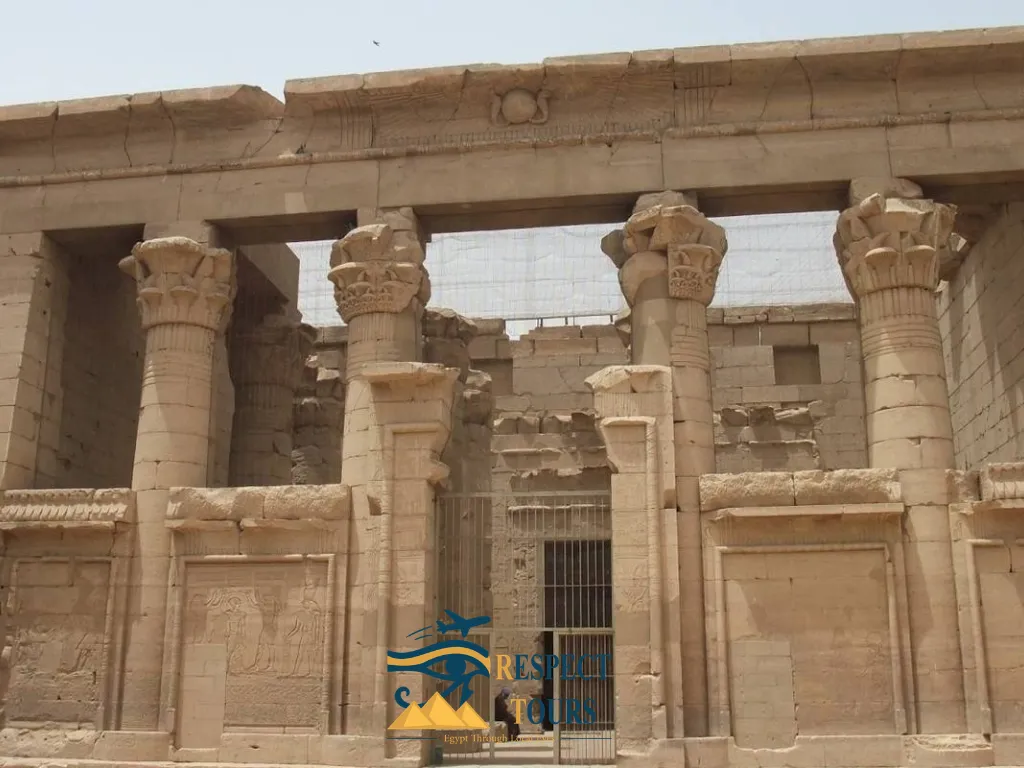
Walking through Kalabsha, you’ll immediately notice its imposing scale and the intricate details that tell stories in stone.
Temple Layout
Kalabsha follows classic Egyptian temple design despite Roman-era construction:
- Entrance Pylon
Massive gateway (35m wide × 20m high) with reliefs showing Augustus as pharaoh making offerings to Mandulis and Isis.
- Peristyle Courtyard
Open-air columned space (40m × 30m) for public ceremonies and processions. Offers panoramic Lake Nasser views.
- Hypostyle Hall
12-column interior hall where filtered light creates atmospheric shadows. Walls display detailed religious scenes and rituals.
- Inner Sanctuary
The “Holy of Holies” where Mandulis’ cult statue was housed. Empty now, but proportions convey sacred significance.
- Side Chambers
Storage rooms for ritual implements and temple treasures.
- Spiral Staircase
Hidden in the northern wall, leads to the roof terrace with 360-degree views.
Architectural Fusion
Roman-Egyptian Blend:
- Egyptian spatial progression (public → private → sacred)
- Roman proportions and engineering techniques
- Column spacing and door frames show Roman influence
- Overall form remains traditionally Egyptian
Massive Scale:
- Total dimensions: 77m long × 22m wide
- Individual blocks weigh several tons
- Precision fitting survived relocation and reassembly
Unfinished Elements:
- Outlined but uncarved reliefs on several walls
- Reveal ancient carving process: sketch first, carve later
- Suggest interrupted construction, political, or economic causes
Roof Access:
- The spiral staircase enabled priests to perform solar rituals
- Now provides visitors with spectacular panoramic viewpoints
Sacred Reliefs and Inscriptions
- Emperor Augustus Scenes:
Multiple reliefs show Augustus in pharaonic dress making offerings to Egyptian and Nubian gods. This visual propaganda legitimized Roman rule by presenting the emperor as Egypt’s rightful pharaoh.
- Mandulis Depictions:
The Nubian sun god appears frequently with falcon features, a distinctive crown, and alongside Isis, Osiris, and Horus. These scenes highlight religious syncretism, blending Nubian and Egyptian beliefs.
- Meroitic Script:
Beyond standard hieroglyphs, some walls feature Meroitic, ancient Nubia’s indigenous writing system. Though not fully deciphered, these inscriptions represent the Nubian voice within the temple.
- Ancient Graffiti:
Greek names, Latin inscriptions, and rough carvings left by ancient soldiers, pilgrims, and travelers. These informal markings connect modern visitors to individuals who stood here 2,000 years ago.
What to See at Kalabsha Temple
1. The Massive Entrance Pylon
The gateway’s scale (35m wide × 20m high) immediately establishes the temple’s importance.
Key features:
- Augustus relief making offerings to Mandulis and Isis
- Unfinished sections reveal carving techniques
- Best photographed in morning light
2. The Open Courtyard
Three-sided colonnade surrounds the spacious court. The fourth side opens to the hypostyle hall entrance.
What to notice:
- Column capital variations
- Lake Nasser views (dramatically different from the original desert setting)
- Cool breezes off the water (pleasant rest spot)
3. Hypostyle Hall Reliefs
12 columns create rhythmic shadows. Walls feature detailed religious iconography.
Look for:
- Ankh symbols (life)
- Was scepters (power)
- Djed pillars (stability)
- Offering procession scenes
- Nubian deities alongside Egyptian gods
4. Inner Sanctuary
Though the cult statue disappeared long ago, side chambers and relief fragments convey a sacred atmosphere.
Notice:
- Side chamber doorways (stored ritual implements)
- Remaining wall decorations
- Intimate scale vs. outer areas
5. Spiral Staircase & Roof
The hidden staircase (watch your footing, worn steps) leads to the roof terrace.
Views include:
- Lake Nasser stretches toward Sudan
- Rust-red Nubian desert hills
- Temple rooftop drainage channels
- Aswan High Dam (on clear days)
Best time: Morning or late afternoon for photography
Expert recommendation from Respect Tours Egypt:
The roof is where many guests have their moment at Kalabsha. You’ve climbed the ancient stairs priests used for solar rituals, and suddenly you’re standing where they stood, looking across a lake that didn’t exist in their time.
The juxtaposition of ancient ritual space, modern reservoir, and timeless desert creates this powerful sense of historical layers. We always budget extra time here because guests need it to process the experience.
6. Meroitic Inscriptions
Throughout the temple, watch for non-hieroglyphic script.
What to find:
- Meroitic text on several wall sections
- Ancient visitor graffiti (Greek, Latin names)
- Medieval traveler carvings
- These informal marks humanize the ancient experience
What You’ll Miss Without a Guide at Kalabsha
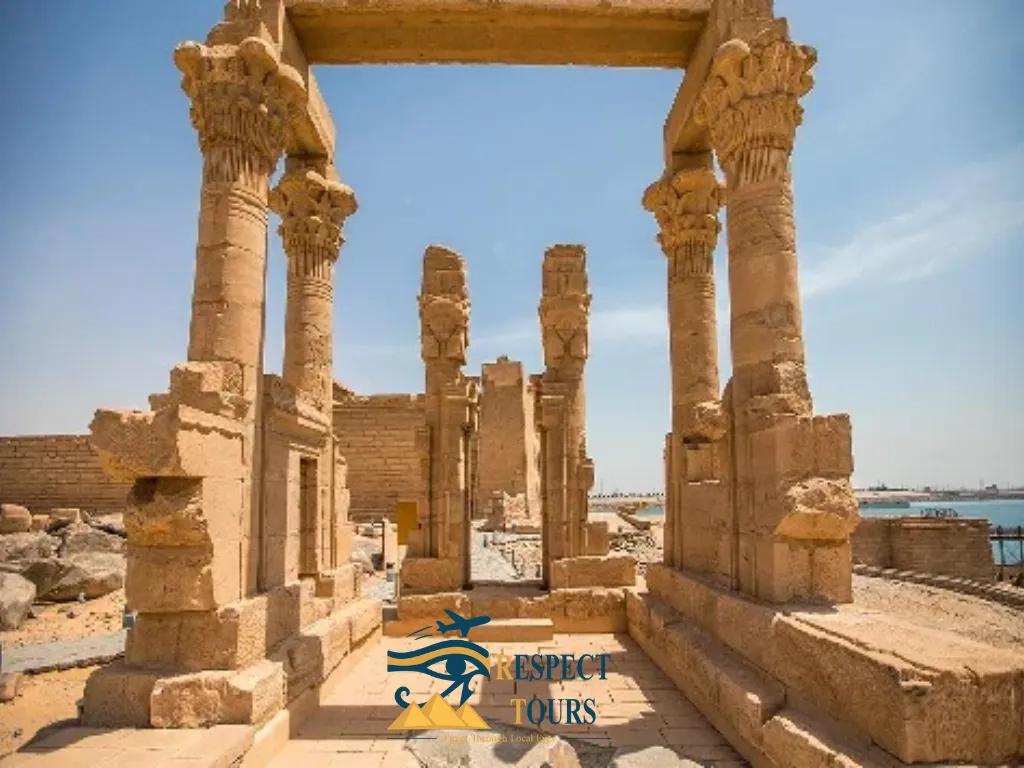
Kalabsha Temple can be visited independently. But without context, many of its most important details go unnoticed.
Here’s what most independent visitors miss:
- Augustus as Pharaoh
The reliefs showing Emperor Augustus dressed as a pharaoh weren’t decorative. They were political statements designed to legitimize Roman rule in Egypt. - The Meaning of Mandulis
Mandulis isn’t simply another deity. He represents Nubian religious continuity under Roman control, a symbol of cultural adaptation rather than conquest. - The Unfinished Reliefs
Some walls contain outlined but uncarved scenes. A guide can explain what halted construction and how ancient artists planned their work. - The Meroitic Script
Most visitors see unfamiliar symbols and assume they’re damaged hieroglyphs. In reality, they represent the indigenous Nubian writing system, rarely preserved elsewhere. - The Ritual Use of the Roof
The spiral staircase wasn’t decorative. Priests used the roof for solar rituals connected to Mandulis, as a sun god.
A knowledgeable Egyptologist transforms the visit from visual admiration into historical understanding.
Best Time to Visit Kalabsha Temple
Ideal Season: October to April
Advantages:
- Comfortable temperatures: 20-30°C (68-86°F)
- Pleasant boat rides
- Clear skies for photography
- Extended on-site time without heat exhaustion
Peak months: November through February (coolest, most popular)
Avoid: May to September
Summer heat regularly exceeds 40°C, making midday exploration dangerous.
If visiting in summer:
- Start at 6:00-7:00 AM if possible
- Bring 3 liters of water per person
- Wear light colors
- Accept you’ll need to move quickly
Best Time of Day
Morning (8:00-10:00 AM) – OPTIMAL
- Soft angled light (best photography)
- Cooler temperatures
- Fewer tour groups (most arrive 10:00 AM-12:00 PM)
- More exploration time without rushing
Midday (11:00 AM-3:00 PM) – AVOID
- Maximum sun intensity
- Stone radiates heat
- Harsh overhead light (poor photos)
Late Afternoon
- Golden hour before sunset bathes the limestone beautifully
- Sunset boat return creates memorable views
- Less common but worthwhile option
Visit Duration
Budget 1.5 to 2.5 hours total:
- Boat transfers: 40 minutes (20 min each way)
- Temple exploration: 60-90 minutes
- Beit el-Wali & Kiosk: 20 minutes (optional)
Photographers and history enthusiasts may want 3 hours for thorough exploration.
What to Bring to Kalabsha Temple
Essential Items
1-Sun Protection:
- Wide-brimmed hat
- SPF 50+ sunscreen
- Sunglasses (critical for lake reflections)
- Light scarf or shawl
2-Hydration & Snacks:
- 2 liters of water per person minimum (no facilities on the island)
- Light snacks if prone to low blood sugar
3-Footwear:
- Closed-toe shoes with a good grip
- Avoid sandals (uneven surfaces, spiral staircase)
Photography:
- Camera with a wide-angle lens (captures scale)
- Phone works fine for most shots
- Extra battery (no charging on the island)
Money & Documents:
- Cash for entrance fees (200 EGP) and boat (400-600 EGP)
- Valid student ID if applicable
- Small bills help with negotiations
Comfort Items:
- Light backpack for carrying supplies
- Hand sanitizer
- Personal medications
What NOT to Bring
- Drones (prohibited without permits, extremely difficult to obtain)
- Large bags (minimal storage at site)
- Credit cards (cash only everywhere)
- Valuable jewelry (dusty, hot conditions)
Facilities at Kalabsha Temple
Kalabsha’s remoteness is part of its charm, but it also means limited services.
Here’s what to expect:
- Basic restrooms are usually available near the entrance area.
- There are no cafés or restaurants on the island.
- No souvenir shops or vendor stalls.
- No shaded visitor centers.
- No credit card payments (cash only).
Kalabsha Temple vs Other Aswan Sites
Kalabsha vs Philae vs Abu Simbel
| Feature | Kalabsha | Philae | Abu Simbel |
|---|---|---|---|
| Era | Roman (30 BC-14 AD) | Ptolemaic/Roman (380 BC-117 AD) | New Kingdom (1264 BC) |
| Dedicated To | Mandulis (Nubian) | Isis (Egyptian) | Ramesses II |
| Style | Roman-Egyptian-Nubian | Classical Egyptian | Colossal rock-cut |
| Location | Lake Nasser island, 12km from the dam | Agilkia Island, Aswan | 280km south near Sudan border |
| Visitors/Year | ~20,000 | ~500,000 | ~300,000 |
| Crowd Level | Very low | High | Very high |
| Access | Boat from High Dam (20 min) | Boat from Aswan (15 min) | 3-4 hr drive or flight |
| Visit Duration | 1.5-2.5 hours | 1.5-2 hours | 2-3 hours (plus travel) |
| Best For | Solitude, Nubian culture | Isis mythology, beauty | Pharaonic grandeur |
| Unique Feature | Meroitic script, roof access | Sound & Light Show | 4 colossal statues (20m) |
| Transportation Cost | 400-600 EGP boat | 100-150 EGP boat | 500-800 EGP convoy/flight |
Why Visit All Three?
Each tells a different chapter of Egyptian history:
- Kalabsha: Roman-Nubian fusion + UNESCO rescue story
- Philae: Ptolemaic artistry + Isis cult significance
- Abu Simbel: New Kingdom power + unmatched scale
Together, they span 1,200+ years and demonstrate different architectural approaches (freestanding temple, island complex, rock-cut monument).
Which to Prioritize?
- 1 day in Aswan: Philae + High Dam + Unfinished Obelisk
- 2 days in Aswan: Add Kalabsha (more intimate than Philae)
- 3 days in Aswan: Add Abu Simbel day trip (requires early start)
Nearby Aswan Attractions
Aswan High Dam
A 20th-century engineering marvel that created Lake Nasser. Observation point shows massive scale (3,830m long × 111m tall). Understanding the dam explains why monument relocation became necessary.
- Visit time: 30 minutes
- Combine with: Kalabsha Temple (same area)
Philae Temple
Stunning Temple of Isis relocated to Agilkia Island. Exquisite Ptolemaic carvings depicting Isis mythology. Evening sound and light shows are available.
- Visit time: 1.5-2 hours
- Best for: Classical Egyptian beauty, detailed reliefs
Nubian Museum
Award-winning museum showcasing Nubian history from prehistoric times to the present. Covers Kerma, Napata, and Meroe kingdoms, plus the High Dam displacement impact.
- Visit time: 2-3 hours
- Best for: Understanding the Nubian cultural context
Traditional Nubian Villages
Motorboat trips to colorful villages on Elephantine Island orthe west bank. Distinctive domed architecture, henna painting, and traditional meals with families.
- Visit time: 2-3 hours
- Best for: Cultural immersion, authentic crafts
Unfinished Obelisk
Enormous abandoned obelisk still attached to granite quarry bedrock (would have been 42m tall, 1,200 tons). Reveals ancient quarrying techniques.
- Visit time: 30-45 minutes
- Best for: Understanding stone-working methods
Abu Simbel
Ramesses II’s colossal rock-cut temples (280km south). Requires early convoy departure (4:00 AM) or 40-minute flight. Four 20-meter seated pharaoh statues are unforgettable.
- Visit time: 2-3 hours (plus travel)
- Best for: Most dramatic Egyptian monument
Understanding Nubian Heritage at Kalabsha
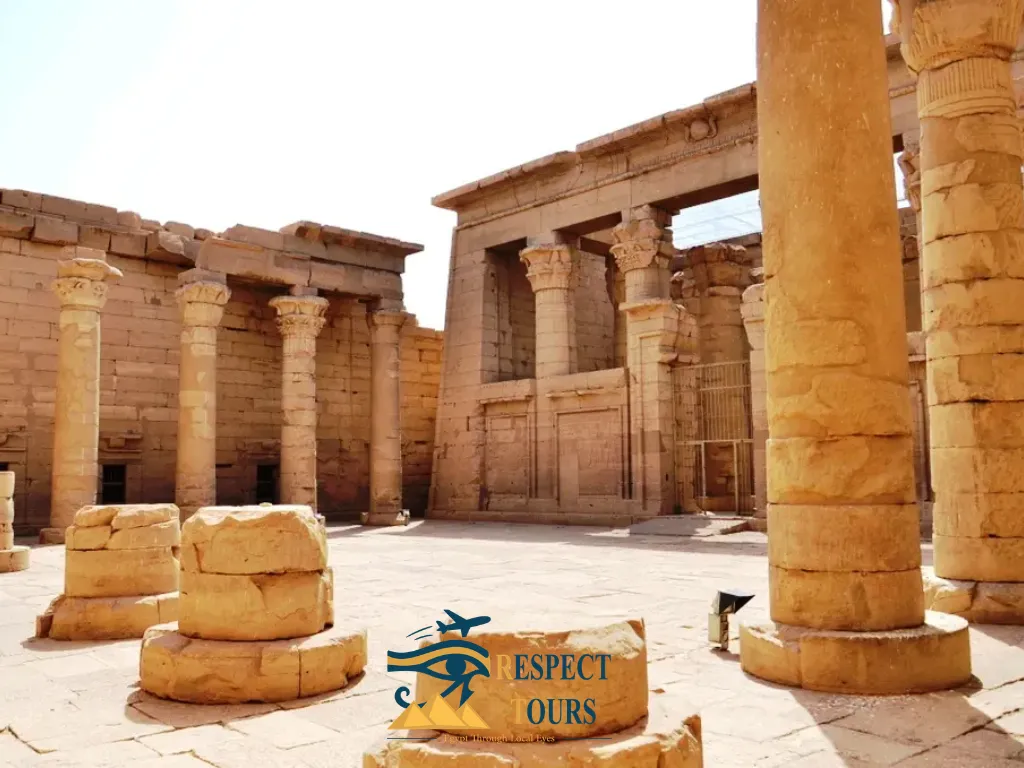
Kalabsha represents more than ancient architecture; it connects to living Nubian culture with millennia of history.
The temple’s rescue saved stones but couldn’t save everything. Over 100,000 Nubians were displaced when Lake Nasser formed. Dozens of villages and countless archaeological sites remain permanently submerged.
Living Nubian Traditions
Today’s Nubian communities maintain a strong cultural identity:
- Language: Many speak Nobiin and Kenzi, languages predating Arabic in the region
- Architecture: Brightly colored houses with domed roofs and geometric patterns reflect ancient traditions
- Crafts: Distinctive pottery, woven baskets, and jewelry maintain aesthetic connections to archaeological findings.
- Music: Unique rhythms and instruments distinct from Egyptian Arab traditions
Visiting with Respect Tours
Recognize that Nubian heritage sites aren’t merely tourist attractions, they’re sacred connections for communities who paid for development.
The temple represents what an international effort could save. The submerged villages represent what was lost.
Planning Your Aswan Itinerary
One-Day Aswan (If Time Limited)
- Morning: Philae Temple + High Dam + Unfinished Obelisk
- Afternoon: Kalabsha Temple
- Evening: Felucca sailing on the Nile
Covers major historical sites while balancing activity with relaxation.
Two-Day Aswan (Recommended)
Day 1:
- Philae Temple (early morning)
- Aswan High Dam
- Unfinished Obelisk
- Nubian Museum (afternoon)
- Felucca sunset sail
Day 2:
- Kalabsha Temple (early for best light)
- Beit el-Wali & Kiosk of Qertassi
- Nubian village lunch
- Free afternoon (souq shopping or hotel pool)
Three-Day Comprehensive Aswan
- Day 1: Temple circuit (Philae, High Dam, Obelisk, Kalabsha)
- Day 2: Cultural immersion (Nubian Museum, villages, Elephantine Island)
- Day 3: Abu Simbel day trip (early convoy or flight)
Nile Cruise Integration
Most Luxor-Aswan cruises dock 1-2 days in Aswan. Add Kalabsha as:
- Shore excursion (half-day with High Dam and Obelisk)
- Pre-cruise extension (arrive early)
- Post-cruise extension (stay after disembarking)
Why Visit Kalabsha Temple with Respect Tours Egypt?
Visiting the Kalabsha Temple independently is possible. But arranging transportation, negotiating boat prices at the High Dam marina, managing timing, and understanding the historical context can quickly turn a peaceful visit into a logistical challenge.
At Respect Tours Egypt, we include Kalabsha Temple as part of a carefully designed Aswan experience that removes the uncertainty and enhances the meaning of the visit.
Here’s what makes the difference:
✔ Seamless logistics
Private air-conditioned transfer to the marina, pre-arranged boat, entrance tickets handled in advance, no negotiation stress.
✔ Expert Egyptologist guidance
Understand why Augustus appears as a pharaoh.
Learn what Mandulis represents in Nubian religion.
Decode the unfinished reliefs and rare Meroitic inscriptions.
✔ Balanced itinerary
Combine the Kalabsha Temple with the High Dam and a visit to a Nubian Village in one smooth half-day experience.
✔ Cultural depth, not just sightseeing
We explain not only the architecture, but the human story, including the Nubian displacement and UNESCO rescue mission.
If you prefer a structured, insightful, and stress-free experience, you can explore our dedicated Kalabsha Temple and Nubian Village tour here: Trip to Aswan Egypt | Kalabsha Temple & Nubian Village
Conclusion
Kalabsha Temple is more than a quiet stop on the map of Aswan. It is a rare blend of Roman ambition, Nubian identity, and modern preservation heroism, all set against the vast blue backdrop of Lake Nasser.
If you’re looking to explore beyond the crowded highlights and experience a monument with space, depth, and meaning, Kalabsha is absolutely worth your time.
Ready to include Kalabsha Temple in your Aswan journey?
Let Respect Tours Egypt handle the logistics, expert guidance, and seamless planning so you can focus on the experience itself.
Kalabsha Temple FAQs
How do I get to Kalabsha Temple from Aswan?
Take a taxi to the marina near the Aswan High Dam (15 minutes from central Aswan). Hire a motorboat for the 15-20 minute crossing to the temple island. Boats cost 400-600 EGP total (negotiable, split among group).
What are Kalabsha Temple’s opening hours?
Daily 8:00 AM to 5:00 PM (sometimes 4:00 PM in winter). Verify current hours locally, as schedules occasionally change for holidays or maintenance.
How much does Kalabsha Temple cost?
Entrance: 200 EGP adults, 100 EGP students (with a valid international ID). Boat transfer separate: 400-600 EGP private boat or 100-150 EGP shared. Cash only.
How long does a visit take?
1.5 to 2.5 hours total, including boat transfers. Temple exploration: 60-90 minutes. Add 20 minutes if visiting Beit el-Wali and the Kiosk of Qertassi on the same island.
Why was Kalabsha Temple moved?
UNESCO relocated the temple (1962-1963) to save it from Lake Nasser flooding after the Aswan High Dam. Engineers dismantled 13,000 stone blocks and reassembled them 50 kilometers from the original site.
Can you take photos at Kalabsha Temple?
Yes, photography is permitted and encouraged. Best spots: entrance pylon, courtyard with lake backdrop, hypostyle hall columns, and roof panoramas. Flash discouraged in dark interior areas.
Is Kalabsha Temple worth visiting?
Yes, especially for travelers wanting fewer crowds (20,000 visitors/year vs. Philae’s 500,000), unique Roman-Nubian architecture, and compelling UNESCO rescue stories. Offers intimate exploration without typical tourist congestion.
Is Kalabsha wheelchair accessible?
No. Boat transfer, uneven stone surfaces, and a narrow spiral staircase make the site challenging for mobility-impaired visitors. No wheelchair access available.
What’s the difference between Kalabsha and Philae?
Kalabsha: Roman-era (30 BC), Nubian god Mandulis, fewer crowds, Roman-Egyptian fusion. Philae: Ptolemaic/Roman (380 BC), goddess Isis, more crowded, classical Egyptian ornate style. Both are worth visiting for different reasons.