

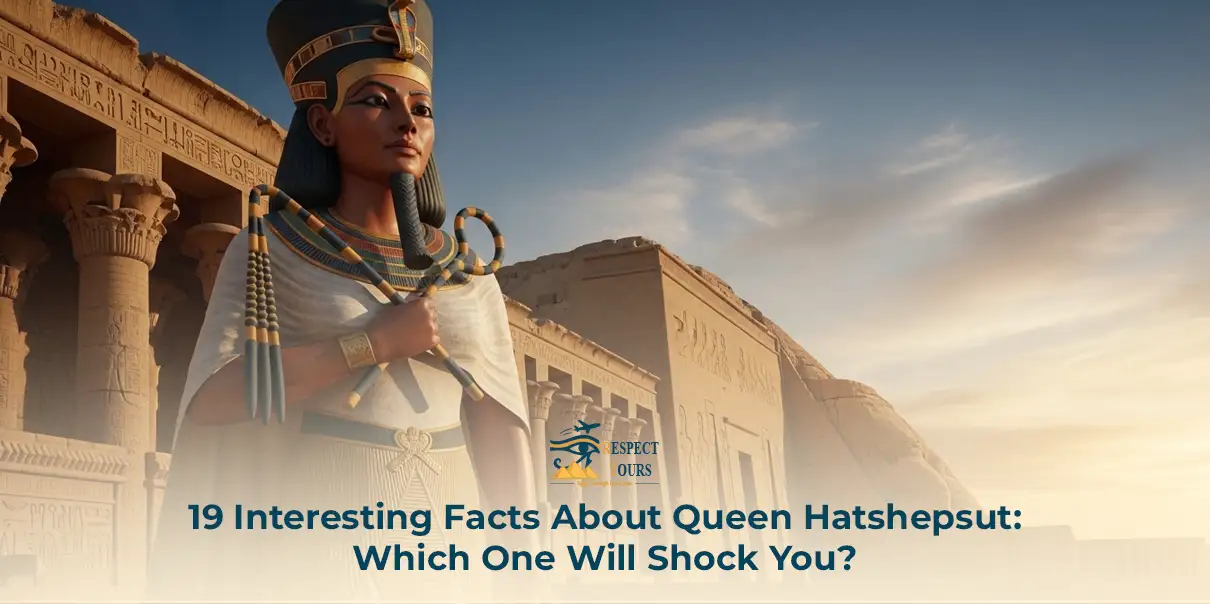
In the golden sands of ancient Egypt, one woman dared to challenge the rules of history. Queen Hatshepsut was no ordinary Egyptian ruler; she was a visionary leader, an accomplished architect, a skilled diplomat, and a pioneer who reshaped the role of women in power. Hatshepsut’s time as ruler was distinguished by stability, economic growth, and impressive architectural achievements that endure to this day
If you’ve ever dreamed of walking in the footsteps of Egypt’s most remarkable female pharaoh, Respect Tours is here to make that journey unforgettable. Our expert guides bring history to life as you explore the temples, tombs, and treasures that tell her extraordinary story.
In this article, we’ll journey through these captivating and interesting facts about Queen Hatshepsut, some well-known and others rarely mentioned, that will give you a deeper insight into the remarkable life and legacy of Egypt’s most powerful queen.
Who Was Queen Hatshepsut?
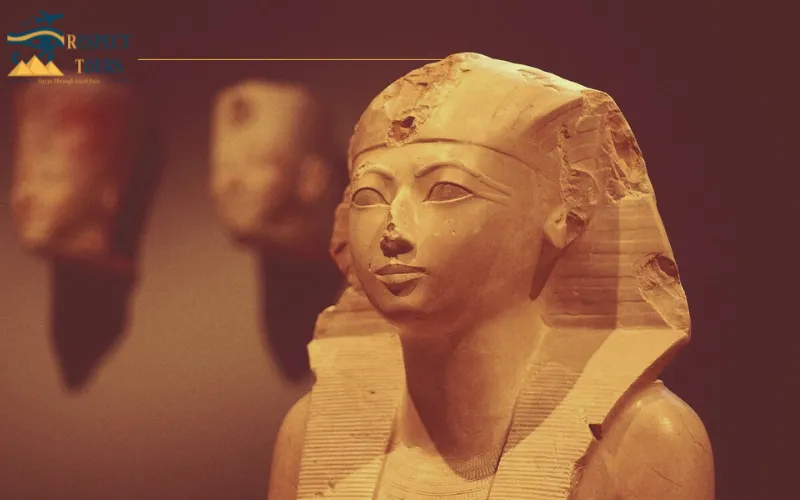
The Egyptian Queen Hatshepsut was the daughter of Pharaoh Thutmose I and became the Great Royal Wife of her half-brother, Thutmose II. When he died, she initially served as regent for his young son, Thutmose III. However, her political skill, vision, and ambition led her to take the throne as Pharaoh, a title traditionally reserved for men.
Ruling during Egypt’s Eighteenth Dynasty (around 1479–1458 BCE), she transformed the kingdom through grand building projects, successful trade expeditions, and stable governance.
Interesting Facts About Queen Hatshepsut: A brief overview
- She Was Born Into Royalty, But Wasn’t First in Line to Rule.
- She Ruled as Regent Before Becoming Pharaoh.
- She Wore the Symbols of a Male Pharaoh?
- Her Reign Was Marked by Peace and Prosperity.
- Her Obelisks and Monumental Engineering Projects.
- Senenmut: Her Architect and Trusted Advisor
- She Built One of Egypt’s Most Stunning Temples.
- She Claimed a Divine Right to Rule.
- She Was a Master of Image and Branding.
- She initiated the famous expedition to the Land of Punt.
- Her Political Alliance with Thutmose III
- Her Burial Site Was a Mystery for Centuries.
- Her mummy was identified in 2007.
- She strengthened Egypt’s religious authority.
- Her reign saw a flourishing of art and culture.
- She expanded Egypt’s international influence.
- She Inspired Generations of Women Leaders.
- You Can Still Follow Her Trail Across Egypt Today.
1 – Born Into Royalty: But Wasn’t First in Line to Rule
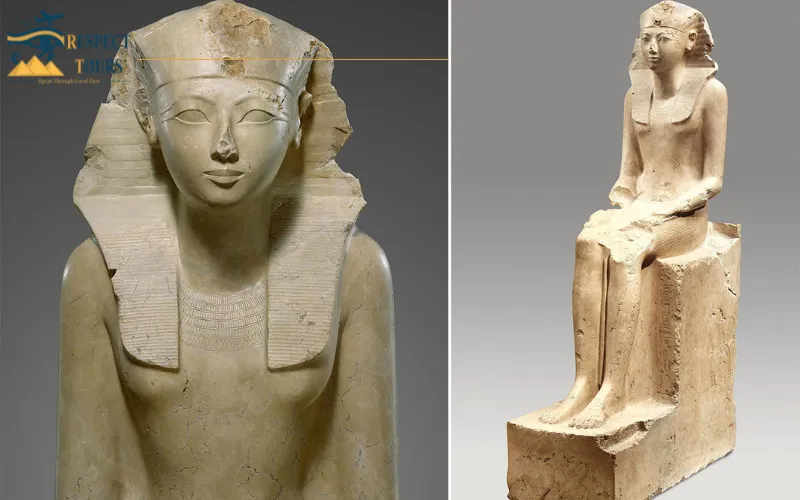
Hatshepsut entered the world around 1507 BCE as the eldest daughter and surviving child of Pharaoh Thutmose I and his Great Royal Wife, Queen Ahmose. Her birth gave her a privileged position in Egypt’s royal court, but it didn’t guarantee her the throne.
To strengthen her political influence and ensure the continuity of the royal line, Hatshepsut married her half-brother Thutmose II, following a common practice among Egyptian royalty to preserve dynastic heritage.
By doing so, she took the title of Great King’s Wife, a role that would prepare her for the extraordinary leadership journey ahead.
Quick Fact: Egyptian royal women were highly educated and often trained in religious and political affairs, skills that later helped Hatshepsut rule with confidence.
2 – She Ruled as Regent Before Becoming Pharaoh
“After the death of Thutmose II, his son Thutmose III was still a minor. As tradition dictated, Hatshepsut became regent, ruling on his behalf until he was old enough to govern.
At first, she fulfilled the expected role: managing court affairs, overseeing religious ceremonies, and ensuring Egypt’s stability. But over time, her authority grew. She began appearing in official inscriptions alongside the boy king, a sign that her political influence was no longer just temporary.
Eventually, she took the unprecedented step of declaring herself Pharaoh of Egypt, not merely a caretaker. This bold move reshaped the nation’s power structure and challenged the long-standing tradition that only men could hold Egypt’s highest title.
Quick Fact: Ancient Egyptian regents often faded into the background once the rightful ruler matured, but Hatshepsut’s reign only became stronger.
3 – Adopted the Symbols of a Male Pharaoh to Assert Authority
To solidify her authority, Hatshepsut adopted the traditional regalia of male pharaohs, including the ceremonial kilt, false beard, and the striped nemes headdress. In official statues and temple reliefs, she was often depicted with a masculine physique, though inscriptions still used feminine pronouns.
This wasn’t about hiding her gender; it was a political strategy. By presenting herself as a “king” in every visual sense, she aligned with centuries of iconography that defined Egypt’s leadership. For her subjects, this helped make her rule feel both legitimate and timeless.
Quick Fact: Some statues show Hatshepsut in full male attire, while others depict her as a woman, a rare blend of imagery for any pharaoh.
4 – Her Reign Was Marked by Peace, Prosperity, and Cultural Growth
Unlike many rulers who are remembered for military conquests, Hatshepsut’s nearly 22-year reign (as regent and pharaoh) was defined by stability, economic growth, and monumental building projects.
She focused on expanding trade, restoring temples, and commissioning art that celebrated Egypt’s divine order. This peaceful governance not only enriched Egypt’s treasury but also strengthened its cultural and religious identity. And if you dive into the most unknown secrets of Queen Hatshepsut, you’ll discover just how remarkable and forward-thinking her rule truly was.
Quick Fact: Historians often describe her era as a “golden age” of diplomacy and construction rather than warfare.
5 – Commissioned Monumental Obelisks and Engineering Projects
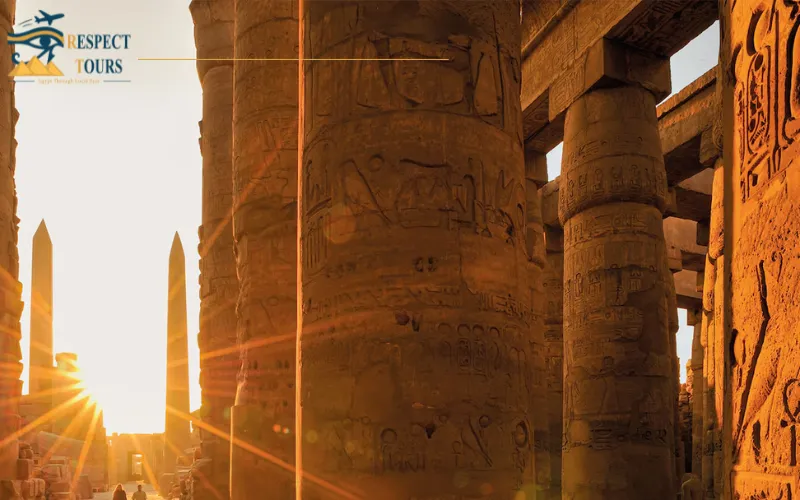
Hatshepsut, who ruled during the Eighteenth Dynasty, was a remarkable leader whose era benefited all of Egypt. She ordered the construction of some of the tallest obelisks ever erected in Egypt, primarily at Karnak Temple.
These obelisks were carved from single blocks of red granite quarried in Aswan and transported hundreds of kilometers along the Nile. One of her obelisks even became the world’s tallest at the time.
Surprising Detail: One of her obelisks still stands today in Rome, known as the Lateran Obelisk.
6 – Senenmut: The Architect and Advisor Behind Her Grand Designs
Behind Hatshepsut’s ambitious building program was Senenmut, a commoner who rose to the highest ranks of her court. He oversaw major projects like her mortuary temple and obelisks, and is believed to have tutored her daughter Neferure. His close relationship with the queen gave him more than 25 titles and a level of influence rarely seen by non-royalty.
Quick Fact: Senenmut’s name appears in over 80 inscriptions across Egypt, a sign of his status during her reign.
7 – Built One of Egypt’s Most Stunning Temples: Deir el-Bahari
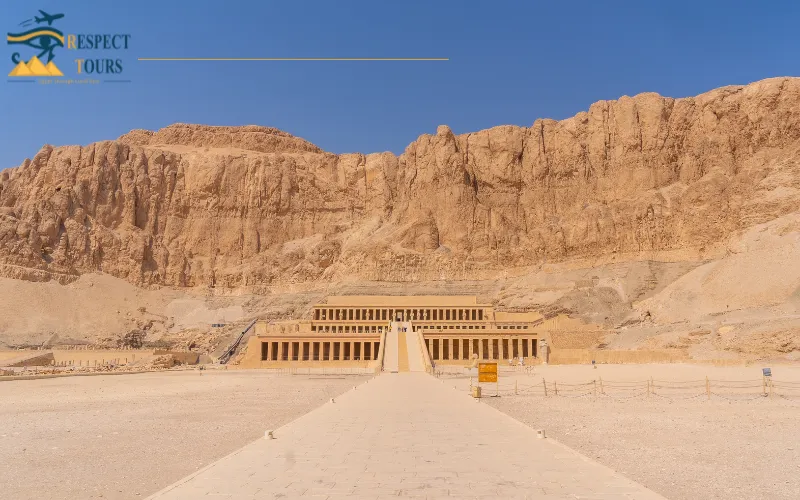
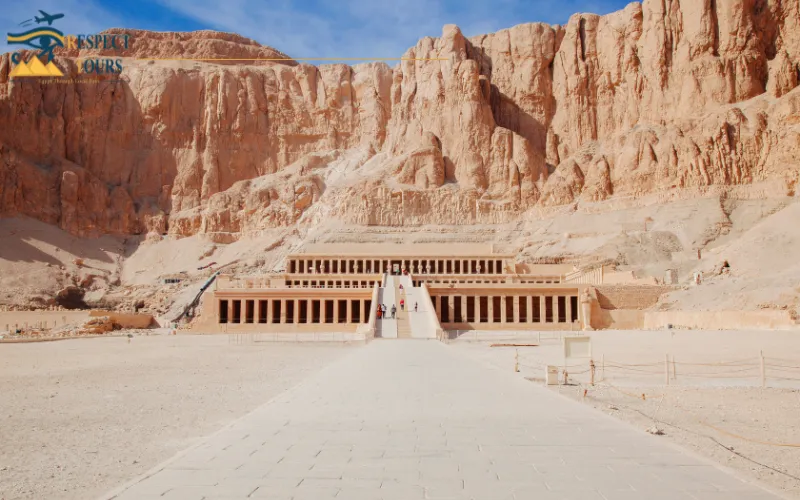
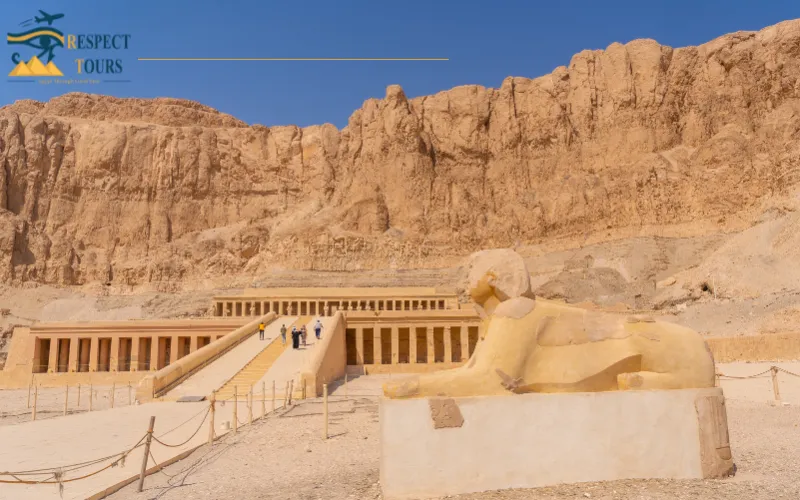
Hatshepsut’s crowning architectural achievement is her Mortuary Temple at Deir el-Bahari, located on the west bank of the Nile in Luxor. Designed by her royal architect, Senenmut, it blends seamlessly into the cliffs, creating a breathtaking harmony between nature and stone.
The temple is laid out in three terraces, connected by grand ramps and adorned with colonnades, chapels, and reliefs. These carvings document her divine birth, coronation, and the famous expedition to Punt.
Interesting Facts About Queen Hatshepsut: The temple’s design was so influential that later pharaohs, including Thutmose III, borrowed elements for their monuments.
8 – Claimed a Divine Right to Rule Through Religious Narratives
To strengthen her legitimacy, Hatshepsut promoted the belief that the god Amun was her father. According to inscriptions, Amun visited her mother in the form of Pharaoh Thutmose I, ensuring her divine conception.
This divine birth narrative wasn’t just a religious statement; it was powerful political propaganda, making her claim to the throne seem destined by the gods themselves.
Unexpected Fact: Her temple walls depict this divine birth in great detail, showing gods and goddesses actively involved in her creation and upbringing.
9 – Mastered Her Public Image and Royal Branding
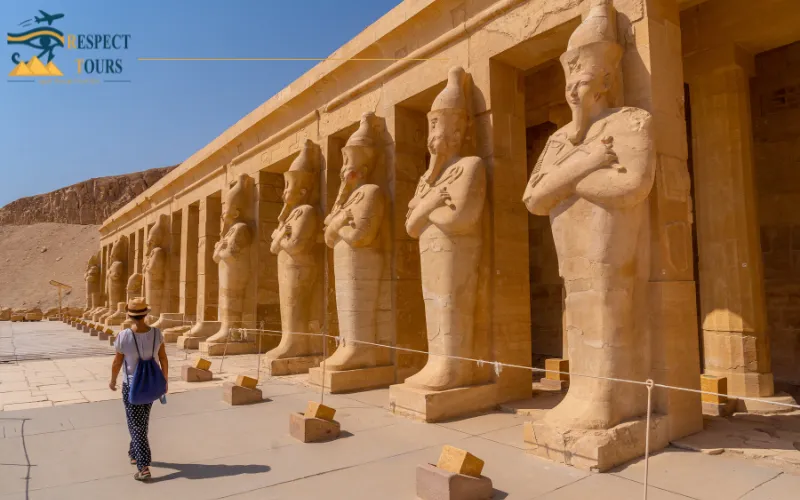
From monumental statues to carved inscriptions, Hatshepsut controlled her image with remarkable precision. She often referred to her reign as one that restored Ma’at, the ancient Egyptian concept of cosmic order and justice.
Her strategic use of titles, imagery, and monumental works ensured that she was remembered as a legitimate and capable ruler, despite breaking traditional gender norms.
Interesting Facts About Queen Hatshepsut: She used titles like “His Majesty” and “Son of Ra,” traditionally reserved for male rulers, while still allowing feminine forms in certain inscriptions.
10 – Initiated the Famous Trade Expedition to the Land of Punt
One of the most celebrated achievements of Hatshepsut was the maritime expedition to Punt (modern-day Eritrea/Somalia region). This trade mission brought back treasures like gold, ebony, exotic animals, and myrrh trees, which were planted in her temple gardens.
Her temple walls vividly illustrate the journey, ships sailing across the Red Sea, loaded with goods, and scenes of the Puntite king and queen greeting Egyptian envoys.
Did You Know? The myrrh trees from Punt were the first known recorded attempt in ancient Egyptian history to transplant foreign trees for cultivation in Egypt.
11 – Maintained Political Alliances with Thutmose III
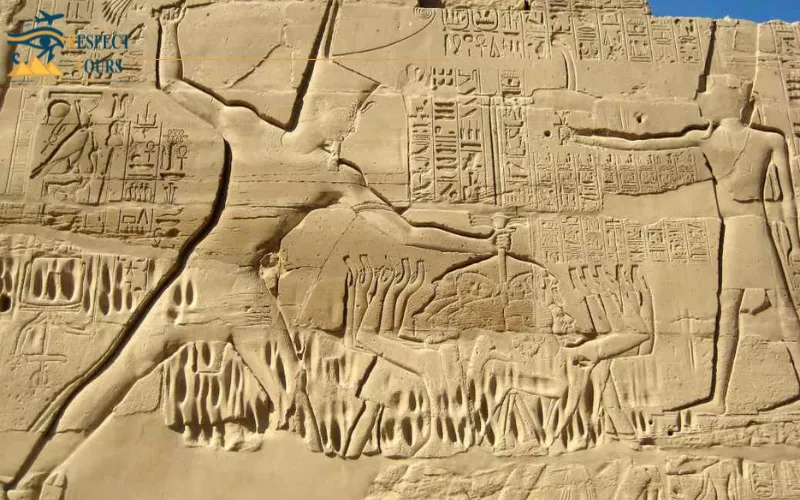
Hatshepsut initially ruled on behalf of young Thutmose III but later crowned herself pharaoh. Rather than facing open conflict, she positioned him in inscriptions as co-ruler, likely to maintain political stability. Some historians believe he even led military campaigns during her reign. Only after her death did he erase her name, not necessarily out of hatred, but to solidify his royal lineage.
Quick Fact: Modern scholars believe their relationship may have been politically strategic rather than hostile during her lifetime.
12 – Successor Attempted to Erase Her Legacy After Her Death
After Hatshepsut’s death, her stepson (and co-ruler) Thutmose III systematically attempted to erase her from history. Her statues were smashed, and her name was chiseled out of monuments.
Historians debate whether this was an act of revenge, a political move to legitimize his lineage, or an attempt to restore traditional male rulership.
Little Known Fact: Ironically, this attempt to erase her made modern archaeologists even more intrigued, leading to a surge in research about her reign.
13 – Burial Site Remained a Mystery for Centuries
Hatshepsut was originally buried in the Valley of the Kings, but for reasons still debated, her mummy was moved to a hidden tomb. This relocation may have been done to protect her remains from tomb robbers or political enemies.
Traveler Tip: The Valley of the Kings in Luxor offers guided tours where you can visit tombs from her dynasty, though her own is not open to the public.
14 – Her Mummy Was Identified in 2007 Using Modern Science
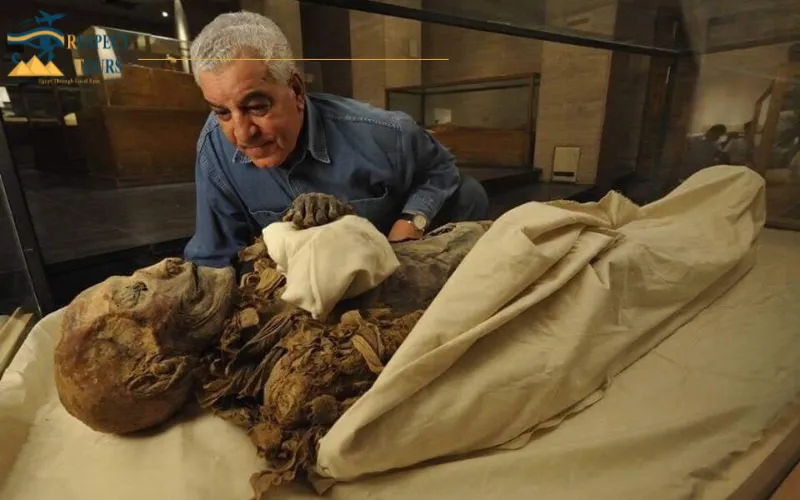
For decades, Egyptologists debated which mummy belonged to Hatshepsut. In 2007, Dr. Zahi Hawass and his team confirmed her identity using DNA testing and a missing tooth that matched a gap in the mummy’s jaw. This discovery gave historians priceless insights into her health and the possible cause of her death.
Traveler Tip: The Egyptian Museum in Cairo occasionally exhibits artifacts related to Hatshepsut’s mummy and burial, worth a visit for history enthusiasts.
15 – Strengthened Egypt’s Religious Authority and Temples
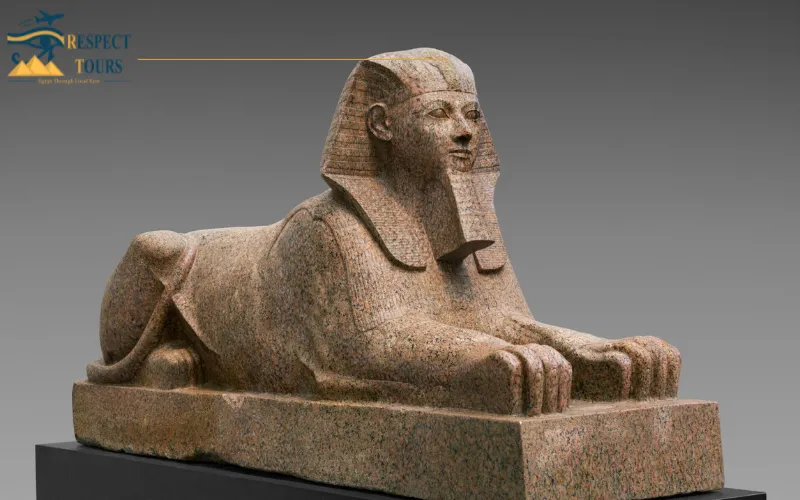
Hatshepsut promoted the cult of Amun, the chief god of Thebes, commissioning grand temples and presenting herself as Amun’s chosen ruler. This religious positioning further legitimized her claim to the throne.
Traveler Tip: Karnak Temple’s chapels dedicated to Amun still display inscriptions praising Hatshepsut’s devotion.
16 – Oversaw a Flourishing of Art, Sculpture, and Culture
From finely carved statues to richly painted temple walls, Hatshepsut’s era produced some of the most elegant art of ancient Egypt. Artists emphasized naturalism, vibrant colors, and storytelling scenes that celebrated Egypt’s prosperity.
Traveler Tip: Luxor’s West Bank museums showcase original reliefs and sculptures from her reign, a must for art lovers.
17 – Expanded Egypt’s International Influence Through Trade and Diplomacy
Through trade, diplomacy, and strategic alliances, Hatshepsut extended Egypt’s reach beyond the Nile Valley. Her reign saw exchanges with regions as far as modern-day Sudan, the Levant, and possibly the Arabian Peninsula.
Traveler Tip: Many temple reliefs showing foreign tribute bearers date back to her reign; look for them in Luxor and Karnak.
18 – Inspired Future Generations of Female Leaders
Although ancient Egypt had other female rulers, Hatshepsut’s long, prosperous reign set a precedent for women in positions of power. Today, she’s celebrated as a symbol of female leadership and resilience.
Traveler Tip: Storytelling tours in Luxor often include Hatshepsut’s legacy as part of a broader discussion on women in ancient Egypt.
19 – Modern Travelers Can Follow Her Trail Across Egypt Today
From the towering obelisk at Karnak to the serene terraces of Deir el-Bahari, Hatshepsut’s legacy is etched into Egypt’s landscape. Travelers can design entire itineraries around visiting her monuments, a journey through time that brings her story to life.
Traveler Tip: For the ultimate Hatshepsut experience, combine visits to Luxor, Cairo, and Aswan to trace her influence from temple to temple.
Her Legacy as a Female Ruler
Queen Hatshepsut set a groundbreaking precedent as one of the earliest recorded female pharaohs in ancient history. Her successful reign demonstrated that a woman could lead Egypt with authority, vision, and political skill equal to any male ruler. By adopting the regalia of a pharaoh and commissioning monumental architecture, she legitimized her rule in the eyes of her people and the gods.
Her leadership inspired later female figures in Egyptian history, including Nefertiti and Cleopatra, to pursue power in ways that challenged traditional gender roles. Hatshepsut’s approach—blending diplomacy, economic growth, and religious influence—created a blueprint for female leadership that resonated for centuries. Today, historians recognize her not only as a remarkable ruler but also as a symbol of female empowerment in a male-dominated society.
Hatshepsut vs Cleopatra / Later Queens
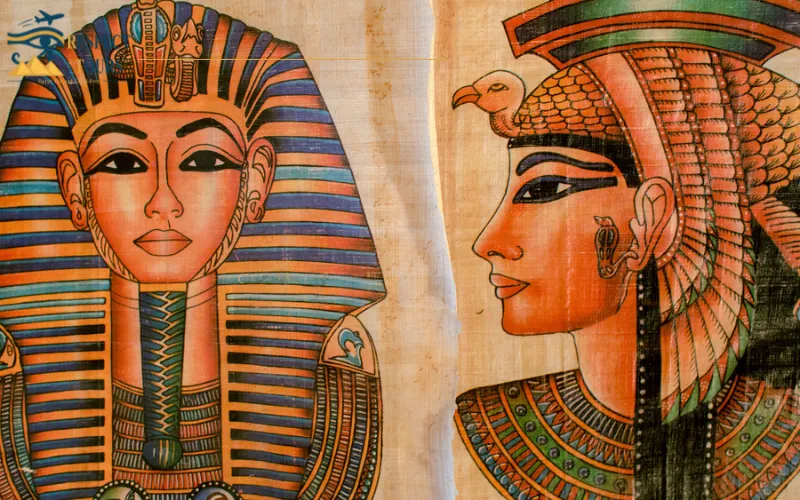
While Cleopatra is often the most famous female ruler of ancient Egypt, Hatshepsut’s reign predates hers by more than 1,500 years. Unlike Cleopatra, who is widely known for her political alliances and romantic relationships with Roman leaders, Hatshepsut’s influence was primarily rooted in monumental building projects, trade expeditions, and internal governance.
Hatshepsut and Nefertiti also share similarities: both challenged traditional roles for women in Egypt, and both leveraged religious symbolism to assert their authority. However, Hatshepsut’s adoption of male regalia and the pharaoh title was a bold statement of legitimacy, setting her apart as a trailblazer. Comparing these rulers highlights how Hatshepsut’s achievements laid the foundation for future female leadership, demonstrating that women could rule effectively and leave an enduring mark on Egyptian history.
Quick Fact: Modern historians consider her one of the earliest recorded female heads of state in world history, long before Cleopatra’s more famous reign.
Where Can I Follow Her Trail Today?
Hatshepsut’s legacy is not only preserved in history books but also etched into the landscapes of Egypt. Modern travelers can trace her footsteps across temples, obelisks, and monuments that still stand over 3,000 years later. From Luxor to Aswan, her story comes alive for those who want to experience ancient Egypt firsthand.
Exploring these sites offers a unique glimpse into her reign, her architectural innovations, and her influence on Egyptian culture and religion. Whether you are interested in history, archaeology, or simply breathtaking views, following Hatshepsut’s trail provides an unforgettable journey through time.
Must-Visit Sites About Hatshepsut
- Temple of Hatshepsut (Deir el-Bahari, Luxor): Marvel at its terraces, colonnades, and detailed reliefs depicting her divine birth, coronation, and expedition to Punt.
- Karnak Temple, Luxor: See her towering obelisks and inscriptions celebrating her reign.
- Aswan’s Unfinished Obelisk: Step into the ancient granite quarry where her monumental obelisks were carved.
- Valley of the Kings, Luxor: Although her original tomb is hidden, other tombs from her dynasty reveal the grandeur of her era.
- Luxor Museums: View original statues, reliefs, and artifacts commissioned by Hatshepsut.
By visiting these sites, travelers gain a deeper appreciation for Hatshepsut’s accomplishments and her impact on Egyptian history, architecture, and culture.
With Respect Tours, you can step into her world, guided by experts who bring ancient Egypt to life. Whether you’re exploring her temple at dawn or standing in the shadow of her obelisks, you’ll feel the magic of a queen who refused to be forgotten.
Plan your journey now and follow in the footsteps of Egypt’s legendary female pharaoh.
Conclusion
Queen Hatshepsut was far more than a rare female ruler; she was a visionary whose achievements shaped Egypt’s golden age. From her obelisks and trade expeditions to Senenmut’s architectural masterpieces, these interesting facts about Queen Hatshepsut reveal a leader who ruled with intelligence, creativity, and timeless influence.
Today, her story lives on not only in the pages of history but also in the stone walls and towering pillars of Luxor. Walking through her Mortuary Temple at Deir el-Bahari is like stepping back more than 3,000 years into a world of ambition, artistry, and legacy.
FAQ: Frequently Asked Questions
Who was Queen Hatshepsut?
Queen Hatshepsut was the fifth pharaoh of Egypt’s 18th Dynasty and one of the few women to rule as a full pharaoh. She reigned from circa 1479 to 1458 BCE, overseeing a period of peace, wealth, and monumental construction.
Why is Queen Hatshepsut famous?
What are 3 facts about Queen Hatshepsut?
How did Queen Hatshepsut die?
The exact cause of her death remains uncertain. Evidence from her mummy suggests she may have died from an illness, possibly linked to bone cancer or complications from skin ointments containing harmful substances.