

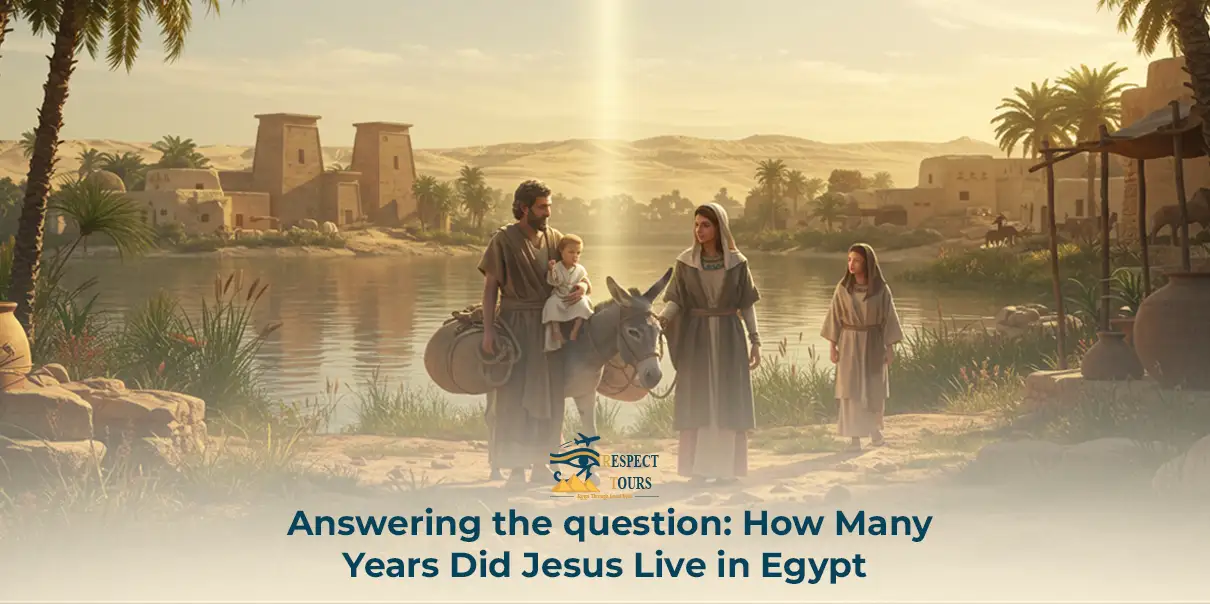
How many years did Jesus live in Egypt? Most historians and biblical scholars agree the Holy Family spent about two to three years in Egypt, though some traditions suggest longer, up to four or even seven years. This period, often overlooked, was one of the most significant episodes in Christ’s early life, shaping his childhood and fulfilling ancient prophecy.
The story begins with the Holy Family’s dramatic Flight to Egypt, when Joseph, Mary, and the infant Jesus escaped King Herod’s massacre of Bethlehem’s children. Egypt became not only their refuge but also the land where Jesus took his first steps, spoke his first words, and grew under divine protection.
In this guide, we’ll explore How Many Years Did Jesus Live in Egypt, the historical and biblical sources behind the timeline, and why Egypt played such a central role in Christian tradition. From the Gospel of Matthew to Coptic legends, archaeology, and prophecy, we’ll uncover what made Egypt both a safe haven and a symbol of redemption in the life of Christ.
Timeline of Jesus’s Years in Egypt

While exact dates are debated, most scholars reconstruct the timeline this way:
- Birth of Jesus: Around 6–4 BCE in Bethlehem.
- Flight to Egypt: Likely between 5–4 BCE, after Herod ordered the massacre of infants.
- Stay in Egypt: Approximately 2–3 years (Coptic traditions say up to 7 years).
- Return to Nazareth: Around 4 BCE, after Herod’s death.
This means Jesus probably entered Egypt as a baby and left as a small child.
Flight of the Holy Family into Egypt
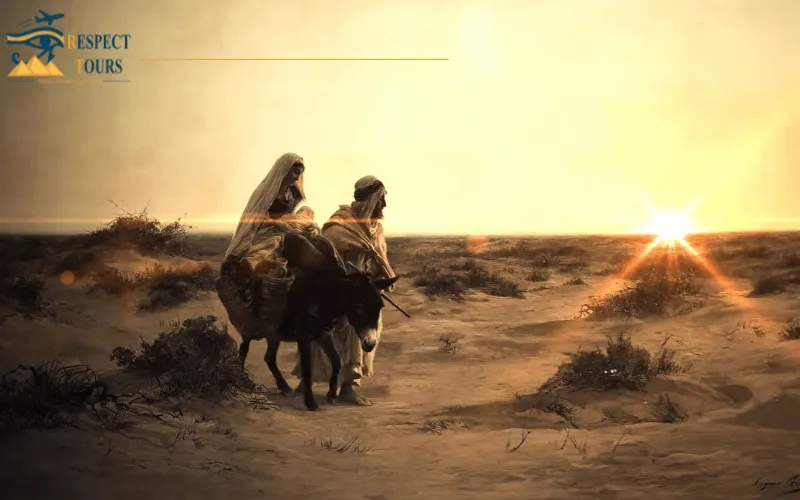
The story of Jesus in Egypt begins with one of the most dramatic moments in the New Testament, the Flight to Egypt. According to the Gospel of Matthew (Matthew 2:13–15), Joseph was warned in a dream by an angel: “Rise, take the child and his mother, and flee to Egypt, and remain there until I tell you; for Herod is about to search for the child, to destroy him.”
A Perilous Journey
Obeying this divine command, Joseph, Mary, and the infant Jesus set out under the cover of night. The journey from Bethlehem to Egypt spanned nearly 280 miles, a dangerous trek through desert routes, bandit-threatened roads, and unfamiliar lands. Despite the hardships, Egypt promised safety from King Herod’s brutal decree, the Massacre of the Innocents, which targeted all boys under the age of two.
Entry into Egypt
Tradition holds that the Holy Family first entered Egypt through Pelusium (modern Port Said region) on the northeastern border. From there, they are believed to have traveled deeper into the Nile Delta, stopping at villages and towns where many Coptic Christian traditions still honor their presence today. These sites later became sacred shrines and important pilgrimage destinations, keeping the memory of Jesus’s time in Egypt alive for centuries.
Why Egypt?
Egypt was more than just a safe refuge, it was a land of prophecy and symbolism. For Jewish readers of Matthew’s Gospel, the Holy Family’s flight echoed the words of the prophet Hosea: “Out of Egypt I called my son” (Hosea 11:1). Just as Israel had once found both bondage and deliverance in Egypt, so too did Jesus’s early life reflect the pattern of exile and redemption that would define his ministry.
The Holy Family’s Journey: Route into Egypt
The Gospel of Matthew doesn’t give precise geography, but tradition and archaeology fill in the gaps.
- Pelusium (Port Said area): The likely entry point from Palestine.
- Bubastis & Belbeis (Nile Delta towns): Stops remembered in Coptic stories.
- Heliopolis (modern Cairo/Matariya): Ancient sources say the family rested beneath a sycamore tree, still honored today.
- Upper Egypt: Some traditions say they traveled as far south as Assiut.
These routes later became the foundation of the Coptic “Holy Family Trail,” still visited by pilgrims today.
Discovering the Secrets of Christ’s Childhood in Egypt
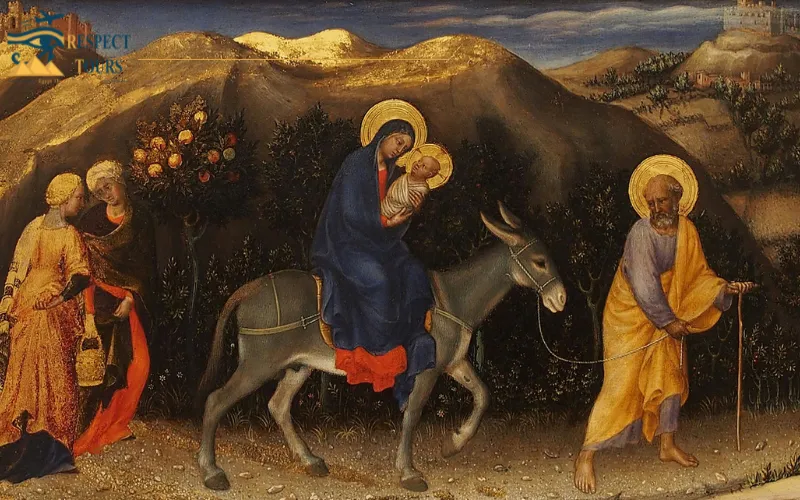
While the Gospels offer only brief glimpses of Jesus’s earliest years, traditions from Coptic Christianity and early Christian writings help fill in the story of his childhood in Egypt. Though not part of the canonical Bible, these traditions reflect the awe and reverence surrounding the Holy Family’s time in the land of the pharaohs.
Miraculous Childhood Stories
Apocryphal texts, such as the Infancy Gospel of Thomas, recount miraculous acts attributed to the young Jesus during his stay in Egypt. According to these accounts, he performed wonders that astonished local Egyptians, healing the sick, shaping birds from clay and bringing them to life, and blessing the homes that offered shelter to his family.
While historians treat these stories cautiously, they highlight how deeply Egypt cherished its connection to Christ’s early years.
How Many Years Did Jesus Live in Egypt?
The central question, how long did Jesus live in Egypt, has been debated for centuries. Most biblical scholars estimate the Holy Family remained there for two to three years, though some traditions suggest longer stays.
Biblical Evidence
The Gospel of Matthew records that the Holy Family stayed in Egypt “until the death of Herod” (Matthew 2:15). Historical records place King Herod’s death in 4 BCE. If Jesus was born around 6–4 BCE, this would mean his Egyptian sojourn likely lasted about two to three years before the family returned to Nazareth.
Variations in Tradition
- Eastern Orthodox traditions sometimes suggest a slightly longer stay, up to four years, based on different chronologies of Herod’s reign.
- Coptic Christian tradition often extends the stay even further, claiming Jesus and his family may have lived in Egypt for as many as seven years. These accounts highlight Egypt’s deep spiritual connection to the Holy Family, though historians consider the longer timelines less likely.
Coptic Pilgrimage Sites in Egypt

Egypt’s Christian heritage keeps alive memories of Jesus’s stay. The Holy Family Route includes over 25 sites across the country where tradition says the family rested. Some highlights:
- Abu Serga Church (Old Cairo): Built over a cave believed to have sheltered the Holy Family.
- Matariya, Cairo: Site of the “Virgin’s Tree,” where tradition says Mary rested with the child Jesus.
- Wadi El-Natrun: Later became a monastic hub inspired by the Holy Family’s journey.
- Gabal El-Tayr, Minya: A church carved into cliffs, marking another resting place.
For Egyptian Christians, these places are living links to Christ’s childhood — and for visitors, they form a fascinating spiritual trail through history.
How Old Was Jesus When They Fled to Egypt?
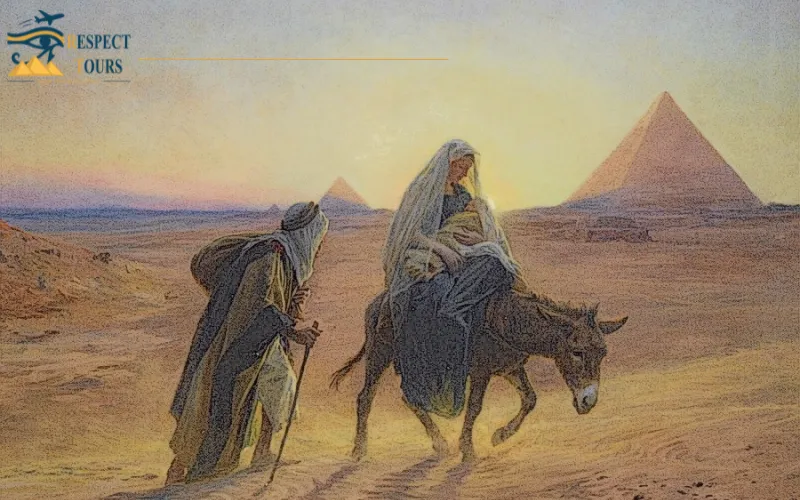
Scholars generally agree that Jesus was an infant, likely between six months and two years old, when the Holy Family fled to Egypt.
Clues from the Bible
The Gospel of Matthew notes that Herod ordered the massacre of all boys “two years old and under” in Bethlehem (Matthew 2:16). This implies Jesus was still very young—probably closer to one year old, at the time of departure.
Life as a Refugee Child
Traveling with an infant was no easy task in the ancient world. Mary likely carried Jesus for much of the journey, while Joseph ensured their safety and provisions. Despite the hardships, Egypt offered sanctuary at a time when Herod’s decree threatened his life.
Growth in Egypt
During those first crucial years of life, Jesus would have:
- Taken his first steps and spoken his first words in Egypt.
- Grew up in a multicultural environment, exposed to Hebrew, Greek, and Egyptian languages.
- Experienced life as a refugee child, shaping the empathy and humility that later defined his ministry.
While the exact age remains uncertain, most evidence suggests Jesus was still a baby when he entered Egypt and a small child when he returned to Nazareth.
The Struggles of Life in Egypt
Life in Egypt was not without hardship for the Holy Family. As refugees, Joseph, Mary, and the infant Jesus had to navigate a new land with different languages, customs, and economic realities.
Daily Challenges
- Language & Culture: The Holy Family likely encountered Greek (the common language of Roman Egypt) alongside Egyptian dialects, which would have been foreign to them.
- Economic Survival: Joseph’s skills as a carpenter probably provided their main income. Construction projects were abundant in Roman Egypt, especially in the Nile Delta, making his trade valuable.
- Housing & Community: Early Christian and Jewish traditions suggest they found shelter among Jewish communities already established in Egypt, offering both familiarity and support.
What Was Special About Egypt for Jesus?
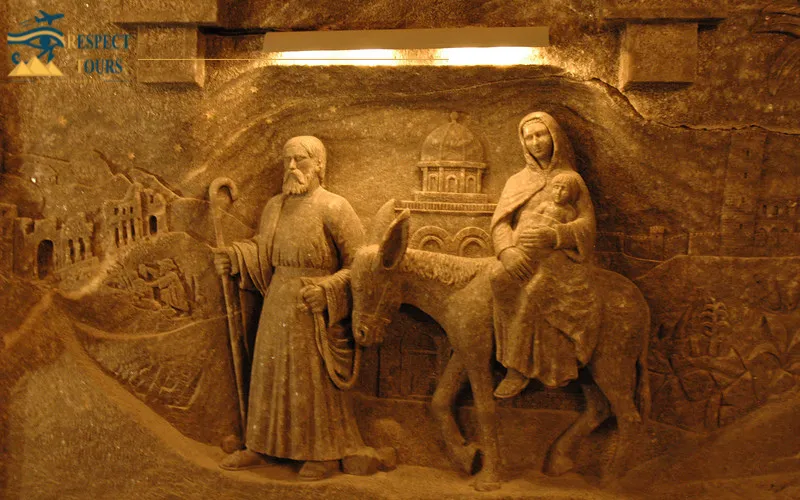
Egypt was far more than just a safe refuge for the Holy Family; it carried deep historical, cultural, and prophetic significance in both Jewish and Christian traditions.
Prophecy Fulfilled
The prophet Hosea had written centuries earlier: “Out of Egypt I called my son” (Hosea 11:1). Early Christians saw Jesus’s return from Egypt as the direct fulfillment of this prophecy, linking him to Israel’s own history of exile and deliverance. Just as Moses led the Israelites out of bondage, Jesus’s time in Egypt foreshadowed his role as the new deliverer.
A Land of Spiritual Symbolism
In Jewish memory, Egypt was both a place of oppression and a place of salvation. It was where Israel suffered slavery but also where God’s power was revealed through the Exodus. By sheltering Jesus, Egypt’s image was transformed from the land of Pharaohs to the land that protected the Messiah.
Religious & Cultural Influence
Ancient Egyptian religion was steeped in themes of death and resurrection, especially through the story of Osiris. These cultural echoes may have shaped how early Egyptian Christians connected to the Gospel’s message of Christ’s death and resurrection.
What’s the Symbolism Behind the Holy Family’s Flight to Egypt?
The Flight to Egypt is not just a historical episode, it carries profound theological and symbolic meaning that shaped Christian understanding of salvation history.
Egypt as a Symbol of Oppression and Refuge
In the Old Testament, Egypt symbolized bondage under Pharaoh. Yet in the New Testament, it became a place of protection for the Messiah. This reversal shows God’s power to transform a place once associated with suffering into a sanctuary of hope.
Parallels with Moses
Just as Moses was saved from Pharaoh’s decree to kill Hebrew infants, Jesus was saved from Herod’s massacre of Bethlehem’s children. Both stories highlight God’s intervention and position Jesus as a “new Moses”, destined to lead his people to spiritual freedom.
Fulfillment of Prophecy
The Holy Family’s time in Egypt fulfilled Hosea’s words: “Out of Egypt I called my son”. Early Christians understood this as proof that Jesus’s life was woven into Israel’s prophetic history, affirming him as the promised Messiah.
Poverty and Refugee Identity
Their exile also reflects Jesus’s identification with the poor, displaced, and marginalized. The Messiah did not grow up in palaces but began life as a refugee, showing God’s solidarity with the vulnerable. This theme echoes later in his ministry, where he preached compassion for the oppressed and downtrodden.
A Symbol of New Beginnings
Finally, the return of the Holy Family from Egypt symbolized renewal and deliverance. Just as Israel emerged from Egypt to begin its covenant with God, Jesus emerged from Egypt to begin his mission of salvation.
Conclusion
Most scholars agree Jesus lived in Egypt for two to three years, though some traditions suggest longer. More important than the exact number is the symbolism: Egypt shifted from a land of slavery to a land of refuge, fulfilling prophecy and protecting the Messiah in his earliest years.
This brief chapter shaped Jesus’s childhood and linked his life to Israel’s story of exile and deliverance. For believers, it remains a powerful reminder that God’s protection and purpose are present even in times of hardship.
FAQ: Frequently Asked Questions
Where did Jesus live in Egypt?
Traditions point to the Nile Delta, Heliopolis (Cairo), and Upper Egypt towns like Assiut.
Why did Jesus go to Egypt?
Was Jesus a baby or child in Egypt?
How old was Jesus when he went to Egypt?
Likely between 6 months and 2 years old.