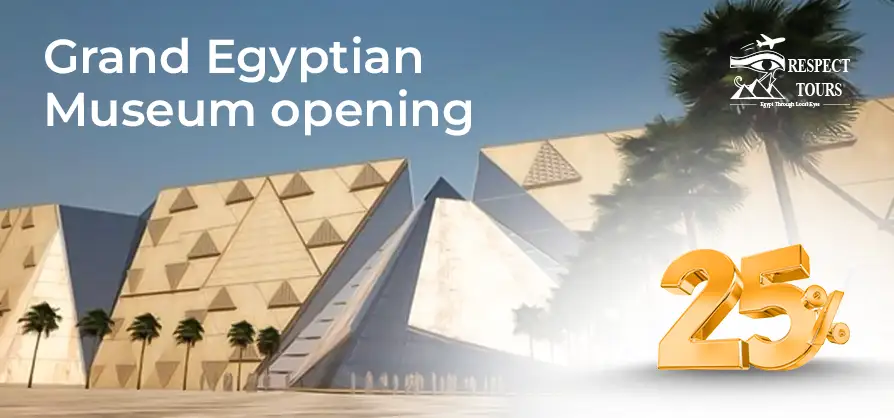



The wait is over. The Grand Egyptian Museum opening date of November 1, 2025, has come and gone, and the world’s largest museum dedicated to a single civilization is now welcoming visitors in spectacular fashion.
Since the Grand Egyptian Museum opening date passed two months ago, the museum has become the definitive destination for Egyptian history, drawing record-breaking crowds eager to witness its architectural magnificence and unparalleled collection of over 100,000 artifacts.
The most significant draw? For the first time in history, King Tutankhamun’s entire 5,000+ artifact treasure is displayed together in stunning galleries that tell his complete story, from childhood to eternity.
This comprehensive guide provides everything you need for a successful visit: current ticket prices, insider tips from the first two months of operation, strategic touring advice, must-see highlights, and how to navigate the crowds that have made advance booking absolutely essential.
This is not just another museum visit; it’s a journey through 5,000 years of civilization that’s setting new global standards for cultural institutions.
Latest Updates: The Museum Is Now Open
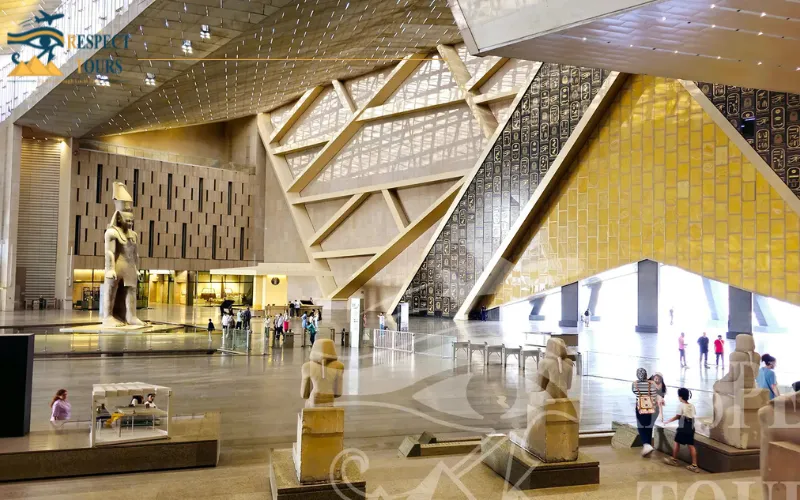
The Grand Egyptian Museum successfully opened to the public on November 1, 2025, marking one of the most significant cultural milestones of the decade. After two months of operation, the museum is exceeding expectations and welcoming visitors from around the globe to experience the complete collection for the first time.
Ready to experience it yourself? Book Full-Day Grand Egyptian Museum Tour with Egyptologist Guide with Respect Tours
What’s Fully Open Now (Post-Opening)
- The Complete Tutankhamun Galleries: All 5,000+ artifacts displayed together for the first time in history
- The Khufu Solar Boat Museum: The 4,600-year-old vessel in its dedicated climate-controlled building
- All 12 Main Exhibition Halls: The complete 5,000-year timeline of Egyptian civilization
- The Royal Mummies Hall: Face-to-face with Egypt’s legendary pharaohs
- Interactive VR and AR Experiences: Cutting-edge technology bringing ancient Egypt to life
- The Children’s Museum: Hands-on learning experiences for young explorers
- Conservation Labs: Watch experts restore ancient artifacts through viewing windows
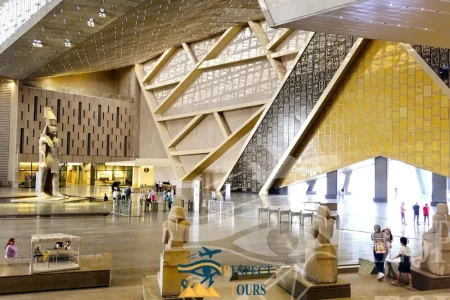
- The Grand Hall & Grand Staircase: The museum’s breathtaking entrance featuring the colossal Ramses II statue
- Exterior Gardens & Commercial Areas: Themed gardens, restaurants, cafés, and gift shops
Current Visitor Experience (2026)
High Demand Period: The museum remains extremely popular, with weekends and Egyptian holidays seeing maximum capacity crowds. Advanced online booking is Essential; walk-up tickets are often sold out by mid-morning.
Best Times to Visit: Weekday mornings (9:00-11:00 AM) offer the most manageable crowds. Late afternoons (4:00-6:00 PM) are also less busy, but give you less time to explore.
Tour Availability: Private guided tours through operators like Respect Tours guarantee skip-the-line access and expert navigation through the most popular galleries.
The Grand Egyptian Museum Tickets & Opening Hours
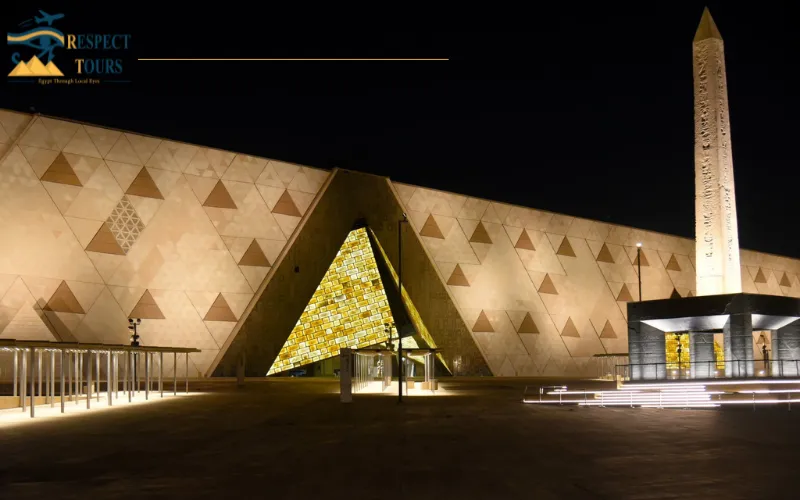
The Grand Egyptian Museum has been operating at full capacity since opening in November 2025, with tickets consistently in high demand. Advance online booking is no longer optional; it’s essential for securing entry, especially during peak travel seasons.
Here’s everything you need to know about current ticket prices, operating hours, and insider strategies for a smooth, hassle-free visit.
The Grand Egyptian Museum ticket (2026 Prices)
These are the official prices for complete museum access, including all galleries, exhibitions, and permanent collections:
Foreign Visitors (Non-Egyptian/Non-Arab League)
- Adults: 1,500 EGP (~USD 30)
- Students (with valid international student ID): 750 EGP (~USD 15)
- Children (6-12 years): 750 EGP (~USD 15)
- Children (under 6): Free
Egyptian & Arab League Residents
- Adults: 200 EGP
- Students (with valid Egyptian/Arab ID): 100 EGP
- Children (6-12 years): 100 EGP
- Children (under 6): Free
Optional Add-Ons
- Photography Permit (non-flash): 300 EGP (~USD 6)
- VR Experience Package: 200 EGP (~USD 4) per experience
- Audio Guide Rental: 100 EGP (~USD 2)
- Guided Tour Upgrade (small group): 400 EGP (~USD 8) per person
DO NOT buy from:
- Third-party ticket reseller websites
- Street vendors near the pyramids or museum
- Unlicensed “tour guides” offering “special deals”
- Social media marketplace sellers
- Unauthorized mobile apps
Grand Egyptian Museum opening hours (Current)
Standard Operating Hours (2026):
- Sunday–Thursday:
– Museum Complex: 8:30 AM – 7:00 PM
– Galleries: 9:00 AM – 6:00 PM
– Last Ticket Purchase: 5:00 PM
– Last Entry: 5:30 PM
- Friday–Saturday (Extended Weekend Hours):
– Museum Complex: 8:30 AM – 10:00 PM
– Galleries: 9:00 AM – 9:00 PM
– Last Ticket Purchase: 8:00 PM
– Last Entry: 8:30 PM
Note: The “Museum Complex” includes gardens, restaurants, cafés, and retail areas. “Galleries” refers to exhibition halls with artifacts.
Essential Booking Tips:
-
- Book Online, Always: This is the number one way to avoid the notoriously long queues, especially on weekends and holidays. Secure your timed-entry slot from the comfort of your hotel.
- Book Well in Advance: Since opening, the museum has consistently operated at or near capacity. Tickets sell out days or weeks ahead, especially for weekends and holidays.
- Consider a Guided Tour Package:
Why Licensed Tours Are Worth It:
Since opening, visitor feedback consistently shows first-time visitors feel overwhelmed by the museum’s massive scale (500,000+ square meters). Guided tours solve this:
- Skip-the-Line Access: Bypass 30-60 minute general admission queues
- Expert Navigation: See highlights before crowds build
- Context & Stories: Transform objects into compelling narratives
- Efficient Timing: 4-5 hours vs. 6-8+ hours independently
Book your expert-guided tour with Respect Tours from Here: Full-Day Tour of Pyramids of Giza & GEM | Best Cairo Day Trip
Our comprehensive packages include:
- Guaranteed skip-the-line entry
- Licensed Egyptologist guide (multiple languages available)
- Strategic routing through galleries
- 5-6 hour exploration with flexible breaks
- Hotel pickup and drop-off
- Small groups or private options
Learn more: Our comprehensive ticket price guide compares all booking options: Grand Egyptian Museum Ticket Price
Let us handle the details. Enjoy a perfect day at the museum and the Pyramids with the Respect Tour.
What You’ll See: Highlights Not to Miss
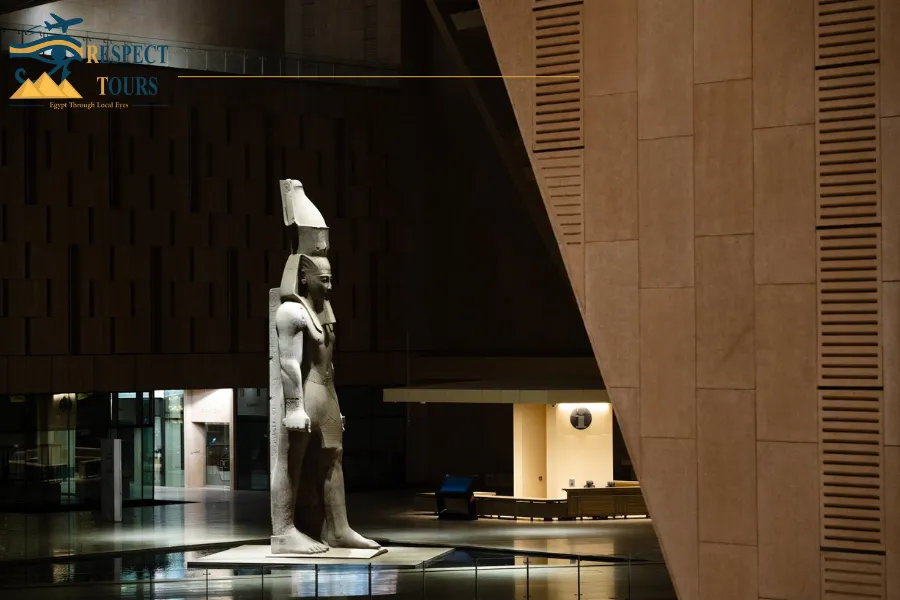
The Grand Egyptian Museum houses over 100,000 artifacts across 500,000+ square meters, a scale that can overwhelm first-time visitors. To help you prioritize, here are the must-see highlights that define the museum experience, along with insider tips for experiencing each one at its best.
The Great Hall & the Colossal Ramses II
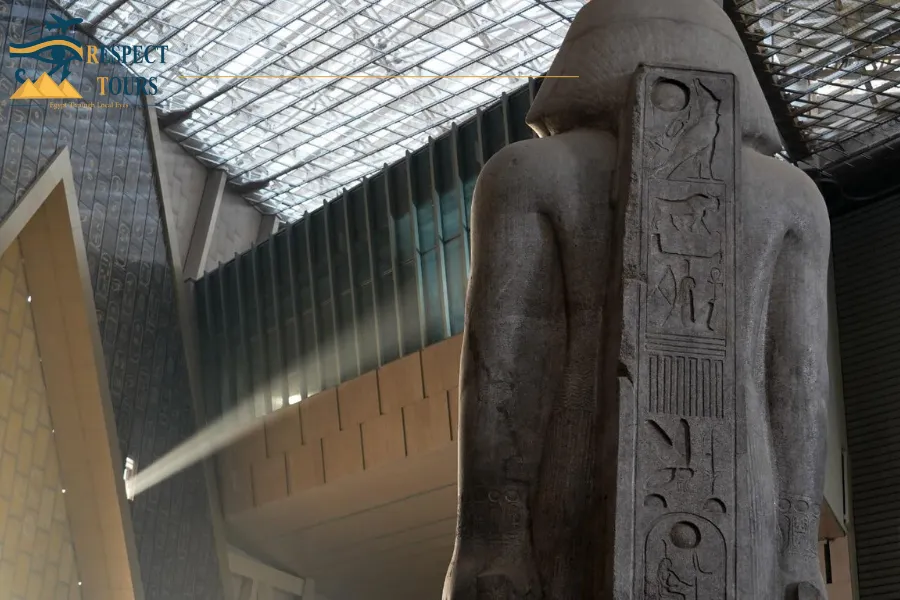
Your journey begins the moment you step into the soaring Great Hall. Dominating the space is an 11-meter-tall statue of King Ramses II, a 3,200-year-old colossus weighing over 80 tons. This majestic monument serves as your welcome to the museum and sets the stage for the grandeur that follows.
It’s one of the most breathtaking first impressions in any museum worldwide. The sheer scale of this ancient sculpture, combined with the hall’s modern architectural design, creates an unforgettable contrast between old and new.
The Grand Staircase: Statues From Across Millennia
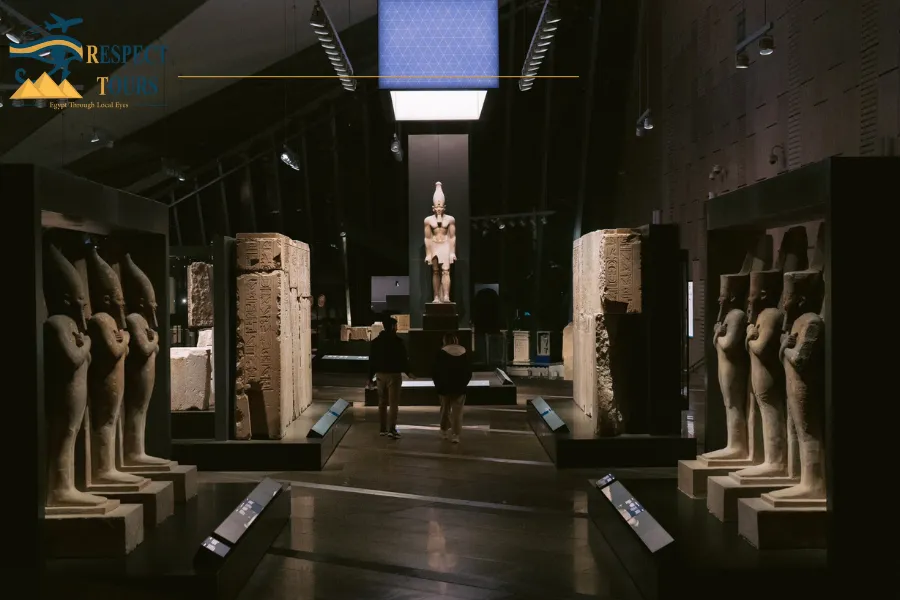
Leading from the Great Hall, the Grand Staircase is a dramatic ascending pathway flanked by 87 royal and divine statues. These massive figures include legendary pharaohs like Akhenaten, Hatshepsut, and Thutmose III, chronologically arranged to guide you through 3,000 years of Egyptian history.
As you climb, you are literally walking through a pantheon of Egypt’s most powerful rulers and gods, chronologically arranged to guide you through different eras.
Experiencing this breathtaking scale in person is the great promise of the Grand Egyptian Museum.
Tutankhamun Galleries
This is the museum’s crown jewel and the main reason for its existence. For the first time in history, all 5,000+ artifacts from King Tutankhamun’s tomb will be displayed in one place.
How is it different from the old museum in Tahrir? The new exhibition is a complete reinvention. While the Tahrir Museum displayed the golden treasures like a jewelry box, the GEM’s two new galleries tell a complete story.
The artifacts, including the iconic golden mask, sarcophagi, chariots, and even the king’s sandals and childhood toys, are contextually arranged to narrate his life, rule, and journey into the afterlife, offering a far more personal and immersive experience.
What You’ll See:
– The Golden Funerary Mask (11 kg of solid gold)
– Three Nested Sarcophagi (outer coffin, middle coffin, innermost gold coffin)
– The Golden Throne (with intimate scenes of Tut and his wife)
– Chariots and Weapons (including his actual battle equipment)
– Personal Items (sandals, walking sticks, childhood games)
– Canopic Shrine (containing his preserved organs)
– Over 150 pieces of jewelry
Want to Know more about Tutankhamun? Read More about King Tut Accomplishments & Treasures You Can See in Egypt
Khufu’s Boat Museum (Solar Boat)
A dedicated climate-controlled building housing the 4,600-year-old solar boat of King Khufu, builder of the Great Pyramid. At 43.4 meters (142 feet) long, this is one of the oldest and largest wooden vessels ever discovered, painstakingly reconstructed from 1,224 pieces found buried at Giza.
The preservation is extraordinary; you can see individual cedar wood planks that were cut and assembled 4,600 years ago. The boat’s purpose was ceremonial: to carry Khufu’s soul across the heavens in his afterlife journey.
The Main Exhibition Halls
The museum’s core: 12 vast chronological halls narrating Egypt’s complete 5,000-year story from the Predynastic period through the Greco-Roman era.
What You’ll See:
– Massive statues of gods and pharaohs
– Temple reliefs and hieroglyphic walls
– Jewelry, pottery, and everyday objects
– Tools, weapons, and agricultural implements
– Funerary objects and mummification equipment
– Greco-Roman artifacts showing cultural fusion
The Royal Mummies Hall
A dedicated, dimly lit, climate-controlled hall where you come face-to-face with Egypt’s legendary pharaohs, including Ramses II, Seti I, Queen Hatshepsut, and Thutmose III.
These aren’t just mummies; they’re actual individuals who ruled Egypt 3,000+ years ago. The exhibit provides scientific insights, facial reconstructions, and stories of their reigns, creating a profound connection to the people who shaped history.
The Children’s Museum
An interactive space specifically designed for young visitors (ages 5-12), featuring hands-on exhibits, archaeological dig simulations, dress-up stations, and augmented reality experiences.
Children can participate in mock excavations, try on pharaoh costumes, learn hieroglyphics, and experience AR-enhanced mummification demonstrations, making ancient Egypt tangible and fun.
The Restoration Labs
A unique viewing opportunity where you watch expert conservators restore ancient papyri, textiles, wooden artifacts, and stone objects through large glass panels.
This is a living museum; you’re watching history being preserved in real-time using cutting-edge scientific techniques. Conservators often interact with viewers, explaining their work.
The Commercial Area & Bazaars
A vibrant concluding space designed like a modern Egyptian bazaar, featuring museum gift shops, artisan stalls, cafés, and restaurants.
What You Can Find:
– Official GEM merchandise
– Certified artifact replicas (museum-quality)
– Local artisan crafts (jewelry, textiles, papyrus)
– Books on Egyptology
– Cafés with pyramid views
– Full-service restaurants
Architecture & Design Moments
Don’t forget to appreciate the museum building itself. It is an architectural masterpiece designed with deep symbolism.
- The Translucent Façade: The giant, translucent alabaster wall at the front of the museum glows at night and is covered in triangular motifs that echo the shape of the pyramids.
- The View of the Pyramids: The entire museum is oriented to create a visual axis with the Giza Pyramids. Massive, floor-to-ceiling glass windows throughout the museum frame stunning, panoramic views of the ancient wonders just two kilometers away.
- The Exterior Gardens: The grounds feature beautiful, themed gardens with plants that would have been found in ancient Egypt, including date palms and acacia trees, offering peaceful areas for rest and reflection.
Planning Your Gallery Route
Recommended 4-Hour Visit (First-Timers):
- Grand Hall & Ramses II (20 min) → Immediate wow factor
- Grand Staircase (30 min) → Historical overview
- Tutankhamun Galleries (90 min) → The main event
- Khufu Solar Boat (30 min) → Engineering marvel
- Royal Mummies Hall (45 min) → Meet the pharaohs
- Quick browse: One main exhibition hall (30 min)
Highlights of the Grand Egyptian Museum Collection
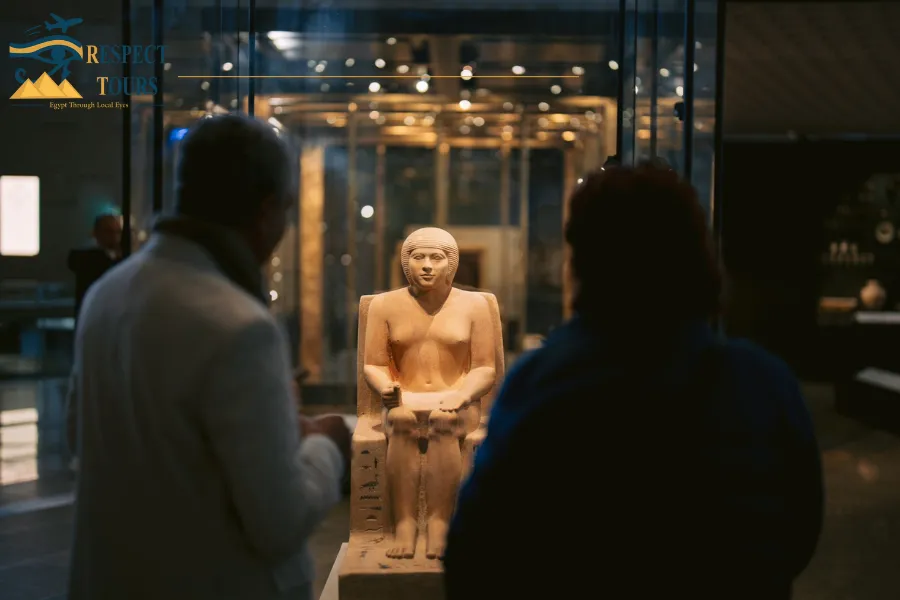
The Grand Egyptian Museum houses the most extensive collection of ancient Egyptian artifacts ever assembled under one roof. Since opening in November 2025, visitors from around the globe have been experiencing world-famous masterpieces alongside thousands of objects displayed publicly for the very first time.
Here are the essential treasures you absolutely cannot miss on your visit, the iconic pieces that define Egypt’s golden age and make the GEM a bucket-list destination.
1. The Gold Mask of Tutankhamun
The ultimate symbol of ancient Egypt and the museum’s most prized possession. This breathtaking funerary mask is crafted from over 10 kilograms of solid gold and inlaid with semi-precious stones. Its permanent move to a state-of-the-art display case in the GEM is a cornerstone of the new museum’s appeal.
2. The Colossal Statue of Ramses II
An 11-meter-tall (36 feet), 83-ton granite statue of Ramses the Great greeting visitors in the museum’s soaring Grand Hall. Originally erected at Memphis (Egypt’s ancient capital), this 3,200-year-old colossus was painstakingly relocated to the GEM in 2018.
This is your first impression of the museum, an unforgettable introduction to the power and artistry of ancient Egypt. The statue’s sheer scale and majestic presence perfectly capture why Ramses II was called “the Great.”
3. Khufu’s Solar Boat
The world’s oldest intact ship, a 4,600-year-old, 43.4-meter-long (142 feet) cedar wood vessel built to carry King Khufu (builder of the Great Pyramid) into the afterlife. Discovered in 1954 buried in a sealed pit beside the Great Pyramid, it was reconstructed from 1,224 individual pieces.
The preservation is miraculous. You can see individual cedar planks, rope bindings, and even the original tool marks from 2,500 BCE. It’s not just a boat; it’s a time capsule of ancient Egyptian craftsmanship.
4. The Grand Staircase Statues
A procession of 87 monumental statues of pharaohs, queens, and deities flanking the Grand Staircase. The collection spans 3,000 years of history, chronologically arranged from the Old Kingdom to the Ptolemaic period.
Notable Figures:
– Akhenaten: (the “heretic pharaoh” who introduced monotheism)
– Hatshepsut: (Egypt’s most successful female pharaoh)
– Thutmose III: (Egypt’s greatest military conqueror)
– Amenhotep III: (father of Akhenaten, builder extraordinaire)
Why It’s Stunning:
You’re literally walking through Egyptian history; each step takes you forward through dynasties and eras. The scale is breathtaking.
5. The Triad of Menkaure
A masterpiece of Old Kingdom sculpture, this beautifully preserved statue shows King Menkaure standing between the goddess Hathor and a local deity. The artistry is remarkable, showcasing a serene power and lifelike quality that set a high standard for royal portraiture thousands of years ago.
6. Bust of Akhenaten
This famous bust is a prime example of the revolutionary Amarna art style. It depicts the “heretic king” Akhenaten with uniquely elongated features and a naturalism that broke from centuries of rigid artistic tradition, reflecting the seismic cultural changes of his reign.
7. Fayum Mummy Portraits
These hauntingly lifelike portraits provide a powerful connection to the people of Greco-Roman Egypt. Painted on wooden boards and placed over the faces of mummies, these images blend Egyptian burial customs with realistic Roman painting techniques, creating some of the most moving portraits to survive from the ancient world.
Experience These Treasures with Expert Guidance
The Grand Egyptian Museum’s collection is so vast that without expert guidance, visitors often spend too long in crowded areas and miss masterpieces hidden in quieter galleries.
Book your museum tour with Respect Tours’ Full-Day Grand Egyptian Museum Tour with Egyptologist Guide
Our Egyptologist guides ensure you experience:
– All iconic treasures with full historical context
– Strategic timing to see Tutankhamun galleries before peak crowds
– Hidden masterpieces most visitors miss
– Skip-the-line access (save 30-60 minutes waiting)
– Perfect pacing through 5,000 years of history
– Answers to all your questions from licensed experts
What to do in the Grand Egyptian Museum?
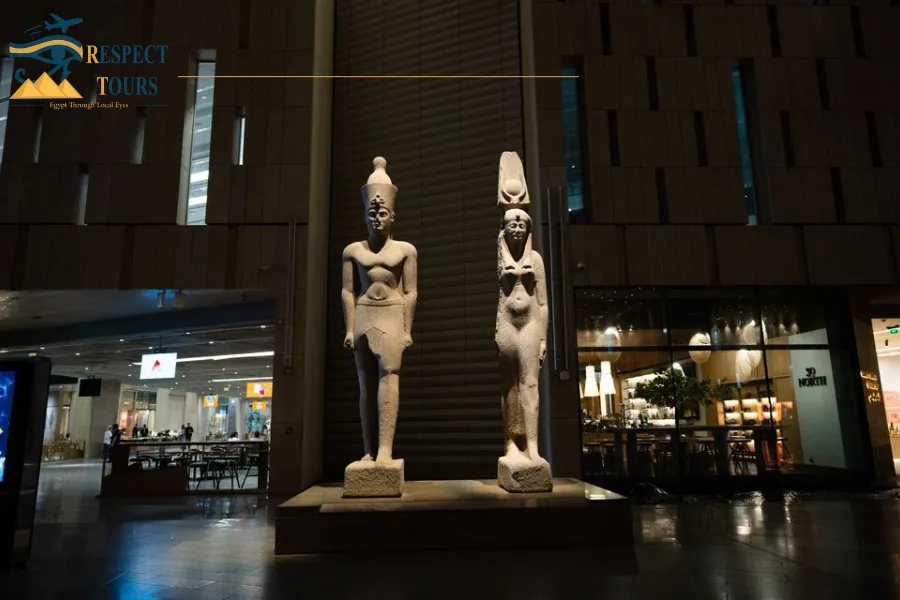
The Grand Egyptian Museum is designed to be a 21st-century institution, blending priceless ancient artifacts with cutting-edge technology. Beyond the traditional galleries, the museum will offer a range of dynamic activities that bring history to life. Here’s everything you can do beyond simply viewing artifacts.
Immersive Virtual Reality (VR) Experiences
Step directly into the world of the pharaohs. The museum is set to feature immersive VR experiences that transport you back in time.
Imagine witnessing the construction of the Great Pyramid as if you were standing at its base, walking through the vibrant streets of ancient Thebes, or sailing down the Nile on a royal barge. This is history you can see, hear, and feel.
Augmented Reality (AR) Guided Tours
See the ancient world layered over the new. The GEM utilizes augmented reality to make the artifacts come alive right before your eyes.
By pointing a smartphone or a special museum device at an exhibit, you’ll be able to see a statue in its original, vibrant colors, watch an animation of how an ancient tool was used, or view 3D models of artifacts that you can digitally rotate and inspect from every angle.
Cultural Performances & Storytelling
Experience the living spirit of ancient Egypt. The museum hosts a variety of cultural events in its theaters and open courtyards.
Look forward to live musical performances featuring replicas of ancient Egyptian instruments and captivating storytelling sessions where professional narrators recount the epic myths of gods like Ra and Osiris and the legendary tales of the great pharaohs.
Dining & Shopping Experiences
Restaurants & Cafés at GEM
The Grand Egyptian Museum features a diverse selection of dining options ranging from quick coffee stops to full-service restaurants with stunning pyramid views.
- Ladurée Egypt
- 30 North Coffee
- Zooba
- Beanos Café
- Dolato
6. Ratios Bakery
7. Bittersweet
Shopping & Boutiques at GEM
The museum’s commercial area features both international luxury brands and distinctly Egyptian artisan boutiques.
- Azza Fahmy Jewelry
- Okhtein
Additional Activities & Experiences
Instagrammable Spots:
- Grand Hall with Ramses II (iconic first impression)
- Grand Staircase panorama (87 statues ascending)
- Pyramid-view windows (ancient wonders framed by modern architecture)
- Tutankhamun’s golden mask (check photo policy on-site)
Attractions Around the Grand Egyptian Museum: What to See Nearby
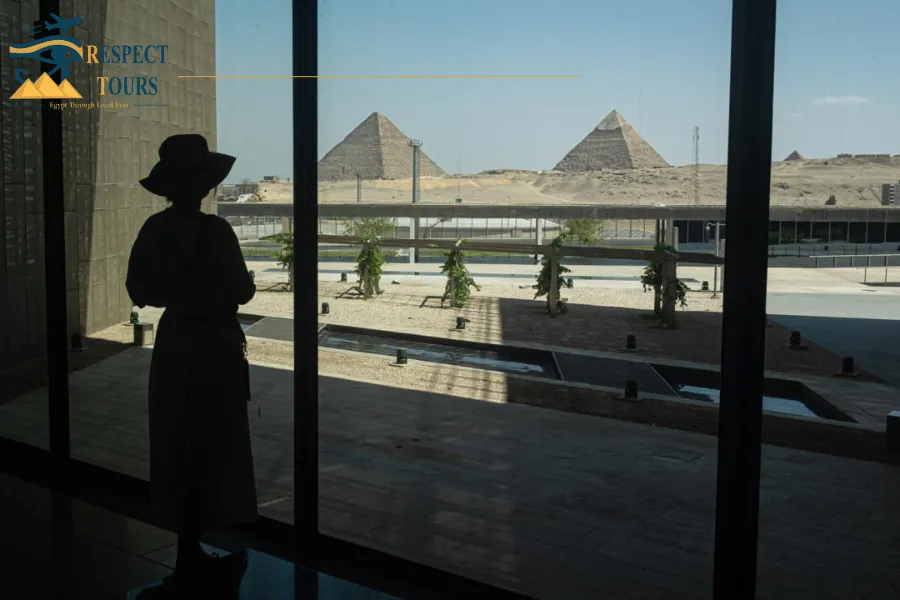
The Grand Egyptian Museum’s strategic location on the Giza Plateau makes it the perfect gateway to some of the most important archaeological sites in the world.
After immersing yourself in the museum’s treasures, you are just minutes away from ancient wonders that have stood for millennia. Here’s your complete guide to nearby attractions, including practical tips, timing strategies, and how to create the perfect multi-site itinerary.
The Giza Pyramids and the Great Sphinx
Distance: 5 minutes
The museum’s direct neighbor and an absolute must-see. The Giza Plateau is home to the Great Pyramid of Khufu, the last remaining wonder of the ancient world, along with the pyramids of Khafre and Menkaure.
No visit is complete without standing before the enigmatic Great Sphinx, the mythical creature with the body of a lion and the head of a king. The proximity allows you to easily combine the museum and the pyramids into one perfect day of sightseeing.
Combine GEM and Pyramids in one perfect day: Full-Day Tour of Pyramids of Giza & GEM | Best Cairo Day Trip
The Saqqara Necropolis
Distance: 25-30 minutes
Take a short drive south to visit the vast burial ground of the ancient capital, Memphis. Saqqara is where pyramid-building began. Its centerpiece is the world’s oldest major stone structure, the Step Pyramid of Djoser.
The site also contains dozens of tombs, many of which are open to the public and feature incredibly well-preserved paintings depicting daily life in ancient Egypt.
The Dahshur Pyramids
Distance: 40-45 minutes
For a less crowded and equally fascinating pyramid experience, continue south to Dahshur. This site showcases the crucial “trial and error” phase of pyramid construction.
Here you can see two pioneering pyramids built by King Sneferu: the Bent Pyramid, with its unique, shallow-angled top, and the Red Pyramid, the world’s first successful true smooth-sided pyramid.
Memphis, the Ancient Capital
Distance: 25-30 minutes
Located near Saqqara, Memphis was the ancient capital of Egypt for over 3,000 years. While little of the city itself remains, the site is now a captivating open-air museum.
Its main attraction is a colossal, 10-meter-long limestone statue of Ramses II, displayed in a dedicated pavilion. You can also see the beautiful Alabaster Sphinx, a smaller but exquisitely carved counterpart to the one at Giza.
Unique Giza Experiences
Beyond the monuments, the area offers classic experiences to complete your visit. Consider a camel or horseback ride in the desert surrounding the pyramids, especially at sunrise or sunset, for breathtaking panoramic photos.
In the evening, the Sound and Light Show at the Giza Plateau brings the story of the pharaohs to life with dramatic lights and narration projected directly onto the pyramids and the Sphinx.
Which is better, the Egyptian Museum or the Grand Egyptian Museum?
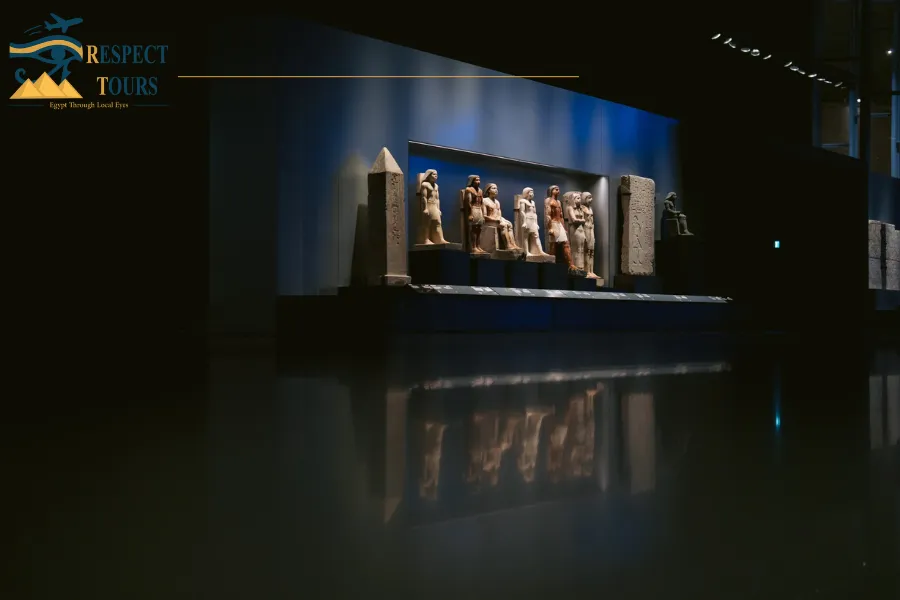
Quick Comparison: GEM vs. Tahrir Museum
| Feature | Grand Egyptian Museum (GEM) | The Egyptian Museum in Tahrir |
|---|---|---|
| Location | Giza, next to the Pyramids | Downtown Cairo, Tahrir Square |
| Main Attraction | Complete Tutankhamun Collection (upon full opening) | Royal Mummies & Old Kingdom masterpieces |
| Architecture | Modern, vast, state-of-the-art | Classic, historic 1902 building |
| Experience | Interactive, spacious (phased opening) | Traditional, classic “treasure-hunt” feel |
| Best For | The main event after 2025: Tutankhamun’s treasures | History lovers & a classic museum experience |
How to Get to the Grand Egyptian Museum
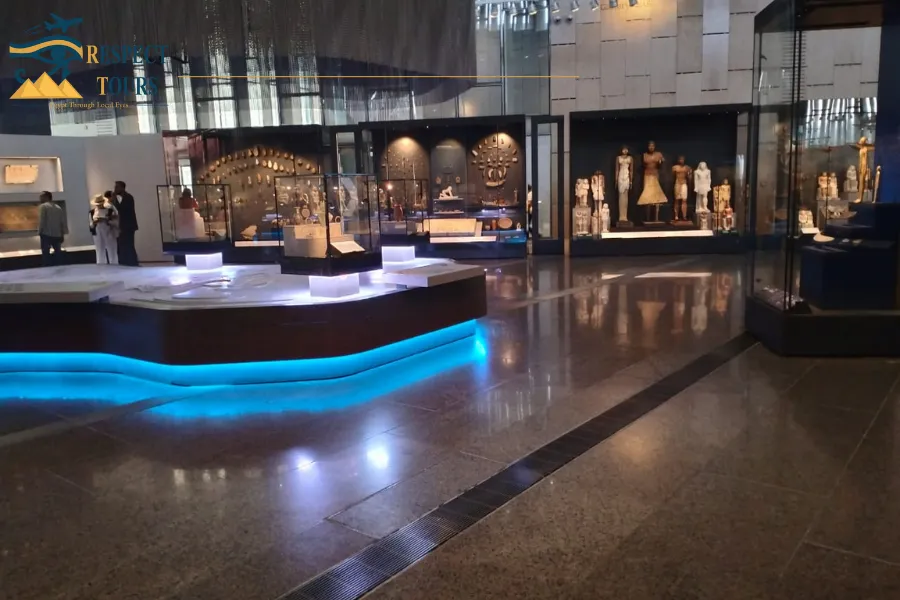
Navigating your way to the GEM is straightforward, as it’s located in one of the world’s most famous archaeological zones. Here’s a breakdown of the best ways to get there and how to beat the crowds.
Location & Distance from the Pyramids
The Grand Egyptian Museum is strategically located on the Giza Plateau, just two kilometers away from the Great Pyramid.
Its proximity allows for breathtaking views and makes it incredibly easy to visit both the museum and the Pyramids in a single day. The main entrance is on the Cairo-Alexandria Desert Road.
Transport Options
- Uber/Careem & Taxis (Most Popular) This is the most convenient and recommended option for most travelers.
- Best Drop-off Point: When using a ride-sharing app, set your destination specifically to the “Grand Egyptian Museum Main Entrance” to avoid being dropped off far from the gate.
- Tip for Taxis: If you take a regular white taxi, always agree on the fare with the driver before you start the trip to avoid any surprises.
- Private Driver / Group Tours (Most Hassle-Free) This is the preferred option if you are planning a full-day excursion to multiple sites (like Saqqara, Dahshur, and the Pyramids) or if you simply want a seamless, stress-free experience. Your driver will handle parking and wait for you, offering door-to-door service from your hotel and back.
Opening-Week Crowd Strategy
Since opening in November 2025, the museum has consistently operated at or near capacity. Follow these tips to make your visit more enjoyable:
- Advance Booking is Essential: Do not show up without a pre-booked, timed-entry ticket. You will likely be turned away. Book online weeks or even months in advance.
- Arrive Early: Be at the entrance before the official opening time (e.g., by 8:45 AM). This allows you to be among the first inside and enjoy the main halls with fewer people.
- Avoid the “Sunset Rush”: The busiest time is often from 2:00 PM to 5:00 PM, as many visitors try to combine a museum visit with watching the sunset at the Pyramids. Plan for a morning visit instead.
- Allow for a Flexible Schedule: Even with a ticket, expect some queues for security and entry. Don’t schedule another activity too tightly after your museum visit, especially during the opening week.
Explore the museum’s treasures with an expert guide. Book your private tour with the experts at Respect Tour.
Plan the Perfect GEM + Pyramids Day
Visiting the Grand Egyptian Museum and the Giza Pyramids on the same day is the ultimate historical experience. With smart planning, you can see both iconic sites without feeling rushed.
With smart planning and strategic timing, you can comfortably see both iconic sites without feeling rushed. Here’s your complete guide to creating the perfect day.
One-Day Itinerary
- 9:00 AM – 1:00 PM: The Grand Egyptian Museum (4 hours)
Strategic Route (4-hour highlights):
9:00-9:20 AM: Grand Hall (Ramses II statue), 20 minutes
– Quick impressive start
– Photos before crowds
9:20-9:50 AM: Grand Staircase, 30 minutes
– Ascend through 87 pharaoh statues
– Photos from multiple levels
9:50-11:20 AM: Tutankhamun Galleries, 90 minutes
– THE priority (complete treasure collection)
– Golden mask, throne, chariots, jewelry
– Take your time here
11:20-11:50 AM: Khufu Solar Boat Museum, 30 minutes
– Ancient ship in climate-controlled building
– Rest break (cooler, less crowded)
11:50 AM-12:20 PM: Royal Mummies Hall, 30 minutes
– Face-to-face with legendary pharaohs
– Solemn, powerful experience
12:20-12:50 PM: One Main Exhibition Hall of choice, 30 minutes
– Choose based on interest (Old Kingdom, New Kingdom, etc.)
– Or browse commercial area/gift shops
2:50-1:00 PM: Exit & transportation to lunch, 10 minutes
- 1:00 PM – 2:30 PM: Lunch with Pyramid Views (1.5 hours)
Enjoy a relaxing Egyptian lunch while gazing at the stunning backdrop of the Great Pyramids you are about to visit.
- 2:30 PM – 5:30 PM: The Giza Pyramids & Sphinx (3 hours) With the sun now in the west, the lighting on the Pyramids and Sphinx is perfect for photography.
Strategic Route (3-hour experience):
2:30-3:00 PM: Sphinx Area, 30 minutes
– Start here while still energized
– Viewing platform photos (iconic shots)
– Less crowded than later
3:00-4:00 PM: Great Pyramid Exploration, 60 minutes
– Walk around base (appreciate massive scale)
– Consider interior entry (steep, cramped, hot, only if interested)
– Northern side (cooler, shadier) for rest breaks
4:00-4:45 PM: Khafre & Menkaure Pyramids, 45 minutes
– Panoramic viewpoint (all three pyramids in one shot)
– The Khafre pyramid retains some casing stones at the top.
– Less crowded than Great Pyramid area
4:45-5:30 PM: Golden Hour Photography & Exit, 45 minutes
– Return to best vantage points
– Sunset lighting on pyramids (4:30-5:30 PM in winter)
– Final photos before site closes
- Evening (Optional): Nile Dinner or Sound & Light Show. To complete your day, consider two classic options. Enjoy a relaxing dinner cruise on the Nile to see the Cairo skyline light up at night.
Alternatively, head back to the Giza Plateau to watch the Sound and Light Show, where the history of the pyramids is projected onto them in a spectacular display.
The Grand Egyptian Museum and the Giza Pyramids in one day is ambitious but absolutely doable with proper planning. You’ll experience the full spectrum of ancient Egypt, from artifacts showcasing daily life to the monumental structures that have inspired humanity for 4,500 years.
Practical Tips
Family-Friendly Pacing
Traveling with children requires a different pace. Here’s how to keep everyone happy:
- Don’t Try to See It All: In the GEM, focus on what will excite kids the most: the golden treasures of Tutankhamun, the colossal statues, and the dedicated Children’s Museum.
- Use the Museum’s Facilities: The GEM is a modern building with clean restrooms, numerous rest areas with benches, and cafes for snacks and drinks. It’s a comfortable environment to take breaks.
- Pacing at the Pyramids: The Giza Plateau is vast and exposed. A short camel ride can be a fun and memorable experience for children and save them from a long, hot walk.
- Stay Hydrated: Carry plenty of water and snacks throughout the day, as the Egyptian sun can be intense.
Photography & Etiquette
- Photography Rules: Non-flash photography for personal use is generally permitted inside the GEM, but rules can vary by gallery, so always check for signs. Flash and tripods are almost always prohibited. At the Pyramids, photography is allowed everywhere.
- Best Light: The GEM’s interior is professionally lit, so photos are great anytime. For the best photos of the Pyramids and Sphinx, the golden hour light in the late afternoon (around 4:00 PM – 5:30 PM) is unmatched.
- What to Wear: Dress in lightweight, breathable clothing that covers the shoulders and knees as a sign of respect for the local culture. Most importantly, wear very comfortable, sturdy walking shoes; this day involves several miles of walking. A hat, sunglasses, and sunscreen are essential.
Accessibility Notes
- Grand Egyptian Museum: As a brand-new facility, the GEM is designed to be fully accessible. It features ramps, accessible entrances, and elevators to all floors, making it easy to navigate with wheelchairs or strollers. Wheelchairs are expected to be available for rent near the entrance.
- Giza Plateau: While the main roads around the pyramids are paved, the terrain can be sandy, rocky, and uneven, which can be challenging for wheelchairs or those with mobility issues. The areas immediately around the Sphinx and the main pyramids are the most accessible.
Conclusion
The Grand Egyptian Museum opened on November 1, 2025, and has quickly become the world’s most spectacular showcase of ancient Egyptian civilization. For the first time in history, King Tutankhamun’s complete 5,000+ artifact treasure is displayed together, housed in an architectural masterpiece with breathtaking pyramid views.
Since opening, the museum has operated at full capacity, advance booking is essential, crowds are intense, and navigating 500,000 square meters of exhibits requires strategic planning.
Let Respect Tour craft the perfect, stress-free journey for you. Our expert Egyptologist guides and exclusive packages are designed to ensure you have a front-row seat to history, with all the details handled.
The wait is over. The doors are opening. Be a part of the legacy.
FAQ: Frequently Asked Questions
Are tickets to the Grand Egyptian Museum refundable?
No, tickets purchased through the official website are non-refundable. However, you can change your date/time up to 48 hours before your visit, subject to availability.
Tour operator policies are more flexible: Licensed operators like Respect Tours typically offer free cancellation 24-48 hours before your tour and full refunds if the museum unexpectedly closes.
Always read cancellation policies carefully before booking, especially during peak season when tickets sell out weeks in advance.
Is photography allowed inside the Grand Egyptian Museum?
How far is the Grand Egyptian Museum from the Giza Pyramids?
Is the museum accessible for children and wheelchair users?
Absolutely. The GEM is a modern facility designed to be fully accessible with ramps, elevators, and family-friendly amenities. The museum is designed for comfortable access for all visitors.