

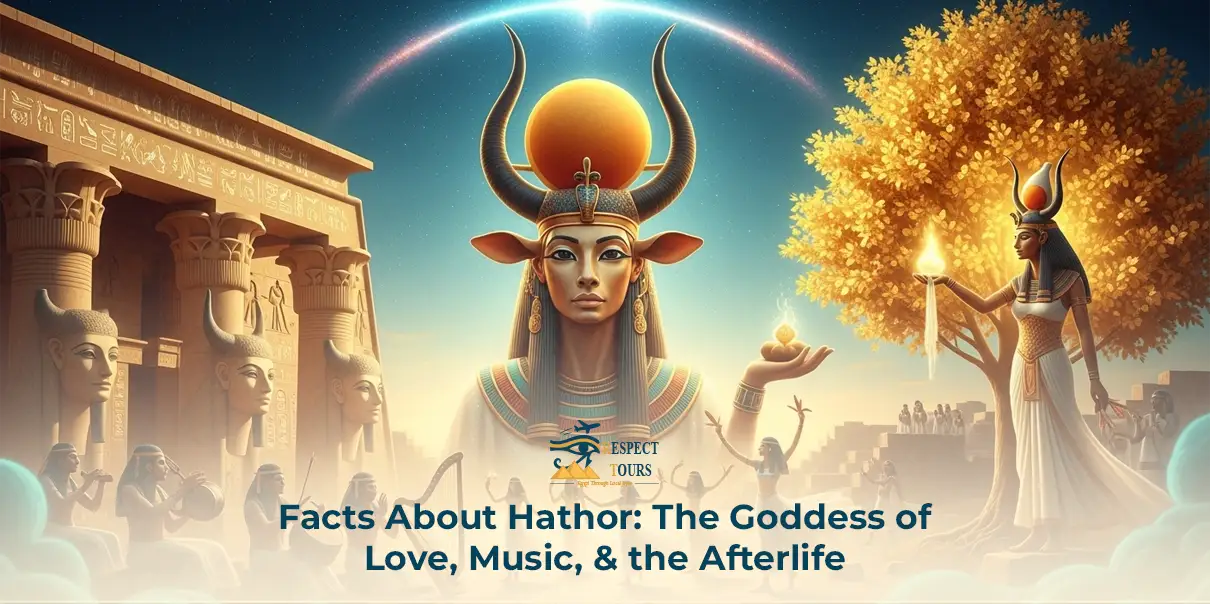
In the rich tapestry of ancient Egyptian mythology, few deities held as much reverence or widespread devotion as Hathor. As the goddess of love, music, fertility, motherhood, and joy, her influence touched every layer of life in ancient Egypt, from the golden temples of Dendera to the intimate moments of childbirth and celebration.
For over three thousand years, Hathor was cherished across all social classes. In this guide, Respect Egypt Tours brings you the most captivating facts about Hathor, revealing why she remains one of the most beloved and complex goddesses in Egypt’s divine pantheon.
Who is Hathor?
Here are some foundational facts about Hathor that explain why she became such a central figure in Egyptian spirituality.
Hathor stands as one of the most ancient and significant deities in the Egyptian pantheon, revered as the goddess of love, beauty, music, dance, fertility, and motherhood. Her worship spans from the earliest dynastic periods around 3100 BCE through the Roman occupation of Egypt, making her one of the longest-venerated deities in human history.
Unlike many Egyptian gods who were primarily worshipped by priests and royalty, Hathor was beloved by all social classes, earning her the affectionate titles “Mistress of the West” and “Lady of the Sycamore.”
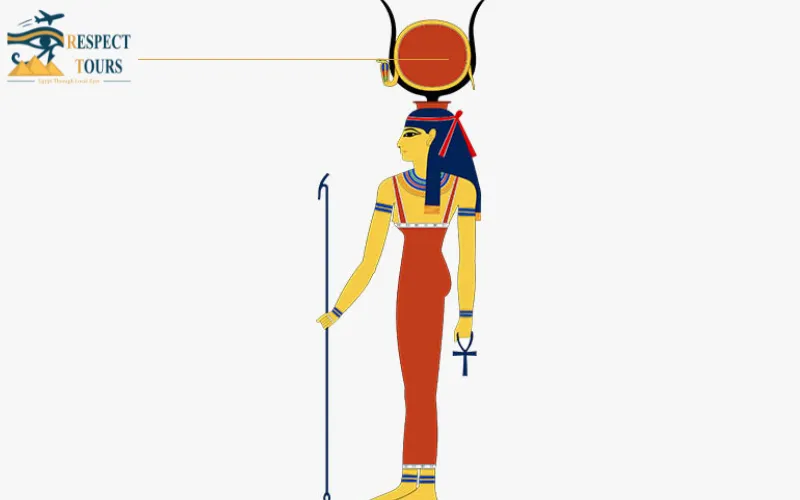
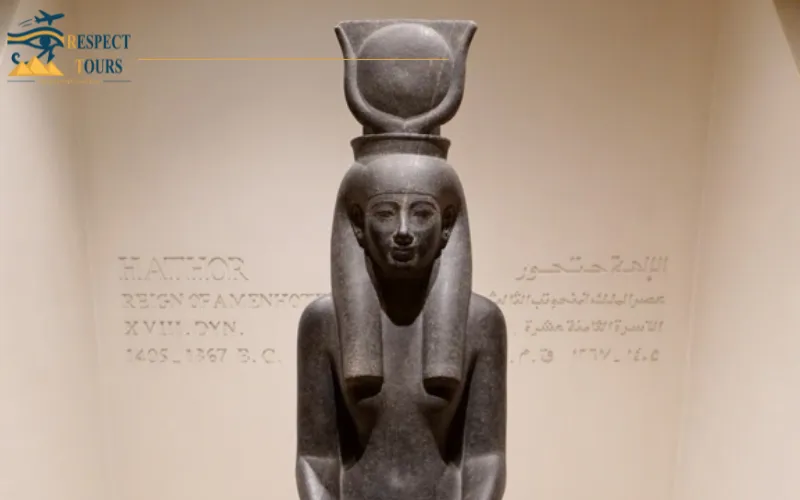
The goddess is most commonly depicted as a woman with cow ears or horns, often crowned with a solar disk, symbolizing her connection to both earthly fertility and celestial power. Her gentle bovine features represented nourishment, maternal care, and the life-giving properties of milk, while her human form embodied beauty, sensuality, and divine femininity.
Her Appearance:
- Human woman with cow ears or horns
- Solar disk crown (connecting earth to sky)
- Gentle bovine features (nourishment and maternal care)
- Beautiful human form (divine femininity)
Timeline: 3100 BCE – 400 CE (over 3,500 years of continuous worship)
The Divine Origins of Hathor
The origins of Hathor stretch back to the prehistoric period of Egyptian civilization, where she likely evolved from earlier cow goddesses worshipped in the Nile Delta.
Archaeological evidence suggests that her cult began in the early dynastic period, possibly originating from the merger of several local fertility deities. Ancient texts describe her as one of the primordial forces of creation, existing even before the establishment of the formal Egyptian pantheon.
Some creation myths position Hathor as the cosmic cow who gave birth to the sky itself, with her body forming the heavens and her milk creating the Milky Way. This cosmic significance elevated her beyond a mere fertility goddess to a fundamental force of creation and sustenance in the universe.
Creation Mythology:
- Some myths describe her as the cosmic cow who birthed the sky
- Her body formed the heavens
- Her milk created the Milky Way
- Existed before the formal Egyptian pantheon
Is Hathor the daughter of Ra?
The Complex Answer: Yes, no, and both!
Egyptian mythology presents Hathor’s relationship with Ra (the sun god) in multiple ways:
| Relationship | Meaning | Symbolism |
|---|---|---|
| Daughter | Born from Ra’s eye | Creative divine force |
| Wife/Consort | Divine feminine counterpart | Cosmic balance |
| Mother | Nurtures Ra’s renewal | Cyclical creation |
| Eye of Ra | Ra’s protective power | Solar aggression |
The relationship between Hathor and Ra, the sun god, represents one of the most complex genealogical puzzles in Egyptian mythology. In various traditions, Hathor is simultaneously described as Ra’s daughter, wife, mother, and even his feminine aspect. This apparent contradiction reflects the fluid nature of Egyptian mythological relationships and the evolving understanding of divine connections over thousands of years.
In the most widely accepted version, Hathor is indeed considered Ra’s daughter, born from his eye as a manifestation of his creative and destructive power. However, she also serves as his consort, representing the feminine principle that complements his masculine solar energy. This dual relationship symbolizes the cyclical nature of creation and the interconnectedness of all divine forces in Egyptian cosmology.
Meaning of the Name Hathor
Among the most practical facts about Hathor is her everyday influence in the lives of Egyptians
“Het-Hert” = “House of Horus” or “Mansion of Horus”
This name reveals her fundamental role as
- Divine Mother who shelters Horus
- Royal Connection (Horus = divine prototype of pharaohs)
- Temple Goddess (“Het” = sacred houses/temples)
- Sacred Space where humans commune with gods
The name “Hathor” derives from the ancient Egyptian “Het-Hert,” which translates literally to “House of Horus” or “Mansion of Horus.” This etymology reveals her fundamental role as the divine mother who shelters and nurtures the sky god Horus within her protective embrace. The name emphasizes her maternal function while connecting her to the royal ideology of Egypt, as Horus was the divine prototype of all pharaohs.
This nomenclature also suggests her role as a temple goddess, with “Het” referring to sacred houses or temples where divine presence dwells. Thus, Hathor became synonymous with the sacred spaces where humans could commune with the divine, particularly in matters of love, fertility, and spiritual guidance.
Important Cultural Facts About Hathor’s Role in Daily Life
Goddess of Love and Beauty
As the paramount goddess of love and beauty, Hathor presided over all aspects of romantic relationships, physical attraction, and aesthetic pleasure. Ancient Egyptians believed she could inspire love between couples, enhance physical beauty, and bless marriages with happiness and longevity.
Her temples served as centers for love magic, where both men and women would come seeking her intervention in matters of the heart. Beauty rituals and cosmetic preparations were often dedicated to Hathor, with mirrors, perfumes, and jewelry considered sacred to her worship.
The famous cosmetic spoons shaped like swimming girls found in many tombs were likely offerings to Hathor, reflecting her association with feminine beauty and sensual pleasure.
Hathor as a Protector of Women
Throughout Egyptian history, Hathor served as the primary divine protector of women, particularly during the vulnerable periods of childbirth and early motherhood.
Pregnant women would wear amulets bearing her image, believing in her power to ensure safe delivery and healthy children. Midwives invoked her name during difficult births, and new mothers offered prayers of thanksgiving for her protection.
Her protective role extended beyond physical safety to encompass women’s social and economic welfare. In a society where women’s status was closely tied to their ability to bear children, Hathor’s blessing was essential for female social security and family stability.
The Motherhood Symbolism
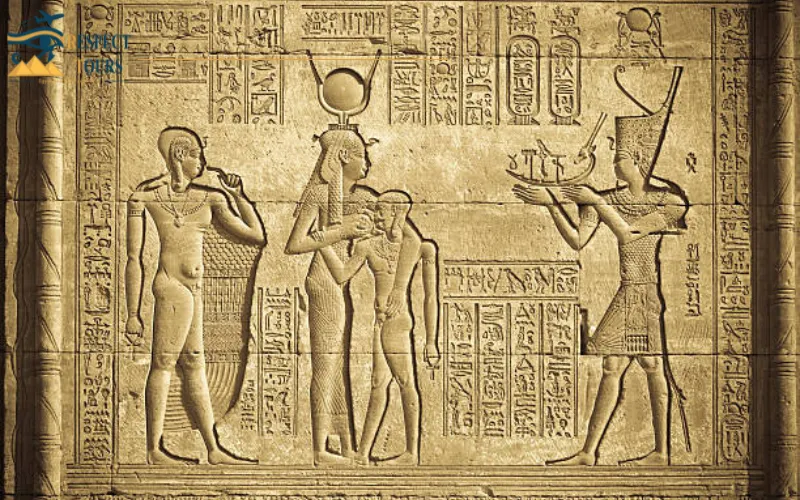
Hathor’s maternal symbolism permeated Egyptian art, literature, and religious practice. She was often depicted nursing the pharaoh, symbolically establishing the divine legitimacy of royal rule through her maternal blessing. This imagery reinforced the concept of the pharaoh as Horus incarnate, with Hathor serving as the divine mother who nurtured Egypt’s living god-king.
The symbolism extended to ordinary families, where Hathor was invoked to bless marriages with children and to protect family units from harm. Her maternal aspect also connected her to the annual flooding of the Nile, which was seen as the earth receiving nourishment from the divine mother’s milk.
Surprising Facts About Hathor and the Afterlife
Paradoxically, despite her life-affirming associations, Hathor also played a crucial role in Egyptian death beliefs and afterlife mythology. As “Mistress of the West,” she welcomed the deceased into the afterlife, providing comfort and guidance during the difficult transition from earthly existence to eternal life.
This seemingly contradictory role reflects the Egyptian understanding of death as a transformation rather than an ending.
In her funerary aspect, Hathor appeared as a cow emerging from the western mountains, ready to carry the souls of the dead to their eternal rest. Tomb paintings frequently show her offering the tree of life to the deceased, symbolizing the continuation of existence beyond physical death.
Titles of Hathor
Hathor held over 20 sacred titles, each reflecting different aspects of her divine nature:
Primary Sacred Titles
| Title | Meaning | Significance |
|---|---|---|
| Lady of Dendera | Primary cult center | Main temple location |
| Mistress of the West | Death guide | Afterlife protection |
| Golden One | Divine radiance | Solar connection |
| Lady of the Sycamore | Tree goddess | Nature connection |
| Eye of Ra | Solar protective power | Divine aggression |
| Mistress of Music | Arts patron | Cultural influence |
| Queen of Heaven | Celestial authority | Cosmic importance |
Regional & Specialized Titles
- “She who Illuminates”: light-bringing aspect
- “Lady of Greenstone”: Connection to precious minerals
- “Mistress of Turquoise”: Mining protection
- “She of the Beautiful Face”: beauty incarnate
Hathor’s Influence on Art and Music
Hathor’s patronage of music, dance, and artistic expression made her central to Egyptian cultural life. Musicians, dancers, and artists considered themselves under her special protection, and many artistic works were created as offerings to her.
The sistrum, a sacred rattle used in religious ceremonies, was particularly associated with her worship and believed to carry her divine presence through its melodious sound.
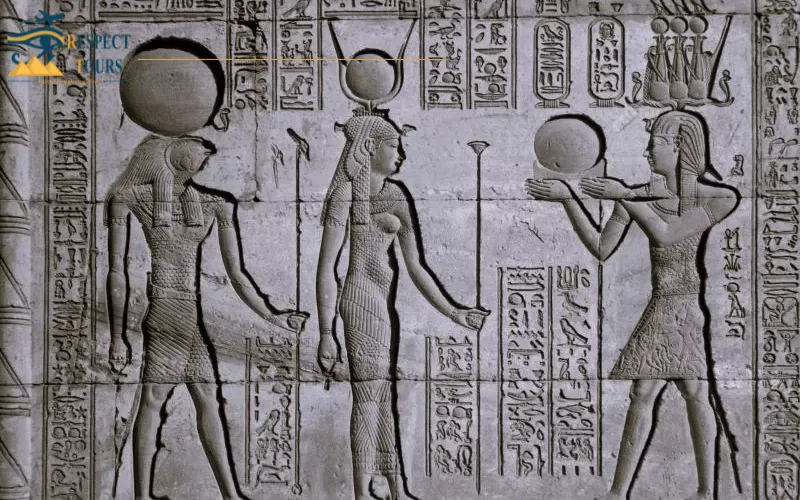
Temple reliefs and papyri frequently depict scenes of musical performances dedicated to Hathor, showing the integration of artistic expression with religious devotion. The goddess herself was often portrayed playing musical instruments or dancing, emphasizing the joyous and celebratory aspects of her worship that contrasted with the more solemn rituals of other deities.
Hathor as a Guide to the Afterlife
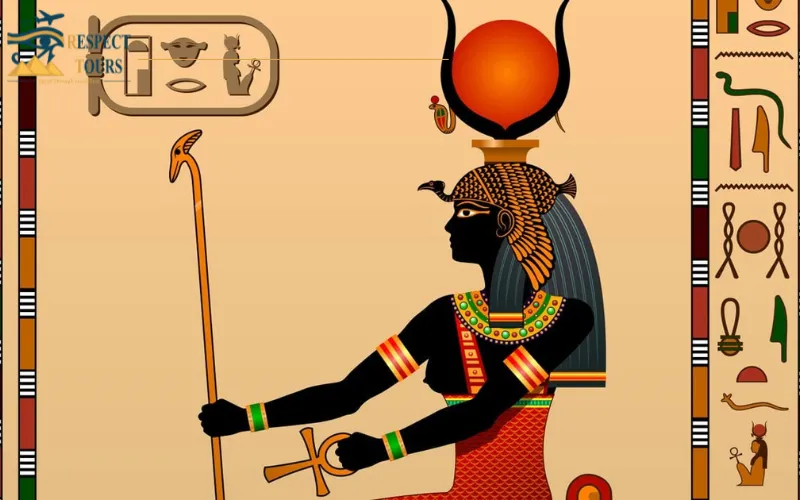
In her role as psychopomp, Hathor guided souls through the challenging journey of death and rebirth. Ancient Egyptian funerary texts describe her meeting the deceased at the threshold of the afterlife, offering sustenance and comfort during their transformation. She was particularly associated with providing the “bread of eternity” and “beer of everlasting life” to nourish souls in their new existence.
Her guidance extended beyond mere comfort to active protection against the dangers of the underworld. Spell texts and amulets invoked her power to shield the deceased from hostile forces and ensure their successful navigation through the complex geography of the afterlife.
Afterlife Services:
- “Bread of Eternity”: spiritual nourishment
- “Beer of Everlasting Life”: Soul sustenance
- Protection: Against underworld dangers
- Navigation: Through afterlife geography
- Transformation: Ensuring successful soul rebirth
Hathor and the Egyptian Pantheon
Hathor’s relationships with other Egyptian deities reveal the interconnected nature of the ancient Egyptian religious system, where gods and goddesses formed complex networks of kinship, alliance, and mutual influence.
Hathor and Ra: The Solar Connection
The relationship between Hathor and Ra represents one of the most fundamental divine partnerships in Egyptian theology. As Ra’s “Eye,” Hathor embodied the aggressive, protective aspect of solar power, capable of both nurturing life and destroying enemies. This dual nature is exemplified in the myth where Ra sends Hathor to punish rebellious humans, but she becomes so fierce in her destruction that Ra must trick her into stopping.
Multiple Relationship Roles:
- Daughter – Born from Ra’s eye as a creative force
- Consort – Feminine solar principle complement
- Mother – Nurturing sun god’s daily renewal
- Protective Force – Ra’s weapon against cosmic enemies
Daily Solar Mythology: Each evening, Hathor welcomes Ra, completing his celestial journey, representing receptive feminine energy, complementing his active masculine power.
Hathor and Horus: The Divine Mother
The relationship between Hathor and Horus exemplifies the archetypal mother-son bond that formed a cornerstone of Egyptian royal ideology. As Horus’s divine mother and nurse, Hathor provided the nurturing foundation that enabled the sky god to fulfill his role as Egypt’s protector and the pharaoh’s divine archetype.
Royal Ideology Foundation:
- Divine Nurse – Providing nourishment and care
- Protector – Shielding from harm
- Royal Legitimizer – Blessing pharaohs as Horus incarnate
- Kingship Template – Divine royal authority establishment
Earthly Application: Royal iconography frequently shows Hathor nursing or protecting kings, reinforcing divine legitimacy through maternal blessing.
Hathor and Horus Love Story
Beyond their mother-son relationship, some mythological traditions describe a romantic connection between Hathor and Horus, representing the sacred marriage between heaven and earth, fertility, and kingship. This relationship symbolized the harmonious union of complementary cosmic forces necessary for maintaining universal order.
The love story between Hathor and Horus also served as a divine prototype for human marriages, providing a mythological foundation for the institution of marriage and the celebration of romantic love within Egyptian society.
The Hathor and Osiris Myth
Hathor’s interactions with Osiris, the god of the underworld and resurrection, highlight her role in death and rebirth mythology. In some traditions, she serves as Osiris’s divine consort in the afterlife, welcoming the souls of the dead into his realm. This partnership emphasizes the complementary nature of death and fertility, endings and beginnings, that characterized Egyptian theological thinking.
Her association with Osiris also connects her to the annual flooding of the Nile and the agricultural cycle, where death and resurrection were seen as natural processes essential for continued life and prosperity.
Celebrations and Festivals Dedicated to Hathor
The Festival of Drunkenness
Annual Celebration commemorating Hathor’s myth:
Festival Activities:
- Music and Dancing – Joyous performances
- Ritual Intoxication – Religious devotion acts
- Mythological Theater – Story reenactments
- Community Bonding – Social strengthening
Mythological Basis: Celebrates the transformation from destroyer to protector through beer/wine appeasement.
Beautiful Festival of the Valley
Sacred Journey Event:
Ceremony Elements:
- Sacred Boat Processions – Hathor’s barque journey
- Tomb Visitations – Connecting living with ancestors
- Family Reunification – Spiritual family bonds
- Floral Decorations – Fragrant offerings
The Temple of Hathor at Dendera
The magnificent Temple of Hathor at Dendera stands as one of the best-preserved religious complexes in Egypt, showcasing the goddess’s enduring importance throughout Egyptian history. Construction began during the Ptolemaic period but continued through Roman times, demonstrating the continuity of Hathor worship across different cultural periods.
The temple’s architecture reflects Hathor’s multifaceted nature, with columns topped by her distinctive face and cow ears, astronomical ceiling decorations emphasizing her cosmic significance, and intricate relief carvings depicting her various myths and festivals. The famous Dendera Zodiac, now in the Louvre, originally adorned the temple ceiling, illustrating the connection between Hathor worship and astronomical observation.
Best-Preserved Egyptian Religious Complex:
Construction Timeline:
- Ptolemaic Period (305-30 BCE) – Initial construction
- Roman Era (30 BCE-641 CE), Continued expansion
- Multi-Cultural Elements – Greek, Roman, Egyptian fusion
Architectural Features
Unique Elements:
- Hathor Columns – Topped with her distinctive face and cow ears
- Astronomical Ceilings – Cosmic significance emphasis
- Intricate Relief Carvings – Myths and festivals depicted
- Famous Dendera Zodiac – Originally temple ceiling (now in the Louvre)
Underground Features:
- Secret crypts for sacred object storage
- Hidden chambers accessible to visitors
- Sacred ritual spaces
- Treasure storage areas
Stories and Myths of Hathor
The rich mythological tradition surrounding Hathor encompasses numerous stories that illuminate different aspects of her divine nature and cultural significance.
Hathor’s Journey to Nubia
One of the most significant myths describes Hathor’s journey to Nubia, where she retreated in anger after a conflict with Ra. This story explains seasonal phenomena and the importance of diplomatic relations between Egypt and Nubia. The myth describes how the gods, particularly Thoth, had to use wisdom and persuasion to convince Hathor to return to Egypt, bringing with her the annual flood and renewed fertility.
Cultural Significance:
- Explained seasonal agricultural variations
- Emphasized Egypt-Nubia diplomatic importance
- Justified Hathor worship in southern regions
- Demonstrated divine wisdom over force
Hathor as Sekhmet: The Warrior Goddess
Perhaps the most dramatic transformation in Hathor’s mythology occurs when she becomes Sekhmet, the fierce lioness goddess of war and destruction. According to the myth, Ra became angry with humanity’s rebellious nature and sent Hathor to punish them. However, her destructive power became so intense that she transformed into Sekhmet and nearly destroyed all of humanity.
Ra had to devise a clever plan, flooding the land with beer dyed red to resemble blood. Sekhmet, thinking it was blood, drank until she became intoxicated and transformed back into the gentle Hathor. This myth explains the dual nature of divine power and the importance of balance in cosmic forces.
Hathor And Love
Hathor’s dominion over love encompassed all forms of affection, from passionate romance to familial bonds and divine love between gods and mortals.
The Goddess’s Role in Marriage and Relationships
As the divine patron of marriage, Hathor blessed unions with fertility, harmony, and lasting affection. Wedding ceremonies often included prayers and offerings to Hathor, seeking her blessing for the new couple. Love poetry from ancient Egypt frequently invokes her name, and romantic spells and charms were dedicated to her power over human hearts.
Her influence extended beyond the initial romantic attraction to encompass the deeper bonds of partnership, mutual respect, and shared life experiences that characterized successful Egyptian marriages. Couples seeking to reconcile after disputes would make offerings at her temples, trusting in her power to restore harmony and affection.
Complete Relationship Spectrum:
Wedding Traditions:
- Ceremonial Blessings – Prayers for new couples
- Temple Offerings – Flowers, perfumes, precious items
- Ancient Love Poetry – Romantic verses invoking her name
- Love Magic Spells – Charms for heart influence
- Reconciliation Rituals – Restoring marital harmony
Relationship Aspects Covered:
- Initial Attraction – Romantic courtship inspiration
- Wedding Ceremonies – Marriage blessing rituals
- Fertility Blessing – Successful childbearing prayers
- Partnership Bonds – Mutual respect and shared experiences
- Long-term Harmony – Sustained marital affection
Cultural Impact of Hathor
Hathor’s influence on Egyptian culture extended far beyond religious worship, shaping artistic expression, social customs, gender roles, and national identity.
Daily Life Touchpoints:
- Beauty and Cosmetics – Used by all social classes
- Music and Celebration – Weddings, festivals, gatherings
- Childbirth Protection – Prayers for safe deliveries
- Household Objects – Symbols on mirrors, jewelry, and personal items
- Market Commerce – Shrines for business prosperity
- Family Harmony – Household unity prayers
Societal Impact:
- Gender Roles – Elevated motherhood and feminine power status
- Economic Activity – Festival-driven trade and commerce
- Community Bonds – Celebrations strengthening social connections
- Cultural Expression – Inspired art, music, dance, literature
The Five Gifts of Hathor
Sacred Divine Bestowals upon Humanity:
Complete Gift Framework
- The Gift of Life
- Vital breath for all living beings
- Fertility for humans, animals, crops
- Creative spark animating existence
- The Gift of Joy and Pleasure
- Happiness and contentment capacity
- Beauty and sensual experience appreciation
- Life’s precious moments celebration
- The Gift of Love and Companionship
- Romantic partner attraction
- Familial bonds and friendships
- Divine-mortal love connections
- The Gift of Music and Artistic Expression
- Musical talents and dance abilities
- Creative inspiration for artists
- Community-uniting cultural traditions
- The Gift of Peaceful Death and Afterlife Guidance
- Comfort during life transitions
- Safe eternal realm passage
- Continued post-physical existence
Theological Framework: These gifts provided a comprehensive understanding of Hathor’s role in human welfare, celebrated through temple rituals, personal prayers, and artistic representations.
Visit Hathor in Dendera with Respect Egypt Tours
Modern visitors to Egypt can experience Hathor’s enduring legacy at the magnificent Dendera Temple complex, located approximately 60 kilometers north of Luxor. Professional tour operators offer comprehensive visits to this well-preserved site, providing expert guidance on the temple’s history, architecture, and religious significance.
The temple experience includes viewing the famous Hathor columns, exploring the underground crypts where sacred objects were stored, and examining the detailed relief carvings that tell the stories of the goddess’s myths and festivals. Many tours combine Dendera with other significant sites, creating a comprehensive understanding of ancient Egyptian religious practices and cultural achievements.
Location: 60 kilometers north of Luxor, Egypt
What Modern Visitors See:
- Iconic Hathor Columns – Architectural marvels with divine faces
- Underground Crypts – Secret sacred storage chambers
- Detailed Stone Carvings – Mythological stories in relief
- Astronomical Decorations – Ancient star maps and zodiac
- Zodiac Replica – Original Dendera Zodiac now in the Louvre
Professional Tour Benefits
Expert-Guided Experiences Include:
- Historical Context – 2,000+ years of temple history
- Architectural Analysis – Construction techniques and significance
- Religious Practices – Festival celebrations and worship methods
- Site Connections – Links to other Egyptian monuments
- Archaeological Updates – Recent discoveries and ongoing research
Conclusion
Today, Hathor continues to inspire awe. Her sacred spaces, like the Temple of Dendera, still whisper stories of divine femininity, creative power, and spiritual joy. As we walk among the ruins and marvel at the art and relics created in her honor, we reconnect with a civilization that knew love, music, and celebration were as vital to life as breath itself.
Hathor’s legacy reminds us that life isn’t just about survival, it’s about meaning, beauty, and connection. In an era where stress and disconnection often dominate, her message remains urgent: nurture love, embrace joy, celebrate beauty, and honor the feminine divine within and around you.
Ready to walk in Hathor’s footsteps? Join Respect Tours and explore her magnificent temple at Dendera with expert guides who bring her story to life. Book your journey today and experience the heart of ancient Egyptian spirituality through the goddess who made joy sacred.
FAQ: Frequently Asked Questions
What does Hathor’s name mean?
It means “House of Horus,” symbolizing her role as a divine mother to the sky god Horus.