
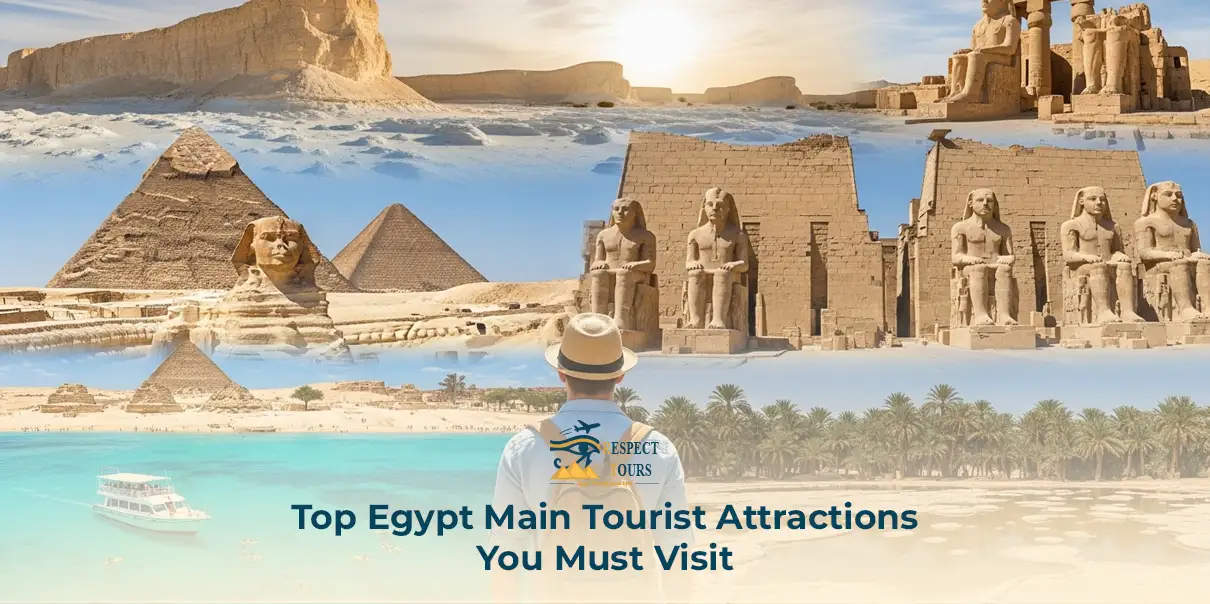
Planning a trip to Egypt? You’re about to have an unforgettable adventure. To make planning simple, this guide focuses directly on Egypt main tourist attractions.
This guide cuts through the complexity. We’ve distilled Egypt main tourist attractions into what actually matters: the must-see sites, practical logistics, and insider knowledge that transforms good trips into unforgettable journeys.
The Ancient Wonders (Cairo & Giza)
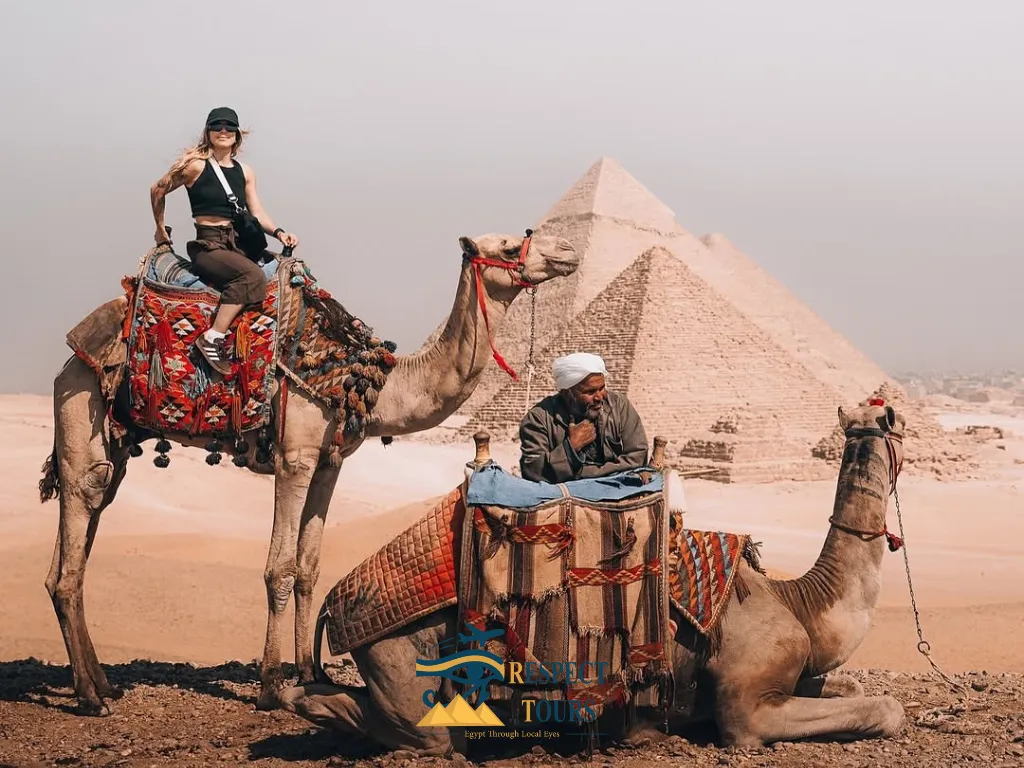
The Pyramids of Giza & The Sphinx
Why this is essential: The only surviving Wonder of the Ancient World. Seeing the Great Pyramid isn’t just tourism; it’s standing before humanity’s most enduring architectural achievement.
What you cannot miss:
The Great Pyramid (Khufu):
- Built 4,500 years ago
- Originally 146 meters tall (481 feet)
- Constructed from 2.3 million limestone blocks
The Great Sphinx:
- 73 meters long, 20 meters high
- Carved from a single limestone ridge
- Face likely represents Pharaoh Khafre
- Best photographed from the southeastern viewing platform
The Panoramic Viewpoint:
- Where do you get the iconic “all three pyramids” shot
- Located on the plateau’s southeastern edge
- Arrive early before tour buses block views
Planning your visit:
| Detail | Information |
|---|---|
| Location | Giza Plateau, 30–45 min from central Cairo |
| Hours | 8 AM – 5 PM daily |
| Entry | EGP 540 (~$11) general; EGP 900 (~$18) inside Great Pyramid |
| Best time | 8–10 AM (cooler, fewer crowds) |
| Duration | 3–4 hours minimum |
| Best season | October – April |
Critical insider tips:
- Arrive at 8 AM sharp. By 10 AM, the plateau swarmed with tour groups, and the heat became punishing.
- Bring supplies: Water (at least 1 liter per person), hat, 50+ SPF sunscreen, and comfortable shoes. There’s virtually no shade.
- Ticket strategy: If going inside the Great Pyramid, buy that ticket FIRST; they sell out by 9:30 AM.
Scams to avoid:
- “The pyramids are closed, let me take you to my shop” (they’re open)
- Police/officials demanding “fees” (entrance fee only, paid at the official booth)
- Anyone offering to “show you a secret entrance” (doesn’t exist)
Photography: Phone cameras are fine. Drones are strictly prohibited (confiscation + possible arrest).
Combining attractions: The Grand Egyptian Museum is 15 minutes away; visit both in one day.
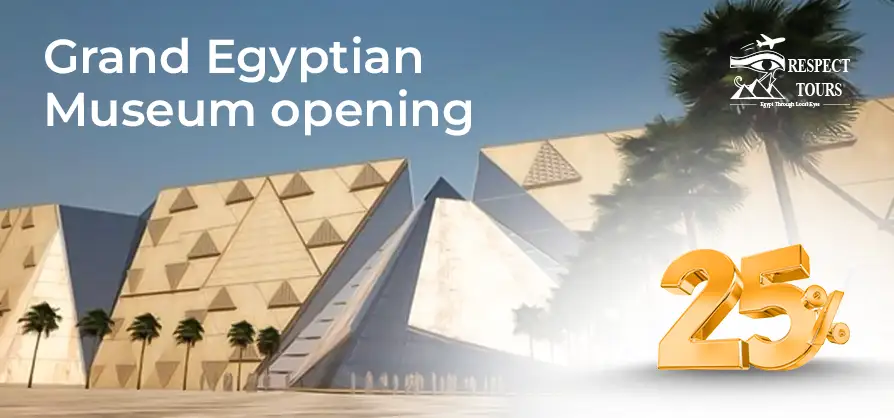
The Grand Egyptian Museum (GEM)
Why this matters: The world’s largest archaeological museum, purpose-built to showcase Egypt’s treasures with a 21st-century presentation.
The revolutionary difference:
Old Egyptian Museum (Tahrir): Overwhelming, cramped, minimal labels, treasure-chest chaos.
The Grand Egyptian Museum: Spacious, climate-controlled, extensive English descriptions, thematic organization
What you cannot miss:
The Complete Tutankhamun Collection:
- All 5,398 objects from his tomb were displayed together for the first time in history
- The golden mask in a dedicated, dramatically lit gallery
- Golden shrines, chariots, jewelry, furniture, everything
- Plan 2+ hours just for Tut galleries
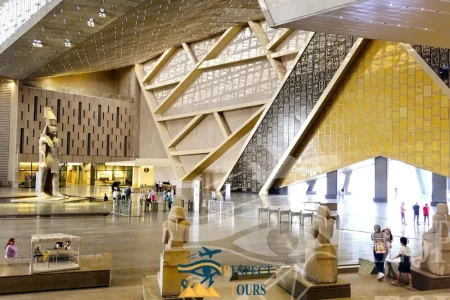
The Grand Staircase:
- Massive statues of gods and kings line your ascent
- The colossal Ramesses II statue dominates the atrium (83 tons)
- Each statue tells Egypt’s chronological story
Khufu’s Solar Boat:
- 4,600-year-old cedar vessel, reconstructed from 1,224 pieces
- Buried beside the Great Pyramid to carry the king into the afterlife
- Displayed in a purpose-built, climate-controlled gallery
Planning your visit:
| Detail | Information |
|---|---|
| Location | Giza, adjacent to the Pyramids |
| Hours | 9 AM – 6 PM daily (subject to change) |
| Entry | ~EGP 1,000 (~$20) general admission |
| Best time | Weekday mornings (weekends are overwhelmingly crowded) |
| Duration | 4–5 hours minimum (could spend a full day) |
Critical insider tips:
Book online in advance: gem.gov.eg (skip massive entry queues)
Wear comfortable shoes: The museum is ENORMOUS, you’ll walk miles on marble floors
Islamic Cairo & Khan el-Khalili Bazaar
Why this matters: Egypt isn’t just pharaonic; Islamic Cairo reveals 1,000 years of medieval splendor, active spiritual life, and authentic urban culture.
What you cannot miss:
The Citadel of Saladin:
- Massive 12th-century fortress dominating Cairo’s eastern hills
- The Muhammad Ali Mosque, stunning Ottoman architecture with alabaster walls
- Panoramic views across Cairo (on clear days, you can see the Pyramids)
- Entry: ~EGP 450 (~$9)
Al-Muizz Street:
- UNESCO World Heritage street lined with medieval architecture
- Magnificently restored mosques, madrasas, sabil-kuttabs
- Walk from Bab al-Futuh (north gate) to Bab Zuweila (south gate)
- Free to walk; some monuments charge small entry fees
Khan el-Khalili Bazaar:
- Cairo’s famous market has been, trading center since the 14th century
- Labyrinthine alleys selling lanterns, jewelry, spices, textiles, brass, perfumes
- Bargaining is essential: Start at 50% of the asking price, settle around 60-70%
- Overwhelming, chaotic, fascinating, the sensory immersion is the attraction itself
Al-Azhar Mosque:
- Founded in 970 CE, one of the world’s oldest continuously operating universities
- Stunning Fatimid and Mamluk architecture
- Active worship site, dress modestly, and remove shoes
- Free entry (small donation appreciated)
Planning your visit:
| Detail | Information |
|---|---|
| Location | Historic heart of Cairo, east of Downtown |
| Hours | Streets always open; shops 10 AM – late (many close Friday mornings for prayer) |
| Entry | Khan el-Khalili free; Citadel ~EGP 450 (~$9) |
| Best time | Late afternoon into evening (cooler, magical lighting when lanterns illuminate) |
| Duration | Half day minimum (4–5 hours) |
Critical insider tips:
- Dress modestly: Shoulders and knees covered (both genders). Women should carry a light scarf for entering mosques.
- Navigate the maze: Hire a guide or download offline maps; it’s genuinely easy to get lost
- Stay hydrated: Fresh mango and sugarcane juice from street vendors (watch them make it, delicious and safe)
- Explore side alleys: The most authentic workshops and hidden architectural gems are off the main tourist paths
- Evening transformation: The area comes alive at dusk, lanterns light, heat subsides, locals promenade. Visit mosques during the day, shop in the evening.
Coptic Cairo
Why this matters: Egypt’s Christian heritage predates Islam by 600+ years. This ancient Roman fortress neighborhood holds some of the world’s oldest churches and the history of the Holy Family’s refuge in Egypt.
What you cannot miss:
The Hanging Church (Al-Muallaqah):
- Built atop the Roman Fortress gatehouse, the nave is literally suspended in the air
- Beautiful icons, elaborate wooden screens, peaceful atmosphere
- Free entry
Saints Sergius and Bacchus Church:
- Built on the spot where the Holy Family (Jesus, Mary, Joseph) allegedly rested
- Visit the crypt below the altar, the actual hiding place, according to tradition
- Free entry
Ben Ezra Synagogue:
- Historic synagogue, once a church
- Famous as the site where the Cairo Geniza manuscripts were discovered (medieval Jewish documents)
- Demonstrates Egypt’s multi-faith heritage
- Free entry
The Coptic Museum:
- World’s largest collection of Coptic Christian art, textiles, manuscripts, and woodwork
- Excellent context for understanding Egypt’s Christian history
- Entry: ~EGP 300 (~$6)
Roman Fortress towers:
- Massive, rounded towers are still visible, forming the neighborhood’s foundation
- Built during Roman Emperor Trajan’s reign (98-117 CE)
Planning your visit:
| Detail | Information |
|---|---|
| Location | Old Cairo (Masr al-Qadima), south of Downtown |
| Hours | ~9 AM – 4 PM daily |
| Entry | Churches and synagogue free; Museum ~EGP 300 (~$6) |
| Best time | Mornings (quiet, peaceful) |
| Duration | 2–3 hours |
Critical insider tips:
- Use the Metro: Mar Girgis station stops directly inside the complex (easiest access)
- Dress modestly: Active worship sites, cover shoulders and knees
- Uneven cobblestones: Comfortable walking shoes are essential
- Combine wisely: Near the National Museum of Egyptian Civilization (NMEC), it is easy to visit both in one morning
- Donations appreciated: While entry is free, small donations help maintain these ancient churches
The Nile Valley (Luxor & Aswan)
Valley of the Kings
Why this is essential: Descending into actual pharaonic tombs, where 3,000-year-old art is so vibrant that it looks freshly painted, is Egypt’s most visceral historical experience.
Understanding the site:
62 tombs discovered (more likely remain hidden). Your ticket allows 3 standard tombs. Premium tombs require separate tickets.
What you cannot miss:
Standard Tombs (included in general ticket):
Choose based on what’s open (rotation for conservation). Generally excellent choices:
- Ramesses IV (KV2): Large, accessible, well-preserved paintings
- Ramesses IX (KV6): Excellent astronomical ceiling, detailed Book of Caverns texts
- Merenptah (KV8): Deep, dramatic descent, red granite sarcophagus in situ
Premium Tombs (separate tickets, often worth it):
- Tutankhamun (KV62): ~EGP 500 (~$10)
- Small, relatively plain, but it’s TUTANKHAMUN
- His mummy remains in the tomb (gold coffin visible)
- The most famous tomb in history, a bucket list essential despite its small size
- Seti I (KV17): ~EGP 1,800 (~$36)
- The valley’s masterpiece, longest, deepest, most elaborate
- Extraordinary preservation, intricate reliefs covering every surface
- Often closed for conservation, if open, splurge on this ticket
- Ramesses V & VI (KV9): ~EGP 500 (~$10)
- Completely covered in vibrant paintings
- Spectacular astronomical ceiling (Book of Day and Night)
- Excellent value for money
Planning your visit:
| Detail | Information |
|---|---|
| Location | Luxor West Bank, ~45 min from East Bank hotels |
| Hours | 6 AM – 5 PM daily |
| Entry | EGP 600 (~$12) for 3 standard tombs + separate fees for premium tombs |
| Best time | 6 AM SHARP (essential to avoid heat) |
| Duration | 2–3 hours |
Critical insider tips:
-
- The heat is brutal: By 9 AM, it’s punishing. By 11 A.M., it’s dangerous. Early arrival isn’t optional; it’s survival.
- Use the Taf-Taf: Electric train from the visitor center to the tomb area (small fee, saves energy for descending into tombs)
- Photography rules:
- Phone photos are usually allowed in standard tombs (no flash)
- Often prohibited in premium tombs (check before entering)
- Never use flash, as it damages ancient pigments
- Choose wisely: Don’t try seeing too many tombs, 3-4 is perfect. The steep stairs and heat are exhausting.
- Hydration strategy: Drink water constantly, even if not thirsty. Dehydration happens fast in desert heat.
- Combine efficiently: Valley of Kings + Temple of Hatshepsut + Colossi of Memnon = one well-paced West Bank morning
Luxor Temple
Why this is essential: Unlike remote desert temples, Luxor Temple sits in the city center, and its true magic reveals itself after dark when dramatic lighting transforms ancient stones.
What makes it special:
Built primarily by Amenhotep III and Ramesses II, this temple celebrates divine kingship and the annual Opet Festival (when Amun’s statue traveled from Karnak to Luxor, renewing the pharaoh’s divine power).
What you cannot miss:
The Avenue of Sphinxes:
- Recently restored 2.7 km processional road connecting Karnak to Luxor
- Hundreds of sphinxes flanking the ancient path
- Beautifully illuminated at night
Ramesses II’s Pylon:
- Massive entrance with colossal statues
- One pink granite obelisk remains (the twin is in Paris, Place de la Concorde)
The Great Colonnade:
- Hall of giant papyrus columns
- Dramatic when lit from below at night
Abu Haggag Mosque:
- 13th-century mosque built INTO the temple
- Shows continuous sacred use across millennia
- Still an active mosque
Amenhotep III’s Sun Court:
- Elegant courtyard deep within the temple
- Beautiful double colonnade
Planning your visit:
| Detail | Information |
|---|---|
| Location | East Bank, Nile Corniche (city center) |
| Hours | 6 AM – 10 PM daily |
| Entry | ~EGP 400 (~$8) |
| Best time | Arrive just before sunset, see it in golden light, then illuminated after dark |
| Duration | 1.5–2 hours |
Critical insider tips:
- Evening is superior: Daytime heat makes this uncomfortable; nighttime is cooler, more atmospheric, more photographable
- Walk the Avenue: After your temple visit, stroll the newly opened Avenue of Sphinxes section
- Photography paradise: The uplighting creates dramatic shadows perfect for stunning photos
- Easy evening activity: Its central location makes this a relaxed end to a day spent at West Bank sites
Abu Simbel Temples
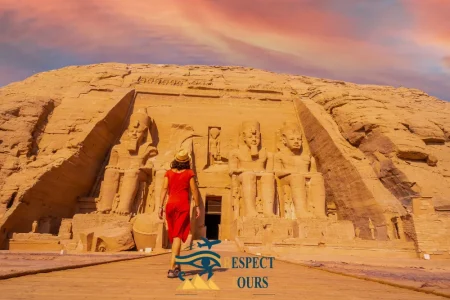
Why this is essential: The sheer ambition, four 20-meter colossal statues carved into a mountain, and the modern miracle of moving the entire complex to save it from Lake Nasser.
The temples:
Great Temple of Ramesses II:
- Four colossal seated statues of Ramesses (20m/66ft high)
- Interior: Hall of Osiris pillars showing Ramesses as a god
- The solar alignment: Twice yearly (Feb 22 & Oct 22), sunrise illuminates the inner sanctuary statues of Ramesses, Ra-Horakhty, and Amun, while leaving Ptah (god of darkness) in shadow
Small Temple of Nefertari:
- Dedicated to Ramesses’ favorite wife and goddess Hathor
- Six statues on facade (4 Ramesses, 2 Nefertari), unique for a queen to appear equal-sized with pharaoh
- Beautiful interior with Hathor columns
The Rescue Story:
- 1960s: The Aswan High Dam threatened to submerge the temples
- UNESCO coordinated a massive international effort
- The entire complex was cut into blocks, moved 65m higher, and reconstructed inside an artificial mountain
- Engineering triumph, saving cultural heritage
Planning your visit:
| Detail | Information |
|---|---|
| Location | Southern Egypt, a 3–3.5-hour drive south of Aswan |
| Hours | 6 AM – 5 PM daily |
| Entry | ~EGP 600–750 (~$12–15) |
| Transport | Road convoy (most common) or flight from Aswan |
| Duration | ~2 hours on site; 8–9 hours round trip from Aswan |
| Best season | October – April (cooler weather) |
Critical insider tips:
-
- The 4 AM wake-up call: Necessary evil, the drive is long, you want time at the site before heat peaks
- Breakfast box: Request from your hotel the night before, they’ll pack breakfast to-go
- Walk behind the dome: To appreciate the relocation’s scale, walk around the huge concrete dome housing the relocated temples
- Sun Festival visits (Feb 22 & Oct 22):
- Incredibly special to witness the solar alignment
- EXTREMELY crowded, book months in advance
- Arrive even earlier to secure a viewing spot
Philae Temple
Why this is essential: Egypt’s most romantic temple, dedicated to Isis, is located on an island requiring a boat approach. The last functioning pagan temple operated until 550 CE.
What makes it special:
The temple was moved stone by stone from Philae Island to nearby Agilkia Island during the 1970s to save it from Lake Nasser’s rising waters, a UNESCO rescue mission preserving this architectural jewel.
What you cannot miss:
The Temple of Isis:
- Main temple with beautiful courtyards, a hypostyle hall, and a sanctuary
- Reliefs depicting the Isis and Osiris mythology
- Birth house (Mammisi) celebrating Horus’s birth
The Kiosk of Trajan:
- Elegant riverside pavilion with floral capitals
- Egypt’s most photographed structure
- Unfinished, adding to its graceful charm
The boat approach:
- 10-minute motorboat ride from mainland marina
- Views of the temple emerging from the Nile create a magical arrival
Sound & Light Show:
- Evening show projecting lights and narration onto temple walls
- Tells Isis and Osiris dramatically
- One of Egypt’s better S&L shows, worth attending
Planning your visit:
| Detail | Information |
|---|---|
| Location | Agilkia Island, Aswan (boat required) |
| Hours | 7 AM – 4 PM (daytime); Sound & Light show evenings |
| Entry | ~EGP 450 (~$9) + boat fare (separate) |
| Best time | Late afternoon for golden light; evening for Sound & Light show |
| Duration | 2–3 hours, including boat rides |
Critical insider tips:
- Negotiate boat fare BEFORE boarding: Agree on round-trip price AND waiting time with captain (fair price: EGP 300-400 for private boat holding up to 8 people)
- The Sound & Light Show is special: Unlike many Egyptian S&L shows, Philae’s is genuinely atmospheric and worth the extra ticket
- Explore the island: Don’t rush, wander paths around the island for different perspectives and peaceful moments
- Know the story: Understanding the Isis and Osiris mythology enhances the visit dramatically. Read up beforehand
- Combine efficiently: Philae + Aswan High Dam + Unfinished Obelisk = one well-paced day
The Red Sea Coast
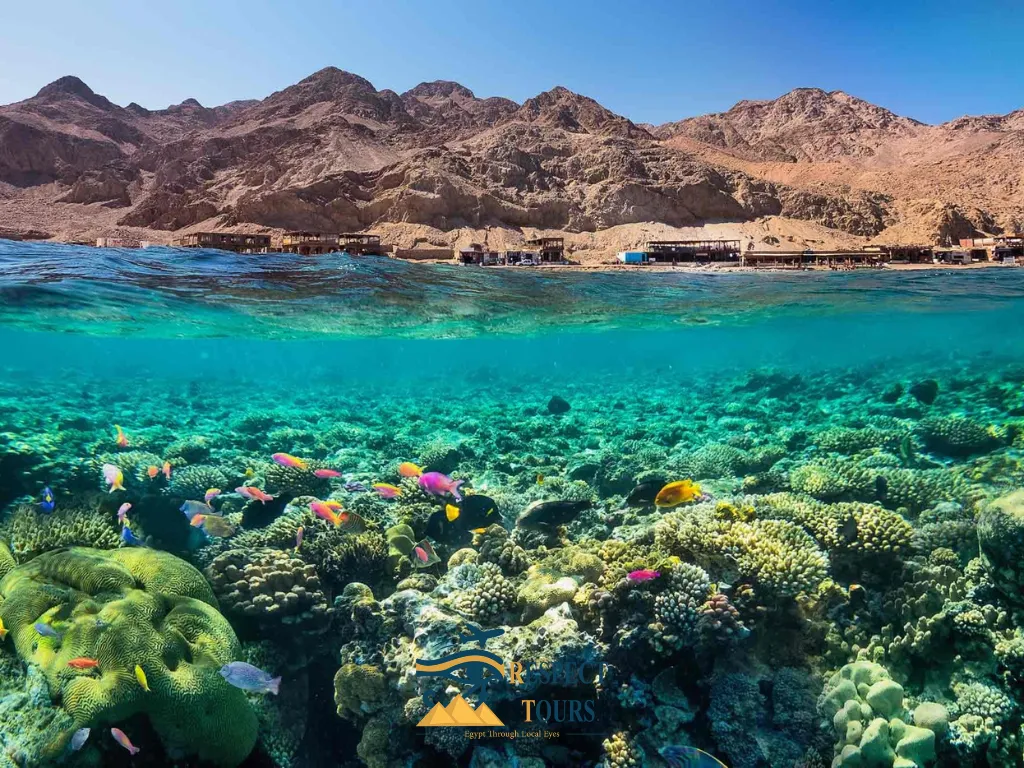
Hurghada: Mainland Beach Paradise
Why choose Hurghada: The most convenient Red Sea resort, on the mainland, just 4 hours from Luxor. Perfect for combining Nile Valley history with beach relaxation.
What you cannot miss:
Giftun Islands boat trip:
- Day trip to pristine national park islands
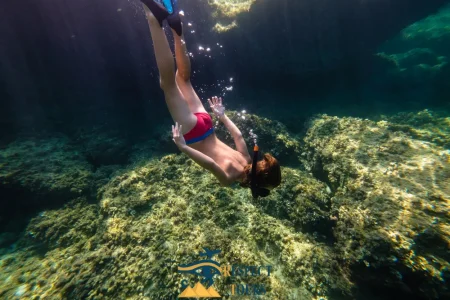
- White sand beaches, crystal-clear water
- Snorkeling above vibrant coral reefs
- Lunch typically included
- Cost: ~$30-50 per person
Hurghada Marina:
- Modern waterfront with restaurants, cafes, and shops
- Beautiful yachts, evening strolls
- More polished than Old Town
Desert quad biking:
- Thrilling safari into the Eastern Desert
- Sunset viewing over dramatic mountains
- Cost: ~$30-50
Water parks:
- Several large parks (Makadi Water World, etc.)
- Perfect for families with children
- Full-day fun
Planning your visit:
| Detail | Information |
|---|---|
| Location | Red Sea coast, ~4 hours from Luxor |
| Airport | Hurghada International (HRG), direct international flights |
| Best season | October – April (pleasant weather); summers are very hot |
| Duration | 4–7 days is ideal for a beach holiday |
| Family-friendly | Excellent — calm beaches, water parks, and kid-focused resorts |
Critical insider tips:
Choose your area:
- Hurghada city: Lively, bustling, more authentic
- Sahl Hasheesh (south): Upscale, quieter, luxury resorts
- El Gouna (north): Polished, more expensive, European-style
Sharm El-Sheikh: Diving Capital
Why choose Sharm: World-class diving and snorkeling, more upscale resorts, vibrant nightlife, and the Sinai location enables Mount Sinai trips.
What you cannot miss:
Ras Muhammad National Park:
- World-renowned marine park
- Incredible coral walls, abundant marine life
- Must-do for divers and snorkelers
- Park fee: ~$5 (usually included in boat trip prices)
Naama Bay:
- Bustling heart of Sharm
- Promenade with restaurants, bars, and shops
- Lively nightlife
Desert safaris:
- Quad biking or camel rides through the Sinai Desert
- Sunset/sunrise viewing
- Bedouin camp visits
Mount Sinai & St. Catherine’s Monastery:
- Overnight trip from Sharm
- Climb Mount Sinai for sunrise (where Moses received the Ten Commandments)
- Visit 6th-century monastery
Planning your visit:
| Detail | Information |
|---|---|
| Location | Southern Sinai Peninsula tip |
| Airport | Sharm El-Sheikh International (SSH), direct international flights |
| Best season | Year-round; March–May & September–November optimal |
| Duration | 4–7 days ideal |
| Vibe | More resort-focused, party atmosphere, international crowd |
Critical insider tips:
- Book PADI-certified dive centers only: Safety is non-negotiable, 5-star PADI certification essential
- Reef-safe sunscreen: Protect the fragile ecosystem you came to see
- Stay hydrated: Sinai sun is intense year-round
Desert Adventures
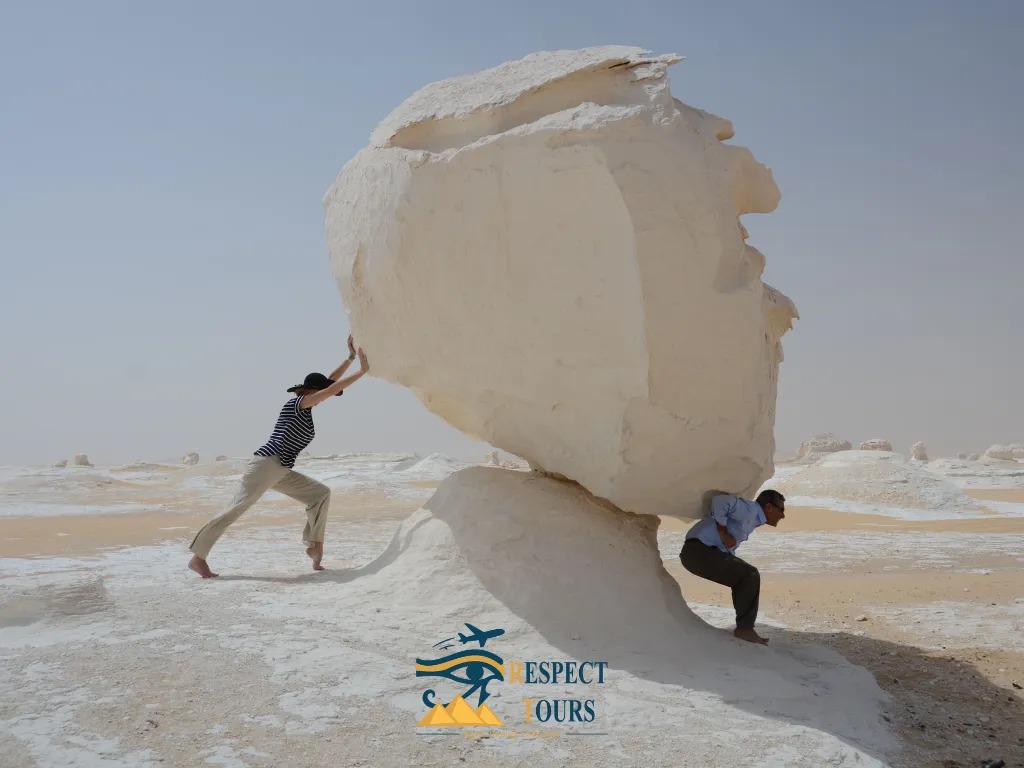
The White Desert National Park
Why this is essential: Egypt’s most surreal landscape, wind-carved chalk formations creating an alien world. The only way to truly experience it: overnight camping under stars.
What you cannot miss:
The white rock formations:
- Massive chalk sculptures naturally carved by the wind
- Famous shapes: “Mushroom,” “Chicken,” others
- Sunrise/sunset paint them pink, orange, gold
Overnight camping:
- Bedouin-style camp in the desert
- Campfire dinner under stars
- Zero light pollution = spectacular stargazing
- Profound silence
- Drive through en route, golden dunes topped with black volcanic rocks
- Stark, beautiful contrast
Crystal Mountain:
- Small hill made of quartz crystals
- Walk through glittering formations
Planning your visit:
| Detail | Information |
|---|---|
| Location | Farafra depression; tours start from Bahariya Oasis (~4 hours from Cairo) |
| Duration | Overnight (one afternoon to the next morning) |
| Cost | ~$100–150 per person (includes 4×4, guide, park fees, meals, camping equipment) |
| Best season | October – April (summers are dangerously hot) |
| Requirements | Must go with a licensed tour operator; cannot visit independently |
Critical insider tips:
- Pack warm layers: Desert nights get cold, bring a jacket, fleece, warm clothes
- Bring a power bank: No electricity in the desert
- It’s rustic camping: Very basic facilities (or none), part of the authentic adventure
- Look for fennec foxes: Small desert foxes sometimes visit camps at night
- Photography: The surreal landscape photographs beautifully, especially at golden hour
Siwa Oasis
Why this is special: Egypt’s most remote oasis, a tranquil Berber culture with unique traditions, language, and landscapes completely different from mainstream Egypt.
What you cannot miss:
The salt pools:
- Hyper-saline lakes where you float effortlessly
- Surreal turquoise colors
- Unforgettable experience
Fortress of Shali:
- Crumbling 13th-century mud-brick fortress
- Labyrinthine ruins dominate the oasis center
- Climb for sunset views
Temple of the Oracle:
- Where Alexander the Great was declared the son of god Amun
- Historic ruins with a fascinating story
Cleopatra’s Bath:
- Natural stone pool fed by a freshwater spring
- Refreshing swim
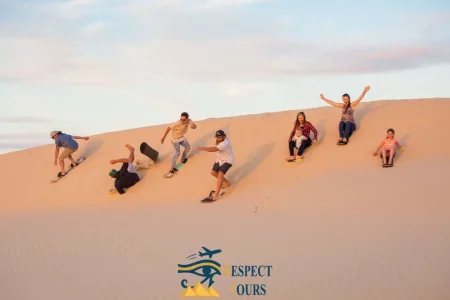
Great Sand Sea safari:
- 4×4 adventure over massive dunes
- Sandboarding opportunities
Planning your visit:
| Detail | Information |
|---|---|
| Location | Western Desert, 8–9 hours from Cairo |
| Duration | Minimum 3–4 nights recommended (makes long journey worthwhile) |
| Best season | March–April & October–November |
| Culture | Conservative Berber community; dress modestly |
Critical insider tips:
- The journey is part of the experience: The long drive through the desert helps you appreciate Siwa’s isolation
- Bring cash: ATMs unreliable; many places don’t accept cards
Practical Planning Framework
How to Structure Your Egypt Trip
The Classic First-Timer (8-10 days):
Days 1-2: Cairo
- Pyramids of Giza & GEM (full day)
- Islamic Cairo & Khan el-Khalili (half day)
- Optional: Coptic Cairo, Egyptian Museum
Days 3-7: Nile Valley
- Fly from Cairo to Luxor
- Luxor East Bank: Karnak & Luxor temples
- Luxor West Bank: Valley of Kings, Hatshepsut Temple, Colossi
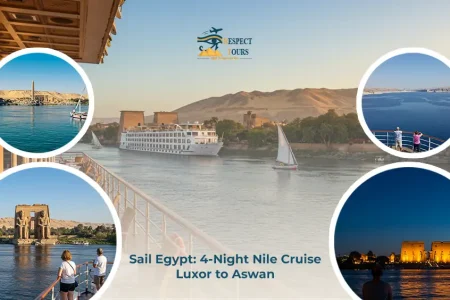
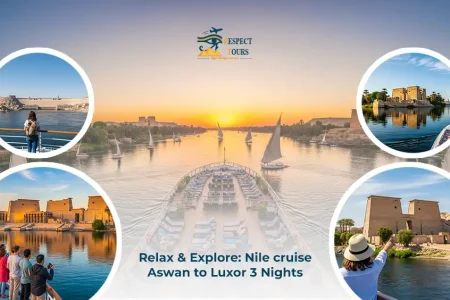
- Option A: 3-4 night Nile cruise to Aswan (includes Edfu, Kom Ombo temples)
- Option B: Fly or drive to Aswan, see Philae, Nubian villages
- Day trip to Abu Simbel from Aswan
Days 8-10: Red Sea
- Transfer to Hurghada or Sharm El-Sheikh
- Beach relaxation, snorkeling, and diving
Why Book with Respect Tours
What Respect Tours Actually Does:
- Expert Local Guides (Not Just Drivers)
- Completely Customized Itineraries
- Premium Transport & Logistics
- Vetted, Quality Partners
- 24/7 On-the-Ground Support
Conclusion: Egypt Awaits
By now, you’ve seen how Egypt’s main tourist attractions weave together the sacred, the historic, and the breathtakingly beautiful, from the Great Pyramid’s immensity to the quiet grace of Philae Temple, from the energy of Khan el-Khalili to the serenity of the Red Sea. Each moment here tells a different story, and together they form one of the most unforgettable travel experiences on Earth.
If you want to experience Egypt not as a checklist, but as a living journey, guided by experts who know every hidden viewpoint and local tradition, Respect Tours is your trusted companion. Our itineraries are crafted by Egyptians who live and breathe their heritage, blending comfort, authenticity, and insight into every step of your adventure.
Egypt is waiting. Let Respect Tours take you there.
FAQ: Frequently Asked Questions
Nile cruise vs. dahabiya vs. day trips?
Cruise = comfort & value; dahabiya = quiet luxury & fewer crowds; day trips = maximum control but more transfers.
Hurghada or Sharm for families?
When is the best time to visit Egypt?
October to April offers pleasant weather, perfect for sightseeing and desert adventures. Summer (May–September) is very hot, especially in Upper Egypt and the Western Desert.
Do I need a visa to visit Egypt?
Most travelers can get an e-visa online (visa2egypt.gov.eg) or a visa on arrival at major airports. Check current requirements for your nationality before traveling.