


Does it snow in Egypt? Yes, but only in one small mountainous region, and even there, it’s far from guaranteed.
Here’s the clear and honest answer: Snowfall in Egypt occurs only in Saint Catherine and the high peaks of the Sinai Peninsula. When it happens, it’s usually limited to 3–5 brief events per winter, typically between December and February.
Everywhere else in Egypt, including Cairo, the Pyramids of Giza, Luxor, Aswan, and the Red Sea coast, remains snow-free year-round. Instead, winter brings mild, comfortable temperatures that make it the best season for sightseeing, cultural tours, and outdoor activities.
In this guide, you’ll learn:
- Where snow can actually happen in Egypt
- When it’s most likely (and when it’s not)
- What winter weather really means for your travel plans
- Whether snow should influence when or how you visit Egypt
If you’re planning a winter trip to Egypt, this article will help you set realistic expectations, and make the most of one of the country’s most rewarding travel seasons.
Snow in Egypt: At a Glance
- Where: Saint Catherine & Mount Sinai only
- When: December–February (mainly January)
- How often: 3-5 times per winter (some years: none)
- Everywhere else: Extremely rare to never
Quick Answer: Does It Snow in Egypt?
Yes, but extremely rarely.
Snow falls with any regularity in only one location: Saint Catherine and the high mountains of the Sinai Peninsula, typically between December and February.
Even there, snowfall in Egypt isn’t guaranteed every winter season.
In the rest of Egypt, including Cairo, Alexandria, Luxor, and Aswan, snow is extraordinarily uncommon. Cairo last experienced measurable snow in 2013, the first occurrence in over a century.
The bottom line? For travelers planning an Egypt winter trip, snow should be viewed as a rare natural bonus, not a primary reason to visit.
Where Does It Snow in Egypt?
Understanding Egypt’s geography explains everything about its snow patterns.
Over 90% of the country consists of low-lying desert with a consistently warm, dry climate. Only one region possesses the elevation and winter temperature conditions necessary for snow.
Snow in Saint Catherine & Mount Sinai (Egypt’s Coldest Region)
Saint Catherine sits in South Sinai, surrounded by Egypt’s highest mountain range. It’s the coldest place in Egypt for good reason.
The town sits at approximately 1,600 meters (5,200 feet) elevation. Mount Sinai’s summit towers even higher at over 2,280 meters (7,480 feet).
These heights create winter night temperatures that frequently drop below freezing. When Mediterranean cold fronts push south, they bring the moisture needed for snow.
How often does it actually snow here?
In a typical good winter, the region experiences 3–5 snowfall events. However, some winters pass with no snow at all.
January consistently offers the highest probability.
What travelers witness during these rare events:
- Light to moderate snow covering rocky mountain peaks
- White accumulation on monastery rooftops and hiking trails
- Dramatic contrast between desert colors and white peaks
The visual result is genuinely striking and unforgettable.
Traveler Tip: January offers the best chance to see snow in Sinai, but don’t plan your entire trip around it. The mountains are stunning even without snow.
From a tourism perspective, this area offers something genuinely rare in the Middle East: a desert mountain landscape that can briefly resemble parts of southern Europe during winter months.
Hiking trails take on a different character. Bedouin villages adapt to cold conditions. Saint Catherine’s Monastery, already a UNESCO World Heritage site, gains an entirely new atmosphere under winter skies.
At Respect Tours, winter itineraries in Sinai are always planned with scheduling flexibility because snow remains weather-dependent. Local Bedouin guides often sense favorable conditions days in advance and can adjust plans accordingly.
Does It Snow Anywhere Else in Egypt?
In practical terms: no.
The northern Sinai mountains might see rare flurries once every few years. Egypt’s western desert high plateaus can experience frost at night, but never snow accumulation.
Here’s what that means for travelers: When people ask, “Does it snow in Egypt?” the honest answer remains: only in the high mountains of Sinai, and even there, only sometimes.
Can It Snow in the Sahara Desert?
This is a common question worth addressing directly.
While parts of the Sahara Desert do extend into Egypt, the Egyptian sections remain too warm and low-lying for snow.
Why snow is impossible in Egypt’s Sahara:
- Elevation too low (most areas under 500m)
- Distance from moisture sources
- Consistently warm winter temperatures
- Geographic position shields it from cold fronts.
The Western Desert can experience frost on the coldest January nights, but actual snowfall has never been documented in Egypt’s Sahara regions in modern records.
Does It Snow in Cairo?
Short answer: almost never.
Cairo sits at just 23–60 meters above sea level with a semi-arid climate classification.
The average winter temperature in Cairo ranges from 18°C during the day to 9°C at night. That’s cool enough to require a jacket, but nowhere near cold enough for snow under normal atmospheric conditions.
When Did It Last Snow in Cairo?
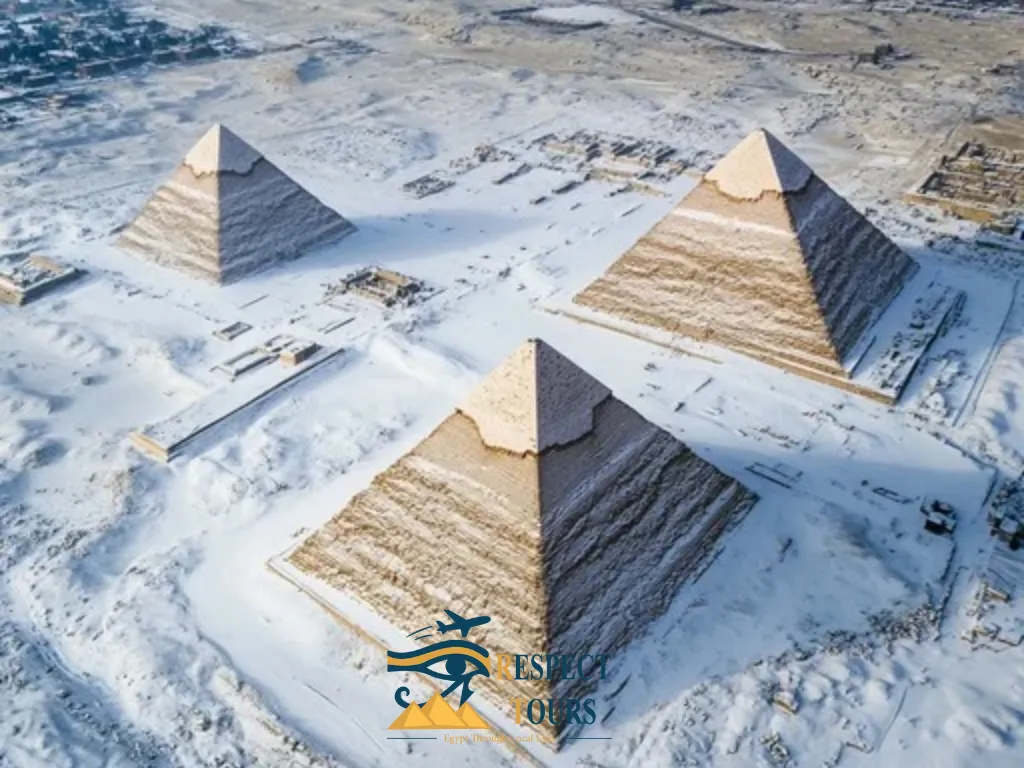
On December 13, 2013, Cairo experienced light snowfall during an exceptional cold wave that swept across the eastern Mediterranean.
What made it historic:
- First measurable snowfall in approximately 112 years
- Light flurries with no lasting accumulation
- Melted within hours of touching the ground
- It became global news precisely because of its extraordinary rarity.
Photos of snow near the pyramids went viral across social media worldwide.
However, meteorologists classify this as a historical anomaly, something travelers should not expect to witness again in their lifetimes.
If you visit Cairo in winter, expect:
- Cool mornings ideal for exploration.
- Pleasant afternoons around 18°C
- Cold evenings that call for layers
- No snow
Does It Ever Snow in Alexandria?
Alexandria possesses a Mediterranean climate with higher humidity and significantly more winter rainfall than Cairo.
But snow remains virtually unknown.
What actually happens during Alexandria’s winter months:
- Frequent rain showers
- Strong coastal winds from the Mediterranean
- Occasional hail or sleet during the coldest systems
- Temperatures generally above 8–10°C (46–50°F)
During the exceptional 2013 cold wave, some reports described sleet mixed with snow in Alexandria. But proper snowfall with ground accumulation hasn’t occurred in modern documented history.
Egypt Snowfall by Region: Quick Comparison
Winter Weather Across Egypt
| Region | Winter Temperature Range | Snow Possibility | What Travelers Experience |
|---|---|---|---|
| Saint Catherine (Sinai) | -5°C to 10°C | ❄️ Moderate (some winters) | Actual snow possible, cold mountain conditions |
| Northern Sinai | 2°C to 10°C | 🌨️ Very low | Frost possible, extremely rare flurries |
| Cairo | 8°C to 18°C | ❌ Extremely rare | Cool, dry winter weather, comfortable sightseeing |
| Alexandria | 9°C to 17°C | ❌ Extremely rare | Rain, coastal wind, Mediterranean winter |
| Luxor | 8°C to 25°C | ❌ None | Mild, sunny, ideal for temple exploration |
| Aswan | 10°C to 28°C | ❌ None | Warm, spring-like year-round |
| Red Sea Coast | 13°C to 23°C | ❌ None | Beach-friendly with warm waters |
When Does It Snow in Egypt? (Month-by-Month)
Snow remains possible only during the winter months in the Sinai mountains. Probability varies significantly by month.
Does It Snow in Egypt in December?
Sometimes, but only in Saint Catherine.
December marks the beginning of Egypt’s winter climate in winter patterns. Cold fronts begin reaching the Sinai region with increasing frequency.
Light snowfall becomes possible, though accumulation usually remains small and melts relatively quickly under daytime sun.
Elsewhere across Egypt, December means comfortable travel weather:
- Cairo averages 19°C during the day.
- Luxor reaches 23°C.
- Aswan enjoys pleasant 26°C temperatures.
Comfortable jacket weather, certainly not cold.
Does It Snow in Egypt in January?
January offers the highest probability for snowfall in Egypt.
This is the coldest month in Egypt nationwide. Night temperatures in Saint Catherine and the Sinai peaks regularly drop below freezing.
Occasionally, this produces what locals consider heavy snowfall by regional standards. Snow may persist for several days in shaded mountain areas.
What this means for your trip: If your specific goal includes witnessing snow in Egypt, January presents your best opportunity, though success remains far from guaranteed.
Does It Snow in Egypt in February?
Snow remains possible during early February as cold conditions continue.
But probability drops noticeably after mid-month. By late February, temperatures begin rising quickly across all regions, and snow becomes highly unlikely even in the mountains.
The 2013 Egypt Snowfall: What Really Happened?
The December 2013 event remains the definitive reference point whenever people search “does it snow in Egypt?”
What happened:
An unusually strong cold air system pushed south from Europe across the Mediterranean. It collided with moist air over northern Egypt in a rare atmospheric combination.
Where snow was reported:
- Light flurries in Cairo
- Mixed precipitation in Alexandria
- Accumulation in northern Sinai
- Heavy snow (by local standards) in Saint Catherine
For Egyptians, the event was genuinely shocking. Elders spoke of never witnessing such conditions in their lifetimes.
For travelers and online audiences, it created surreal, almost unbelievable images of snow near palm trees and ancient monuments.
From a meteorological perspective, this event is classified as statistically extremely rare, unlikely to repeat in the same locations for many decades.
While historically fascinating, the 2013 snowfall should not influence modern travel expectations or planning decisions.
Common Snow Myths About Egypt
Let’s separate fact from fiction when it comes to Egypt’s winter weather.
Myth 1: “Egypt never gets cold.”
The truth: Parts of Egypt get genuinely cold in winter.
Saint Catherine regularly drops to -10°C to -16°C on winter nights. Even Cairo can feel chilly at 9°C after sunset, especially with the wind.
The deserts experience dramatic temperature drops after dark. Winter camping requires proper cold-weather gear.
Myth 2: “The Sahara Desert gets regular snow.”
The truth: The Sahara can get snow, but not in Egypt.
Snow has fallen in parts of the Sahara in Algeria and Morocco at higher elevations. But Egypt’s Sahara regions remain too low and too warm.
The Western Desert might see frost, never snow.
Myth 3: “Snow disrupts all Egyptian travel.”
The truth: Snow, when it happens, only affects the high Sinai mountains.
Even during the 2013 event, travel continued normally across 99% of Egypt. The pyramids, Nile cruises, Luxor temples, and Red Sea resorts were completely unaffected.
Visiting Egypt in winter is not only safe, but it’s also the best season.
Is Egypt Cold in Winter?
This is one of the most common questions from travelers planning winter travel to Egypt.
Short answer: Not really, except in the mountains.
Most of Egypt experiences mild to warm winter weather that’s actually ideal for sightseeing and outdoor activities.
Here’s what “winter” feels like across different regions:
- Cairo & Northern Egypt
Cool mornings that warm up nicely by midday. You’ll want a light jacket for evenings, but afternoons are pleasant for walking tours.
- Luxor & Aswan (Upper Egypt)
Mild days that feel like perfect spring weather. Mornings can be cool, but by 10 AM you’ll likely shed layers.
- Red Sea Coast
Warm and beach-friendly. Water temperatures stay around 22°C (72°F), ideal for diving and snorkeling.
- Sinai Mountains
Genuinely cold, especially at night. This is the only region where “winter” means freezing temperatures and warm layers.
From a traveler’s perspective, Egypt’s winter is less about “cold” and more about “comfortable,” with perfect temperatures for activities that would be exhausting in summer heat.
How Cold Is Egypt in Winter (By the Numbers)?
What Is the Coldest Month in Egypt?
January consistently registers as the coldest month across all Egyptian regions.
Average winter temperatures in January:
- Cairo: 18°C day / 9°C night
- Alexandria: 16°C day / 10°C night
- Luxor: 24°C day / 10°C night
- Aswan: 26°C day / 12°C night
- Saint Catherine: 8°C day / -3°C night
These variations make packing strategically essential for multi-city itineraries.
What Is the Coldest Place in Egypt?
Saint Catherine and the Mount Sinai region hold this distinction definitively.
Recorded winter lows:
- Town: around -10°C to -16°C
- Mountain summit: even colder
Everywhere else in Egypt remains well above freezing throughout winter.
Is Winter a Good Time to Visit Egypt?
For the overwhelming majority of travelers, yes, winter represents the best time to visit Egypt for comfort, activities, and overall experience quality.
Pros of Visiting Egypt in Winter
Winter unlocks Egypt’s full potential in ways summer cannot match:
- Comfortable sightseeing temperatures
Explore pyramids without heat exhaustion. Wander through Luxor’s vast temple complexes at a natural pace. Spend hours at archaeological sites without feeling rushed by oppressive heat.
- Ideal conditions for Nile cruises
Pleasant deck temperatures and clear skies are perfect for photography. Enjoy outdoor dining along the river without sweat and discomfort.
- Crystal-clear skies
Winter brings the clearest visibility for photography. The famous “Egyptian blue sky” looks its best in the winter months.
- Active markets and street life
Outdoor cafés become more enjoyable. Local markets bustle with energy. Cultural events and festivals happen more frequently.
- Desert travel becomes comfortable.
Activities like White Desert camping or Siwa Oasis exploration shift from endurance tests to genuine pleasures. Cool nights, warm days, and clear conditions.
- Perfect stargazing
Cold desert nights create the clearest conditions for astronomy. The Milky Way appears stunning in winter skies.
Many Respect Tours guests specifically mention that winter visits allowed them to truly absorb Egypt’s history rather than merely survive it.
Cons to Be Aware Of
Winter also brings Egypt’s peak tourist season from December through February.
What this means practically:
- Popular sites experience larger crowds.
- Hotels command higher rates.
- Some tours require booking.
- Nights, especially in desert regions and mountains, can turn genuinely cold.
You’ll need realistic expectations about regional temperature variations and proper layers.
What Can Travelers Do in Egypt During Winter?
Egypt’s winter weather transforms the country into a destination of remarkable diversity and comfort.
Cultural & Historical Exploration (Cairo, Luxor, Aswan)
Winter makes Egypt’s greatest cultural treasures genuinely accessible.
Perfect winter activities:
- Explore the Pyramids of Giza at your own pace.
- Wander through Islamic Cairo’s medieval streets comfortably.
- Visit Karnak Temple and the Valley of the Kings with energy to appreciate the details
- Enjoy evening cultural shows and sound-and-light performances.
- Spend hours in the Egyptian Museum without exhaustion.
The difference is profound. Summer heat forces rushed visits. Winter allows genuine immersion.
Desert & Oasis Adventures
Winter represents the only season truly suitable for desert experiences.
Activities that become comfortable (even magical) in winter:
- White Desert camping under stars
- Bahariya Oasis jeep safaris
- Siwa hot springs visits
- Western Desert stargazing
- Bedouin cultural experiences
Cold nights paired with warm days and crystal-clear skies create ideal conditions for these bucket-list experiences.
Red Sea Escapes in Winter
Even during winter months, Red Sea water temperatures remain around 22°C (72°F), perfectly comfortable for water activities.
What works beautifully in winter:
- Diving and snorkeling (visibility is excellent)
- Beach resort relaxation
- Water sports
- Combining culture and beach in one trip
Many travelers combine cultural touring in the Nile Valley with Red Sea resort stays, enjoying the best of both worlds.
Sinai Mountain & Nature Experiences
Without summer’s extreme heat, Sinai’s mountains become genuinely inviting.
Winter mountain experiences:
- Hiking Mount Sinai for sunrise
- Visiting Saint Catherine’s Monastery
- Exploring Bedouin villages
- Experiencing high-altitude winter landscapes
Snow, when it occurs, transforms these experiences into something truly unique.
Practical Travel Tips for Visiting Egypt in Winter
Successful winter travel in Egypt requires understanding regional differences and preparing accordingly.
- Booking strategy:
Book accommodations and tours early for December and January, especially around holidays.
- Packing philosophy:
Pack in layers rather than single heavy items. Temperature swings between regions can be dramatic.
- Schedule flexibility:
Keep schedules somewhat flexible if visiting Sinai, where the weather can occasionally affect mountain access.
- Use local expertise:
Work with licensed guides in desert and mountain regions who understand seasonal conditions.
- Snow expectations:
Don’t plan your entire trip around the unlikely possibility of snow; focus instead on winter’s guaranteed advantages.
- Stay hydrated:
Despite cooler temperatures, Egypt’s dry air requires consistent hydration.
- Sun protection:
Winter sun remains intense. Sunscreen and sunglasses are essential year-round.
Winter Safety Note: While Egypt’s winter weather is generally ideal for travel, mountain areas can experience occasional access restrictions during heavy snow. Desert nights require proper cold-weather gear. Always travel with reputable tour operators who prioritize safety.
What to Pack for Egypt in Winter
For Cities (Cairo & Alexandria)
- Light jacket or fleece
- Long-sleeve shirts
- Comfortable walking shoes
- Scarf for cool evenings
- Sunglasses for bright winter days
For Upper Egypt (Luxor & Aswan)
- Light layering pieces
- One sweater for evenings
- Sun protection (sun stays intense)
- Comfortable walking footwear
- Hat for daytime sun
For Sinai & Desert Nights
- Insulated jacket
- Thermal layers
- Gloves and a hat
- Warm socks
- Sturdy hiking shoes
- Headlamp or flashlight
Essentials Everywhere
- High-SPF sunscreen (winter sun remains intense)
- Quality sunglasses
- Moisturizer for dry air
- Reusable water bottle
- Power adapter
- Portable phone charger
Packing Tip: Think layers over bulk. Egypt’s winter requires more versatility than heavy winter coats.
Why Plan Your Winter Trip with Respect Tours?
Winter travel in Egypt requires understanding regional climates, seasonal rhythms, and how to maximize comfort across diverse environments.
That’s where local expertise becomes invaluable.
Respect Tours specializes in winter-optimized experiences:
- Designing itineraries that combine cities, deserts, mountains, and beaches intelligently
- Providing honest advice about snow probabilities rather than false promises
- Connecting travelers with regional experts who understand seasonal conditions
- Maintaining flexible scheduling to work around weather variations
- Prioritizing safety in desert and mountain excursions
- Creating realistic expectations while maximizing unique experiences
Instead of chasing unrealistic snow expectations, travelers experience the best version of Egypt that winter genuinely offers: rich culture, comfortable exploration, and remarkable seasonal diversity.
Whether you’re interested in Egypt winter tours, customized itineraries, or simply honest advice about the best time to visit Egypt, local expertise makes the difference between a good trip and an unforgettable journey.
Conclusion: Snow Is Rare, but Winter in Egypt Is Remarkable
So, does it snow in Egypt?
Yes, but only in a small mountain region, only occasionally, and never with reliability.
What truly matters for travelers is something better: winter transforms Egypt into one of the world’s most comfortable, diverse, and rewarding destinations.
You can explore ancient temples without heat exhaustion. Camp in deserts under impossibly clear skies. Sail the Nile in perfect weather. Dive the Red Sea in warm waters. Even experience snowy mountains, all within one remarkable country and one extraordinary season.
Should snow influence your Egypt plans?
No, if you want guaranteed experiences,
- Maybe, if you’re flexible and visiting Sinai anyway.
If you’re planning an Egypt winter trip and want realistic advice, balanced expectations, and an itinerary built around what winter genuinely offers rather than unlikely weather phenomena, Respect Tours can design a journey that matches your travel style, interests, and sense of adventure.
Snow or no snow, visiting Egypt in winter remains genuinely unforgettable.
Ready to experience Egypt’s perfect winter weather?
Start planning your winter journey today.
Ready to start your Red Sea adventure? Let’s make it unforgettable.
FAQ: Frequently Asked Questions
Does it snow in Egypt every year?
No. Even in Saint Catherine, some winters pass with no measurable snowfall. It’s weather-dependent and unpredictable.
Realistically, no. The 2013 event was exceptional and unlikely to repeat in our lifetimes. Does it snow in Cairo, Egypt? Essentially never.
Most regions remain mild to warm. Only mountain areas experience genuinely cold conditions. The average winter temperature in Egypt varies by region but stays comfortable for most travelers.
Not really, except in the Sinai mountains. Most of Egypt experiences pleasant, mild weather perfect for sightseeing and outdoor activities.