
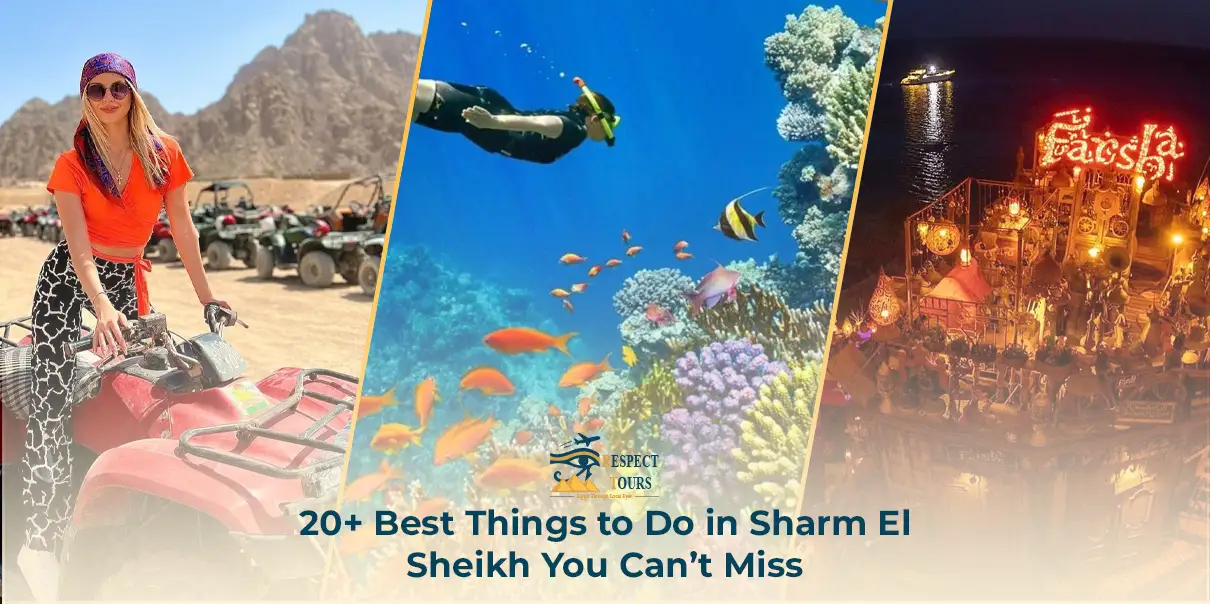
Looking for the best Things to Do in Sharm El Sheikh? You’re in the right place. This Red Sea gem is more than luxury resorts and sunny beaches; it’s a place where coral reefs, golden deserts, and Bedouin traditions come together to create unforgettable adventures.
But here’s the truth: most visitors never see beyond the resorts. That’s where this guide changes everything. We’ve handpicked 20+ of the best things to do in Sharm El Sheikh, blending iconic highlights like Ras Mohammed National Park and Mount Sinai with hidden local experiences you won’t find in any brochure, secret beaches, desert feasts, and authentic cultural encounters.
At Respect Tours, our local team has spent years exploring every reef, trail, and market in Sharm El Sheikh. We’re proud to share the authentic side of the city safely, responsibly, and with a touch of local warmth.
Ready to discover the real Sharm El Sheikh? Let’s begin.
Quick Facts: Sharm El Sheikh at a Glance
| Category | Details |
|---|---|
| Location | Southern tip of Sinai Peninsula, Egypt |
| Population | ~73,000 residents; 4+ million annual visitors |
| Climate | Desert: hot summers (35–45°C), mild winters (18–26°C) |
| Marine Biodiversity | 1,200+ fish species, 220+ coral species |
| Best Time to Visit | October–April (peak); March–April ideal |
| Main Districts | Naama Bay, Sharks Bay, Nabq Bay, Sharm El Maya (Old Town) |
| Airport | Sharm El Sheikh International (SSH), 18 km from the center |
| Currency | Egyptian Pound (EGP); USD/EUR widely accepted |
| Languages | Arabic (English is widely spoken in tourism areas) |
| Top Activities | Diving, snorkeling, desert safaris, and cultural immersion |
| UNESCO Sites | Saint Catherine’s Monastery (World Heritage) |
| Protected Areas | Ras Mohammed (480 km²), Nabq (600 km²), Tiran Island |
| Water Temperature | 21–28°C year-round (wetsuit recommended Nov–Apr) |
| Visibility | 20–40 meters (best March–May, Oct–Nov) |
PART 1: Underwater Adventures (World-Class Diving & Snorkeling)
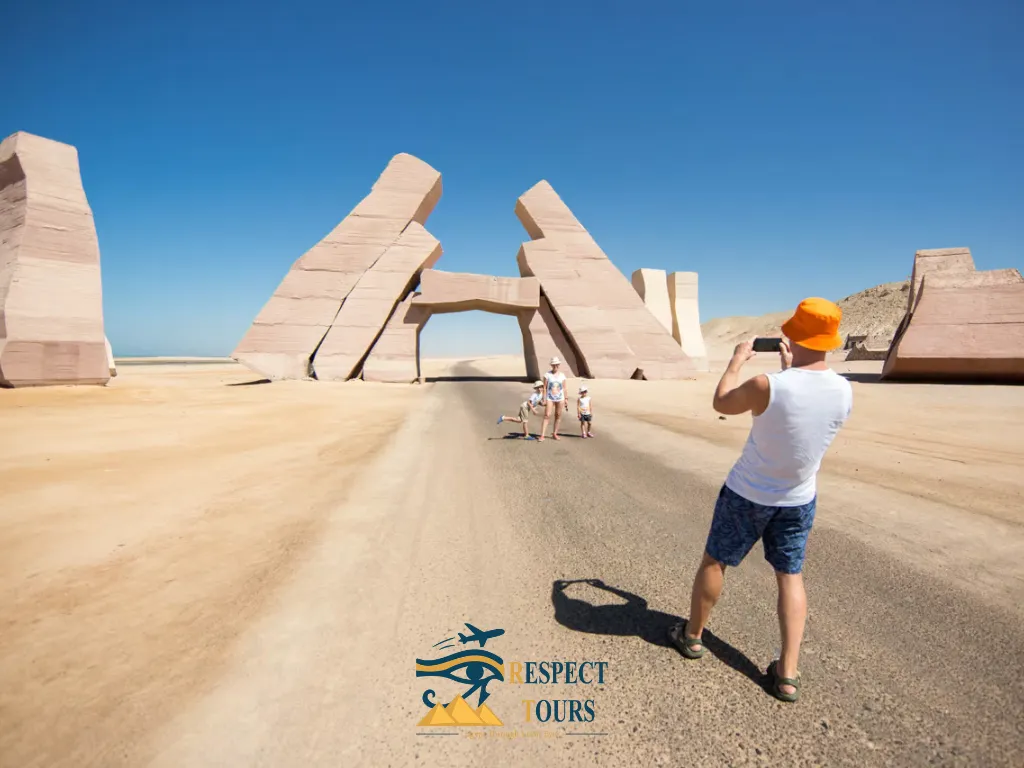
1. Dive Ras Mohammed National Park
Why it’s legendary: Jacques Cousteau once called Ras Mohammed one of the world’s most magnificent underwater locations. Where the Gulf of Aqaba meets the Gulf of Suez, nutrient-rich currents create an explosion of marine life unmatched anywhere in the Red Sea.
Must-dive sites within the park:
Shark Reef & Yolanda Reef: The crown jewel. Dramatic vertical walls plunge 800+ meters into the abyss. You’ll drift past massive schools of barracuda, jackfish, and snappers forming living walls. Grey reef sharks patrol the blue. If you’re lucky, hammerheads appear in the summer months. The Yolanda wreck, scattered at the reef’s base, adds an eerie dimension, a cargo ship’s bathroom fixtures now home to moray eels.
Ras Za’atar: Shallower site perfect for less experienced divers. Healthy hard and soft corals in every color imaginable. Sea turtles graze on seagrass, oblivious to divers. Eagle rays glide past like underwater B-2 bombers.
Shark Observatory (Shore Dive): Accessible directly from the cliffs. Strong currents make it challenging but rewarding, with frequent shark sightings and the adrenaline of drift diving along dramatic walls.
What you’ll see: 1,000+ fish species, 220+ coral types, turtles, dolphins, rays, sharks.
Insider tip: Book afternoon dives (1-3 PM). Most boats return to the harbor, leaving sites nearly empty.
2. Explore the Straits of Tiran
The four legendary reefs:
Jackson Reef: The most famous. The wreck of the Lara cargo ship sits dramatically perched on the reef’s northern edge, half above water (great for photos). Below, steep walls attract massive schools of jacks, barracuda, and tuna, and frequent reef shark sightings.
Woodhouse Reef: Least dived but most pristine. Stunning hard coral gardens, with less current, perfect for underwater photography. Better for intermediate divers.
Thomas Reef: Dramatic underwater plateau at 20 meters, then drops into the abyss. Schooling hammerheads occasionally patrol the deeper waters (advanced divers only). Mantas appear seasonally (spring and autumn).
Gordon Reef: The shallowest and most accessible. Excellent snorkeling around the edges. The Louilla wreck (cargo ship) rusts photogenically above water, with coral-encrusted sections below. Turtles are common.
What makes Tiran special: Strong currents = big fish. You’ll see more pelagics here than at most Red Sea sites. The reefs’ exposure to the open ocean means regular visits from sharks, rays, and even whale sharks (very rarely, but it happens).
3. SS Thistlegorm Wreck Dive
The story: In October 1941, German bombers sank this British cargo ship carrying military supplies to Allied forces. The ship went down in 30 meters of water, nearly intact. Rediscovered by Jacques Cousteau in 1956, it’s now arguably the world’s most famous wreck dive.
What you’ll see: This isn’t just twisted metal; it’s a time capsule. BSA motorcycles are still strapped in the hold. Bedford trucks. Aircraft parts. Ammunition (stable but don’t touch!). Lee Enfield rifles. Wellington boots. The ship’s locomotive is in the hold. Two railway carriages on deck.
Marine life has colonized everything: glassfish swarm the holds in shimmering clouds, lionfish hide in cabin doorways, and batfish and barracuda patrol the decks. Soft corals have turned the anti-aircraft guns into underwater bouquets.
Diving details:
- Depth: 16-32 meters (requires Advanced Open Water minimum)
- Visibility: Usually excellent (20-30 meters) except during plankton blooms
- Currents: Can be strong; drift dive often required
- Penetration: Possible for experienced wreck divers with proper training
- Surface interval location: Sha’ab Ali (another wreck/reef) or Dunraven wreck
Challenge level:
- Advanced Open Water minimum
- 2+ hour boat journey
- Deep dive (16-32 meters)
- Strong currents possible
Insider tip: Book liveaboard trips for less crowded experiences and multiple dives on the wreck.
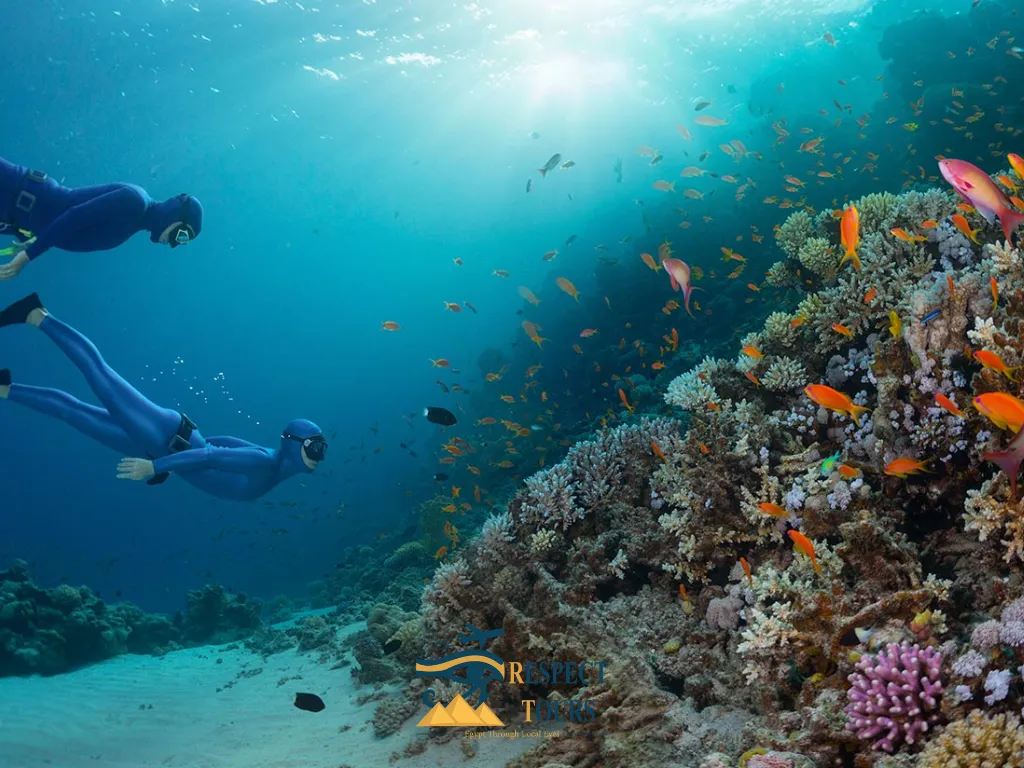
4. Learn Freediving
Why freediving > scuba: Imagine gliding silently through the water, no bubbles to scare fish, no heavy equipment, just you and the ocean. Freediving is meditation underwater, peaceful, profound, and surprisingly accessible.
What you’ll learn:
- Proper breathing techniques (pranayama-style)
- Equalization (clearing ears while descending)
- Static breath-hold (holding breath while floating)
- Dynamic swimming (distance on one breath)
- Safety protocols and buddy system
- Reaching 10-20 meter depths comfortably
Why Sharm is perfect for learning: Warm, calm, clear water. Gentle entry sites. Shallow coral gardens for practice. Experienced instructors (many are national champions).
The experience: Day 1: Pool/shallow water, learning breath-hold basics. You’ll be amazed at how long you can hold your breath with proper technique (2-3 minutes is achievable for beginners).
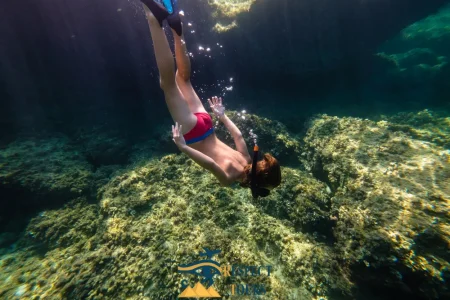
5. Snorkel Sharks Bay
Why locals love it: Pristine shore-accessible reef. Walk 10 meters into the water, and you’re on healthy coral.
Marine life: Parrotfish, sergeant majors, butterflyfish, sea turtles (regular), octopuses, blue-spotted stingrays, and clownfish.
Best time: 7-9 AM (calmest water, most active marine life, best visibility)
Insider tip: The Best coral is 30-50 meters from shore. Tourists stay close, you go further.
PART 2: Desert & Mountain Adventures
6. Mount Sinai Sunrise Hike
The journey: Depart at midnight. 2-3 hour ascent in darkness up Camel Path. Reach the 2,285-meter summit before dawn. Watch sunrise transform the Sinai mountains from black to gold.
What to pack:
- Warm layers (fleece, jacket, hat, gloves; summit is freezing)
- Hiking boots
- Headlamp
- 2+ liters of water
- Energy snacks
Camel option: You can rent camels for 70% of the ascent ($20-30). You still walk the final “Steps of Repentance” (camels prohibited). Good option for those with knee issues or low fitness.
Insider tips:
- Arrive at the summit 45+ minutes before sunrise: Best spots fill up
- Bring toilet paper: Facilities are basic (squat toilets, no paper)
- Bargain with tea sellers: Start at 50% of the asking price
- Avoid full moon nights: Too much light pollution diminishes stargazing
- Go in winter (Dec-Feb): Colder but clearer skies, fewer crowds
Difficulty: Moderate. No technical skills needed. Children 8+ usually manage fine.
7. Visit Saint Catherine’s Monastery
At the mountain’s foot: Founded in 527 AD, this UNESCO World Heritage Site ranks among Christianity’s most sacred places and houses incredible historical treasures.
What you’ll see:
The Burning Bush: The site where Moses is said to have encountered God in a burning bush. The bush (actually a bramble) still grows in the monastery garden, protected behind a small chapel.
Ancient Library: Second only to the Vatican. Contains 4th-century Bible pages, illuminated manuscripts, and texts in Greek, Arabic, Syriac, Georgian, and Slavonic. (Limited visitor access, but you’ll see some displayed manuscripts.)
Icon Collection: Over 2,000 religious icons, many from the 5th-6th centuries, some of Christianity’s oldest surviving religious art.
Architecture: Massive Byzantine walls built by Emperor Justinian. Ornate interior chapels. The Church of the Transfiguration with Byzantine mosaics.
Ossuary: A chamber containing skulls and bones of deceased monks (viewable through glass, macabre but fascinating).
Practical info:
- Opening hours: Monday, Wednesday, Friday only (9 AM-12 PM)
- Entry: Free (donations encouraged)
- Photography: Exterior allowed; interior prohibited in many areas
- Time needed: 45-90 minutes
Combined experience: Most tours combine Mount Sinai sunrise with a monastery visit (you visit after descending the mountain, around 8-9 AM).
8. Trek the Colored Canyon
Nature’s art gallery: This narrow sandstone gorge displays millions of years of geological history in spectacular layers of red, yellow, purple, orange, magenta, and gold.
The experience: You’ll walk through an 800-meter canyon with passages so narrow you can touch both walls simultaneously (claustrophobic? Skip this one). Walls tower 40-80 meters above, creating dramatic light effects as sunlight filters down. Every turn reveals new color combinations and rock formations.
What makes it magical:
- Temperature: 10-15°C cooler inside than the surrounding desert (natural air conditioning)
- Photography: Every angle is Instagram gold, with dramatic shadows and vibrant colors
- Adventure factor: Moderate climbing, squeezing through narrow passages, scrambling over boulders
The route: Most tours include:
- 2-hour drive from Sharm to the Nuweiba area
- 1-2 hour canyon trek
- Bedouin lunch in the desert
- Often combined with the Ain Khudra oasis or the Blue Desert visits
Difficulty: Moderate. Requires:
- Reasonable fitness (lots of up/down)
- Sure footing (rocky, uneven terrain)
- No severe claustrophobia (some very narrow sections)
- Children 8+ usually fine
What to bring:
- Sturdy hiking shoes (sneakers acceptable, sandals dangerous)
- Hat and sunscreen (pre-canyon desert is scorching)
- Water (2 liters minimum)
- Camera (you’ll take 100+ photos)
Best time: October to April (cooler temperatures). Avoid visiting in summer (June-August); the surrounding desert is extremely hot.
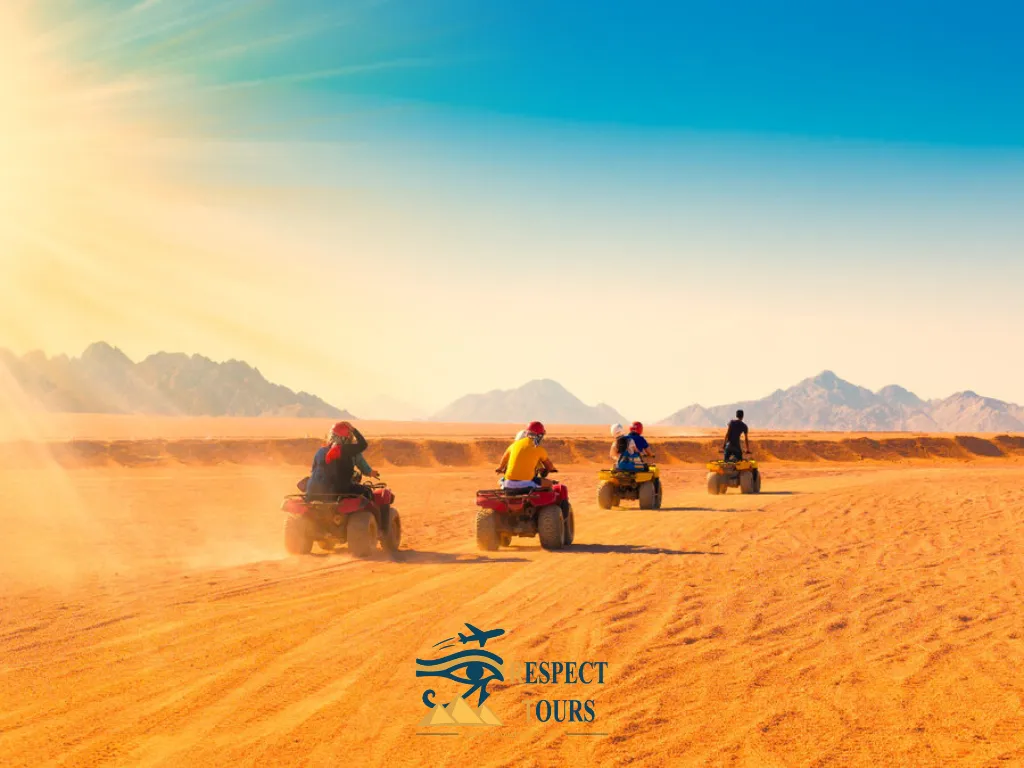
9. Quad Biking Desert Safari
The adrenaline rush: Tearing across Sinai’s desert on a 250cc quad bike is pure exhilaration, wind in your face, sand spraying from wheels, and endless golden dunes stretching to the horizon.
A typical safari includes:
1-2 hours of quad biking: Across rocky plains, around dunes, and through dried wadis (riverbeds). No experience is necessary; guides provide full instruction, and you follow in convoy.
Bedouin village visit: Authentic camp (not tourist recreation). Meet families, see how they live, and learn about desert survival techniques that date back millennia.
Traditional activities:
- Bedouin tea preparation (sage tea or sweet black tea with mint)
- Freshly-baked bread from underground sand ovens
- Short camel ride
- Henna painting (optional, usually for women)
Sunset viewing: Climb a high dune or rock outcrop to watch the sun set over the desert—one of Sinai’s most photogenic moments.
Stargazing: As darkness falls, lie on traditional carpets while Bedouins point out constellations and share desert folklore.
Traditional dinner (on longer tours):
- Grilled meats and vegetables
- Rice with nuts and raisins
- Fresh flatbreads
- Traditional salads
- Bedouin desserts
Tour types:
- Short (2-3 hours): Just quad biking and tea
- Standard (4-5 hours): Includes Bedouin visit, sunset, light dinner
- Sunset special (5-6 hours): Full experience with extended stargazing
- Overnight desert camping (rare but available): Sleep in Bedouin tents under stars
Who can do it:
- Drivers: Age 16+ (some operators allow 14+ with parental consent)
- Passengers: Children can ride with adults
- No license required: Just basic coordination skills
What to bring:
- Scarf or bandana (sand protection for face)
- Sunglasses (essential)
- Closed-toe shoes (sandals = sand-blasted feet)
- Camera in waterproof bag (sand gets everywhere)
Best time: Afternoon/sunset tours (cooler temperatures, stunning light for photos). Avoid midday summer (dangerously hot).
PART 3: Beach Life & Water Sports
10. Snorkel Sharks Bay, Pristine Shore-Accessible Reefs
Why the name? Don’t worry, it’s named for the bay’s shape, not actual shark populations. This is one of Sharm’s safest, most family-friendly snorkel spots.
What makes Shark Bay special:
- Direct shore access: Walk into water, swim 10 meters, you’re on pristine coral
- Shallow gardens: 2-6 meters deep (perfect for beginners and kids)
- Calm conditions: Protected from winds and currents
- Healthy reef: Better coral coverage than many boat-access sites
- Beach clubs: Facilities, restaurants, and loungers available
Marine life:
- Colorful parrotfish grazing on coral
- Schools of sergeant majors and butterflyfish
- Occasional sea turtles (green sea turtles visit this bay)
- Octopuses hiding in reef crevices
- Blue-spotted stingrays resting on sandy patches
- Clownfish (Nemo!) in anemones
Best snorkel areas:
- Um El Sid Hill area: Right side of the bay, excellent coral walls
- White Knights Beach: Left side, good for beginners
- Far Garden: Further from beach clubs, less crowded
When to go:
- Early morning (7-9 AM): Calmest water, most active marine life, best visibility
- Avoid windy days: Afternoon winds can reduce visibility
Insider tips:
- Bring your own gear: Rentals are marked up; buy cheap mask/snorkel/fins in Old Market
- Reef shoes mandatory: Rocky entries will shred bare feet
- Go further from the beach: Best coral is 30-50 meters from shore (most tourists stay close)
- Never stand on coral: It damages the reef, and you’ll get cut
11. Naama Bay Beach, Sharm’s Social Heart
The vibe: If Sharks Bay is a peaceful family beach, Naama Bay is the party. This crescent-shaped beach is Sharm’s most famous, bustling with energy, water sports, beach bars, and people-watching.
What to do:
- Swimming: Gradual, shallow entry perfect for non-swimmers
- Beach volleyball: Nets set up, pickup games common
- Water sports: Everything from jet skis to parasailing
- Beach bars: Cocktails, music, loungers
- Evening promenade: Illuminated boardwalk comes alive after sunset
The atmosphere: Lively, social, international crowd. You’ll hear 10 languages. Beach vendors sell everything from fresh juice to sunglasses. Music from competing beach bars. Jet skis are buzzing. It’s not tranquil, but it’s energetic and fun.
Snorkeling: Honestly? Not great. Years of foot traffic have damaged near-shore coral. But the swimming is excellent, and it’s perfect for non-snorkelers.
Best time:
- Afternoon (3-6 PM): Perfect beach weather, social atmosphere peaks
- Evening: The Beach becomes a promenade for walking, shopping, eating, and bar-hopping
Perfect for:
- First-time Sharm visitors
- Families with small children (safe shallow water)
- Social butterflies
- People who want everything walkable
- Nightlife seekers (bars and clubs steps away)
Not ideal for:
- Snorkeling enthusiasts
- Those seeking quiet/peaceful beaches
- Budget travelers (Naama Bay is the most expensive area)
12. Parasailing, Jet Skis & Extreme Water Sports
Beyond snorkeling: For adrenaline junkies, Sharm’s warm, calm waters are perfect for high-octane water activities.
Top water sports:
Parasailing: Strapped to a parachute and towed by a speedboat, you’ll soar 30-50 meters above the Red Sea. Stunning aerial views of the coastline and visible coral reefs below. Flight lasts 10-15 minutes.
- Price: $40-60 per person
- Best locations: Naama Bay, Sharks Bay
Jet Skiing: Rent solo or tandem jet skis and explore the coastline at your own pace. Many operators offer guided tours along the coast.
- Price: $50-80 per hour
- Guided tours: $70-100 (includes marine protected areas)
Banana Boat: The ultimate group laugh. Up to 8 people sit on an inflatable banana towed behind a speedboat. The goal: make everyone fall off. Hilarious, wet, memorable.
- Price: $15-25 per person (15-20 minutes)
- Perfect for: Groups, families with teenagers
Tube Riding: Similar to banana boat, but solo or double, sit on a couch-shaped inflatable and try to hold on as the boat driver makes sharp turns. More challenging than the banana boat.
- Price: $20-30 per person
Flyboarding: The future is here. Water jets strapped to your feet propel you into the air like Iron Man. Incredibly difficult (expect to faceplant repeatedly) but exhilarating.
- Price: $80-120 per session (30 minutes of instruction included)
- Best location: Naama Bay
Kitesurfing/Windsurfing: Not ideal in Sharm (better in Dahab). But beginner lessons are available at Sharks Bay during the windy season (March-May, Oct-Nov).
- Price: $100-150 for beginner lessons
Where to book: Most water sports centers cluster in Naama Bay and Sharks Bay. Prices are negotiable; bargain hard, especially if booking multiple activities.
Safety tips:
- Book only with licensed operators (check for safety equipment)
- Wear life jackets (mandatory on most activities)
- Know your swimming ability (jet ski accidents happen)
- Follow the guide instructions (especially on flyboarding)
PART 4: Cultural Immersion & Local Experiences
13. Shop Old Market (Sharm El Souk)
Authentic Egyptian bazaar: Escape resort boutiques for traditional shopping.
What to buy:
- Papyrus paintings: Hieroglyphic art on authentic papyrus. Watch artists demonstrate ancient techniques.
- Silver jewelry & cartouches: Handcrafted silver ankhs, scarabs, and cartouches (personalized with your name in hieroglyphs). Unique souvenirs.
- Bedouin textiles: Hand-embroidered pillows, wall hangings, and traditional dresses. Beautiful colors, authentic craftsmanship.
- Spices & tea: Egyptian spice blends (dukkah, ras el hanout), hibiscus tea (karkadeh), chamomile, and mint. Fresh, aromatic, cheap.
- Essential oils & perfumes: Concentrated oils (lotus, jasmine, musk, oud). Egyptian perfume tradition dates back millennia.
- Alabaster & stone carvings: Statues, vases, pyramids, and scarabs carved from alabaster, basalt, or limestone.
- Galabiya (traditional clothing): Comfortable cotton robes perfect for desert heat. Locals wear them daily.
Bargaining strategy:
- Ask price, offer 40-50%
- Slowly negotiate up to 60-70% of the original
- Walk away if stuck; they’ll call you back
Best time: Early evening (6-8 PM) for pleasant temperatures.
14. Visit Al-Sahaba Mosque
Sharm’s architectural masterpiece: an Ottoman-style mosque with twin 70-meter minarets dominating the Old Town skyline.
Highlights: Intricate Islamic geometric patterns, beautiful calligraphy, ornate chandeliers, and spectacular night illumination.
Visiting info:
- Free entry outside prayer times
- Modest clothing mandatory (shoulders/knees covered, women cover hair)
- Best time: Late afternoon or evening for photography
15. HIDDEN: Bedouin Cooking Class
Authentic recipes: Learn real Bedouin cuisine from women who’ve cooked this way for generations.
What you’ll make:
- Bedouin bread (baked in underground sand ovens)
- Zarb (Bedouin BBQ buried underground)
- Traditional mezze and salads
- Fattet Bedoui (layered comfort food)
- Bedouin tea-brewing techniques
The experience: 3-4 hours with a Bedouin family. Learn food culture, cook together, and feast on what you made. Women share stories about Bedouin life.
How to book: Very rare. Ask Respect Tours, Bedouin guides at Mount Sinai, or during desert safaris.
16. Experience Farsha Café
The Instagram legend: Farsha Café isn’t just a café; it’s an eclectic, chaotic, beautiful maze cascading down cliffs with Red Sea views. If you only visit one café in Sharm, make it Farsha.
What makes Farsha magical:
The setting: Multi-level terraces carved into cliffs overlooking the Red Sea. Every level offers different views, different seating styles, and different vibes.
The décor: Organized chaos. Antique furniture mixed with neon signs, colorful lanterns, vintage radios, random artwork, Bedouin carpets, fairy lights, and objects nobody can identify. It’s like Alice in Wonderland meets Bedouin camp meets hipster Brooklyn.
Seating options:
- Traditional Bedouin floor seating (cushions, low tables)
- Hanging swing chairs
- Cliff-edge tables
- Cozy alcoves
- Rooftop terraces
The views: Stunning Red Sea panoramas. Watch boats passing. See Tiran Island in the distance. Sunset from here is spectacular.
Why everyone loves it:
- Photo opportunities: Every corner is Instagram gold; you’ll take 100 photos
- Sunset perfection: Prime Red Sea sunset viewing
- Chill atmosphere: Relaxed, bohemian vibe
- Meet travelers: Social spot where everyone mingles
- Affordable: Reasonable prices despite the prime location
Practical tips:
- Arrive 45 minutes before sunset: Gets VERY crowded
- Scout the best spot early: Explore levels before sunset to find the perfect viewing location
- Minimum consumption: Usually required (one drink per person)
Best times:
- Sunset (5-7 PM): Prime time, most crowded, most beautiful
- Late afternoon (3-5 PM): Quieter, still great views
- Night (8 PM+): Romantic lighting, less crowded
PART 4: Day Trips & Nearby Adventures
17. Dahab Day Trip
Stark contrast to Sharm: While Sharm is resorts and tourists, Dahab is backpackers, hippies, yoga, and chill. Worth the 90-minute drive north.
Dahab highlights:
The Blue Hole: World-famous dive site. Submarine sinkhole 130 meters deep. Spectacular snorkeling around the rim. Advanced divers explore the abyss. (Note: Dangerous dive, “world’s most deadly dive site,” should be attempted only with proper training and a guide.)
Blue Lagoon: Protected bay with shallow, calm water. Perfect for windsurfing and kitesurfing beginners. Beautiful turquoise colors.
The Promenade: Waterfront walking street lined with colorful restaurants, cafés with cushioned floor seating, handicraft shops, and dive centers. Stunning sunset views. Relaxed atmosphere where time moves slowly.
Activities in Dahab:
- World-class kitesurfing and windsurfing (best in the Red Sea)
- Freediving courses (Dahab is the freediving mecca)
- Yoga retreats and classes
- Camel beach rides
- Café hopping
- Shopping handicrafts
The vibe: Laid-back, bohemian, international. Backpackers, digital nomads, and long-term travelers. Think Goa or Bali vibes transported to Egypt.
Day trip logistics:
- Drive: 90 minutes north from Sharm
- Depart: 9 AM, return 6-7 PM
Who Dahab is for:
- Wind sports enthusiasts
- Those seeking a less touristy atmosphere
- Yoga lovers
- Budget travelers (Dahab is cheaper than Sharm)
- Anyone wanting chill, hippie vibes
18. HIDDEN: Mangrove Kayaking in Nabq
What tourists miss: 20 minutes north lies Nabq Protectorate with Egypt’s northernmost mangrove forests, pristine, peaceful, and perfect for kayaking.
The experience: Paddle through narrow waterways shaded by mangrove branches. Incredibly peaceful, just bird sounds and paddle splashing. You’ll spot:
- Herons and egrets are fishing
- Crabs scuttling on mangrove roots
- Small fish schools in shallow water
- Occasionally, dolphins in deeper channels
Why it’s special:
- Rare ecosystem: Mangroves are rare in the Red Sea
- Peaceful: No motorboats, no crowds
- Easy: Calm, protected waters perfect for beginners
- Wildlife: Bird-watching paradise
- Eco-tourism: Protected area, sustainable activity
Difficulty: Easy. Calm, protected waters, perfect for beginners and families.
Best time: Early morning (cooler, more birds) or late afternoon.
19 White Island Boat Trip
Pristine island escape: White Island (in the Ras Mohammed area) offers an uninhabited paradise, white sandy beaches, turquoise waters, and excellent snorkeling.
The boat trip:
- Full-day excursion departing Sharm Marina
- 1-2 hour boat ride to the island
- Multiple snorkel stops en route
- 2-3 hours on the island
- Lunch on board or beach picnic
- Return late afternoon
The island: Uninhabited. White sand beaches. Crystal-clear shallow waters. Coral gardens surround the island. Perfect for:
- Beach lounging
- Swimming
- Snorkeling
- Underwater photography
Snorkeling around the island:
- Healthy coral reefs
- Diverse fish species
- Possible turtle and ray encounters
- Usually less crowded than mainland spots
Best time: March-November (avoid winter storms that occasionally cancel trips).
Practical Information
When to Visit Sharm El Sheikh: Month-by-Month Guide
Spring (March-May):
- Weather: 25-32°C, perfect
- Pros: Ideal conditions, best diving visibility, wildflowers in the desert
- Cons: Crowded, higher prices
- Best for: Diving, snorkeling, all activities
Summer (June-August):
- Weather: 35-45°C, dangerously hot on land
- Pros: Cheapest prices, empty tourist sites, excellent underwater visibility
- Cons: Extreme heat limits daytime activities
- Best for: Divers, budget travelers who can handle heat
Autumn (September-November):
- Weather: 28-35°C, comfortable
- Pros: Good weather, fewer crowds than spring, good prices
- Cons: September can still be quite hot
- Best for: All activities, good balance of weather and value
Winter (December-February):
- Weather: 18-26°C, mild
- Pros: Pleasant land temperatures, excellent for desert activities
- Cons: Cooler water requires a wetsuit; December is very crowded
- Best for: Mount Sinai hikes, desert safaris, cultural experiences
Absolute best months: March-April, October-November
Avoid if possible: Late December (crowds and prices peak), July-August (dangerously hot unless you’re only diving)
Marine Life Seasonal Calendar
Dolphin sightings: Year-round, best odds March-June
Sea turtles: Year-round, most active May-September
Manta rays: April-June, September-October (seasonal visitors)
Whale sharks: June-August (rare but occasionally seen)
Hammerhead sharks: June-September (Tiran straits, advanced divers)
Barracuda schools: Year-round, peak August-October
Coral spawning: Usually September (magical snorkel/dive experience)
What to Pack (Essential Items)
Underwater:
- Reef-safe sunscreen (regular sunscreen kills coral)
- Your own snorkel gear (improves experience, saves money)
- Rash guard (sun protection while snorkeling)
Desert/Mountain:
- Warm layers (fleece, jacket for Mount Sinai)
- Hiking boots or sturdy shoes
- Headlamp
- Hat and sunglasses
General:
- Modest clothing for cultural sites
- Power adapter (Egypt uses European two-pin plugs)
- First aid kit basics
- Copies of passport/documents
Don’t pack:
- Heavy winter clothing (unnecessary even in January)
- Too many clothes (you’ll live in swimwear and shorts)
Why Choose Respect Tours
Local Expertise: Born-and-raised Egyptians who grew up in Sinai. We know every hidden beach, trusted Bedouin family, and secret snorkel spot.
Authentic Experiences: Years of built relationships with Bedouin families, fishermen, and local guides. You’ll experience the Sharm tourists never see.
Small Groups: Maximum 12 travelers. Personal attention, flexibility, and genuine connections.
Safety First: Certified guides (diving, first aid, desert survival). Modern equipment. Comprehensive insurance. 24/7 support.
Sustainable: Reef-safe practices, support for Bedouin communities, and environmental education.
Customization: Tell us your interests, fitness level, and budget; we craft a perfect Sharm experience.
Transparent Pricing: No hidden fees. What we quote is what you pay. Multi-day discounts are available.
Conclusion
From diving at Ras Mohammed to watching the sunrise over Mount Sinai, Sharm El Sheikh is a destination that blends adventure, culture, and peace in one unforgettable journey. Whether you came for the Red Sea’s coral wonders, the mystery of the desert, or the hospitality of the Bedouin people, every experience here leaves a story worth telling.
We hope this guide to the best Things to Do in Sharm El Sheikh helps you explore beyond the resorts to discover hidden beaches, authentic local food, and real connections with the people who call Sinai home.
At Respect Tours, we’re proud to share our first-hand knowledge, built through years of guiding travelers safely through Egypt’s most magical landscapes. Travel responsibly, dive gently, and keep an open heart, because Sharm El Sheikh is not just a place to visit; it’s a place to feel.
Ready to start your Red Sea adventure? Let’s make it unforgettable.
FAQ: Frequently Asked Questions
What are the top 3 must-do activities?
(1) Diving/snorkeling at Ras Mohammed, world-class marine life. (2) Mount Sinai sunrise, spiritual and unforgettable. (3) Desert safari with authentic Bedouin experience, culture, and adventure.
Absolutely. Incredible snorkeling, desert adventures, cultural sites, beaches, water sports, shopping, and dining. An amazing trip is possible without diving.
Yes. Strong security presence throughout Sinai. Resort areas are heavily protected. Millions visit annually without incident.
October-April offers perfect weather (20-28°C). March-April and October-November are particularly excellent for fewer crowds.