


The Great Sphinx of Giza is the largest monumental sculpture in the ancient world – a 73-meter limestone colossus with the body of a lion and the face of a pharaoh, carved directly from the bedrock of Egypt’s Giza Plateau around 2500 BC.
Approximately 4,500 years old, it is attributed to Pharaoh Khafre and is believed to act as the eternal guardian of his pyramid complex. Its gaze is fixed due east – greeting the rising sun – in accordance with ancient Egyptian solar cosmology.
Standing before the Great Sphinx of Giza, with its inscrutable expression and its lion’s paws stretching across the desert sand, is one of those travel moments that genuinely stops you.
As your Senior Travel Editor at Respect Tours Egypt, this guide covers everything: the history, the mysteries, and exactly how to visit without the crowds, the confusion, or missing the best views.
Great Sphinx Facts: Size, Age & Key Details
Here are the essential facts about the Great Sphinx of Giza, the numbers, and context that make standing before it all the more extraordinary.
| Detail | Fact |
|---|---|
| Full Name | The Great Sphinx of Giza (ancient Egyptian: Hor-em-akhet — “Horus on the Horizon”) |
| Location | Giza Plateau, west bank of the Nile, Egypt — part of the Memphis UNESCO World Heritage Site |
| Length | 73 metres (240 ft) — paw to tail |
| Height | 20 metres (66 ft) — base to crown of head |
| Width | 19 metres (62 ft) at its widest point |
| Material | Carved from a single natural limestone outcrop in the Giza bedrock |
| Builder | Attributed to Pharaoh Khafre (c. 2558–2532 BCE), Fourth Dynasty |
| Orientation | Faces due east — aligned with the rising sun at spring and autumn equinoxes |
| Restorations | Cleared by Thutmose IV (~1400 BCE); major restorations in the 20th century |
Why this matters to you: The Sphinx was not built; it was revealed. Ancient sculptors looked at a natural limestone outcrop left behind by pyramid quarrying and decided to transform it into a living deity. That shift in perspective changes everything about how you look at it.
Who Built the Great Sphinx of Giza?
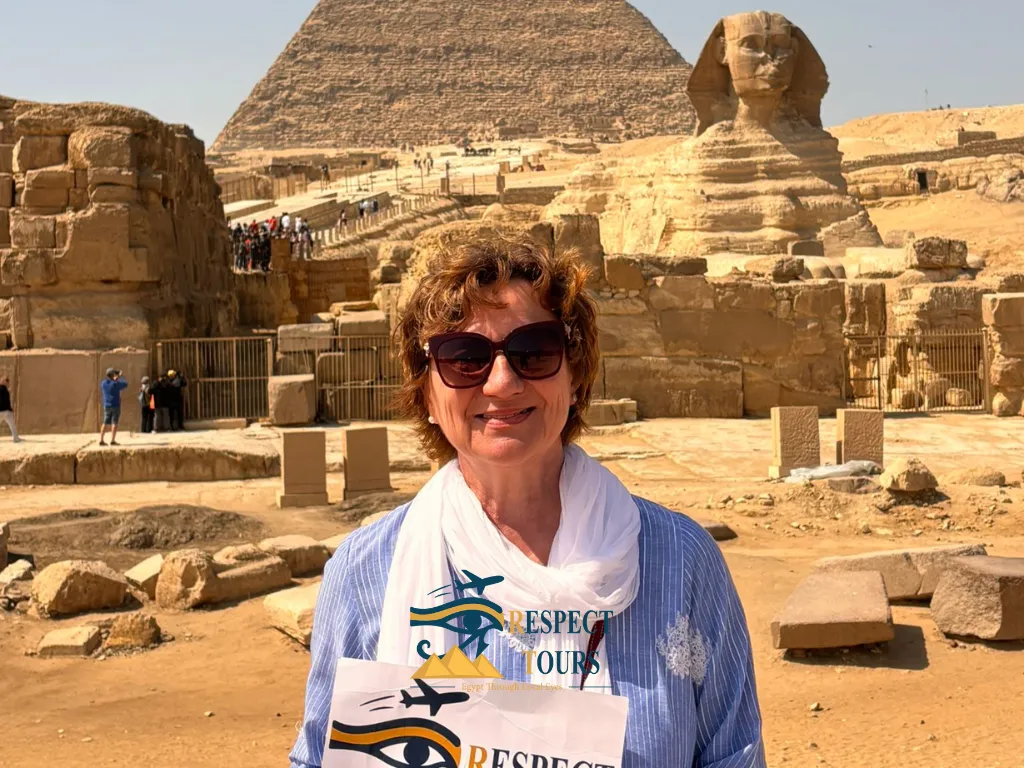
The Great Sphinx of Giza is attributed to Pharaoh Khafre of the Fourth Dynasty, who ruled ancient Egypt around 2558-2532 BC.
The evidence includes the Sphinx’s physical position within Khafre’s funerary complex, its alignment with the Khafre Valley Temple, and stylistic similarities with confirmed portraits of the pharaoh.
The case for Khafre rests on three pillars:
- Location: The Sphinx sits at the eastern edge of Khafre’s mortuary complex, directly aligned with his causeway and pyramid.
- Architecture: Its proportions and style are consistent with Fourth Dynasty craftsmanship found elsewhere on the Giza Plateau.
- Portrait evidence: Facial comparisons between the Sphinx and verified statues of Khafre, including the diorite statue held in the Cairo Museum, show strong structural similarities.
How Old Is the Great Sphinx of Giza?
The Great Sphinx of Giza is approximately 4,500 years old, built during the reign of Pharaoh Khafre around 2558-2532 BC. This makes it one of the oldest surviving monumental sculptures on Earth and among the defining achievements of ancient Egypt’s Old Kingdom period.
To grasp the scale of that age: when ancient Rome was at its height, the Sphinx was already 2,500 years old. When the first European settlers arrived in America, it had been inhabited by the desert for 4,000 years. When you stand before it, the history of modern nations feels very young indeed.
Most Egyptologists date the Sphinx based on its proximity to Khafre’s pyramid and temple complex, the architectural style, and the widely held belief that its face is a portrait of Khafre himself.
However, some alternative theories, notably those proposed by geologist Robert Schoch, suggest an even older date, based on water-erosion patterns that may predate the arid climate of Dynastic Egypt. While these theories remain outside the mainstream, they underscore the enduring mystery surrounding this ancient wonder.
The Mysterious Nose of the Great Sphinx
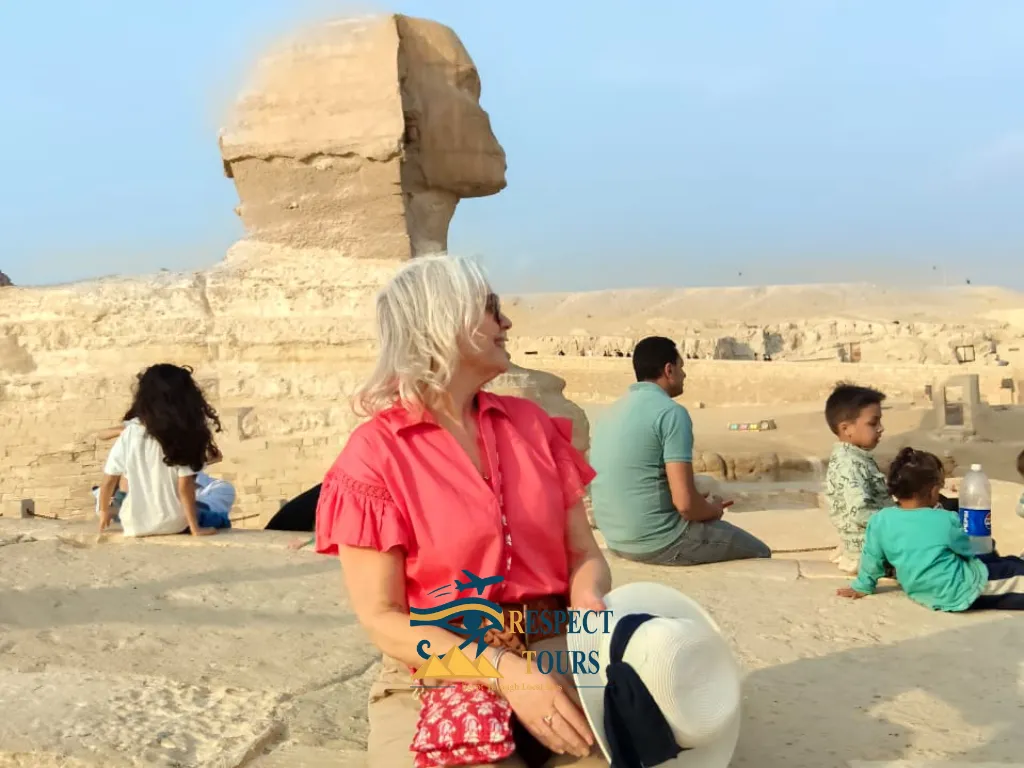
The nose of the Great Sphinx was deliberately destroyed in 1378 AD, most likely by Muhammad Sa’im al-Dahr, a Sufi iconoclast who defaced the monument in protest at local peasants making offerings to it.
Historical drawings from the 18th century confirm the nose was already missing long before Napoleon’s Egyptian campaign, disproving the popular cannon-fire legend.
It is one of the most common questions visitors ask – and one of the most misunderstood. The Napoleon story is a compelling myth, but it is just that: a myth.
The truth, as often happens with history, is a bit more human. Al-Dahr reportedly acted out of religious conviction, angered that local peasants were making offerings to the Sphinx in hopes of a good harvest – a practice he considered idolatrous. The locals, understandably upset by the destruction of their beloved monument, reportedly lynched him for his actions.
Why this matters to you: The missing nose is not just an aesthetic curiosity. It is a story of cultural clash, changing beliefs, and the volatile relationship between different eras and the monuments they inherit. It adds a layer to the Sphinx that no photograph quite captures.
The Dream Stela: The Sphinx Speaks
Between the front paws of the Great Sphinx stands a granite slab known as the Dream Stela, and the story it tells is one of the most compelling in all of Giza.
The stela recounts the dream of Thutmose IV, who, as a young prince, fell asleep in the shadow of the Sphinx during a hunting trip around 1400 BC. In the dream, the Sphinx spoke to him, complaining that the desert sand was burying it and promising Thutmose the throne of Egypt if he would clear the sand away.
Thutmose fulfilled his promise. And he did indeed become pharaoh.
Why this matters to you: The Dream Stela reveals how the ancient Egyptians saw the Sphinx – not as a statue, but as a living deity with the power to shape destiny. It also speaks to the Sphinx’s perpetual struggle against the desert: a battle it has been fighting and losing ground to for 4,500 years.
What Is the Great Sphinx Actually Called?
The ancient Egyptians did not call it “the Sphinx.” That name came later, borrowed from the Greeks, who recognized a resemblance to their own mythological creature, a winged lion with a human head known for posing riddles.
- Hor-em-akhet (Horemakhet): The most likely ancient Egyptian name, meaning “Horus on the ‘horizon’—reflecting its role as a solar deity and guardian.
- Abu al-Hol: Its Arabic name, meaning “Father of Terror”—a reference to its imposing, otherworldly presence.
- Sphinx: The Greek term that stuck, used across the world from antiquity to the present day.
Each name is a lens through which a different civilization tried to make sense of the same extraordinary monument.
Theories About the Great Sphinx: Fact vs. Mystery
The Sphinx attracts theories the way the desert attracts sand. Here is a clear breakdown of the major ones – and how much weight they actually carry.
| Theory | Status | What the Evidence Actually Shows |
|---|---|---|
| Face of Khafre | Accepted | Strong circumstantial and stylistic evidence; supported by most Egyptologists and Egypt’s Supreme Council of Antiquities |
| Pre-dynastic origin (Schoch theory) | Debated | Based on water erosion patterns; geologically interesting but not accepted by mainstream Egyptology due to lack of supporting textual or archaeological evidence |
| Hall of Records | Unverified | Linked to Edgar Cayce’s claims; ground-penetrating radar has found no supporting evidence beneath the Sphinx |
| Astronomical alignment | Credible | Eastward orientation aligned with equinox sunrise; widely accepted as intentional |
| Secret tunnels | Partially true | Small shaft behind the head and short tunnels exist; no major hidden chambers found in surveys |
Why this matters to you: The Sphinx does not need embellishment. The documented history is extraordinary enough. Going in with accurate expectations means you appreciate what is real, rather than feeling let down by what is not.
Erosion and Conservation: A Monument Under Threat
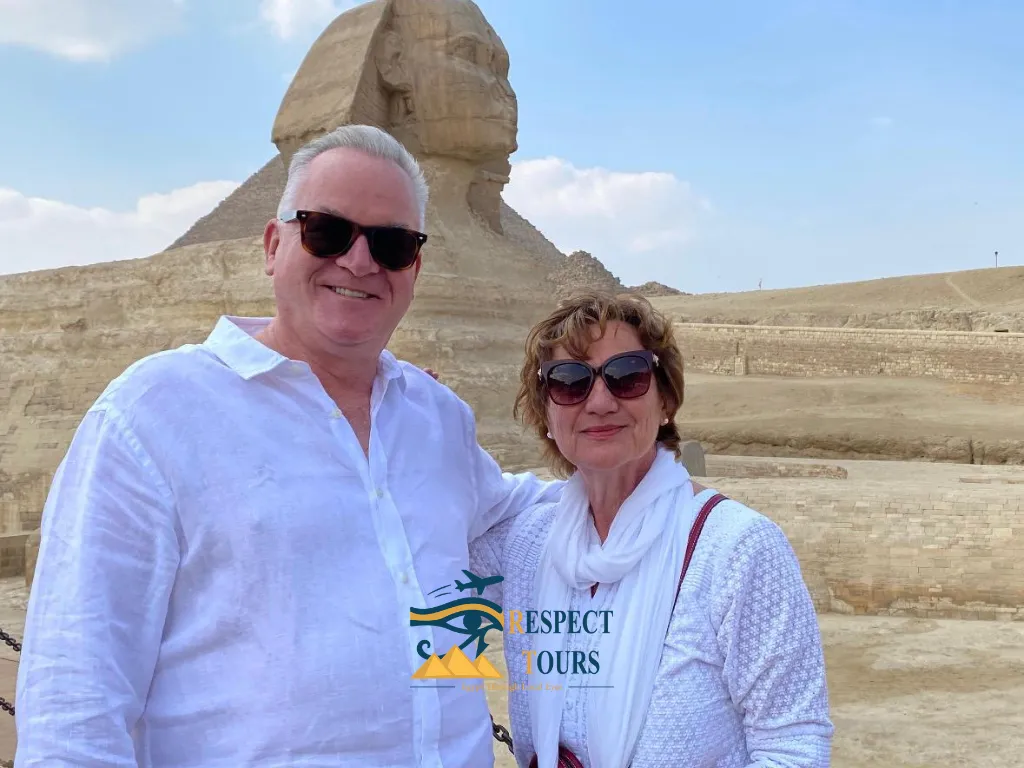
Carved from relatively soft limestone, the Great Sphinx has been eroding for most of its existence. Three forces are primarily responsible:
- Wind and sand: Desert winds have slowly smoothed the surface, erasing finer facial and body detail over millennia.
- Groundwater: Rising water tables from Cairo’s modern infrastructure cause salt crystallization that flakes the stone from within.
- Air pollution: Cairo’s air quality adds corrosive agents that accelerate surface deterioration.
Restoration work, replacing damaged limestone blocks and applying protective coatings, has been ongoing for over a century. The effort is never quite finished. When you look at the Sphinx, you are witnessing an active conservation challenge as much as an ancient monument.
How to Visit the Great Sphinx of Giza: Practical Guide
Navigating the Giza Plateau independently is entirely possible, but it rewards preparation. Here is everything you need.
Step 1: Getting There from Cairo
- By taxi or Uber: The most practical option from central Cairo. The ride takes 30-50 minutes, depending on traffic. Agree on the fare before you get in.
- By organized tour: Recommended for first-time visitors. Transport, tickets, and entry logistics are handled for you.
Step 2: Tickets – What You Need & What It Costs
Ticket prices are set by Egypt’s Ministry of Tourism and are subject to change. Always verify current prices before visiting.
| Ticket Type | Approx. Price (Foreign Adults) | What It Includes | Worth It? |
|---|---|---|---|
| Giza Plateau Entry | EGP 540 (~$17–18 USD) | Sphinx viewing area + exterior views of all three pyramids | Essential |
| Great Pyramid of Khufu (interior) | EGP 600 (~$19 USD) | Access inside the main chamber of the Great Pyramid | Recommended |
| Khafre Pyramid (interior) | EGP 400 (~$13 USD) | Entry inside Khafre’s pyramid | Optional |
| Menkaure Pyramid (interior) | EGP 200 (~$6 USD) | Entry inside the smallest pyramid | Optional |
| Solar Boat Museum | EGP 100 (~$3 USD) | Display of an ancient royal ceremonial boat | Highly recommended |
Note: Entry inside the Sphinx itself is not available to the public. The Sphinx enclosure (the area in front of and around the monument) is included in the standard plateau ticket.
Step 3: Opening Hours
- Winter (October-April): 8:00 AM – 5:00 PM
- Summer (May-September): 8:00 AM – 6:00 PM
- The ticket office typically opens at 8:00 AM. Hours can shift seasonally – always check with official sources before your visit.
Step 4: What to Bring
- Water: At least 1-1.5 liters per person. There are vendors on-site, but hydrating before the heat peaks is important.
- Sun protection: Hat, sunscreen, and sunglasses. The plateau offers almost no shade.
- Comfortable closed-toe shoes: The ground is uneven stone and compacted sand throughout.
- Camera or fully charged phone: The Sphinx rewards good photography. Bring a portable power bank.
Prefer to skip the logistics entirely? Our private Giza Plateau tours include certified Egyptologist guides, pre-arranged entry, and sunrise access – so you arrive with nothing to worry about except the view.
Explore our private Giza tours →
Best Time to Visit the Great Sphinx
By Time of Day
- 8:00-9:00 AM (opening): The single best window. Soft directional light hits the Sphinx’s face from the east. Minimal crowds. Dramatically cooler in summer. This is the one professionals choose.
- Late afternoon (4:00-5:00 PM in winter / 5:00-6:00 PM in summer): Long shadows and warm golden light create exceptional photography conditions. Crowds thin as tour groups head back to Cairo.
- 10:00 AM-2:00 PM: Avoid. This is the peak bus tour window. Crowd density is at its highest, and the midday sun is harsh with no relief.
By Season
| Season | Conditions | Verdict |
|---|---|---|
| October – April | Temperatures range from 15–25°C with comfortable walking weather and higher tourist activity | Best overall season |
| May – June | Temperatures rise quickly; manageable with early starts (before 8:30 AM) | Acceptable with an early start |
| July – August | Extreme heat (35–42°C) with very harsh midday conditions | Early morning only |
| September | Still hot but easing slightly; fewer tourists (shoulder season) | Acceptable with an early start |
Local insider note: Avoid visiting on Fridays (the Egyptian weekend – local visitor numbers spike) and during major public holidays. The difference in crowd density can be dramatic.
Can You Go Inside the Great Sphinx?
No. The interior of the Great Sphinx is not open to the public. Archaeologists have documented a small shaft behind the head and two short tunnels near the hindquarters, but no significant chambers have been found.
Visitors can view the Sphinx from the dedicated enclosure included in the standard Giza Plateau ticket.
The persistent rumor of vast secret tunnels or hidden chambers beneath the Sphinx has been tested with ground-penetrating radar surveys. The bedrock beneath is largely solid. The known passages are short and archaeologically unremarkable.
What you can access: The Sphinx enclosure, the open area in front of and flanking the monument, gives excellent views from multiple angles. You cannot touch or climb the statue, but you can get genuinely close.
Best Spots to Photograph the Great Sphinx
The Sphinx rewards photographers who plan their angles. Here are the shots worth knowing before you arrive.
- The Classic Head-On Shot: Stand directly in front of the Sphinx enclosure, centered on the monument’s face. Works at any time of day, but the expression reads best in soft morning or evening light.
- The Pyramid-in-Frame Shot: Approach from the north-east side. From this angle, the Pyramid of Khafre rises directly above and behind the Sphinx’s head, arguably the most iconic composition on the Giza Plateau. A 50-85mm focal length works best to compress the distance.
- The Profile View: The southern viewing terrace gives a clean lateral profile of the lion’s body. Excellent for showing the true scale of the monument relative to nearby visitors.
- The Wide-Angle Approach: For mobile photography, wide-angle mode from ground level looking up at the face creates a dramatic, larger-than-life perspective.
Drone note: Drone photography is strictly prohibited on the Giza Plateau without a permit from Egypt’s Ministry of Antiquities. Expect enforcement.
Golden hour tip: In winter months, 8:00-9:30 AM puts the sun directly at the Sphinx’s back from a visitor’s perspective, meaning the face falls in soft frontal light. Exceptional for portraits with the monument in the background.
What to Expect When Visiting the Great Sphinx
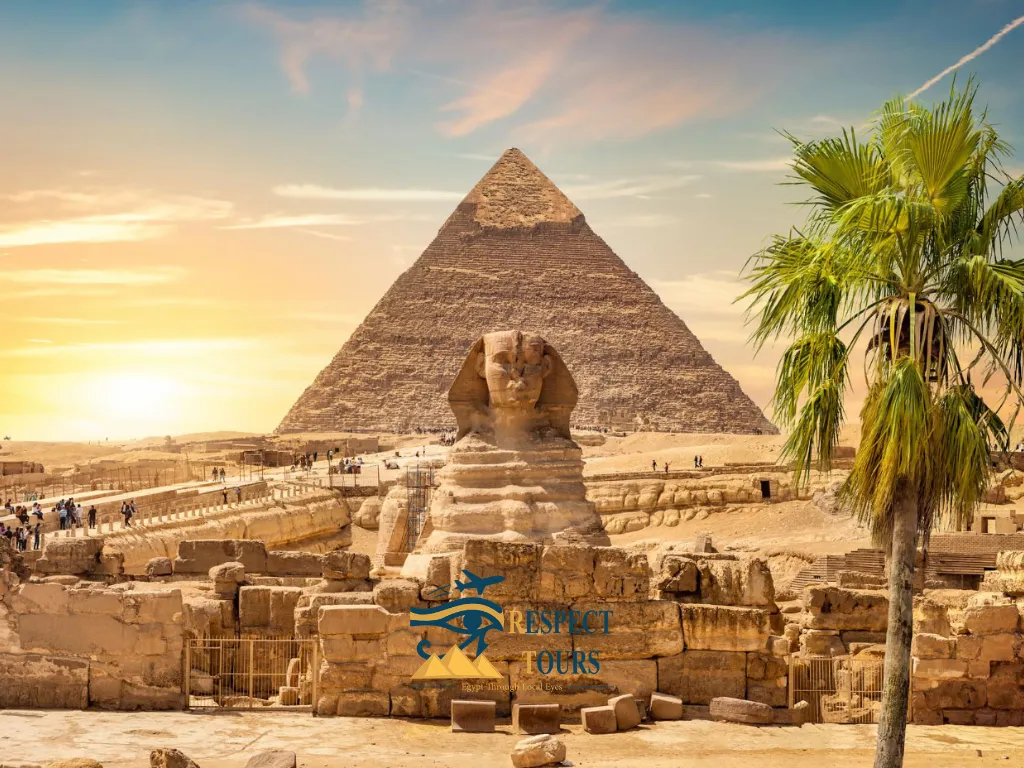
Knowing what the visit actually looks like – before you arrive – makes a real difference to how you experience it.
- The approach: You walk down from the plateau toward the enclosure – the scale increases dramatically as you descend. The head that looks manageable from a distance becomes a full colossus up close.
- Viewing access: Perimeter terraces on both the north and south sides give different perspectives. The Dream Stela, between the paws, is clearly visible from the front.
- Time allocation: Allow 30-45 minutes for the Sphinx specifically; 3-4 hours for the full Giza Plateau. Half-day tours are standard.
- Facilities: Basic toilets and food vendors near the entrance. Almost no shade on the plateau – plan accordingly.
- Vendor interaction: A calm “no thank you” works. Do not feel pressured, and always agree on prices before committing to anything.
Visiting the Great Sphinx with Respect Tours Egypt
Our private Giza Plateau tours are built around something different.
What You Get with Respect Tours Egypt
| Factor | Visiting Independently | With Respect Tours Egypt |
|---|---|---|
| Guide Quality | Audio guide or none | Certified Egyptologist who answers all your questions |
| Crowd Management | Arrive and take your chances | Strategic timing planned around crowd patterns |
| Sunrise Access | Book separately and navigate alone | Included and fully arranged |
| Transport | Taxi / Uber with fare negotiation | Air-conditioned vehicle, door-to-door service |
| Ticket Logistics | Queue at the gate | Pre-arranged — skip the lines |
| Photo Spots | Find them yourself | Guided to the best photo angles first |
| Historical Context | Based on what you’ve read | Expert explanations (Dream Stela, erosion, Khafre context) |
Traveller’s story: “My father – a lifelong history enthusiast from Toronto – had dreamed of seeing the Sphinx for thirty years. Our guide, Ahmed, didn’t just point at it.
He walked us to the angle where the Pyramid of Khafre frames perfectly behind the head, showed us the Dream Stela up close, and explained the erosion layers on the enclosure walls that Schoch used in his dating argument. Dad stood there for ten minutes in silence. That was worth more than any photograph. ” – David M., Toronto, Canada
Don’t leave the Great Sphinx to chance. Let Respect Tours Egypt handle the details, transport, entry, a certified guide, and the best views, so you focus entirely on making memories.
Book your private Giza Plateau & Sphinx tour →
Frequently Asked Questions
Can tourists go inside the Great Sphinx?
No. The interior of the Great Sphinx is not open to the public. Known passages include a small shaft behind the head and two short tunnels near the hindquarters, but no significant chambers exist. Ground-penetrating radar surveys have found no hidden complexes. Visitors can view the monument from the enclosed area included in the standard Giza Plateau ticket.
What is the best time to visit the Great Sphinx?
The best time is at gate opening (8:00 AM) for minimal crowds and ideal morning light on the Sphinx’s east-facing head, or late afternoon (1.5 hours before closing) for long shadows and warm light. October to April is the most comfortable season. Avoid 10:00 AM-2:00 PM, when crowds and midday heat peak.
Conclusion
The Great Sphinx of Giza has been standing watch over the desert for 4,500 years. It has outlasted empires, survived iconoclasts, and confounded historians for centuries. No photograph quite prepares you for the moment you actually see it.
Whether you are drawn by the history, the mysteries, or simply the scale of the thing, the Sphinx rewards those who arrive prepared. Know when to come, know what to bring, and know what you are looking at. That preparation is the difference between a photo op and an experience you carry home for the rest of your life.
Respect Tours Egypt exists to make that experience everything it should be. From the angle that puts Khafre’s pyramid perfectly behind the Sphinx’s head to the story of the Dream Stela told by a certified Egyptologist standing right next to it, these are the details that turn a visit to Giza into something genuinely unforgettable.
Ready to see the Great Sphinx of Giza? Explore our private Giza Plateau tours and start planning your Egypt journey today: respecttoursegypt.com