
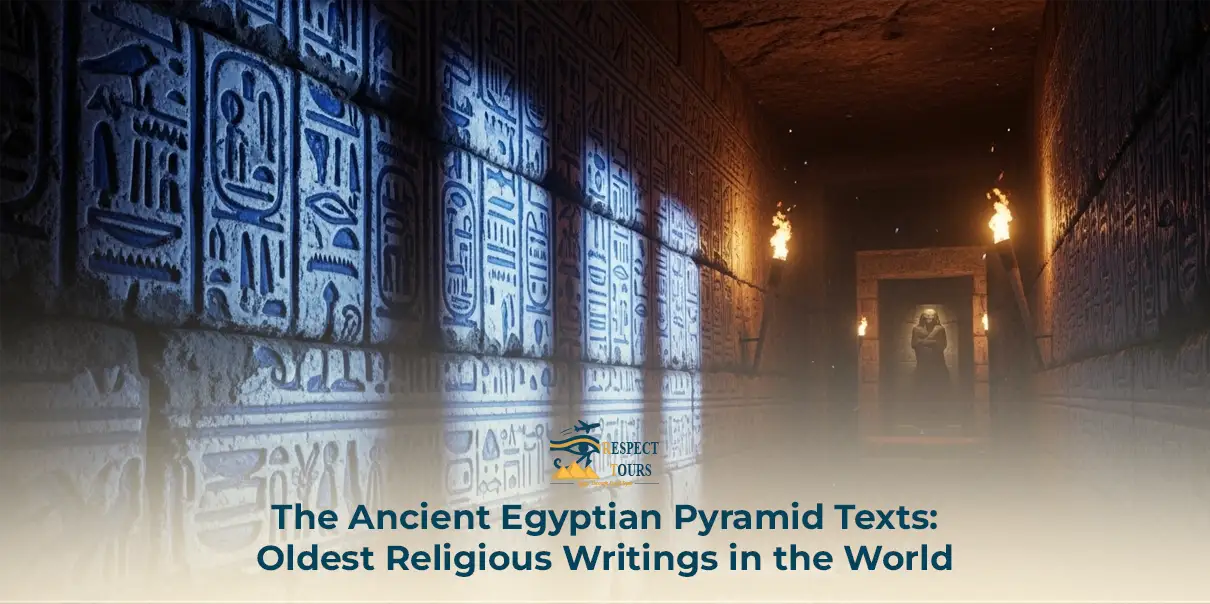
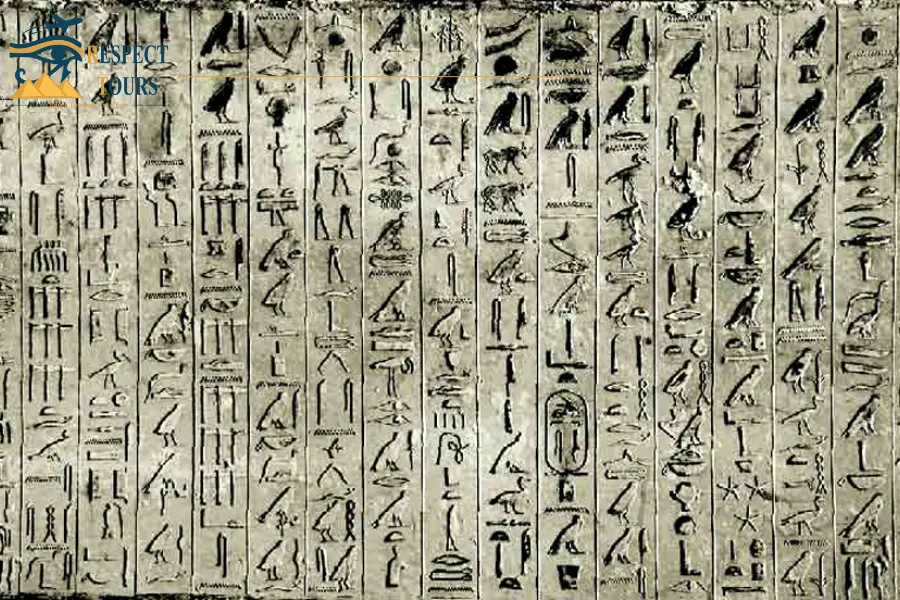
Long before the Book of the Dead, the Bible, or the Vedas, the Ancient Egyptian Pyramid Texts marked humanity’s very first attempt to understand life after death. Carved into the walls of royal pyramids more than 4,400 years ago, these inscriptions are the oldest religious writings in the world.
Far from being mere decoration, the Pyramid Texts were spells, prayers, and hymns designed to protect the pharaoh in the afterlife, ensure resurrection, and guide his soul to the stars. First discovered inside the pyramid of King Unas at Saqqara, they opened a window into the beliefs of the Old Kingdom and laid the foundation for later funerary traditions like the Coffin Texts and the Book of the Dead.
For today’s traveler, understanding the Ancient Egyptian Pyramid Texts transforms a visit to Saqqara from seeing “just hieroglyphs on walls” into a profound journey into the minds of the pyramid builders. These texts are not only history carved in stone; they are humanity’s first blueprint for eternity.
What are the pyramid texts in Ancient Egypt?
Imagine a time before most of the world’s great religions had been founded, before their sacred books were ever written.
In that distant past, humanity’s first attempt to map the afterlife was carved not onto papyrus scrolls, but directly into the stone walls of a pharaoh’s eternal home. These are the ancient Egyptian pyramid texts, a collection of the oldest religious writings known to humankind.
The World’s Oldest Sacred Literature
Dating back to the Old Kingdom (around 2400-2300 BCE), these hieroglyphic inscriptions are over 4,400 years old. To put that in perspective, they predate the earliest parts of the Bible by over a thousand years and the Rigveda of Hinduism by nearly as long.
They were not found in the famous Giza pyramids but were a later innovation, first discovered inside the pyramid of King Unas at the Saqqara necropolis. For the first time, a pharaoh’s tomb was filled with the words that would guide his soul to the heavens.
The Pharaoh’s Guide to Eternity: Purpose and Function
The ancient Egyptian pyramid texts were not a history or a biography; they were a powerful and practical guidebook for the king’s journey into the afterlife. They served as a collection of hundreds of magical spells, prayers, and divine formulas (known as “utterances”). Their sacred purpose was to:
- Protect the pharaoh from dangers like snakes, demons, and hostile gods in the underworld.
- Provide the “magic words” needed to navigate the complex landscape of the Duat (the Egyptian afterworld).
- Ensure the king’s successful resurrection and ascension to the heavens, where he would join the gods and sail across the sky with the sun god Ra for all eternity.
A Revolutionary Discovery and Its Lasting Legacy
For centuries, scholars believed that the Old Kingdom pyramids were completely bare inside. This all changed in 1881 when Egyptologist Gaston Maspero broke into the pyramids at Saqqara and found the walls of the burial chambers covered in these beautiful, mysterious the ancient Egyptian pyramid texts.
The discovery was revolutionary, completely transforming our understanding of Old Kingdom religious beliefs.
The influence of the ancient Egyptian pyramid texts is immense. They formed the foundation for all later Egyptian funerary literature.
The spells and ideas first written on these pyramid walls evolved over centuries into the Coffin Texts of the Middle Kingdom and, eventually, into the famous “Book of the Dead” of the New Kingdom. They are, in essence, the source code for the ancient Egyptian concept of eternal life.
Inside the Sacred Words: Content and Meaning of the Pyramid Texts
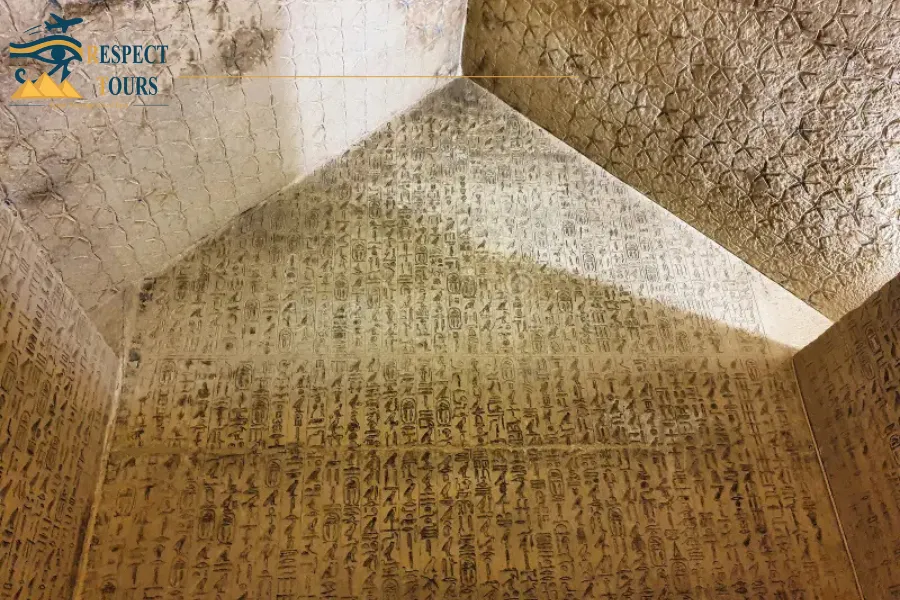
Carved into the stone walls deep inside the pyramids of Saqqara, the ancient Egyptian pyramid texts are not a single, linear book. They are a rich and complex collection of divine “utterances” that form a blueprint for eternity.
To the ancient Egyptians, these were not just words; they were powerful, living magic. Here’s what they actually say.
The Pharaoh’s Journey to Immortality
The central theme of the ancient Egyptian pyramid texts is the deceased king’s dramatic journey from death to divinity. They provide a step-by-step guide for the pharaoh’s soul, detailing a path filled with trials and transformations:
- Resurrection: The spells begin in the burial chamber, calling for the king to awaken from the slumber of death and shed his mortal form.
- The Journey: The king then undertakes a perilous voyage through the Duat (the underworld), facing hostile demons and crossing celestial rivers.
- The Final Ascent: The ultimate goal is to ascend to the heavens. The texts describe the pharaoh climbing a celestial ladder, flying as a bird, or being carried on the smoke of incense to reach the sky.
- Eternal Life: Upon his successful arrival, the king is transformed into an Akh (a radiant spirit), taking his place among the “imperishable stars” and joining the sun god Ra in his solar boat to sail across the sky for eternity.
Magical Spells and Protective Formulas
To succeed on this journey, the pharaoh was equipped with a powerful arsenal of magical formulas. There are over 800 different spells, or “utterances,” recorded in the ancient Egyptian pyramid texts. These spells served very specific purposes:
- Protection: Many utterances were powerful defensive spells to ward off threats like venomous snakes, scorpions, and fearsome demons who sought to devour the king’s soul.
- Nourishment: Other spells magically provided the king with an endless supply of food and drink in the afterlife.
- Resurrection and Power: The most potent spells were for resurrection itself. One of the most famous (and fearsome) is the “Cannibal Hymn,” in which the king symbolically hunts and devours the gods themselves to absorb their divine power and knowledge.
A Window into the Ancient Mind
Beyond the magic, the ancient Egyptian pyramid texts give us our earliest and purest glimpse into the Egyptian understanding of the universe.
They contain the first known references to some of Egypt’s most important creation myths and divine figures:
- The Gods: They tell the story of the creator god Atum and the divine family of Heliopolis.
- The Osiris Myth: This is where we find the foundational elements of the Osiris myth, the story of his death at the hands of his brother Set, his magical revival by his wife Isis, and the eventual triumph of his son, Horus.
- The Egyptian Universe: the ancient Egyptian pyramid texts paint a picture of their cosmos: the sky as a celestial ocean, the underworld as a landscape of gates and caverns, and the Field of Reeds as their vision of paradise. Reading them is like looking at a map of the ancient Egyptian soul.
Understanding the profound ancient Egyptian pyramid texts requires more than just seeing them; it requires an expert to bring them to life. Our qualified Egyptologist guides at Respect Tour can translate these spells and explain their secrets to you directly in front of the inscribed walls. Book your private tour to transform your visit into an unforgettable educational experience.
Are the Pyramid Texts the oldest known religious texts in the world?
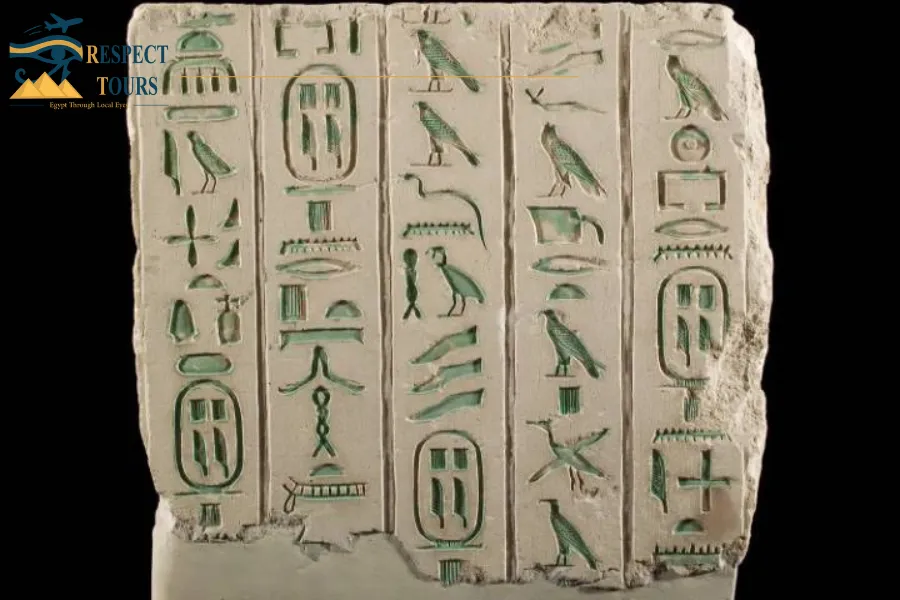
Visitors to Egypt often hear these three famous names and can be confused about how they relate. They are not three different “bibles,” but rather a single, continuous religious tradition that evolved over 1,500 years. Think of them as three distinct editions of the same ultimate guidebook to the Egyptian afterlife.
1. The Pyramid Texts (c. 2400 BCE – The Royal Exclusive)
The tradition began around 2400 BCE with the ancient Egyptian pyramid texts. As the world’s first sacred scriptures, these spells were a privilege reserved exclusively for the pharaoh and were meticulously carved onto the stone walls deep inside the pyramids of Saqqara.
Their primary focus was not on judgment, but on the king’s glorious transformation into a god and his ascension to the heavens to join the “imperishable stars.”
2. The Coffin Texts (c. 2100 BCE – For the Elite)
Centuries later, during the Middle Kingdom (around 2100 BCE), these beliefs evolved into the Coffin Texts. As Egyptian society changed, the path to the afterlife became more accessible, and these spells were adopted by wealthy nobles and high officials, not just the king.
Instead of pyramid walls, the texts were now painted directly onto the inside of wooden coffins, creating a personal magical barrier. The Coffin Texts included many of the older spells but added new ones with a greater focus on the god Osiris and navigating the dangers of the underworld.
3. The Book of the Dead (c. 1550 BCE – A Guide for All)
This evolution reached its final and most famous form in the New Kingdom (starting around 1550 BCE) with the Book of the Dead. By this era, the afterlife was accessible to anyone who could afford the proper spells.
The texts were now written on customizable papyrus scrolls that were placed with the deceased. Drawing heavily from both the Pyramid and Coffin Texts, the Book of the Dead became the ultimate guidebook, with its central focus being the magic needed to pass the final judgment, the “Weighing of the Heart” ceremony, and gain entry into the idyllic paradise known as the “Field of Reeds.”
In essence, these sacred texts show a fascinating evolution in Egyptian belief: a journey that began as a closely guarded royal secret carved in stone for the king alone and ended as a personal papyrus guide to eternity available to all.
Where to See the Original Pyramid Texts
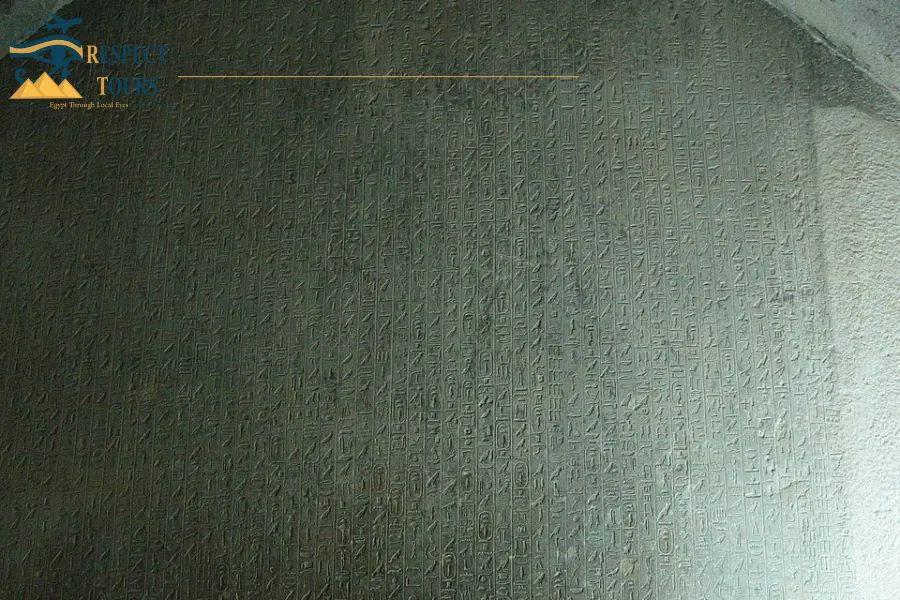
Unlike artifacts behind museum glass, the power of the ancient Egyptian pyramid texts comes from seeing them in their original, sacred context.
To do this, you must visit the vast pyramid fields of the Saqqara Necropolis, a short drive from Cairo. Here’s your guide to finding these hidden wonders.
The Pyramid of Unas: The Original Masterpiece
This is the ground zero for the ancient Egyptian pyramid texts and an absolute must-see.
- What to Expect: From the outside, the pyramid looks like a small, sandy hill. But the true treasure is within. You’ll descend a narrow corridor into the heart of the pyramid, where the burial chamber walls are covered in pristine, floor-to-ceiling columns of blue-painted hieroglyphs.
The feeling of standing in this small, silent room, surrounded by 4,400-year-old magic, is an unforgettable experience.
- Best Time to Visit: Arrive early in the morning (right at opening time) on a weekday to avoid the biggest tour groups and the midday heat.
- Photography: Officially, photography inside tombs at Saqqara is often restricted to protect the ancient pigments. However, the rules can vary by the day. Always check with the on-site inspector at the pyramid’s entrance before taking any photos, and never use a flash.
The Pyramid of Teti
Located nearby, the Pyramid of Teti is another excellent and easily accessible place to see the ancient Egyptian pyramid texts.
- What to Expect: The hieroglyphic inscriptions inside are also remarkably well-preserved. Because it’s a popular stop, you may encounter more groups here.
- Guided Tours: Visiting with an Egyptologist guide is highly recommended. The ancient Egyptian pyramid texts are complex, and a guide can translate key passages and explain the meaning behind the spells you are seeing, transforming your visit from simple viewing into a deep learning experience.
- Accessibility: Like Unas, entry requires descending a steep, narrow passage, which may be challenging for visitors with mobility issues or claustrophobia.
Pyramids of Pepi I & Pepi II: For the Dedicated Explorer
For those with extra time or a deep interest in the subject, the pyramids of the 6th Dynasty kings in South Saqqara offer a more secluded experience.
These sites are far less crowded, allowing for a quiet, more personal encounter with the sacred the ancient Egyptian pyramid texts . A combined itinerary could include the main sites in the morning, followed by a visit to these pyramids in the afternoon.
Visiting Saqqara comfortably requires good transportation planning. Let Respect Tour handle all the details for you. We provide a private, air-conditioned vehicle and an expert guide to ensure you arrive easily and comfortably, allowing you to focus completely on exploring this unique historical site.
Planning Your Pyramid Texts Adventure: Complete Visitor Guide
A trip to see the ancient Egyptian pyramid texts is a journey to the very beginning of religious thought. Unlike a typical museum visit, this adventure takes you to an active archaeological site. Proper planning is key to a comfortable and rewarding experience. Here is everything you need to know.
Getting to Saqqara from Cairo
Saqqara is located about 30 kilometers (18 miles) south of central Cairo. There is no direct public transport, so you’ll need to choose one of these options:
- Private Car or Ride-Sharing: This offers the most flexibility. A trip from Downtown Cairo takes 60-90 minutes, depending on traffic. If you use a ride-sharing app, it’s best to negotiate a multi-hour “trip” with your driver that includes waiting time, as finding a car for the return journey from the remote desert location can be very difficult.
- Organized Tour (Recommended): This is the most stress-free and insightful option. A pre-booked tour with a company like Respect Tour includes an air-conditioned vehicle, a driver, and, most importantly, an expert Egyptologist guide who can translate the texts and explain their profound meaning. This often works out to be the best value, as many tours also include visits to the nearby sites of Memphis and Dahshur.
Best Time to Visit
Timing your visit can dramatically improve your experience.
- Seasonal Considerations:
- October – March (Winter): The weather is perfect—cool and sunny. This is also the peak tourist season, so expect the largest crowds.
- May – August (Summer): The heat is intense, especially at midday. However, there are far fewer tourists. If you visit in summer, go right at opening time to finish before the worst of the heat.
- Optimal Daily Visiting Hours: The golden rule for Saqqara is to arrive early. The site opens at 8:00 AM. Arriving then allows you to explore the main pyramids, like Unas and Teti, before the large tour buses arrive around 10:00 AM.
What to Bring and Expect
- Essential Items: Pack like you’re going on a desert hike.
- Sun Protection: A wide-brimmed hat, sunglasses, and high-SPF sunscreen are non-negotiable.
- Water: Bring more than you think you’ll need, at least 1-2 liters per person.
- Comfortable Shoes: You will be walking on uneven, sandy ground. Sturdy, closed-toe footwear is a must.
- Cash: For your entry ticket, snacks, and small tips (baksheesh) for site guardians.
- Physical Requirements & Accessibility: Be prepared. Entering the pyramids requires descending and ascending steep, narrow ramps in a crouched position. The air inside can be stuffy and warm. This experience is not recommended for visitors with severe mobility issues, claustrophobia, heart conditions, or respiratory problems.
- Respectful Behavior: Remember you are in a sacred, ancient burial site. Do not touch the carved and painted walls, as oils from your skin can cause irreparable damage. Never use a flash when taking photos, and always speak in a quiet, respectful voice inside the tombs and burial chambers.
Ready to step back in time and explore the secrets of Ancient Egypt?
Book your unforgettable journey with Respect Tour, where history meets adventure.
Expert guides, hassle-free transport, and tailored experiences await you!
Expert-Led Tours
While it’s possible to visit the pyramids of Saqqara on your own, the hieroglyphs covering the walls are dense, complex, and written in a 4,400-year-old dialect.
To truly appreciate their meaning and significance, a guided tour with a qualified expert is invaluable. Here are the types of specialized tours that can transform your visit into a profound educational journey.
Specialized Egyptology Tours
This is the most highly recommended option for any curious traveler. Unlike a standard tour, these are led by qualified Egyptologists who can read and interpret the hieroglyphic the ancient Egyptian pyramid texts on the spot.
- What to Expect: An Egyptologist guide can translate key passages for you, explain the nuances of the magical spells, and connect the ideas in the ancient Egyptian pyramid texts to the broader history of Egyptian religion. They bring the silent stones to life with stories of gods, kings, and the quest for immortality.
- Tour Options: You can often choose between a small-group tour, which is more affordable and allows for interaction, or a private tour. A private tour with a company like Respect Tour offers the ultimate experience, allowing you to set the pace and delve deep into the topics that interest you most.
Photography and Documentation Tours
This is a niche option for serious professionals, not regular tourists.
- For Professionals: If you are a professional photographer, filmmaker, or academic researcher who needs to document the ancient Egyptian pyramid texts, a standard ticket is not sufficient. You are not allowed to bring professional equipment like tripods, external lighting, or high-end video cameras into the tombs without a special permit.
- Special Access: These permits must be obtained in advance from the Ministry of Tourism and Antiquities. They are often costly but can grant special access, sometimes outside of normal visiting hours, for serious documentation work. The easiest way to arrange this is by working with a licensed local agency.
Educational Travel Programs
For students and academics, Saqqara is a key site for in-depth study.
- University Study Tours: Many universities, museums, and Egyptological societies from around the world organize annual study tours to Egypt. A detailed, multi-hour visit to the ancient Egyptian pyramid texts at Saqqara is always a core component of these academic trips.
- Student Groups: While individual students receive a 50% discount on the general entry ticket with a valid ID, special rates for guided educational tours can often be arranged for larger university or school groups through specialized travel providers.
Of course. Here is the section on related sites, written in an informative style to help travelers build a richer, more contextual itinerary around the ancient Egyptian pyramid texts.
Related Sites to Enhance Your Experience
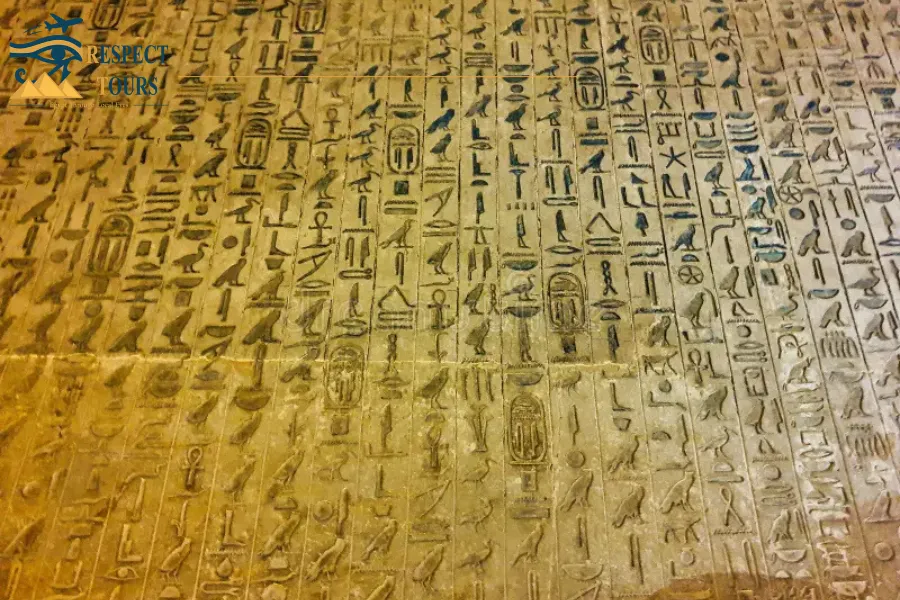
While Saqqara is the original home of the ancient Egyptian pyramid texts, the story and legacy of these sacred writings can be traced throughout the Cairo area. Visiting these related sites will provide a richer context and a deeper understanding of the world that created them.
The Grand Egyptian Museum (GEM)
The GEM is the perfect partner to your Saqqara visit. While the texts remain on the pyramid walls, the artifacts from the tombs and temples of the Old Kingdom are housed here.
- Contextual Artifacts and Displays: At the GEM, you can see the statues, sarcophagi, and funerary goods from the very era that produced the ancient Egyptian pyramid texts. Seeing the exquisite artistry of Old Kingdom sculptures, like the Triad of Menkaure, provides a three-dimensional view of the civilization that wrote these spells.
- Interactive Exhibits: The museum’s modern, interactive displays will offer the best and most accessible explanations of the evolution of Egyptian religious beliefs, visually connecting the ideas in the ancient Egyptian pyramid texts to later funerary traditions.
- Combination Tours: The most efficient way to see both sites is on a combined tour that covers the Giza Pyramids, the GEM, and the Saqqara necropolis.
The Egyptian Museum in Tahrir
The historic museum in Downtown Cairo showcases the direct descendants of the ancient Egyptian pyramid texts.
- Papyrus Collections: The museum houses a world-famous collection of funerary papyri, including stunningly illustrated copies of the Book of the Dead. This famous New Kingdom text is a direct evolution of the spells first written in the ancient Egyptian pyramid texts, allowing you to see the “next chapter” of the story.
- Related Artifacts: Tahrir is still home to countless masterpieces from all eras of Egyptian history that help explain the gods and myths first mentioned in the ancient Egyptian pyramid texts.
The Giza Plateau Connection
The iconic Giza Plateau, home of the Great Pyramid, provides the crucial historical context for the ancient Egyptian pyramid texts.
- An Architectural Evolution: The massive, internally undecorated pyramids of Giza (Fourth Dynasty) were built before the smaller, text-filled pyramids at Saqqara (late Fifth and Sixth Dynasties). Visiting both sites allows you to witness a fascinating shift in religious focus, from the monumental structure itself being the vehicle for resurrection to the magical power of the written word.
- Combined Giza-Saqqara Tours: The classic “pyramids tour” for any visitor to Cairo is a full-day trip that includes Giza, Saqqara, and the ancient capital of Memphis. This itinerary is the most efficient way to experience the complete story of the Old Kingdom, from the awe-inspiring structures at Giza to the sacred, secret texts of Saqqara.
An Authentic Experience with Egyptologists
Anyone can show you a temple, but only a true expert can make the stones speak. This is the core of our promise to you. At Respect Tour, we believe that a trip to Egypt should be more than just a sightseeing tour; it should be a deep and meaningful connection with a timeless civilization.
Our promise of “An Authentic Experience with Egyptologists” means your journey is led by a qualified scholar, not just a tour guide. Imagine standing before the ancient Egyptian pyramid texts as your guide reads the 4,400-year-old hieroglyphs directly from the walls.
Picture walking through Karnak Temple as they explain the hidden symbolism in the carvings you would have otherwise missed, or asking complex questions about ancient beliefs and receiving detailed, academic answers.
This is what authenticity means to us: transforming your trip into a profound educational journey. With our Egyptologists, you don’t just see the monuments; you understand the people, the passion, and the power of the civilization that built them.
Conclusion
To stand inside the pyramid of Unas is to stand at the dawn of human spirituality. It is a once-in-a-lifetime opportunity to read the very words that gave humanity its first detailed vision of eternal life. These are not just carvings on a wall; they are the collected hopes, fears, and magic of a civilization trying to solve the ultimate mystery.
We hope this guide has not only answered your questions but has also inspired you to move from reading about the ancient Egyptian pyramid texts to planning your own adventure to see them. A journey to Egypt is a pilgrimage to the source of so much of our world’s history and mythology.
In the end, the ancient Egyptian pyramid texts connect our present to their distant past in a profound way. They show us that while our worlds are millennia apart, the fundamental human questions about life, death, and our place in the cosmos remain the same. The pharaohs sought their answers in the stars; in visiting their tombs, we get a little closer to understanding our own.
FAQ: Frequently Asked Questions
How old are the ancient Egyptian pyramid texts, and why are they important?
At over 4,400 years old, they predate the Bible, Torah, and other major religious texts by centuries. They’re crucial for understanding ancient Egyptian religion, afterlife beliefs, and the development of religious literature worldwide.
Who wrote the ancient Egyptian pyramid texts, and for whom?
How many Pyramid Texts exist, and what do they contain?
Where can I see the original Pyramid Texts in Egypt?
The best-preserved and most accessible Pyramid Texts can be seen at:
- Pyramid of Unas at Saqqara (the first pyramid with texts)
- Pyramid of Teti at Saqqara (excellent hieroglyphic preservation)
- Pyramids of Pepi I and Pepi II at South Saqqara
- All locations are within the Saqqara archaeological site