

For more than 4,500 years, people have looked at the Pyramids of Giza and wondered how they were built. Without modern tools or machines, the ancient Egyptians moved and placed over two million stone blocks with incredible accuracy.
In this guide, Respect Tours explains the 3 theories on how the pyramids were built, using straight ramps, hidden spiral ramps, and even water-powered systems. You’ll learn how these ideas may have worked together to create the Great Pyramid, one of the world’s greatest engineering achievements.
By the end, you’ll see the pyramids not just as old stones but as a story of human skill, teamwork, and determination, proof that creativity and effort can shape wonders that last forever.
Quick Answer: How Were the Pyramids Built?
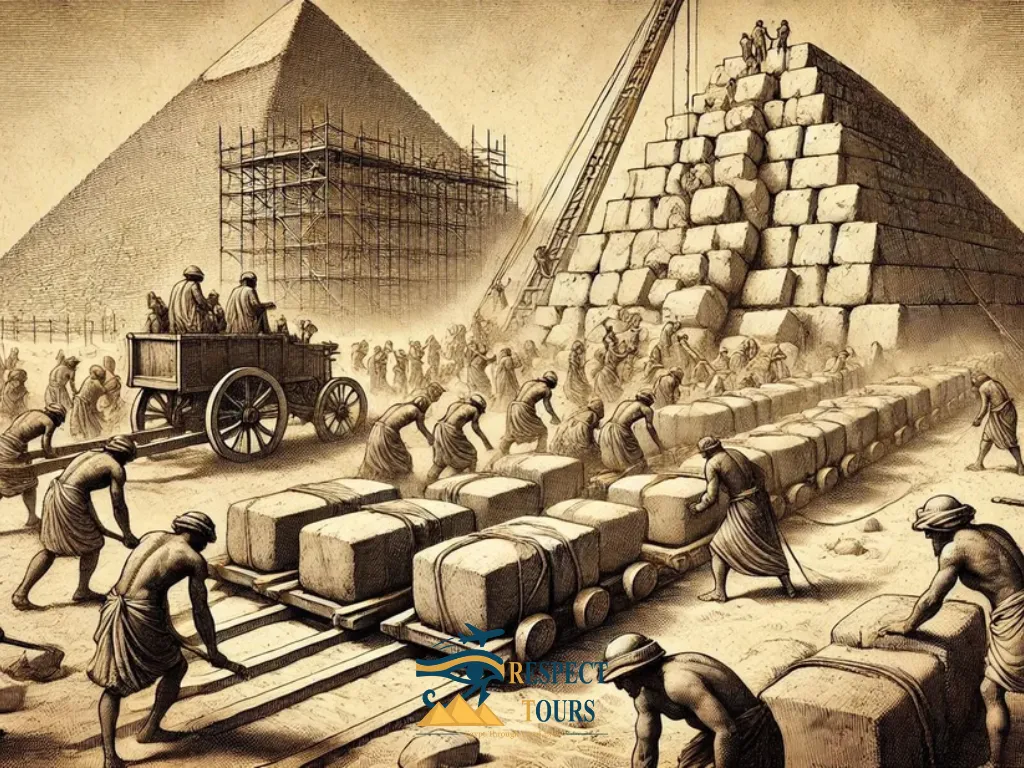
Modern scientific consensus: Ancient Egyptians used a combination of three main methods that evolved as construction progressed:
The Most Likely Construction Sequence
| Construction Phase | Primary Method | Evidence Strength | Expert Acceptance |
|---|---|---|---|
| Lower Pyramid (0–43m) | External straight/zigzag ramps | ⭐⭐⭐⭐⭐ Strong | 85% consensus |
| Middle Section (43–90m) | Spiral external or internal ramps | ⭐⭐⭐⭐ Moderate | 60% consensus |
| Upper Pyramid (90–146m) | Internal ramps or alternative systems | ⭐⭐⭐ Developing | 40% consensus |
| Material Transport (all phases) | Water transport via the Nile canals | ⭐⭐⭐⭐⭐ Strong | 90% consensus |
Critical insight: No single theory explains all archaeological evidence. The ancient Egyptians likely adapted their methods as the pyramid was constructed, using different techniques for each stage, demonstrating remarkable engineering flexibility.
The three theories:
- External Ramp Systems – Multiple ramp configurations (straight, zigzag, spiral)
- Internal Spiral Ramp – Hidden passages inside the pyramid structure
- Water Transport & Hydraulic Systems – Canal networks and possible water-powered lifting
Let’s examine each theory with evidence, expert analysis, and honest assessment of strengths and limitations.
Understanding the Challenge: Why This Question Matters
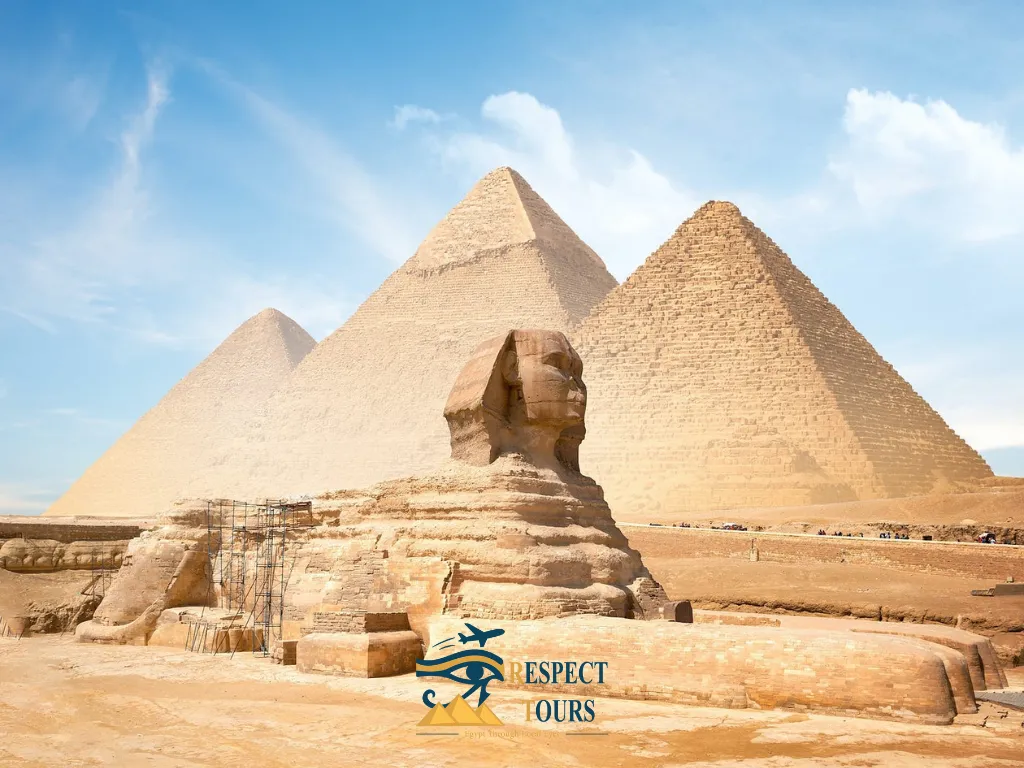
Great Pyramid of Khufu (Completed ~2560 BCE):
| Category | Details |
|---|---|
| Total workforce | 20,000–30,000 workers (rotated seasonally) |
| Core crew size | ~2,000 permanent skilled workers |
| Daily food rations | 21,000 loaves of bread, 4,000 jugs of beer |
| Meat consumption | 11 cattle and 37 sheep per day |
| Work schedule | Organized in 10-day work cycles |
| Team structure | Divided into gangs of 200, further split into groups of 20 |
Architectural Evolution: How Egyptians Learned to Build Pyramids
Before examining the theories, understanding how Egyptian architecture evolved reveals why Khufu’s Great Pyramid represents the pinnacle of a centuries-long learning curve.
The Progression: Mastabas → Step Pyramids → True Pyramids
Phase 1: Mastabas (3100-2630 BCE)
- Flat-roofed rectangular tombs made of mudbrick
- Simple structures requiring minimal engineering
- Lesson learned: Basic stone masonry and tomb construction
Phase 2: Step Pyramid of Djoser (2630 BCE)
- Architect: Imhotep (world’s first recorded architect)
- Innovation: Stacking six progressively smaller mastabas
- Height: 62 meters (203 feet)
- Significance: First large-scale stone monument in history
- Lesson learned: Large-scale stone handling and structural stability
Phase 3: Sneferu’s Experimental Period (2613-2589 BCE)
Meidum Pyramid:
- Started as a step pyramid, converted to a true pyramid
- Partial collapse (possibly during or after construction)
- Lesson learned: Angle stability and casing stone attachment are crucial
Bent Pyramid (Dahshur):
- Unique feature: Dramatic angle change mid-construction (54° to 43°)
- Why it changed: Structural instability forced builders to reduce the angle
- Lesson learned: Optimal pyramid angle around 51-53° for stability
Cairo City Tour Dahshur Saqqara
Red Pyramid (Dahshur):
- First successful true pyramid with smooth sides
- 43° angle (conservative after Bent Pyramid experience)
- Lesson learned: Geometry perfected, construction techniques refined
Phase 4: The Great Pyramid of Khufu (2589-2566 BCE)
- Applied all lessons from previous pyramids
- Perfect 51.5° angle
- Unprecedented scale and precision
- Achievement: Represents three generations of accumulated knowledge
What Makes the Pyramids of Giza Worth Visiting?

When you stand before the Great Pyramid, you’re witnessing:
Engineering brilliance:
- 2.3 million blocks placed with millimeter precision
- The load distribution is so perfect that the structure holds itself together
- Alignment to true north within 0.05 degrees
- 4,500 years of survival through earthquakes, erosion, and time
Human organization:
- 30,000 workers coordinated over 20 years
- Supply chains spanning hundreds of kilometers
- Administrative systems managing food, tools, and labor
- Project management rivaling modern megaprojects
Adaptive innovation:
- Multiple construction methods are integrated
- Real-time problem-solving (evidenced by Bent Pyramid changes)
- Knowledge accumulated over generations
- Practical engineering trumping theoretical perfection
Cultural achievement:
- Not just a tomb, but a statement of national identity
- Spiritual significance transcending function
- Architectural refinement from decades of pyramid building
- A testament to what unified civilization can accomplish
What Can You See at the Giza Plateau?
The Giza Plateau is home to the three great pyramids, Khufu (the Great Pyramid), Khafre, and Menkaure, along with smaller queen pyramids, ancient causeways, and the mighty Great Sphinx. Together, they form the only surviving Wonder of the Ancient World, and a UNESCO World Heritage Site that welcomes millions each year.
Yet beyond their fame lies the real magic: the mystery of how they were built. Standing before these colossal stones, most visitors feel the same awe, knowing they were shaped and lifted by hand, guided only by skill, patience, and willpower.
What Makes Visiting Giza a Unique Travel Experience?
The Giza Plateau is home to three world-famous pyramids, Khufu (the Great Pyramid), Khafre, and Menkaure, along with smaller “queen” pyramids, ancient causeways, and the mysterious Great Sphinx.
Together, they form the only surviving Wonder of the Ancient World and a UNESCO World Heritage Site that attracts millions every year.
But beyond their fame lies a deeper fascination: the question of how they were built.
Standing before them, most visitors share the same sense of awe, not just at the size of the stones, but at the knowledge that they were shaped and stacked using nothing more than human skill, simple tools, and willpower.
Quick Facts: The Great Pyramid of Khufu
- Height: 146.6 meters (481 feet), originally, now 138.8m due to erosion
- Base: 230.4 meters (756 feet) per side
- Weight: Approximately 6 million tons
- Blocks used: ~2.3 million limestone blocks
- Average block weight: 2.5 tons (some up to 80 tons)
- Construction time: ~20 years (2580–2560 BCE)
- Precision: Aligned to true north within 0.05 degrees
- Workforce: Estimated 20,000–30,000 workers rotated seasonally
When Were the Pyramids Built?
To truly appreciate how extraordinary the pyramids are, you have to step back in time, far beyond the Roman Empire, the birth of Greece, or even Stonehenge. The Pyramids of Giza were constructed during Egypt’s Old Kingdom period, an era of powerful pharaohs, spiritual devotion, and breathtaking innovation that began more than 4,500 years ago.
The Golden Age of Pyramid Building
The Great Pyramid of Khufu (Cheops), the largest and oldest of the three, was completed around 2560 BCE, after roughly 20 years of intense, organized labor. His successors, Khafre and Menkaure, followed with their own slightly smaller pyramids, each refining the design and construction techniques of the previous one.
This remarkable building phase lasted from roughly 2630 to 2500 BCE, a span known as Egypt’s Fourth Dynasty, sometimes called the Age of the Pyramids. It was a time when kings were not just rulers but divine figures believed to ascend to the afterlife through monumental tombs.
Why This Timeline Matters for Travelers
When you stand on the Giza Plateau, you’re literally standing on ground where the world’s first engineers walked, 2,000 years before the Parthenon, 3,000 years before Rome’s Colosseum. The precision and scale achieved at such an early date astonish modern architects and travelers alike.
- Our Egyptologist guide will often point out how construction evolved through Egypt’s dynasties. For instance:
- Early pyramids like Saqqara’s Step Pyramid (built for Pharaoh Djoser) were prototypes of the grand Giza design.
- Later pyramids in Dahshur, like the Bent and Red Pyramids, show experimentation with angles and materials.
- By the time of Khufu, the Egyptians had perfected the art, producing a monument of unmatched symmetry and endurance.
Traveler Tip: Best Photo Spots
- For the iconic “all three pyramids aligned” shot, head to the panoramic viewpoint on the southern edge of the plateau.
- Early morning (7–9 AM) offers the best light and fewer crowds. Sunset provides dramatic golden-hour photography, but expect more visitors.
A Timeless Legacy
What makes the pyramids even more extraordinary is that they’ve survived earthquakes, floods, sandstorms, and time itself. While most ancient wonders vanished, the Giza pyramids still dominate Cairo’s horizon, a silent testament to what human collaboration can achieve.
Who Built the Pyramids?
Were the Pyramids Built by Slaves or Skilled Workers?
For centuries, many assumed that thousands of enslaved people were forced to drag massive limestone blocks under the scorching desert sun.
But excavations in the 1990s at Giza’s Workers’ Village, near the pyramids’ base, changed everything.
Archaeologists uncovered well-planned housing, bakeries, breweries, and even medical facilities, proving that the builders were well-fed, respected laborers, not prisoners.
They were teams of farmers, craftsmen, stonecutters, and engineers, recruited during the Nile’s flood season when fields were underwater.
Their contribution wasn’t coerced; it was a national project of pride and faith. Egyptians believed building the pharaoh’s tomb helped ensure their ruler’s safe passage to the afterlife, which in turn protected Egypt’s prosperity.
Organized Like a Modern Workforce
Historical records and graffiti found inside the pyramids reveal team names like “The Drunkards of Menkaure” or “The Friends of Khufu”.
These weren’t slaves chained to stone; they were craft guilds with group spirit, humor, and identity.
Each crew of about 2,000 men was divided into smaller units responsible for cutting, transporting, and positioning blocks with incredible precision, an ancient version of modern project management.
This vast operation relied on administrative skill, logistics, and engineering intelligence unmatched for its time.
Workers were rotated regularly, supplied with meat, beer, and bread, a diet fit for athletes, to sustain their immense physical effort.
Quick Facts: The Workforce
| Workforce Aspect | Details |
|---|---|
| Total workforce | 20,000–30,000 workers (rotated seasonally) |
| Core crew size | ~2,000 permanent skilled workers |
| Daily food rations | 21,000 loaves of bread, 4,000 jugs of beer |
| Meat consumption | 11 cattle and 37 sheep per day |
| Work schedule | Organized in 10-day work cycles |
| Team structure | Divided into gangs of 200, further split into groups of 20 |
3 Theories on How the Pyramids Were Built
The Main 3 Theories on How the Pyramids Were Built
Even with decades of research, the question “how were the pyramids built?” remains one of the most captivating mysteries in archaeology.
What makes it so remarkable is that ancient Egyptians achieved engineering feats we’d find difficult to replicate today, using only copper tools, rope, wood, and human ingenuity.
Over time, scientists and historians have proposed several theories, each shedding new light on how 2.3 million limestone and granite blocks, some weighing over 70 tons, were precisely placed to form the Great Pyramid.
Here are the three most widely accepted theories.
Theory Comparison Table
Comparison at a Glance
| Theory | Method | Evidence | Best For | Where to See Related Evidence | Editorial Take |
|---|---|---|---|---|---|
| Straight ramp (incl. short/zigzag segments) | External ramps; water-lubed sleds | Ramp traces at Egyptian sites; Hatnub sled/ramp system | Lower courses | On-plateau staging pads; Hatnub quarry research | Most robust for early stages |
| Internal/spiral ramp | Internal corkscrew path in the pyramid | Thermal anomalies; Houdin models | Higher courses | Thermal-scan publications; site diagrams | Plausible complement; still debated |
| Water transport & counterweights | Canals to the site; possible hydraulic lifts | Papyrus of Merer (canal logistics); ancient channel traces | Quarry → site delivery | Wadi al-Jarf papyri (museum publications); boat pits | Strong for logistics; lifting remains debated |
Most Likely Scenario: Combination of all three, straight ramps for early layers, spiral systems for upper sections, and water transport for material delivery.
1. The Straight Ramp Theory: The Classic Approach
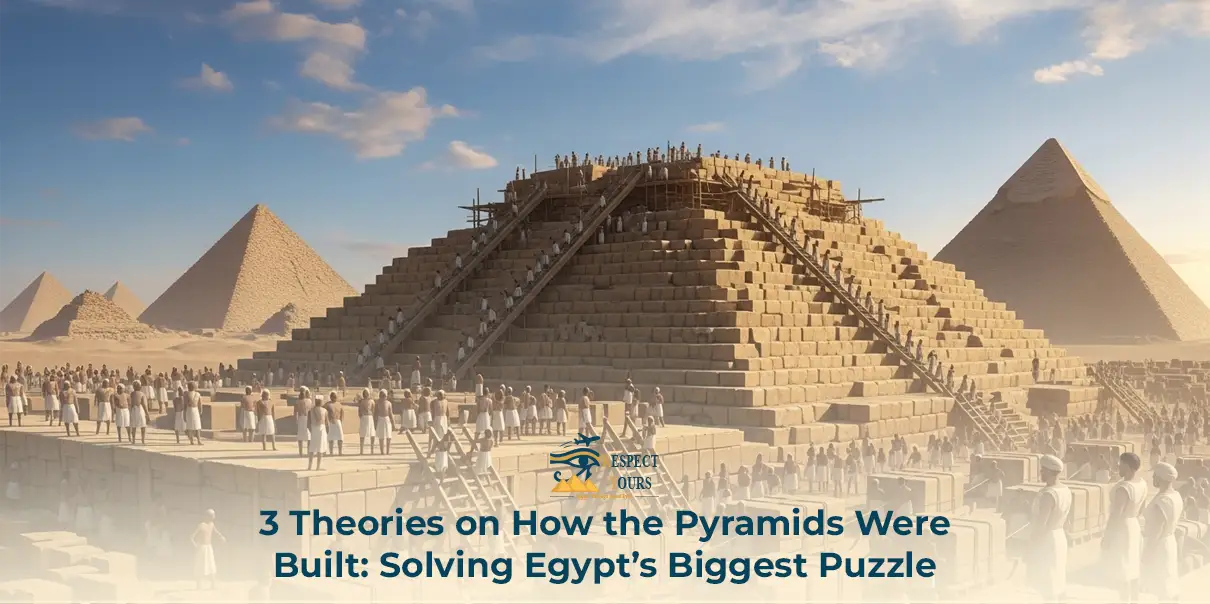
This is the oldest and most traditional explanation. It suggests that the Egyptians built a massive straight ramp made of mudbrick, limestone chippings, and clay, extending outward from the pyramid’s base.
Workers dragged the stone blocks up the ramp using sleds lubricated with water, a method supported by wall carvings found in tombs and experiments by modern engineers.
The advantage? Simplicity.
The disadvantage? Logistics, such a ramp would have required more material than the pyramid itself, making it impractical at full height.
Still, smaller ramps discovered near Karnak Temple and Hatnub Quarry prove that ramps were indeed used for moving heavy stone, perhaps in combination with other systems.
Traveler insight:
When visiting the Giza Plateau, our expert guides often point out the flat areas around the pyramids where temporary ramps and staging zones once stood, subtle traces of the colossal effort that took place here 4,500 years ago.
2. The Spiral Ramp Theory: Engineering Genius
Another leading idea, proposed by French architect Jean-Pierre Houdin, suggests the builders used an internal spiral ramp that wound upward inside the pyramid as it rose.
According to this theory, the outer blocks were laid using a short external ramp for the first few levels. Then, as construction continued, an internal ramp allowed workers to move stones higher without building an enormous external structure.
Computer models support the feasibility of this method, and thermal scans of the Great Pyramid have revealed mysterious voids inside that could match the path of such a ramp.
If true, this would make the Great Pyramid not just a tomb, but a masterpiece of hidden engineering, centuries ahead of its time.
Traveler insight:
Standing near Khufu’s Pyramid, you can imagine the inner corridors doubling as construction routes, a perfect blend of architecture and logistics that continues to inspire modern design.
3. The Water and Counterweight Theory: A Hydraulic Wonder
A more recent hypothesis suggests the Egyptians might have harnessed water power to move massive stones. Using a series of canals and flotation systems, stones could have been floated close to the building site during Nile floods, then raised using water-filled shafts acting as counterweights.
Ancient texts describe Nile channel extensions reaching near Giza, lending some credibility to this hydraulic theory. While evidence remains limited, it highlights how Egyptians may have combined engineering with environmental knowledge, using the very lifeblood of their civilization, the Nile, to shape their monuments.
Traveler insight:
When visiting Giza, you’ll often hear how the ancient builders planned around seasonal floods, proving they were not just builders but master planners of their landscape.
Tools and Materials Used in Pyramid Construction
Behind every massive limestone block at Giza lies a story of ancient Egyptian technology and innovation.
The builders relied on simple yet effective tools, copper chisels, dolerite pounding stones, wooden sledges, and ropes made from papyrus and palm fibers, to shape, move, and align stones with astonishing precision.
Quick Facts: Tools & Materials
- Primary Tools:
– Copper chisels and saws
– Dolerite pounding stones (harder than limestone)
– Wooden sledges and rollers
– Rope (papyrus and palm fiber, 4-ply for strength)
– Plumb bobs and set squares for precision
- Materials:
– Limestone: 2.3 million blocks from local Tura quarries
– Granite: Inner chambers, transported 800km from Aswan
– Mortar: Gypsum-based, filling gaps between blocks
– Casing stones: Fine white limestone (mostly removed over centuries)
Evidence from quarries and workers’ settlements shows that construction materials were locally sourced whenever possible.
Limestone formed the pyramid’s core and casing, while granite from Aswan was used for internal chambers due to its strength and spiritual symbolism.
The builders also utilized mudbrick and limestone chippings to form temporary ramp systems and staging areas during the building process.
These ingenious pyramid construction techniques demonstrate the Egyptians’ deep understanding of physics, materials, and manpower. Their combination of engineering knowledge and spiritual purpose transformed Giza into one of the most enduring wonders of the ancient world.
Archaeological Discoveries That Support the Theories

Modern archaeology continues to uncover compelling evidence that sheds light on the mystery of the pyramids and how they were built using remarkable ancient Egyptian engineering.
What Does the Papyrus of Merer Reveal?
One of the most significant discoveries came from the Papyrus of Merer, found near the Red Sea.
This ancient logbook, written by an overseer named Merer, describes how teams of workers transported massive limestone blocks from Tura quarries to Giza using a network of canals.
This evidence confirms that the pyramid construction techniques involved highly organized labor, water transport systems, and detailed planning.
How Do the Hatnub Ramps Explain Construction Techniques?
Further discoveries at Hatnub Quarry revealed Hatnub ramps, a unique system of sloped pathways with post holes and rope grooves.
Archaeologists believe these were used to drag heavy blocks up steep inclines, supporting the ramp systems theory and showing how ancient technology helped overcome impossible odds.
Adding to this, Jean-Pierre Houdin’s 2005 study introduced a new dimension to our understanding. Using 3D modeling, Houdin suggested the use of internal spiral ramps, a theory later supported by thermal scans showing unexplained internal voids inside the Great Pyramid of Khufu.
These findings bridge legend and science, revealing that the builders were not mythical beings, but brilliant engineers who applied advanced pyramid construction techniques thousands of years before modern machinery existed.
For a deeper dive into when the construction began and how it evolved through Egypt’s dynasties, see our detailed article: When Was the Great Pyramid at Giza Built.
Why the Pyramids Were Built, and What They Symbolized
To the ancient Egyptians, the pyramids were far more than royal tombs; they were bridges between Earth and the heavens, designed to ensure the pharaoh’s eternal journey to the afterlife. Every stone, angle, and alignment carried deep spiritual meaning.
Tombs for the Pharaohs, and Gateways to Eternity
Each pyramid was built as the final resting place of a pharaoh, a divine ruler believed to become one with the sun god Ra after death. Egyptians saw death not as an end, but as a transformation, and the pyramid served as a cosmic launch point for the king’s rebirth.
The Great Pyramid of Khufu, for instance, aligns almost perfectly with the cardinal points and the stars of Orion’s Belt, which Egyptians associated with Osiris, the god of resurrection. This precise alignment was no accident: it was a reflection of their belief in cosmic order, or Ma’at.
Inside, narrow shafts point toward specific stars, symbolically guiding the king’s soul toward eternity. Every corridor, chamber, and inscription was crafted as part of a sacred ritual, a map to immortality.
Quick Facts: Pyramid Symbolism
| Aspect | Details |
|---|---|
| Alignment | True north within 0.05 degrees of accuracy |
| Orion correlation | Shafts point to Orion’s Belt (Osiris constellation) |
| Shape symbolism | Represents sun rays / stairway to heaven |
| Golden ratio | Present in pyramid proportions (1.618) |
| Base perimeter | 1,760 cubits = 1/2 minute of Earth’s latitude |
| Spiritual function | “Horizon of Khufu” — meeting point of earth and sky |
Why Did the Egyptians Choose the Pyramid Shape?
Why a pyramid? The answer lies in sunlight. Egyptians believed the slanting rays of the sun formed a celestial ladder. The pyramid’s shape mirrors those rays, allowing the pharaoh’s spirit to ascend toward the heavens.
This geometric perfection wasn’t only architectural, it was spiritual. The base represented the Earth’s solid foundation; the peak symbolized divine unity. In essence, the pyramid was the ultimate expression of balance between heaven and earth.
Visiting the Pyramids Today: What Travelers Should Know
Best Time to Visit the Pyramids
The pyramids can be visited year-round, but October through April offers the most comfortable weather, with mild days and cooler evenings. Early mornings and late afternoons are ideal for photography; the sunlight turns the limestone a soft gold, while crowds are lighter.
If you visit in summer, plan to arrive as soon as the site opens (around 7 a.m.) and bring plenty of water, a hat, and sunscreen; the desert sun can be intense.
How to Explore the Giza Plateau
- The Giza complex covers a vast area, including:
- The Great Pyramid of Khufu, the only one you can still enter (for a separate ticket).
- The Pyramids of Khafre and Menkaure are smaller but beautifully proportioned.
- The Great Sphinx, guarding the plateau with an air of timeless mystery.
- The Solar Boat Museum (or Grand Egyptian Museum nearby), home to one of the world’s oldest full-sized ships, used for the pharaoh’s afterlife journey.
A knowledgeable local Egyptologist can transform this visit from a sightseeing stop into a story, pointing out hidden hieroglyphs, explaining alignment mysteries, and guiding you through lesser-known tombs that most tourists miss.
Why Choose Respect Tour
A visit to Egypt’s pyramids is not just a trip, it’s an encounter with the origins of human genius. And when you travel with this expert team, that encounter becomes deeper, more personal, and far more meaningful.
- Local Expertise That Brings History Alive
Every guide is a certified Egyptologist or local historian who understands not only the facts but the fascinating stories that shaped them. You’ll hear how workers hauled stones, why the pyramids align with the stars, and what daily life on the Giza Plateau might have been like 4,500 years ago.
These insights turn your visit from a checklist moment into a genuine journey through time.
- Customized, Comfortable, and Insightful
The tours are flexibly designed around your interests, from half-day Cairo explorations to full archaeological expeditions across Giza, Saqqara, and Dahshur.
You can explore ancient tombs in the morning, meet local artisans by afternoon, and relax on a Nile-view terrace by evening. Everything, from timing to transport, is arranged with care, professionalism, and comfort.
- Ethical and Responsible Tourism
The company supports sustainable travel and local Egyptian communities. Every booking contributes to preserving cultural heritage sites and empowering local guides, craftspeople, and small businesses. Traveling responsibly helps protect Egypt’s treasures for future generations.
Conclusion
The Pyramids of Giza are living proof of human genius, built through knowledge, teamwork, and innovation that still amazes the world.
For over 4,500 years, they have inspired awe and curiosity, challenging every generation to ask: “How were they built?”
After exploring the 3 theories on how the pyramids were built, from straight ramps and hidden internal corridors to ingenious water transport systems, we see that the truth lies not in one method, but in the brilliance of human adaptation.
The Egyptians combined science, faith, and teamwork to create a masterpiece that still defies time.
Yet, no amount of reading compares to seeing it for yourself.
When you stand before the Great Pyramid, run your hand along its ancient limestone, and feel the desert wind, history becomes real.
Respect Tours invites you to go beyond the theories, to walk in the footsteps of the builders, guided by experts who bring Egypt’s engineering wonder to life.
Book your journey today, and experience the legacy of human genius where it was born.
FAQ: Frequently Asked Questions
When is the best time to visit the pyramids?
The most pleasant months are October to April, when temperatures are cooler. Early morning or sunset visits offer the best light for photography and a calmer atmosphere.
Set aside 2–3 hours for the main Giza Plateau (Great Pyramid, Khafre, Menkaure, and Sphinx). Add extra time if you want to explore the Solar Boat Museum or nearby Saqqara.
Yes, visitors can enter the Great Pyramid of Khufu and others for an additional ticket. It’s a narrow climb inside ancient chambers, but an unforgettable experience.
Archaeological findings at Giza show the pyramids were built by skilled Egyptian laborers, not slaves.
They lived in organized worker villages, received food and medical care, and took great pride in their work.