

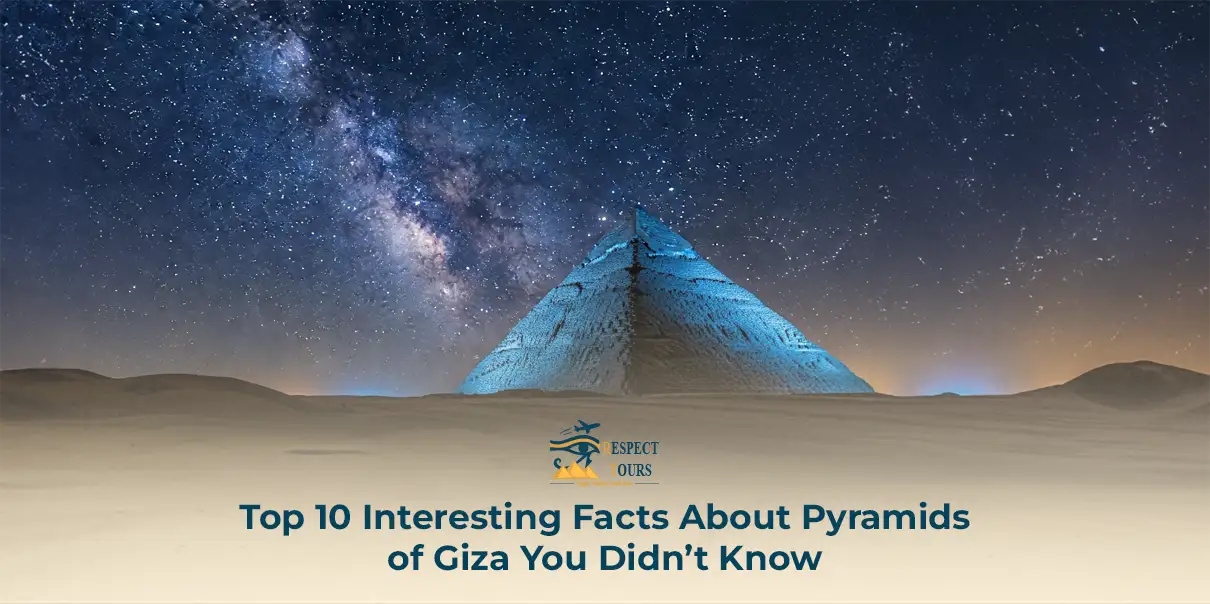
The Pyramids of Giza are among the most famous monuments in the world, instantly recognized by their timeless silhouette. But beyond their massive stone blocks lies a hidden world of secrets that few visitors ever truly understand.
From mind-blowing engineering precision and astronomical alignments to mysterious missing pieces and still-undiscovered chambers, the pyramids hold far more than meets the eye.
In this guide, we’ll uncover the top 10 interesting facts about the Pyramids of Giza that will change the way you see these ancient wonders forever. Whether you’re a curious traveler, a history enthusiast, or planning your first trip to Egypt, these fascinating insights will transform you from a casual tourist into a true explorer of one of history’s greatest achievements.
Quick Overview: Top 10 Interesting Facts About the Pyramids of Giza
- The Great Pyramid is the Last Ancient Wonder Standing: The only surviving member of the Seven Wonders of the Ancient World.
- Built Over 4,500 Years Ago: Older than most civilizations, even ancient Greece and Rome.
- Perfectly Aligned with True North: The Great Pyramid’s orientation is accurate within 3/60th of a degree.
- Made of over 2.3 Million Stone Blocks: Each weighing up to 80 tons, transported with remarkable skill.
- Once covered in White Limestone: Originally gleamed like a giant jewel under the Egyptian sun.
- The Mystery of the Missing Capstone: The golden or limestone pyramidion that crowned Khufu’s pyramid has vanished.
- Built by Skilled Workers, Not Slaves: Archaeology shows paid, respected laborers built them, not slaves.
- The Solar Boat of Khufu: A 4,600-year-old full-sized wooden ship buried for the pharaoh’s afterlife journey.
- Hidden Chambers Still Being Found: Modern scans reveal voids and possible undiscovered passages inside.
- A Global Attraction Today: Millions visit each year, keeping the pyramids a living symbol of Egypt.
Now that you’ve seen the highlights at a glance, let’s dive deeper into each one of these fascinating details. From the awe-inspiring scale of construction to the cosmic precision of their alignment, each fact reveals another layer of mystery about the pyramids.
Understanding the full story behind these points will not only enrich your knowledge but also transform the way you experience the Pyramids of Giza, whether you’re reading at home or standing in their shadow on the Giza Plateau.
1. The Great Pyramid of Khufu Is the Last Surviving Wonder of the Ancient World
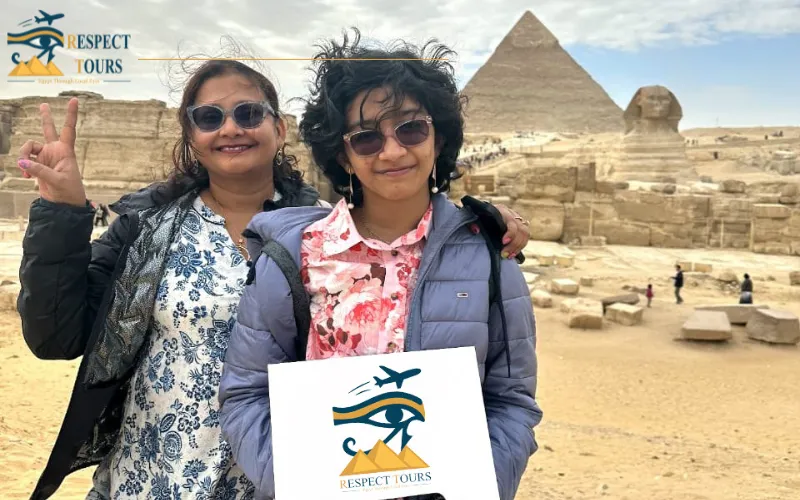
We begin our list with the single most awe-inspiring fact: of the Seven Wonders of the Ancient World, it is the only one that has survived to the present day.
The legendary Hanging Gardens of Babylon are a myth, the great Lighthouse of Alexandria has crumbled into the sea, the Temple of Artemis and the Statue of Zeus were lost to fire and earthquakes, and the Colossus of Rhodes has fallen.
All are gone, existing only in ancient texts and our collective imagination. Yet, the Great Pyramid of Khufu remains almost perfectly intact. This incredible resilience is arguably the most important of the top 10 interesting facts about pyramids of Giza, as it elevates the monument from a mere archaeological site to a true miracle of survival.
For over 4,500 years, it has stood in defiant testament to the genius of its builders, weathering the rise and fall of empires and the relentless passage of millennia. When you stand at its base, you are not just looking at an ancient tomb; you are looking at the sole survivor, the final, tangible message from the entire ancient world. All Egyptologist guides at Respect Tour specialize in bringing history to life.
They will not only guide you to the best viewpoints but will also explain these profound top 10 interesting facts about pyramids of Giza as you stand in their shadow. Let us transform your visit into an unforgettable journey of discovery.
2. Built Over 4,500 Years Ago: Older Than Most Civilizations
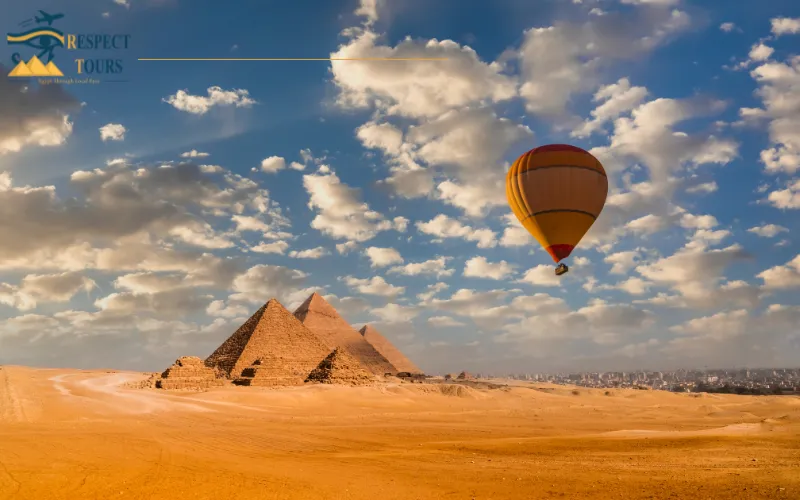
One of the most foundational of the top 10 interesting facts about pyramids of Giza is their staggering age, which is almost impossible to fully comprehend.
Completed around 2560 BCE, these monuments are not just old; they were ancient even by the standards of the “ancient world.” To put this vast timescale into perspective, the Great Pyramid was already over 2,500 years old when the Roman Empire was at its peak.
When the ancient Greeks built the Parthenon in Athens, the pyramids had already been standing for two millennia. They predate most of the construction of Stonehenge in England and are thousands of years older than the Great Wall of China.
This immense, humbling timescale is a crucial concept to grasp and a key reason why these are among the top 10 interesting facts about pyramids of Giza.
3. Precision Engineering: The Pyramid Aligns Perfectly with True North

While their size is overwhelming, it is the almost supernatural precision of the pyramids that truly baffles engineers to this day. This is a crucial point in our list of the top 10 interesting facts about pyramids of Giza.
The Great Pyramid is not just roughly aligned with the cardinal points; it is oriented to true north with an accuracy of within 3/60th of a degree—a level of precision that is almost unbelievable for a structure built 4,500 years ago without modern instruments.
To achieve this, the ancient builders would have needed a profound understanding of astronomy, likely using the stars to find a perfect north-south line.
This was not for aesthetic reasons; this precise alignment was a sacred act, designed to ensure the pharaoh’s soul could ascend to the heavens and join the “imperishable stars” that circle the northern celestial pole.
This incredible fusion of faith and science easily earns its place as one of the most astonishing top 10 interesting facts about pyramids of Giza.
4. Millions of Stone Blocks, Each Weighing Tons
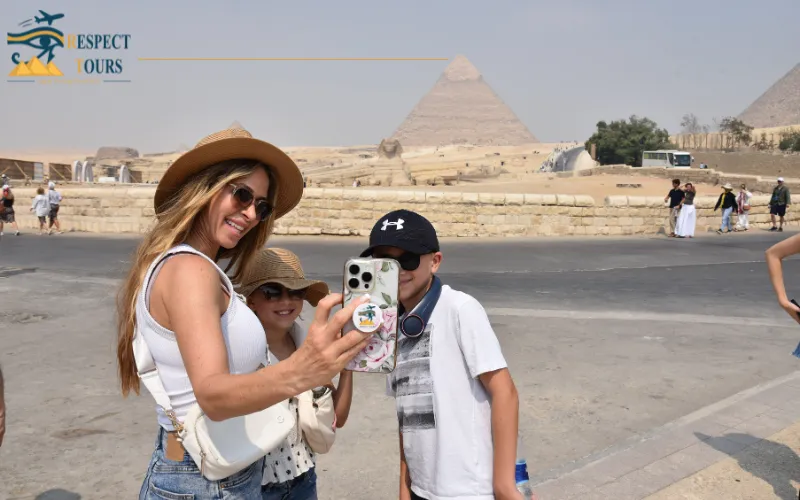
The sheer scale of the materials used to build the pyramids is so vast that it’s difficult to visualize, making it a cornerstone of the top 10 interesting facts about pyramids of Giza.
The Great Pyramid alone is constructed from an estimated 2.3 million individual stone blocks, each weighing an average of 2.5 tons, the equivalent of a large SUV. While most of these limestone blocks were quarried right on the Giza plateau, the real challenge was transporting the more specialized stones.
The massive granite beams used to roof the King’s Chamber, some weighing up to 80 tons, were brought from the distant quarries of Aswan, over 800 kilometers (500 miles) to the south. Moving and placing these stones with such precision required a massive and highly organized workforce. It is estimated that a rotating crew of twenty to thirty thousand skilled builders, not slaves, worked for decades to complete the structure.
The immense logistical effort of quarrying, transporting, and lifting millions of tons of stone with simple tools is a testament to the incredible power and organizational genius of the Old Kingdom, solidifying its place as one of the top 10 interesting facts about pyramids of Giza.
5. The Pyramid of Khufu Was Once Covered in White Limestone
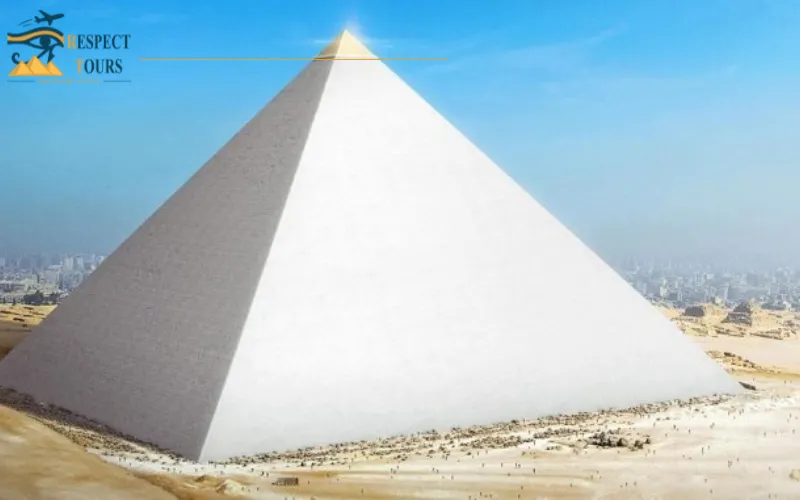
The rough, sand-colored, stepped appearance of the pyramids is an iconic image, but it is not how they looked in ancient times. In fact, their original appearance was far more spectacular, a detail that is one of the most visually stunning of the top 10 interesting facts about pyramids of Giza.
Originally, the entire Great Pyramid was encased in over 144,000 blocks of highly polished, white Tura limestone. These casing stones were cut and fitted with such incredible precision that they created a single, massive, seamless surface that gleamed brilliantly in the Egyptian sun. Ancient Egyptians called the monument ‘Akhet Khufu’ (Khufu’s Horizon), and topped with a capstone, possibly of gold, it would have shone like a colossal jewel visible for miles.
The loss of this brilliant shell, which was loosened by an earthquake in 1303 CE and later quarried to build medieval Cairo, completely changed the character of the monument. This transformation is one of the most important top 10 interesting facts about pyramids of Giza to understand when you visit.
6. The Mystery of the Missing Capstone
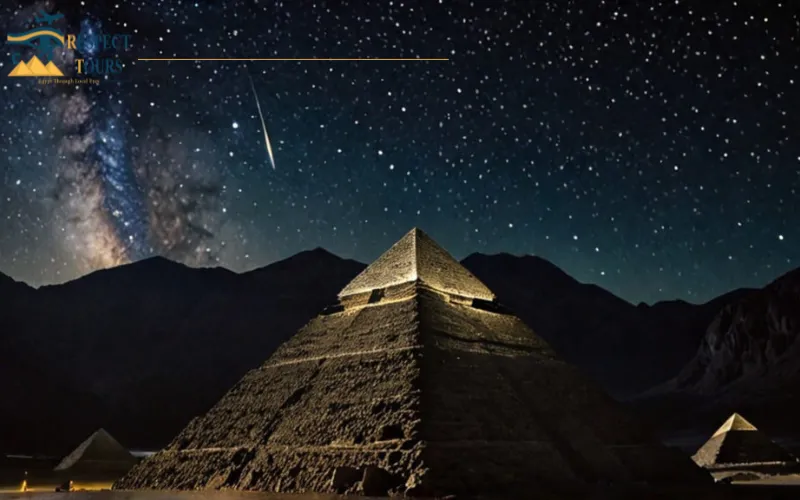
Among the top 10 interesting facts about pyramids of Giza, few capture the imagination like the mystery of the missing capstone. The pyramidion, or Benben stone, was the final block placed at the very apex of the Great Pyramid, completing its sacred shape.
Ancient texts suggest it was a pyramid-shaped stone, possibly made of a precious metal like electrum (a gold-silver alloy) or gilded limestone, designed to catch the first and last rays of the sun, acting as a beacon of divine light.
Today, however, it is gone. What happened to it remains one of Egypt’s greatest unsolved mysteries. Was it stolen in antiquity, destroyed by the elements, or perhaps repurposed for another monument? No one knows for sure. Its absence leaves the pyramid with a flat top, a silent, intriguing question mark at the peak of the world’s greatest monument.
This enduring mystery is a fascinating component of the top 10 interesting facts about pyramids of Giza.
7. Workers Were Skilled Laborers, Not Slaves
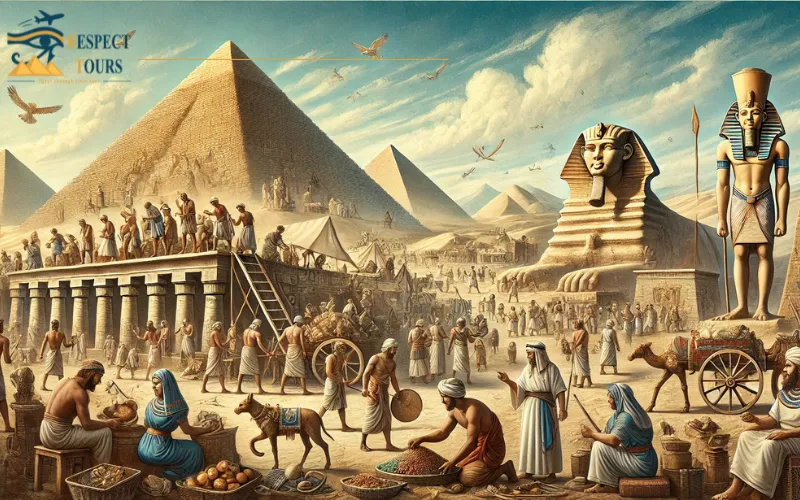
Debunking one of history’s most famous myths is a crucial part of our list of the top 10 interesting facts about pyramids of Giza.
The enduring image from Hollywood of countless slaves being forced to build the pyramids is entirely incorrect. Archaeological evidence from the discovery of a nearby workers’ village and tombs has proven that the workforce consisted of tens of thousands of skilled Egyptian laborers. These were respected citizens who were well-fed with meat, bread, and beer and received expert medical care, as evidenced by healed bones found on-site.
They worked in rotating shifts and were granted the high honor of being buried in tombs near the pyramids they helped build. This understanding transforms our view of the monument from one of oppression to one of national pride and collective effort.
Knowing the truth about the builders is one of the most important top 10 interesting facts about pyramids of Giza.
8. The Solar Boat: A Pharaoh’s Journey to the Afterlife
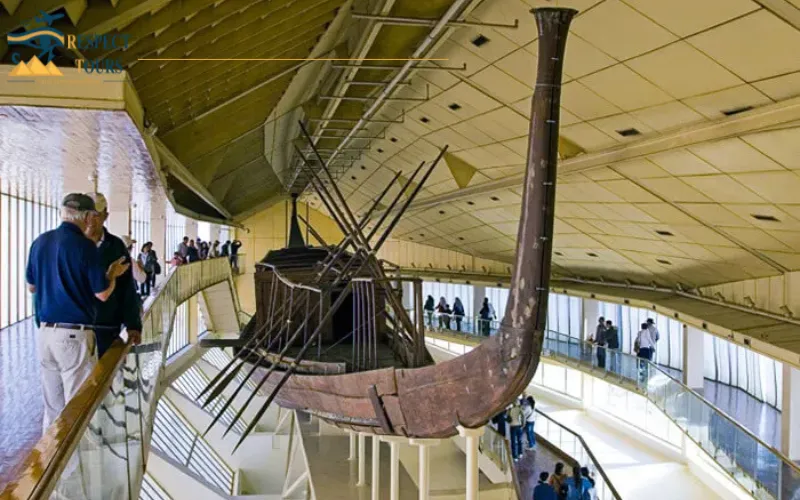
While the pyramids themselves are the main attraction, the discovery of a full-sized ancient ship at their base is one of the most incredible top 10 interesting facts about pyramids of Giza.
Unearthed in 1954 from a sealed pit next to the Great Pyramid, the Khufu Solar Boat is a 4,600-year-old, perfectly preserved cedarwood vessel.
At over 43 meters (143 feet) long, this was not a ceremonial model but a functional ship, designed to magically transport the pharaoh’s soul across the heavens with the sun god Ra. For decades, it was housed in its own museum on the plateau, but it has recently been moved in a monumental, single-piece operation to its new, state-of-the-art home at the Grand Egyptian Museum.
This ancient vessel provides a tangible link to the pharaoh’s spiritual journey, making it a vital part of the top 10 interesting facts about pyramids of Giza.
9. Hidden Chambers Are Still Being Discovered Today
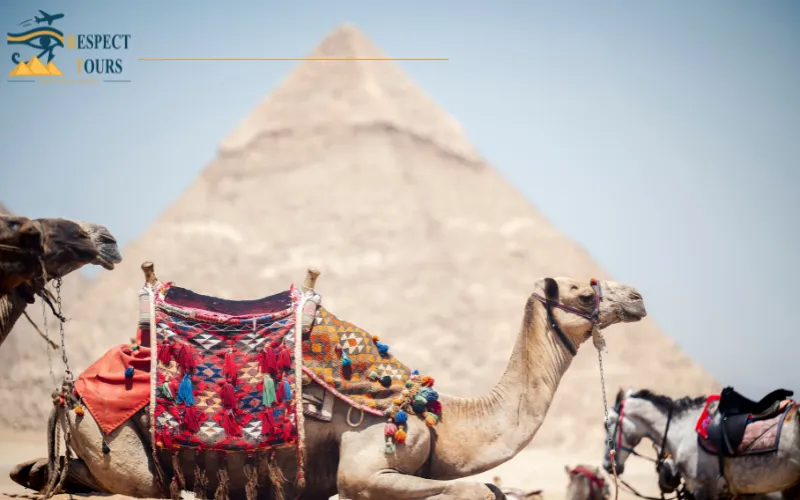
Proving that the age of discovery is far from over, one of the most exciting of the top 10 interesting facts about pyramids of Giza is that new secrets are still being found within them.
In recent years, the international “ScanPyramids” project has used advanced, non-invasive technology like cosmic-ray muography to peer deep inside the Great Pyramid’s stone structure. In 2017, this project announced the stunning discovery of a massive, previously unknown void, now known as the “Big Void,” located above the Grand Gallery.
This enormous hidden chamber, at least 30 meters (100 feet) long, has yet to be physically explored. The fact that a 4,500-year-old monument is still at the forefront of modern scientific discovery proves it has not yet revealed all its secrets and makes this one of the most thrilling top 10 interesting facts about pyramids of Giza.
10. The Pyramids Attract Millions of Visitors Each Year
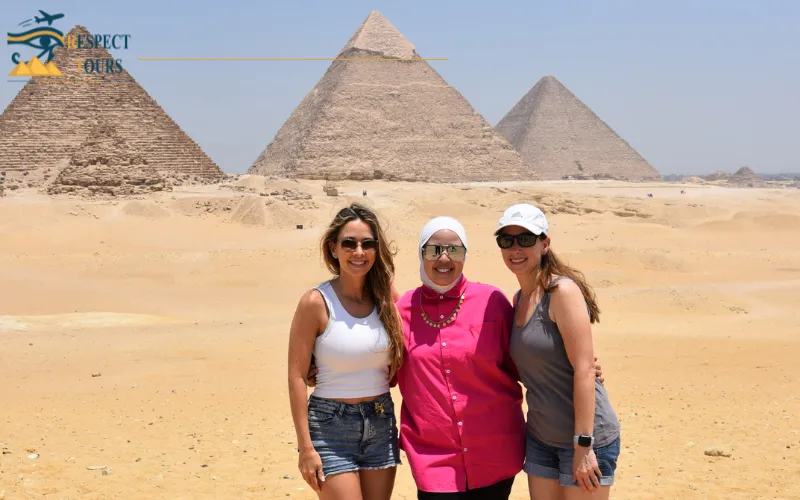
Our final entry in the top 10 interesting facts about pyramids of Giza connects their ancient past to their vibrant, living present.
Today, the Giza Necropolis is a UNESCO World Heritage site and the most iconic symbol of Egypt, attracting millions of tourists from every corner of the globe each year. The pyramids are not just a relic of a lost civilization; they are a global landmark and a pillar of modern tourism.
Standing at their base, you share an experience of awe with millions of fellow travelers and countless generations of visitors stretching back to Greek and Roman times.
This enduring power to inspire and unite humanity in wonder is the ultimate reason to learn the top 10 interesting facts about pyramids of Giza and to plan your own pilgrimage to this incredible site.
Bonus Fact: The Pyramids May Still Hold Untold Secrets
We couldn’t conclude our list without a bonus fact that goes beyond the known top 10 interesting facts about pyramids of Giza and looks to the future.
Despite 4,500 years of history and over a century of intense archaeological study, the pyramids have not yet revealed all their secrets. Many Egyptologists believe that the true burial chamber of King Khufu has never actually been found, and that the sarcophagus in the King’s Chamber is a decoy.
Modern, non-invasive projects like ScanPyramids continue to detect mysterious voids and hidden corridors within the Great Pyramid’s structure, suggesting that entire new sections are waiting to be discovered.
Add to this the enduring mysteries of the Great Sphinx, with its own theories of hidden chambers beneath its paws, and it becomes clear that the Giza Plateau is still an active site of discovery.
The next great find could happen at any moment, reminding us that we have only scratched the surface of understanding these incredible monuments.
How the Pyramids Were Built: Theories and Debates
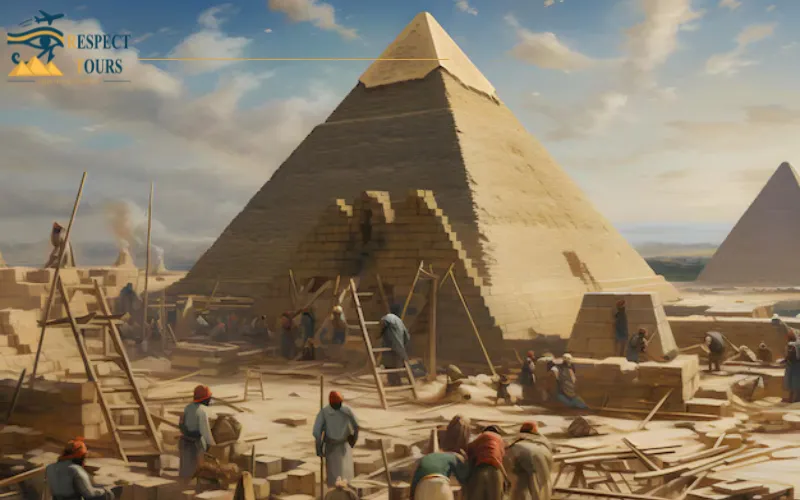
The question of how a civilization without modern machinery built these perfect, colossal monuments is central to the top 10 interesting facts about pyramids of Giza.
The mainstream archaeological view is a testament to human ingenuity. It is believed that millions of stone blocks were quarried using simple copper chisels and wooden tools.
These massive blocks were then transported across the desert on large sleds, with water poured on the sand in front to reduce friction. To lift the stones, it’s widely believed the Egyptians constructed vast and complex ramps. Whether this was a single, long, straight ramp, a ramp that spiraled around the pyramid, or an internal ramp is still a subject of intense debate.
While many fringe theories involving aliens or lost technologies persist, the evidence points to a highly organized, skilled workforce using brilliant but simple techniques on a scale that is hard to imagine.
The enduring debate itself is one of the most compelling top 10 interesting facts about pyramids of Giza.
What Was the Purpose of the Pyramids?
While it’s true that the pyramids served as tombs, their purpose was far more profound than simply being a final resting place.
Understanding their sacred function is perhaps the most important of the top 10 interesting facts about pyramids of Giza.
The pyramids were essentially “resurrection machines,” designed to launch the soul of the deceased pharaoh into the immortal realm of the gods. The pyramid’s shape itself is highly symbolic, representing a solid ramp or staircase for the king to ascend to the heavens. It is also thought to represent the primeval mound of creation (the Benben), the first land to emerge from the waters of chaos.
By being buried within this symbol of creation and rebirth, the pharaoh’s soul could be magically regenerated. Every aspect of the pyramid, from its alignment with the stars to its internal passages, was designed to ensure the king’s successful transformation into a divine being, who would then sail across the heavens with the sun god Ra for eternity, justifying its place in our list of the top 10 interesting facts about pyramids of Giza.
The Sphinx and Its Connection to the Pyramids
No list of the top 10 interesting facts about pyramids of Giza would be complete without mentioning their silent, enigmatic guardian: the Great Sphinx. Carved from a single, massive outcrop of limestone, this mythical creature has the body of a lion and the head of a king, believed by most Egyptologists to be the Pharaoh Khafre, builder of the second pyramid.
The Sphinx is not a separate attraction but an integral part of the Giza necropolis. It stands as a powerful protector, guarding the sacred burial ground and the pyramids within it. Its temple was used for solar worship, connecting the king’s divine power to that of the sun god Ra.
While the pyramids represent the pharaoh’s journey in death, the Sphinx represents his royal power and divine authority in life, a perfect fusion of human and divine might that adds another layer of mystery to the top 10 interesting facts about pyramids of Giza.
The Pyramid Complex: Temples, Causeways, and Cemeteries
Many visitors don’t realize that the main pyramid is just the centerpiece of a huge, functioning religious complex, a crucial detail among the top 10 interesting facts about pyramids of Giza. Each main pyramid was part of a larger architectural plan designed for sacred rituals.
This complex included a Mortuary Temple, situated at the base of the pyramid, where priests would perform daily rituals and leave offerings for the deceased king’s soul. A long, covered Causeway connected this temple to a Valley Temple, located further down on the edge of the Nile floodplain, where the king’s body would be received and purified.
Surrounding the main pyramids were smaller queens’ pyramids and vast cemeteries of “mastaba” tombs, where loyal family members and high-ranking officials were buried to serve their king in the afterlife.
Understanding that this was a bustling, sacred city for the dead, not just an isolated tomb, is one of the most important top 10 interesting facts about pyramids of Giza.
Famous Discoveries Inside the Pyramids
The story of the discoveries made inside and around these monuments is a fascinating part of the top 10 interesting facts about pyramids of Giza.
While the burial chambers were famously looted in antiquity, leaving them empty of treasure, archaeologists have still made incredible finds.
The most significant discoveries are the massive, empty granite sarcophagi, which were placed in the burial chambers during construction. Above the King’s Chamber in the Great Pyramid, explorers found five “relieving chambers” that contained the only known instances of King Khufu’s name written inside the pyramid.
The most spectacular discovery of all, however, was found sealed in a pit at the pyramid’s base in 1954: the perfectly preserved Solar Boat of Khufu. More recently, the ScanPyramids project discovered the “Big Void,” a massive hidden chamber, proving that the pyramids have not yet revealed all their secrets, which is a key part of our list of the top 10 interesting facts about pyramids of Giza.
Planning Your Visit to the Pyramids of Giza
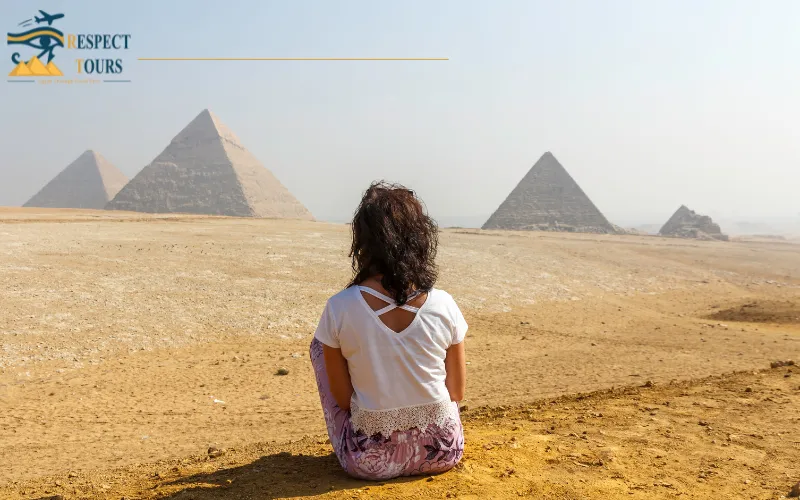
Now that you’re armed with these incredible facts, you’re ready to plan an unforgettable visit. Here’s what you need to know:
Best Time to Visit:
The most pleasant weather is from October to March, but this is also the busiest season. For fewer crowds, consider the shoulder months of April, May, September, and November.
No matter the season, the golden rule is to arrive right at the 8:00 AM opening time to experience the site in relative peace before the large tour buses arrive.
Ticket Prices (Approximate for 2026)
A general entry ticket to the Giza Plateau for foreign adults is approximately 360 EGP.
Note that entering any of the pyramids themselves requires a separate, additional ticket that can be purchased at the main ticket office.
Prices are subject to change, so always check the official government website for the latest fees.
Essential Visitor Tips
Wear comfortable walking shoes, a hat, and sunscreen. Bring plenty of water. Be prepared for a security check at the entrance and be polite but firm in declining unsolicited offers from touts inside the site to ensure a more pleasant experience.
Book Your Pyramid Adventure with Respect Tour
Knowing the secrets of the pyramids is one thing, but experiencing them with an expert who can bring them to life is another.
Let Respect Tour be your guide to discovering the top 10 interesting facts about pyramids of Giza in person, without any of the usual hassles.
Our expert Egyptologist guides will not only show you the monuments but will explain their hidden astronomical alignments, construction secrets, and historical context while you stand in their shadow.
We handle all the logistics, from private, air-conditioned transportation that picks you up from your hotel to securing all your tickets in advance.
Don’t just see the pyramids; understand them. Book your unforgettable pyramid adventure with Respect Tour today and let us handle the details while you focus on the magic. This is more than a tour; it’s your front-row seat to history, which makes it the last of our top 10 interesting facts about pyramids of Giza.
Conclusion
The Pyramids of Giza are more than just colossal tombs; they are the last standing Wonder of the Ancient World, testaments to human genius, faith, and endurance. Knowing the top 10 interesting facts about the Pyramids of Giza turns a simple visit into a once-in-a-lifetime journey of discovery. From their astonishing precision to their hidden chambers and solar boats, every stone tells a story.
And when you explore them with an expert Egyptologist guide, these ancient facts come alive. At Respect Tours, we don’t just take you to the pyramids; we unlock their secrets for you. Don’t just see the pyramids; understand them.
FAQ: Frequently Asked Questions
Can tourists go inside the pyramids?
Yes, but entry requires a separate ticket for each pyramid.
Why were the Pyramids of Giza built?
How old are the Pyramids of Giza?
How many blocks were used in the Great Pyramid?
About 2.3 million stone blocks, each weighing 2–80 tons.