


Before the pyramids, before Tutankhamun and Ramses the Great, there was King Menes, the man credited with founding the very first dynasty of Ancient Egypt. Around 3100 BCE, Menes (often identified with Narmer) united Upper and Lower Egypt, marking the beginning of over 3,000 years of pharaonic rule. His leadership didn’t just shape a nation; it sparked one of the most influential civilizations in world history. showing what did King Menes do for Egypt.
In this article, 10 Facts About King Menes: The Founder of Ancient Egypt, we explore the myths, archaeological discoveries, and historical legacy behind this legendary figure. From divine symbolism to real political genius, each fact reveals how Menes became the cornerstone of ancient Egyptian identity.
The Legacy of King Menes: Egypt’s First Unifier
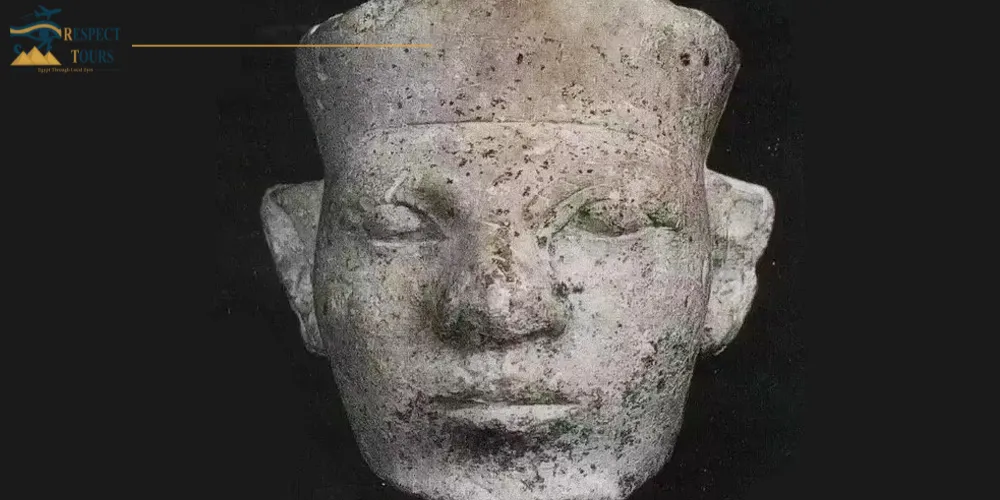
King Menes rose to prominence during Egypt’s predynastic era, a time when independent kingdoms in Upper and Lower Egypt vied for dominance. Most evidence points to Menes ruling from the ancient city of This (or Thinis) in Upper Egypt.
His name appears in early king lists, such as the Abydos King List and the Turin Canon, though his identity remains a subject of scholarly debate. Some researchers believe Menes was a single historical figure, while others argue he may be a composite representation of multiple early rulers, possibly including Narmer or Aha.
The unification of Egypt was likely a gradual process rather than a single event. Menes is credited with completing this transformation through a combination of military strength, political alliances through marriage, and religious authority, showing how did Menes unite Egypt and laying the foundation for pharaonic rule that would endure for over 3,000 years.
Although archaeological records from this early period are scarce and fragmented, Menes’ influence stretched far beyond his time. Hieroglyphic writing was just emerging during his reign, leaving historians to rely on later sources—often written centuries afterward—that mix mythology with fact.
As a result, King Menes remains a partly mysterious figure: a blend of historical ruler and mythic founder whose impact on Egyptian civilization is undeniable.
10 Facts About King Menes: A Brief Overview
- Unifier of Egypt: King Menes unified Upper and Lower Egypt around 3100 BCE, showing how did Menes unite Egypt and marking the beginning of dynastic rule.
- Founder of Memphis: He established Memphis as Egypt’s first capital, strategically located near the unification border.
- Standardized Religion: Menes introduced unified religious practices to consolidate spiritual and political power.
- Pharaonic Iconography: He developed the visual symbols of kingship, including the double crown and ceremonial regalia.
- Economic Reforms: Menes implemented administrative systems that supported trade, agriculture, and taxation.
- Military Expansion: His reign included military campaigns to secure Egypt’s borders and expand its influence.
- Cultural Growth: Under Menes, Egypt saw early advancements in art, architecture, and statecraft.
- Legendary Status: Later Egyptian texts portrayed him as a near-mythic founding hero.
- Historical Debate: Scholars continue to debate whether Menes was a real individual or a composite of rulers like Narmer or Aha.
- Lasting Impact: His legacy shaped Egyptian civilization for over 3,000 years, laying the groundwork for future dynasties and reflecting what did King Menes do for Egypt.
Together, these facts highlight Menes as a transformational leader. His political unification, cultural reforms, and enduring symbolism made him the prototype of pharaonic authority and one of the most influential figures in ancient history.
A timeline of King Menes and the early dynastic period
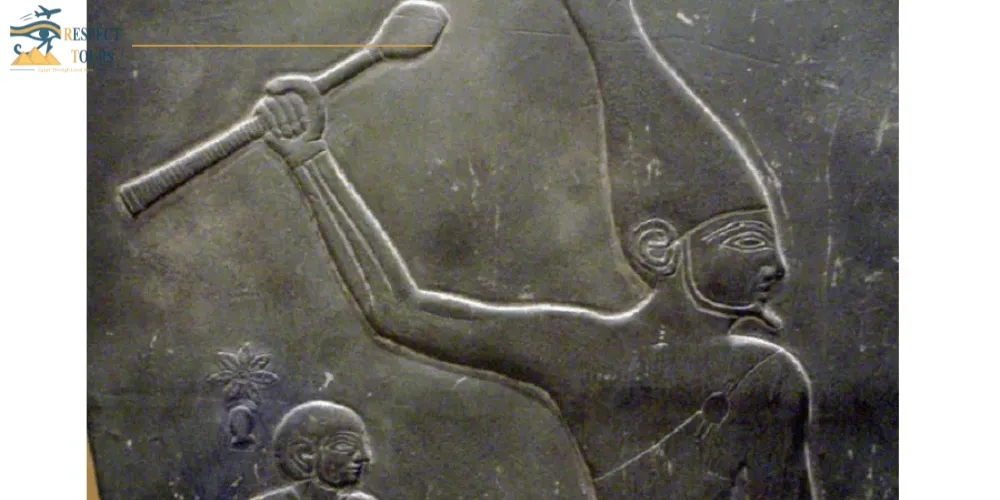
The predynastic period (c. 3500-3100 BCE):
Witnessed increasing political consolidation in Egypt. Multiple kingdoms emerged along the Nile River, each controlling specific regions. Upper Egypt dominated the southern territories, while Lower Egypt controlled the northern Delta region. Competition between these kingdoms intensified during the late predynastic period.
Menes’ rise to power occurred around 3100 BCE.
During the transition to the Early Dynastic Period. His unification campaign probably lasted several years. The process involved military conquest, political alliances, and religious integration. His victory established the First Dynasty of unified Egypt.
The Early Dynastic Period (c. 3100-2686 BCE):
Encompassed the first two dynasties of unified Egypt. Menes’ immediate successors consolidated his achievements and expanded Egyptian territory. This period saw the development of hieroglyphic writing, monumental architecture, and complex religious systems. The foundations laid during this era supported Egyptian civilization’s later achievements.
1. Unification of Upper and Lower Egypt
King Menes’ most significant achievement was the unification of Egypt’s two ancient kingdoms. Upper Egypt, stretching from Aswan to Memphis, and Lower Egypt, encompassing the fertile Nile Delta north of Memphis, had long been culturally and politically distinct, each with its deities, traditions, and leadership structures.
This unification was not a single event but a gradual process that required both military strength and diplomatic finesse. Menes likely combined conquest with alliance-building, possibly through strategic marriages that helped legitimize his rule across both regions.
The newly unified kingdom adopted symbols from each of its territories. Most famously, the double crown—a fusion of the White Crown of Upper Egypt and the Red Crown of Lower Egypt—became the pharaoh’s emblem of dual authority. From this point forward, rulers held the title “King of Upper and Lower Egypt,” a tradition that continued throughout ancient Egyptian history.
Unification delivered immediate advantages. Trade flourished with the removal of internal barriers, agricultural resources could be more efficiently redistributed, and the centralized state was better equipped to launch ambitious building projects and defend its borders.
2. Foundation of Memphis
Among the 10 Facts About King Menes, his founding of Memphis stands as a pivotal moment in Egypt’s early statecraft.
Menes established Memphis as the capital of unified Egypt, strategically positioning it at the junction between Upper and Lower Egypt. Its location near the Nile Delta provided access to Mediterranean trade routes and natural defenses, making it both a political and economic stronghold.
Archaeological evidence confirms Memphis’s importance during the Early Dynastic Period. Excavations reveal royal tombs, administrative buildings, and early state infrastructure. For over a thousand years, Memphis remained Egypt’s political and cultural heart, extending its influence far beyond the Nile Valley.
The city also rose as a spiritual center dedicated to Ptah, the creator god. Its grand temples attracted pilgrims, and festivals reinforced the pharaoh’s divine status. Religion and governance merged in Memphis, solidifying national unity.
Economically, Memphis flourished. The capital managed trade routes connecting Africa, Asia, and the Mediterranean. Its workshops produced fine goods for Egypt’s elite, while its merchants thrived through international commerce, laying the foundation for Egypt’s long-term prosperity.
3. Introduction of new religious practices
Another key entry in the 10 Facts About King Menes is his role in shaping Egypt’s religious system, laying the foundation for one of the world’s longest-lasting spiritual traditions.
Before unification, each region of Egypt worshipped its local deities through distinct rituals. Menes recognized that consolidating religious belief was essential for political unity. He introduced a more standardized religious framework that elevated the pharaoh to the center of divine order.
Under this system, Menes was regarded as the living embodiment of Horus, the falcon god. This concept of divine kingship legitimized his authority and became a core tenet of ancient Egyptian theology for centuries to come.
Religious festivals were not just spiritual; they were political tools. These state-sponsored ceremonies celebrated the king’s divinity and reinforced the pharaoh’s supreme status in society. Over time, local variations in practice gave way to more uniform rituals, promoting national cohesion while still honoring regional traditions.
Temple building accelerated under Menes’ rule. With royal support, religious institutions flourished, and priests became powerful allies of the throne. This strategic alliance between the temple and the crown would define Egyptian governance for generations.
4. Development of royal iconography
One of the most enduring is his establishment of royal iconography, visual symbols that defined pharaonic authority for over 3,000 years.
The Double Crown (Pschent) became the ultimate emblem of unification, combining the white crown of Upper Egypt with the red crown of Lower Egypt. The crook and flail, representing the pharaoh as both shepherd and enforcer, became standard elements of royal imagery.
Menes also introduced other iconic symbols of divine kingship. The uraeus, a cobra on the royal crown, symbolized protection and legitimacy. The false beard represented divine wisdom and eternal life. These visual elements appeared on temples, seals, thrones, and ceremonial regalia, instantly signaling power and sacred rule.
Menes’ era also laid the foundation for Egyptian artistic conventions. Pharaohs were depicted with idealized features: ageless, symmetrical, and godlike. Specific poses, like the striding stance or smiting scene- communicated authority, dominance, and divine favor. These stylistic standards shaped Egyptian art for millennia and were rigorously maintained in royal depictions across dynasties.
Monumental art and architecture further amplified royal iconography. Massive stone structures, adorned with inscriptions and scenes of triumph, served as public declarations of the pharaoh’s divine mandate. These monuments didn’t just celebrate rule, they made it visible, permanent, and unquestionable.
5. Economic and administrative reforms
The 10 Facts About King Menes would be incomplete without highlighting his pioneering reforms that laid the economic and bureaucratic foundation of ancient Egypt.
After unification, Menes centralized governance by replacing local rulers with royal administrators loyal to the crown. These officials oversaw agriculture, taxation, and resource management, transforming Egypt into a structured, prosperous state.
To support this new system, hieroglyphic writing evolved into a powerful administrative tool. Scribes documented tax collections, land ownership, trade agreements, and legal decrees. This early record-keeping ensured accountability and laid the groundwork for one of history’s most advanced ancient bureaucracies.
Menes also introduced standardized weights and measures, facilitating fair commerce across Egypt’s diverse regions. These reforms not only reduced trade disputes but also encouraged long-distance exchange and regional specialization.
Under Menes’ leadership, royal workshops flourished. Skilled artisans produced luxury goods, jewelry, linen, and ceramics, for both local use and foreign markets. These goods became important exports that enhanced the kingdom’s wealth and diplomatic influence.
By building a unified economy backed by centralized administration, Menes positioned Egypt as a stable and prosperous power in the ancient world.
6. Military campaigns and expansion
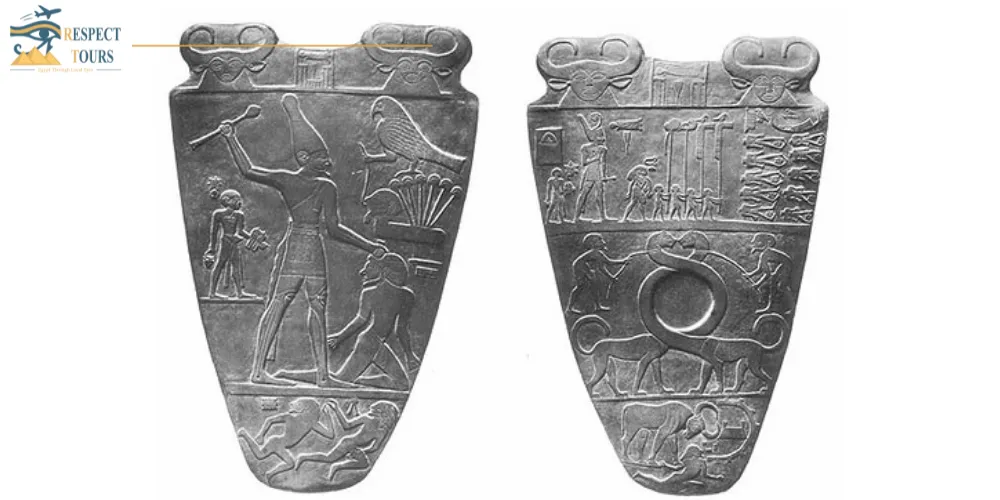
Another defining point in the 10 Facts About King Menes is his use of military strength to protect and expand the newly unified kingdom.
Menes led campaigns south into Nubia, securing vital resources such as gold, incense, and exotic goods. To the north and northeast, he extended Egyptian influence toward the Levant, ensuring control over key trade routes and defensive frontiers.
His reign marked a shift toward a more organized military. Bronze weapons replaced stone tools, and soldiers fought in disciplined formations. The Egyptian army also developed naval capabilities, asserting dominance over the Nile and nearby coastal waters.
These military advances required strong logistical support. Menes’ administration coordinated supply chains, fortifications, and troop deployments. Veterans were rewarded with land, fostering loyalty while helping settle and secure strategic zones.
Prisoners of war became valuable contributors to the Egyptian economy. Many were skilled artisans or laborers, integrated into temple construction, farming, or the royal workshops. This expanded workforce supported the infrastructure needed for Egypt’s growing influence and long-term prosperity.
7. Artistic and cultural heyday
With unification came royal patronage that supported artisans, architects, and writers across Egypt.
Menes’ centralized rule created a larger, unified audience for artistic production. This era saw the emergence of new styles that fused local traditions with state-approved symbolism. Craftsmanship reached new heights as skilled workers produced ceremonial objects, temple decorations, and elite burial goods.
Monumental architecture also advanced under Menes. Early use of stone in construction laid the groundwork for later achievements such as pyramids and grand temples. His royal tombs demonstrated early examples of complex engineering and aesthetic precision.
Menes’ court encouraged literature and hymn writing, celebrating divine kingship and royal victories. Religious texts began to systematize theology, a step toward the later development of the Pyramid Texts and Book of the Dead.
Unification accelerated cultural exchange. Artistic techniques, religious ideas, and regional materials flowed more freely across Egypt. This cross-pollination helped form a coherent Egyptian cultural identity, distinctive, symbolic, and remarkably enduring for over three millennia.
8. Legendary status and later depictions
While Menes was a historical figure, later Egyptian and foreign sources portrayed him as a semi-divine founder of Egyptian civilization.
Ancient Egyptian texts credited Menes with miraculous origins and divine guidance. He was seen not just as a unifier but as a cultural hero chosen by the gods to bring order to chaos. These mythical elements reinforced the pharaoh’s sacred authority and set a precedent for divine kingship.
Greek historians like Herodotus further mythologized Menes. They described him as a civilizer and lawgiver, comparing him to legendary figures like Minos or Romulus. While these writings increased his fame in the West, they often blurred the line between history and legend.
Even medieval Islamic historians referenced Menes in their chronicles. They recognized him as the first Egyptian king and praised his administrative wisdom. These sources preserved alternative historical narratives and expanded global awareness of early Egypt.
In modern times, archaeological discoveries at sites such as Abydos and Memphis have begun to untangle the myth from the man. Excavations have uncovered evidence of early kingship, temple construction, and royal tombs that support the historical existence of a unifying figure like Menes—even if the name itself may represent a title or composite identity.
Through myth, memory, and material remains, Menes’ story has persisted as a cornerstone of Egyptian heritage, firmly anchoring his status as the first pharaoh in both legend and fact.
9. Debate about historical identity
Modern scholars debate whether Menes represents a single historical figure or multiple rulers. Was Menes a real individual or a symbolic name representing a series of early kings who collectively unified Egypt?
Many Egyptologists identify Menes with Narmer, a ruler whose name appears on the famous Narmer Palette, a ceremonial artifact showing the unification of Upper and Lower Egypt. The palette depicts a king wearing both crowns and subduing his enemies, a powerful image of state formation. However, it doesn’t mention the name “Menes,” which complicates direct identification.
Some scholars suggest Menes was a composite figure, blending Narmer, Aha, and other early rulers who contributed to unification. This theory reflects the gradual nature of political consolidation over multiple generations rather than a single, defining moment.
Ancient Egyptian pharaohs often had multiple names and titles, which adds another layer of complexity. Records from the Abydos King List, Turin Canon, and Manetho’s writings offer differing sequences of kings and names. These inconsistencies make it difficult to confirm a single historical Menes.
Until more definitive archaeological evidence emerges, the historical identity of Menes remains one of early Egypt’s most fascinating mysteries, underscoring how mythology, royal propaganda, and limited records shape our understanding of ancient history.
10. Legacy and influence on Egyptian history
Menes laid the political, cultural, and religious foundations of ancient Egypt—structures that would last for over three thousand years.
His concept of divine kingship, where the pharaoh was seen as both human and god, became the cornerstone of Egyptian governance. This theological framework legitimized royal authority and tied the crown to cosmic order (ma’at), a central principle in Egyptian thought.
Menes’ establishment of centralized administration, standardized law, and national systems of measurement and taxation enabled Egypt to function as a unified state. These innovations allowed for surplus management, efficient construction projects, and expansion of trade.
The capital city of Memphis, founded under his reign, became Egypt’s political and religious heart for centuries. His military and economic reforms influenced how future dynasties approached conquest, diplomacy, and resource distribution.
Artistically, Menes helped define royal iconography, such as the double crown, crook and flail, and divine motifs, that persisted in Egyptian art for generations. His reign marked the birth of a uniquely Egyptian aesthetic and cultural identity.
Today, Menes is recognized as a symbol of national unity. His story is taught in Egyptian schools, and sites associated with him attract global tourists. In many ways, Menes is to Egypt what Romulus is to Rome: a semi-historical figure whose real and symbolic legacies shaped a civilization.
Quotes from Egyptologists
Dr. Toby Wilkinson, Cambridge University Egyptologist, observes, “Menes represents the crucial transition from prehistoric chiefdoms to unified state civilization in ancient Egypt.” His research emphasizes the revolutionary nature of political unification.
Professor Aidan Dodson from the University of Bristol states, “The identification of Menes remains one of Egyptology’s most fascinating puzzles, requiring careful analysis of limited contemporary evidence.” His work highlights the challenges of early Egyptian chronology.
Dr. Joann Fletcher from the University of York notes, “Menes’ reign marked the beginning of pharaonic culture that would influence the Mediterranean world for millennia.” Her research emphasizes the broader cultural impact of unification.
Professor David Wengrow from University College London explains, “The political innovations attributed to Menes created the world’s first unified territorial state, predating similar developments elsewhere by centuries.” His comparative approach highlights Egypt’s historical significance.
Further insights into the era of Menes
The Early Dynastic Period witnessed revolutionary changes in Egyptian society. Urban centers expanded rapidly as political unification created new opportunities. Specialized crafts were developed to serve royal courts and religious institutions. Social stratification increased as royal administration required diverse skills.
Climate conditions during Menes’ reign were more favorable than today. The Nile River’s annual flood was more predictable and extensive. This environmental advantage supported agricultural productivity and population growth. The stable climate facilitated long-term planning and monumental construction.
Trade networks expanded dramatically during this period. Egyptian merchants established contacts with Mesopotamia, the Levant, and Nubia. Luxury goods flowed into Egypt in exchange for agricultural products and manufactured items. This international commerce enhanced royal wealth and cultural exchange.
Technological innovations accelerated under unified rule. Metalworking techniques have advanced significantly. New tools and weapons improved agricultural and military capabilities. Medical knowledge increased through systematic observation and recording. These developments laid the foundations for later Egyptian achievements.
Economic effects of King Menes’ reign
Expansion of trade
Establishment of trade networks
Menes’ unification created opportunities for unprecedented trade expansion. Previously isolated regions could now exchange goods freely. The royal administration provided security for merchant caravans. Standardized weights and measures facilitated commercial transactions across the kingdom.
Egyptian merchants established trading posts throughout the region. These facilities stored goods and provided services for traveling traders. Royal officials supervised commercial activities and collected taxes. The trade network generated substantial revenue for the royal treasury.
Foreign merchants were attracted to Egypt’s stable political environment. They brought exotic goods and new technologies. Egyptian products gained an international reputation for quality and craftsmanship. This reputation enhanced Egypt’s prestige and economic influence.
Trade routes connected Egypt to distant civilizations. Overland routes reached Mesopotamia and the Levant. River transport facilitated internal commerce. Coastal shipping connected Egypt to Mediterranean markets. These networks formed the foundation of ancient international commerce.
The role of the Nile River
The Nile River became the backbone of Egypt’s unified economy. Its annual flood provided predictable agricultural cycles. River transport was more efficient than overland alternatives. Royal control of river traffic generated significant revenue.
River ports were developed at strategic locations throughout the kingdom. These facilities handled grain shipments and manufactured goods. Royal officials supervised loading and unloading operations. The port system integrated regional economies into a national market.
The Nile’s flood cycle determined agricultural and economic planning. Royal administrators coordinated planting and harvesting schedules. Surplus grain was stored in royal granaries. This system provided food security and economic stability.
River transportation reduced commercial costs significantly. Large quantities of goods could be moved efficiently. This advantage made Egyptian products competitive in international markets. The river system gave Egypt unique economic advantages over neighboring regions.
Developments in agriculture
Innovations in irrigation
Menes’ reign saw significant improvements in irrigation technology. Engineers developed new techniques for controlling floodwaters. Canal systems were expanded and improved. These innovations increased agricultural productivity dramatically.
Royal workshops produced improved agricultural tools. Metal implements replaced stone tools gradually. New designs increased efficiency and durability. These technological advances supported agricultural expansion.
Irrigation projects required coordinated planning and labor. Royal officials supervised construction and maintenance. Local communities provided workers for these projects. The cooperative effort strengthened social bonds and royal authority.
Water management became a specialized skill. Engineers studied flood patterns and river behavior. Their knowledge was passed down through generations. This expertise became crucial for Egypt’s continued prosperity.
Diversification of the harvests
Agricultural diversification increased under Menes’ rule. New crops were introduced from neighboring regions. Existing crops were improved through selective breeding. This diversification provided food security and economic opportunities.
Royal gardens experimented with new plant varieties. Successful innovations were distributed throughout the kingdom. Agricultural specialists shared knowledge and techniques. This system promoted continuous improvement in farming practices.
Crop rotation systems were developed to maintain soil fertility. Different regions specialize in particular crops. This specialization increased overall productivity. The surplus supported non-agricultural populations in cities.
Storage and preservation techniques have improved significantly. Royal granaries protected grain from spoilage. Preserved foods supported trade and military campaigns. These innovations increased food security and economic flexibility.
Management of resources
Centralized control
Menes established centralized control over Egypt’s natural resources. Royal officials supervised mining and quarrying operations. This system ensured efficient resource extraction and distribution. The centralized approach maximized economic benefits.
Resource allocation became a royal prerogative. Officials distributed materials according to government priorities. This system supported major construction projects and military campaigns. Centralized control enhanced royal power and national unity.
Royal workshops processed raw materials into finished goods. Skilled craftsmen created products for domestic use and export. Quality control ensured consistent standards. This system enhanced Egypt’s reputation for fine craftsmanship.
Resource management required detailed record-keeping. Royal scribes documented extraction, processing, and distribution. These records facilitated planning and accountability. The documentation system became a model for later administrations.
Mining and quarries
Egypt’s mineral wealth became a foundation of royal power. Gold mines in the Eastern Desert provided precious metal for royal treasuries. Copper deposits supplied materials for tools and weapons. Stone quarries provided materials for monumental construction.
Mining operations required significant investment in infrastructure. Royal officials supervised worker communities. Supply lines supported remote mining sites. The investment generated substantial returns for the royal treasury.
Quarrying operations expanded dramatically during Menes’ reign. High-quality stone was extracted for royal monuments. Skilled workers shaped materials at quarry sites. This efficiency reduced transportation costs and improved quality.
Mining and quarrying created employment for thousands of workers. Skilled miners and stoneworkers became valuable resources. Their expertise was passed down through generations. These specialized skills supported Egypt’s construction achievements.
Distribution of wealth
Equitable distribution of resources
Menes implemented policies that promoted relatively equitable resource distribution. Royal officials ensured adequate food supplies for all regions. Emergency reserves protected against famine. This system maintained social stability and royal legitimacy.
Taxation systems were designed to avoid excessive burdens. Different regions contributed according to their capabilities. Royal officials monitored local conditions and adjusted requirements. This flexibility prevented economic hardship and social unrest.
Royal workshops employed skilled artisans. These workers received steady wages and social benefits. Their families enjoyed higher living standards. This system created a loyal middle class that supported royal authority.
Agricultural surpluses were redistributed to support urban populations. Royal granaries supplied food during difficult periods. This system maintained social cohesion and economic stability. The redistribution mechanism became a permanent feature of the Egyptian government.
Temples and public works
Temple construction provided economic benefits beyond religious purposes. These projects employed skilled workers and artisans. Local communities supplied materials and labor. The economic activity stimulated regional development.
Public works projects improved infrastructure throughout the kingdom. Roads, canals, and ports facilitated commerce. Royal investment generated long-term economic benefits. These improvements enhanced Egypt’s competitive advantages.
Temple complexes became major economic centers. They controlled agricultural land and employed numerous workers. Religious festivals generated commercial activity. The temples’ economic role supported both religious and secular development.
Royal patronage of public works demonstrated governmental commitment to citizen welfare. These projects improved living conditions and created opportunities. The investment in infrastructure paid dividends for generations. This approach became a model for later pharaohs.
Conclusion
The 10 Facts About King Menes reveals who was Menes, a transformative leader whose vision created one of history’s greatest civilizations. His unification of Upper and Lower Egypt established political foundations that endured for over three millennia. The capital he founded, Memphis, became a center of commerce, culture, and religious authority that influenced the ancient world.
Menes’ innovations in government, religion, and economics created the framework for pharaonic civilization. His military campaigns secured Egypt’s borders and expanded its influence. The artistic and cultural developments during his reign established traditions that defined Egyptian identity. His legacy demonstrates how exceptional leadership can shape the course of human history.
Modern scholarship continues to debate aspects of Menes’ identity and achievements. Archaeological discoveries provide new insights into his period and accomplishments. The 10 Facts About King Menes: The founder of ancient Egypt represents our current understanding of this remarkable figure. Future research will undoubtedly reveal additional details about his extraordinary reign.
Understanding Menes’ achievements helps us appreciate the foundations of ancient Egyptian civilization. His political vision created unity from diversity. His innovations in administration and economics supported sustained prosperity. His cultural contributions enriched human heritage. The study of his reign provides valuable lessons about leadership, governance, and the power of a unified vision in creating lasting civilizations.
FAQ: Frequently Asked Questions
Is King Menes the same person as Narmer?
Scholars are divided. Some believe Menes and Narmer are the same individual based on overlapping archaeological evidence, such as the Narmer Palette. Others argue Menes may be a composite figure representing several early rulers.
King Menes is considered the first pharaoh of a unified Egypt around 3100 BCE. He is credited with merging Upper and Lower Egypt into one kingdom, founding Memphis as the capital, and laying the foundations of ancient Egyptian civilization.